


Even though there is a lot of criticism about microtransactions in games, the revenue from this type of monetization in games continues to rise.
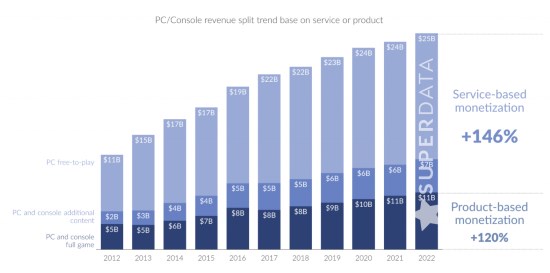
The market research institute SuperData has analyzed how microtransactions in games have changed over the past five years:
- The revenue in this area was 11 billion US dollars in 2012.
- In 2017, this number doubled to 22 billion dollars.
This is interesting compared to the revenue from sold games, which was 5 billion dollars in 2012 and 8 billion dollars in 2017.
The trend continues
According to SuperData, this trend is expected to continue. Revenue from microtransactions is projected to rise according to experts, faster and higher than sales of new games.

A doubling of revenue in the sales figures of games by 2022 is not in sight, while revenues from free-to-play games are expected to grow to 25 billion dollars by 2022.
Thus, the figures confirm the trend that game developers and publishers currently see: Players are engaging more and longer with fewer games for which they are also willing to spend more money through microtransactions.
FIFA 17 as a model for the success of microtransactions
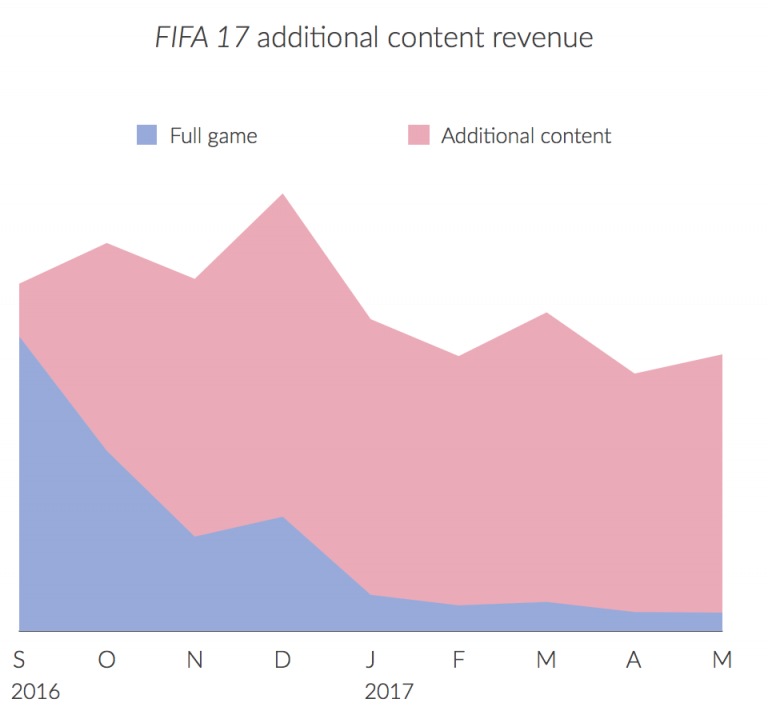
As a prime example of a successful microtransaction model, FIFA 17 serves.
There, the launch month is no longer the most important revenue month. The football game generates as much revenue through microtransactions for months after release as it did in the launch month through actual game sales.
Microtransactions are vilified but still used
Furthermore, the numbers show that – even if players often vilify microtransactions – they still go along with the trend. And this despite the situation surrounding Star Wars Battlefront 2, which has now become a poster child for everything that is wrong with microtransactions and loot boxes.
SuperData describes microtransactions as a continuing experiment. Because developers and publishers still need to find the fine line they can walk to get players to spend money without upsetting them.
SuperData notes that Call of Duty is significantly more successful with its microtransactions than EA’s Battlefield. The microtransaction system of Assassin’s Creed Unity has been judged by fans as too greedy and punished: it did not work.

Maintain balance
Andreas says: Microtransactions don’t have to be a bad thing. Those who wish to support their favorite game by purchasing skins and cosmetic items in this way should not have a guilty conscience. However, fairness must always be maintained. Items that provide gameplay advantages lead to unfairness and result in dissatisfied customers. Therefore, publishers and developers should always carefully consider what and how they offer additional items.
Loot boxes always have a somewhat unpleasant aftertaste because chance decides what you receive, which can lead to spending more money. This, combined with items that grant advantages in the game, creates an explosive mix, as seen in the case of Star Wars Battlefront 2. Here, game developers and publishers still have work to do to find a good balance.

Your opinion is important to us!
Do you like the article? Then let us know!