League of Legends, World of Warcraft, Guild Wars 2. All MMOs, each representing a different payment model: But what are the advantages of Free2Play, Pay2Play, and Buy2Play? What do these terms mean, and how do the models differ?
Free To Play, Pay To Play, Buy To Play is something everyone dealing with MMOs must have heard of. These three payment models differ significantly from one another, each with its own advantages and disadvantages for the developer and the player. This article aims to explore their distinctions and potential in more depth.
Free To Play – A Trap?
Nothing in life is free. Even though the term “Free to Play” initially suggests otherwise, it is nonetheless apparent that the developer wants to make a profit. Games marketed this way usually come with a catch or several: You cannot use all items, play all classes, or access all areas. These missing contents are acquired via microtransactions.
Basically, this is not a bad thing. The download and the startup of the MMO remain free of charge, allowing the player to test the games like a demo version first. The real problem arises when one wants to stay longer in the game and is also willing to invest money. The payment model is often designed to obscure the costs.
The Item Shop as a Time Saver
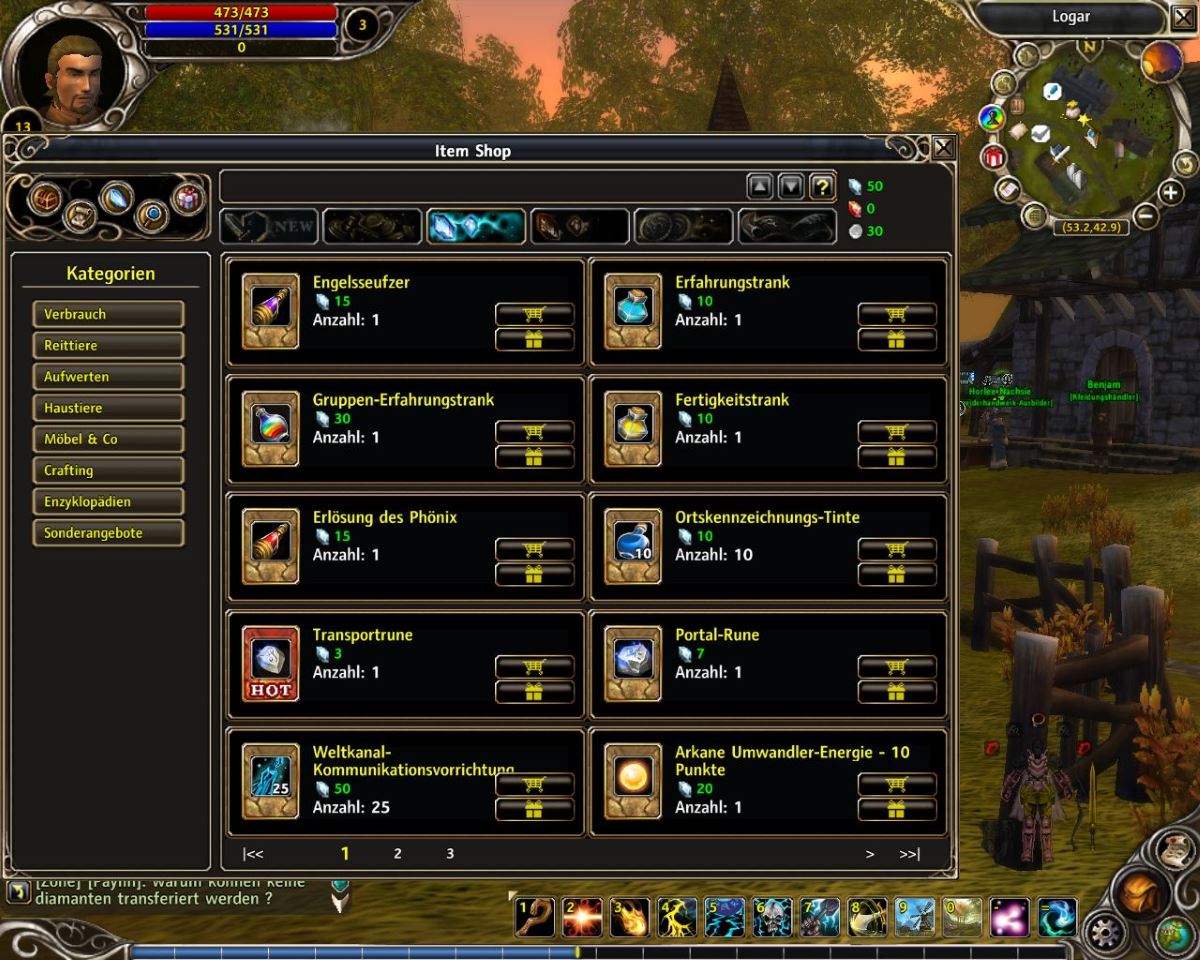
This starts with the fact that many items in the item shop do not cost Euros or dollars. You need a premium currency, the conversion rate of which fluctuates: Depending on how much a player wants to “exchange” at once. For example, you might get 800 of the premium currency for €5 and 3500 for €20 instead of just 3200. On the one hand, this creates an incentive to buy more. On the other hand, it also obscures the exact conversion rate. If an item in the item shop costs 1700 premium currency, the price must first be converted into Euros. Otherwise, you can quickly lose track of your expenses.
The third advantage (from the entrepreneur’s point of view) is that more premium currency is bought than needed. For €5 you get 800, but the item costs 1700. Thus, you would have to spend 15€ three times. However, wouldn’t it be better to spend €20 to receive the bonus?
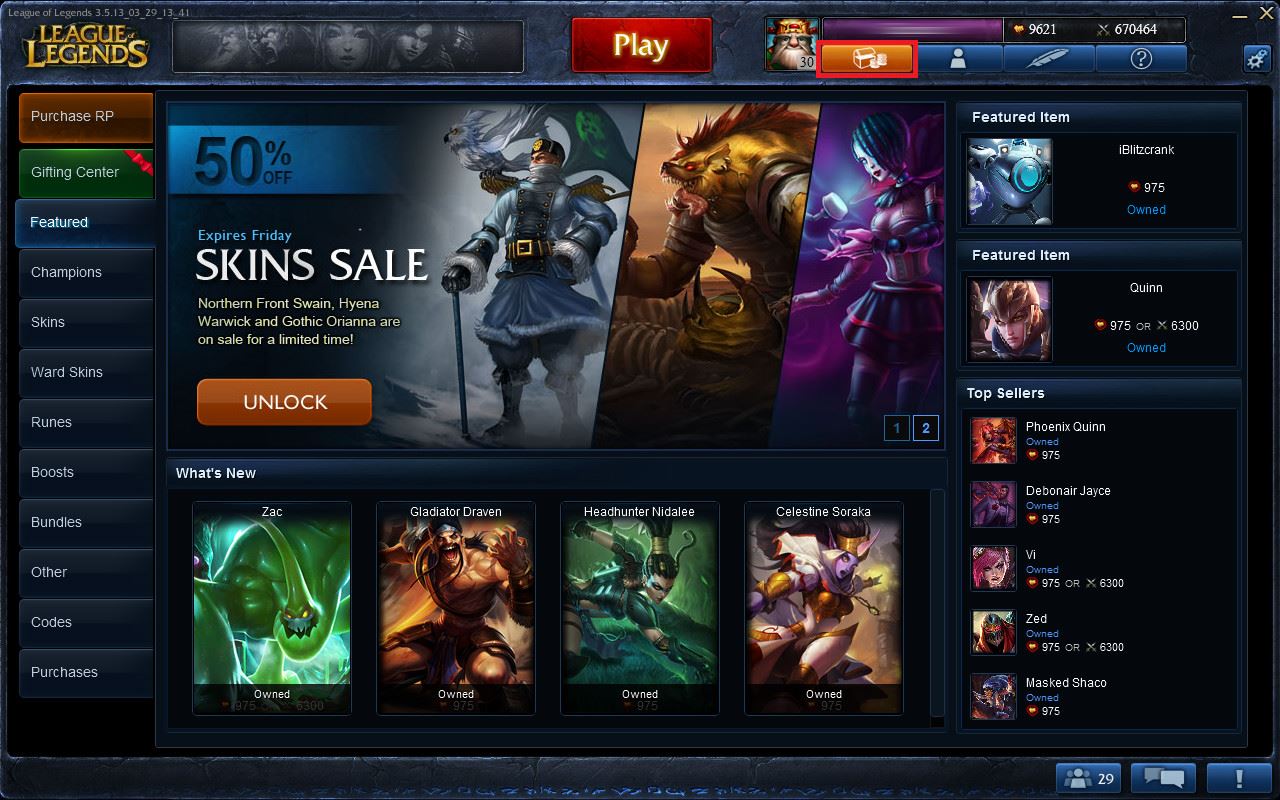
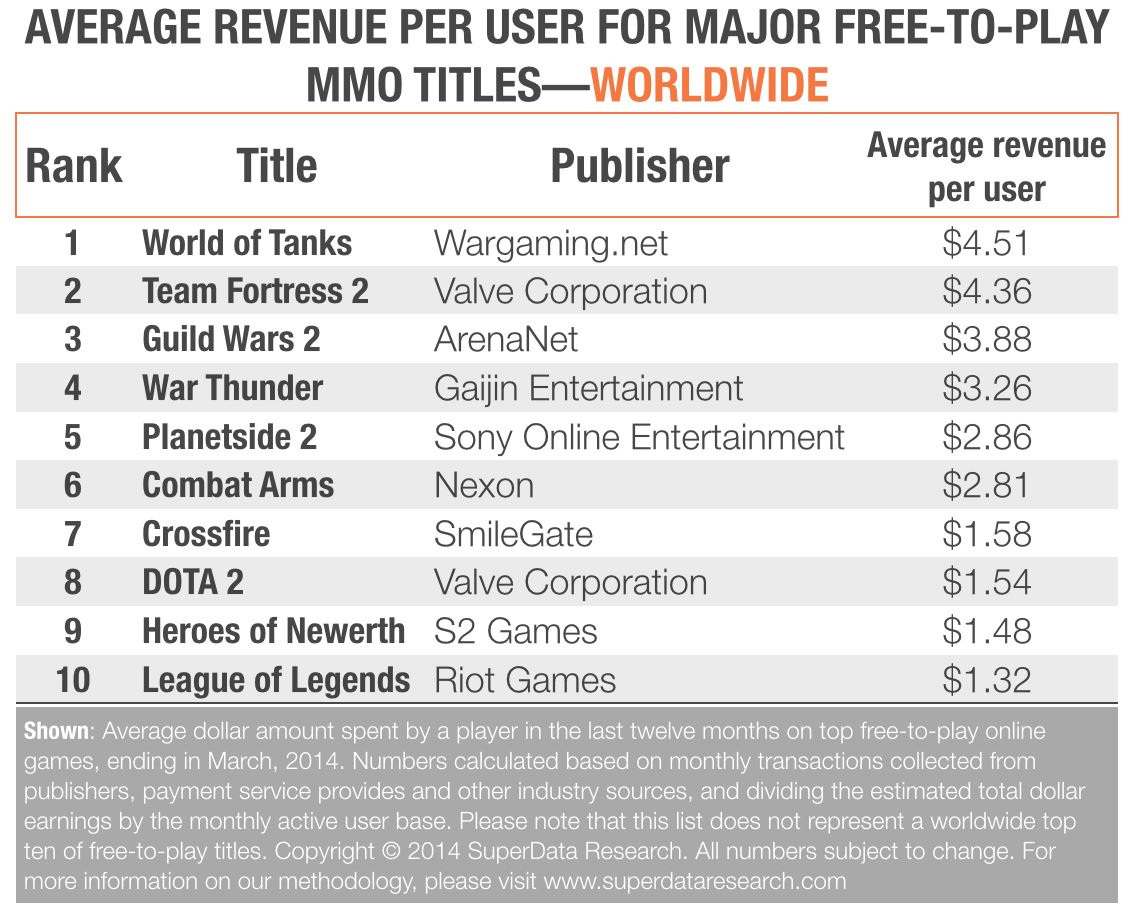
Besides all the conversions, the content of the item shop is crucial: What can you buy for the premium currency? Are they essential items, or can you manage well without them? Games like Dota 2, SMITE, and League of Legends can be very generous. They primarily offer cosmetic extras. The average player does not feel pressured to spend money constantly.
Hearthstone is also fair. The booster packs can either be purchased directly for Euros, without premium currency, or farmed. Everyone has the choice of whether to invest money or time instead. What is often underestimated, however, is that time itself is a very precious commodity. There is some truth in the saying “Time is money”. The question that therefore arises is: What is the right balance between time invested and the rewards earned from the item shop?
Can there even be a false balance? Games whose item shop is considered unfair are referred to as “Pay to Win”. This is because those who do not spend anything or only little cannot compete against those who are willing to invest more. However, what exactly “Pay to Win” means is debatable.
Some believe that a game in which the premium currency can be earned is no longer Pay to Win. After all, anyone can gradually earn everything. According to this view, almost every Free to Play game is fair. However, this view does not consider the balance between time invested and currency earned. A user could pass away from old age before earning the aforementioned 1700 premium currency, and it would still be a fair system.
The other extreme view is that anything that grants even the slightest (time) advantage is already Pay to Win.
Ultimately, the border between Free to Play and Pay to Win lies somewhere between these two extremes. It is up to each individual to draw this line for themselves, as it ultimately is a judgment about whether one finds the game fair or not. Even though one side claims that their definition of “Pay to Win” is older and thus correct.
The item shop of an MMORPG selling the best weapons and armors will certainly be seen negatively by many players. Especially for those wanting to tackle the raid content. For them, it will be Pay to Win, regardless of whether these armor pieces can also be earned. Someone who primarily plays alone and is only interested in the quests and their story might see it differently. Because he has a different focus. The story is important to him, not the equipment and comparison with other games. Therefore, he sees no need to purchase them.
The Player Count
After outlining the terms, we will turn our attention to the player count.
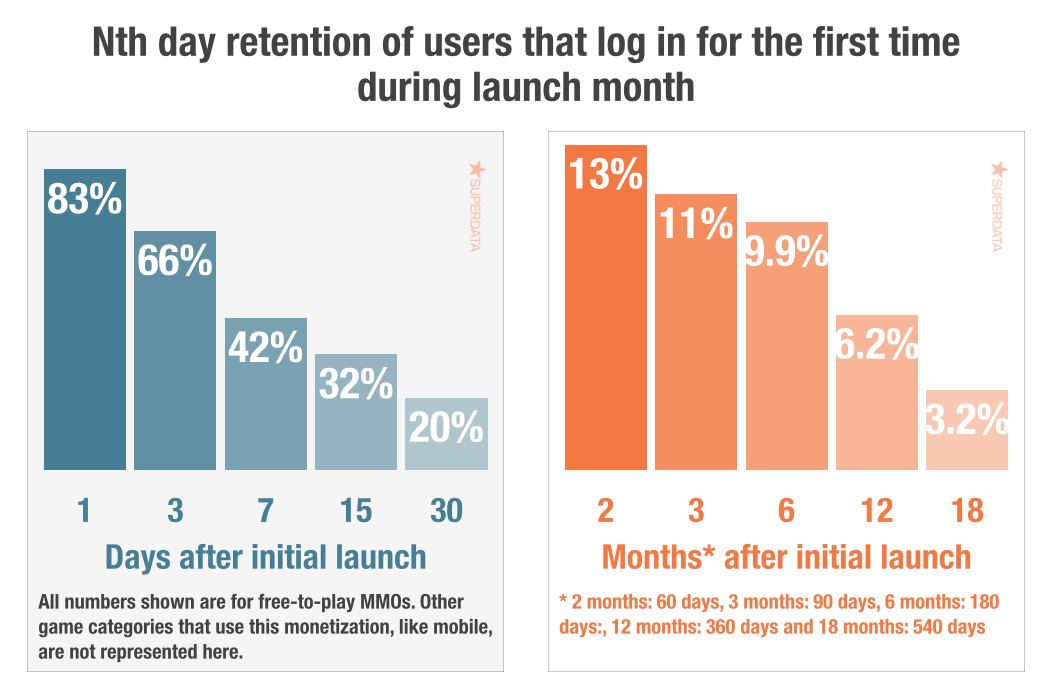
According to a study by SuperData, 83% of players who logged in at the launch of an MMO stay for at least one day. 3.2% stay for 18 months. This statistic is not really surprising. Many try out the new game and lose interest after a few days; very few remain longer.

This statistic additionally accounts for players who come after the launch. The orange line represents those who stay for a day, starting at the mentioned 83% at time 0, the release. The green line represents those who stay for a week, starting at 42%. The blue represents 30 days, starting at 20%.
The longer the MMO is on the market, the less time players are willing to invest in it. About half of the players who joined the MMO for the first time a year later stay for the next day. And only about 3% remain for a month.
Those who play at launch are more likely to stay longer than someone who joins months later. This can be explained by the fact that those who play at release already had a significant interest in the game. They want to see as much as possible.
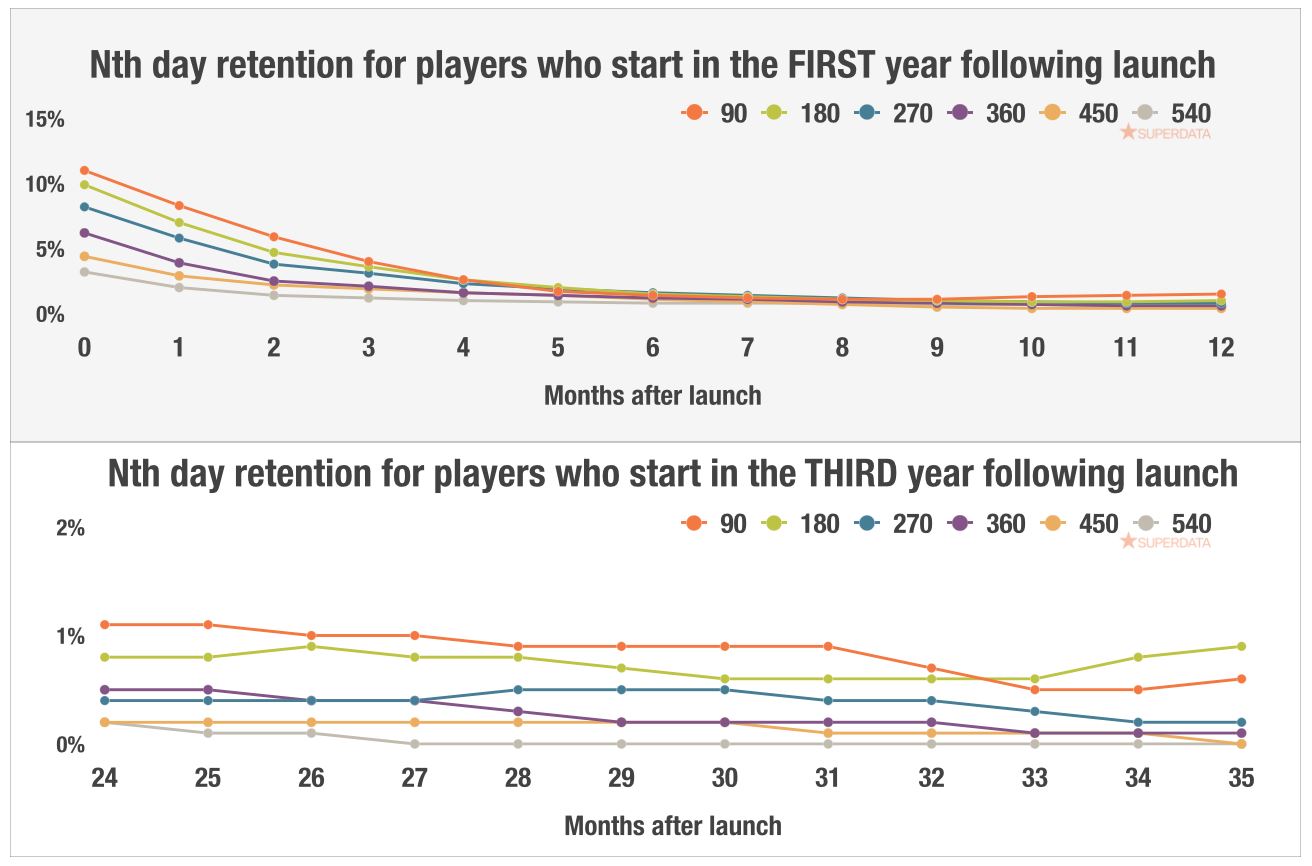
This chart is a continuation of the previous one. However, it covers not the days 1-30 but rather 90-540. And it extends up to 35 months after release. Notably, in the last months, 33-35, while the lines previously fell, they now start to rise slightly.
Those who try the game after several years typically have given it more thought. They have researched it. Such a person is more likely to remain in the game. A Free To Play MMO that has been able to maintain itself over several years thus becomes more interesting for new players.
For a Free To Play MMO, several aspects are relevant. First, the right launch timing must be found to attract as many players as possible. This requires a good marketing campaign. The first 30 days are important to acquire a certain number of loyal players. If the number is sufficient to survive the following 2-3 years, it can recover from the initial player loss. It will thus be able to maintain itself in the market. Therefore, anyone looking for a Free to Play game is well advised to choose one that has been in existence for several years.
Pay To Play
In this model, the player pays a monthly fee for the subscription. Usually, this provides access to all features of the game. A classic item shop typically does not exist, so one can only invest time. Whether that is fair must be decided by each player individually. On the one hand, no one can buy advantages. On the other hand, those who have an abundance of time are at an advantage. Those who lack time cannot compensate for that with money.
The Profitability
Firstly, the subscription model has a crucial advantage for the entrepreneur: He knows his income or can estimate it better. If he knows how many subscribers the game has and how much this value fluctuates, he can predict how high the revenues that the game generates will be. Likewise, the player can determine their expenses, as they always know how much the month costs.
However, the downside of this model is that new content must be released regularly. This applies to every MMO, but with the Pay To Play model, every lost player also means lost revenue. Therefore, it is even more important to keep them.

A very successful game can earn more with the subscription system than with the item shop. However, this may change in the future. More and more MMOs are shifting from Pay to Play to Free to Play. Possible reasons include the loss of players after release, higher security, and better pricing control.
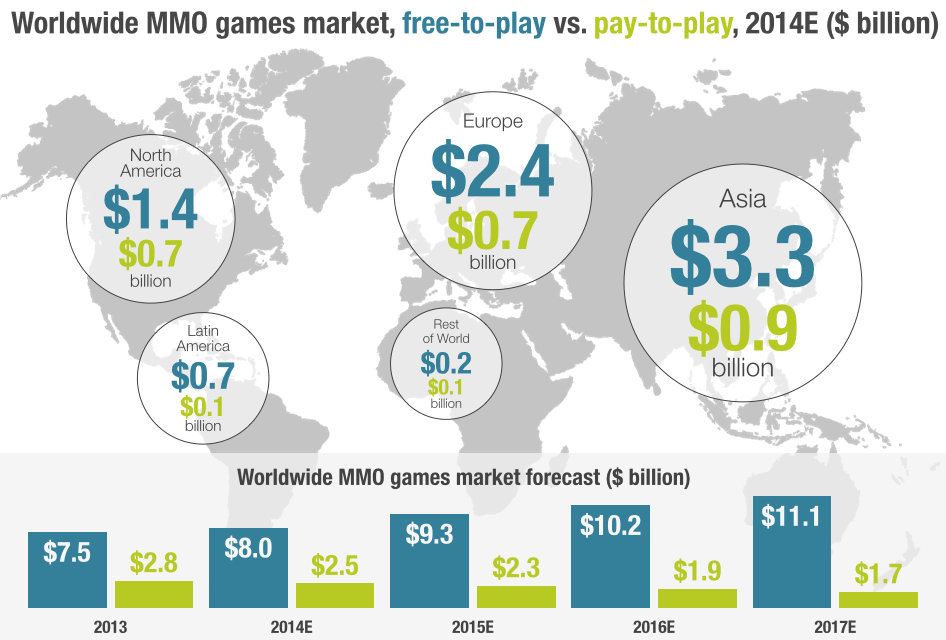
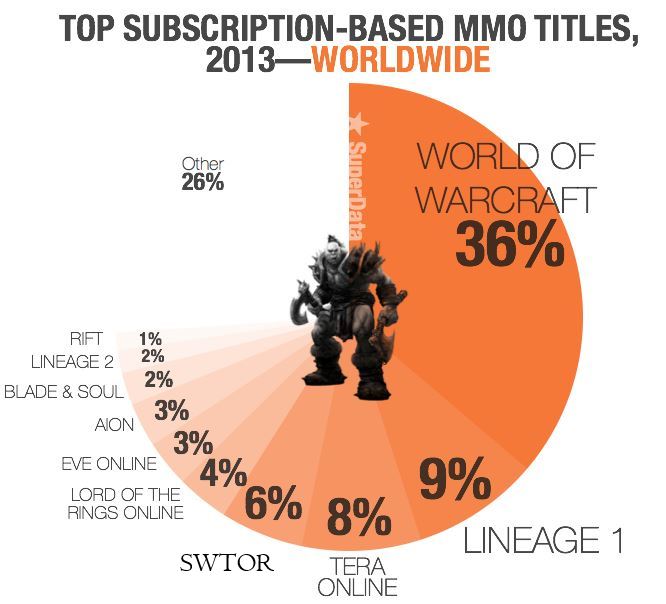
The MMO market has changed. World of Warcraft is the largest representative of the Pay to Play model. WoW can afford to go more than a year without releasing content. But it is questionable what will happen after WoW. Because even the newer games from WoW developer Blizzard are all Free To Play.
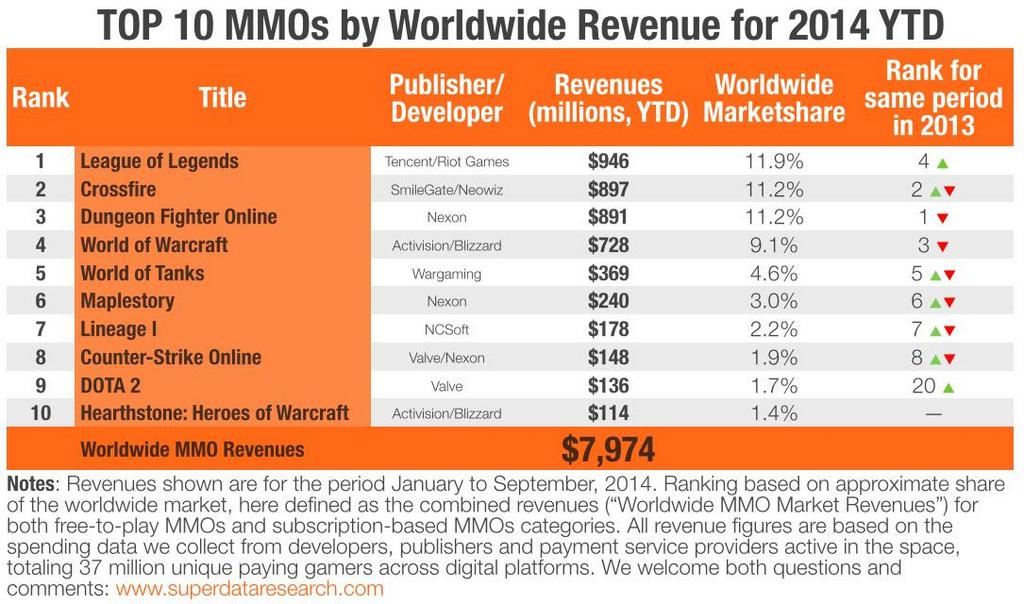
Players who choose the Pay to Play model generally have high expectations. They expect high quality in quests, PvP, and endgame content. They want to spend as much time in the game as possible to get a lot for their money. Of course, regular content patches should also be released. New subscription games must compare themselves to the well over 10-year-old World of Warcraft. This is both understandable and problematic. A new game cannot offer as much content as World of Warcraft.
Moreover, differing expectations arise. If it is too similar in design and combat system to Blizzard’s game, it will be criticized as just a simple copy. If it deviates from that, through an unusual art style and many innovative gameplay elements, it receives criticism as well. As it disregards fundamental and already established gameplay principles (e.g., the trinity of tank, healer, DPS). This issue was discussed by Schuhmann in his article.
Consequently, there is only a small number of players who remain permanently. Especially with a subscription model, a large number of players is needed. Because only a high number can ensure the costs of support, servers, and content.
Buy To Play
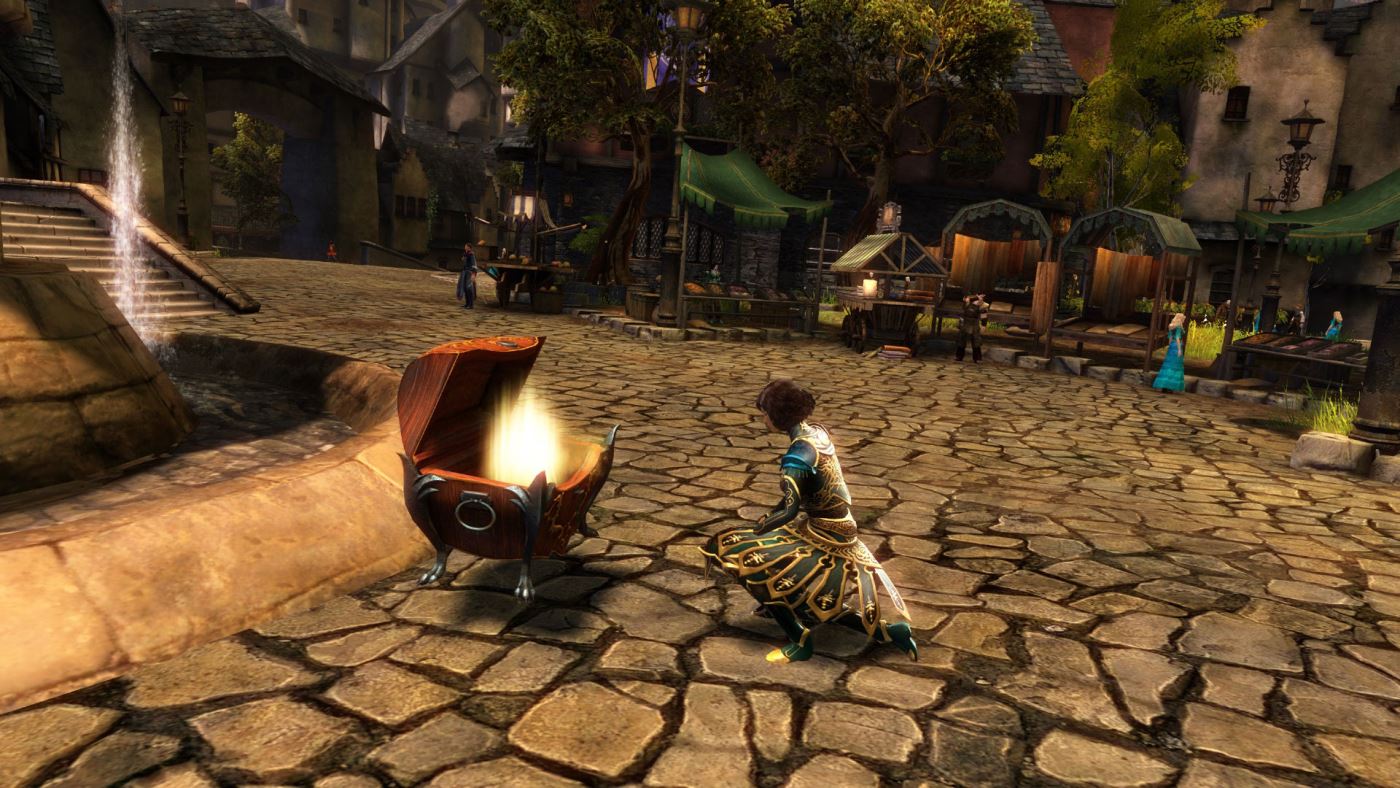
In this model, the game is purchased once. Almost all content is available at the time of purchase, and there is no monthly fee. An item shop may exist, offering cosmetic items or special services, such as name changes or additional character slots. It is therefore a mix of Free To Play and Pay to Play.
It combines the advantages and disadvantages of both systems. It can be sustained with significantly fewer players than a Pay To Play title. The game also does not need to be developed around the item shop, as revenue is generated from the sale of the main game and add-ons. Both the less aggressive item shop and the absence of monthly fees are advantages for the player. For the developer, however, it is also a risk: there is no guarantee of regular revenues.
Notable representatives of this model are Guild Wars 2, The Secret World, and The Elder Scrolls Online. As this model is relatively new in this form, there is a lack of statistics regarding it, and Buy To Play titles are often counted as Free To Play titles. However, the Guild Wars series seems to have proven that Buy To Play can be effective in the MMO business. After all, the second part likely would not have the same payment model as its predecessor, which still exists today. A problem could arise when a Buy To Play game exists for a long time and a newcomer has to purchase more and more game content to access all available content. For casual players, Buy To Play is certainly an interesting system.
Conclusion
Free To Play titles are difficult to assess. Depending on the type and content of the item shop, opinions vary. Drawing a line to Pay To Win is hardly possible. However, the payment model has a lot of potential. The most popular games can be generous here, allowing many to enjoy free gameplay. This is also absolutely necessary. Because a Free to Play MMO needs not only someone willing to invest money but also many players. If an MMO is deemed dead due to too few players, some who would invest money might not even come. Because the relative advantage or uniqueness compared to others is crucial.
Due to the item shop trap, this payment model initially had a bad reputation. However, it is improving, and shops are becoming fairer. How it will develop further remains to be seen. However, one will not entirely escape it anymore. It is no longer exclusive to MMOs. Mobile games are, no doubt, the most well-known representatives who might generate more revenue in the future. It is no wonder that upcoming top MMOs like Lineage Eternal do not want to miss out on this market.
There are also mixtures between these models. More and more Free to Play representatives, such as TERA or SWTOR, have an optional subscription system. This grants access to content that otherwise would have to be purchased in the item shop. Depending on the game, players may also receive some premium currency monthly, allowing them to purchase cosmetic items. On the other hand, in World of Warcraft, there is a Pay to Play title with an item shop and, recently, the ability to earn game time.
It binds millions of players. It will be interesting to see what happens when World of Warcraft loses its dominant position. Will it signal the final downfall of Pay to Play? Or will it lead to a new flourishing of this system? Because then there will be more uncommitted players willing to pay monthly?