

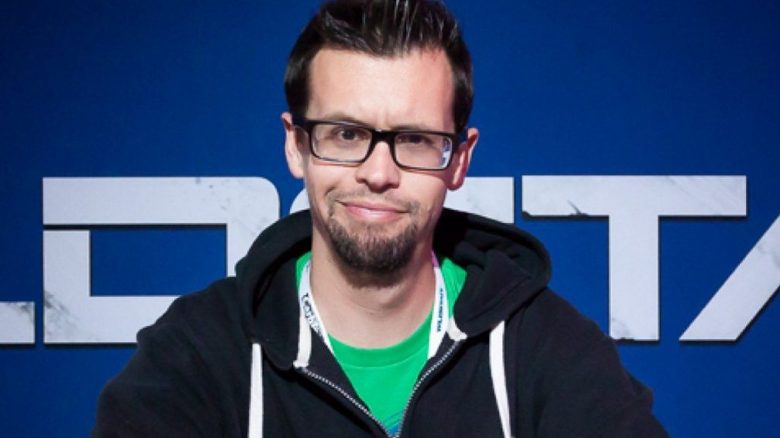
Stephan Frost was a central figure in the MMORPG WildStar for 4 years, then worked at Amazon, Blizzard (WoW), and Nexon. Now he explains why the development of MMORPGs is so difficult and what can go wrong. The influence of fans, YouTubers, and the publisher makes life tough for developers – and tempting poaching offers come in.

Frost has had a somewhat strange career. Most know him as “the face of WildStar”. He was a producer at Carbine from 2010 until October 2014 and featured in many videos and dev talks about the eagerly awaited MMORPG WildStar.
But Frost was especially present during the “pre-release” phase of WildStar and disappeared early from Carbine when WildStar was released and failed. Since then, Frost has taken on new roles at Amazon Game Studios, Blizzard, and Nexon. He has not made any public appearances there (Blizzard/Amazon) or his projects died before they were completed (Nexon).
Currently, Frost works at a studio in Colorado, Deck Nine Games, as Game Director. The studio is primarily known for “Life is Strange: Before The Storm”.
Here’s what Frost says now about the development of MMORPGs: Frost posted several tweets with the major headings: “The flat cycle of MMORPG development”.
He basically says: The development always proceeds in the same way.
The Development Phase of an MMORPG
Frost writes that the first 4 to 6 years of development of an MMORPG are painful and full of great ideas that are difficult to implement. In this phase, it’s hard to figure out where an MMO stands, as the systems don’t yet work together. A lot of technology is needed in this phase.
The problem is: During this phase, new MMORPGs emerge that already offer features that you have planned. Then you have to reshuffle your plans and further develop the concepts. Because you still need 3 years until release.
The publisher is already starting to push for a soon release.
The Alpha Phase of an MMORPG
In the alpha of an MMORPG, the hype is at its peak. YouTubers start making excited videos: “Finally a break from WoW!” Followers begin to fantasize about what the game could be. There’s now a lot of feedback and even more hype for the MMORPG.
Internally, the developers are still deep in creating level content and must already fix alpha issues. The community is told that the feature everyone wants probably won’t make it into the game (while internally it is already known: It’s definitely not coming).
In fact, the team should now be working on endgame content, but they have already promised the publisher and the community so much stuff that they must work on it. The hype is high, and the pressure is building.
The First Setback
Now the producers are shouting: “Alarm.” The deadline expectations just don’t match anymore, the deadlines cannot be met.
Now you have to walk to the publisher and ask for more money and more time. The MMORPG must be postponed. Because there is so much hype, the publisher allows it. The community understands the delay: “The game has to be good.”
But now comes a drought period, without new features. During this time, YouTubers have nothing to do and post “What I wish for” videos, which further fuels expectations.
The Beta Phase of an MMORPG
Now everything becomes more concrete, the MMORPG feels rounder, but is still far from release. Players are allowed to participate occasionally and like what they play.
But the developers realize that there is still much work ahead of them and that endgame content is still missing. By now, they have already worked on the MMORPG for 5 to 8 years, and the funder, the publisher, is becoming nervous. He has already invested 60-100 million US dollars in the project and wants to see his “return on investment”; now money must be made.
Players and developers know: The game needs more time. But still, the launch is now. The publisher allows no more delays.
The Release Phase of an MMORPG
The game is out and gets a lot of hype, but endgame is still missing: that is still months away. But now the issue with bugs really begins. Players want fixes and want them fast. There are problems with bugs, servers, endgame, complaints about balancing and tuning of the game.
For developers, everything is different now: They are in live development, and problems need to be solved.
The player count is already dwindling, YouTubers aren’t getting as many clicks as in the beginning, they try to stay positive, but are slowly getting fed up. Developers work hard to combat the frustration. But now offers from other studios come in, luring with a lot of money to work on new projects. The game is getting better, but it takes time.

The “Post-Release” Phase of an MMORPG
Now several big names from the studio have already left. The team is exhausted. The YouTubers are angry: they feel like no one is listening to them. Player numbers are dwindling.
A major patch comes with bug fixes and new zones, but it hardly brings players back. YouTubers make videos like “THIS HAS FINALLY KILLED THE NEW MMORPG” and get a lot of clicks for it.
The game is getting better, but more and more developers are leaving. The team that knows how the MMORPG works is either gone or completely burned out.
Now there are two options:
- Either the MMORPG has earned enough money, and development continues, new developers can be hired, and players can be kept interested
- Or the MMORPG closes in 6 months
And Forever Temptation to Poach
From Frost’s account, it becomes clear that the main difficulty of an MMORPG from the developers’ perspective is external influences from players, YouTubers and the publishers because the game is ultimately never where it should be, as there is always pressure from outside.
Apparently, the devs would prefer to work in a closed room in peace. Once pressure from outside comes, the game suffers, as described by Frost: priorities are then shifted, often to the detriment of the endgame.
An interesting detail is the “poaching offers” from other studios. We see this with failed MMORPGs and MMOs like WildStar and Anthem: the responsible people disappeared constantly in the “post-release” phase. This means that positions have to be refilled, impacting the continuity and quality of a game.
For those still hoping for new games:
The 8 most promising new MMOs and MMORPGs for 2021

Your opinion is important to us!
Do you like the article? Then let us know!