

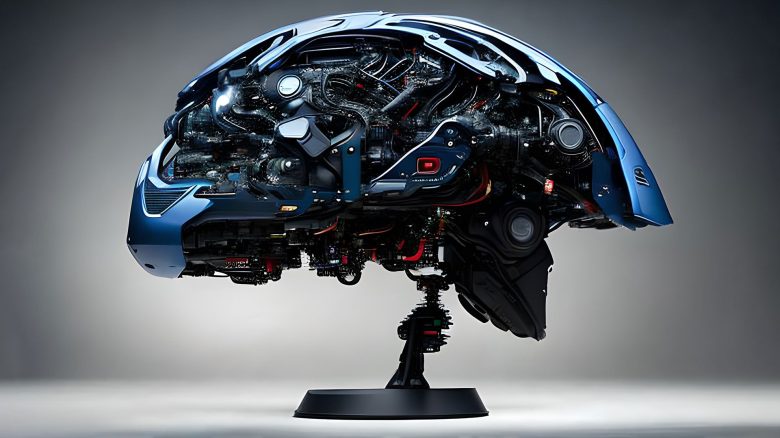
You want to dive deeper into the subject of ChatGPT & Co and create facts in your environment with detailed background knowledge? Below, you will learn everything about the basics of AI. We will also show you some examples of artificial intelligence that go far beyond the currently popular chatbots like ChatGPT.
Artificial intelligence plays an increasingly important role today. Companies like Microsoft or Google invest a lot of money in this technology, and people let chatbots write texts or entire software. But what is out there, and what differences should one be aware of?
Artificial Intelligence and Machine Learning: What is the Difference?
Artificial intelligence and machine learning are two terms that are often mentioned together:
- Artificial intelligence (AI) describes the ability of machines to mimic human thinking and action. This allows them to solve tasks such as speech recognition, autonomous driving, or image recognition.
- Machine learning (ML) is a specific subfield of artificial intelligence and describes the process by which machines learn from experience and can improve their own performance.
- A subfield of machine learning is deep learning. These are systems that can learn on their own and without human guidance through neural networks.
The difference between AI and ML is that ML is a subset of AI and describes how machines can learn independently. AI, on the other hand, describes a broader range of applications and possibilities. Artificial intelligence and machine learning are being used in more and more areas to solve complex tasks efficiently and quickly.
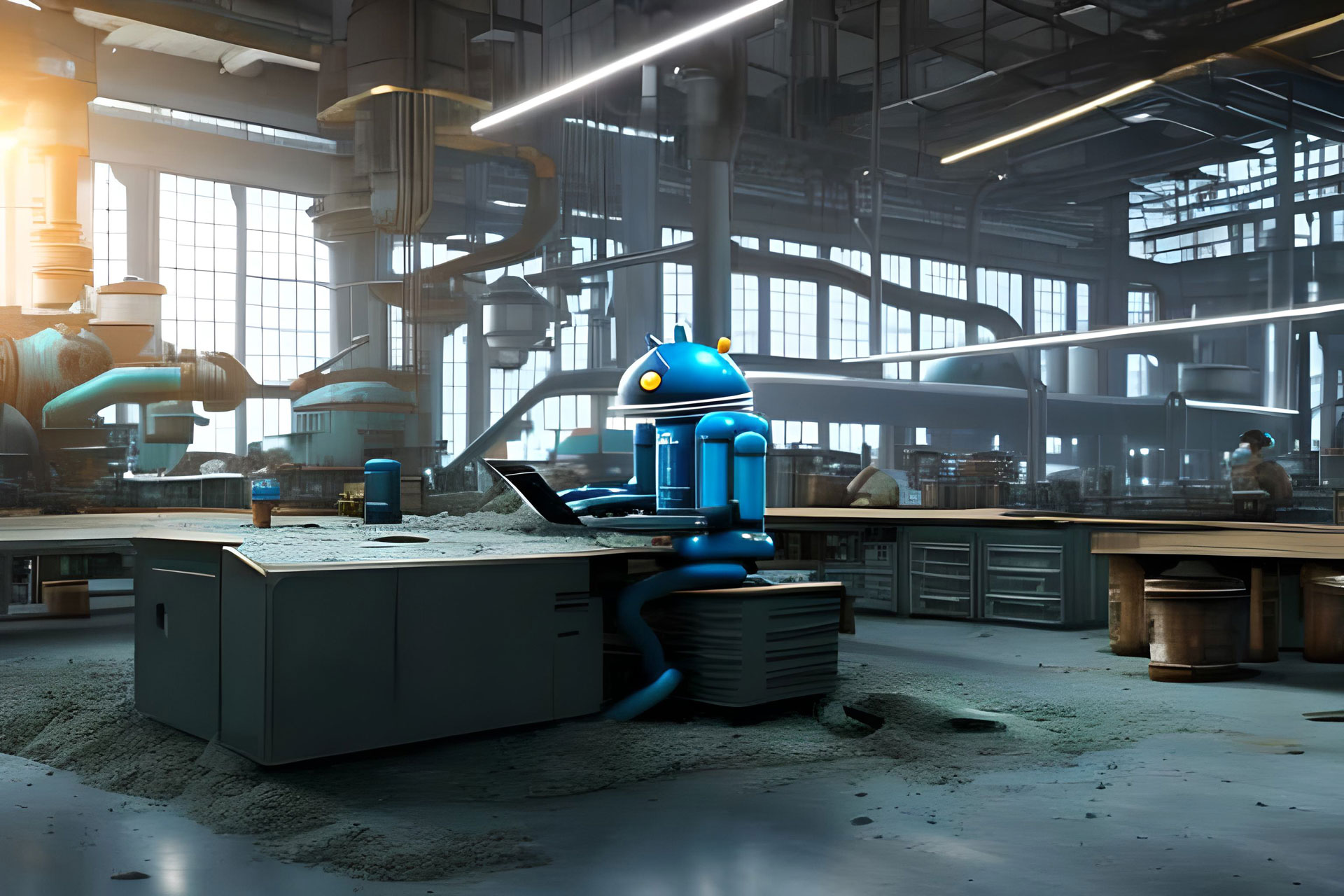
AI is already being used in almost every area of life
Where are artificial intelligence and machine learning already being used? AI and machine learning have many application areas, ranging from health research to transportation. In healthcare, AI is already being used to assist in diagnoses by helping doctors recognize patterns in data. Currently, efforts are being made for AIs to assist doctors in analyzing X-ray and ultrasound images as well as in diagnostics and treatment.
AI is also useful in traffic management to optimize traffic flows and reduce accidents. For example, the city of Phoenix in the US state of Arizona has introduced a new traffic management system that uses AI to coordinate traffic lights. In agriculture, AI and machine learning are used to maximize yields and combat plant diseases. Another area of application is the financial industry, where AI and machine learning are used to minimize risks and enable efficient pricing.
Furthermore, AI and machine learning have been used for some time in image processing, robotics, and natural language processing to develop assistance systems that make daily life easier. In the future, many more fields of application are expected to emerge as AI and machine learning continue to advance.

Education is also not untouched by AI. It is to be expected that AI and machine learning will be used even more in the education sector in the future. AI and machine learning are hoped to help make the learning process more individualized and efficient by allowing algorithms and machine learning to address the specific needs of individuals.
Furthermore, AI and ML can provide valuable support for teachers by helping them identify learning progress and challenges so that they can support students appropriately. An example of such technology is virtual learning assistants that are available around the clock and can cater to the individual needs of learners.
The use of AI in education, however, raises ethical questions, and it is important to consider the impacts on students and teachers. Therefore, the further development remains to be seen.

AI and machine learning also influence the working world in various ways. One example is the automation of tasks that previously had to be performed by humans. This can lead to more efficient and faster production, resulting in increased productivity. The use of AI and machine learning in the workplace can also enable better decision-making by analyzing large amounts of data and making forecasts.
However, concerns may also arise regarding job loss and the relocation of activities. Therefore, it is important to monitor the impacts of AI and machine learning on the workplace and respond accordingly. Companies must ensure that their employees are trained for the use of AI and machine learning and develop their skills accordingly.
It is also important that ethical questions are taken into account and that regulators in the industry take action to ensure that AI and machine learning are used safely and responsibly.

Do Androids Dream of Electric Sheep? – The Limits of AI and ML
The future prospects of artificial intelligence and machine learning and their impact on our society are diverse and difficult to assess. Thanks to advances in research and big data, AI will play an increasingly important role in many areas.
There are already efforts to have the Internet of Things (IoT) merge with AI and machine learning into intelligent connected devices and systems. In this case, we speak of AIoT, or artificial intelligence of things. Further progress is also expected in robotics, including the development of autonomous vehicles and collaborative robotics in the industry.
Although AI and ML undeniably possess enormous potential, their application is limited. A major problem is the so-called conceptualization of AI, where AI has been trained for a specific goal but cannot guarantee that it will work in other or further contexts.


Unstructured data also poses a challenge, as AI systems depend on clearly and logically structured data. Furthermore, it can be difficult to clarify responsibility and liability for errors from AI systems. Therefore, there are still many ethical and technical hurdles to overcome before AI and ML can be reliably and safely deployed.
What problems are there with AI? Recently, questions regarding copyright, data protection, and ethics have been increasingly raised. The handling of data is of great importance, as algorithms can only learn from data, making high quality and transparency in data collection and processing necessary. Ethical questions like the use of AI in the arms industry or in autonomous vehicles must also be discussed.
It is important to address these questions and ensure the responsible use of AI and machine learning to avoid potential negative impacts.

Everything is still open for the future
Where our journey with AIs will lead us is currently completely open. Legal questions, for example, regarding copyright for texts and images created with AIs, liability issues, or other legal topics are not yet clearly resolved. It is also not yet foreseeable what will be possible with AIs in the future.
But we are sure that AI and ML are no more messiahs or bringers of doom as Skynet would be, just as it has been with other technological innovations in the recent past. However, regarding our own practical experiences of recent weeks, in which we, like many others, seek ways to integrate AIs in everyday life, we are already cautiously optimistic that the practical benefits in both private and professional and public environments will prevail this time.
ChatGPT dives into the world of MMOs: We asked ChatGPT what the best MMO is that you can currently play. What answers the popular chatbot generated and where the AI failed to answer our specific questions, you can check out in the following article:
We asked the AI: What is the best MMO you can currently play?

Your opinion is important to us!
Do you like the article? Then let us know!