

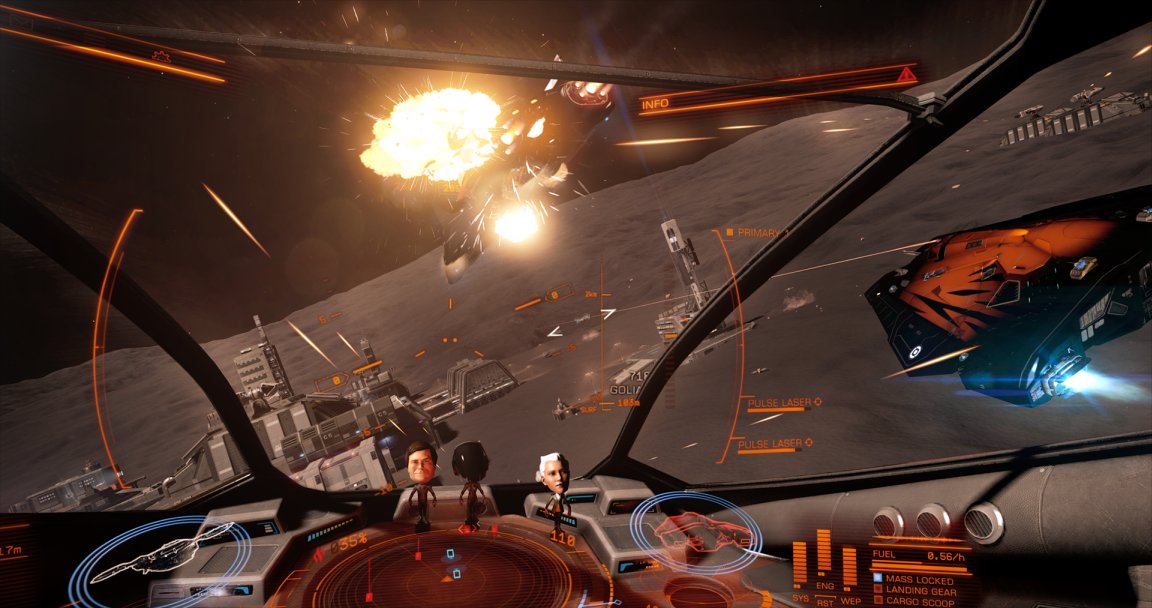
For the space MMO Elite: Dangerous starts with Horizons an expansion into beta. It allows planetary landings.
A game as vast as a universe, say fans. But just as empty, say critics. The latter is supposed to change with the expansion series “Horizons”.
When you listen to the press releases about Elite Dangerous, you are overwhelmed by all the superlatives. The universe simply never ends: Through “procedural synthesis”, so to speak “automatic generation”, there is incredibly much space.
“If you take the 400 billion known star systems, with all their planets, then 60% of those will be accessible with the launch of Horizons later,” says Elite’s tech guru Matt Dickinson in an interview with Polygon.
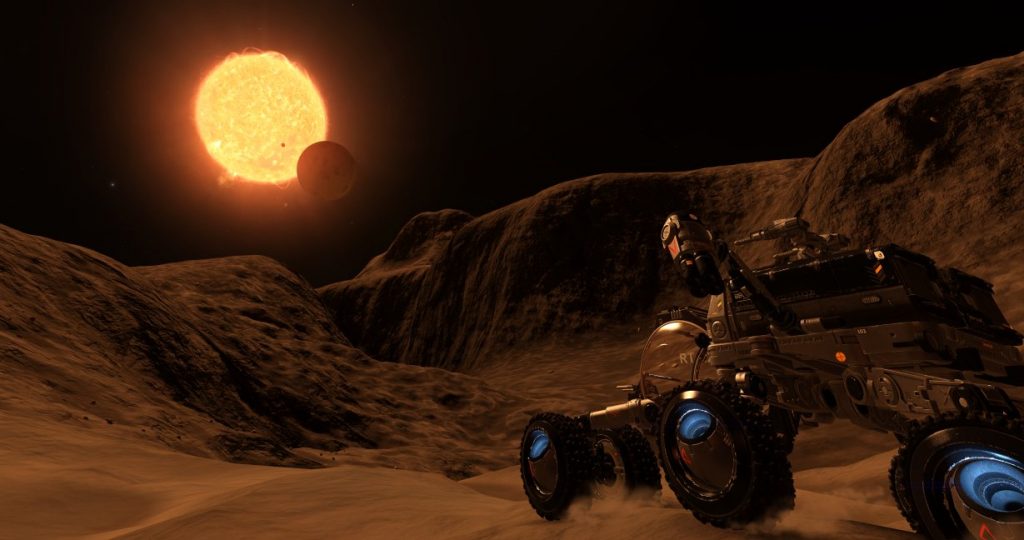
All these planets are accessible through planetary landings. And these “Planetary Landings” are the core feature of Horizon “Planetary Landings”, an expansion to Elite: Dangerous. The beta for this has started today for PC. Now, players can not only admire the planets from orbit but can land on them.
Expansion Horizons will be a full-price title, December is just the beginning of a “series”
The “life-sized worlds” lure with great panoramas and gameplay options, it is said. Players can fly over the planets with their spaceship or race across the surface with the Scarab vehicle. They are to find resources, explore crash sites, and raid bases.
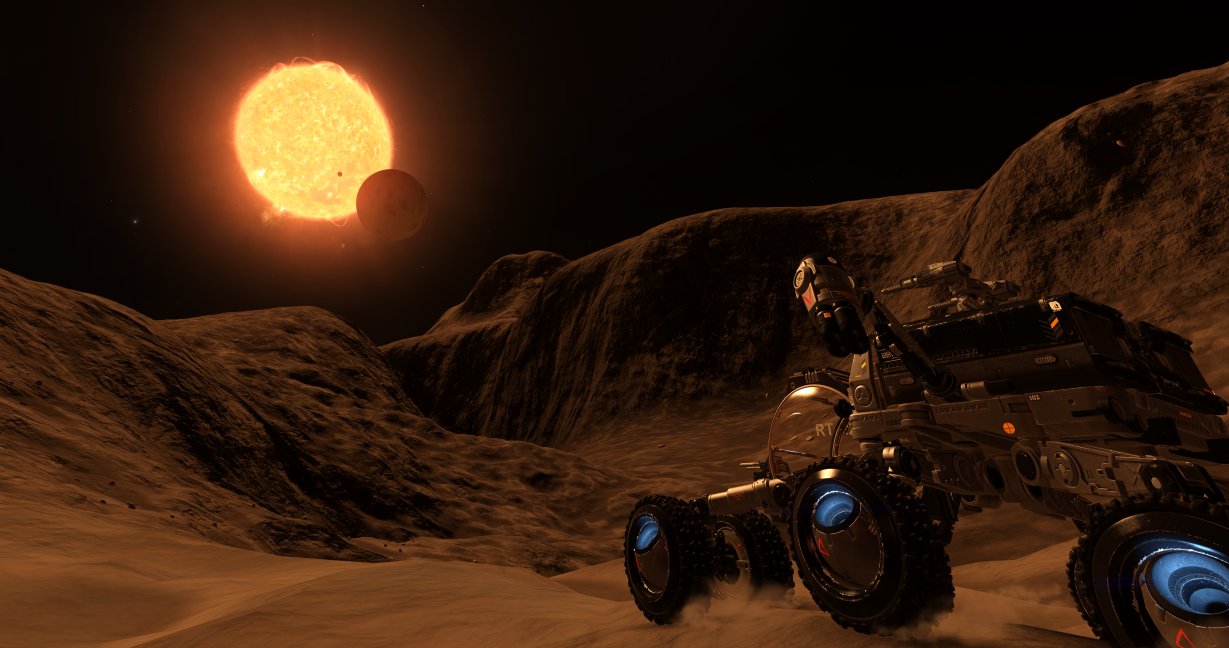
During the Christmas season, Horizons is expected to officially launch with the first expansion “Planetary Landings”. Even those who do not purchase the expansion (it will be offered as a full-price title) will remain in a shared universe with the add-on players, receiving patches and updates. However, the focus of Elite is on the Horizon players: In 2016, further missions, new ships, and close combat arenas are to be added. Anyone who has bought Horizons will also benefit from these advantages.
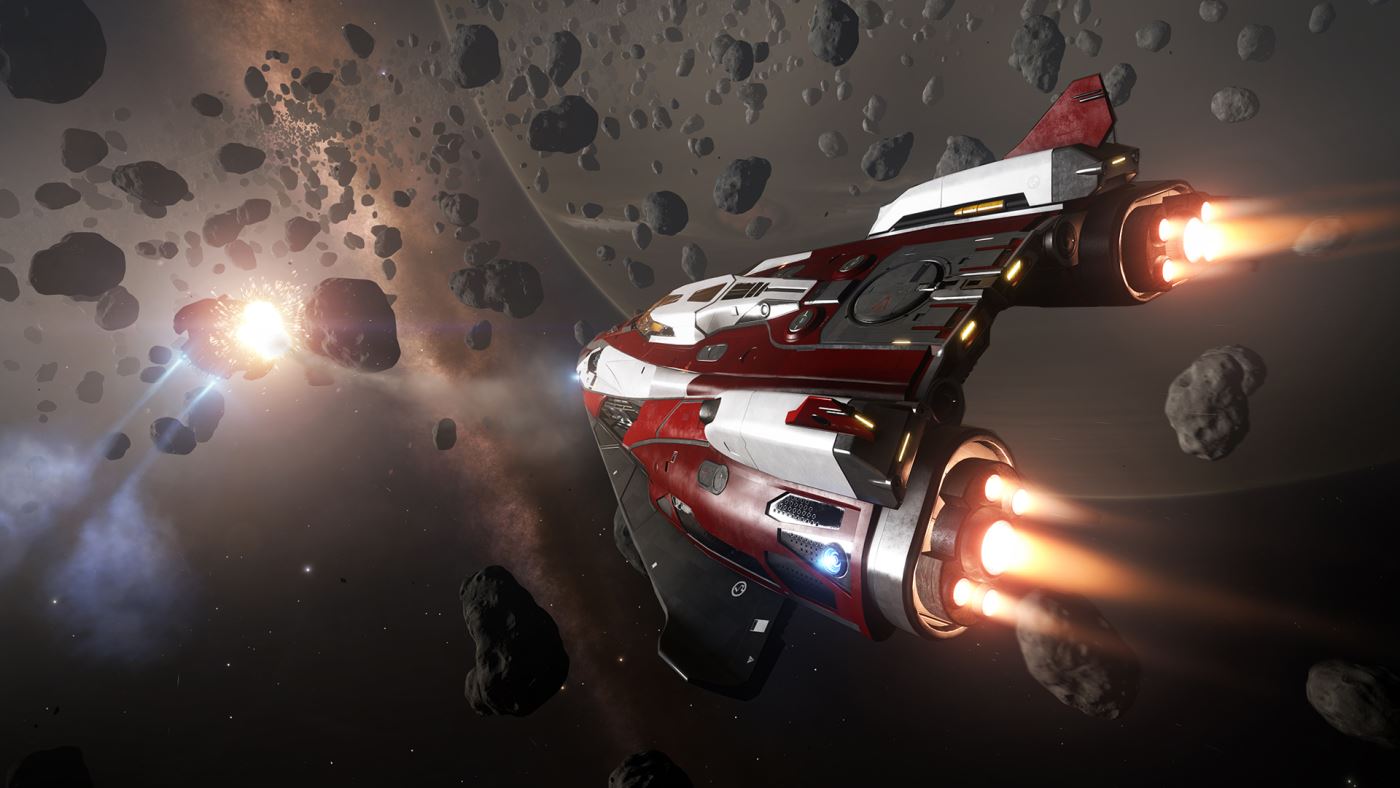
The goal is to eventually simulate everything, everywhere
The mastermind of Elite, David Braben, raves: This is just the beginning. Elite is an incredibly ambitious project, perhaps ridiculously ambitious. The ultimate goal is to simulate everything. Everything and everywhere. They are still some distance from this goal, but they are getting closer step by step.

Your opinion is important to us!
Do you like the article? Then let us know!