

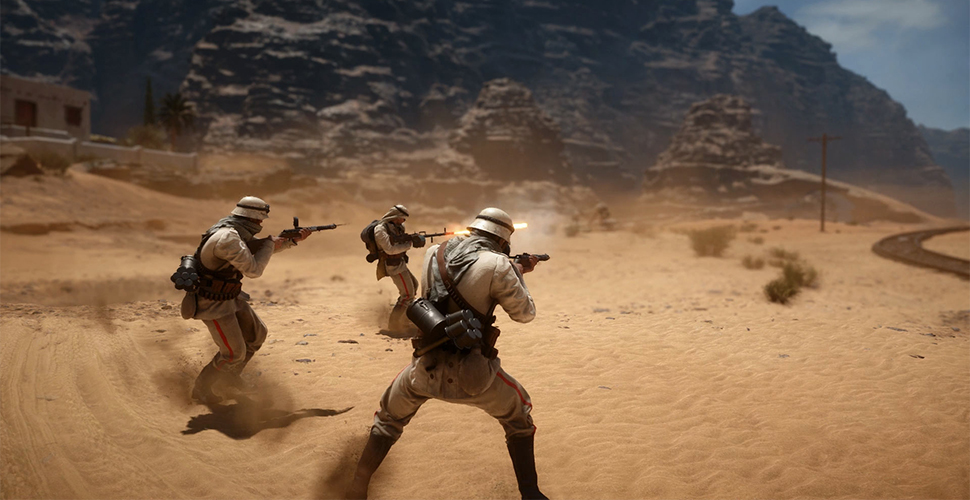
More and more companies are turning to the research of artificial intelligence. These are supposed to automate unwanted workflows, uncover programmer errors, or even learn to play Battlefield 1, as was recently done at a research facility of Electronic Arts.

The research facility Search for Extraordinary Experiences (SEED) of Electronic Arts has created a self-learning artificial intelligence that taught itself to play the multiplayer of Battlefield 1.
The team around Magnus Nordin was inspired by Google’s AI “Deep Mind” and wanted to find out how much effort an artificial intelligence needs to learn a modern and complex AAA game like Battlefield 1.
The AI learned to play from scratch using the heuristic method of trial and error. The developers only asked the program, which controls all characters on the battlefield using a neural network, to achieve the objectives of each map.
What this looks like has been captured by Electronic Arts in the following video.
The AI is still inferior to human players
While the fundamental Battlefield gameplay of the AI is already impressive, according to researchers, it can be easily distracted and confused. Although the individual agents can respond immediately to threats, when they are alone, they tend to spin around and search for something to do.
Even though the behavior of the individual agents seems funny, one should always keep in mind that the AI learns with each game. Several tests have already been conducted where human players competed against the AI in simplified game modes.
According to Magnus Nordin, some participants in the test asked the researchers to mark the AI agents to make it easier to distinguish them from real players. This is already a good sign for the project, according to Nordin.
It is only a matter of time until AI-controlled agents will defeat human players under certain challenges.
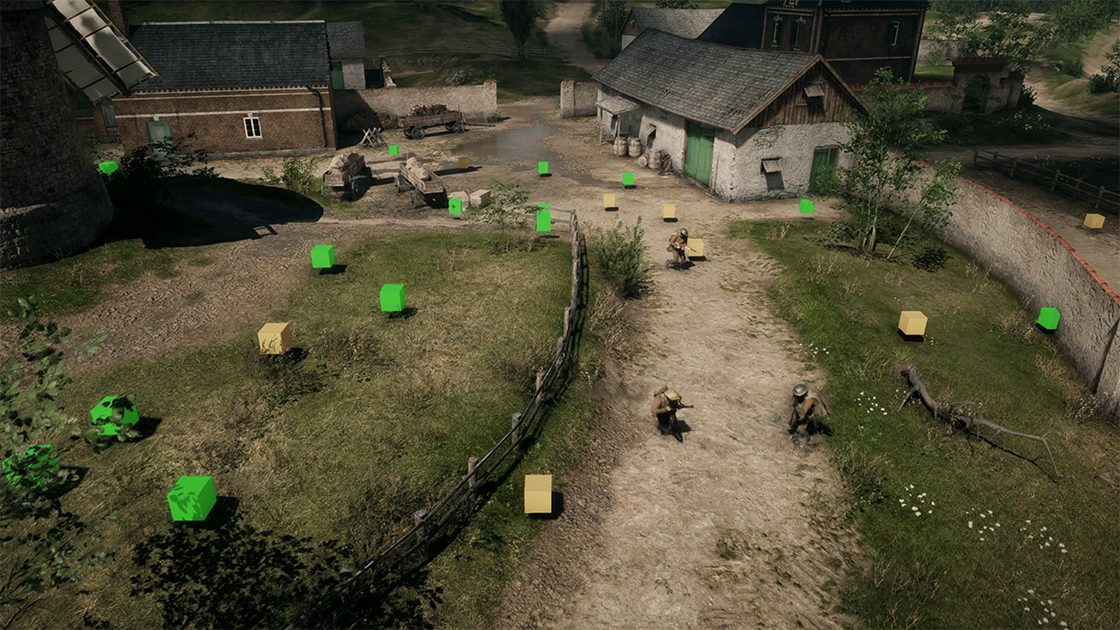
A goal of SEED’s research is to support DICE with the AI in testing and quality assurance. However, Nordin has no doubt that neural networks will find application in many fields in the coming years. They could be a good replacement for bots, but could also be used in the areas of procedurally generated content, animations, speech generation, or speech recognition.
Ubisoft’s AI does not play, but watches the programmers closely

Your opinion is important to us!
Do you like the article? Then let us know!