

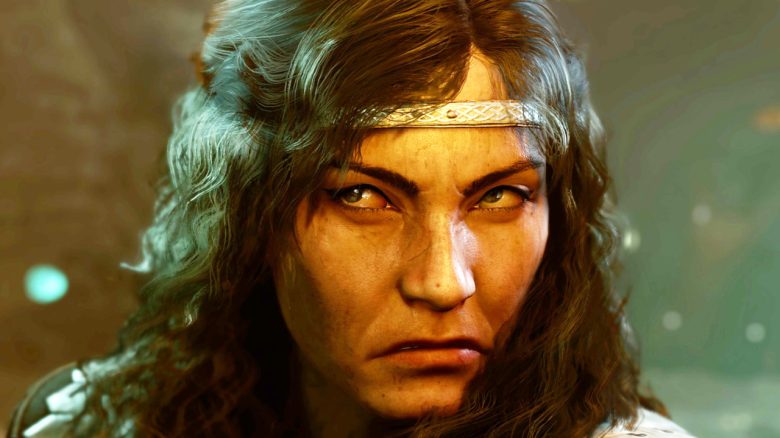
In a fantasy world like that of Dungeons & Dragons, you can be whoever or whatever you want. However, if you want to get the most out of your character, until recently you only had one ideal choice: the human.
Whether in WoW, D&D, Baldur’s Gate 3, or any other fantasy game: those who play a human are often looked down upon. After all, who wants to be what they already are in real life in such an open world? You see it similarly: in the survey about favorite races, humans only ranked 6th.
Nevertheless, humans are the most popular race according to D&D Beyond and: “Human, Fighter, Sword & Shield” is not only a meme but also a frequently chosen combination in role-playing games.
Playing a human in a fantasy game doesn’t have to be a sign of lack of creativity since, often, the race is simply strong due to its advantages. This is also true for Dungeons & Dragons, as humans were long considered the best choice for any class – and that was due to a special feature.
“Variant Human” makes humans demigods at early levels
Normally, all races in the 5th edition of D&D have a +2 bonus to one attribute and a +1 bonus to another attribute. This is valuable because attribute increases are otherwise only possible every 4 levels or through special items, potions, and the like.
However, humans are, as often in fantasy games, blessed with “Versatility.” They receive a +1 attribute bonus to everything, which is quite useless for most classes. However, the manual provides the option to play the “variant feature” if the game master allows it.
With this variant, you gain +1 to two different attributes and a feat of your choice (from page 165). These feats are extremely powerful. Many of them grant a +1 to an attribute as well as an additional effect – making you on paper stronger than most other races.
Some feats are so strong that they are almost overpowered right at the beginning of the game – after all, you usually get them no earlier than level 4. Some of these feats include:
- Healer: with this you can restore 1d6+4 hit points to a creature with healing equipment per short or long rest. Especially at the beginning, that’s a good portion of the maximum hit points.
- Observant: increases Intelligence or Wisdom and provides a bonus to passive perception and investigation.
- Athlete: increases Strength or Dexterity and allows climbing without movement penalties.
- Magic Initiate: allows simple spells for classes that otherwise could not cast spells.
- Armor Training and Mastery: allows or improves wearing armor.
- Alert: increases initiative and prevents you from being surprised as long as you are conscious.
Most other feats are only really useful later in the game or only for certain classes and situations. You can find the best feats in our list of the best feats in Dungeons & Dragons.
Not boring at all – humans offer more than you think
Such feats, or “feats”, are mainly interesting for min-maxers but make it easier to get into tricky adventures. However, they are not just suitable for players who want to get the most out of their class; they also fit perfectly into role-playing.
Especially for humans, who are often considered “boring” by many players, you have the opportunity to sharpen your character’s role with the feats. The feats don’t always have to be practical; they can simply fit the character:
- Are you a daredevil who loves to fight? Become a bar brawler.
- Did you swear in your background to protect the weak? Become a guardian.
- Was your character born under a lucky star? Become the lucky one!
Humans in D&D are certainly not just the faceless background characters in cities. They can come from all regions of the world with corresponding background stories and – if you want to play that – with dialects, accents, and other peculiarities. There are many ways to improve immersion for D&D and such small details make the table feel livelier.



2024 has stamped out races, now anyone can do anything… almost
Why do I say that humans were the strongest race and not are? This is due to the major overhaul that Wizards of the Coast released for the 5th edition of D&D in 2024.
The new ruleset changed many rules from the original 5th edition, including how races work. Instead of race-specific advantages and disadvantages dictated by the game, for instance, attribute bonuses can now be freely allocated since 2024.
As compensation for having additional abilities like darkvision or advantages on certain rolls, humans can now choose a feat by default in the 2024 version, but from a slightly smaller pool. Overall, the difference between races is no longer as pronounced as it was before 2024.
When it comes to style points, humans obviously lag behind many of the other races of D&D. After all, you could alternatively be a dragon, a dwarf, or someone with a devil in their bloodline… even if you then have to reckon with consequences: Hardly any other race in Dungeons & Dragons is as despised as tieflings – but why are the “devil’s children” so hated?

Your opinion is important to us!
Do you like the article? Then let us know!