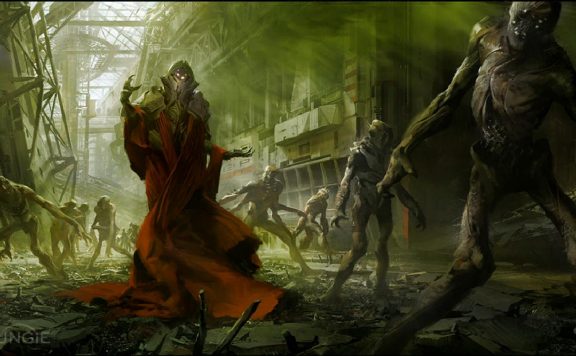

Teleporting enemies in the Crucible of Destiny are a major annoyance for the player base. Calls for better servers are repeatedly heard. We take a closer look at the servers and the Destiny network.
Why this is not so simple with the servers has been clearly and informatively written by Redditor nessus42. Our author Shin summarizes the information for you and gives an outlook on what Bungie wants to improve with Destiny 2.
- “Look how he teleports around”
- “You can’t possibly hit him”
- “I’m dead, and I didn’t even see him”
- “Bungie please, fix your servers”
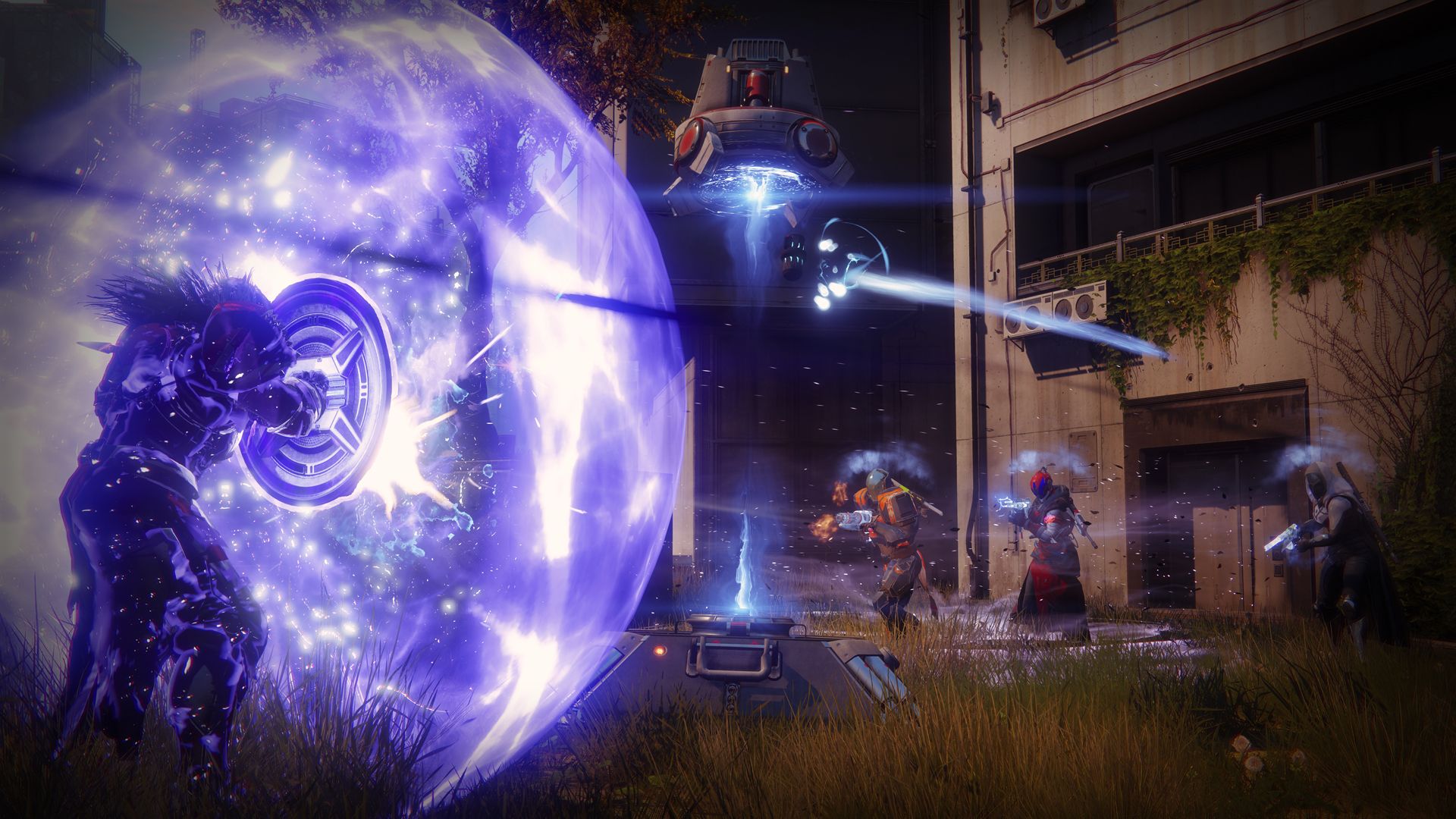
I assert that every Destiny player has had such a conversation at least once. These situations are a major annoyance as we often find ourselves powerless against them. This will not change in the future.
The Holy (Server) Trinity
Even though Bungie avoids the term, there are actually dedicated servers in Destiny. However, Bungie does not want to call them that because they only manage a small part of very important information, the so-called “critical mission status.” They control activity scripts that, for example, open doors when you place certain artifacts in the appropriate spots.
These servers are housed in Bungie’s server cloud and are called activity servers. There are two of these servers: the instance host and the mission host. The third one is the physical host, which we will talk about later.
The host responsible for the instance (you could also call it a “zone” in the game) regulates, for instance, how many enemies spawn in a certain location or what happens when players stand on a platform to trigger certain events.
The mission host is comparable to the instance host but manages different information, such as the progress of a cooperative mission, a strike, or a raid checkpoint.

It is often the case that your console communicates with both servers simultaneously. A good example of this is the Glass Chamber. The starting area of the raid is also a public patrol area. Random players can help you open the chamber but do not participate in the raid instance itself.
For each instance, there is also a physical host. This host manages billions of small details that are not covered by the instance host. Basically, all calculations relevant to the physical host are performed independently on each console that is part of an instance. However, the final say goes to the physical host of the instance (for example, the console of the fireteam leader).
Let’s illustrate this with an example. You start a raid with five other players. Player 1 is the fireteam leader and the physical host of the instance. Player 1’s console always has the final word when it comes to the current state of the instance. All consoles of players 2-6 perform their own calculations. However, the “reality” is determined by player 1. Any discrepancies that occur between the servers must be corrected by your consoles.
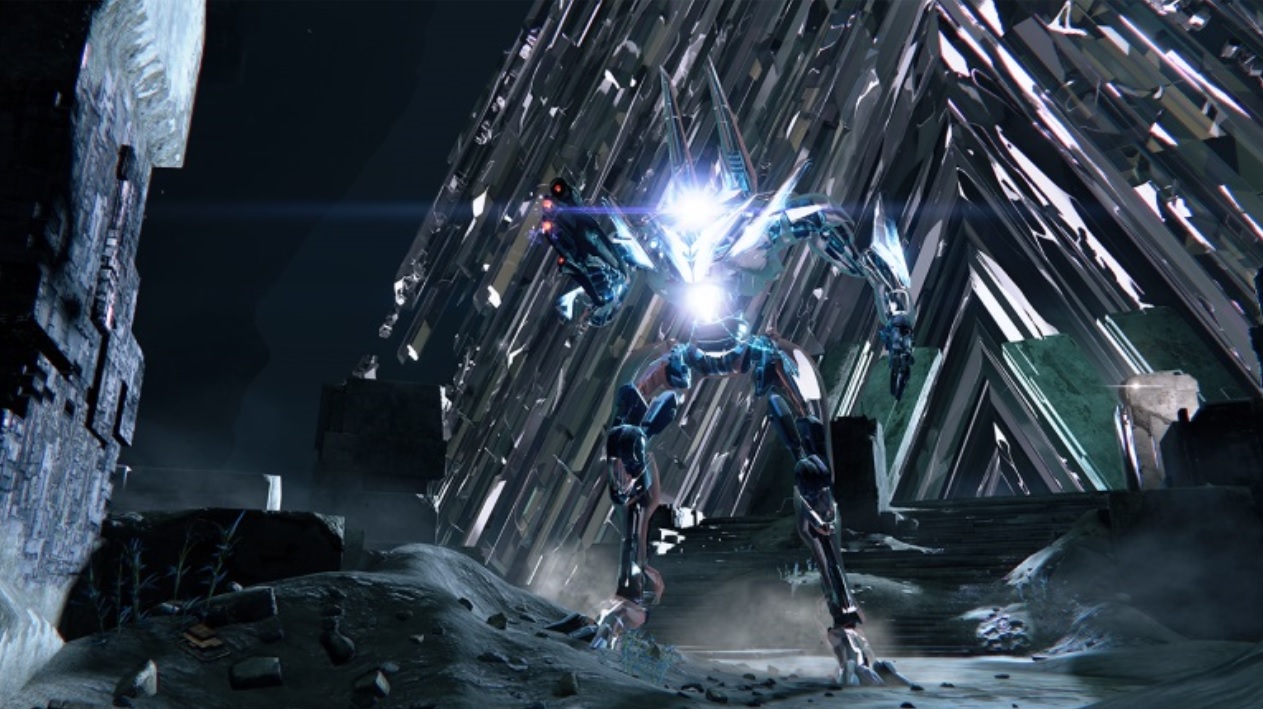
This explains, for example, why enemies teleport around. Conflicts between the servers occur due to poor connections that need to be corrected, resulting in erratic behavior of the enemies.
If the physical host leaves the instance, another console is immediately selected as the new physical host, which now represents the new “reality”. This circumstance ensures that changing the fireteam leader in a raid makes absolutely no difference as long as the former fireteam leader is still in the instance. If you want to designate a specific console as the physical host, the owner of that console must be the first to enter the instance (e.g., a raid). Since he is the only player in this instance, he will naturally also be the physical host.
However, nowhere in the documentation published by Bungie does it state that this host is permanently fixed, nor whether it can change during the further progress of an instance.
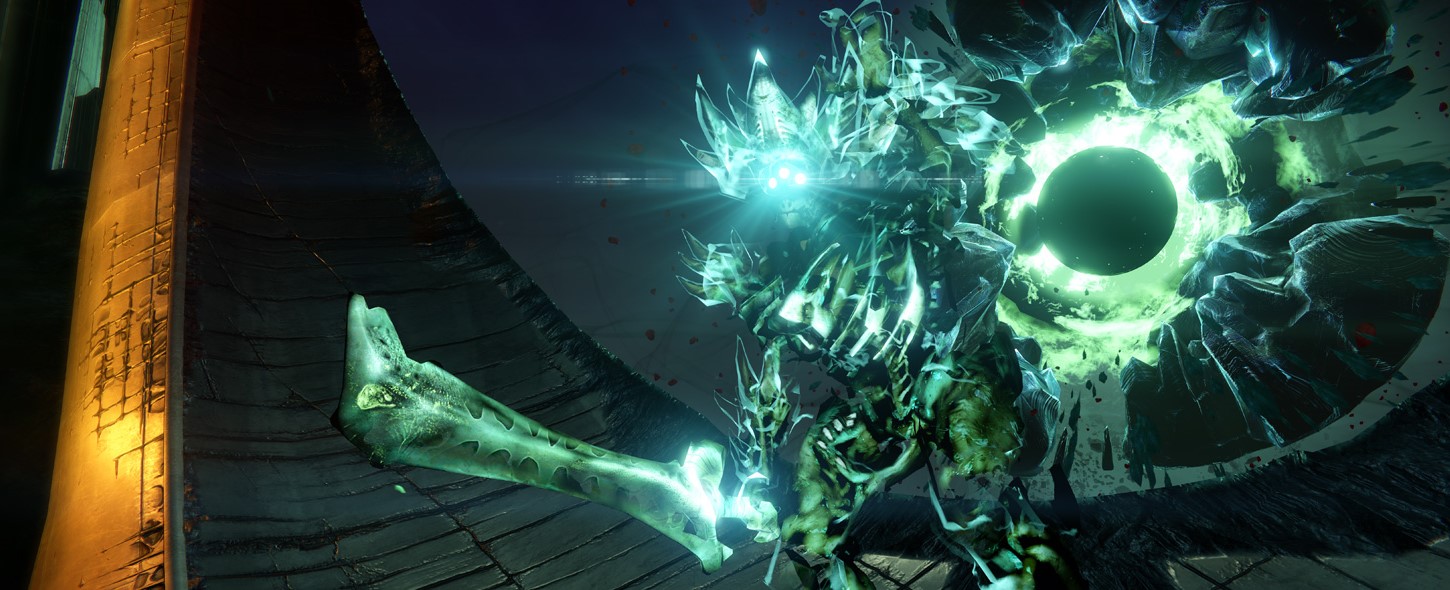
This technique also allowed Crota to be defeated with a little trick. The physical host removes its LAN cable before transitioning to another console can occur. Now there was enough time to kill Crota before a transition took place.
Dedicated Servers – Yay or Nay?
Bungie emphasized again in its weekly update on 25.05.2017 that it will introduce no dedicated servers. This statement seems surprising, as there are clearly servers operating in Bungie’s spheres. Bungie itself provides the answer to this terminology:
“We do not use this terminology because “Dedicated Servers” in the perception of the player base refers to a purely client-server model. Destiny 2, on the other hand, uses a hybrid of client-server model and P2P model (console as physical host) similar to Destiny 1 (we will talk about the exact differences later). The servers are responsible for game progress, each console for movements and abilities. This allows us to give players the feeling that everything they do happens instantly, be it the shooting behavior of a weapon or the movements, no matter where they live in the world, and regardless of with whom they play in the world.”
A statement we can confirm. No matter what you do with your character, you see the effect immediately on your screen, regardless of what kind of connection the opponent has. This is how Bungie intended, with the goal of creating an experience for players that feels like a single-player shooter.
What would it mean if Bungie actually used a purely client-server model and could therefore actually talk about dedicated servers? Let’s consider this using a trivial example. You fire your weapon at an enemy. In a pure client-server model, where your console really only takes on the part of displaying the game, the following happens:
You fire your weapon. You then have to wait for this information to be transmitted to the servers. The server now calculates whether you hit your target. If that’s the case, the server calculates the damage you inflicted. The server then sends this information along with the remaining health bar of your opponent back to the console. Only after all this has happened can your console display the damage on your screen. This logic applies to everything you do with your character. Every movement must first be calculated by the server and reported back to the console.
Unless you have a truly very fast internet connection, your gaming experience will not feel as immediate as it does in Destiny.

At this point, it should be mentioned that no known first-person shooter has implemented a pure client-server model in the last 15 years. Instead, mechanics are used that predict players’ movements, thereby simplifying server-side calculations.
What about cheaters?
Counter Strike: Global Offensive (CS:GO) is ranked number one among eSports games in terms of revenue. The developer takes a different approach than Destiny and is much closer to a pure client-server model. This is what Valve says about their client-server model:
Network latencies and lags can create paradoxes that seem illogical. For example, you can be hit by an opponent even though you have already taken cover. The server has moved the hitbox of the player to the last known point where they could still be hit. This inconsistency cannot be resolved, especially with poor internet connections.
In this example described by Valve, a lagging player can be hit even though they have already taken cover, as the server (which dictates the “truth”) has not yet received this information.
In comparison to CS:GO, a player in Destiny with a poor connection has an advantage. This is because the respective console dictates the “truth” regarding the player’s position. If lags occur here, it appears as if players are not moving, are invulnerable, or shoot you from nowhere.
From the opponent’s perspective, he simply walked around you and shot you in the back. This movement, however, did not register with you due to the opponent’s poor connection, so your console cannot represent that movement.
The great weakness of Destiny’s architecture is the so-called “Lag-Switch.” These are simple mechanical switches that temporarily disconnect the outgoing network connection from the game (the incoming connection remains intact). As a result, these cheaters can see your movements, but the data packets from the cheaters do not reach you consistently, leading to teleporting enemies.
CS:GO is also not immune to cheaters. However, instead of using lag switches, they work with so-called denial-of-service attacks. The router of another player is bombarded with requests, significantly degrading his connection and causing a disadvantage in the game.
When it comes to purely PvE, Bungie’s approach is clearly the better one. AI enemies do not have a lag switch, so the gaming experience is significantly better. And these are the very levers Bungie wants to continue to pull with Destiny 2.

In summary, it can be said: Even if Bungie were to implement a pure client-server model, it would not eliminate the possibility of cheaters. Only the tools would change to ruin the gaming experience for other players. The gaming experience for the PvP mode would not necessarily improve.
Will everything be better with Destiny 2?
This question can be answered clearly with a yes and no. What changes specifically? In Destiny 1, the function of the physical host is taken on by a console. In Destiny 2, this part will also move to Bungie’s servers. The final word lies with Bungie and not with a console that potentially has a poor internet connection. Nevertheless, every single console will still perform its own calculations regarding shooting behavior, movements, and abilities and reconcile them with Bungie’s servers.
With regard to PvE, the gaming experience will continue to improve. In PvP, Destiny 2 will still be susceptible to cheating through a lag switch or poor connections of your opponents. Of course, it is also possible that Bungie will pursue different approaches between PvE and PvP for Destiny 2. However, this is very unlikely due to the resources required for that.

Ultimately, it can be concluded that Bungie now uses “dedicated servers.” However, they do not use this term because the console still plays an important role in various calculations.
The summary:
In Destiny 1, there are three different server types: the mission host, the instance host, and the physical host. The first two are housed in Bungie’s sphere, while the physical host is a randomly selected console in an instance. This was implemented for cost reasons, as the physical host performs a multitude of calculations.
In Destiny 2, the physical host will also transition into Bungie’s sphere. Nevertheless, many calculations will continue to take place on each console and will be reconciled with the host. However, no console will be the host anymore.
Interesting: Destiny 2: For PS4 Pro, it’s a stop at 30 FPS – Does Xbox One X do better?