

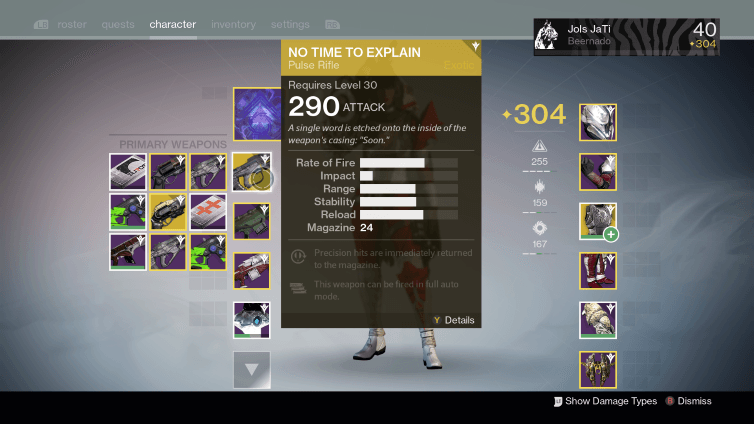
In the MMO shooter Destiny , the status bars on the weapons cause confusion. What does “40 Range” actually mean?

A look at the weapon in Destiny shows endless status bars. A few numbers are clear, the ammunition value is precise, but what exactly does “Range” mean?
The gunsmith Jon Weisnewski was a guest on a podcast and had to delve deep into the substance to explain what “Range” actually means.
The shot cone changes and decides whether the second shot hits or not
Specifically, “Range” is an abstract and summary value that conceals complicated things. On one hand, the range determines at what distance a weapon deals less damage and when it deals almost none at all. This is known as “Damage Fall-Off,” which most have likely registered and understood by now.
However, “Accuracy” is also involved. You can think of it as a “shot cone” emanating from the barrel of each weapon, a cone. When firing the weapon for the first time, this cone is usually “tight and precise.” You want players to hit with the first shot, for which they typically take their time, and you want to reward players who “aim a little longer.”
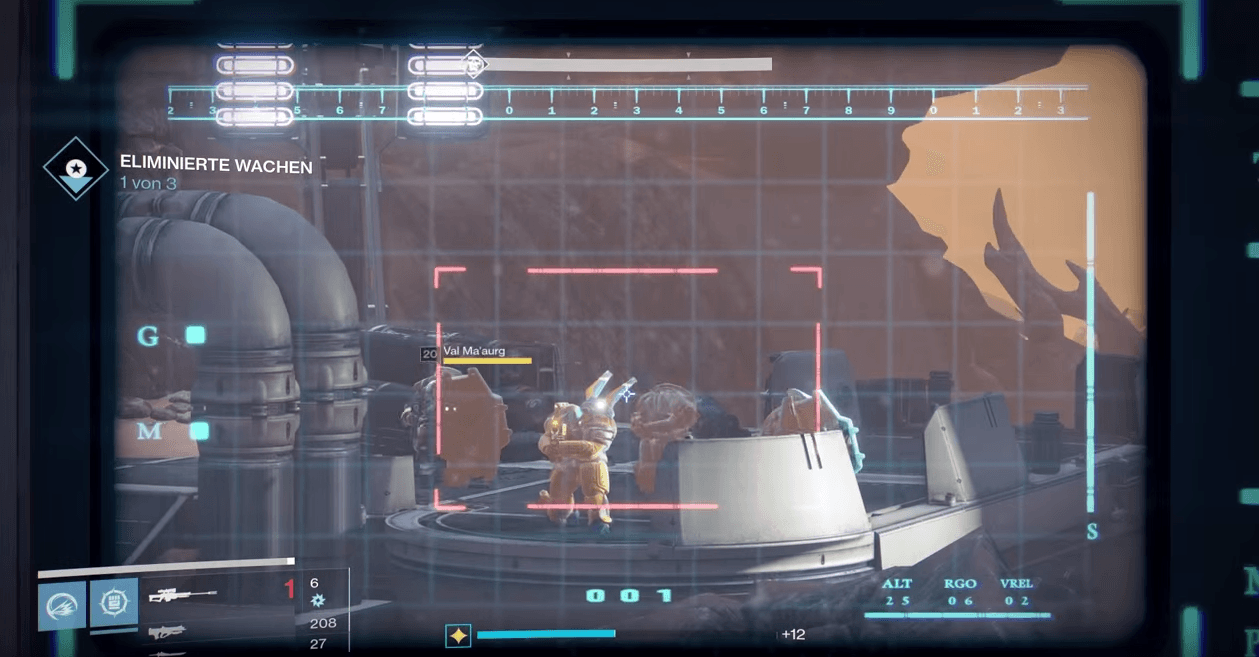
With follow-up shots, this cone expands further. So, if someone shoots quickly with a handgun, they get such a wide corridor that they hardly hit anything.
The “Range” value ultimately determines how the cone behaves, how quickly it widens, how fast it contracts again, and much more. Weisnewski has a huge spreadsheet containing all these values for different weapons and their subtypes.
Destiny cannot and will not provide the player with all this information
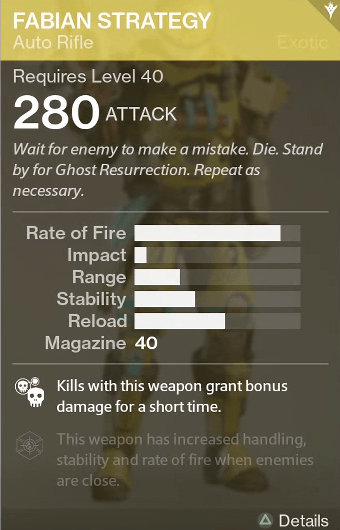
It is not possible to provide players with all this information, as there wouldn’t be enough space in the game. The weapon card already conveys so much information to the player that if it included “Accuracy,” it would be too much.
Players have to trust Bungie to some extent that the “Range value 40” actually does something, is useful, and brings benefits.
Knowing all this would also pull players out of their immersion. If they had all the information, they would not be playing Destiny, but rather a “number game.” Additionally, they should feel like the ones in control making decisions.
Thus, the “technical value” Aim-Assist, also known as targeting assistance in the game, is referred to as “Target-Acquisition” so that players still feel they are aiming and achieving their successes, and it is not some developer turning knobs.
Weapons can only be compared within a category
Another designer, Sage, later explained to visitors of the Bungie headquarters that one should not make the mistake of comparing the status bars of different weapon types. That would be comparing apples to oranges.
The status bars apply only to their own weapon category. Comparing a handgun to a pulse rifle or a shotgun to a fusion rifle will probably not give players the information they are looking for.
Mein MMO says: Regarding “Range” and how the various shot cones change, alongside “Aim-Assist,” recoil direction, and the various scopes, this is likely part of the mystery as to why some weapons simply feel “right and good” to players, while others, despite having better stats, do not.
Behind a “I just can’t handle the weapon” could simply be a shot cone that doesn’t fit the player because at the moment of the second or third shot it is already “too far,” while another weapon resets and allows the player to land the second shot on target.
More about Destiny, like news, articles, guides, and columns can be found here.

Your opinion is important to us!
Do you like the article? Then let us know!