

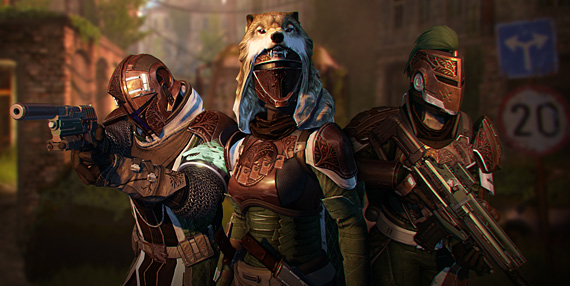
In the MMO shooter Destiny , a completely different development structure has been found one year after its release.

Destiny is a huge project and initially struggled to quickly resolve emerging issues. With such a large development team, it was more like an oil tanker, difficult to maneuver.
In a behind-the-scenes look, the Guardian reports how Destiny actually operates in practice. Instead of an oil tanker, it relies more on a squadron, where each part has its own tasks.
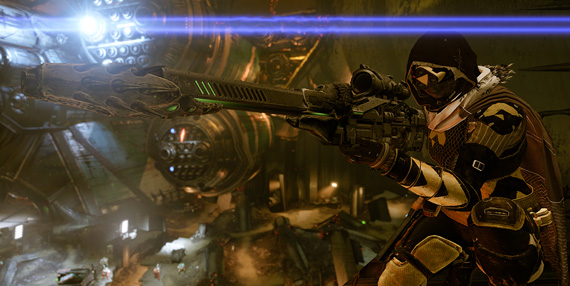
Several teams work on the future, one on the present
Instead of one massive team, there are several small ones working on the “next expansions.” This is evident in practice as different Bungie developers step forward to introduce mechanics to players and conduct interviews for each DLC or, as now, for “The Taken King.”
But there is also a larger “live team” with about 20 senior developers focused on incorporating player feedback.

Even if normally about 20 people work here, the team gets much larger when gearing up for the launch of new game content or when extra technicians are needed, they say.
Additionally, they regularly bring in specialists from the entire studio to contribute fresh ideas or develop a game content right now. The live team is like a whirlpool, drawing in Bungie employees and then spitting them out.
This rotation makes those who work on Destiny game content that arrives much later feel involved in the current Destiny.
There is a kind of development tribunal
Besides the live team, there is a handful of the most experienced developers who form a kind of “development tribunal,” the “triage” team.
There are always a thousand things to be done or improved in Destiny. However, the resources available for this are limited. The tribunal decides how to allocate resources. It decides what the team will work on next, what can be fixed next, and what can wait a bit longer.
It is not unusual for a team leader to receive an invitation to speak before the tribunal with the question: “What are you currently working on, what do you want to fix, and why can we not postpone this?”

Vex Mythoclast attracted a lot of attention back then, but hardly anyone had it
An example of a problem that seemed important but actually was not so significant is the “Vex Mythoclast.” During its heyday, there were videos of players dominating entire Crucible matches with it.
Bungie then wondered: “How many people are really affected by this?” It turned out that only 600 players had the Vex Mythoclast at all. Thus, the Vex Mythoclast was not a case for “instant patching” but could wait.
If 3 million players had an issue, then it had to be resolved. But with 600? Priorities had to be set.
This is also how they handle fan feedback when players want new things in the game or improvements to elements. Such suggestions are almost never bad, but practically always fantastic ideas that they agree with. The question is: “Are they more fantastic than the 50 other things we want to do first?”

Your opinion is important to us!
Do you like the article? Then let us know!