

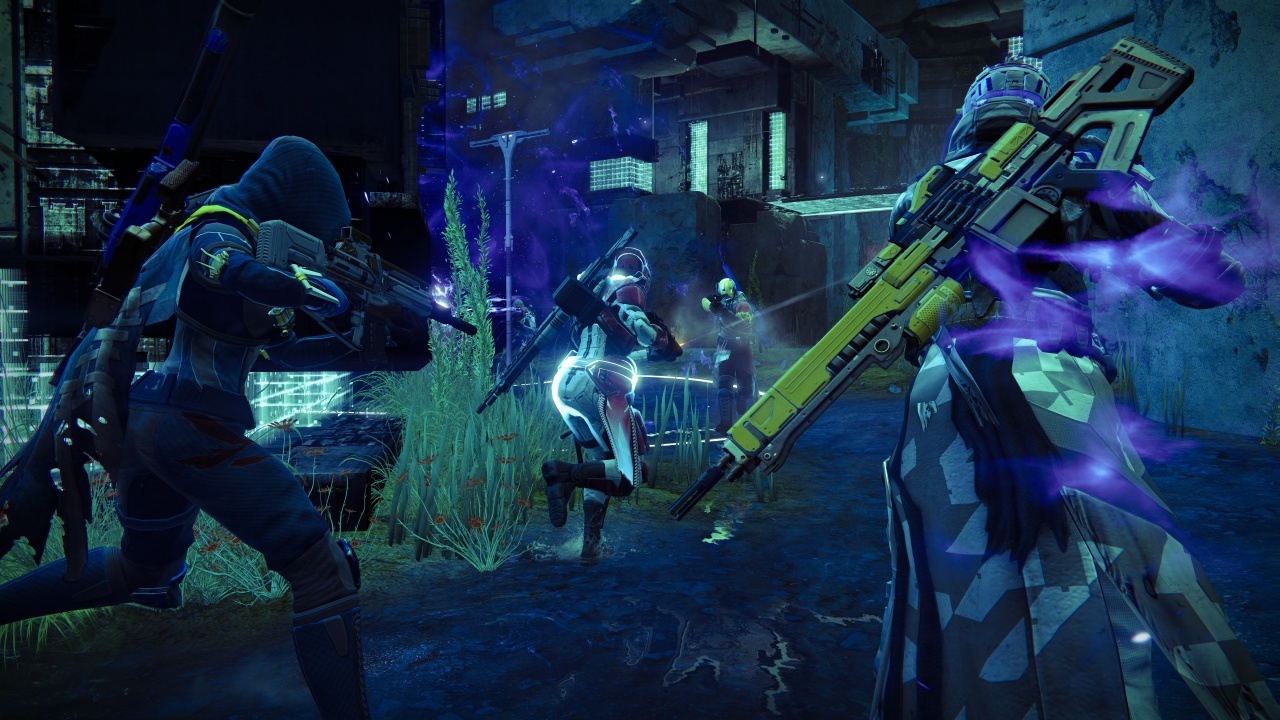
The MMO shooter Destiny conducted behavioral studies and focus tests to reach target audiences and find out what would engage them in the game.

“Man, Destiny is so boring. Why is anyone still playing it?” we regularly read on our Facebook page. Well, not everyone has installed Destiny since the release and put more than a thousand hours into it, but there are quite a few. How exactly did Bungie manage to capture so many players beyond the point where it would normally be expected? How did they know the formula for success? It wasn’t magic; they didn’t rely on gut feeling or instinct, but rather worked hard to gather this data.
At a design conference, the head of user research, John Hopson, presented how Bungie collected the necessary data to design Destiny in a way that many can’t put down the controller.
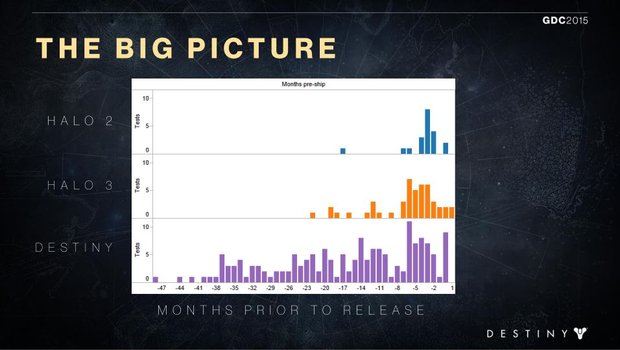
They started focus tests years in advance
Three years before the release, they began with “target audience” testing. They found that there were 5 player types that would appear in Destiny, including some who focused solely on a very specific mode of the game. Bungie wanted to focus primarily on the “omnivores,” the players who like to try all game modes that a game offers.
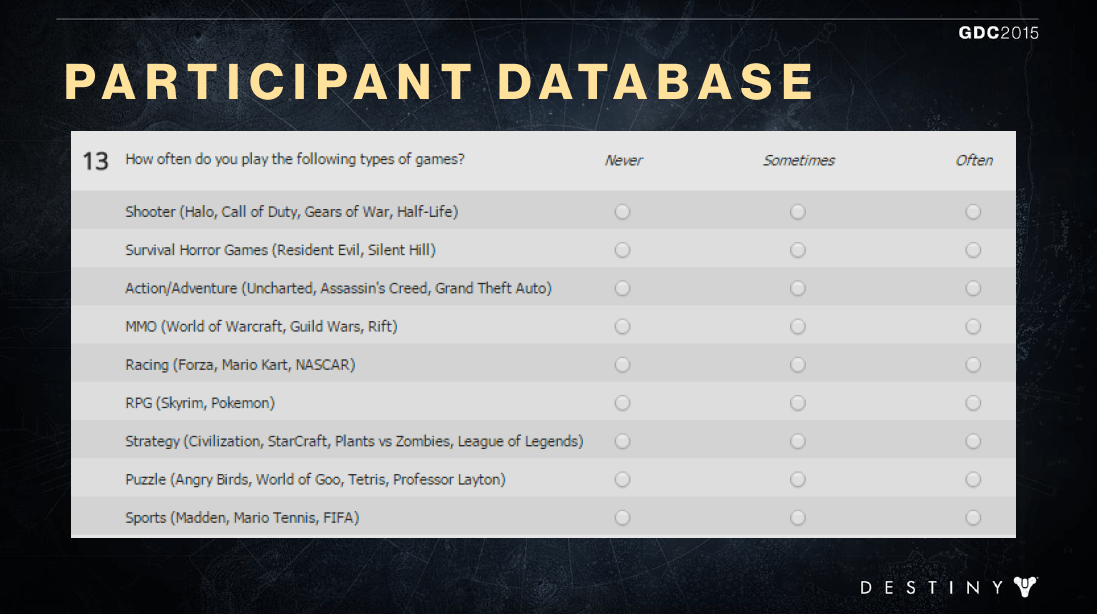
Using scientific methods like surveys about gaming habits, they selected testers to obtain a representative sample of the players who would eventually play Destiny. They then took them in a bus to a game lab – and there was also a free buffet.
Press X if you like it
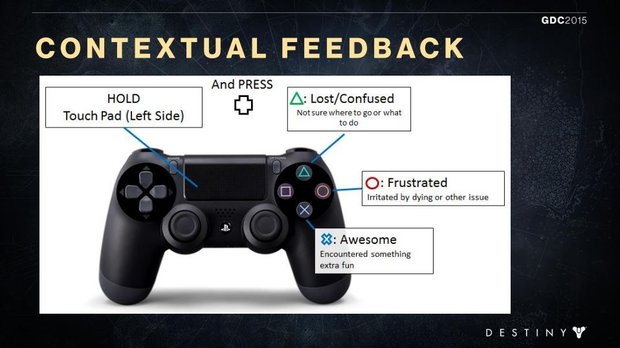
The tests later had players go through a map and let them indicate how they felt using their controller: The X button on the Dualshock stood for “great,” while the circle represented frustration. To ensure that not every shot was counted as a signal, they also had to activate the left side of the touchpad.
In addition, they followed their eye movements with special glasses and recorded their reactions on video to study and evaluate them later.
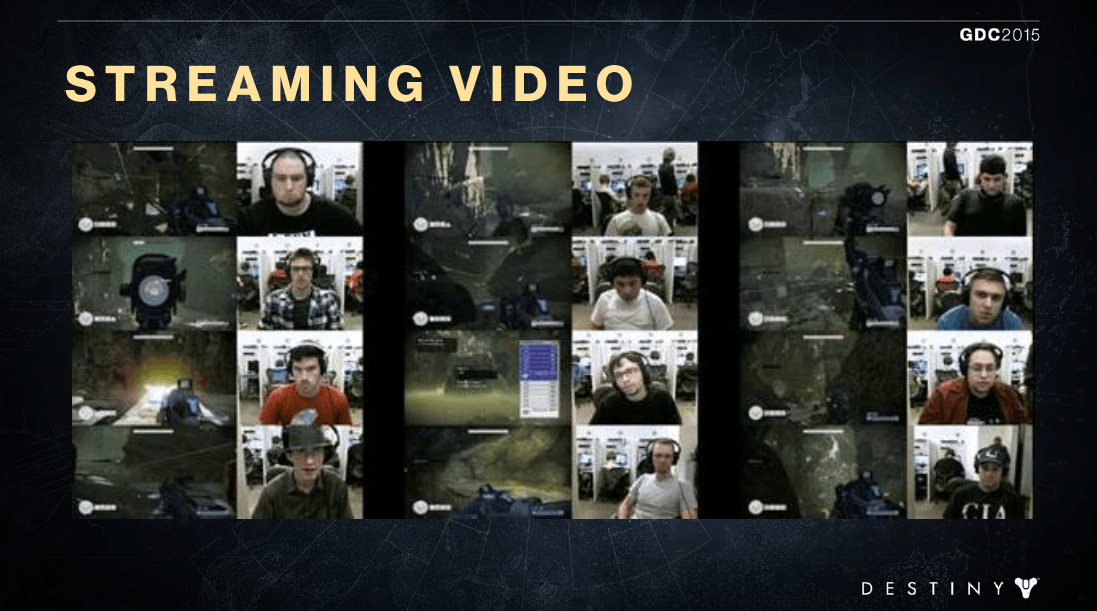
All these results were then used to design Destiny in a way that would engage as many players as possible, and the numbers prove that they were quite successful with it. Of course, there were significant security measures in place at the time to ensure that game testers wouldn’t leak details about the game years before its release.
Numerous other pictures from the presentation, some informative and others quite amusingcan be found here on the GDC conference page.
Last year, we actually reported on John Hopson’s work and the insights he gained about reward systems in games that were based on tests with pigeons, monkeys, and rats.

Your opinion is important to us!
Do you like the article? Then let us know!