

In Destiny 2 there is an interesting development on Steam: With the expansion Lightfall, Destiny 2 was able to reach more players at its peak than at any other time since its release on Steam in October 2019. However, just 5 months later, it becomes clear that Destiny 2 cannot retain the players.

What was so special about the launch of Lightfall?
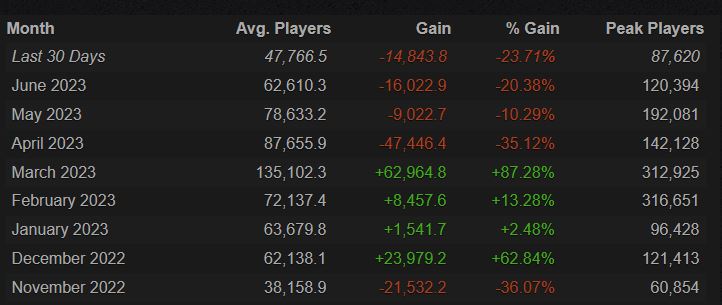
- The launch of Lightfall on February 28, 2023, caused a huge surge for Destiny 2. Even beforehand, the player numbers had shot up from a low point (38,158) to (72,137). At release, they then reached their peak with 316,651 at the top and an average of 135,102 players.
- Compared to February, the player numbers increased by 63%: The interest in Destiny 2 on Steam was even higher at its peak than during the Steam launch: back then, they reached a maximum of 293,000 players – at the release of Lightfall, there were 316,651 players.
- However, just a few months after the release of Lightfall, almost all new players have disappeared, and player numbers on Steam have fallen significantly. With an average of 47,766 players, we are almost back to the weak level from November 2022. Compared to the peak, 64% of players are gone.
Destiny 2 was able to build strong hype – However, it could not maintain this hype
What is the reason for this? The site Forbes analyzes dryly: Although Bungie succeeded in generating strong hype with Lightfall, in the end, Lightfall could not live up to this hype.
Qualitatively, Lightfall is worse than earlier expansions Witch Queen (2022), Beyond Light (2020), and Forsaken (2018). Only with the weak 2019 expansion Shadowkeep can Lightfall keep up.
The expansion, Forbes judges, lacks a good story, compelling characters, and significant expansions of the PvP.
What makes the decline now extraordinary: While a player drop after an expansion is normal and has often happened in Destiny 2: such a significant decline over 4 months is relatively rare.
Such a drastic decline in Steam player numbers over 4 months last occurred with the release on Steam in 2019.
This could have been the crucial point: Additionally, it may have contributed to the downturn that, for the first time in the history of Destiny 2 in June 2023, it became clear that the focus of Bungie has shifted from Destiny to new projects like Matter.
Many of the former top developers of Destiny and the PvP team are now working on this game, Forbes notes.



They waited for help from Sony, but that seems to go into other projects
What is behind this: Since the release of Destiny 1 in 2014, it is known that the loot shooter is an extremely resource-consuming game, on which hundreds, even thousands of developers work, but never enough to satisfy the content hunger of the fans.
Therefore, Activision Blizzard had early on planned to support Bungie with additional teams.
The Forsaken expansion (2018) was also so strong because several other teams besides Bungie could work on the expansion.
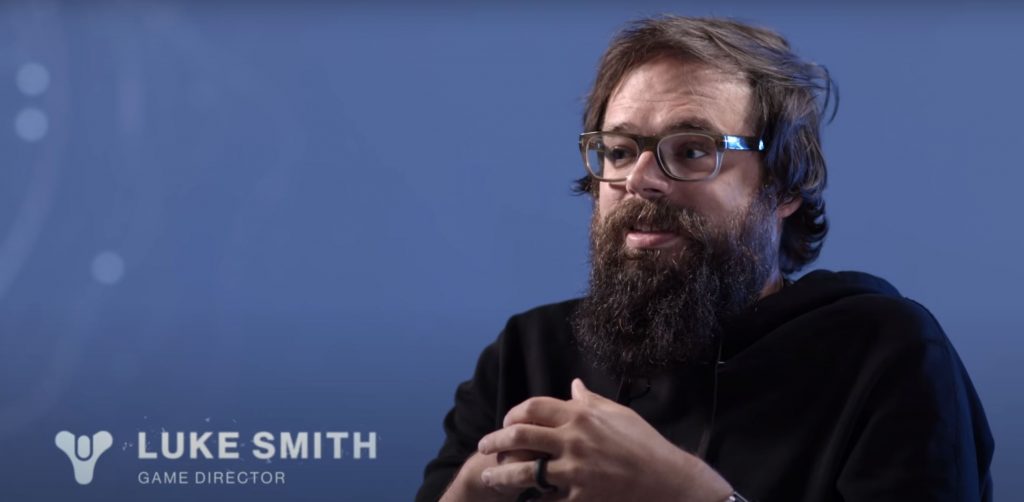
However, with the separation from Activision Blizzard, the support studios also disappeared, and game director Luke Smith admitted in 2020 that Bungie could never again manage a large Destiny expansion like Forsaken. This turned out to be true. Instead of focusing on story, secrets, and new game content, Bungie focused more on grind, time gates, and content stretching starting in 2019.
When Sony announced in January 2022 that it was buying Bungie, there was a brief moment of hope that with a new major partner in the back, there would be more resources for Destiny 2 again.
A year and a half after the purchase, however, one must conclude that Bungie has more resources, but they do not necessarily flow into Destiny 2, but into new projects.
The exciting thing is that Destiny 2, even 9 years after its release with a new expansion like Lightfall, still has enormous potential to draw attention and set new records on Steam. However, it seems to lack the substance to retain a large part of the players in the medium term.
In 2020, we already noted at MeinMMO:
Destiny 2 without Activision Blizzard should be great, but it has been disappointing so far

Your opinion is important to us!
Do you like the article? Then let us know!