


Destiny 2 is giving our author Schuhmann a headache. The game is now experiencing the crisis that it should have had in February 2015. Maybe that’s a good thing.

We at Mein MMO and I as editor-in-chief have been covering MMOs and MMORPGs since 2014. Over the past four years, we have witnessed some high-profile launches:
- The Elder Scrolls Online (April 2014)
- WildStar (June 2014)
- Destiny (September 2014)
- or The Division (March 2016).
In three of the four cases, the launches were difficult, and the mood shifted from “excited anticipation” to “blank horror” in the first six months.
Six months after the release, hardly anyone would have given a nickel for WildStar, The Elder Scrolls Online, or The Division. The games were in crisis mode.
If you look at the reader comments from back then: It sounds as if the games were total flops and the developers were severely scolded. Or worse: Fans were already apathetic and had disappointedly given up on the game.
Destiny 1 is the exception to this rule. Bungie’s shooter was spared such a crisis in February 2015, six months after its release. But now, Destiny 2 is experiencing precisely this crisis in 2018.
Is that a reason for concern or hope?
Crisis in New MMOs and MMORPGs is Actually Inevitable
Practically every MMO or MMORPG from a studio that is new to the online business goes through a crisis.
The problem is: The studios behind these games do not know what to expect at launch. They can be as well-prepared as they want: They simply do not know.
- Their game, which they developed years ago, simply does not work as players now want it to, how it should work.
- This type of “live game” has a much higher load and pace than a conventional game.
With a “normal game,” the tension in the development team goes down at launch. You take a breather and catch up on your vacation. In online games, the work escalates to the next level with the release. Right from the launch, fans are crying out for “more content” and the teams have to get back to work. Now, every day matters.
Under this pressure and new conditions, “fresh” online studios have crumbled more than once.
WildStar, The Elder Scrolls Online, The Division – Dead Six Months After Launch
Every game suffers from individual problems at launch that must be addressed immediately because the fans are already brandishing torches and pitchforks. Something definitely is not going as expected:
- WildStar suffered from bugs and design weaknesses
- The Elder Scrolls Online’s endgame was a disaster. ESO was plagued by phasing problems and suffered from severe issues with bots, balance, and gameplay
- In Destiny, the story was a joke, the loot system didn’t work – with the Loot Cave making Destiny a laughingstock in the gaming scene for weeks
- And The Division was so plagued by glitches, bugs, and exploits that hardly anyone cared about the game anymore
After a Few Months, the Pressure Increases
Normally, these problems appear at launch, but they intensify after a few weeks.
The reason is: New MMOs or MMORPGs usually provide a polished leveling experience up to the maximum level, which entertains for a few weeks
However, this experience lasts only a short time. The fresh content eventually runs out. Once this honeymoon phase is over, the endgame of a game must impress. However, all MMOs exhibit weaknesses in the first months after release: The crisis intensifies because new content is lacking or cannot meet expectations.
Usually, a new online game reaches a low point after half a year.
In fact, WildStar, The Division, and The Elder Scrolls Online were nearly done six months after their release. Nobody would have given much thought to the three games. There was a destructively negative mood in the community of all these games.
The Allure of the New Enables Destiny to Escape Unscathed
Strangely enough, it was different with Destiny.
Destiny went through a strange curve at release. There was criticism of the story and the loot system, and many left quickly. But those who stayed began to succumb to the strange allure of Destiny. Players were eager to reach the maximum level and had to grind and farm the raid.
For many shooter fans, Destiny was the first encounter with “MMO mechanics”: Everything was new and exciting. In retrospect, the first months of Destiny 1 were golden times for many, even though there were many weaknesses – just like with other games.
While players were furious about the first item reset in the DLC “Darkness Rises” and considered the DLCs a cheek, they fell in love with the obscure narration through Grimoire cards or engaged with the intricacies of the design of their characters.
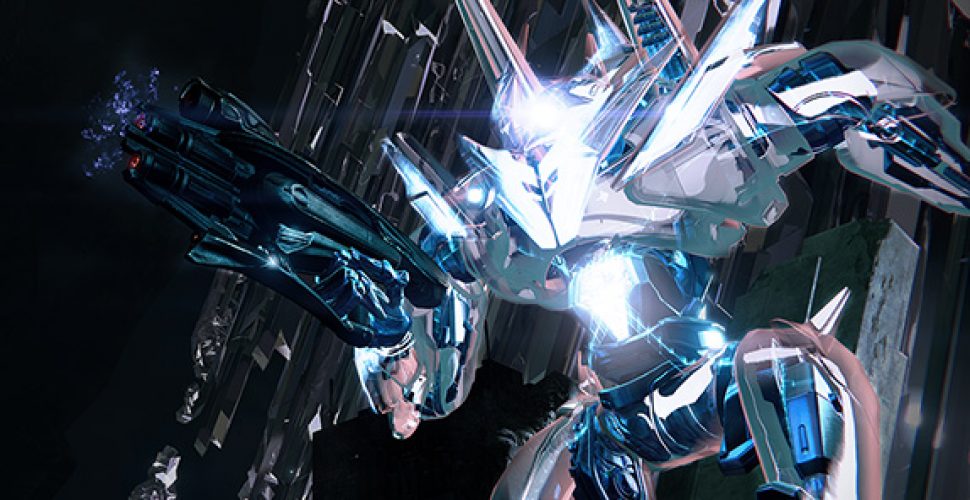
Moreover, what was special about Destiny was: Nobody quite knew what kind of game it was. There was nothing comparable. The mere combination of shooter and raid kept players engaged until February. Also, the world of Destiny seemed to offer so many possibilities.
Some of the first wishes included things like:
- Let’s live on that ship!
- Or battles could break out in space.
- Or we travel to new, yet undiscovered worlds, meet new aliens, and shoot them in the face.
In February, it was unclear how Destiny would develop. But everyone had an idea, a vision about it. There was consensus that it was already good and could only get better. Destiny has enormous potential.
The result: While Destiny 1 had difficulties, it did not experience the same crisis that other games did. Everything continued somehow.
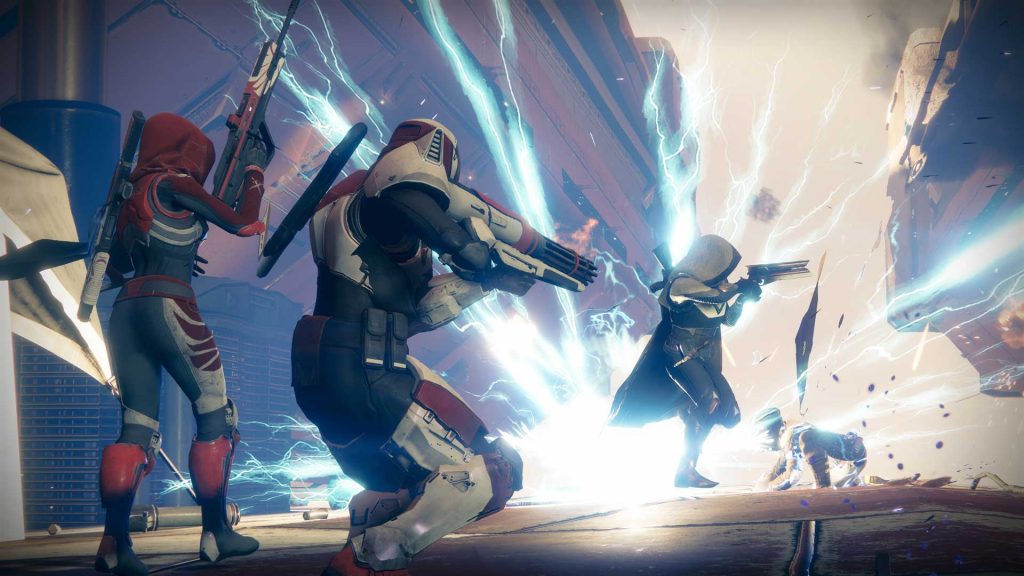
The Division and The Elder Scrolls Online Emerged Stronger from the Crisis
The other games were not so fortunate. In WildStar, The Division, and The Elder Scrolls Online, players had clear expectations of how the games should be:
- WildStar should be like WoW, but like before and better
- The Elder Scrolls Online should function like Skyrim
- and The Division should basically be like Destiny, just better and with Tom Clancy and so on
And the games failed because of that. Six months after the release, WildStar, The Division, and The Elder Scrolls Online were all in a crisis.
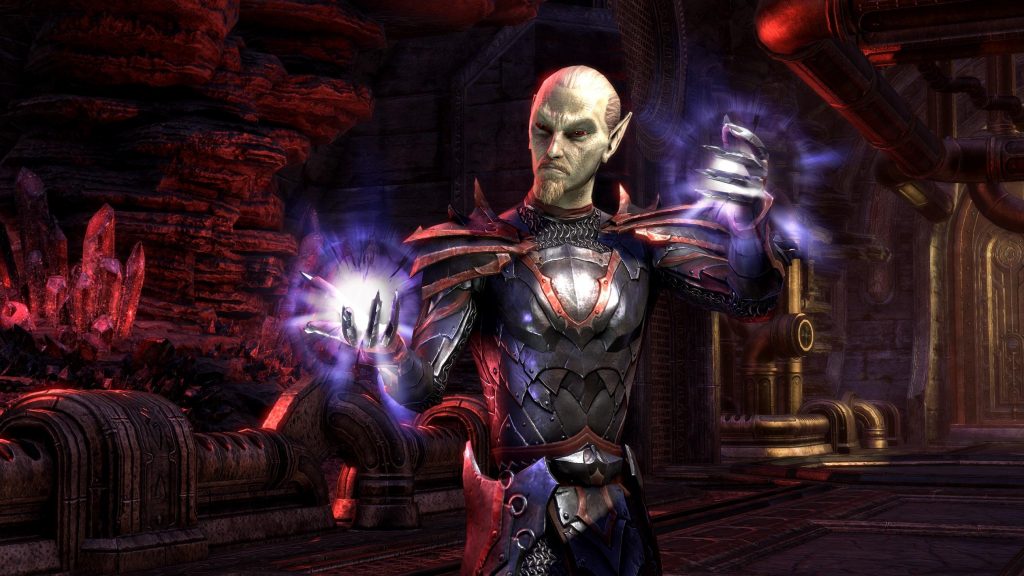
In The Division and The Elder Scrolls Online, crisis meetings were called, and plans were made with players to ultimately pull through about a year later.
ESO and The Division made a solemn promise at that time, laid their cards on the table, and were willing to turn over every stone to save the game.
- In The Division, about six months after release, the legendary phrase was uttered: “Our game is not fun.”
- In The Elder Scrolls Online, developers and the most loyal fans were gathered in one room and asked: “If you think the endgame is good, please raise your hand.” When no hands went up – not even from the developers – that was the turning point in the history of The Elder Scrolls Online.
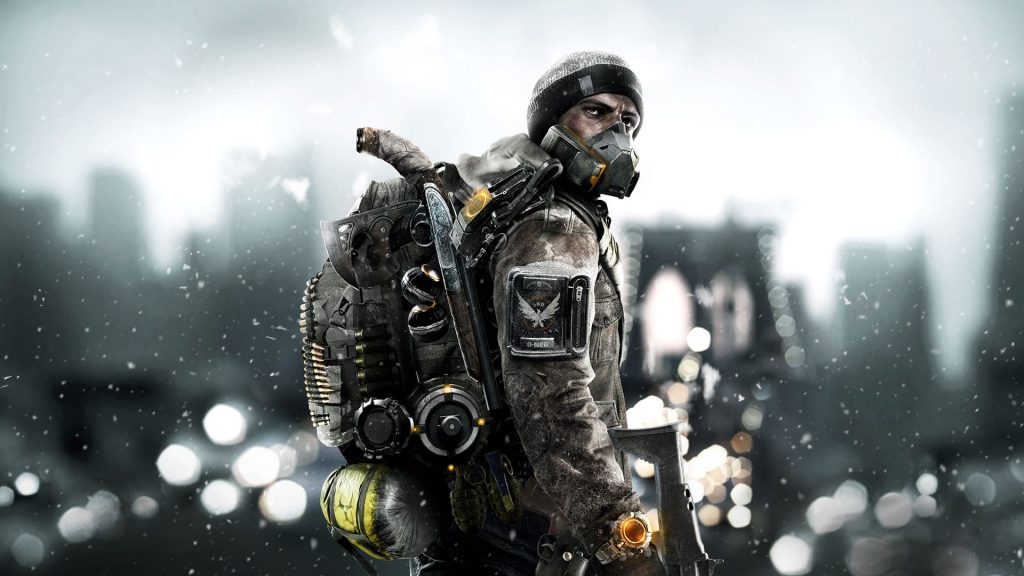
The team at WildStar, however, ultimately failed to achieve such a moment. A Free2Play attempt was unsuccessful. WildStar still exists, it still has its fans, and we think, WildStar should be played a lot more as a free MMORPG: but WildStar has long since fallen out of the league of successful online games.
In contrast, everything functioned without a crisis mood and chaos in Destiny. The expansion The Taken King was released, and the hopes of many players were fulfilled. Afterward, there was relatively little for two years in Destiny, but a crisis did not break out. Players waited for Destiny 2, still driven by the hope: Now it’s already good, and it will surely only get better.
Somehow, Destiny avoided the crisis back in 2014 and 2015 – today, it seems: that time was bought at a high price. The crisis was only prolonged like a flu.
Crisis Can Also Be an Opportunity
It is interesting to see where the three games stand after their respective crises.
- WildStar has essentially sunk into insignificance and broken upon the crisis: A turnaround never really occurred. Even if the game improved, success did not return.
- The Elder Scrolls Online and The Division have developed splendidly, are considered much improved and strengthened. ESO has essentially fulfilled the wish of its fans and has become much more like Skyrim since its release. In The Division, the game has been polished and improved step by step.
- Destiny did not have a crisis but crept from content gap to content gap after the strong expansion in autumn 2015 with the promise that Destiny 2 would be much better. However, Bungie seems to have postponed structural weaknesses that keep showing up and likely resulted in a catastrophic reboot in Destiny 2.
This reboot, some strange design decisions, and a series of misfortunes have now plunged Destiny 2 into a crisis similar to those that other games experienced six months after release.
Perhaps This is the Crisis Destiny 2 Simply Needs
The depressing yet reassuring thing is that Destiny 2 is also in a crisis like The Elder Scrolls Online, WildStar, and The Division six months after their release. So, this is actually normal.
Only: Now players know how Destiny 2 should be (namely like Destiny 1, just better and more innovative). Destiny 2 no longer has the “bonus of the new.” Worse yet: For Destiny veterans, it doesn’t feel like Destiny 2 was just released half a year ago, but rather that three and a half years have passed since the release.
This is also aided by Bungie’s repair plans, which essentially aim for “Let’s do it again like in Destiny 1.”
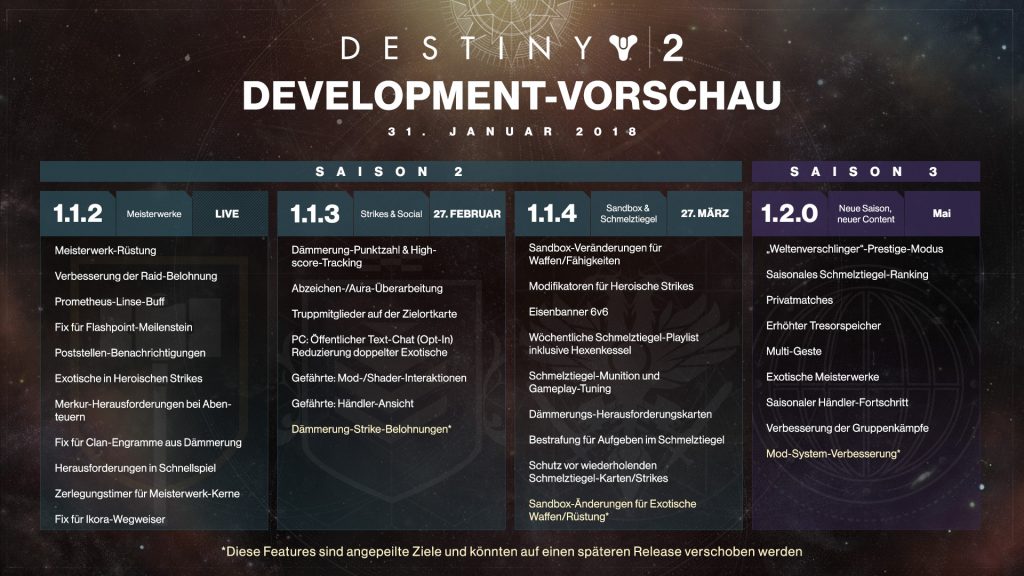
But: The crisis can also be reassuring. Just as The Division and The Elder Scrolls Online managed to resolve their challenges within a year, Destiny 2 can also succeed.
The first signs that Bungie is now thinking differently and making changes are clearly visible.
Destiny 2 can emerge strengthened from the crisis – just as the other games have managed to do. However, players will not be very understanding of this.
By the way: A year ago, we wanted to give players of The Division hope with a reference to The Elder Scrolls Online. Back then, no one believed it:
The Division: These 12 similarities with ESO give fans hope

Your opinion is important to us!
Do you like the article? Then let us know!