

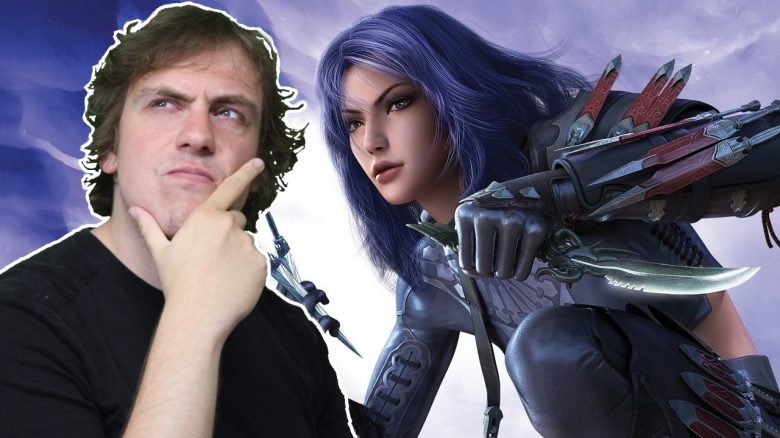
Guild Wars 2 is one of the most successful and best MMORPGs on the market. Still, many old players long for a “real successor to Guild Wars 1”. The game from 2005 did many things differently than other MMORPGs of the time, winning the hearts of many players. MeinMMO editor Alexander Leitsch reveals what was so good about it.
Guild Wars 1 was never a classic MMORPG. The world was divided into dozens of private instances, the max level was just 20, and even in terms of skills and payment model, the game took unusual paths for its time.
Yet these decisions turned out to be a stroke of luck. The development studio ArenaNet was able to build a fan base that is still active in Guild Wars 1 17 years after release and 13 years after the last expansion.
And they still loudly call for a “true Guild Wars 2”.
Strict separation of PvE and PvP – With great successes
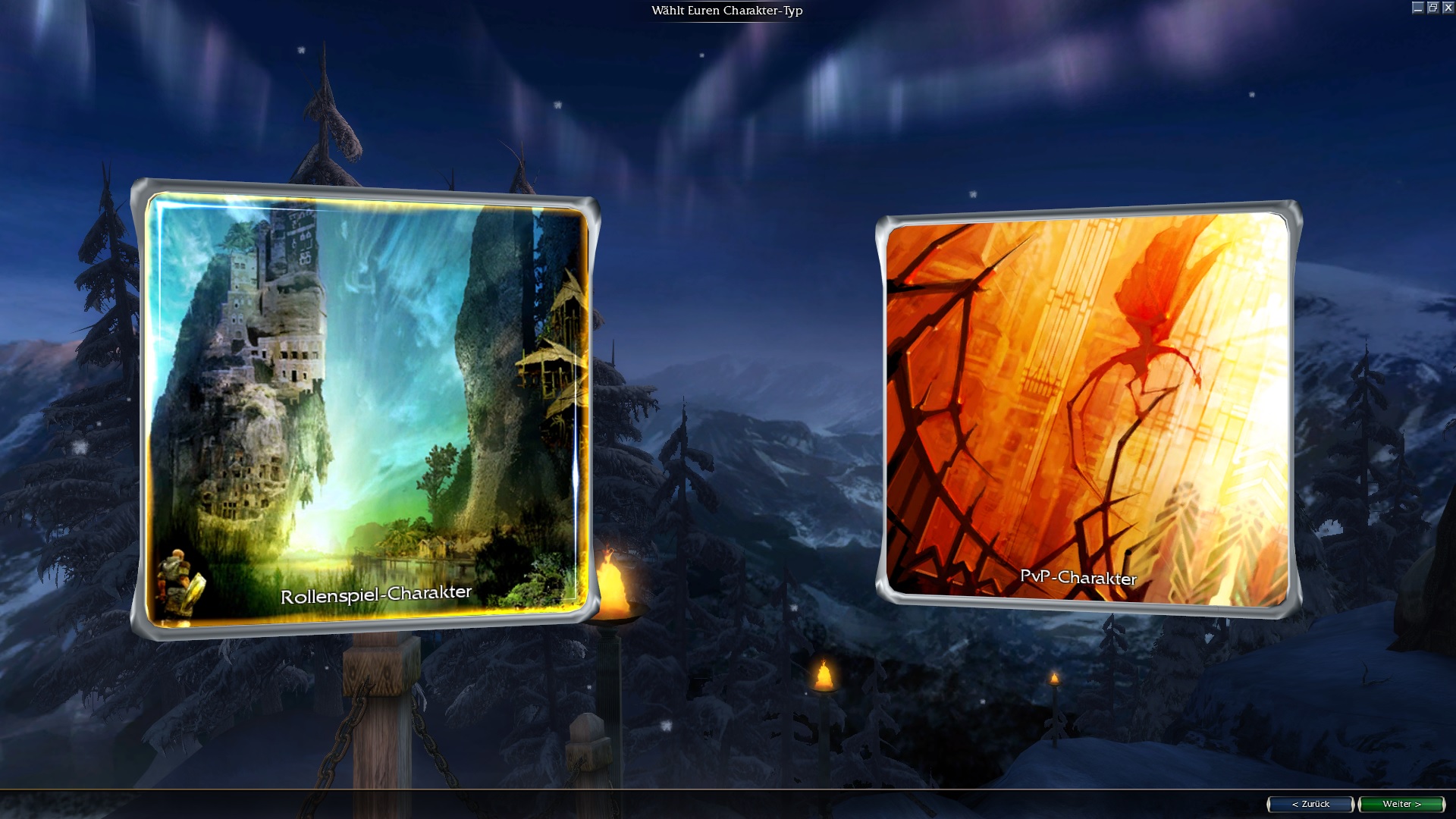
Right at the character creation, the first difference compared to classic MMORPGs awaited. You had the choice between a role-playing character or a PvP character:
- The role-playing character started at level 1 in one of the campaigns and you could use him in PvE or PvP. In PvP, however, he only became useful when you reached max level.
- PvP characters had max level from the start but could not leave the PvP lobbies.
These options allowed newcomers to start directly in PvP and participate in various arenas. Generally, Guild Wars 1 differed in terms of PvP from other titles of its time. There was no PvP in the open world – also because there was no open world.
PvP only took place in designated arenas.
What fascinated me most back then was that skill in PvP was the most important factor.
With the PvP characters, level and equipment did not matter much, as you could quickly unlock all relevant skills, and the max equipment was predefined.
However, if you wanted to dominate in Hero’s Ascension or Guild Battles, you needed to put together a good team combo and train with it, train, train, train. I myself had PvP training up to five times a week in its heyday.
PvE was only possible as a group, even if it didn’t necessarily consist of players
If you couldn’t get into PvP, you started as a role-playing character. After a short tutorial covering the basics, it became clear especially for veterans of EverQuest or WoW that Guild Wars 1 was not a classic MMORPG.
Because you only encountered other players in cities. Every area outside the cities was completely instantiated, just like dungeons. You could enter these areas with a group of 1 to initially 4 and later up to 8 players. And you always needed a group.
Of course, it was most fun when the empty slots were filled by other players. Even in simple story quests, you were forced to interact with others. Alone you would walk to a certain death.
If you could not find or did not want to find teammates, you could rely on allies, i.e., NPCs. Later, heroes were introduced – NPCs you could customize and equip. This group system created a very special feeling:
- In Guild Wars 1, you were never alone,
- you were always dependent on healers,
- tactics and positioning always played a role.
The cool thing about the system was that due to instantiation, you never had to wait on mobs. You could simply leave the area and re-enter – ideal for grinders. Additionally, a hard mode for each area was later introduced that you could activate optionally. This is what makes GW1 unique even today.
Fast to max level, but still a lot to do
If you did not want a long grind but wanted to get to the end-game areas quickly, Guild Wars 1 also made it relatively easy. The max level was only 20 and could be reached in a matter of hours in later campaigns. The max equipment could also easily be bought from a vendor – also requiring very little time.
You could even skip the travel times to new cities, thanks to so-called rushers. They were paid to simply walk from one place to another. Because when a member of the group enters a city or a new area, the entire group is teleported there. Yes, in Guild Wars 1, you were paid to just walk to another location while the buyer was AFK.
However, if you think this meant you quickly reached the end of the game, you are greatly mistaken:
- Completing the campaigns (a total of four) took between 5 to 20 hours each.
- To unlock all skills – especially the elite skills – challenges had to be mastered, and certain bosses had to be defeated.
- There were many elite areas like Underworld, Rift, or Torment’s Gate, which could only be completed with player groups.
- In the endgame, everything revolved around fashion and titles. To get the coolest armor skins, you often had to grind weeks or months. Those wanting the famous title “God Among Mortals” had to work on various challenges for years.
By the way, Guild Wars 1 can still be played today, although the player numbers are relatively low and there are no updates:
Nostalgia, however, masks many problems
As much as I remember back then, I often forget the problems of the game. The story was very thin in many places, many of the 250 skills were useless in virtually every scenario, and you mostly played the meta builds; the combat system was too static at many points, and long loading times and lags sometimes decided entire PvP matches.
Moreover, a large part of the game content consisted of heavy grind for rare titles or armor or just assembling builds. If you had no fun with that, you quickly disappeared from Guild Wars 1.
Nevertheless, many wish for a modern version of the game. A “real Guild Wars 2”, as some veterans emphasize here on MeinMMO:
- RSH wrote under an article: “GuildWars 1 was amazing back then. The incredibly many build versions and play styles, especially in PvP. Rarely have I been so addicted […}. Even PvE farming was fun; the dungeons were cool. A shame that Guild Wars 2 had nothing to do with GW1.
- Yannick Trevy also could not get into the successor: “GW1 was also my first online game. I could spend hours on it without thinking of anything else. Unfortunately, I couldn’t get into GW2 at all, which made me very sad because I was really looking forward to it.”
The problem: Guild Wars 2 breaks with almost all of these special features. The game world is open, there are no heroes or dual classes, the variety of builds is smaller, and the entire story can be completed solo.
By the way, Guild Wars 2 has just been released on Steam:
Is Guild Wars 2 a bad game? Definitely not. In pure player and revenue numbers, it is significantly more successful than its predecessor and appeals to a broader audience. But it is not a successor regarding game systems and gameplay. And it is very likely that such a thing will never happen.
Did you play Guild Wars 1 at its peak? What made the MMORPG so special for you? What is your favorite memory? Feel free to write it in the comments.
Whether it is worth starting Guild Wars 2 right now, we have discussed here for you:
In addition, there were many smaller tasks, like equipping heroes, collecting miniatures, fully dyeing armor, and so on. In my 10,000 play hours, I have never been bored. This was not least due to the big topic of builds.
250 skills per class, dual-classing, and hero setup
The combat system of Guild Wars 1 has always been quite static. There were no dodge rolls, direct aiming was not needed, and there was not even a key to jump. However, there was a special rule: Every player can only take eight active skills into an area.
Guild Wars 1 already offered around 75 skills per class at launch and the option for a secondary class. As a warrior, I could choose monk as a secondary class and thus use all of the monk’s skills. I could heal myself or shield myself as a melee and tank.
Over time, the classes gained more skills – now there are around 250. Each class has access to all other skills thanks to secondary classes, making it incredibly difficult to reduce the number to eight skills.
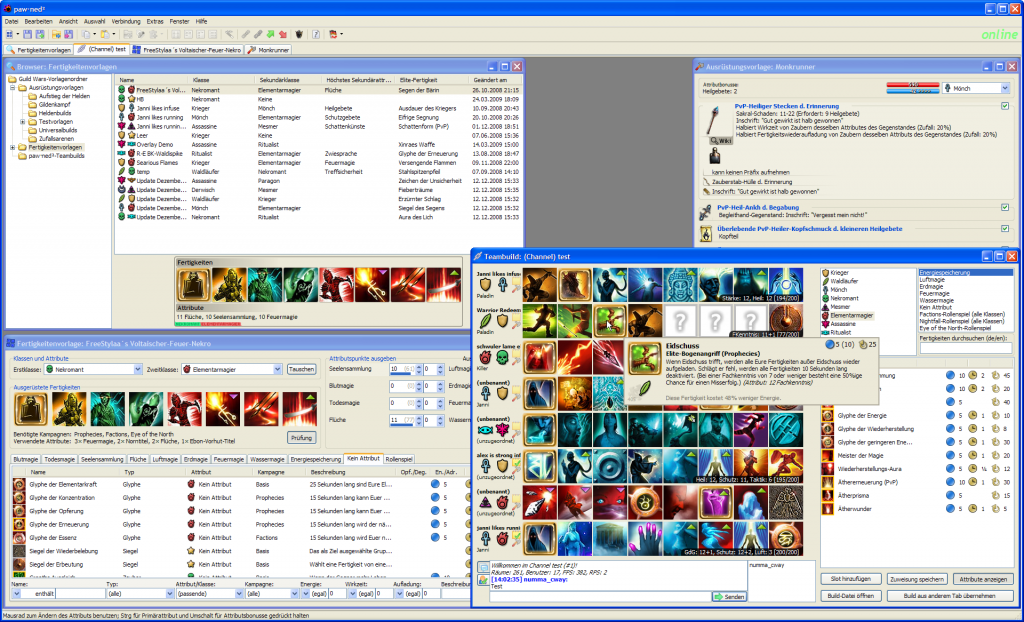
From this large pool of possibilities, hardcore theorycrafters then developed the best builds – for solo players but also for groups, NPCs, or PvP teams.
If one wanted, one could spend weeks and months just optimizing builds. If one was lazy, they simply followed the meta, like in the Discord Way with heroes or fixed spike groups in PvP.
However, I have never spent as much time assembling builds and groups in any other MMORPG as I did in Guild Wars 1.
No monthly fees
For me, the decisive factor for Guild Wars 1 in 2006 was the payment model. Because at 13, my mother did not let me sign up for a subscription for WoW. However, Guild Wars 1 only had to be purchased once and you could always play it – later, new expansions were added. It was the forerunner of the Buy2Play model that many games use today.
By the way, Guild Wars 1 can still be played today, although the player numbers are relatively low and there are no updates:
Nostalgia, however, masks many problems
As much as I remember back then, I often forget the problems of the game. The story was very thin in many places, many of the 250 skills were useless in virtually every scenario, and you mostly played the meta builds; the combat system was too static at many points, and long loading times and lags sometimes decided entire PvP matches.
Moreover, a large part of the game content consisted of heavy grind for rare titles or armor or just assembling builds. If you had no fun with that, you quickly disappeared from Guild Wars 1.
Nevertheless, many wish for a modern version of the game. A “real Guild Wars 2”, as some veterans emphasize here on MeinMMO:
- RSH wrote under an article: “GuildWars 1 was amazing back then. The incredibly many build versions and play styles, especially in PvP. Rarely have I been so addicted […}. Even PvE farming was fun; the dungeons were cool. A shame that Guild Wars 2 had nothing to do with GW1.
- Yannick Trevy also could not get into the successor: “GW1 was also my first online game. I could spend hours on it without thinking of anything else. Unfortunately, I couldn’t get into GW2 at all, which made me very sad because I was really looking forward to it.”
The problem: Guild Wars 2 breaks with almost all of these special features. The game world is open, there are no heroes or dual classes, the variety of builds is smaller, and the entire story can be completed solo.
By the way, Guild Wars 2 has just been released on Steam:
Is Guild Wars 2 a bad game? Definitely not. In pure player and revenue numbers, it is significantly more successful than its predecessor and appeals to a broader audience. But it is not a successor regarding game systems and gameplay. And it is very likely that such a thing will never happen.
Did you play Guild Wars 1 at its peak? What made the MMORPG so special for you? What is your favorite memory? Feel free to write it in the comments.
Whether it is worth starting Guild Wars 2 right now, we have discussed here for you:

Your opinion is important to us!
Do you like the article? Then let us know!