

Especially MMORPGs that promote an eSport idea support this mode. Players are thus somewhat comparable to each other.
The chances of becoming a hero in this mode are pretty high: No one really cares. After winning a battleground in which you played a great role, the thing closes, someone might type “gg”, and then you stand alone waiting for the applause that doesn’t come. If you make the mistake of demanding applause from the often completely unknown teammates at the end of a match, with the humble remark: “Well, didn’t I do great, you noobs?” you often receive nothing but open hostility in return.
Realm versus Realm: Chaos, Tumult, and the Full Program
And this is where the other, chaotic, unfair, strategically demanding, and overall addictive and delusional PvP comes into play. RvR or Realm versus Realm. There, entire realms of a server compete against each other. Or in the fantasy game Guild Wars 2, even entire servers (in that case, it is called World versus World).

There is no fairness here; there are no set times, but rather, here is war, which famously follows no rules – much like love. It is about holding fortresses, achieving mission objectives, and above all, it is about coordination, coordination, and coordination
Where in one form of instanced PvP it is helpful to pay attention to chat or the map, but not at all obligatory, things are different in RvR or WvW. As soon as you are on the relevant map, you are confronted with the Teamspeak channel. Once logged in, you often see two hundred people in one channel while the current commander or zerg leader issues endurance slogans or discusses tactical objectives (often in a dialect that utterly shatters any form of immersion).
And in fact, something exciting and deeply unsettling happens in this form of player versus player conflict. Here, there are actually heroes. The only problem is: You rarely are one yourself. In a game like Guild Wars 2, true armies often clash. The screen is overloaded with the various abilities swirling around, and players each want to be a hero.
No player life counts for so little and no triumph means so much as on the battlefields of such a server-wide battle. Things do not go fairly here, but through a clever game principle, it is possible for an individual to contribute something decisive to the battle.
Whether you lead an attack at the right moment, flank and eliminate the opposing healers with a sneaky maneuver, or otherwise draw attention to yourself. Since there is a fixed group of players pursuing a common goal, the opportunity exists to stand out from a mass of players. This, of course, also has a downside: As in Highlander, there can be only one.
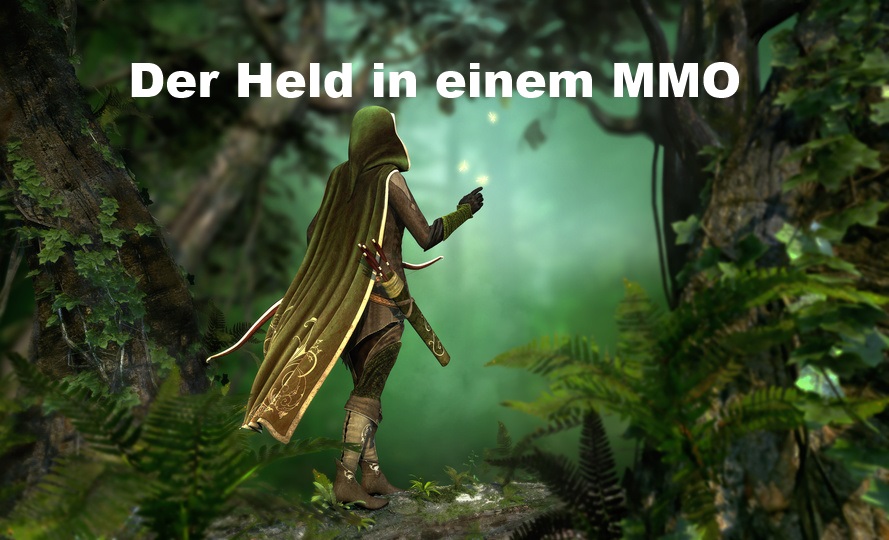
Or as I once read accurately in a forum about one of the first MMORPGs I ever played: “What is this nonsense? I play my archer to be Robin Hood! Not the third from the left who falls from the wall!”
But let’s be honest: What would Robin Hood be without all the guys who fall from the wall?
Just a guy in silly pants, right?
Our tips:
- If you’ve never plunged into the madness of a server-wide battle and are now tempted: Guild Wars 2 is currently considered the hottest candidate for such an experience. If you like it even bigger, you can check out Eve Online, where there is only one server, and the space battles last days and are legendary
- Orient yourself to the zerg, meaning the largest mass of your own players
- It is best to join a Teamspeak channel and listen to what the leader has to say
- Even in a mass battle, a small group of players can accomplish more than an individual, having a few friends by your side makes a significant difference
- Always keep in mind that you are the hero of your own story! No matter what others say: They are just NPCs paid by the developer!
Why do we actually enjoy playing online role-playing games so much? For some, it might be about being part of a virtual community, spending time with friends in-game, and feeling comfortable and secure.
For others, progress is the priority: There is always a nastier boss, a shinier item, yet another achievement to obtain (and one that no one else in the friend circle has!).
But if you dig a little deeper, isn’t it true that most of us also want to be the hero?
The Hero in Solo PvE: Make way, here I come
It is not hard for game designers to bestow the hero role upon the player. In every single-player game, it is ultimately the player who defeats the villain, saves the princess, guides the father’s trade empire through tough times, arranges the Tetris blocks correctly, slays the rogue, dons the crown, and ensures peace and justice.
Who else would do that? Luigi? Mort? Claptrap? Or some other useless sidekick?
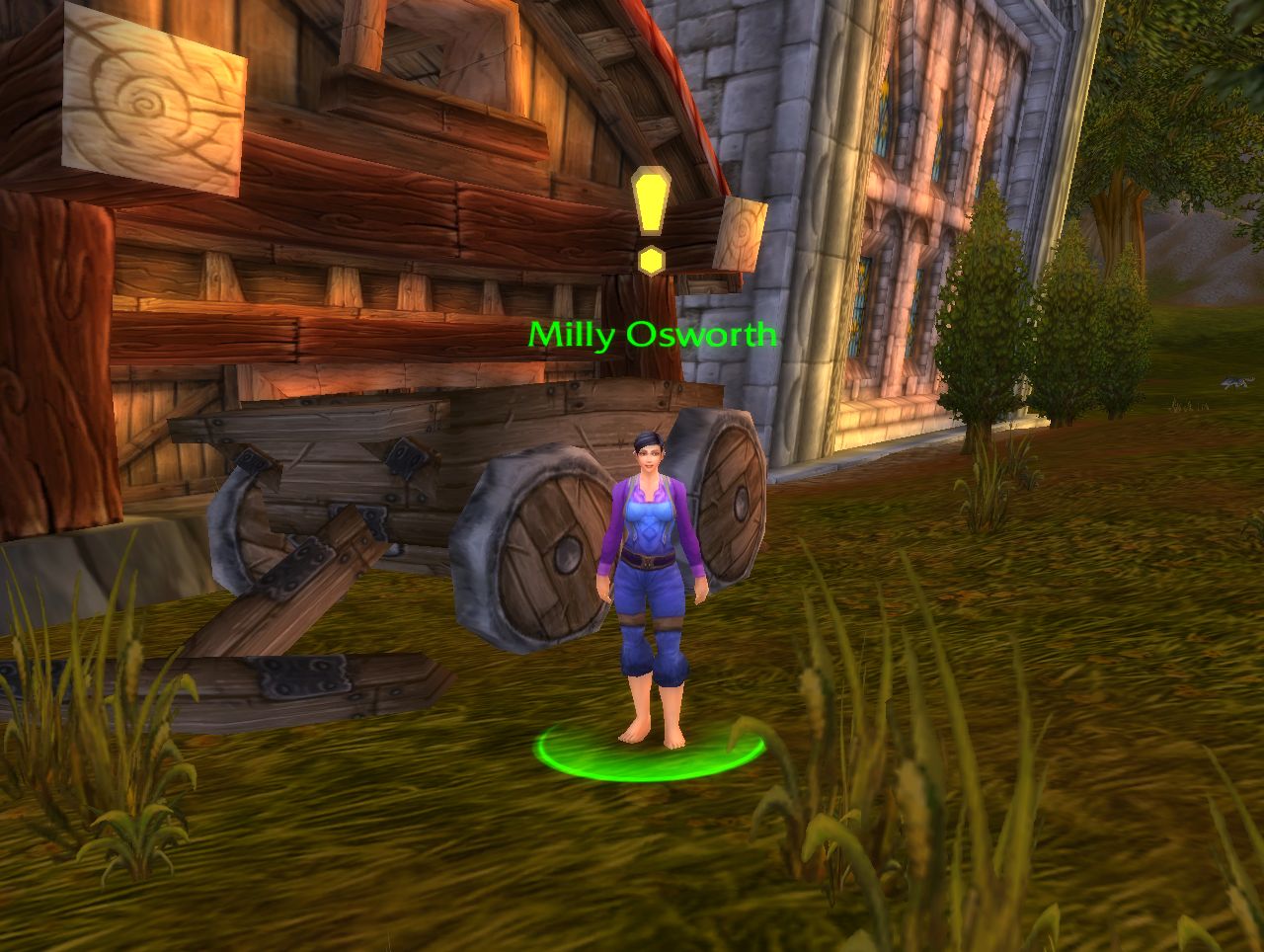
No, the player is molded to be a hero. In PvE mode, this is not a problem. The player in an MMORPG goes on a quest safari. Moves from zone to zone and ensures peace and justice. Like a cowboy, he rides into the village – in an MMORPG, villages are called quest hubs, of course – he looks around briefly, recognizes the poor villagers by the exclamation mark above their heads, and takes down the bad guys.
He does this for one to three levels, then the zone is cleared, and he moves to the next one. The villagers wave goodbye, and the one or baby NPC looks up at his mother (or a corresponding alien) and sighs: Ach! I wish I could be like him.
Heroes in Multiplayer PvE: Often only room for one on the podium
This hero role that the player claims for himself is already put to the test when he joins a party with other players. There, he may be just a small cog in the machine. Perhaps he is the healer, trailing behind an over-equipped tank, without much to do. Or he might be the weakest DPS and feels that the others would do just fine without him.
It gets much worse in a raid. There, you are one of ten, one of twenty-five, one of forty heroes. And usually, some players hold an exposed rank. Who did they cheer for during the heyday of WOW? Kungen, the tank of the then elite guild Nihilum. The other thirty-nine? Experts might have heard of them. In the victory photo, there is only room for one.
Nevertheless, maybe the individual player doesn’t feel quite like the hero in the front lines, but at least he has clearly won.
The boss is dead in the dust, isn’t he?
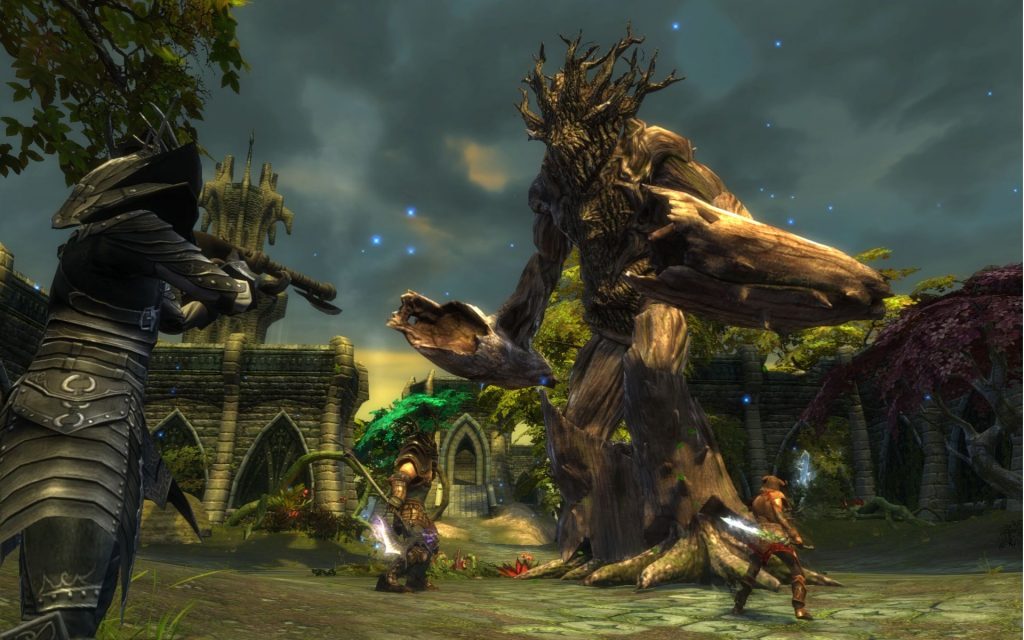
And the voice that whispers softly in your head that you were just one of many – you can silence that. If necessary, you hum a few tunes from the Lord of the Rings soundtrack – or, like any sensible person, make lightsaber sounds while you slice gray mobs outside the capital.
The PvP Paradox: One must lose for another to win
In PvE, there are ultimately only winners and heroes over the long term. Every boss will eventually drop the loot. But how does it look when it comes to fighting other players? On one side the shining hero – and on the other?
This time, there is no dead pile of pixels scurrying home with its head down, explaining to the little rascals that someone has looted again. No, this time we find ourselves.
Not as shining heroes, but as victims of self-satisfied, dull-shining little heroes.

We are stabbed in the back, torn apart by lasers, betrayed, cheated, and squashed by a massive zerg. We are thrown off bridges, subject to stun hacks that make us swing at nothing, and shredded by double and triple combos.
Long live PvP!
The place where heroes only rise when weighed against losers. Let’s take a closer look:
Instance PvP: Battlegrounds and Arenas
The exciting question in PvP is that of design. On one side is the neatly segmented “Instance PvP”. In most games, these are battlegrounds or arenas. A certain number of players on each side compete against each other, with clear objectives: Capture the Flag, King of the Hill, Deathmatch, or whoever eats the most blueberry pies first.
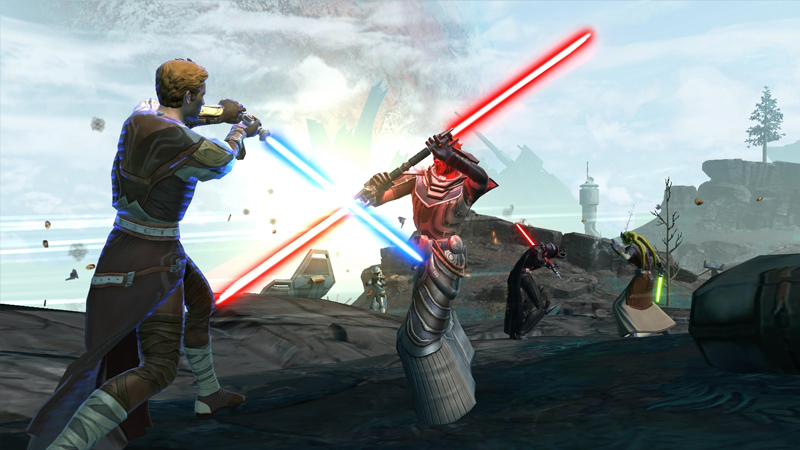
The good thing about this design philosophy is that, in theory, each side starts on equal footing. It is a chessboard, and everyone has the same number of pieces – at least in theory. In practice, the queen on black is twice as strong as the one on white and can shoot lasers from her eyes – but in theory, everything is fair.
Especially MMORPGs that promote an eSport idea support this mode. Players are thus somewhat comparable to each other.
The chances of becoming a hero in this mode are pretty high: No one really cares. After winning a battleground in which you played a great role, the thing closes, someone might type “gg”, and then you stand alone waiting for the applause that doesn’t come. If you make the mistake of demanding applause from the often completely unknown teammates at the end of a match, with the humble remark: “Well, didn’t I do great, you noobs?” you often receive nothing but open hostility in return.
Realm versus Realm: Chaos, Tumult, and the Full Program
And this is where the other, chaotic, unfair, strategically demanding, and overall addictive and delusional PvP comes into play. RvR or Realm versus Realm. There, entire realms of a server compete against each other. Or in the fantasy game Guild Wars 2, even entire servers (in that case, it is called World versus World).
There is no fairness here; there are no set times, but rather, here is war, which famously follows no rules – much like love. It is about holding fortresses, achieving mission objectives, and above all, it is about coordination, coordination, and coordination
Where in one form of instanced PvP it is helpful to pay attention to chat or the map, but not at all obligatory, things are different in RvR or WvW. As soon as you are on the relevant map, you are confronted with the Teamspeak channel. Once logged in, you often see two hundred people in one channel while the current commander or zerg leader issues endurance slogans or discusses tactical objectives (often in a dialect that utterly shatters any form of immersion).
And in fact, something exciting and deeply unsettling happens in this form of player versus player conflict. Here, there are actually heroes. The only problem is: You rarely are one yourself. In a game like Guild Wars 2, true armies often clash. The screen is overloaded with the various abilities swirling around, and players each want to be a hero.
No player life counts for so little and no triumph means so much as on the battlefields of such a server-wide battle. Things do not go fairly here, but through a clever game principle, it is possible for an individual to contribute something decisive to the battle.
Whether you lead an attack at the right moment, flank and eliminate the opposing healers with a sneaky maneuver, or otherwise draw attention to yourself. Since there is a fixed group of players pursuing a common goal, the opportunity exists to stand out from a mass of players. This, of course, also has a downside: As in Highlander, there can be only one.
Or as I once read accurately in a forum about one of the first MMORPGs I ever played: “What is this nonsense? I play my archer to be Robin Hood! Not the third from the left who falls from the wall!”
But let’s be honest: What would Robin Hood be without all the guys who fall from the wall?
Just a guy in silly pants, right?
Our tips:
- If you’ve never plunged into the madness of a server-wide battle and are now tempted: Guild Wars 2 is currently considered the hottest candidate for such an experience. If you like it even bigger, you can check out Eve Online, where there is only one server, and the space battles last days and are legendary
- Orient yourself to the zerg, meaning the largest mass of your own players
- It is best to join a Teamspeak channel and listen to what the leader has to say
- Even in a mass battle, a small group of players can accomplish more than an individual, having a few friends by your side makes a significant difference
- Always keep in mind that you are the hero of your own story! No matter what others say: They are just NPCs paid by the developer!

Your opinion is important to us!
Do you like the article? Then let us know!