

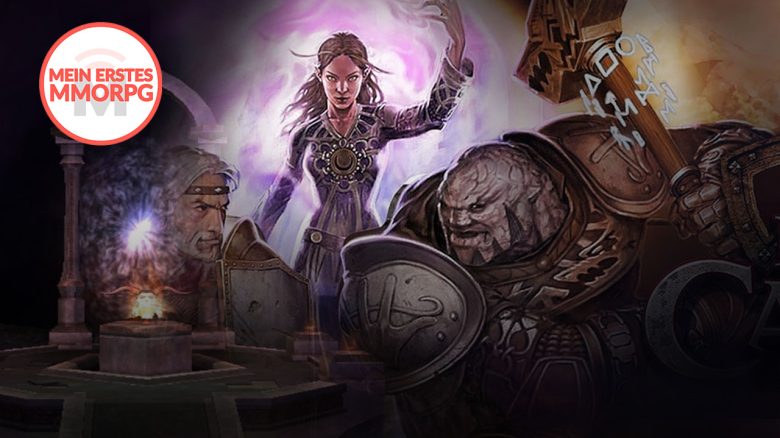
The MMORPG Dark Age of Camelot was released in 2002 in Europe and is still considered by many veterans to be the online role-playing game with the best PvP. MeinMMO author Schuhmann reflects in October 2023 on his time in DAOC and explains what today’s MMORPGs can learn from DAOC.
DAOC was released in the early days of the internet in Germany, when many people didn’t even have a flat-rate internet connection. There were indeed online games at that time, but they were often shooters like Team Fortress or perhaps something like Age of Empires.
Only a few who played Dark Age of Camelot at that time had experience from MMORPGs like Everquest or Ultima Online – those were the veterans who had a bit of knowledge, and they were the ones we looked up to.
But for many who started playing Dark Age of Camelot in Germany, it was the first MMORPG. For me, it certainly was: My only experience with online games before was with Diablo 2, which had been released shortly before. I quickly found myself in a guild of people who had been playing DAOC on the US server for a while but primarily knew each other from Team Fortress.
A player with knowledge could stop 80 newcomers
The one guy in our guild who knew what he was doing, a ranger named Lorin, had experience in Everquest and knew things that were completely foreign to the rest of us back then: For example, that it’s best to play an archer in a new MMORPG full of noobs because they can level and engage in PvP alone.
PvP was anyway the great unifying element in Dark Age of Camelot: Because the 3 realms of the MMORPG shared common borderlands with castles that could be conquered or defended. A ranger who knew what he was doing could hold a castle against 40, 60, or 80 clueless newcomers who for some reason decided to attempt to conquer such a castle.
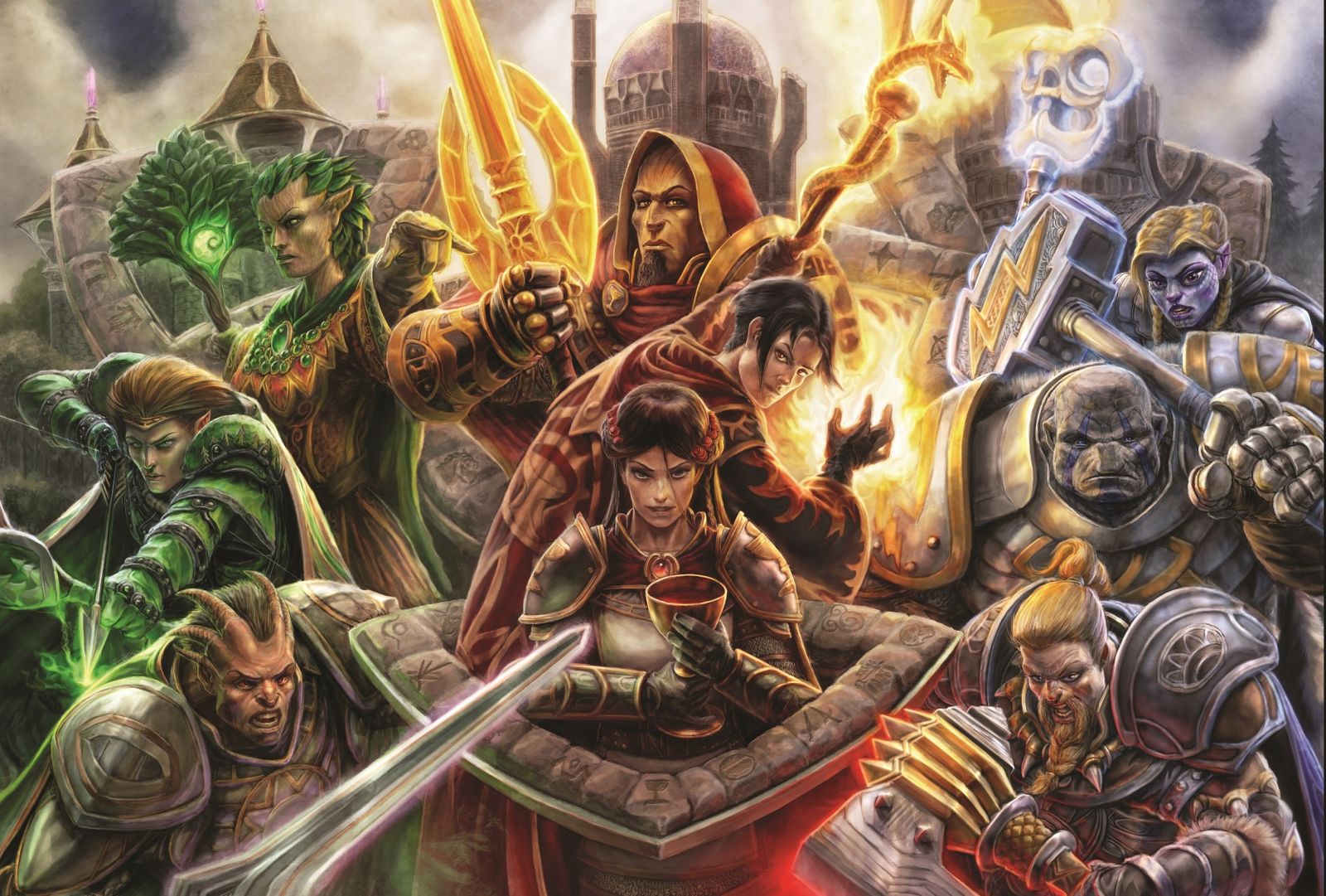
I have many fond memories of the early days in the MMORPG. DAOC had some features that are no longer known today: Each realm had different versions of archetypes:
- The hunter of the realm Albion had a shield,
- the one from Midgard had its own pet and could use a spear,
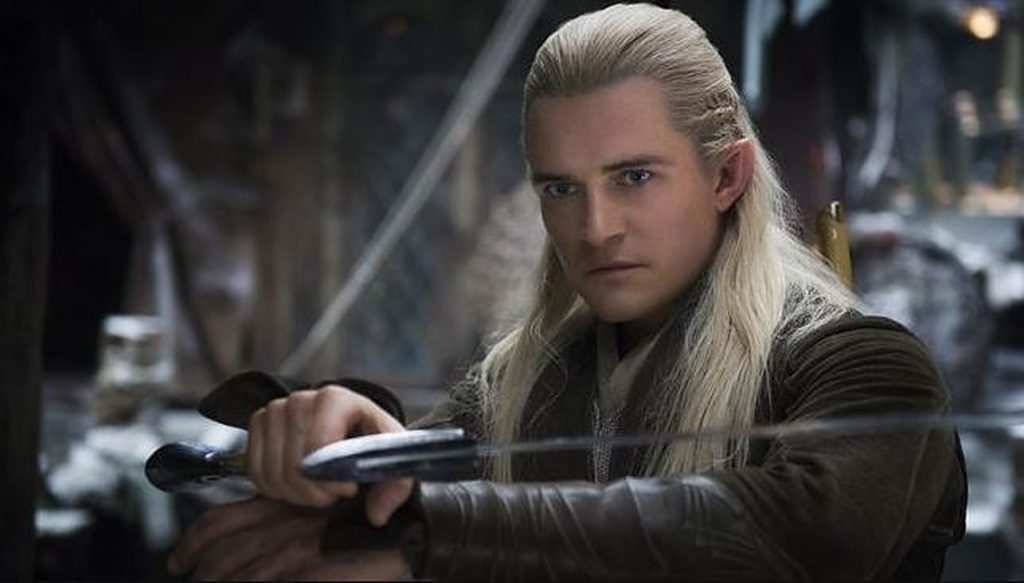
- the hunter in my realm Hibernia wielded two blades and since we were still in the midst of the “Lord of the Rings” hype in 2002, I probably saw more misspelled versions of “Legolas” than was good for me.
“Don’t sit down – Garf is around”
In realm-wide chats, you could read back then when a scout of the enemy, a guy named Sam, was lurking around the borders of our realm again, killing low-level players who wanted to farm mobs in the borderlands unsuspectingly.
The realm of dwarves, trolls, and foul-smelling vikings, Midgard, had the coolest classes: Their rogue variant was called “Shadowblade” and could use two-handed weapons. A player from Midgard, a northerner named Garf, quickly gained a reputation as a deadly assassin, sneaking through the ranks of enemies and killing sitting mages from the shadows.
Mages, affectionately called “fluffies” back then, died from a single hit from his two-handed weapon: With “one-hits”, assassins remained invisible, quickly spreading panic among players to make sure not to sit down and regenerate mana, because surely “Garf” was somewhere – and whoever sat down was always critically hit by a strike. And with such a two-handed weapon, really high values could come out.
Players would then run through the enemies, spamming area spells just to try and hit Garf – usually in vain. Later, a small Lurikeen from our realm made a name for himself because he could reliably track down and eliminate the nasty Garf.

Through forums and mIRC, one learned what was happening in the other realms
Normally, you only learned in DAOC what was happening in your own realm: Because the defense of the realm against invading hordes was so important, you quickly had an eye on who the “strong guilds” were that you could call upon in times of need for defense: It was clear which guild leader you had to get on well with and which guild had the reputation of being unreliable because they did their own thing and did not coordinate with others.
It quickly became clear that you better not message this one guild leader after 8:00 PM, as he usually had a drink in him and reacted moodily.
Yet, even though you quickly knew the drinking habits of a stranger in your own realm down to the smallest detail, you knew almost nothing about the opponents: You could only read the name if a player killed another. Since many were still completely clueless in the beginning, the few veterans with experience from other MMORPGs stood out, having learned how to level and play properly.
Thus, there was a group of players who seemed overwhelmingly powerful simply because they didn’t play individually but teamed up in threes: There was a Thane, a kind of “magical warrior” who, unfairly, had a private healer with him and a dwarf with an oversized axe.
Against them, as a lonely wolf, you simply had no chance, because the fighters protected the healer and the healer kept restoring the warriors’ health. Much later, I learned that the three were privately friends: a couple and a friend of the man – they had gone through several MMORPGs together.
In any case, you quickly got to know your opponents through forums and common chats. In mIRC, a kind of Discord for cavemen, people chatted, teased each other, and shared complaints about the balance, as one realm was always too strong.
Particularly bad became it when later expansions came and developers Mythic sold the expansions by making the new classes so strong that they were ridiculed as the “flavor of the month” class, easily overwhelming opponents.
Whether Mythic was really that calculating and every new class was fundamentally overpowered, I can no longer swear today. After years as a gaming journalist, I am skeptical when I read such theories from players. But back then, I found it outrageous from Mythic, alarming, and a general scandal – and I felt good about seeing it that way.
Players who switched from their realm to another were called “winning team joiners” – it was almost as frowned upon as people who played “flavor of the month” classes.
Stories were heard of wealthy blacksmiths and powerful leaders
Stories were heard about a player in a realm who led a “zerg”: Everyone knew that you could follow this player in PvP to safely march through the mass from gate to gate and overwhelm enemies.
Or you heard the story of a player who had become the most powerful blacksmith of his realm and was forging such good swords that everyone wanted one from him, for the name of the blacksmith adorned the blades in DAOC.
The gold you paid him for a sword, so it was rumored, could also be bought from him for real money.
In our realm, a bard who was a police officer in real life made a name for himself by being the first to kill the dragon worldwide – even though he was not a particularly good player: He simply designated the dragon hunt as the “event”, marched through the zone with two hundred people, and “zerged” the dragon to death in huge lag. This was due to a game mechanic in DAOC where enemies were easier to hit the more players were attacking them.
Later, a class that could summon mushrooms came, which also counted as attackers: And a handful of mushroom types could kill those monsters for which you needed half a village back then.
When I once tried to become the raid leader, primarily to get a specific glowing sword that I desperately wanted, it went horribly wrong: Although the “zerging” through the raid Darkness Falls went smoothly: Before you could do the PvE in the raid, you first swept away the enemies of the opposing realm from the raid. That was not a problem, and the boss “Legion” died as planned.
Even the coveted sword dropped, but then a guy just pocketed it and refused to return it, even though according to the custom of the time an item was due to the raid leader if he announced it beforehand.
He said he wasn’t an idiot, that the sword would bring in a lot of money on eBay, which caused quite a stir in the forum at the time, as “ninja looting” was considered frowned upon.
In the MMORPG DAOC, you were still someone
The difference to modern MMORPGs was mainly that DAOC was a limited experience: One realm was limited to a few thousand players. We did not know anything like mega-servers. Due to the common threat from foreign realms or common goals like the death of the dragon, community was important.
There was no anonymous raid finder, no reasonable mechanics to distribute loot fairly, there were no battlegrounds or arenas where structured PvP was possible, ultimately DAOC was an MMORPG where much had to be resolved personally and where contacts and the reputation of a player were important.
What really made DAOC better than online role-playing games today was the feeling it gave players of being someone in this world. What today Influencers like Asmongold are in a large way, were many players in a small way back then: Of course, on the neighboring server, no one knew who Garf was, the nasty Shadowblade, causing everyone to not sit down – but on our server for a time, he was someone.
That was nice.
For many years now, a spiritual successor to DAOC called “Camelot Unchained” has been in the works, but a lot isn’t going as planned:
MMORPG Camelot Unchained has been in development for years – the mood is openly hostile.

Your opinion is important to us!
Do you like the article? Then let us know!