

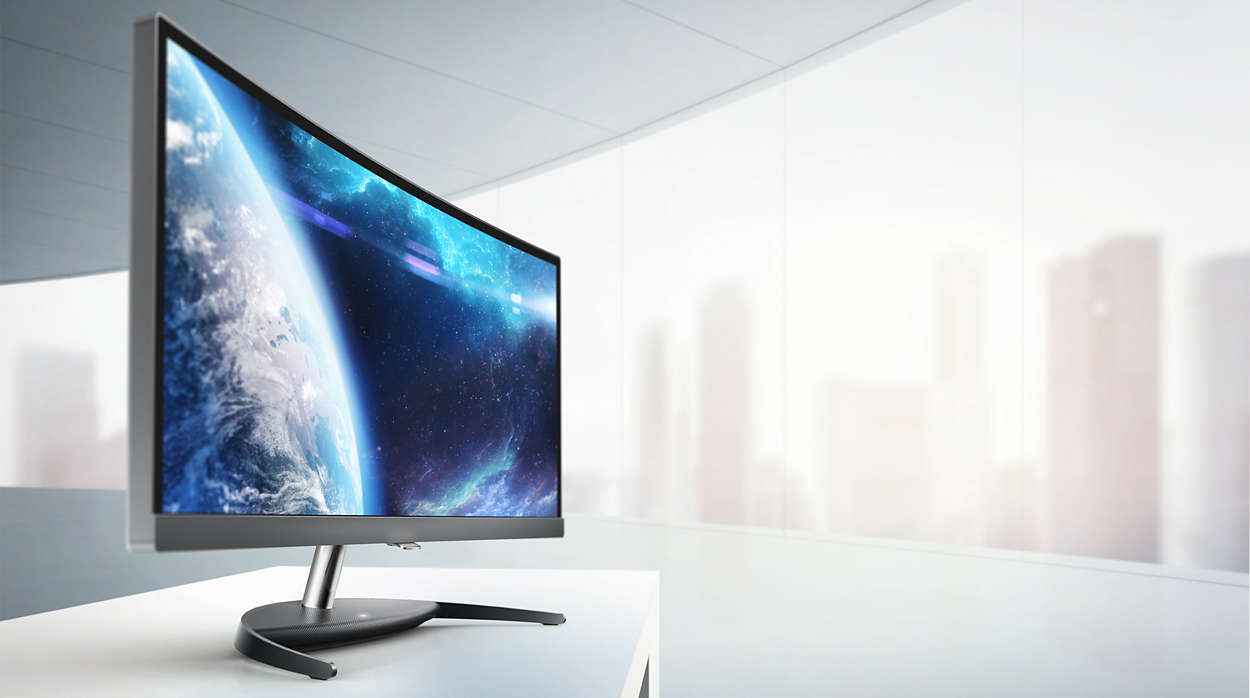
In just a few years from tube monitors to curved displays. Enough reason to take a closer look.
In 2015, the first curved screen from the brand Philips will be released. 34 inches (86.4 cm) with a resolution of 3440 x 1440 pixels are supposed to provide an intense viewing experience, with a suggested retail price of €1149. This naturally raises the question of how useful this technology is. What advantages does it offer? And what disadvantages?
Reasons to buy
The most obvious reason is the curvature. This is supposed to ensure that the distances from the image at the edge are identical to that in the center. This means the curve follows the eye, which does not have to constantly re-focus, relieving strain. This can be very helpful, especially for image editing when working for long periods. Another effect is the improvement of plasticity.
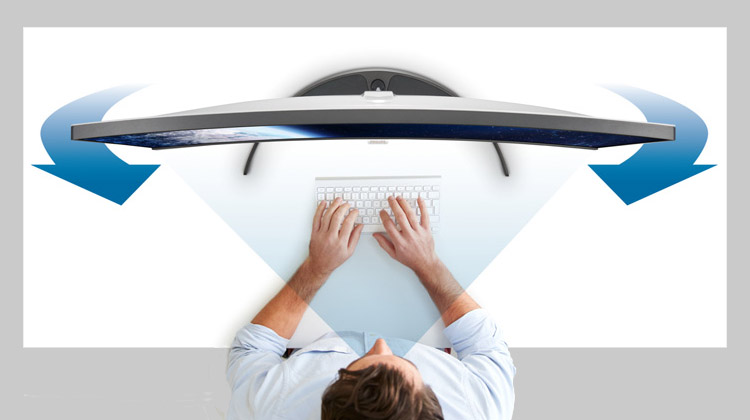
The curved display brings the image edges and pixels closer to the user, making viewing more comfortable. Users sit closer to a computer screen than a television, thus the curvature of the screen can enable a far more intense work experience with minimal distraction. – Artem Khomenko, Product Manager
Furthermore, the monitors usually have the 21:9 format for a better movie experience. Additionally, an ultra-HD resolution or even higher is possible.
Reasons against buying
In addition to the high prices, there are also several other reasons against it. For a time, earlier monitors did not support all color spaces, making the devices unsuitable for graphic designers. Moreover, one must sit directly in front of the screen. Looking at the display from the side results in a distorted image. With a curved TV, you won’t be able to watch movies together with family. They are also difficult to mount on the wall. And when mounted, the protruding edges do not look very nice.
Conclusion

The technology has not advanced very far yet. This makes manufacturing and pricing significantly more expensive, and the devices are currently a pure luxury product. Similar to SSDs.
The same applies to the UHD format. As a user, you gain little when such resolutions, although technically possible, are hardly available in films that support them. Of course, one could argue that it will be possible later, thus it is just a matter of time. That may very well be true, but then you do not need to buy a monitor now when they will be both more sophisticated and cheaper later on.

Your opinion is important to us!
Do you like the article? Then let us know!