

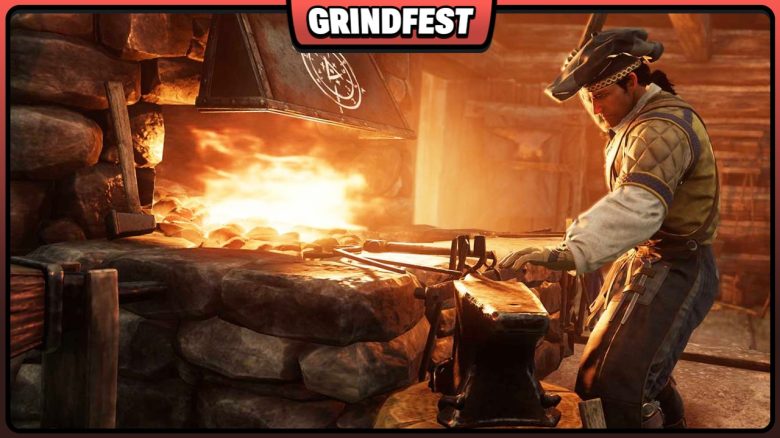
While new MMORPGs are becoming increasingly rare, the genre of Cozy Games is growing steadily, also appealing to typical MMO players.
In recent years, MMORPGs have changed significantly. The reasons for this are varied, but a main focus is on the fact that everything that needs solving is already resolved by the release. While titles like Ultima Online focused early on gathering and crafting, players in modern MMORPGs are driven from one attraction to the next to grab their 10-to-60-minute fun bites.
Crafting, trading, and job systems have been increasingly hollowed out, becoming mere side activities. In some modern MMORPGs, there’s no way around raids and dungeons to achieve anything in the game. These aspects are, however, essential components of the genre. MeinMMO former editor Alexander Leitsch described this as early as 2021.
At the same time, so-called Cozy Games are gaining popularity by picking up and perfecting the mechanics that MMORPGs once borrowed from their common ancestors, such as Harvest Moon. As a result, Cozy Games – even if it may sound strange – are slowly becoming the better MMORPGs.
Do you know why the loot always has the same colors?
Side issue: Crafting
In the past, gathering resources and crafting were often not just a side activity but a cornerstone of the player economy. Those who specialized in making weapons, armor, or potions could secure their place in the community of a game. One had to venture into dangerous areas to obtain rare materials or spend hours mining ores and fishing.
The economy within the games was fueled by player craftsmanship, while merchants and auctions thrived on self-created products. Raph Koster, lead designer of Ultima Online, explained in an interview with MeinMMO in 2020 that the allure of classic MMORPGs was precisely the players creating a real, living economy.
In Ultima Online, the world was shaped by the players. A blacksmith relied on the miner who had to mine the ore to forge weapons and armor. Merchants played an essential role by distributing raw materials and enlivening markets.
This week, exciting articles on the topic of MMORPG await you every day. Included: a journey through the history of online role-playing games, as well as nostalgic reviews, streaming evenings, interviews, columns, and analyses.
Here is the program for MeinMMO’s big MMORPG theme week 2025
This interesting economy gave players a deeper motivation to specialize in professions and crafting. This is something that many modern MMORPGs have largely abandoned.
If you played one of the MMORPG ancestors back then, you probably also had one or several guild crafters and gatherers around you, ensuring that your group had everything needed to even engage in battles.
The need for other players to be equipped for an activity is long a relic of the past. Today, equipment for attraction number 35 drops in many games at attractions 32, 33, and 34. The hero goes solo.

Main thing: Fun
Many modern MMORPGs follow the theme park model: developers emphasize linear content where players are guided from one attraction to the next without being hindered by obstacles that disrupt their gameplay (cf. Wikipedia). While this is an advantage for many casual players because it makes entry easier, it simultaneously causes deeper gameplay mechanics like professions and crafting to lose significance.
In classic MMORPGs like EverQuest or Ultima Online, crafting was often a real alternative to combat – some players spent all their time farming materials, processing them, and trading with other players. Without gathering resources and crafting items, supply and economy collapsed. Then fighters were also left in the lurch.
Those who specialized in making weapons, armor, or potions could therefore secure their place in the community of a game. In 2001, the gross domestic product of the world was estimated for EverQuest by comparing the prices of in-game items with their value on real-money marketplaces and flea market pages. The virtual world was ranked 77th worldwide – between Bulgaria and Russia (via windowsunited.de).
Today, however, many of these mechanics have been greatly simplified or have become nearly meaningless. Instead of complex production chains or deep profession systems, modern MMORPGs often feature simplified crafting menus. Materials can be easily obtained through quests, dungeons, or shops, and crafting becomes more of a footnote than a central feature of the game.

Alternative: Cozy Games
While MMORPGs increasingly neglect true crafting and jobs, Cozy Games pick up exactly these mechanics and build entire player experiences around them.
Games like “Stardew Valley”, “Animal Crossing: New Horizons”, “Disney Dreamlight Valley”, or “Dinkum” offer extensive gathering and crafting systems that are often deeper than in MMORPGs. But they go even further:
- Focus on Gathering and Crafting Mechanics – While MMORPGs often treat these elements merely as a side activity, they are the core of the game in Cozy Games. Players can farm, fish, mine, and actively shape and design their surroundings without these mechanics being overshadowed by other game content. No raid boss needs to be defeated to craft an item.
- Social Interactions with and without Humans – Many Cozy Games offer a simulated social experience. NPCs with complex relationships, multiplayer features, or asynchronous interactions (like in “Animal Crossing” or “Dreamlight Valley”) replace traditional MMORPG communities. While the social aspect in MMORPGs is increasingly being eradicated by single-player content, NPCs in Cozy Games take an interest in the player and create parasocial relationships through dialogues. Some Cozy Games also offer a coop mode.
- No Raids, No PvP – but Long-Term Progress – Players in MMORPGs who only wanted to gather and craft often feel trapped in a world that ultimately pushes them towards raids or PvP to have enough content. Cozy Games, on the other hand, provide these players with opportunities to make progress without combat mechanics.
- Playtime that integrates better into daily life – MMORPGs often require longer sessions and regular logins to stay engaged. Cozy Games, on the other hand, allow for more flexible play – perfect for casual gamers. And if collectors have always been out and about at night, Cozy Games won’t stop them either.
- Reward Systems that Replace the MMORPG Factor – Some Cozy Games now feature mechanics such as daily quests, season passes, or unlockable rewards, experience points, and levels that function similarly to MMORPGs. This gives players the same dopamine kick as loot grinding but without the frustration of raids or endgame content and at their own pace. Whether the experience points come from monster grinding or ore mining ultimately doesn’t matter.
- Housing with More Freedom – In Cozy Games, housing is often much more flexible than in MMORPGs. As they are usually single-player or smaller multiplayer games, gamers have far greater opportunities to design their surroundings individually. In MMORPGs, however, housing is often restricted by fixed placements, limited building spots, or instanced areas.

Cozy Games versus MMORPGs – The Conclusion
Cozy Games have overtaken MMORPGs in many areas by focusing on specialized player wishes and making crafting, gathering, and social interactions a standalone player experience. MMORPGs, on the other hand, have fallen behind in these areas and thus lose an important part of their community.
Nevertheless, the MMORPG genre remains unique because it leads a persistent character through a multitude of different contents – from crafting to quests to PvP and raids.
While Cozy Games are an alternative for players who only want to gather and craft, they offer no substitute for those who want to prove themselves in challenging PvE dungeons, raids, or competitive PvP.


No other genre manages to unite so many play styles in a vibrant, interconnected world. To ensure that MMORPGs do not lose this advantage, they urgently need to focus more on diversity and better integrate player types who do not want to fight. And that’s exactly why I believe that Cozy Games are currently almost the better MMORPGs.
What do you think? Have modern MMORPGs neglected the target group of gatherers and crafters? Do you play Cozy Games to experience these aspects? You can read more about my experiences with Cozy Games, specifically Disney Dreamlight Valley, here: Of all things, a Disney game is currently the best MMORPG for me because grinding is finally fun again

Your opinion is important to us!
Do you like the article? Then let us know!