
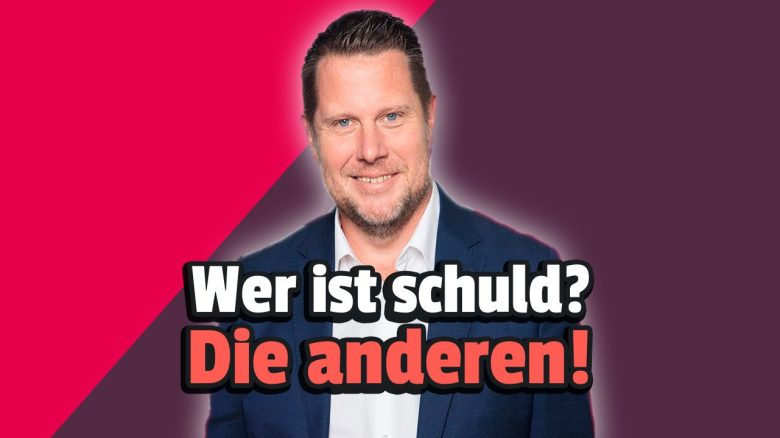
The Swedish media company Embracer, which includes numerous game studios and publishers, will split into three different entities after a historic cost-cutting program. In an interview, CEO Lars Wingefors explains who is responsible for the extensive layoffs, studio closures, and project terminations.
What has happened with Embracer now? After a nearly finalized billion-dollar deal fell through almost a year ago, the decision-makers at the Swedish media company had to initiate a strict cost-cutting strategy.
The balance sheet of the extensive measures according to Embracer’s financial report from February 2024:
- By the end of 2023, around 1,400 positions will be cut (about eight percent of the total workforce).
- About 30 unannounced projects have been put on hold.
- Several studios announced their closure, including Volition (Saints Row).
- Gearbox Entertainment (Borderlands) is being sold to Take-Two for 460 million US dollars.
- Saber Interactive (SnowRunner) is leaving the company, which is expected to raise about 200 million US dollars by the end of 2024.
Based on these cost-cutting measures, Embracer will now split into three independent, publicly traded entities:
- Asmodee Group (board games, collectible cards, tabletop)
- Coffe Stain & Friends (PC, mobile, and console games with small to medium (Double-A) budgets) – this entity will include THQ Nordic, Black Forest Games, HandyGames, and the remnants of Piranha Bytes among others
- Middle-Earth Enterprises & Friends (here lie the key brands for blockbuster productions: Lord of the Rings, Tomb Raider, Metro, Dead Island, or Kingdom Come: Deliverance) – this entity will include Plaion, Crystal Dynamics, Eidos Montreal, and Fishlabs among others
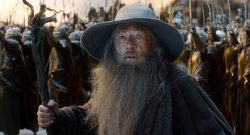
The franchise of Lord of the Rings is right in the middle of the Embracer storm:
Smaller and therefore more attractive for investors
Why is Embracer doing this? It continues to be about reducing operating costs and increasing profitability. By splitting into three units, it is possible to transfer a mountain of 900 million dollars in debt of the two gaming units to the very profitable Asmodee group.
With the split into three independent public companies, the name Embracer is also removed from the equation, which has suffered some image damage over the past months. CEO Lars Wingefors wants to establish a new holding company instead to remain the owner and majority shareholder of the three companies.
Furthermore, industry insiders speculate that this measure might entice investors from Saudi Arabia to invest more money into one or more of the three units. Even now, Saudi Arabia is considered the second-largest shareholder of Embracer. Furthermore, it is said that these investors are behind the collapsed billion-dollar deal.

What does CEO Lars Wingefors say about the whole situation? The co-founder of Embracer was ready for a lengthy interview with James Batchelor from Gamesindustry.biz, and below we summarize his key statements:
- In 2019 and 2020, capital costs were very low. Investors were willing to invest large sums in mergers and acquisitions. Covid triggered a real boom in the industry. The geopolitical situation was much more stable than today.
- By the end of 2022, the situation then deteriorated drastically. After the pandemic, a hangover mood followed the boom. This was exacerbated by the war of aggression initiated by Russia against Ukraine. Capital costs noticeably increased. Investors sat on their money instead of continuing to invest. According to Wingefors, all these external factors have caused Embracer’s growth plan not to materialize.
- In this phase, Embracer had to take on debt for the first time in its corporate history (apparently primarily for the acquisition of Asmodee). By the end of 2023, the debt was at 1.5 billion US dollars. Many measures in recent months are aimed at reducing this debt burden.
- Wingefors postulates that the AAA market is so volatile that as a game developer or publisher, one should never have debt. The risk is simply too great that it cannot be repaid. In board games, it looks different, since this business area is much more stable. Therefore, it makes sense to transfer the debt from the two game units to Asmodee.
- The CEO explains that the new leaders of the three units should build their own brands and strategies over the coming months. However, there should also be collaborations and licensing agreements between the three companies – but on conditions that are typically agreed upon as competitors.
What does all this mean for players? Embracer holds the rights to about 900 franchises, including Tomb Raider, Deus Ex, Thief, Legacy of Kain, Lord of the Rings, Gothic, Metro, Alone in the Dark, Outcast, Kingdom Come: Deliverance, and Dead Island.
One of Embracer’s most exciting current projects:
For great games to be developed for these brands in the future, the right budgets and teams are needed, which can only exist long-term if Embracer gets back on its feet. Moreover, Embracer’s future is important for the gaming location in Germany.
About 1,300 employees are working here in Germany for studios and departments of the Swedish media company. Among the German developers are Black Forest Games, Fishlabs, Grimlore, KAIKO, and the remnants of Piranha Bytes.
By the way: The most important German gaming studio for role-playing games is likely closing down

Your opinion is important to us!
Do you like the article? Then let us know!