

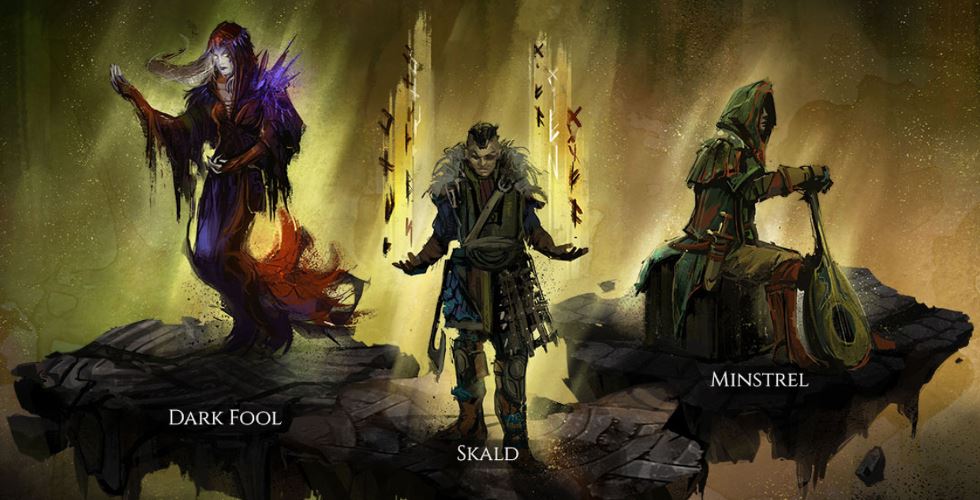
After the mages had their big appearance last week, City State Entertainment (CSE) presents the support archetype and its three classes in their current class presentation: the “Bards” of Camelot Unchained (RvR-MMORPG).
The hybrid healers of the Devout archetype have received support on the support front since this weekend. The three new support or bard classes cannot heal, but can strengthen allies (buffs), weaken enemies (debuffs), and increase the movement speed of entire groups, which will be a great blessing due to the long travel paths and lack of mounts.
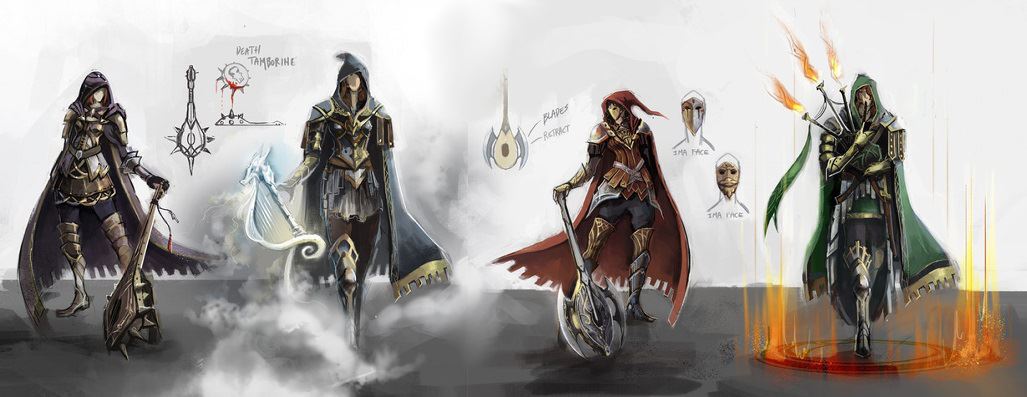
The support archetype divides into the following three different classes:
Minstrel
The Minstrel (Arthurian) are masters of instruments, classical bards who inspire their troops with music (among other buffs) for battle and rock the victory celebration at the end of the battle. The more minstrels combine their music, the stronger the effect of the song they play, allowing them to give their allies a significant boost. Each song resonates for a certain time until it finally fades away, as does the effect of the music. Thus, it is crucial for the minstrel to plan their performance down to the smallest detail and choose the right songs for the right moment to maintain the morale of the troops throughout the entire length of the conflict.
All three bards have a song that increases the movement speed of the group, with the minstrel giving his allies the fastest legs. However, if the minstrel takes damage, the effect will be interrupted for a short time. The great peculiarity of the minstrel is that he can really put in effort when playing. The harder he strums the strings, the more powerful the effects of his music become. He should, however, consider carefully when to use this, as the songs that are boosted this way last for a shorter time.
Dark Fool
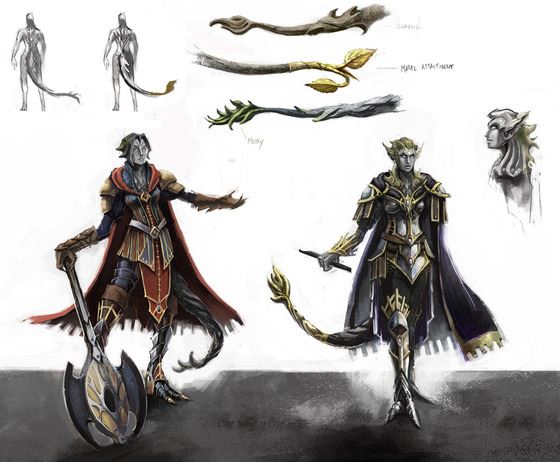
Like many classes of the Tuatha Dé Danann, the Dark Fool appears somewhat eerie and twisted, as opposed to the minstrel, who aims to please others with his music, the Dark Fool enjoys the misery of others. Despite his musical talent and contrary to the other bards, he also employs cunning tricks and illusions. Likewise, the Dark Fools focus less on playing songs and more on battle cries (shouts), which, contrary to the long-lasting effects of songs, trigger more temporary effects. These effects are aimed less at the well-being of their allies and more at the suffering of their enemies (debuffs).
They are masters of illusions, luring their enemies into traps to torment them (life leech), which pleases them even more than the death of an enemy. The more souls there are to torment, the more powerful the Dark Fool becomes. Hence, he draws his full potential especially from desperate battles when outnumbered, while his power begins to wane once his side gains the upper hand and comes closer to victory.
Like the other two bards, the Dark Fool also has a song that increases the speed of his group, but to a lesser extent than that of the minstrel. Additionally, the speed effect does not break upon taking damage, but instead increases the damage that the Dark Fool’s group receives from enemies. However, if the Dark Fool can finish his song undisturbed, the group receives a buff that reduces the blood and stamina consumption (similar to mana from other games) of the next used combat ability and slightly increases its damage. Their great peculiarity is that the battle cries of the Dark Fool negate the buffs of their enemies and weaken them even further.
Skalds
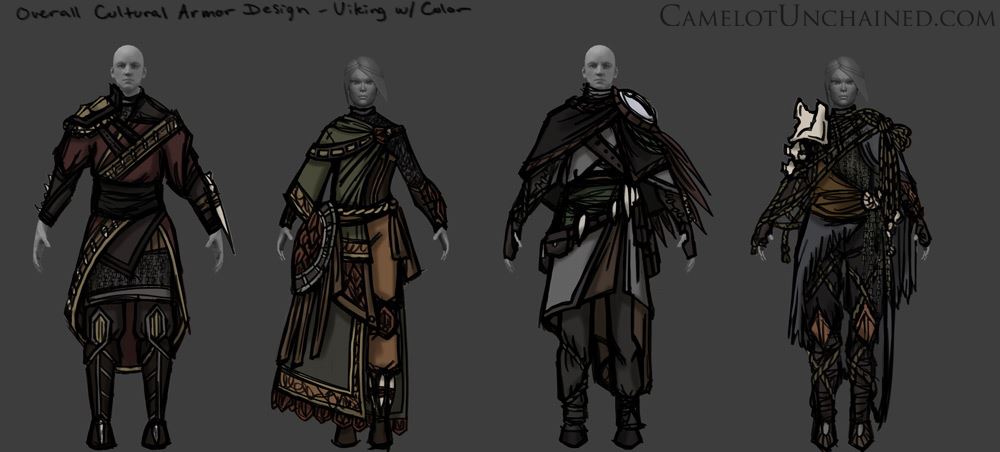
Skalds / Skalden (Viking) were the singers and poets of medieval Scandinavia. Also in Camelot Unchained, they can handle words like no other. Thus, it is not surprising that they forgo instruments and rely entirely on their singing. This can be of great advantage, as the skalds can carry weapons instead of instruments, thereby increasing their damage. They are therefore more offensively oriented than their two counterparts.
The downside is that a single “silence spell” can shut down the skald’s music, while the other two bards can still at least use their instruments. However, if they can sing undisturbed, they weaken (debuff) and damage their enemies over time (DoT) and assist their allies in defeating foes.
Like the minstrel, the speed effect of the skald disappears when damage received interrupts their singing. Unfortunately, the speed buff is also slightly lower for the skald, but in return, his singing provides a strong attack bonus for the first strike. The peculiarity of the skald’s songs is that the effects of the previous song can connect with the effects of the new song and act simultaneously. But the skald must also use his talent carefully, as his songs demand more from him (higher energy costs) than those of the other bards.
You can find more class presentations and information about the game on our news overview of Camelot Unchained.

Your opinion is important to us!
Do you like the article? Then let us know!