


2022 brings with it a sequel to the most successful CoD title so far, Modern Warfare II. Following the very weak sales of Call of Duty: Vanguard, a significant upswing is expected here.

But what happens after that? By 2024, the last “Black Ops” title will already be 4 years old. Will the fan base hold on that long? What if the next setting doesn’t resonate at all?
Long-term, Call of Duty risks losing its paid titles entirely. CoD could be perceived more as a free-to-play franchise.
Perhaps that is even the plan – that cannot be said for sure right now. But so far, the annual titles have been a guarantee to remain in the discussion.
Generally, the strong connection of many players to the individual series of the franchise could also be lost. Annual titles have always defined CoD, and if the current game doesn’t fit: “Then I’ll just wait until next year – a Black Ops is coming then”.
Moreover, if there is no new zombie experience, this CoD community might lose interest in the short or long term. One of the biggest content creators for CoD Zombies can hardly imagine waiting until 2024:
Additionally, the current strategy may tempt them to take fewer risks in the future. Vanguard faced criticism for not introducing enough new elements in multiplayer.
If there is only a title every 2 years, gameplay experiments or important innovations might be missed. CoD would then only bring:
- Better graphics
- New maps
- Proven settings
- The usual campaign
If a new premium “Call of Duty” does not resonate at all, the developers might toil for 2 years on an unpopular game and then completely abandon the next title.
So far, much about this topic remains unclear and Call of Duty probably won’t help clarify things much in the near future.
I personally welcome the shift to a 2-year rhythm. It could give the franchise new room to grow and unleash innovative forces.
Looking at the sale of Activision Blizzard to Microsoft, new opportunities arise – also in terms of budget and franchise expansion.
The free-to-play Warzone has shown the CoD creators that a Call of Duty does not have to be a full-price title to ring the cash registers.
The potential and demand are there. Time will tell if Call of Duty makes the most of it.
Please feel free to share your thoughts on the topic with us in the comments. What opportunities & risks do you see for CoD? Do you like the idea of a 2-year rhythm?
With the live-season model and the very popular free-to-play Warzone, the franchise remains relevant. Especially since a second part with better technology for Warzone has already been announced.

Further opportunities arise from potential new titles under the Call of Duty umbrella. Activision responded with the following statement regarding the leaks about the missing premium title in 2023:
We have an exciting list of premium and free-to-play experiences for Call of Duty this year, next year, and beyond. Reports claiming otherwise are incorrect. We look forward to sharing details when the time is right.
via Twitter@charlieINTEL
The announcement by the CoD creators could mean many things. The leak report is neither confirmed nor really denied – a premium title for 2022 has already been announced, and a new free-to-play title is being launched alongside Warzone.
However, there is also room for other CoD experiences that we have barely or not at all on our radar. The leaker “Tom Henderson” wrote as early as the beginning of 2021:
“A separate zombie project is in early development. The game is currently not connected to any other title,” Henderson wrote back then.
This could mean a CoD zombie title that focuses entirely on the popular PvE aspect of Call of Duty. The trend would lean towards a paid title.
Other rumors revolve around a standalone mobile version for Warzone. The title would likely be a free-to-play game.
However, developers might also be pursuing entirely different projects that expand the Call of Duty franchise and bring in new dynamics.
In the end, the longer life cycle of the premium titles could also lead to a generally higher quality and quantity of content.
By the way, we also have a MeinMMO podcast. Recently, we discussed the big shooter releases of early 2022:
CoD without annual titles: The risks
Call of Duty is a development machine, worked on by many studios, and its strategy includes annual releases.
Shifting an established strategy always carries some risk and also involves a lot of speculation.
There is particularly great potential for failure in choosing the right setting.
2022 brings with it a sequel to the most successful CoD title so far, Modern Warfare II. Following the very weak sales of Call of Duty: Vanguard, a significant upswing is expected here.
But what happens after that? By 2024, the last “Black Ops” title will already be 4 years old. Will the fan base hold on that long? What if the next setting doesn’t resonate at all?
Long-term, Call of Duty risks losing its paid titles entirely. CoD could be perceived more as a free-to-play franchise.
Perhaps that is even the plan – that cannot be said for sure right now. But so far, the annual titles have been a guarantee to remain in the discussion.
Generally, the strong connection of many players to the individual series of the franchise could also be lost. Annual titles have always defined CoD, and if the current game doesn’t fit: “Then I’ll just wait until next year – a Black Ops is coming then”.
Moreover, if there is no new zombie experience, this CoD community might lose interest in the short or long term. One of the biggest content creators for CoD Zombies can hardly imagine waiting until 2024:
Additionally, the current strategy may tempt them to take fewer risks in the future. Vanguard faced criticism for not introducing enough new elements in multiplayer.
If there is only a title every 2 years, gameplay experiments or important innovations might be missed. CoD would then only bring:
- Better graphics
- New maps
- Proven settings
- The usual campaign
If a new premium “Call of Duty” does not resonate at all, the developers might toil for 2 years on an unpopular game and then completely abandon the next title.
So far, much about this topic remains unclear and Call of Duty probably won’t help clarify things much in the near future.
I personally welcome the shift to a 2-year rhythm. It could give the franchise new room to grow and unleash innovative forces.
Looking at the sale of Activision Blizzard to Microsoft, new opportunities arise – also in terms of budget and franchise expansion.
The free-to-play Warzone has shown the CoD creators that a Call of Duty does not have to be a full-price title to ring the cash registers.
The potential and demand are there. Time will tell if Call of Duty makes the most of it.
Please feel free to share your thoughts on the topic with us in the comments. What opportunities & risks do you see for CoD? Do you like the idea of a 2-year rhythm?
With the live-season model and the very popular free-to-play Warzone, the franchise remains relevant. Especially since a second part with better technology for Warzone has already been announced.
Further opportunities arise from potential new titles under the Call of Duty umbrella. Activision responded with the following statement regarding the leaks about the missing premium title in 2023:
We have an exciting list of premium and free-to-play experiences for Call of Duty this year, next year, and beyond. Reports claiming otherwise are incorrect. We look forward to sharing details when the time is right.
via Twitter@charlieINTEL
The announcement by the CoD creators could mean many things. The leak report is neither confirmed nor really denied – a premium title for 2022 has already been announced, and a new free-to-play title is being launched alongside Warzone.
However, there is also room for other CoD experiences that we have barely or not at all on our radar. The leaker “Tom Henderson” wrote as early as the beginning of 2021:
“A separate zombie project is in early development. The game is currently not connected to any other title,” Henderson wrote back then.
This could mean a CoD zombie title that focuses entirely on the popular PvE aspect of Call of Duty. The trend would lean towards a paid title.
Other rumors revolve around a standalone mobile version for Warzone. The title would likely be a free-to-play game.
However, developers might also be pursuing entirely different projects that expand the Call of Duty franchise and bring in new dynamics.
In the end, the longer life cycle of the premium titles could also lead to a generally higher quality and quantity of content.
By the way, we also have a MeinMMO podcast. Recently, we discussed the big shooter releases of early 2022:
CoD without annual titles: The risks
Call of Duty is a development machine, worked on by many studios, and its strategy includes annual releases.
Shifting an established strategy always carries some risk and also involves a lot of speculation.
There is particularly great potential for failure in choosing the right setting.
2022 brings with it a sequel to the most successful CoD title so far, Modern Warfare II. Following the very weak sales of Call of Duty: Vanguard, a significant upswing is expected here.
But what happens after that? By 2024, the last “Black Ops” title will already be 4 years old. Will the fan base hold on that long? What if the next setting doesn’t resonate at all?
Long-term, Call of Duty risks losing its paid titles entirely. CoD could be perceived more as a free-to-play franchise.
Perhaps that is even the plan – that cannot be said for sure right now. But so far, the annual titles have been a guarantee to remain in the discussion.
Generally, the strong connection of many players to the individual series of the franchise could also be lost. Annual titles have always defined CoD, and if the current game doesn’t fit: “Then I’ll just wait until next year – a Black Ops is coming then”.
Moreover, if there is no new zombie experience, this CoD community might lose interest in the short or long term. One of the biggest content creators for CoD Zombies can hardly imagine waiting until 2024:
Additionally, the current strategy may tempt them to take fewer risks in the future. Vanguard faced criticism for not introducing enough new elements in multiplayer.
If there is only a title every 2 years, gameplay experiments or important innovations might be missed. CoD would then only bring:
- Better graphics
- New maps
- Proven settings
- The usual campaign
If a new premium “Call of Duty” does not resonate at all, the developers might toil for 2 years on an unpopular game and then completely abandon the next title.
So far, much about this topic remains unclear and Call of Duty probably won’t help clarify things much in the near future.
I personally welcome the shift to a 2-year rhythm. It could give the franchise new room to grow and unleash innovative forces.
Looking at the sale of Activision Blizzard to Microsoft, new opportunities arise – also in terms of budget and franchise expansion.
The free-to-play Warzone has shown the CoD creators that a Call of Duty does not have to be a full-price title to ring the cash registers.
The potential and demand are there. Time will tell if Call of Duty makes the most of it.
Please feel free to share your thoughts on the topic with us in the comments. What opportunities & risks do you see for CoD? Do you like the idea of a 2-year rhythm?
2022 brings with it a sequel to the most successful CoD title so far, Modern Warfare II. Following the very weak sales of Call of Duty: Vanguard, a significant upswing is expected here.
But what happens after that? By 2024, the last “Black Ops” title will already be 4 years old. Will the fan base hold on that long? What if the next setting doesn’t resonate at all?
Long-term, Call of Duty risks losing its paid titles entirely. CoD could be perceived more as a free-to-play franchise.
Perhaps that is even the plan – that cannot be said for sure right now. But so far, the annual titles have been a guarantee to remain in the discussion.
Generally, the strong connection of many players to the individual series of the franchise could also be lost. Annual titles have always defined CoD, and if the current game doesn’t fit: “Then I’ll just wait until next year – a Black Ops is coming then”.
Moreover, if there is no new zombie experience, this CoD community might lose interest in the short or long term. One of the biggest content creators for CoD Zombies can hardly imagine waiting until 2024:
Additionally, the current strategy may tempt them to take fewer risks in the future. Vanguard faced criticism for not introducing enough new elements in multiplayer.
If there is only a title every 2 years, gameplay experiments or important innovations might be missed. CoD would then only bring:
- Better graphics
- New maps
- Proven settings
- The usual campaign
If a new premium “Call of Duty” does not resonate at all, the developers might toil for 2 years on an unpopular game and then completely abandon the next title.
So far, much about this topic remains unclear and Call of Duty probably won’t help clarify things much in the near future.
I personally welcome the shift to a 2-year rhythm. It could give the franchise new room to grow and unleash innovative forces.
Looking at the sale of Activision Blizzard to Microsoft, new opportunities arise – also in terms of budget and franchise expansion.
The free-to-play Warzone has shown the CoD creators that a Call of Duty does not have to be a full-price title to ring the cash registers.
The potential and demand are there. Time will tell if Call of Duty makes the most of it.
Please feel free to share your thoughts on the topic with us in the comments. What opportunities & risks do you see for CoD? Do you like the idea of a 2-year rhythm?
With the live-season model and the very popular free-to-play Warzone, the franchise remains relevant. Especially since a second part with better technology for Warzone has already been announced.
Further opportunities arise from potential new titles under the Call of Duty umbrella. Activision responded with the following statement regarding the leaks about the missing premium title in 2023:
We have an exciting list of premium and free-to-play experiences for Call of Duty this year, next year, and beyond. Reports claiming otherwise are incorrect. We look forward to sharing details when the time is right.
via Twitter@charlieINTEL
The announcement by the CoD creators could mean many things. The leak report is neither confirmed nor really denied – a premium title for 2022 has already been announced, and a new free-to-play title is being launched alongside Warzone.
However, there is also room for other CoD experiences that we have barely or not at all on our radar. The leaker “Tom Henderson” wrote as early as the beginning of 2021:
“A separate zombie project is in early development. The game is currently not connected to any other title,” Henderson wrote back then.
This could mean a CoD zombie title that focuses entirely on the popular PvE aspect of Call of Duty. The trend would lean towards a paid title.
Other rumors revolve around a standalone mobile version for Warzone. The title would likely be a free-to-play game.
However, developers might also be pursuing entirely different projects that expand the Call of Duty franchise and bring in new dynamics.
In the end, the longer life cycle of the premium titles could also lead to a generally higher quality and quantity of content.
By the way, we also have a MeinMMO podcast. Recently, we discussed the big shooter releases of early 2022:
CoD without annual titles: The risks
Call of Duty is a development machine, worked on by many studios, and its strategy includes annual releases.
Shifting an established strategy always carries some risk and also involves a lot of speculation.
There is particularly great potential for failure in choosing the right setting.
2022 brings with it a sequel to the most successful CoD title so far, Modern Warfare II. Following the very weak sales of Call of Duty: Vanguard, a significant upswing is expected here.
But what happens after that? By 2024, the last “Black Ops” title will already be 4 years old. Will the fan base hold on that long? What if the next setting doesn’t resonate at all?
Long-term, Call of Duty risks losing its paid titles entirely. CoD could be perceived more as a free-to-play franchise.
Perhaps that is even the plan – that cannot be said for sure right now. But so far, the annual titles have been a guarantee to remain in the discussion.
Generally, the strong connection of many players to the individual series of the franchise could also be lost. Annual titles have always defined CoD, and if the current game doesn’t fit: “Then I’ll just wait until next year – a Black Ops is coming then”.
Moreover, if there is no new zombie experience, this CoD community might lose interest in the short or long term. One of the biggest content creators for CoD Zombies can hardly imagine waiting until 2024:
Additionally, the current strategy may tempt them to take fewer risks in the future. Vanguard faced criticism for not introducing enough new elements in multiplayer.
If there is only a title every 2 years, gameplay experiments or important innovations might be missed. CoD would then only bring:
- Better graphics
- New maps
- Proven settings
- The usual campaign
If a new premium “Call of Duty” does not resonate at all, the developers might toil for 2 years on an unpopular game and then completely abandon the next title.
So far, much about this topic remains unclear and Call of Duty probably won’t help clarify things much in the near future.
I personally welcome the shift to a 2-year rhythm. It could give the franchise new room to grow and unleash innovative forces.
Looking at the sale of Activision Blizzard to Microsoft, new opportunities arise – also in terms of budget and franchise expansion.
The free-to-play Warzone has shown the CoD creators that a Call of Duty does not have to be a full-price title to ring the cash registers.
The potential and demand are there. Time will tell if Call of Duty makes the most of it.
Please feel free to share your thoughts on the topic with us in the comments. What opportunities & risks do you see for CoD? Do you like the idea of a 2-year rhythm?
An insider report reveals that Call of Duty 2023 will likely skip the annual multiplayer title. Our CoD expert Maik Schneider sees this as both an opportunity and a risk.

The release of the free Battle Royale Call of Duty: Warzone has fundamentally changed the CoD franchise.
Even the developers were surprised by the massive success and subsequently changed their plans – instead of supporting the Battle Royale for just one year, Warzone will soon enter its third year.
However, the success of Warzone is putting pressure on the annual premium titles, for which players still have to pay full price.
An insider leak now suggests that Call of Duty will skip the annual title for the first time since 2005 this year. This is a great opportunity for the shooter franchise, but it also carries risks. I want to delve deeper into both aspects.
CoD without annual titles: The opportunities
The annual releases of CoD led to a fragmentation of the fan base. Some prefer the titles from “Modern Warfare”, while others identify as Treyarch groupies and stick mainly to the “Black Ops” series.
This division could dissolve to some extent, bringing the community closer together.
For CoD, this would fundamentally mean more sales of a title:
- Because there won’t be a CoD every year anymore
- Because fans of a setting might not want to wait 2 years for the next Black Ops
Players are again buying a “Call of Duty” rather than just the setting. This shifts the focus back onto the unique features of the entire series rather than the individual titles.
A strong opportunity to sharpen the profile of the series more and compete with other games instead of constantly battling internally.
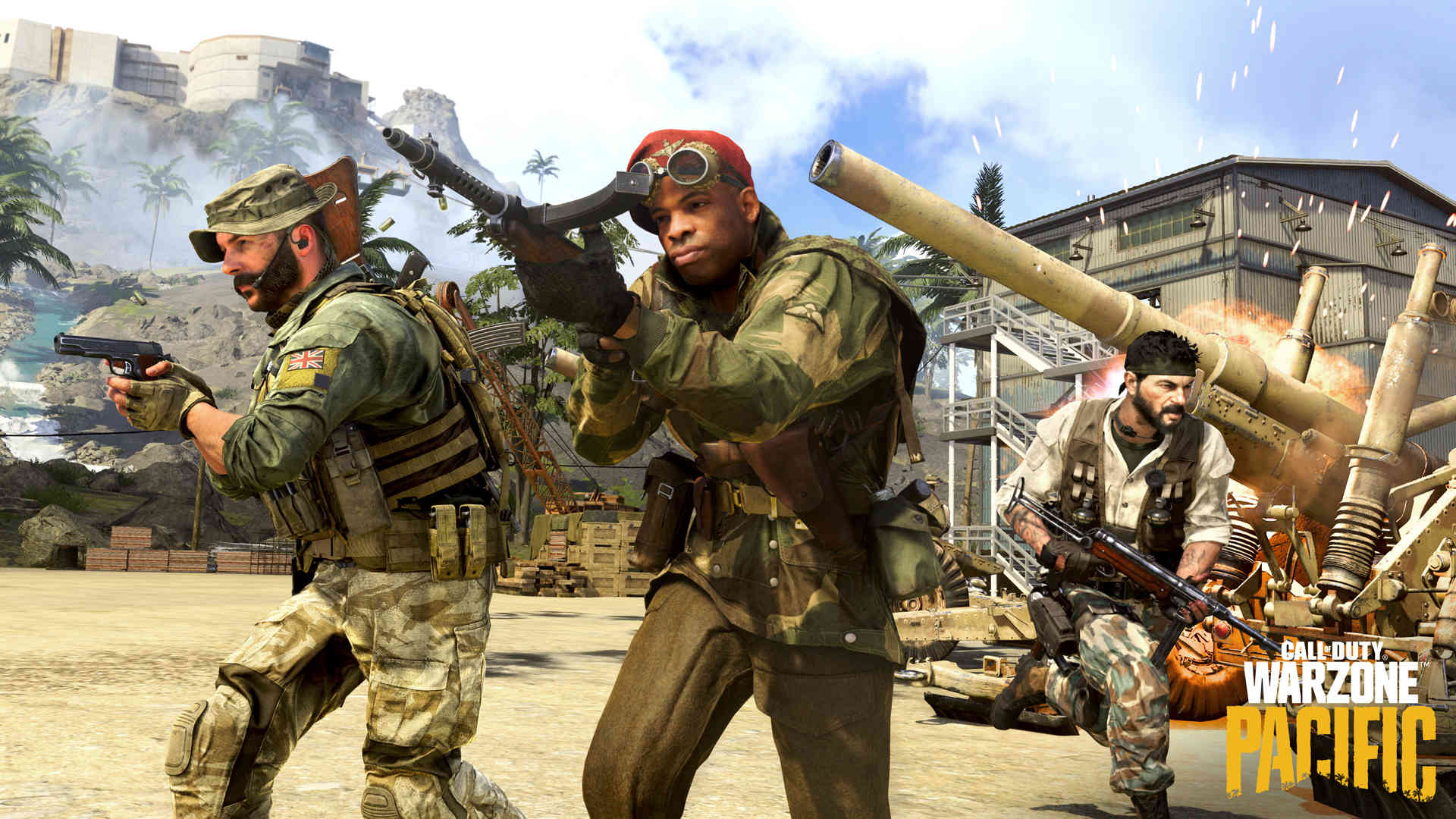
The longer life cycles also lead to higher revenues from important microtransactions. The investor calls from recent years have proven how great the potential for Call of Duty is in terms of in-game sales.
CoD is at a point where the decision also makes financial sense: By skipping a title, they tend to save development costs while increasing earnings per title.
Whether more revenue can be generated overall remains to be seen. However, profit shares are likely to increase.
Moreover, if there is no new zombie experience, this CoD community might lose interest in the short or long term. One of the biggest content creators for CoD Zombies can hardly imagine waiting until 2024:
Additionally, the current strategy may tempt them to take fewer risks in the future. Vanguard faced criticism for not introducing enough new elements in multiplayer.
If there is only a title every 2 years, gameplay experiments or important innovations might be missed. CoD would then only bring:
- Better graphics
- New maps
- Proven settings
- The usual campaign
If a new premium “Call of Duty” does not resonate at all, the developers might toil for 2 years on an unpopular game and then completely abandon the next title.
So far, much about this topic remains unclear and Call of Duty probably won’t help clarify things much in the near future.
I personally welcome the shift to a 2-year rhythm. It could give the franchise new room to grow and unleash innovative forces.
Looking at the sale of Activision Blizzard to Microsoft, new opportunities arise – also in terms of budget and franchise expansion.
The free-to-play Warzone has shown the CoD creators that a Call of Duty does not have to be a full-price title to ring the cash registers.
The potential and demand are there. Time will tell if Call of Duty makes the most of it.
Please feel free to share your thoughts on the topic with us in the comments. What opportunities & risks do you see for CoD? Do you like the idea of a 2-year rhythm?
2022 brings with it a sequel to the most successful CoD title so far, Modern Warfare II. Following the very weak sales of Call of Duty: Vanguard, a significant upswing is expected here.
But what happens after that? By 2024, the last “Black Ops” title will already be 4 years old. Will the fan base hold on that long? What if the next setting doesn’t resonate at all?
Long-term, Call of Duty risks losing its paid titles entirely. CoD could be perceived more as a free-to-play franchise.
Perhaps that is even the plan – that cannot be said for sure right now. But so far, the annual titles have been a guarantee to remain in the discussion.
Generally, the strong connection of many players to the individual series of the franchise could also be lost. Annual titles have always defined CoD, and if the current game doesn’t fit: “Then I’ll just wait until next year – a Black Ops is coming then”.
Moreover, if there is no new zombie experience, this CoD community might lose interest in the short or long term. One of the biggest content creators for CoD Zombies can hardly imagine waiting until 2024:
Additionally, the current strategy may tempt them to take fewer risks in the future. Vanguard faced criticism for not introducing enough new elements in multiplayer.
If there is only a title every 2 years, gameplay experiments or important innovations might be missed. CoD would then only bring:
- Better graphics
- New maps
- Proven settings
- The usual campaign
If a new premium “Call of Duty” does not resonate at all, the developers might toil for 2 years on an unpopular game and then completely abandon the next title.
So far, much about this topic remains unclear and Call of Duty probably won’t help clarify things much in the near future.
I personally welcome the shift to a 2-year rhythm. It could give the franchise new room to grow and unleash innovative forces.
Looking at the sale of Activision Blizzard to Microsoft, new opportunities arise – also in terms of budget and franchise expansion.
The free-to-play Warzone has shown the CoD creators that a Call of Duty does not have to be a full-price title to ring the cash registers.
The potential and demand are there. Time will tell if Call of Duty makes the most of it.
Please feel free to share your thoughts on the topic with us in the comments. What opportunities & risks do you see for CoD? Do you like the idea of a 2-year rhythm?
With the live-season model and the very popular free-to-play Warzone, the franchise remains relevant. Especially since a second part with better technology for Warzone has already been announced.
Further opportunities arise from potential new titles under the Call of Duty umbrella. Activision responded with the following statement regarding the leaks about the missing premium title in 2023:
We have an exciting list of premium and free-to-play experiences for Call of Duty this year, next year, and beyond. Reports claiming otherwise are incorrect. We look forward to sharing details when the time is right.
via Twitter@charlieINTEL
The announcement by the CoD creators could mean many things. The leak report is neither confirmed nor really denied – a premium title for 2022 has already been announced, and a new free-to-play title is being launched alongside Warzone.
However, there is also room for other CoD experiences that we have barely or not at all on our radar. The leaker “Tom Henderson” wrote as early as the beginning of 2021:
“A separate zombie project is in early development. The game is currently not connected to any other title,” Henderson wrote back then.
This could mean a CoD zombie title that focuses entirely on the popular PvE aspect of Call of Duty. The trend would lean towards a paid title.
Other rumors revolve around a standalone mobile version for Warzone. The title would likely be a free-to-play game.
However, developers might also be pursuing entirely different projects that expand the Call of Duty franchise and bring in new dynamics.
In the end, the longer life cycle of the premium titles could also lead to a generally higher quality and quantity of content.
By the way, we also have a MeinMMO podcast. Recently, we discussed the big shooter releases of early 2022:
CoD without annual titles: The risks
Call of Duty is a development machine, worked on by many studios, and its strategy includes annual releases.
Shifting an established strategy always carries some risk and also involves a lot of speculation.
There is particularly great potential for failure in choosing the right setting.
2022 brings with it a sequel to the most successful CoD title so far, Modern Warfare II. Following the very weak sales of Call of Duty: Vanguard, a significant upswing is expected here.
But what happens after that? By 2024, the last “Black Ops” title will already be 4 years old. Will the fan base hold on that long? What if the next setting doesn’t resonate at all?
Long-term, Call of Duty risks losing its paid titles entirely. CoD could be perceived more as a free-to-play franchise.
Perhaps that is even the plan – that cannot be said for sure right now. But so far, the annual titles have been a guarantee to remain in the discussion.
Generally, the strong connection of many players to the individual series of the franchise could also be lost. Annual titles have always defined CoD, and if the current game doesn’t fit: “Then I’ll just wait until next year – a Black Ops is coming then”.
Moreover, if there is no new zombie experience, this CoD community might lose interest in the short or long term. One of the biggest content creators for CoD Zombies can hardly imagine waiting until 2024:
Additionally, the current strategy may tempt them to take fewer risks in the future. Vanguard faced criticism for not introducing enough new elements in multiplayer.
If there is only a title every 2 years, gameplay experiments or important innovations might be missed. CoD would then only bring:
- Better graphics
- New maps
- Proven settings
- The usual campaign
If a new premium “Call of Duty” does not resonate at all, the developers might toil for 2 years on an unpopular game and then completely abandon the next title.
So far, much about this topic remains unclear and Call of Duty probably won’t help clarify things much in the near future.
I personally welcome the shift to a 2-year rhythm. It could give the franchise new room to grow and unleash innovative forces.
Looking at the sale of Activision Blizzard to Microsoft, new opportunities arise – also in terms of budget and franchise expansion.
The free-to-play Warzone has shown the CoD creators that a Call of Duty does not have to be a full-price title to ring the cash registers.
The potential and demand are there. Time will tell if Call of Duty makes the most of it.
Please feel free to share your thoughts on the topic with us in the comments. What opportunities & risks do you see for CoD? Do you like the idea of a 2-year rhythm?
2022 brings with it a sequel to the most successful CoD title so far, Modern Warfare II. Following the very weak sales of Call of Duty: Vanguard, a significant upswing is expected here.
But what happens after that? By 2024, the last “Black Ops” title will already be 4 years old. Will the fan base hold on that long? What if the next setting doesn’t resonate at all?
Long-term, Call of Duty risks losing its paid titles entirely. CoD could be perceived more as a free-to-play franchise.
Perhaps that is even the plan – that cannot be said for sure right now. But so far, the annual titles have been a guarantee to remain in the discussion.
Generally, the strong connection of many players to the individual series of the franchise could also be lost. Annual titles have always defined CoD, and if the current game doesn’t fit: “Then I’ll just wait until next year – a Black Ops is coming then”.
Moreover, if there is no new zombie experience, this CoD community might lose interest in the short or long term. One of the biggest content creators for CoD Zombies can hardly imagine waiting until 2024:
Additionally, the current strategy may tempt them to take fewer risks in the future. Vanguard faced criticism for not introducing enough new elements in multiplayer.
If there is only a title every 2 years, gameplay experiments or important innovations might be missed. CoD would then only bring:
- Better graphics
- New maps
- Proven settings
- The usual campaign
If a new premium “Call of Duty” does not resonate at all, the developers might toil for 2 years on an unpopular game and then completely abandon the next title.
So far, much about this topic remains unclear and Call of Duty probably won’t help clarify things much in the near future.
I personally welcome the shift to a 2-year rhythm. It could give the franchise new room to grow and unleash innovative forces.
Looking at the sale of Activision Blizzard to Microsoft, new opportunities arise – also in terms of budget and franchise expansion.
The free-to-play Warzone has shown the CoD creators that a Call of Duty does not have to be a full-price title to ring the cash registers.
The potential and demand are there. Time will tell if Call of Duty makes the most of it.
Please feel free to share your thoughts on the topic with us in the comments. What opportunities & risks do you see for CoD? Do you like the idea of a 2-year rhythm?
With the live-season model and the very popular free-to-play Warzone, the franchise remains relevant. Especially since a second part with better technology for Warzone has already been announced.
Further opportunities arise from potential new titles under the Call of Duty umbrella. Activision responded with the following statement regarding the leaks about the missing premium title in 2023:
We have an exciting list of premium and free-to-play experiences for Call of Duty this year, next year, and beyond. Reports claiming otherwise are incorrect. We look forward to sharing details when the time is right.
via Twitter@charlieINTEL
The announcement by the CoD creators could mean many things. The leak report is neither confirmed nor really denied – a premium title for 2022 has already been announced, and a new free-to-play title is being launched alongside Warzone.
However, there is also room for other CoD experiences that we have barely or not at all on our radar. The leaker “Tom Henderson” wrote as early as the beginning of 2021:
“A separate zombie project is in early development. The game is currently not connected to any other title,” Henderson wrote back then.
This could mean a CoD zombie title that focuses entirely on the popular PvE aspect of Call of Duty. The trend would lean towards a paid title.
Other rumors revolve around a standalone mobile version for Warzone. The title would likely be a free-to-play game.
However, developers might also be pursuing entirely different projects that expand the Call of Duty franchise and bring in new dynamics.
In the end, the longer life cycle of the premium titles could also lead to a generally higher quality and quantity of content.
By the way, we also have a MeinMMO podcast. Recently, we discussed the big shooter releases of early 2022:
CoD without annual titles: The risks
Call of Duty is a development machine, worked on by many studios, and its strategy includes annual releases.
Shifting an established strategy always carries some risk and also involves a lot of speculation.
There is particularly great potential for failure in choosing the right setting.
2022 brings with it a sequel to the most successful CoD title so far, Modern Warfare II. Following the very weak sales of Call of Duty: Vanguard, a significant upswing is expected here.
But what happens after that? By 2024, the last “Black Ops” title will already be 4 years old. Will the fan base hold on that long? What if the next setting doesn’t resonate at all?
Long-term, Call of Duty risks losing its paid titles entirely. CoD could be perceived more as a free-to-play franchise.
Perhaps that is even the plan – that cannot be said for sure right now. But so far, the annual titles have been a guarantee to remain in the discussion.
Generally, the strong connection of many players to the individual series of the franchise could also be lost. Annual titles have always defined CoD, and if the current game doesn’t fit: “Then I’ll just wait until next year – a Black Ops is coming then”.
Moreover, if there is no new zombie experience, this CoD community might lose interest in the short or long term. One of the biggest content creators for CoD Zombies can hardly imagine waiting until 2024:
Additionally, the current strategy may tempt them to take fewer risks in the future. Vanguard faced criticism for not introducing enough new elements in multiplayer.
If there is only a title every 2 years, gameplay experiments or important innovations might be missed. CoD would then only bring:
- Better graphics
- New maps
- Proven settings
- The usual campaign
If a new premium “Call of Duty” does not resonate at all, the developers might toil for 2 years on an unpopular game and then completely abandon the next title.
So far, much about this topic remains unclear and Call of Duty probably won’t help clarify things much in the near future.
I personally welcome the shift to a 2-year rhythm. It could give the franchise new room to grow and unleash innovative forces.
Looking at the sale of Activision Blizzard to Microsoft, new opportunities arise – also in terms of budget and franchise expansion.
The free-to-play Warzone has shown the CoD creators that a Call of Duty does not have to be a full-price title to ring the cash registers.
The potential and demand are there. Time will tell if Call of Duty makes the most of it.
Please feel free to share your thoughts on the topic with us in the comments. What opportunities & risks do you see for CoD? Do you like the idea of a 2-year rhythm?

Your opinion is important to us!
Do you like the article? Then let us know!