

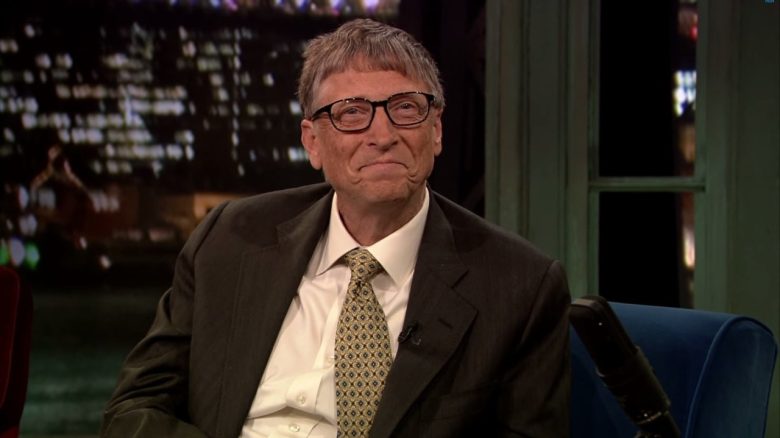
In Germany, there is a discussion about the 4-day workweek, but Bill Gates, the founder of Microsoft, states that he sees the future in just 3 days. However, for many companies, this could become unaffordable.
Bill Gates, the co-founder of Microsoft, sees the future of work as a week with only three days. The reason for this, he believes, lies primarily in the rapid development of artificial intelligence. Because AI will change the workplace as significantly as the computer did 20 years ago.
At first glance, this sounds tempting, but many people fear that the use of AI could ultimately cost them their jobs.
AI has the same impact on work as the computer did years ago
What does Bill Gates say? During an appearance on Trevor Noah’s “What Now?” podcast, Gates shared his vision of a future where AI-driven productivity gains could lead to a three-day workweek. This is reported by the French magazine Jeuxvideo.com.
In the conversation, he emphasized that AI will play a significant role in the workplace in the future. He compared the effects of AI to the invention of the computer and stated that AI will not eliminate jobs but fundamentally change them. The computer also did not completely abolish jobs; it only transformed them.
According to him, the increase in efficiency due to AI capabilities would pave the way for a significant reduction in working hours without endangering overall productivity.
Fear of AI worries many employees
What are people afraid of? Bill Gates emphasizes that AI will not eliminate jobs but fundamentally change them. However, many people do not believe this. There are already regular reports, where people have been laid off because AI was supposedly taking over their previous tasks.
In the tech sector, there are repeated reports that people are being fired due to AI. However, the transition has not always been smooth in the past. The English-language magazine cbsnews.com reports:
- The Washington Post reported on two copywriters who lost their livelihoods because their employers decided that ChatGPT could do the work cheaper.
- Media companies like CNET have already laid off reporters because they used AI to write articles that later had to be corrected for plagiarism.
- A counseling center used a chatbot for eating disorders to replace human employees who had organized themselves in a union. After the bot gave people problematic advice, it had to be shut down.
Many therefore see AI not only as a means to increase productivity but also as a risk to their own jobs. This is because AI is significantly cheaper in everyday life than the salary of an expensive employee. The fear has now become so great, that Generation Z is now taking on manual jobs, because they believe they could be less displaced here.
On the other hand, young people are more open to AI: Especially younger employees who have grown up with rapid technological advancements are generally more receptive to the concept of AI-driven changes in work. Older generations, however, tend to express more concern about potential disruptions.

Are there safe jobs? The CEO of ChatGPT explained in an interview which professions AI cannot replace. In total, he came up with 34 professions that are safe from artificial intelligence. Alongside bus drivers and hairdressers, some other lesser-known jobs are included: The inventor of AI ChatGPT reveals which 34 professions AI will never be able to replace

Your opinion is important to us!
Do you like the article? Then let us know!