

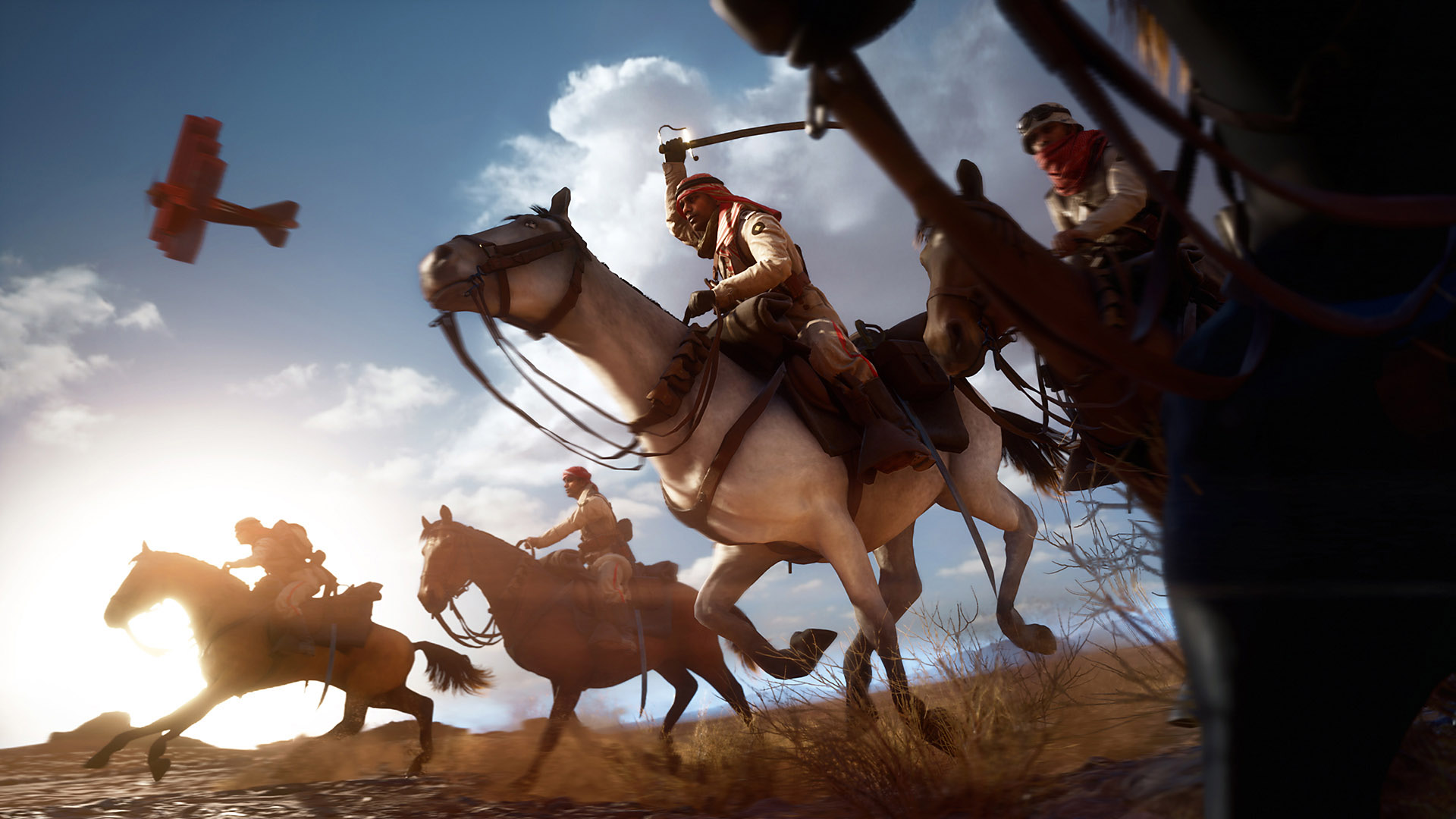
Each class in Battlefield 1 has its uniqueness. In this guide, we will show you which of these classes fits your playstyle.
The different classes from Battlefield 1 differ from those that you may know from other installments of the Battlefield series. While each class has the chance to hold its own, the roles’ unique characteristics are an important point. Assault soldiers are good at blowing up vehicles, Support soldiers assist allies, Medics can heal and revive players, and the Scout class excels at spotting enemies. To help you find a class you can manage well, we will present the differences and characteristics of the classes in Battlefield 1.
Assault
As the name suggests, this class is more suited for action-packed fights. As an Assault soldier, you fight at close to medium range against your opponents. Your primary weapons are assault rifles, which are not particularly effective over long distances. Therefore, choose fights close to you, such as in urban areas, and avoid open, expansive fields. When enemies come to battle with strong tanks, Assault soldiers are in demand.
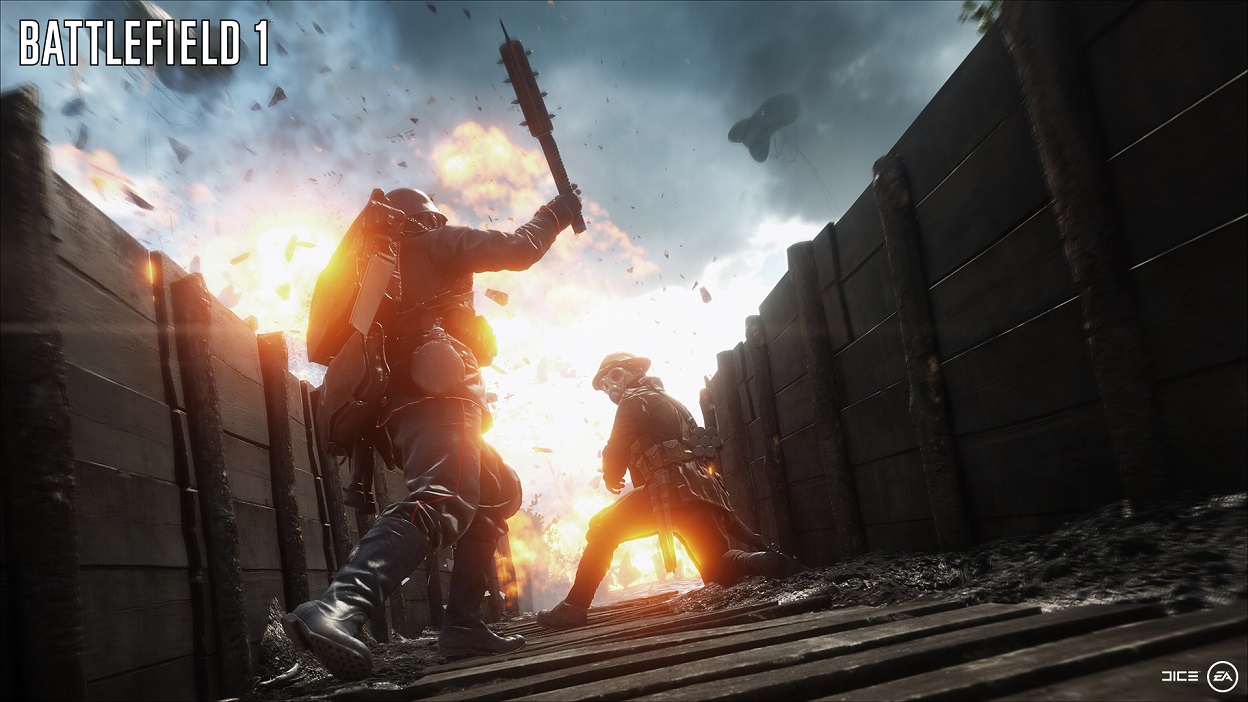
The Assault class has the ability to use various anti-tank weapons to quickly disable these heavy vehicles. If you join forces with other Assault players, you can destroy a heavily armored vehicle in no time with anti-tank grenades.
Assault soldiers fight at close to medium range and are especially effective against vehicles in small groups with other Assault soldiers.
Support
Providing ammunition is just one of the important tasks a Support soldier can fulfill. With the light machine guns that this class uses, you can effectively keep enemies at bay. These LMGs are equipped with large magazines to keep enemies pinned down with sustained fire. In your role as a supporter, you help your teammates to perform their roles effectively. You can deploy ammo boxes to ensure your allies always have access to ammunition. Additionally, you can place tripwire bombs to secure the paths to your allied snipers and cover their backs.
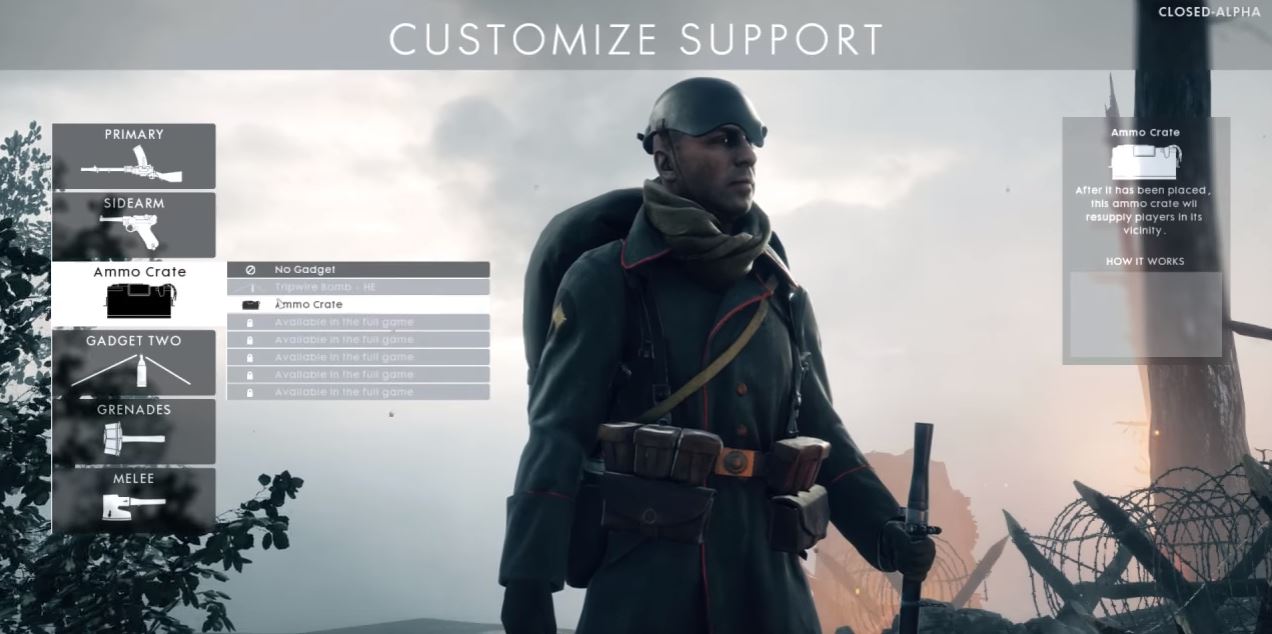
To know where your help is needed, good communication is crucial. A working microphone/headset is definitely a plus. In addition to the tripwire bomb, you also have a mortar, which can deal targeted area damage. This is especially important in game modes like Rush, where certain points on the maps need to be defended.
Support soldiers suppress enemies with their weapons and assist their allies with ammunition, tripwire bombs, and mortars.
Medic
The Medic stands behind the Assault and Support players, ensuring they stay alive. As a Medic, you have semi-automatic rifles that deal significant damage at medium range. In close-quarter or long-range battles, these weapons are not particularly strong. Generally, you don’t position yourself with this class to engage in many fights. Your focus should be on your allies rather than kills. You can place medpacks to restore your allies’ health. If a medpack arrives too late, you can also revive allies.
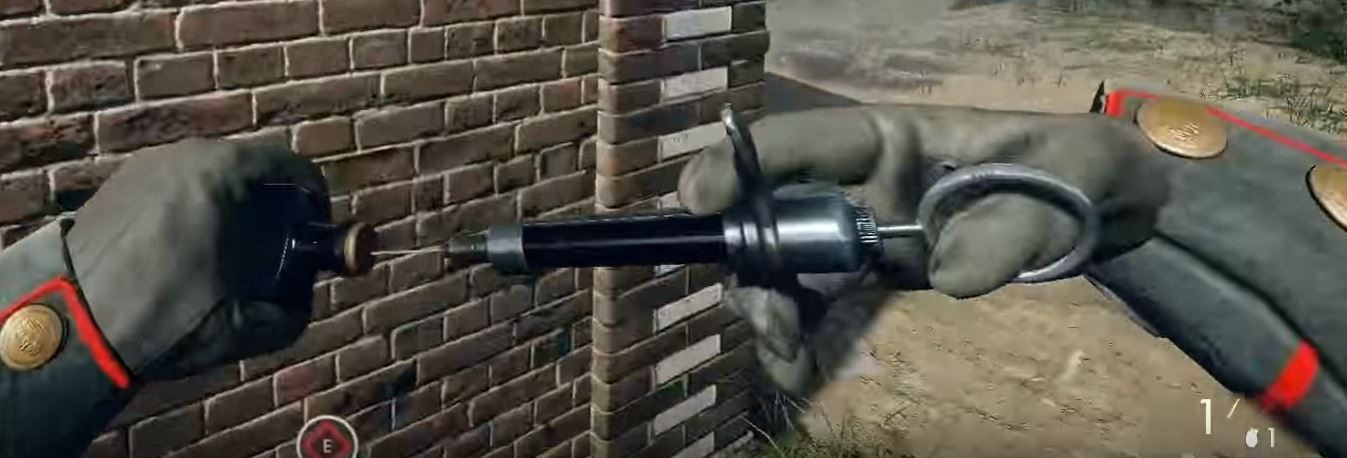
In Battlefield 1, killed players can call for a Medic to bring them back into the game. As a Medic, you receive a notification. You should respond quickly, as this allows players to return to the game faster than if they need to reposition after a respawn. Additionally, you can fire grenades from your weapon as a Medic to clear doors, obstacles, or groups of enemies out of the way.
As a Medic, you should avoid close-quarters fights. Healing and reviving allies is more important than shooting enemies.
Scout
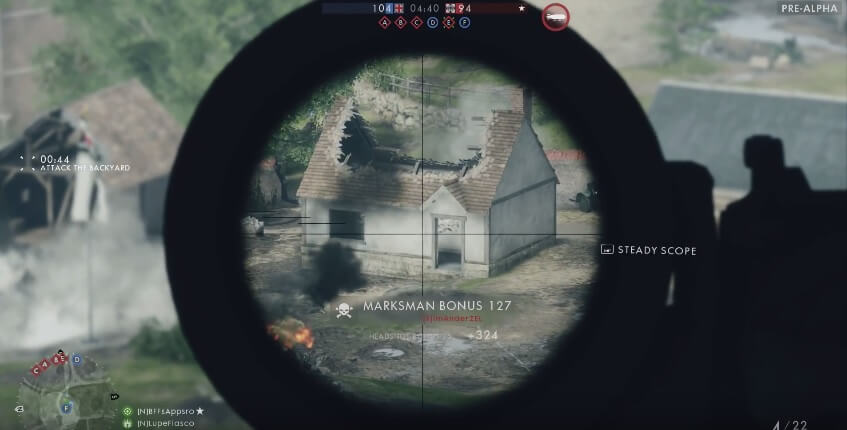
As a Scout, you play the sniper role in Battlefield 1. As known from other games, you pick off enemies from a distance with sniper rifles. You should absolutely avoid close-range fights, as your pistol does deal damage but looks inferior in a duel against a submachine gun. Focus on killing enemy snipers. This way, your allies on the battlefield will have an easier time. However, make sure to also target cavalry or vehicles as a sniper.
As a Scout, you can support your allies with your flare gun, as this pistol allows you to reveal the position of enemies. If your team knows where the enemies are, the chances of killing them are high. Additionally, you can equip special ammunition that is effective against heavily armored targets.
As a Scout, you should focus on targets at long range. Enemy snipers, cavalry, and open vehicles take priority. You can support your team with the flare gun.
With the help of this overview, you can now get an idea of what makes each class in Battlefield 1 special. You can find more tips for the game in our Battlefield 1 Veteran Guide.

Your opinion is important to us!
Do you like the article? Then let us know!