

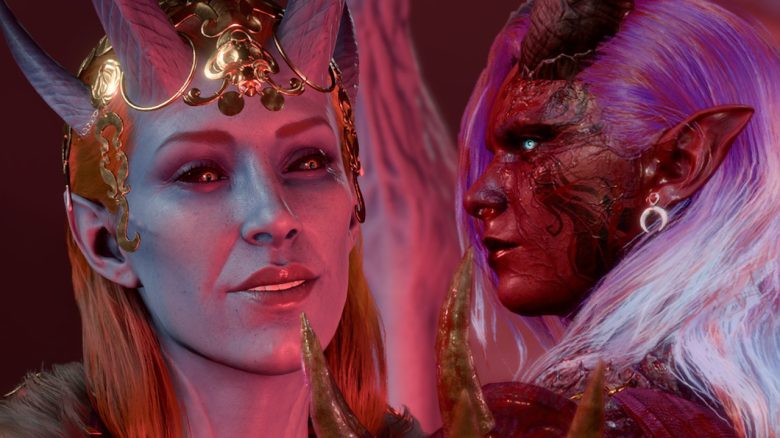
MeinMMO-Tiefling Cortyn is dissatisfied with the end of Baldur’s Gate 3. Because there, the game forgets everything it did so well before.
Before I start with the criticism, I want to emphasize once again how much fun Baldur’s Gate 3 gave me for most of the game. Especially the first two acts were absolutely outstanding and among the best I have seen in gaming so far. These are beautiful, exciting stories and moments that I won’t forget anytime soon.
Nevertheless, I have to talk about the last two hours of the game here. Because Baldur’s Gate 3 not only deviates from its previously established core principles, but in many cases also becomes ruthlessly illogical and ignores its own backstory. And I’m not even talking about the fact that the biggest decision in the game is a lie.
Spoiler Warning: This article discusses several possible endings of Baldur’s Gate 3 and contains significant spoilers. You have been warned.
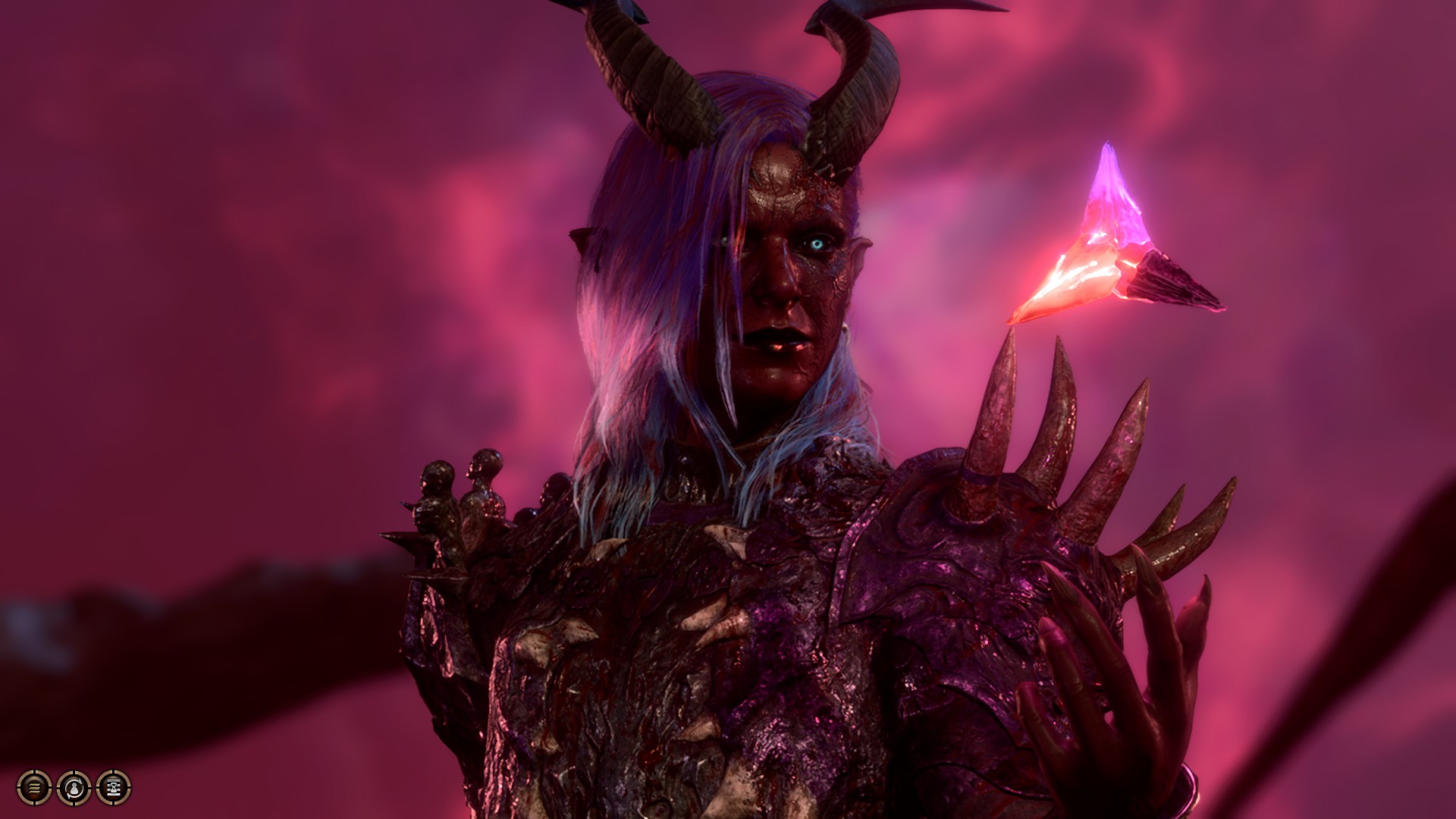
As I have already reported, I played my main save together with a friend, who constantly forced me into good decisions. With clearly over 120 hours of pure gameplay, we spent a long time in Baldur’s Gate 3 and experienced a lot. But in the last hours of play, we were both appalled.
Unlike the rest of the game, the ending is determined by the person who “owns” the save. Previously, the co-player could also make decisions actively when approaching an NPC first. In the end, this was no longer the case.
Therefore, we decided to play the ending twice: once with my decisions and once with my co-player’s decisions.
The Evil Ending – 15-Second Scene with Fade to Black
At the end of the game, you need a mind flayer. This is a serious decision – because the transformation is permanent. Since I had generally made “evil” choices, I thought to myself: Okay, now I will go through with it and try my master plan. I make Karlach turn into a mind flayer. She is even extremely happy because she believes that she can live longer because her hell machine will no longer affect her so strongly as a mind flayer.
In doing so, Karlach completely ignores that the transformation erases her soul – but more on that later.
The big moment has come. Karlach is ready to destroy the Absolute, and the narrator presents me with a final choice: Do I let Karlach destroy the Absolute? Or do I betray Karlach at the last moment and take the power of a godlike being for myself?
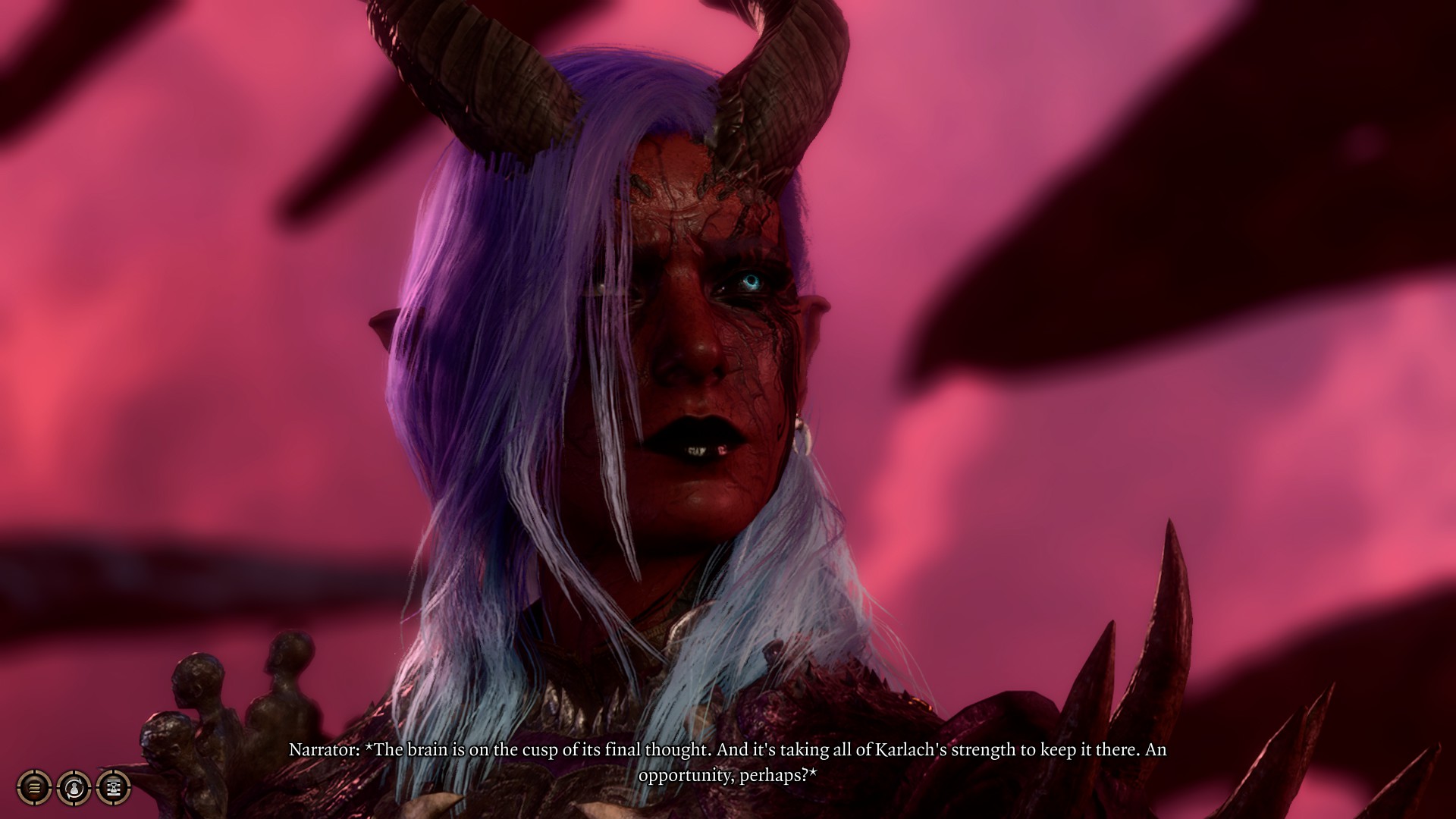
5 seconds later, Karlach has a dagger first in her back and then multiple times in her stomach.
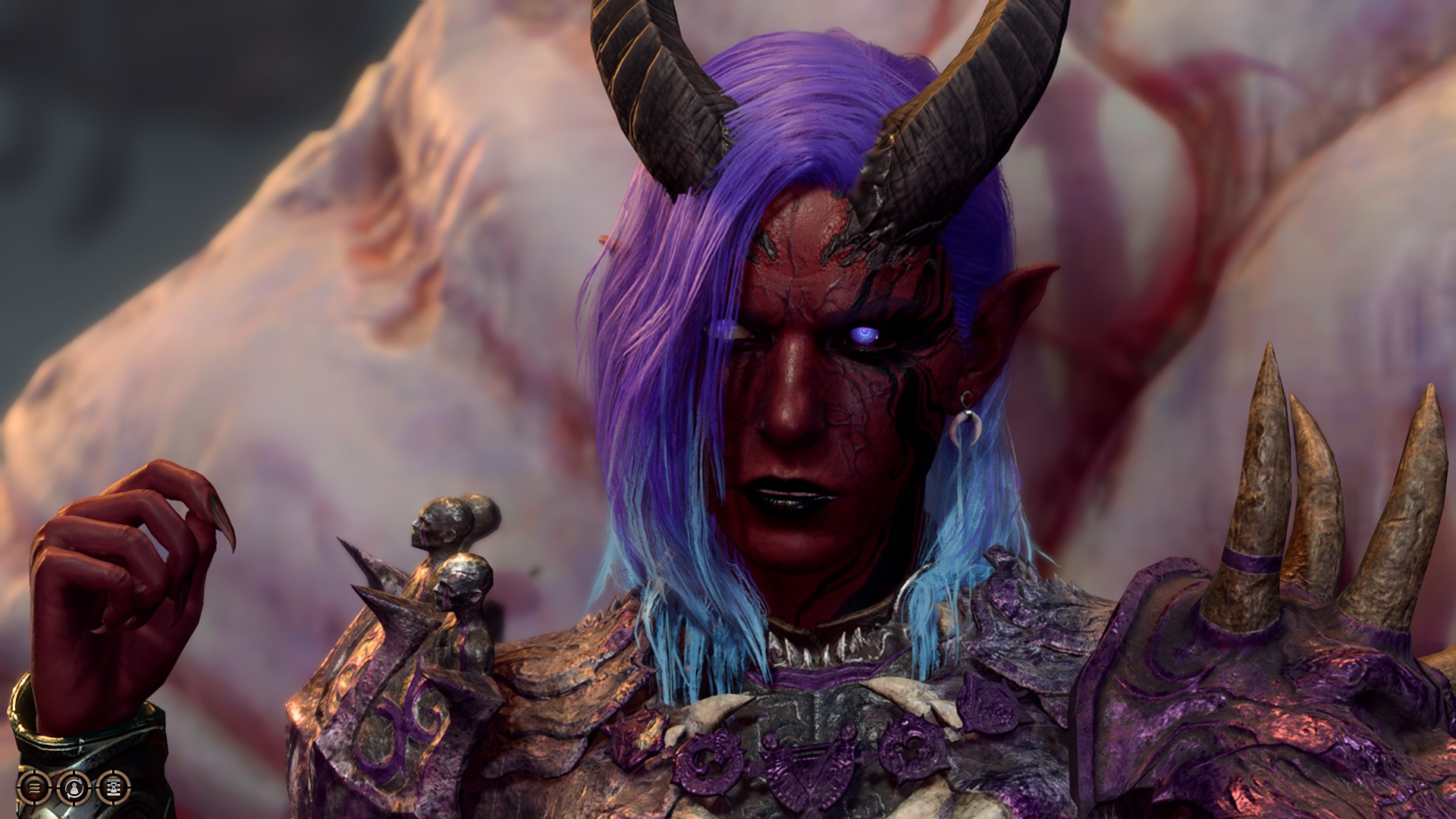
I had to grin sardonically. After 120 hours of gameplay, the “evil” ending is now coming. My Tiefling takes control and orders the Absolute to spread its control over all beings. A quick cut. My Cortyn sits on a throne, looks grimly into the camera, and says “In my name.”
End.
This entire scene, including the murder of Karlach, took less than 30 seconds.
The spectacular, evil ending that I had hoped for so long is literally just my character sitting on a throne and looking evil into the camera before the screen turns black.
As the credits roll, we sit in silence on Discord for a while. After a few minutes, I then hear doubtfully from my co-player: “That was a bit tight, wasn’t it?”
There is no “after credits” scene. The game returns to the main menu.
I felt empty. I know “unsatisfying endings” all too well since Mass Effect 3, but this was on a whole other level. The short scene felt as if someone had quickly snuck it into the game two hours before the release just to have an evil version.
The “good ending” is also ridiculous
As agreed earlier, we then played the last 2 hours with the “good decisions”. And honestly, this is even more ridiculous than the bad ending, because suddenly all characters act as if they just escaped from kindergarten.
We tell the Emperor that none of us wants to become a mind flayer. Instead, we want to free the imprisoned Orpheus and fight against the Absolute with him.
The Emperor, who has supported us for over 120 hours and whose only goal so far has been to stand against the Absolute, acts like a petulant child as if someone had just taken away his sandcastle mold. He runs away and joins the Absolute – just like that. After the Absolute had been the all-encompassing, evil enemy throughout the entire game, he suddenly turns on a dime. It gets even crazier when you find out in the story that the Emperor was Balduran
– the founder of Baldur’s Gate.
Okay, that was already “wild.” But it got even worse.
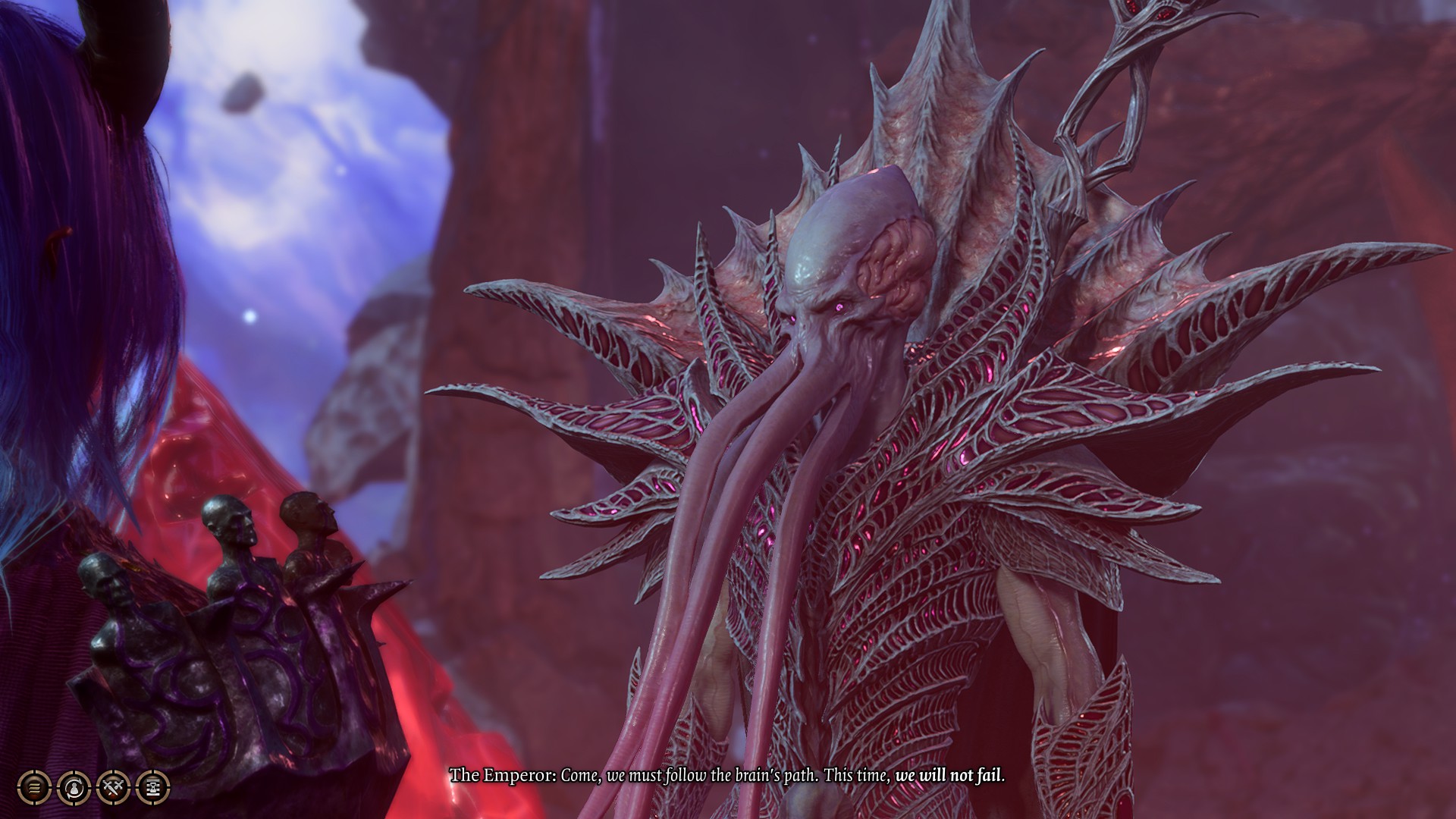
The prince Orpheus is freed and he also starts complaining: Yes, actually he wouldn’t even talk to infected people like us. Such scum as mind flayers or people with tadpoles in their heads shouldn’t even come close to him. We are the most disgusting thing in the world, absolute vermin.
We also tell Orpheus that none of us wants to turn into a mind flayer.
And since Orpheus also seems to be a cosmic being of principles – he simply transforms himself into a mind flayer.
This was one of the few moments when I had to say “Lol” loudly in Discord because I wanted to laugh, but I just couldn’t.
After Orpheus first insulted us, he transforms himself into a mind flayer without batting an eye – without even explaining whether he himself is infected with a tadpole (which, to be honest, would make very little sense). He just does it – because plot.
Again the final battle. This time we let Orpheus do his thing as a mind flayer – the Absolute is killed.
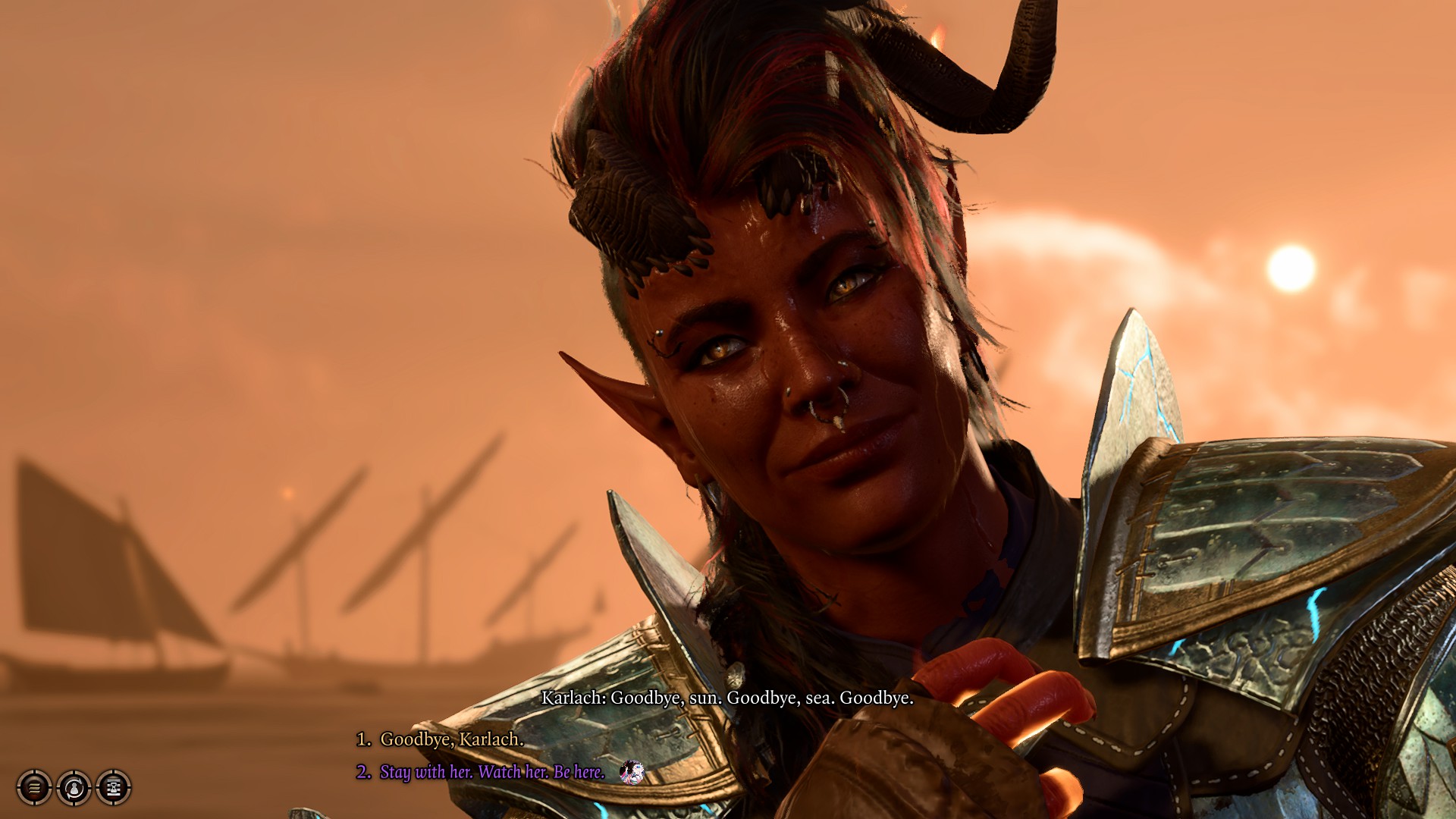
Instead of the 30-second sequence like in the “evil ending”, here there is a whole lot more. All companions appear again and have something to say. Gale wants to go look for an artifact to become a god himself, Shadowheart says some shadowy things, and Karlach bursts into flames and turns to ashes because her “good ending” is not included in the game (which is a scandal for another article).
However, a lot of things are wrong. Because all companions talk to me as if I had turned into a mind flayer. They talk about how my tentacles suit me and that it wouldn’t be so bad. Meanwhile, my Tiefling hasn’t turned into a mind flayer in this ending, and even her “half transformation” from the end of Act 2 has inexplicably disappeared.
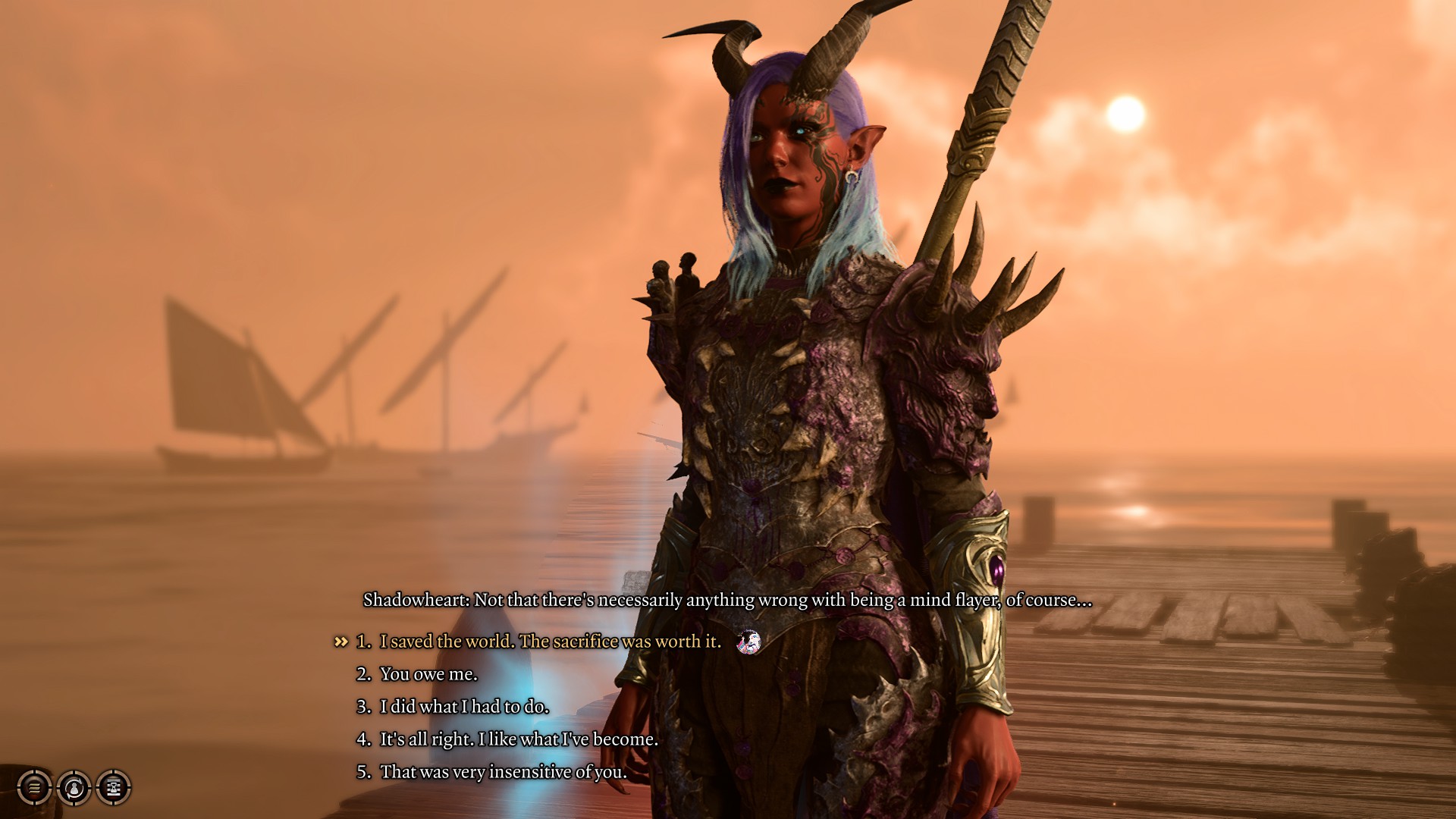
The entire scene lasts about 10 minutes. After the credits, there is a final scene with Lazarus.
Two endings, but only one is “correct”
I want to be gracious. That my companions address me as a mind flayer at the end is probably a bug that will be fixed soon. I can overlook that.
But not other things.
The “good” ending is well-developed. It has different variables, such as what we did with our companions throughout the story. Here there are numerous different scenes with small differences, and even if I have only seen a few, I must say: At least the ending sequence is overall quite consistent.
But to just dismiss the “evil ending” with a 15-second sequence is an outrage.
For a large part of the game, Baldur’s Gate 3 gives me the freedom in my choices. I can be “good” and save as many as possible, or I can be “evil”, scheming and reaching for absolute power (or the power of the Absolute – however you want to see it).
But at the very end, the game clearly tells me: If you act evil, you won’t get a “correct” ending. If you want the “correct” ending, then you have to be “good”.
And that’s really unfortunate.
Baldur’s Gate 3 ignores its own story
What is perhaps the worst criticism for me is the fact that Baldur’s Gate 3 simply throws its own established story out of the window at the end. Because one of the most important aspects of Baldur’s Gate 3 is that mind flayers have no souls. When a mortal being is infected with a tadpole and then transforms into a mind flayer, the soul is completely extinguished. Because mind flayers have no soul, this is emphasized and reiterated several times in the game.
In both examples, neither Karlach nor Orpheus (and through the address bug also my character) is really “themselves” – they have become mind flayers, their souls have been erased. What still exists is merely a soulless mind flayer who possesses the memories of the former host.
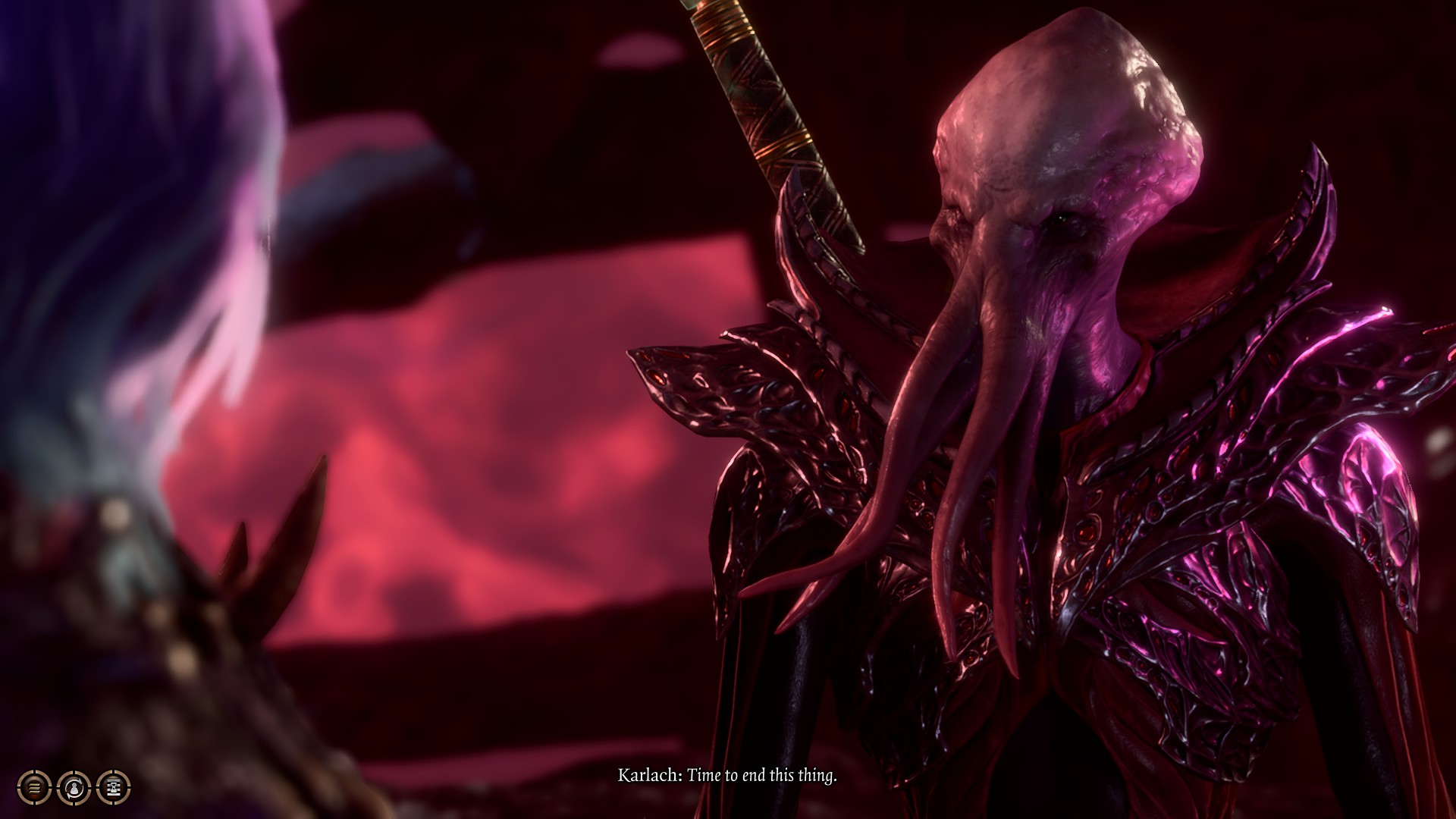
However, this is completely ignored by the companions. It’s as if they forgot that the soul is extinguished during the transformation. It’s as if they simply overlooked this important, critical story point.
That this is not an “oversight” and that the disappearance of the soul was intended until the end is also shown in the scene after the credits. There, we see Lazarus before an image of the Dead Three, asking if they really thought that this “massive disappearance of souls” would escape the notice of other gods.

Baldur’s Gate 3 messes up a lot with the ending
I could go on for a long time about the ending. About missing quests that prevent a “good ending” from companions. About the last 2 hours of gameplay, in which Baldur’s Gate 3 has hardly any freedom left, but strictly steers everything towards the same result. About how the bugs have become even worse at the end.
But I actually don’t want to, because I’m just one thing: sad.
Baldur’s Gate 3 has entertained me so well for over 120 hours that I will keep it in memory forever. But the last 2 hours and the ending are a total disappointment. Here, the developers need to fix numerous errors and also refine the logic of the story being told.
My hope is that in 2 years there will be a “Definitive Edition” that will bring a functional, well-thought-out ending.
Because even if I want to start Baldur’s Gate 3 again in “Tactician” mode in the next few days – I don’t want to play the ending again anytime soon. That just hurt too much.

Your opinion is important to us!
Do you like the article? Then let us know!