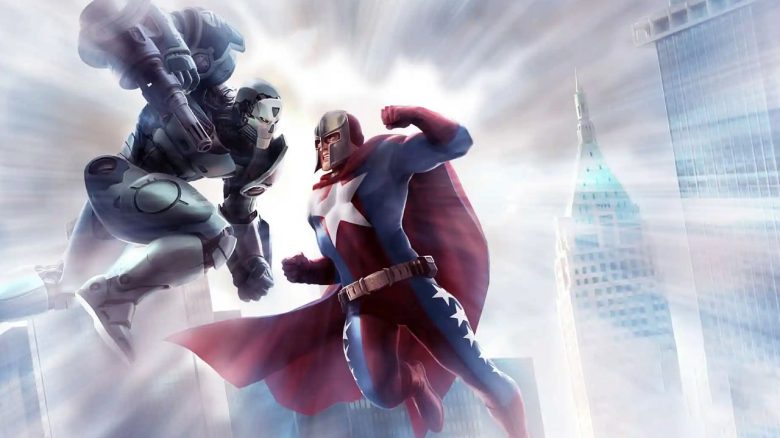
In 2004, the MMORPG City of Heroes was released, fulfilling players’ dreams of having their own superhero. But what made City of Heroes so good and what ultimately led to its downfall?
What kind of game was it? City of Heroes was a popular MMORPG that convinced players especially with its unique character editor, vibrant world, and the dream of living a superhero life.
On Metacritic, it received the highest rating of 100 at release multiple times. The average score landed at a respectable 85, making it one of the best MMORPGs according to Metacritic.
Despite the good reviews, many updates, expansions, and a very dedicated fanbase, the game was shut down by the publisher NCSoft in 2012. Even today, several fan groups are working on private servers to make the MMORPG playable again.
Here you can watch a trailer again:
Outstanding Character Editor and a Lively Game World
What made City of Heroes so good? As usual, you could create your own character in City of Heroes. However, the character editor was an absolute dream for its time. There were not only dozens of options and sliders for appearance, but you could also customize your superpowers, attributes, and costume very individually.
Additionally, there was a window where you could write down your backstory – an absolute dream for role players.
The MMORPG also impressed with its game world, which felt very lively. In Paragon City, there were not only superheroes but also regular humans. And they had jobs, walked around, or met in groups. They weren’t static NPCs waiting in one spot for you to take their quest.
Quests were called missions in City of Heroes and could usually be completed solo. However, there was always the possibility to start a mission as a team. The difficulty would be dynamically adjusted.


Moreover, special events frequently occurred in the game world. There were suddenly appearing world events where you had to defeat a strong enemy together with other superheroes or participated in patrols through the city. Traveling through different areas was also stylishly implemented – with the subway.
The many freedoms and the lively world are also the aspects that many players today miss in the superhero MMORPG DC Universe Online. By the way, it underwent a major overhaul in 2021:

How did the development go? Shortly after the release, the developers released the first big updates. On October 31, 2005, City of Villains was released. It was a standalone game that worked without purchasing City of Heroes.
Instead of a hero, you created a villain and could experience adventures on the Rogue Isles. If you owned both games, you unlocked bonuses in each other’s games. Later, the games were connected, allowing heroes and villains to play together.
But even outside of this expansion, there was a lot of content for the MMORPG. Overall, the game received 24 free “Major Updates”, including the patch “Destiny Manifest”, which introduced a new level cap, new missions, and a PvP zone in 2006.
In August 2010, the new expansion “Going Rogue” was also released. This required an additional payment. Here, a type of third faction was introduced. The “Rogues” were neither good nor evil, but wandered somewhere in between.
You can also watch the final moments of City of Heroes here:
Poor revenues and 3 new MMORPGs doomed the game
What led to the downfall of City of Heroes? Initially, the game was very successful. With 330,000 sales by August 2006, it was the 53rd best-selling computer game between January 2000 and August 2006 (via Edge Online).
Although the MMORPG had built a significant community and was continuously expanded, the game did not financially perform as well as hoped. Moreover, the game did not gain traction in the publisher’s home country – Korea. In 2011, the game transitioned to Free2Play, but with some limitations. For instance, without a subscription, players were excluded from new content.
In the 4th quarter of 2011, City of Heroes generated only 3.4 billion Won for the publisher, which was roughly equivalent to 2.2 million Euros at the time. For comparison:
- Aion generated almost 51 billion Won
- Lineage 1 generated 44 billion Won
- Even Guild Wars 1, which was no longer being developed and had its last expansion in 2009, still brought in 1.5 billion Won
In total, City of Heroes accounted for only about 3% of NCSoft’s revenues. 2011 was also the first year in which the company recorded a loss compared to the previous year.

This, along with the fact that three new MMORPGs from NCSoft were in the pipeline in 2012, likely sealed the fate of City of Heroes. Guild Wars 2 was released in the West in 2012, Blade & Soul was released in Korea the same year, and WildStar was already in an advanced stage of development.
How did players react to the shutdown? They were shocked and tried everything to keep their MMORPG alive. They sent NCSoft cakes to the office and collected over 21,000 signatures to persuade the studio to change its mind. But it was to no avail.
Meanwhile, several fan groups are working on bringing back the game. City of Titans, for example, managed to raise nearly $680,000 through Kickstarter to create a new version of the MMORPG. Work is still ongoing there. In November 2022, the developers announced that they were switching to the Unreal Engine.
More about the games can be found here: 3 new superhero MMORPGs are currently in development – How are they doing?.
What do you think of City of Heroes? Do you still have fond memories of the MMORPG? Do you wish for a full return?