

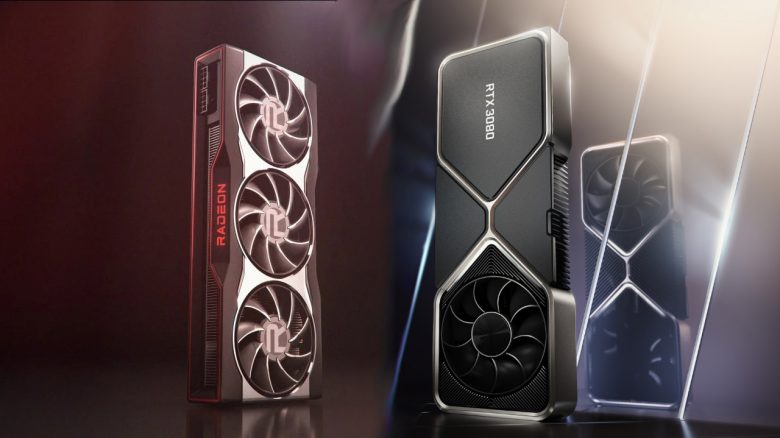
In its press conference, AMD not only announces a date but also explains that the technology should even work with the competition. MeinMMO presents you with the essential information.
AMD has finally provided more information on its DLSS alternative, FidelityFX Super Resolution (short: FSR), at its official press conference for Computex 2021.
This was presented: AMD presented several important pieces of information:
- FidelityFX Super Resolution (FSR) is set to be released on June 22.
- Both AMD and Nvidia graphics cards should support the DLSS alternative. In total, FSR should work with more than 100 graphics cards.
- FSR is expected to be open source and supported by at least 10 developers and engines at launch.
We at MeinMMO had already explained to you, that AMD urgently needs a DLSS alternative to remain competitive. With the release date on June 22, 2021, FidelityFX Super Resolution is coming closer than we had feared.
Initial benchmarks confirm AMD’s DLSS alternative provides a decent FPS boost
AMD has introduced its new technology in a bit more detail. FSR will have four different quality settings like DLSS:
- ‘Ultra Quality’,
- ‘Quality’,
- ‘Balanced’
- ‘Performance’
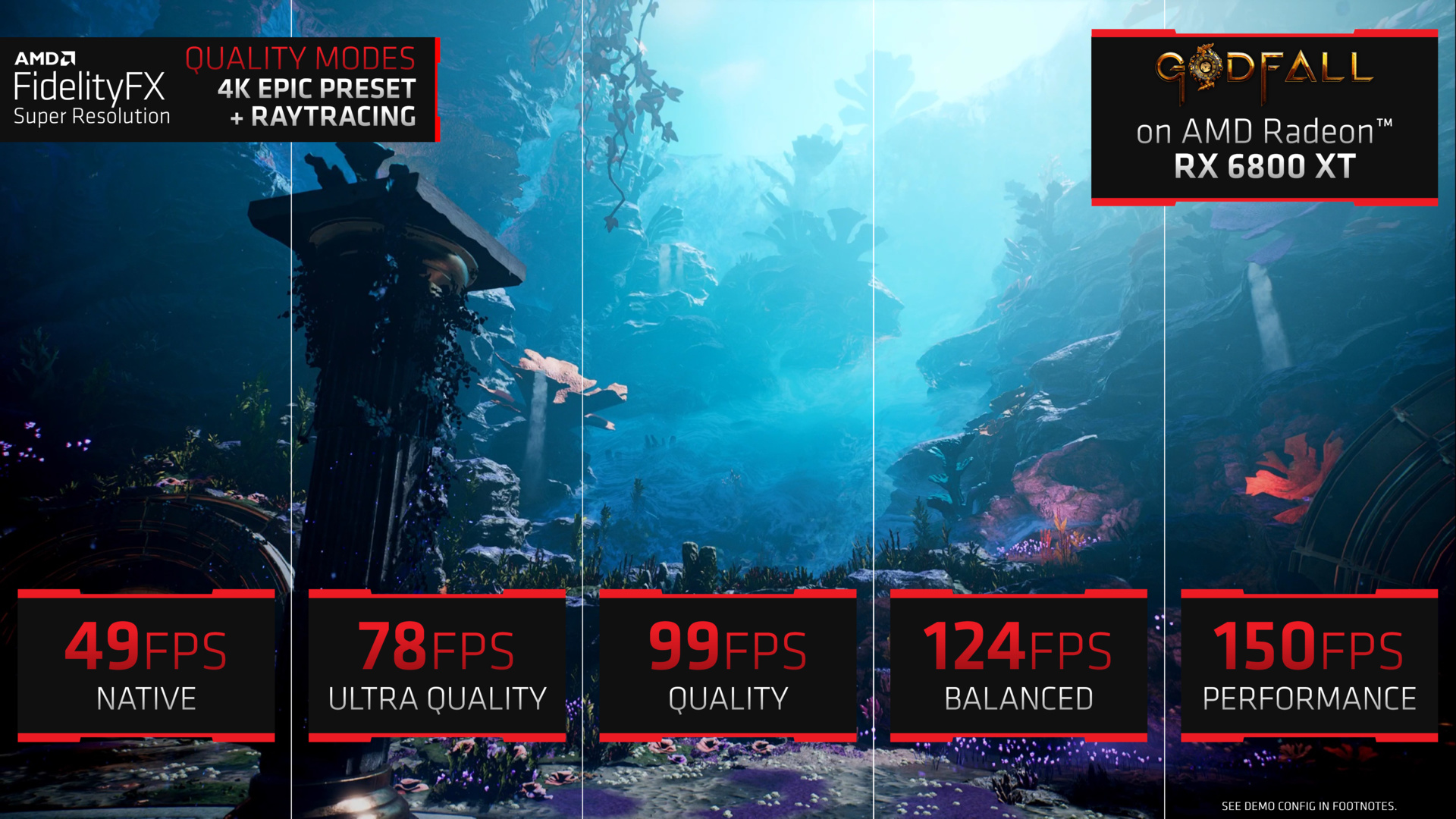
Official benchmarks for AMD’s DLSS alternative: AMD has also presented official benchmarks for the game Godfall. The numbers come from an RX 6800 XT and are expected to run at 49 FPS with ray tracing and the highest graphics settings enabled.
According to AMD, performance increases significantly with FSR enabled. You can see the numbers in the following table:
| FPS | Increase compared to | |
|---|---|---|
| FSR Ultra Quality | 78 FPS | 59 % |
| FSR Quality | 99 FPS | 25 % |
| FSR Balanced | 124 FPS | 25 % |
| FSR Performance | 150 FPS | 21 % |
What we do not know: The FPS increase is generally very high, but we do not know how good the image quality will be in the end.
Which graphics cards are supposed to support FSR? AMD stated in the Computex stream that even older graphics cards should benefit from the new technology. These include the following graphics cards:
- AMD RX 6000
- AMD RX 5000
- AMD RX 500
- RX Vega graphics cards
- all Ryzen processors with graphics processor (APUs)
However, this does not change the fact that availability remains quite poor. Graphics cards like the RX 6800 XT were extremely quickly sold out and there were lines in front of electronics stores in the USA. The support for older graphics cards should provide these cards with an additional chance.
Nvidia graphics cards should also benefit from the new AMD technology
A surprising hint was the note that AMD’s technology should also run on Nvidia graphics cards.
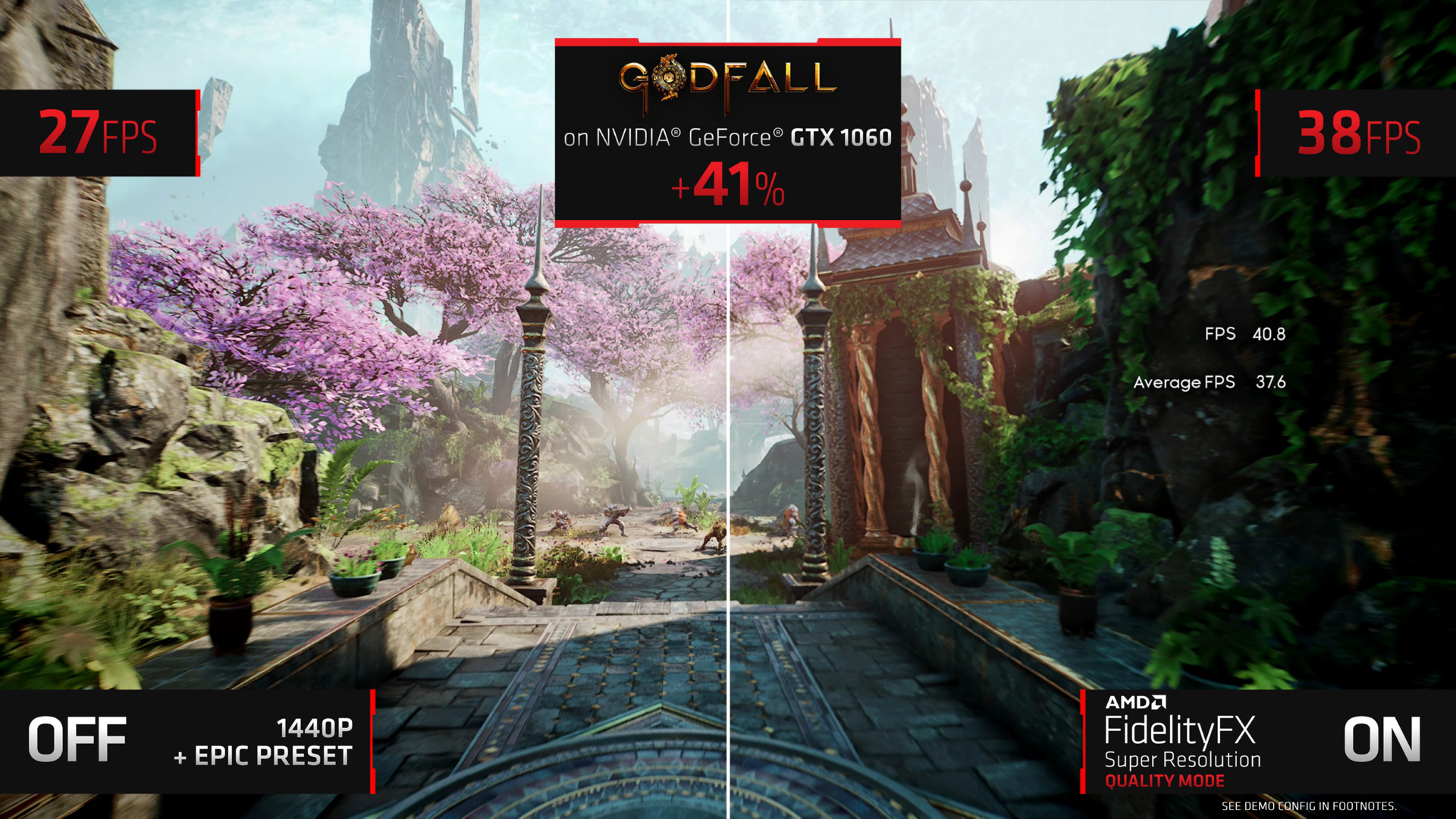
In the YouTube video, they demonstrated this using a GTX 1060. According to the hardware survey on Steam, this is currently the most popular Nvidia graphics card (via Steampowered.com). Nvidia’s DLSS is not supported on this graphics card.
The video shows that performance can be significantly increased with FSR. The GTX 1060 offers 38 FPS in the game Godfall at WQHD (1440p), which is 41% more than without FSR.
Theoretically, many players who still have an older Nvidia graphics card would benefit from this technology.
AMD aims to put Nvidia under pressure with DLSS alternative, but will it work?
So far, DLSS has been a significant reason for purchasing Nvidia graphics cards. Until now, AMD has not been able to offer a real alternative. This could change if Fidelity FX Super Resolution can really provide the performance boost that AMD confidently promises.
What speaks for AMD: AMD’s surprising announcement and especially the fact that AMD’s DLSS alternative is also expected to work with Nvidia graphics cards and significantly increase performance indicates that they want to put significant pressure on competitors.
The decision to also support comparatively older graphics chips speaks in favor of AMD. Especially if processors with graphics chips (so-called APUs) can significantly utilize FSR, then FSR is likely to become extremely successful.
Additionally, it should be an open-source implementation that developers can easily integrate into their games or engines. This could facilitate the widespread adoption of FSR. AMD has already been quite successful with FreeSync.
What speaks against it: We cannot yet say how well this will work, and there are various reasons for this. So far, we do not know how good the final image quality of FSR will be. We also do not know exactly how AMD’s technology will function.
Nvidia relies on specialized Tensor Cores, which are built into RTX graphics cards. These are not available in Radeon graphics cards.
We will then have to wait for June 22, 2021, and hope for the first independent benchmarks. This will also clarify the question of whether AMD’s Fidelity Super Resolution is competitive with Nvidia’s DLSS.
A large open question is also whether and to what extent FSR will function on the Xbox Series X and the PS5. Because the next-gen consoles also contain graphics chips from AMD.
6900 XT vs RTX 3090: Nvidia is clearly ahead in ray tracing – this could change soon

Your opinion is important to us!
Do you like the article? Then let us know!