

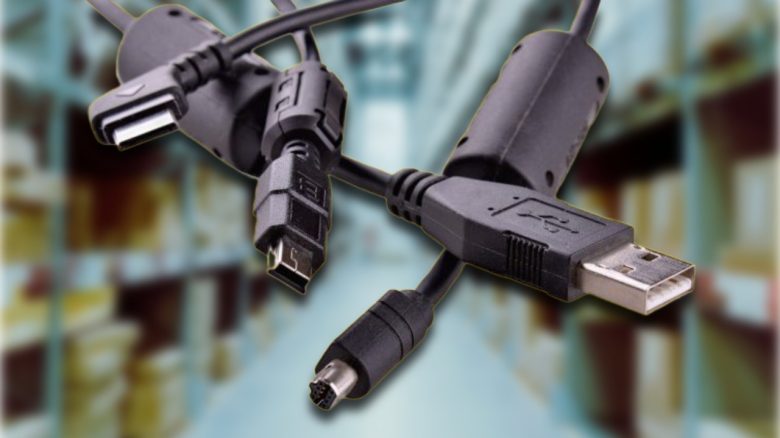
Cables come in many different shapes and sizes. Most people have various options lying around at home. Some users may have noticed a small cylindrical core at the end of their charger.
What is this plastic part? The same question was asked by the user Patrick_PJ05, who in his Reddit post on 02.03.2026, asked the community for information. He shared a picture of a laptop charger cable, where the small cylinder at the end is clearly visible.
Within a few days, the post received over 13,000 views and 500 comments addressing the question (as of 05.03.2026).
The plastic object contains a so-called ferrite core, and its function is to filter out potential interference signals from cables (via essentracomponents), as such signals can quickly lead to disruptions. A user even reports hearing creepy voices coming from his PC.
The placement is not random
Why is this important? You will primarily find the core on HDMI, USB, and power cables. They are usually placed near the endpoint to capture as many disturbances at once, as these can be picked up along the entire length of a cable, which is why they are mostly filtered at the end.
Many are probably familiar with such interference noises when bringing electronic devices like a mobile phone close to older speakers. In such cases, certain devices can emit signals that affect the sound of the speaker and cause a buzzing sound or noise (via YouTube).
Technology is evolving
Why are there variants without ferrite cores? Since the 1950s, they have been used in telephone systems, later finding their way into the TV industry and then into modern electronic devices like power supplies and cables (fair-rite).
In the past, such plastic parts were more common on many products than they are today. The reason for this is, for example, a development in the video signal used:
Analog video signals, which were more widespread in the past, have changed nowadays and are less prone to interference. An example of this is the HDMI cable, which uses a digital signal instead of an analog one like its predecessor VGA (via anker).



Whether cables will still have such ferrite parts at their ends in the future is uncertain. But technology continues to evolve and often makes old technologies obsolete. However, there are also funny experiments that one can do when there are interference signals nearby: The monitor of a gamer keeps turning off – the culprit is a soda can sitting next to his gaming PC

Your opinion is important to us!
Do you like the article? Then let us know!