

Besides the main focus on PvP battles, Albion Online mainly entices with its housing system. In this island guide, we explain how you can buy your own private island, what options it offers, and what to consider.
The Function of Your Island

An island in Albion Online serves multiple functions. On one hand, it is a fixed point where you can respawn in case of death. Everyone knows how frustrating it is to have to respawn in enemy territory with damaged equipment, only for the opposing faction to have it even easier to kill you again. An island saves you this frustration and gives you the opportunity to strengthen yourself before heading back into battle.
Furthermore, an island is your private crafting area, where you can process collected or purchased resources and craft items that can be sold profitably. You can also breed buff food and mounts, as well as beasts that can be used in battle, in your own area.
What to Consider When Buying
It is important to consider that you can only enter an island from the city where you purchased it. Its location is significant because the availability of resources in the adjacent territories affects the crafting you prefer.
If you specialize in crafting cloth garments, for example, a city adjacent to areas rich in stones or ores may not be the best place for your base. Choose wisely! Only one island can be acquired per character. While it can be destroyed, you will lose all previously invested materials.
The prerequisite for acquisition is owning an account with at least 30 days of premium time. If this runs out, you still have full access to your island. You can buy it from island traders, whom you can find in every major city in the game.
Expansion – How to Make It Worthwhile
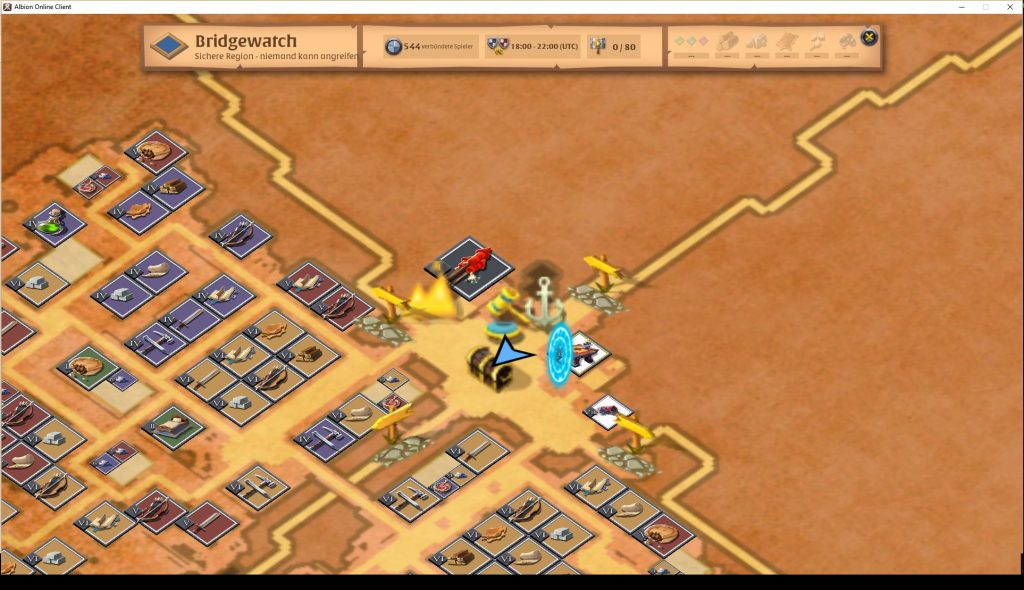
After purchasing an island, you are theoretically free to do whatever you want with it. However, like any free system, there are certain guidelines that are more effective than others. In general, the higher the level of your island, the greater its utility. Freshly bought, it has only one buildable slot, which is why most players immediately upgrade their own area. This function is also available through the island trader and costs increasingly more silver with rising levels.
- Level 1: 12,500 silver
- Level 2: 37,500 silver
- Level 3: 125,000 silver
- Level 4: 325,000 silver
- Level 5: 625,000 silver
- Level 6: 2,500,000 silver
For each level, your island expands with additional building slots. These are divided into regular and small building plots, in addition to some areas where you can grow herbs or plants, and breed mounts and beasts. With the expansion of the island to level 2, a merchant will appear on it from whom you can buy seeds and young animals for breeding according to your level.
The total number of buildable area of a maximally expanded island consists of 11 large, 2 small, and 5 cultivation areas in total. They divide as follows according to the expansion level:
- Level 1: 1 building plot
- Level 2: 1 cultivation plot, 1 building plot, 2 small building plots, and a farming trader
- Level 3: 1 cultivation plot, 2 building plots
- Level 4: 1 cultivation plot, 2 building plots
- Level 5: 1 cultivation plot, 2 building plots
- Level 6: 1 cultivation plot, 3 building plots
It quickly becomes clear that an island only fully realizes its utility starting from level 2. Beginning with this, you can plant vegetables and produce buff food from them. This is not only very useful in combat but at higher levels necessary to keep production buildings running.
In the building menu, which you can open with the quick key H, all buildings are displayed. These are divided into the categories Economy, Agriculture, Military, and Houses.
That’s Why It’s Worth Building a House
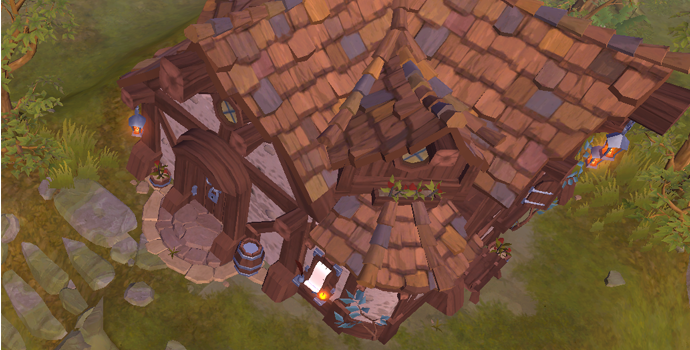
In addition to all production buildings available in the game, it is also possible to build a residential house on the island. Unlike all other building types, it is completely irrelevant for the production of materials and items, but fulfills some important functions.
By placing self-made chests, you can centrally store crafting materials and valuable items. Additionally, owning a residential house also allows you to hire NPCs to work for you. If you specialize in gathering certain resources, it is advisable to hire a worker to assist with this.
How Useful Guild Islands Are
Guild islands offer you and your fellow players several advantages. On one hand, you can help each other in building buildings. Furthermore, these islands give you the opportunity to trade at better prices through the guild’s internal marketplace and use the crafting buildings of your clan members under better conditions. A central storage additionally facilitates the distribution of resources needed for expansion.

These community islands are especially worthwhile because your own private island cannot provide all available buildings even in a fully upgraded state. For example, a maximally improved island has two farm areas – but also a total of four buildings that can only be built on such an island. A guild island helps you become completely independent of the production of other players and offers you better trading conditions. Additionally, buildings are much faster to construct and upgrade if you are not solely responsible for gathering resources. Price-wise, an island for your guild is significantly more expensive than your private island; like this, your community refuge is also upgradable a total of six times and offers depending on the level:
- Level 1: 1 building plot
- Level 2: 3 building plots, 2 small building plots, 1 marketplace
- Level 3: 3 building plots
- Level 4: 3 building plots
- Level 5: 3 building plots
- Level 6: 4 building plots
With this information, you should have an easy start in expanding and managing your own island. In upcoming guides, we will provide more detailed insights on the function and management of NPCs and other helpful tips around Albion Online.
This can help with the right choice of buildings: How the Character Builder helps you find a game goal

Your opinion is important to us!
Do you like the article? Then let us know!