

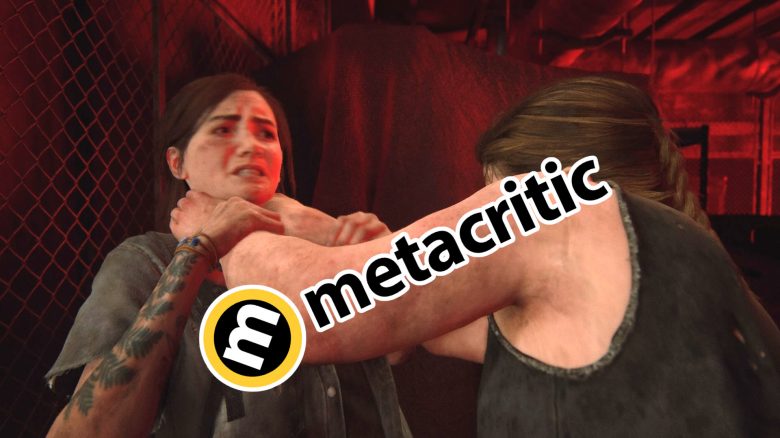
The Last of Us Part II is struggling with bad user reviews and review bombing on Metacritic. The platform has now introduced a change that aims to prevent such review bombing at the launch of a game in the future. Unfortunately, this comes too late – and for the wrong reasons, according to MeinMMO author Benedict Grothaus.

Note: The title of the article has been changed because new information on the topic has emerged. You can find the corresponding update at the end of the text.
This is how Metacritic responds: The website Metacritic collects ratings for games from users and the gaming press. Both are listed on Metacritic separately as Metascore and user score. The site is an important resource for many users to get a first impression of a new game and read collected opinions.
Previously, anyone with an account could easily rate a game as a user. It didn’t matter whether they had played it, owned it, or even knew about it. One click was enough to give a new video game a grade.
However, that is no longer so easy – at least not at the launch of a game. Metacritic has introduced a rule stating that user scores will not be available for a certain period of time. Instead, users are asked to play the game for a while longer before forming an opinion.
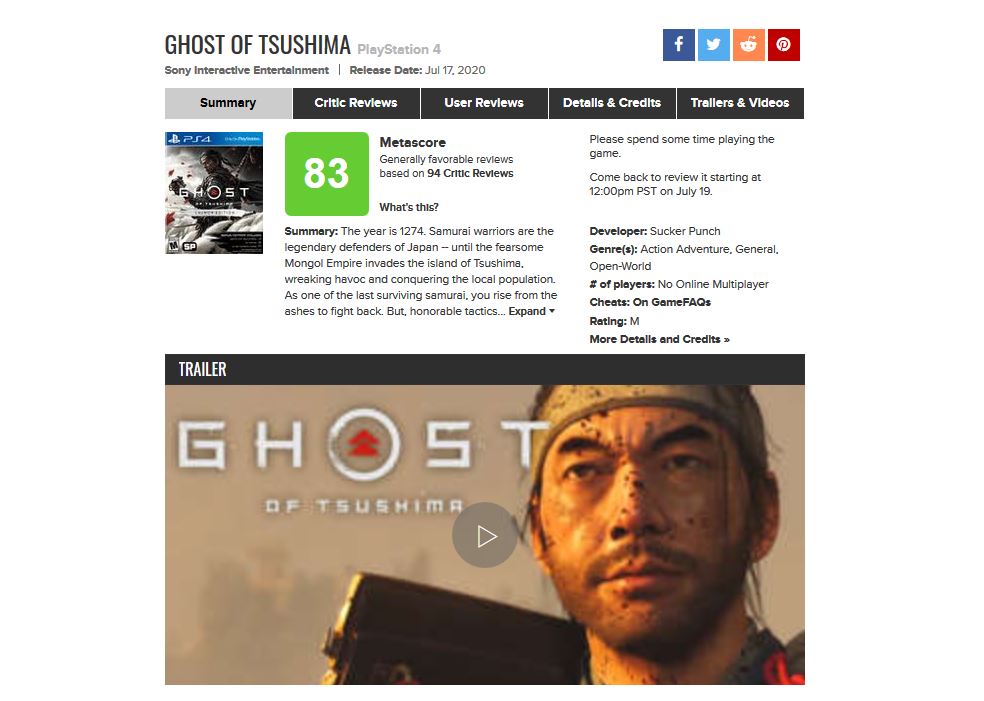
Why is the change coming? In the past, there were frequently cases where users rated games poorly to express their displeasure without considering the game and its content at all (“review bombing”).
One of the newest and most prominent examples of this behavior is The Last of Us Part II. Its social criticism polarizes the new story game strongly and provokes sometimes fierce reactions.
While critics give The Last of Us Part II a 94/100, rating it very well, it currently stands at only 5.5/10 from users. Many of the negative reviews with 0 points claim that the game has an “LGBTQ” agenda and promotes it.

Particularly the discussion around The Last of Us Part II and the many negative reviews right at launch is likely the decisive reason why Metacritic has chosen now to restrict reviews at launch.
I think: This is far too late, and the reason behind it is not pretty either.
This should have happened much earlier
This is why it comes too late: First of all: I think the change is good and right. Something like this has been necessary for a long time. However, Metacritic has taken too long, because:
- The Last of Us Part II no longer benefits from it
- Many other games before also had the problem of being bombarded at launch
The phenomenon of review bombing is old, and other providers like Steam have responded by simply excluding certain reviews from the meta ratings. The corresponding user reviews are simply marked as “off-topic” there.

Similar problems have already appeared very prominently on Metacritic in recent years. In 2018, for example, the survival game Fallout 76 received a massive amount of negative reviews right at release, when many players could not even play it extensively yet.
Similarly, in 2019, the new Call of Duty: Modern Warfare received tons of 0-point reviews due to propaganda allegations: It was said to be anti-Russian. These 0-point reviews also came without directly addressing the game itself and allowing for further criticisms.
Why does something need to happen here? All three mentioned games are good examples of why action should be taken against review bombing. The Last of Us Part II and Call of Duty have proven to be excellent games and top titles in their categories.
However, does this reflect in the user scores? No. Now, someone who prefers to trust other players rather than the press only looks at the raw number, they might be discouraged and refrain from playing the games, even though they could enjoy them.

Fallout 76 is in a similar boat. It certainly is and was not perfect and has struggled with many errors and bugs. However, it was never “0-points-bad”. Moreover, many of the reviews at that time didn’t even relate to the game itself but rather to the fact that some hardcore fans wanted a sequel to Fallout 4 – simply another single-player game in the series, not a multiplayer game.
The “hate train” against Fallout 76 has attracted many influencers, users, and forum visitors afterwards – much to the chagrin of the actual players. It went so far that players who liked Fallout 76 were vilified.
Preventing review bombing here would surely have helped to shape the entire narrative differently, resulting in less hatred from all sides. The harsh criticism of Fallout 76, in my opinion, would have been an even better reason for the introduction than what is currently the case with The Last of Us Part II.
When should this have happened? I cannot name a specific time. I can only say: Much earlier. Perhaps even upon the release of the website, but at the very latest at the first case of review bombing that ever occurred.
It should be a given that game reviews refer to the game itself and not to any circumstances and controversies that only tangentially relate to it. Therefore, it is clear to me: now is too late.
However, it is not only the timing that is an issue. The reason for the action that is being taken now, or at least the one that seems to be the origin, appears to be quite problematic in my view.
Regulation yes, but please no censorship
Why is the reason wrong? Many negative reviews of The Last of Us Part II relate to the game’s “political correctness.” If you take a look at the comments on these reviews on Metacritic, you will find:
- Allegations of manipulation and “brainwashing”
- Criticism of the treatment of homosexuality and LGBTQ
- Dissatisfaction with the story in general
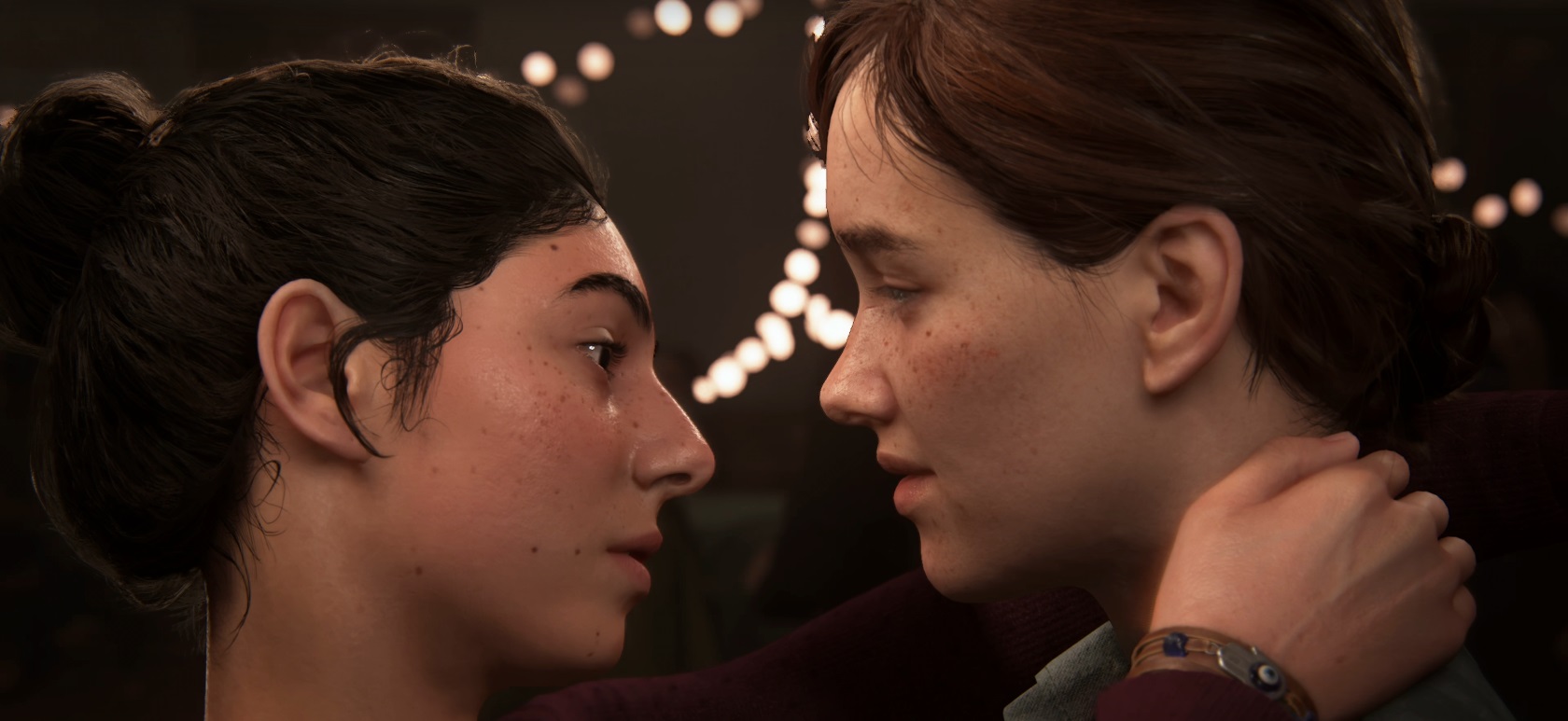
I myself have not played The Last of Us Part II because the story did not engage me even in Part 1. Therefore, I do not want to rate the game, nor can I determine how justified the criticism of the story is, but I can already see in gameplay videos that these reasons alone are not sufficient for 0 points. Cortyn from our MeinMMO team is strongly convinced by The Last Of Us II.
A much larger problem than the criticism of the story seems to be for many of the “0-point” warriors the accusation of how The Last of Us Part II handles LGBTQ. Here I find myself caught between the fronts:
- On one hand, I think it is good that such a topic is more prominently represented and that homosexual relationships are viewed as “normal” and self-evident in a game.
- On the other hand, it annoys me greatly that more and more games make their diversity a selling point. A game should convince because it plays well, not because it showcases a wide selection of characters with various skin colors and sexual preferences.

Specifically addressing the treatment of homo-, bi-, and transsexuality, I find extremely critical. I myself am bi- or pansexual and had many years of questioning what was “wrong” with me, struggling until I finally came to “understand” myself better.
I do not want people to profit from it just because it is convenient. For me, this is not a respectful way to deal with the subject but rather “going with the wind.”
Moreover, if every game is now stamped with the diversity label, it will likely provoke stubborn reactions and resentment among gamers rather than actual inclusion.
What exactly is my criticism? The difficulty with Metacritic’s reaction to the entire issue, for me, is that it feels like Metacritic wants to introduce censorship based precisely on that review bombing and prohibit review bombing for exactly this political reason, while review bombings for other reasons have been tolerated.
Players who are dissatisfied with how developers and publishers market their games will now be silenced.
Many fans already have the impression that they lack the opportunity to express criticism and be heard. And the topic of diversity is as charged and current as very few others. However, those who want to talk about it lack an appropriate platform for discussion.
It feels as if this topic of diversity has become more and more prominently represented in games over the past months and years.
Therefore, I can understand the criticism of it and understand why people get upset, even if they are not inherently against it.
On the other hand, I find it wrong that the critics use user reviews to spread their opinions in this way. Reviews should evaluate a game as a whole, not just individual aspects of it.
Hardly anyone seeks dialogue anymore – users just want to vent their bad mood, and providers uncompromisingly suppress it. How are we supposed to find solutions together?
This leads to the problem that critics once again feel overrun because they can no longer express their frustration, and their opinions become even more entrenched. Clearer boundaries are being drawn, and no one is willing to talk reasonably. At the same time, it seems as though Metacritic has only reacted when a certain group screamed loud enough for it.
It also seems as if the occasion of The Last of Us Part II fits well. So it seems that Metacritic is not concerned with maintaining the integrity of the reviews, as was needed with CoD or Fallout.
I appreciate that action is taken against review bombing on Metacritic. However, I do not appreciate how it is being done and that it is sparked by The Last of Us Part II.
Update: The Last Of Us is not the reason
Metacritic has denied in response to an inquiry from gamesindustry.biz that a “specific game” was the reason for the introduction. The change is therefore not a reaction to the review bombing of The Last Of Us II.
It is a general change for all games, in which one must now wait 36 hours after release to write a review. This only applies to games, not other sections.
The reason for this is data-driven information from critics and experts in the industry.

Your opinion is important to us!
Do you like the article? Then let us know!