
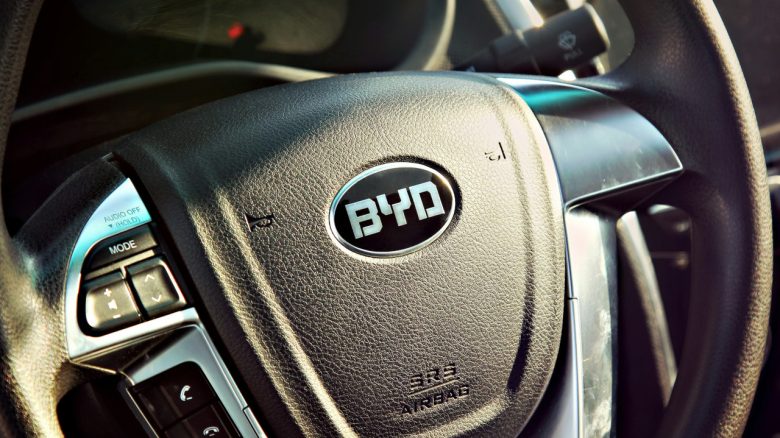
The Chinese automaker BYD has big plans for Europe. They have already surpassed Tesla in sales figures and with a new plant in Hungary, they aim to put pressure on European manufacturers. BYD’s plan could actually succeed.
Which manufacturer is being discussed? The Chinese manufacturer BYD (“Build Your Dreams”) has grown enormously in recent years. In 2024, the company sold 4.25 million vehicles, ten times more than in 2020, and aims for 5.5 million this year. Revenues have recently increased by 27% to 108 billion USD.
What does this have to do with Europe? The domestic Chinese market is saturated, and for many manufacturers, including BYD, Europe represents the central market for the future. BYD was able to triple its sales within a year, offers very affordable models, and aggressively invests in infrastructure, expansion, and advertising. Analysts indicate that such unbeatably low prices are possible due to Chinese state subsidies. However, these subsidies have long been under intense criticism as they are said to distort the market.
BYD has surpassed Tesla in vehicle sales for the first time in 2025
What about Tesla? BYD has surpassed Tesla in electric vehicle sales worldwide for the first time and registered more vehicles in Europe in April 2025 than Tesla: Tesla sold as few vehicles in the first quarter of 2025 as it has in a long time. There are reasons for this:
While BYD constantly optimizes its model range and prices and quickly introduces new ideas and innovations, Tesla suffers from an outdated, narrow range and image problems: Instead of focusing on a car for the mass market, Elon Musk is betting on a robotaxi, which experts say may never be profitable.
BYD, on the other hand, is focusing on massive expansion of dealer networks and local production in Europe to circumvent tariffs and gain market share: The new BYD factory in Szeged (Hungary) is expected to produce its first electric vehicles by the end of 2025 and is part of a massive expansion plan by the Chinese corporation BYD.
In Europe, the strong expansion from China has been identified as a threat to the domestic market. Therefore, the European Union (EU) introduced punitive tariffs of up to 45% on electric cars from China in October 2024 to counter state subsidies and unfair competitive advantages (via marktundmittelstand.de).



China has a problem: The domestic market produces so many cars that even new cars are being sold as used. Nevertheless, it does not change the fact that there are significant overcapacities in China: China produces so many cars that even new cars have to be sold as used