

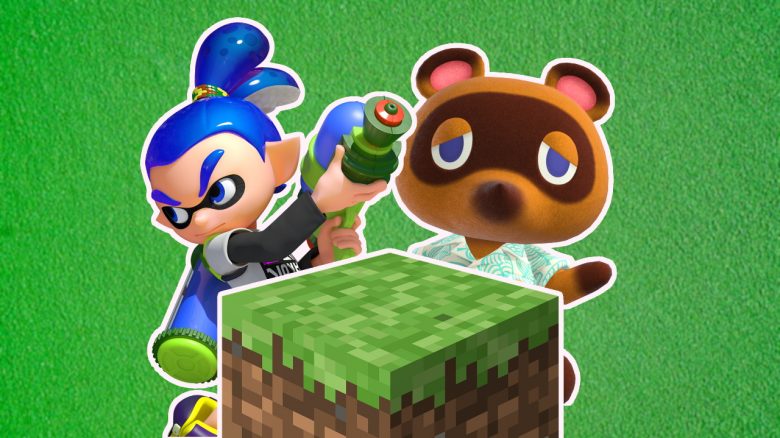
Help, my child really wants to play online games on the PC or console. But what games can safely be entrusted to small children, and what do parents need to consider when the little ones are playing online? We at MeinMMO explain it.
What are online games and MMOs? Online games are games that are not (primarily) played alone, but with other players over the Internet. This means that your children can play with friends, but also with completely unknown people online.
A subgenre of online games is so-called MMOs. The abbreviation stands for “Massively-Multiplayer-Online[Game]” – So a game with massively many simultaneous players that is played online. In MMOs, many players are often in the same online world at the same time.
Online games and MMOs can belong to various genres within gaming. The most common are:
- RPGs: This stands for Role-Playing Game, meaning role-playing games, where players take on roles and embody them online. For example, brave warriors and wizards in an online world.
- Shooters: The classic “shooting games”. Here, the goal is to shoot opponent characters with a weapon. However, shooters are not necessarily violent “killer games”. There are also harmless games for children.
- Building and simulation games: In these games, you can explore the game world and build things there. Often, the games have no defined objectives. You just play as in a sandbox.
- Puzzle and platform games: In these games, the goal is to solve logic and physics puzzles and overcome tricky obstacle courses with a character.

What parents should pay attention to
At what age should children even start playing? As a rule of thumb – the older they are, the more playtime a day should be allowed. Ideally, children from 0 to 3 years should not play digitally at all.
For 4-year-olds, according to media educators, the first learning games are okay. Children should play properly from the age of 5 (via GameStar).
How long should children play per day? Depending on their age, children should adhere to the following playing times according to media educators:
- From 5 years: About 30 minutes per day
- 6 to 9 years: Here, an hour of gaming is also allowed
- From 9 years: It is recommended to calculate 10 minutes per completed year of age per day or one hour per week. A 10-year-old child could then play a maximum of 100 minutes per day or a total of 10 hours a week.
What else should I pay attention to as a parent? Especially with online games, it is important to pay attention to who the children are playing with. Parents should monitor game times and educate the children about the dangers of online gaming.
Children must be warned not to trust strangers and should always have their parents as points of contact.
Additionally, parents should check if their children’s games contain hidden costs. So-called “microtransactions” promise advantages in the game or particularly spectacular virtual clothes or items that can then be used online for a few euros.
It must be clear from the outset that children can’t spend a lot of money here without significant effort. Therefore, pay strict attention to appropriate security settings on the PC or console, so that children are not even able to buy items in the game with real money.
Where can I find more information? If you want to dive deeper into the topic of games and media for children, we recommend the following websites (via GameStar):
- Guide for families by USK
- Game advisor NRW – Games evaluated educationally
- Spielbar – Information platform on the topic of computer games
- Internet ABC – educational guide for media
- Look Here! – Initiative to support media education
- Common Sense Media – English-language advice portal for games, movies, and series
- TOMMI – German Children’s Software Award
But enough of the preamble, the following games are all well-suited for children.

Your opinion is important to us!
Do you like the article? Then let us know!