

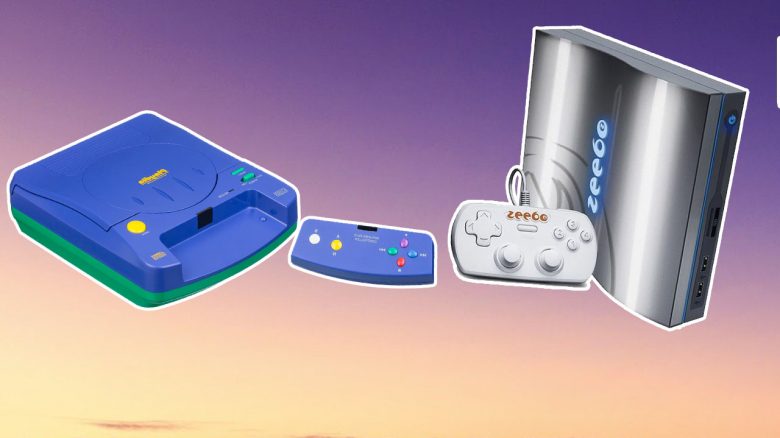
Console wars have been raging long before the PlayStation and Xbox. In this article, we introduce you to consoles that hardly anyone knows because they completely flopped.
Before Sony, Microsoft, and Nintendo established themselves as the undisputed giants in the console market, various manufacturers attempted to gain a foothold in the gaming industry each year. Names like Sega, Atari, or Commodore will be familiar to most here.
Their consoles came and went, leaving their mark on gaming history and paving the way for innovation. But there were also others, whose lifespan was so short and the flop so severe that hardly anyone remembers them today. Here are 5 such consoles.
Amstrad GX4000
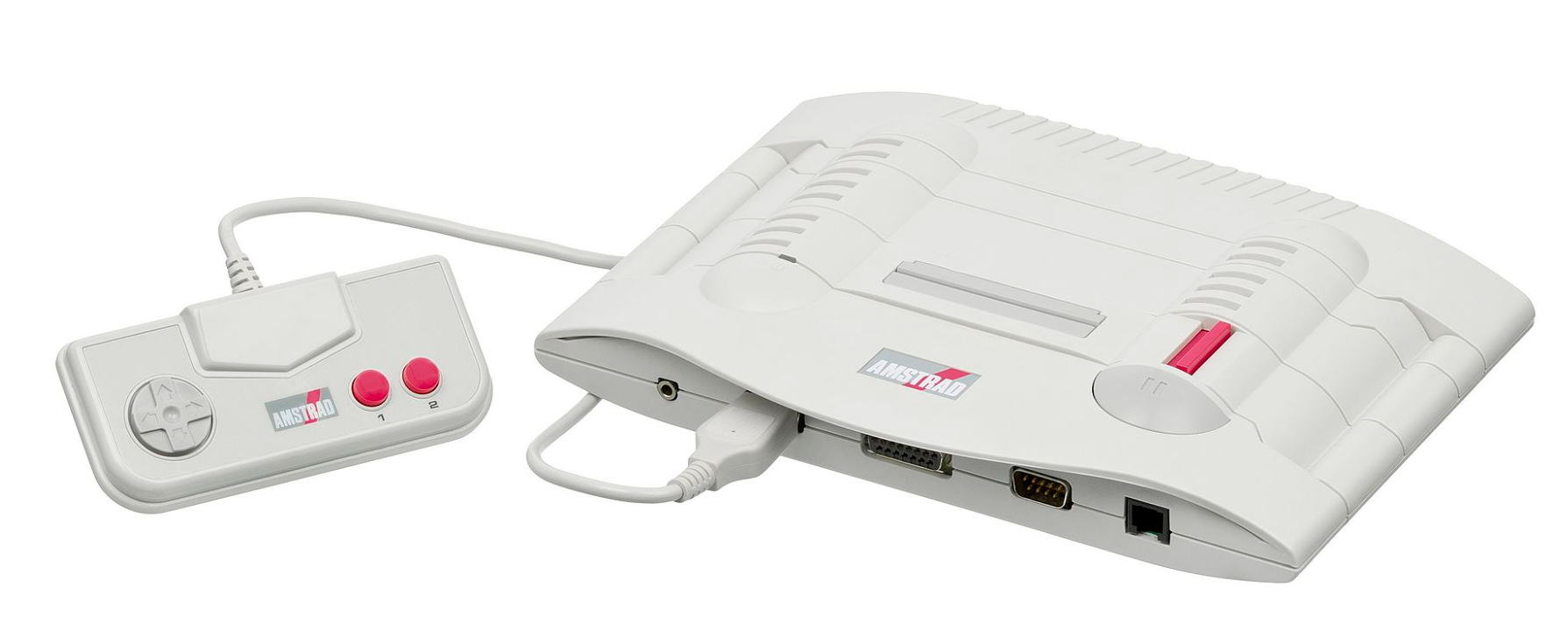
During the 80s and 90s, many toy and tech companies attempted to enter the growing console market to get their piece of the money pie. One such company was Amstrad, founded by the Brit Alan Sugar.
During the 80s, the manufacturer was one of the dominant forces in the British PC market, and they wanted to leverage this position to also participate in the console wars. This marked the birth of Amstrad GC4000. The hardware architecture of the console was based on their own “CPC Plus” home computers and belonged to the third generation of consoles.
The failure of the console was pre-programmed. At the time of its release in 1990, the competition was already strong. The 8-bit consoles Sega Master System and the heavyweight Nintendo Entertainment System (NES) were dominating the European market, against which the Amstrad had to compete.
Furthermore, the first 16-bit consoles like the Sega Genesis had already appeared at the end of the 80s, against which the 8-bit Amstrad, with its limited software offering of about 30 games, stood no chance. Estimates suggest that the console sold just 14,000 units.
Zeebo
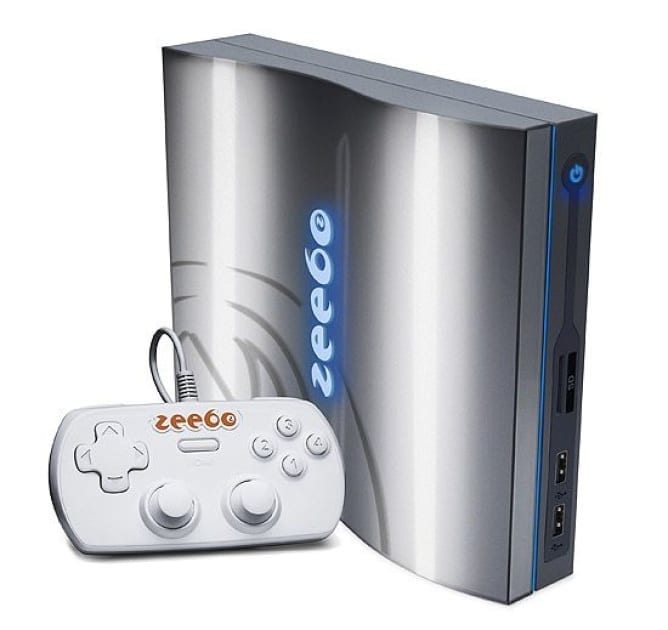
Compared to other consoles on this list, Zeebo is quite a young console. The device first appeared in May 2009, three years after the Wii and PlayStation 3, and it was not actually intended for us.
The target audience for Zeebo was supposed to be the middle class in countries like Brazil and Mexico, with a later release planned for China and Russia. With a price of 499 Brazilian Reais (approximately €150 at the time, today €94.90), it was aimed at customers for whom the consoles of the market leaders Microsoft, Sony, and Nintendo were too expensive.
However, while the price seems very low to us, it was still too much for customers in Brazil and Mexico. Consequently, the price plummeted to 299 Reais just 6 months after release.
Another problem was software. The Zeebo received a remarkable 46 titles, many of which were “ports” and adapted versions of existing titles, such as Resident Evil 4 (2005) and Need for Speed: Carbon (2006).
Its sales target of 600,000 units was missed by a good margin, with estimates suggesting it sold only 30,000 consoles in the end (via indiependent.co.uk).
Playdia
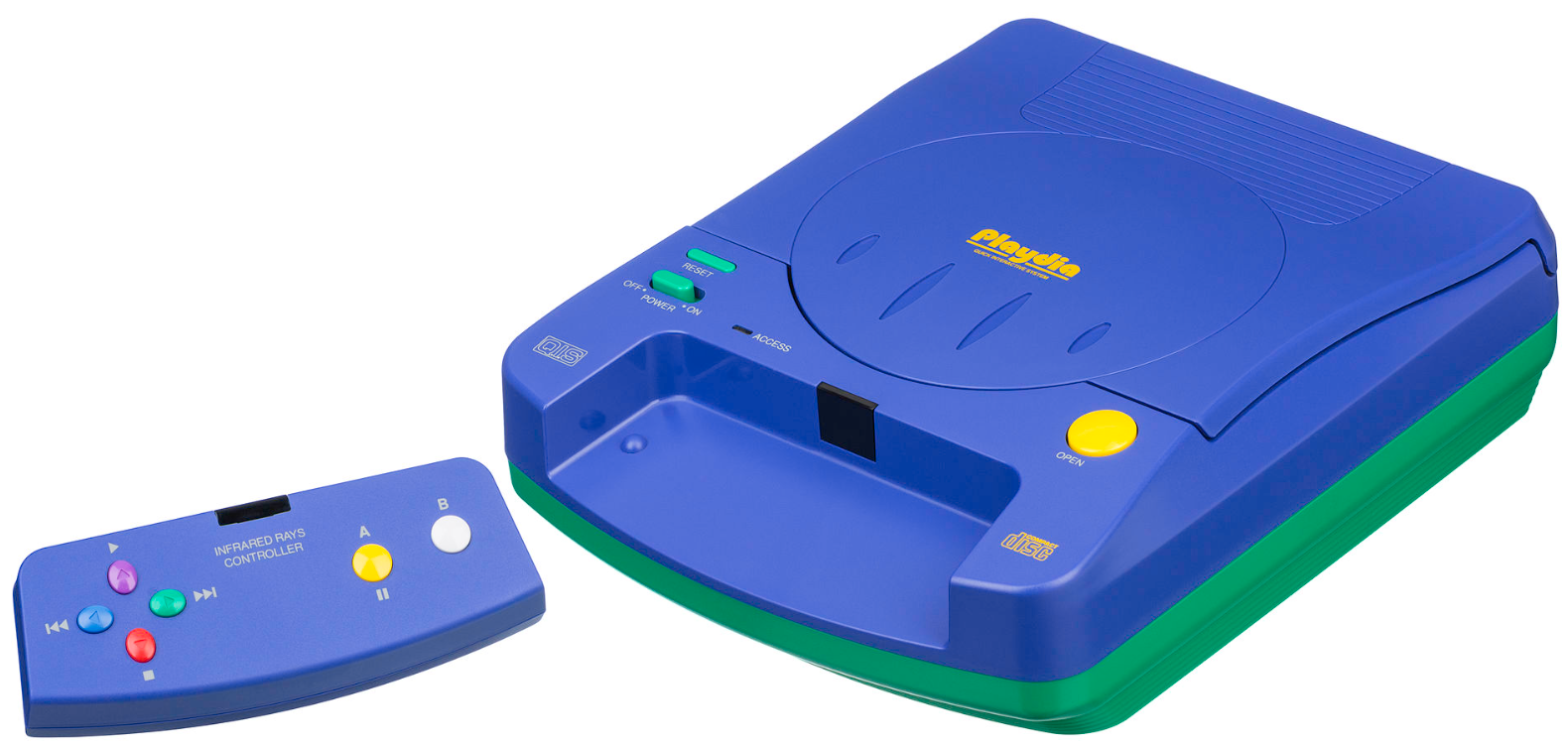
One of the many companies that repeatedly attempted to enter the console market unsuccessfully was the Japanese toy giant Bandai. One of their attempts was Playdia, a 32-bit console of the fifth generation, controlled by a wireless infrared controller.
To stand out from the competition, which was incredibly diverse and numerous in the 90s, Bandai went against the trends of the industry at the time. The Playdia was designed as a console for children, which could be seen both in its colorful appearance and the software available.
The games that were released for Playdia during its short lifespan were less games in the classic sense, but rather interactive animes and educational software. There was no trace of the proper gameplay that was already known at the time from Nintendo, Sega, and Atari games.
The selection mainly consisted of Bandai’s own IPs such as Dragon Ball, Sailor Moon, and Gundam, with Bandai being the only manufacturer that supported the platform. As a result, Playdia received only 39 different titles in total.
It is not known how many units the Playdia ultimately sold, but it did not reach the targeted goal of 200,000 consoles and was discontinued in 1996, just two years after its release (via playdia.fandom.com).

Nuon
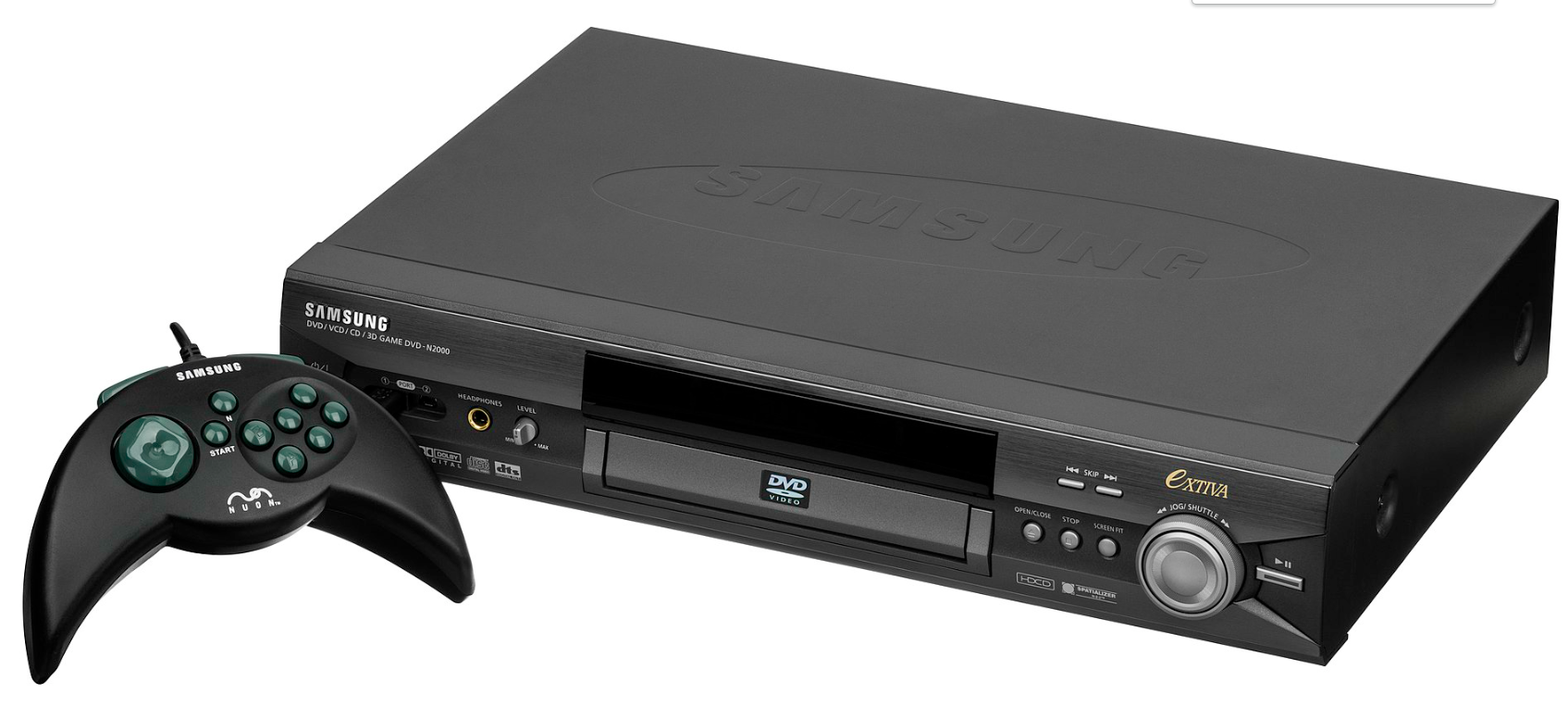
The developer of Nuon, VM Labs Inc., was founded by a former vice president and several former employees of Atari, who already had experience in the console wars.
However, their approach was somewhat “backward.” Although Nuon, which was released in 2000, is considered a console, it was marketed at best as a multimedia device and at worst as a DVD player. Even in appearance, Nuon resembled a video player more than a console. The games for Nuon were thus extremely limited and sometimes completely absurd.
Only 8 games were released for the console, half of which already existed on the PlayStation (via giantbomb). One game was even region-locked and could only be played on the Korean version of the console. The same applied in reverse: the Korean Nuon could only play this one exclusive game for that region: Crayon Shin-chan 3.
The absurdities continued, as Nuon had a total of 4 different controllers with various button layouts, which were either copies of the PlayStation or N64 controllers. However, the games were not designed to support all 4 controllers, and with a bit of bad luck, you might not be able to properly control the freshly bought game for your Nuon.
Therefore, it’s no surprise that the console totally flopped, selling only about 25,000 units, even though it was one of the first 128-bit consoles alongside the Dreamcast and PlayStation 2.
FM Towns Marty
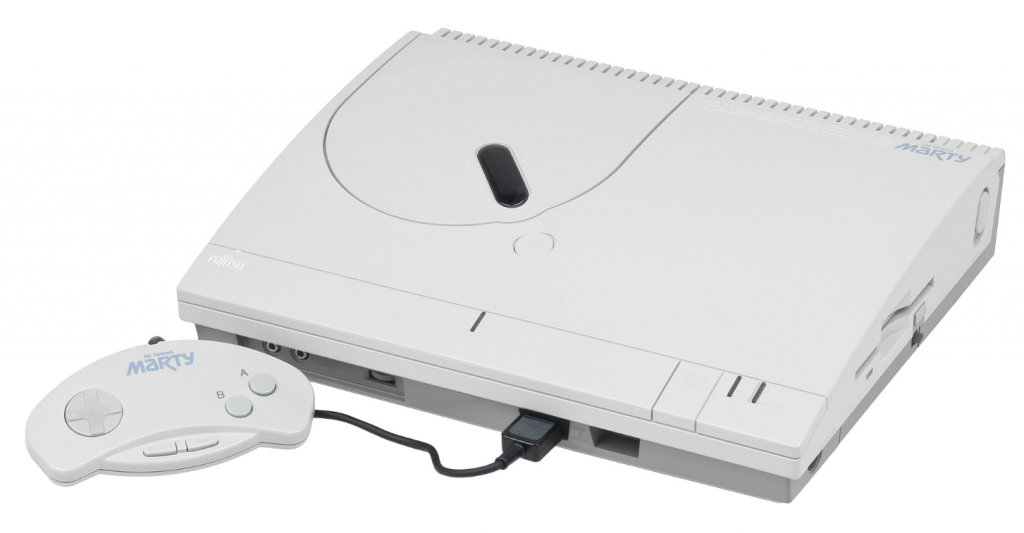
Just because a company in the tech industry is very successful does not mean that they can easily enter the console business. Many companies, including Fujitsu, had to learn this lesson in the 90s.
As a successful manufacturer of PCs, televisions, and monitors, Fujitsu decided to extend their influence to consoles and gaming as well. For this purpose, the company launched the FM Towns Marty console on February 20, 1993, which was supposed to be the first 32-bit console with a CD drive.
The console was released only in Japan at the hefty price of 98,000 yen, which would be about €1,408 today. It was a hefty sum that was not feasible for many, especially because of the numerous cheap alternatives.
Sales were so poor that Fujitsu brought the Marty 2 to market just a year later to draw attention to the industry again. While the 2 in the name may have suggested a new console with better or at least different specs, that was not the case. The only difference was the casing, which was a slightly darker gray in the second version.
In contrast to the other consoles on this list, the Marty had a nearly huge game selection. This was due to the fact that the device was backward compatible and could play the games of Fujitsu’s own FM Towns PCs.
The Marty and Marty 2 together sold an estimated 45,000 units and were an absolute flop, after which Fujitsu stayed out of the console wars.
Did you know about the consoles on our list? Can you think of any others that completely flopped and never gained recognition? Let us know in the comments.
The 5 best MMORPGs on PS4, PS5, and Xbox that you can play in 2022

Your opinion is important to us!
Do you like the article? Then let us know!