

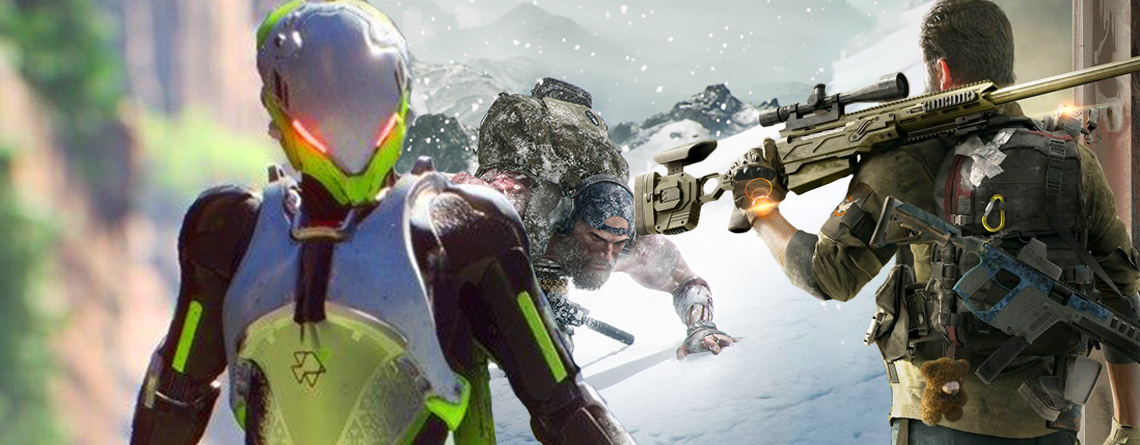
The base game was criticized by some at launch for being too thin. Technical issues, especially on the critically important consoles, plagued Anthem.
The actual, deeper problems only became apparent after launch:
- Apparently, Anthem was just finished in time for launch and there were hardly any contents prepared for the time after release.
- Moreover, the game was heavily criticized for fundamental gameplay systems: the progress was off, and there was no enjoyment in upgrading the Javelin and searching for new items.
- Then practically half the team that developed Anthem left the game, either leaving the company or working on Dragon Age 4 – the SWTOR team in Austin was supposed to take over.
- The roadmap and the planned development of Anthem were put on hold. BioWare retreated for a fundamental overhaul.
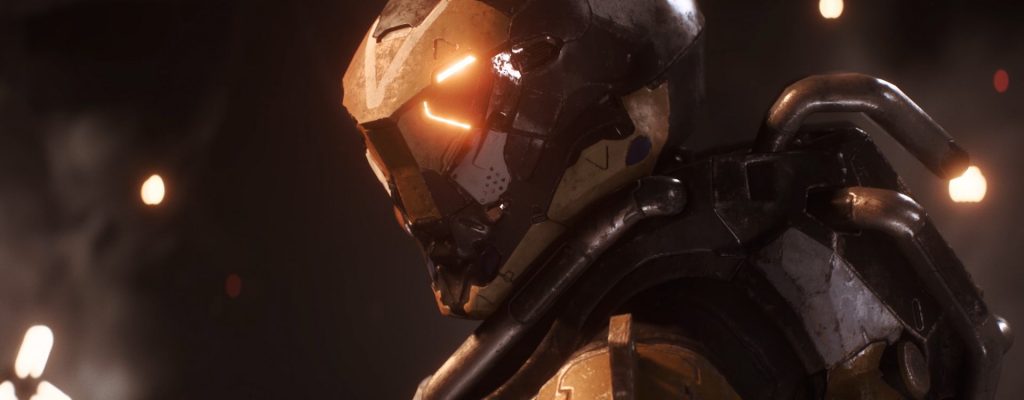
How can one see this positively? BioWare and EA have assured that they will not give up on Anthem. Allegedly, a major overhaul or even a reboot is planned for 2020.
Maybe Iron Man will rise again in 2020. By now, expectations are so low that anything looks like a silver lining.
Blizzard and Hong Kong – the most unnecessary shitstorm of 2019
This was the expectation: Blizzard has been propagating humanitarian values for decades:
- every voice counts
- think globally
- learn and grow
Essentially, Blizzard are the “good guys”, the ones who understand games and players, valuing quality and good communication.
Players expect a behavior that matches this image from “their” company.
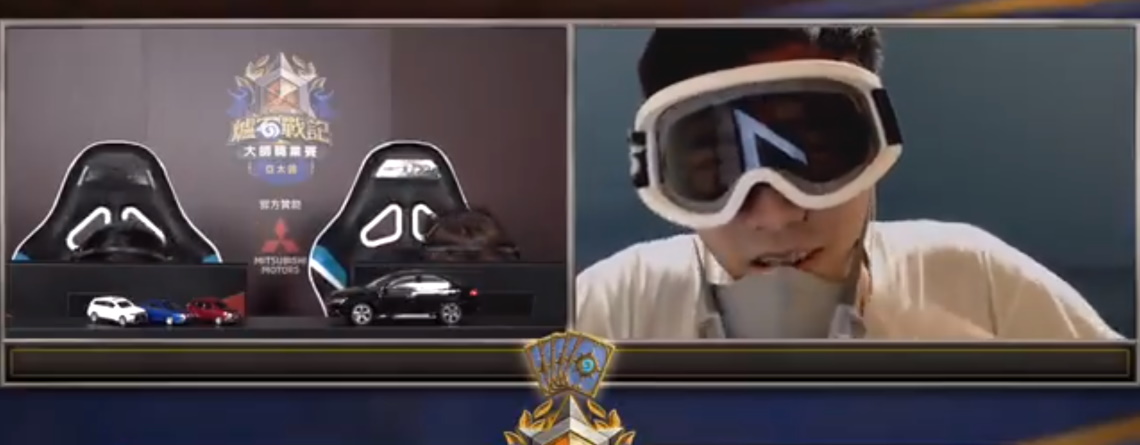
What went wrong: During a Hearthstone stream, a professional player shouted: “Freedom for Hong Kong.”
Blizzard subsequently banned the player for life and ended the collaboration with both moderators, and it was said that the player would lose the prize money he had already won. Additionally, a statement from Blizzard appeared on an Asian social media platform saying that they protect “China’s pride”.
This led to a shitstorm, accusing Blizzard of “cowering” to the “Chinese government”. For fear of facing business disadvantages, Blizzard would now practice censorship and restrict freedom of speech, while betraying their own values and yielding to China’s national interests.
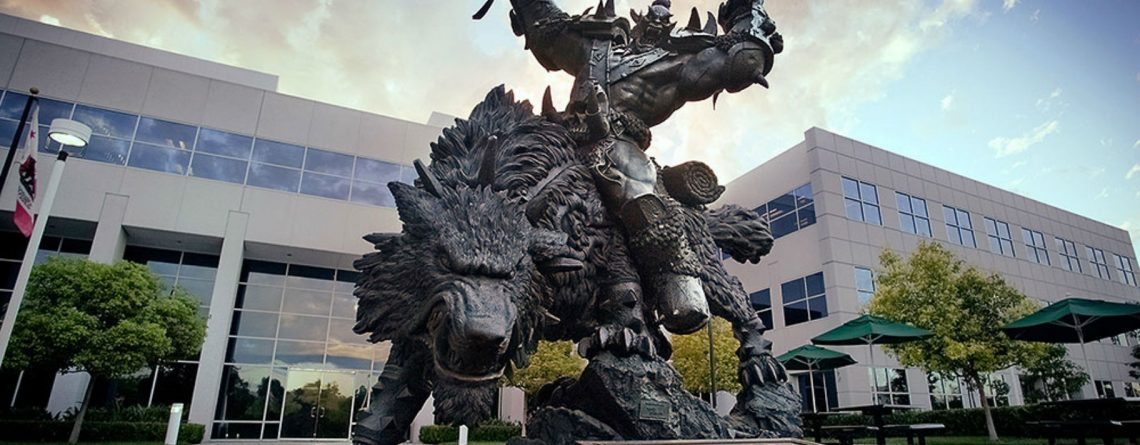
Blizzard employees covered some values like “Every voice counts” on an orc statue at the California headquarters. Protests were expected for BlizzCon 2019.
Blizzard responded to this shitstorm with a public apology: They acted too hastily. Blizzard reduced the penalties for the grandmaster and the hosts and distanced themselves from the statement regarding “China’s pride” – that was issued by Blizzard’s Chinese partner NetEase.
Nevertheless, it is crucial to adhere to the rules: Official streams should focus on the games, not on political messages. The now reduced penalties for those involved remained in place.

How can one see this positively? Blizzard showed remorse at BlizzCon 2019 and clarified that they do not want to be the Blizzard that they presented in the Hong Kong affair, but rather a more relaxed, tolerant version committed to their own values. In retrospect, it was said that they acted hastily and incorrectly when issuing the harsh penalties.
It can be assumed that Blizzard will recognize such a PR disaster in a similar situation next time and work on communication with their Chinese partners.
The evolution of The Division 2 – Hard up, harder down
This was the expectation: The shooter The Division 2 was released in March 2019 and received positive feedback. The shooter was considered the “most complete loot shooter to date” at launch. The Division 2 offered a well-rounded campaign, the systems felt solid, and the atmosphere was dense.
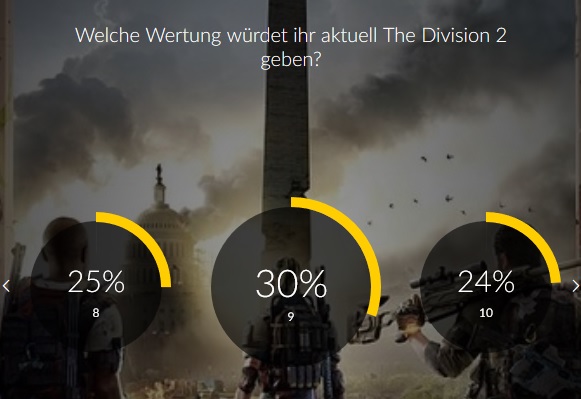
MeinMMO readers rated The Division 2 very highly after launch:
- 30% gave it a score of 9 out of 10
- 25% gave it a score of 8 out of 10
- 24% even gave it the top score of 10
The Division 2 was quite enjoyable for about 6 weeks. Players expected solid content to be added subsequently.
What went wrong: The Division 2 relied on free DLCs and was praised for it before release: Finally, the community would not be split between those who purchase DLCs and those who do not.
In practice, however, free updates proved too thin and too infrequent to maintain the initial hype of The Division 2.
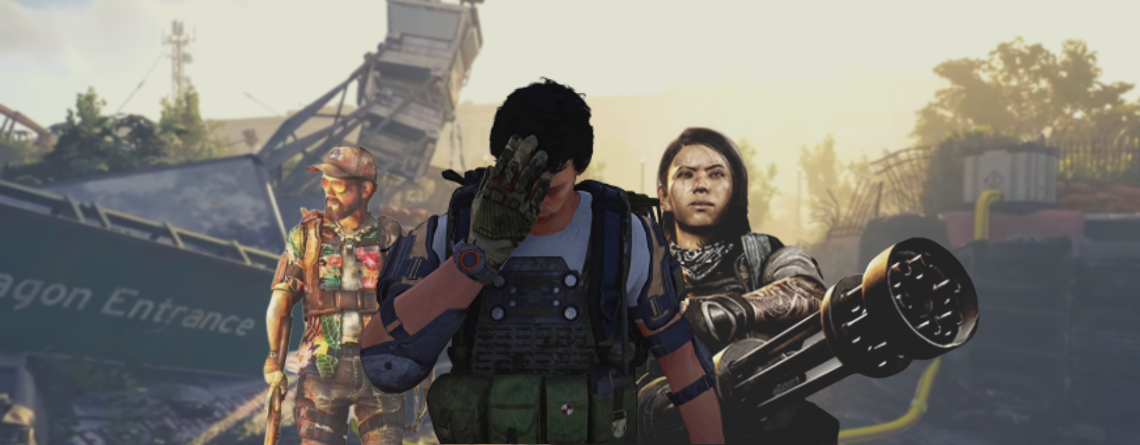
Players also criticized that features and progress from The Division 1 were missing in the second part. It quickly became clear that The Division 2 could not sustain the initial momentum from the launch: the game rapidly lost steam.
While updates and DLCs were released, they did little to keep agents motivated to stay in The Division 2. As 2019 progressed, less and less new content arrived, and communication dwindled. As a game, The Division 2 convinced at launch, but as a “Games as a service” title meant to entertain players for over a year, the shooter fell short.
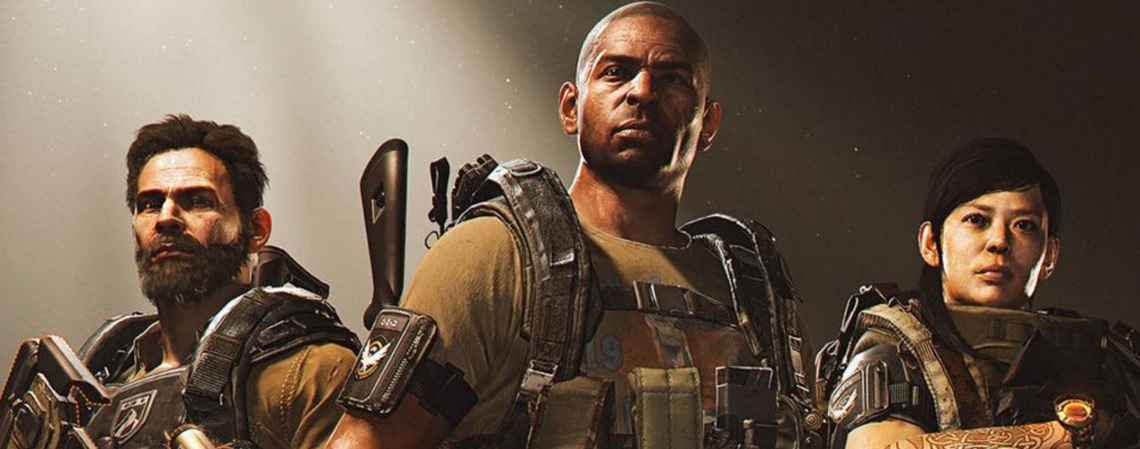
How can one see this positively? Division 1 improved after several months – the same can be hoped for The Division 2. Another DLC and a raid are planned for 2020. The game’s potential is also high, as evidenced by the reaction during the launch phase, which was later described by Massive as the “honeymoon” period.
The strange thing about The Division 2’s evolution is that Massive has already gone through all the difficult phases with The Division 1 between 2016 and 2018. The decision to focus on free DLCs and bring new missions instead of new modes seems to have significantly impacted long-term motivation.
Massive seems to be aware of the fundamental problems with The Division 2: However, it is still unclear whether they have the resources to change the issues.
Google Stadia – Who is this meant for?
This was the expectation: Google wanted to make a big entry into gaming with Stadia: Their system was clearly designed as a competitor to the PS4 Pro and Xbox One.
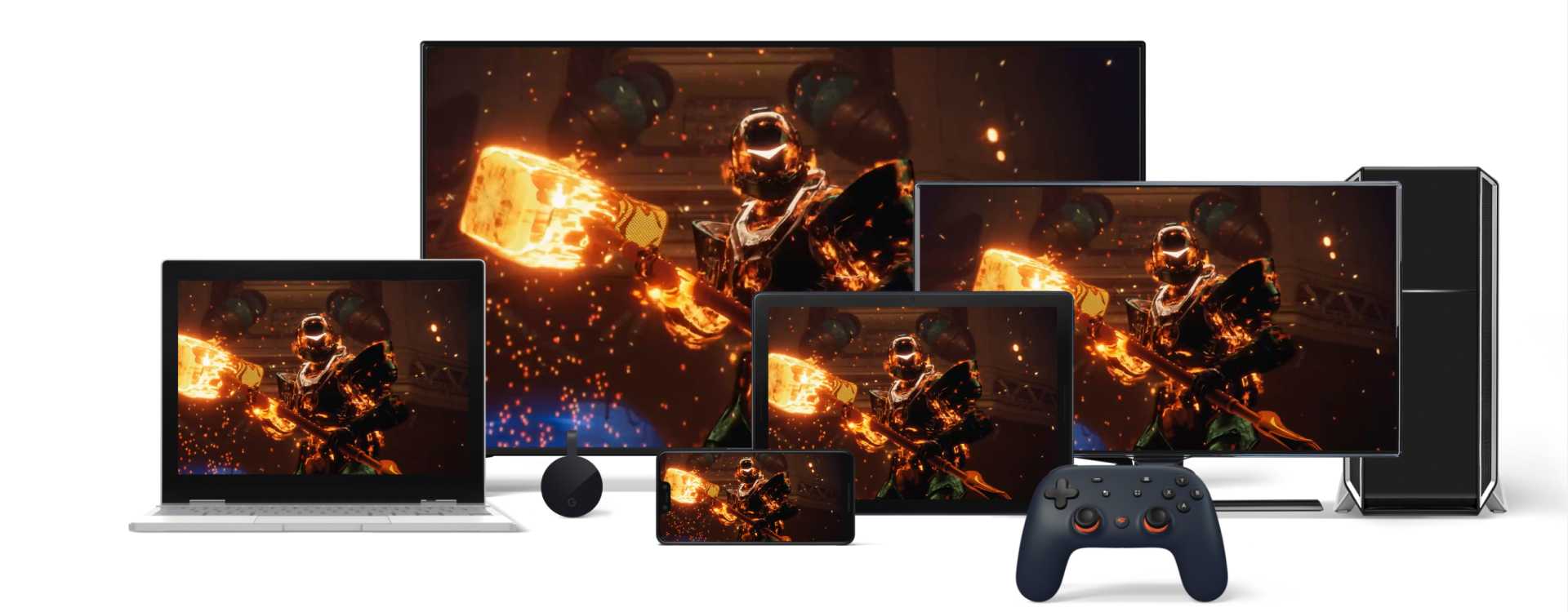
Through streaming, players would no longer have to download games, but could seamlessly jump in and play from anywhere without having to buy expensive, high-performance hardware upfront.
Google’s announcement to enter the gaming market made such waves that Microsoft and Sony even formed a strategic partnership in May 2019 to support each other as “classic gaming companies” more strongly. Later, insiders mentioned that the established platform holders had “great respect” for the tech giant Google’s entry into the gaming market.
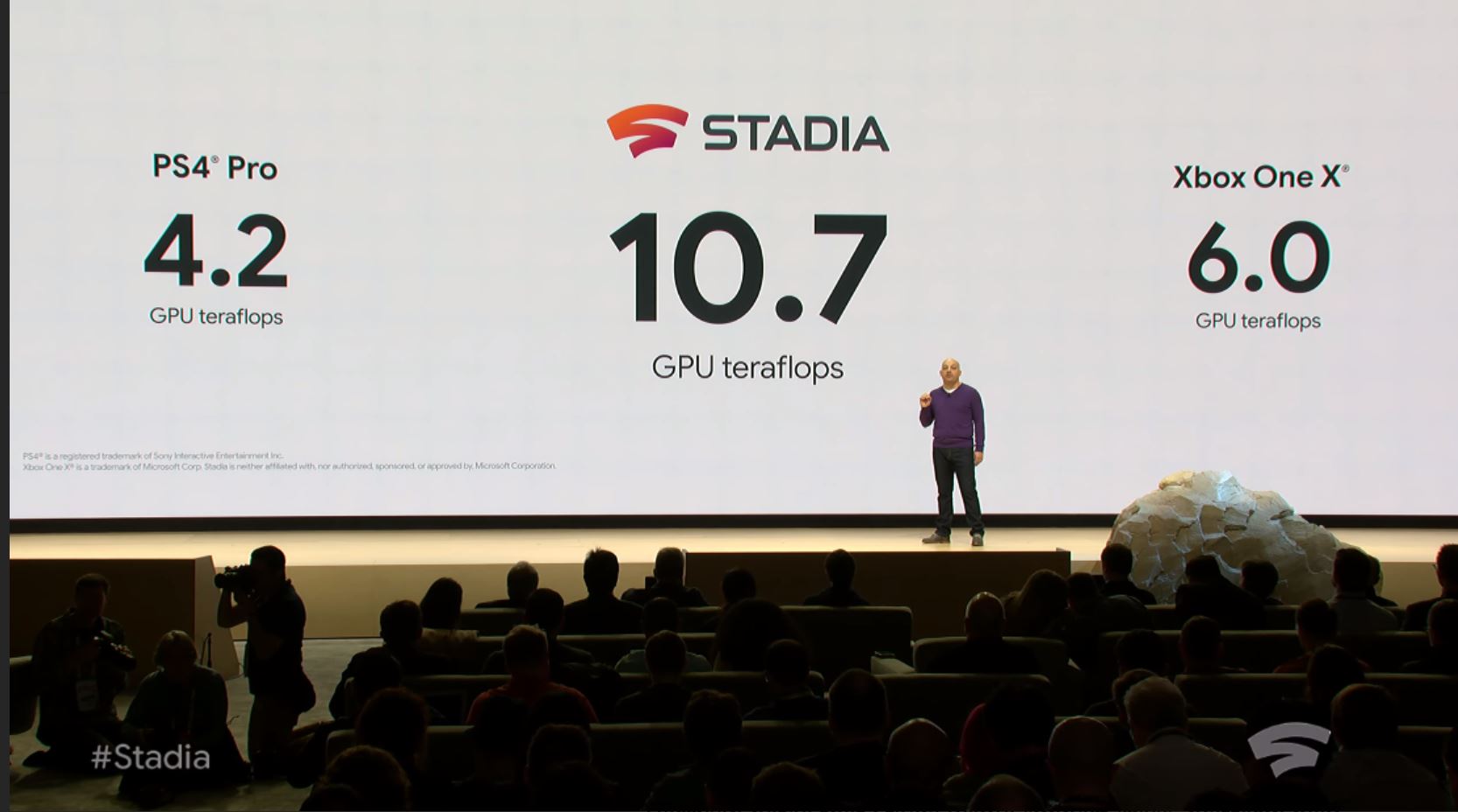
What went wrong: Actually, not much. The only issue remains unclear is who Google Stadia is actually aimed at: because the console primarily offers full-price titles that have long been available on other platforms. The typical “Free2Play” hits like Fortnite or Apex Legends are missing – there are currently no notable exclusives.
The system is especially attractive to people who have neither a PC nor a console or a game collection, but have decided to fully immerse themselves in gaming and purchase 60€ full-price titles.
Overall, the concept of Google Stadia, although technically impressive, does not seem coherent at the moment: You can play games without download, but you have to purchase them beforehand.
Players would likely prefer a subscription model, like what Microsoft offers with Gamepass: Play all the games in the offering for a flat rate, depending on what one feels like. Especially without bothersome downloads and patching, Stadia would be excellently positioned for such usage.
But Stadia doesn’t offer such a deal: Google offers a subscription, but it’s tied to only a few selected titles.
How can one see this positively? Stadia is still in its early stages and Google is working on the concept: Google has already proven that they can technically provide streaming – at least in many cases. Now they need games and titles that people will genuinely want to switch to or enter the gaming space for.
It will still take a while before the mechanisms kick in and exclusive studios develop top titles that only run on Stadia.
Ghost Recon Breakpoint – What repairs that wasn’t broken
This was the expectation: In 2017, Ghost Recon Wildlands was an unexpected success for Ubisoft. The tactical shooter managed to build a loyal community and was solidly developed over months.
Ghost Recon Breakpoint was supposed to build on this success.
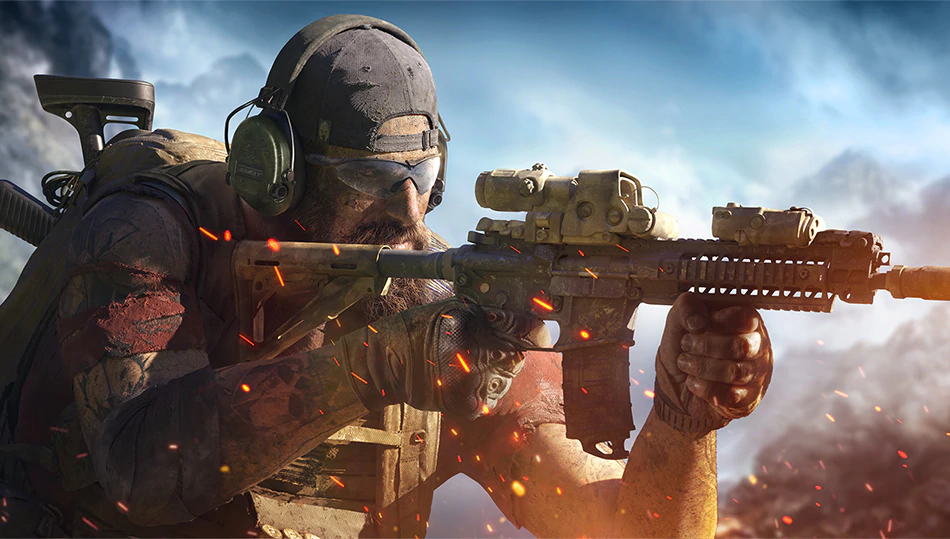
What went wrong: Ghost Recon Breakpoint was such a flop for Ubisoft, that the head of the company, Yves Guillemot, questioned Ubisoft’s business model afterward and delayed the release of firmly announced games for early 2020.
Apparently, Ubisoft developed the shooter Breakpoint past its target audience, who did not understand why they should buy a new game when Wildlands was continuously being improved.
Breakpoint was said to lack new features, and the features that were genuinely new fell flat with players. The new ideas were aimed at “grinding” and “RPG” elements – while players preferred tactical elements that fit the “Ghost Recon” series over bullet sponge ideas like in The Division.
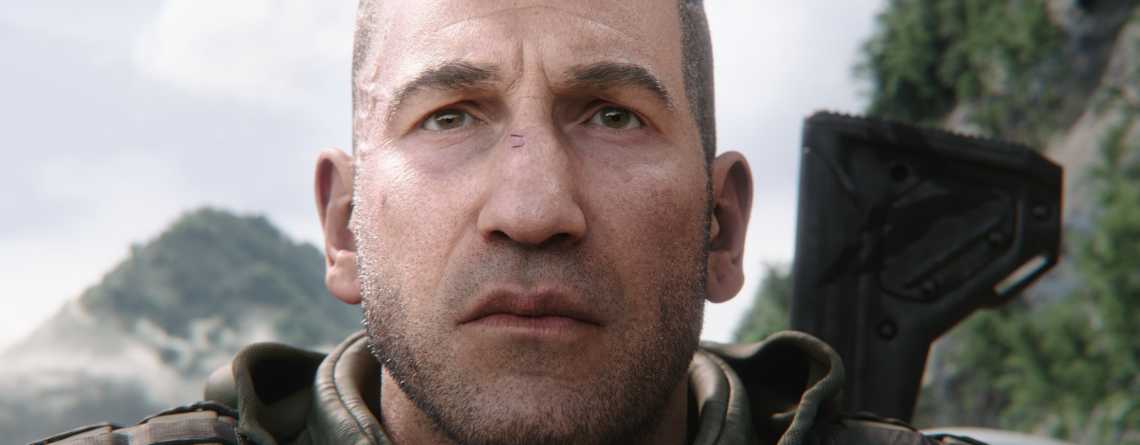
How can one see this positively? Ghost Recon Breakpoint was obviously a turning point for Ubisoft and a reason to re-evaluate the formula that had brought so much success in recent years: The idea to further develop and improve games like Rainbow Six Siege or For Honor has earned Ubisoft a lot of money and significantly enhanced the company’s reputation.
Halting the development of functioning games and then launching a new installment, as happened in 2019, seems to be a weak point in the formula that Ubisoft now needs to rethink. While it brings more launches, new attention, and money – players then want compelling reasons to see why a “restart” is necessary before engaging with the new game.
Ubisoft has clearly learned this lesson the hard way with Ghost Recon Breakpoint.

After so many disappointments, treat yourself to a list of online games that positively surprised us.
It can be assumed that Blizzard will recognize such a PR disaster in a similar situation next time and work on communication with their Chinese partners.
The evolution of The Division 2 – Hard up, harder down
This was the expectation: The shooter The Division 2 was released in March 2019 and received positive feedback. The shooter was considered the “most complete loot shooter to date” at launch. The Division 2 offered a well-rounded campaign, the systems felt solid, and the atmosphere was dense.
MeinMMO readers rated The Division 2 very highly after launch:
- 30% gave it a score of 9 out of 10
- 25% gave it a score of 8 out of 10
- 24% even gave it the top score of 10
The Division 2 was quite enjoyable for about 6 weeks. Players expected solid content to be added subsequently.
What went wrong: The Division 2 relied on free DLCs and was praised for it before release: Finally, the community would not be split between those who purchase DLCs and those who do not.
In practice, however, free updates proved too thin and too infrequent to maintain the initial hype of The Division 2.
Players also criticized that features and progress from The Division 1 were missing in the second part. It quickly became clear that The Division 2 could not sustain the initial momentum from the launch: the game rapidly lost steam.
While updates and DLCs were released, they did little to keep agents motivated to stay in The Division 2. As 2019 progressed, less and less new content arrived, and communication dwindled. As a game, The Division 2 convinced at launch, but as a “Games as a service” title meant to entertain players for over a year, the shooter fell short.
How can one see this positively? Division 1 improved after several months – the same can be hoped for The Division 2. Another DLC and a raid are planned for 2020. The game’s potential is also high, as evidenced by the reaction during the launch phase, which was later described by Massive as the “honeymoon” period.
The strange thing about The Division 2’s evolution is that Massive has already gone through all the difficult phases with The Division 1 between 2016 and 2018. The decision to focus on free DLCs and bring new missions instead of new modes seems to have significantly impacted long-term motivation.
Massive seems to be aware of the fundamental problems with The Division 2: However, it is still unclear whether they have the resources to change the issues.
Google Stadia – Who is this meant for?
This was the expectation: Google wanted to make a big entry into gaming with Stadia: Their system was clearly designed as a competitor to the PS4 Pro and Xbox One.
Through streaming, players would no longer have to download games, but could seamlessly jump in and play from anywhere without having to buy expensive, high-performance hardware upfront.
Google’s announcement to enter the gaming market made such waves that Microsoft and Sony even formed a strategic partnership in May 2019 to support each other as “classic gaming companies” more strongly. Later, insiders mentioned that the established platform holders had “great respect” for the tech giant Google’s entry into the gaming market.
What went wrong: Actually, not much. The only issue remains unclear is who Google Stadia is actually aimed at: because the console primarily offers full-price titles that have long been available on other platforms. The typical “Free2Play” hits like Fortnite or Apex Legends are missing – there are currently no notable exclusives.
The system is especially attractive to people who have neither a PC nor a console or a game collection, but have decided to fully immerse themselves in gaming and purchase 60€ full-price titles.
Overall, the concept of Google Stadia, although technically impressive, does not seem coherent at the moment: You can play games without download, but you have to purchase them beforehand.
Players would likely prefer a subscription model, like what Microsoft offers with Gamepass: Play all the games in the offering for a flat rate, depending on what one feels like. Especially without bothersome downloads and patching, Stadia would be excellently positioned for such usage.
But Stadia doesn’t offer such a deal: Google offers a subscription, but it’s tied to only a few selected titles.
How can one see this positively? Stadia is still in its early stages and Google is working on the concept: Google has already proven that they can technically provide streaming – at least in many cases. Now they need games and titles that people will genuinely want to switch to or enter the gaming space for.
It will still take a while before the mechanisms kick in and exclusive studios develop top titles that only run on Stadia.
Ghost Recon Breakpoint – What repairs that wasn’t broken
This was the expectation: In 2017, Ghost Recon Wildlands was an unexpected success for Ubisoft. The tactical shooter managed to build a loyal community and was solidly developed over months.
Ghost Recon Breakpoint was supposed to build on this success.
What went wrong: Ghost Recon Breakpoint was such a flop for Ubisoft, that the head of the company, Yves Guillemot, questioned Ubisoft’s business model afterward and delayed the release of firmly announced games for early 2020.
Apparently, Ubisoft developed the shooter Breakpoint past its target audience, who did not understand why they should buy a new game when Wildlands was continuously being improved.
Breakpoint was said to lack new features, and the features that were genuinely new fell flat with players. The new ideas were aimed at “grinding” and “RPG” elements – while players preferred tactical elements that fit the “Ghost Recon” series over bullet sponge ideas like in The Division.
How can one see this positively? Ghost Recon Breakpoint was obviously a turning point for Ubisoft and a reason to re-evaluate the formula that had brought so much success in recent years: The idea to further develop and improve games like Rainbow Six Siege or For Honor has earned Ubisoft a lot of money and significantly enhanced the company’s reputation.
Halting the development of functioning games and then launching a new installment, as happened in 2019, seems to be a weak point in the formula that Ubisoft now needs to rethink. While it brings more launches, new attention, and money – players then want compelling reasons to see why a “restart” is necessary before engaging with the new game.
Ubisoft has clearly learned this lesson the hard way with Ghost Recon Breakpoint.
After so many disappointments, treat yourself to a list of online games that positively surprised us.
The base game was criticized by some at launch for being too thin. Technical issues, especially on the critically important consoles, plagued Anthem.
The actual, deeper problems only became apparent after launch:
- Apparently, Anthem was just finished in time for launch and there were hardly any contents prepared for the time after release.
- Moreover, the game was heavily criticized for fundamental gameplay systems: the progress was off, and there was no enjoyment in upgrading the Javelin and searching for new items.
- Then practically half the team that developed Anthem left the game, either leaving the company or working on Dragon Age 4 – the SWTOR team in Austin was supposed to take over.
- The roadmap and the planned development of Anthem were put on hold. BioWare retreated for a fundamental overhaul.
How can one see this positively? BioWare and EA have assured that they will not give up on Anthem. Allegedly, a major overhaul or even a reboot is planned for 2020.
Maybe Iron Man will rise again in 2020. By now, expectations are so low that anything looks like a silver lining.
Blizzard and Hong Kong – the most unnecessary shitstorm of 2019
This was the expectation: Blizzard has been propagating humanitarian values for decades:
- every voice counts
- think globally
- learn and grow
Essentially, Blizzard are the “good guys”, the ones who understand games and players, valuing quality and good communication.
Players expect a behavior that matches this image from “their” company.
What went wrong: During a Hearthstone stream, a professional player shouted: “Freedom for Hong Kong.”
Blizzard subsequently banned the player for life and ended the collaboration with both moderators, and it was said that the player would lose the prize money he had already won. Additionally, a statement from Blizzard appeared on an Asian social media platform saying that they protect “China’s pride”.
This led to a shitstorm, accusing Blizzard of “cowering” to the “Chinese government”. For fear of facing business disadvantages, Blizzard would now practice censorship and restrict freedom of speech, while betraying their own values and yielding to China’s national interests.
Blizzard employees covered some values like “Every voice counts” on an orc statue at the California headquarters. Protests were expected for BlizzCon 2019.
Blizzard responded to this shitstorm with a public apology: They acted too hastily. Blizzard reduced the penalties for the grandmaster and the hosts and distanced themselves from the statement regarding “China’s pride” – that was issued by Blizzard’s Chinese partner NetEase.
Nevertheless, it is crucial to adhere to the rules: Official streams should focus on the games, not on political messages. The now reduced penalties for those involved remained in place.
How can one see this positively? Blizzard showed remorse at BlizzCon 2019 and clarified that they do not want to be the Blizzard that they presented in the Hong Kong affair, but rather a more relaxed, tolerant version committed to their own values. In retrospect, it was said that they acted hastily and incorrectly when issuing the harsh penalties.
It can be assumed that Blizzard will recognize such a PR disaster in a similar situation next time and work on communication with their Chinese partners.
The evolution of The Division 2 – Hard up, harder down
This was the expectation: The shooter The Division 2 was released in March 2019 and received positive feedback. The shooter was considered the “most complete loot shooter to date” at launch. The Division 2 offered a well-rounded campaign, the systems felt solid, and the atmosphere was dense.
MeinMMO readers rated The Division 2 very highly after launch:
- 30% gave it a score of 9 out of 10
- 25% gave it a score of 8 out of 10
- 24% even gave it the top score of 10
The Division 2 was quite enjoyable for about 6 weeks. Players expected solid content to be added subsequently.
What went wrong: The Division 2 relied on free DLCs and was praised for it before release: Finally, the community would not be split between those who purchase DLCs and those who do not.
In practice, however, free updates proved too thin and too infrequent to maintain the initial hype of The Division 2.
Players also criticized that features and progress from The Division 1 were missing in the second part. It quickly became clear that The Division 2 could not sustain the initial momentum from the launch: the game rapidly lost steam.
While updates and DLCs were released, they did little to keep agents motivated to stay in The Division 2. As 2019 progressed, less and less new content arrived, and communication dwindled. As a game, The Division 2 convinced at launch, but as a “Games as a service” title meant to entertain players for over a year, the shooter fell short.
How can one see this positively? Division 1 improved after several months – the same can be hoped for The Division 2. Another DLC and a raid are planned for 2020. The game’s potential is also high, as evidenced by the reaction during the launch phase, which was later described by Massive as the “honeymoon” period.
The strange thing about The Division 2’s evolution is that Massive has already gone through all the difficult phases with The Division 1 between 2016 and 2018. The decision to focus on free DLCs and bring new missions instead of new modes seems to have significantly impacted long-term motivation.
Massive seems to be aware of the fundamental problems with The Division 2: However, it is still unclear whether they have the resources to change the issues.
Google Stadia – Who is this meant for?
This was the expectation: Google wanted to make a big entry into gaming with Stadia: Their system was clearly designed as a competitor to the PS4 Pro and Xbox One.
Through streaming, players would no longer have to download games, but could seamlessly jump in and play from anywhere without having to buy expensive, high-performance hardware upfront.
Google’s announcement to enter the gaming market made such waves that Microsoft and Sony even formed a strategic partnership in May 2019 to support each other as “classic gaming companies” more strongly. Later, insiders mentioned that the established platform holders had “great respect” for the tech giant Google’s entry into the gaming market.
What went wrong: Actually, not much. The only issue remains unclear is who Google Stadia is actually aimed at: because the console primarily offers full-price titles that have long been available on other platforms. The typical “Free2Play” hits like Fortnite or Apex Legends are missing – there are currently no notable exclusives.
The system is especially attractive to people who have neither a PC nor a console or a game collection, but have decided to fully immerse themselves in gaming and purchase 60€ full-price titles.
Overall, the concept of Google Stadia, although technically impressive, does not seem coherent at the moment: You can play games without download, but you have to purchase them beforehand.
Players would likely prefer a subscription model, like what Microsoft offers with Gamepass: Play all the games in the offering for a flat rate, depending on what one feels like. Especially without bothersome downloads and patching, Stadia would be excellently positioned for such usage.
But Stadia doesn’t offer such a deal: Google offers a subscription, but it’s tied to only a few selected titles.
How can one see this positively? Stadia is still in its early stages and Google is working on the concept: Google has already proven that they can technically provide streaming – at least in many cases. Now they need games and titles that people will genuinely want to switch to or enter the gaming space for.
It will still take a while before the mechanisms kick in and exclusive studios develop top titles that only run on Stadia.
Ghost Recon Breakpoint – What repairs that wasn’t broken
This was the expectation: In 2017, Ghost Recon Wildlands was an unexpected success for Ubisoft. The tactical shooter managed to build a loyal community and was solidly developed over months.
Ghost Recon Breakpoint was supposed to build on this success.
What went wrong: Ghost Recon Breakpoint was such a flop for Ubisoft, that the head of the company, Yves Guillemot, questioned Ubisoft’s business model afterward and delayed the release of firmly announced games for early 2020.
Apparently, Ubisoft developed the shooter Breakpoint past its target audience, who did not understand why they should buy a new game when Wildlands was continuously being improved.
Breakpoint was said to lack new features, and the features that were genuinely new fell flat with players. The new ideas were aimed at “grinding” and “RPG” elements – while players preferred tactical elements that fit the “Ghost Recon” series over bullet sponge ideas like in The Division.
How can one see this positively? Ghost Recon Breakpoint was obviously a turning point for Ubisoft and a reason to re-evaluate the formula that had brought so much success in recent years: The idea to further develop and improve games like Rainbow Six Siege or For Honor has earned Ubisoft a lot of money and significantly enhanced the company’s reputation.
Halting the development of functioning games and then launching a new installment, as happened in 2019, seems to be a weak point in the formula that Ubisoft now needs to rethink. While it brings more launches, new attention, and money – players then want compelling reasons to see why a “restart” is necessary before engaging with the new game.
Ubisoft has clearly learned this lesson the hard way with Ghost Recon Breakpoint.
After so many disappointments, treat yourself to a list of online games that positively surprised us.
Maybe Iron Man will rise again in 2020. By now, expectations are so low that anything looks like a silver lining.
Blizzard and Hong Kong – the most unnecessary shitstorm of 2019
This was the expectation: Blizzard has been propagating humanitarian values for decades:
- every voice counts
- think globally
- learn and grow
Essentially, Blizzard are the “good guys”, the ones who understand games and players, valuing quality and good communication.
Players expect a behavior that matches this image from “their” company.
What went wrong: During a Hearthstone stream, a professional player shouted: “Freedom for Hong Kong.”
Blizzard subsequently banned the player for life and ended the collaboration with both moderators, and it was said that the player would lose the prize money he had already won. Additionally, a statement from Blizzard appeared on an Asian social media platform saying that they protect “China’s pride”.
This led to a shitstorm, accusing Blizzard of “cowering” to the “Chinese government”. For fear of facing business disadvantages, Blizzard would now practice censorship and restrict freedom of speech, while betraying their own values and yielding to China’s national interests.
Blizzard employees covered some values like “Every voice counts” on an orc statue at the California headquarters. Protests were expected for BlizzCon 2019.
Blizzard responded to this shitstorm with a public apology: They acted too hastily. Blizzard reduced the penalties for the grandmaster and the hosts and distanced themselves from the statement regarding “China’s pride” – that was issued by Blizzard’s Chinese partner NetEase.
Nevertheless, it is crucial to adhere to the rules: Official streams should focus on the games, not on political messages. The now reduced penalties for those involved remained in place.
How can one see this positively? Blizzard showed remorse at BlizzCon 2019 and clarified that they do not want to be the Blizzard that they presented in the Hong Kong affair, but rather a more relaxed, tolerant version committed to their own values. In retrospect, it was said that they acted hastily and incorrectly when issuing the harsh penalties.
It can be assumed that Blizzard will recognize such a PR disaster in a similar situation next time and work on communication with their Chinese partners.
The evolution of The Division 2 – Hard up, harder down
This was the expectation: The shooter The Division 2 was released in March 2019 and received positive feedback. The shooter was considered the “most complete loot shooter to date” at launch. The Division 2 offered a well-rounded campaign, the systems felt solid, and the atmosphere was dense.
MeinMMO readers rated The Division 2 very highly after launch:
- 30% gave it a score of 9 out of 10
- 25% gave it a score of 8 out of 10
- 24% even gave it the top score of 10
The Division 2 was quite enjoyable for about 6 weeks. Players expected solid content to be added subsequently.
What went wrong: The Division 2 relied on free DLCs and was praised for it before release: Finally, the community would not be split between those who purchase DLCs and those who do not.
In practice, however, free updates proved too thin and too infrequent to maintain the initial hype of The Division 2.
Players also criticized that features and progress from The Division 1 were missing in the second part. It quickly became clear that The Division 2 could not sustain the initial momentum from the launch: the game rapidly lost steam.
While updates and DLCs were released, they did little to keep agents motivated to stay in The Division 2. As 2019 progressed, less and less new content arrived, and communication dwindled. As a game, The Division 2 convinced at launch, but as a “Games as a service” title meant to entertain players for over a year, the shooter fell short.
How can one see this positively? Division 1 improved after several months – the same can be hoped for The Division 2. Another DLC and a raid are planned for 2020. The game’s potential is also high, as evidenced by the reaction during the launch phase, which was later described by Massive as the “honeymoon” period.
The strange thing about The Division 2’s evolution is that Massive has already gone through all the difficult phases with The Division 1 between 2016 and 2018. The decision to focus on free DLCs and bring new missions instead of new modes seems to have significantly impacted long-term motivation.
Massive seems to be aware of the fundamental problems with The Division 2: However, it is still unclear whether they have the resources to change the issues.
Google Stadia – Who is this meant for?
This was the expectation: Google wanted to make a big entry into gaming with Stadia: Their system was clearly designed as a competitor to the PS4 Pro and Xbox One.
Through streaming, players would no longer have to download games, but could seamlessly jump in and play from anywhere without having to buy expensive, high-performance hardware upfront.
Google’s announcement to enter the gaming market made such waves that Microsoft and Sony even formed a strategic partnership in May 2019 to support each other as “classic gaming companies” more strongly. Later, insiders mentioned that the established platform holders had “great respect” for the tech giant Google’s entry into the gaming market.
What went wrong: Actually, not much. The only issue remains unclear is who Google Stadia is actually aimed at: because the console primarily offers full-price titles that have long been available on other platforms. The typical “Free2Play” hits like Fortnite or Apex Legends are missing – there are currently no notable exclusives.
The system is especially attractive to people who have neither a PC nor a console or a game collection, but have decided to fully immerse themselves in gaming and purchase 60€ full-price titles.
Overall, the concept of Google Stadia, although technically impressive, does not seem coherent at the moment: You can play games without download, but you have to purchase them beforehand.
Players would likely prefer a subscription model, like what Microsoft offers with Gamepass: Play all the games in the offering for a flat rate, depending on what one feels like. Especially without bothersome downloads and patching, Stadia would be excellently positioned for such usage.
But Stadia doesn’t offer such a deal: Google offers a subscription, but it’s tied to only a few selected titles.
How can one see this positively? Stadia is still in its early stages and Google is working on the concept: Google has already proven that they can technically provide streaming – at least in many cases. Now they need games and titles that people will genuinely want to switch to or enter the gaming space for.
It will still take a while before the mechanisms kick in and exclusive studios develop top titles that only run on Stadia.
Ghost Recon Breakpoint – What repairs that wasn’t broken
This was the expectation: In 2017, Ghost Recon Wildlands was an unexpected success for Ubisoft. The tactical shooter managed to build a loyal community and was solidly developed over months.
Ghost Recon Breakpoint was supposed to build on this success.
What went wrong: Ghost Recon Breakpoint was such a flop for Ubisoft, that the head of the company, Yves Guillemot, questioned Ubisoft’s business model afterward and delayed the release of firmly announced games for early 2020.
Apparently, Ubisoft developed the shooter Breakpoint past its target audience, who did not understand why they should buy a new game when Wildlands was continuously being improved.
Breakpoint was said to lack new features, and the features that were genuinely new fell flat with players. The new ideas were aimed at “grinding” and “RPG” elements – while players preferred tactical elements that fit the “Ghost Recon” series over bullet sponge ideas like in The Division.
How can one see this positively? Ghost Recon Breakpoint was obviously a turning point for Ubisoft and a reason to re-evaluate the formula that had brought so much success in recent years: The idea to further develop and improve games like Rainbow Six Siege or For Honor has earned Ubisoft a lot of money and significantly enhanced the company’s reputation.
Halting the development of functioning games and then launching a new installment, as happened in 2019, seems to be a weak point in the formula that Ubisoft now needs to rethink. While it brings more launches, new attention, and money – players then want compelling reasons to see why a “restart” is necessary before engaging with the new game.
Ubisoft has clearly learned this lesson the hard way with Ghost Recon Breakpoint.
After so many disappointments, treat yourself to a list of online games that positively surprised us.
The base game was criticized by some at launch for being too thin. Technical issues, especially on the critically important consoles, plagued Anthem.
The actual, deeper problems only became apparent after launch:
- Apparently, Anthem was just finished in time for launch and there were hardly any contents prepared for the time after release.
- Moreover, the game was heavily criticized for fundamental gameplay systems: the progress was off, and there was no enjoyment in upgrading the Javelin and searching for new items.
- Then practically half the team that developed Anthem left the game, either leaving the company or working on Dragon Age 4 – the SWTOR team in Austin was supposed to take over.
- The roadmap and the planned development of Anthem were put on hold. BioWare retreated for a fundamental overhaul.
How can one see this positively? BioWare and EA have assured that they will not give up on Anthem. Allegedly, a major overhaul or even a reboot is planned for 2020.
Maybe Iron Man will rise again in 2020. By now, expectations are so low that anything looks like a silver lining.
Blizzard and Hong Kong – the most unnecessary shitstorm of 2019
This was the expectation: Blizzard has been propagating humanitarian values for decades:
- every voice counts
- think globally
- learn and grow
Essentially, Blizzard are the “good guys”, the ones who understand games and players, valuing quality and good communication.
Players expect a behavior that matches this image from “their” company.
What went wrong: During a Hearthstone stream, a professional player shouted: “Freedom for Hong Kong.”
Blizzard subsequently banned the player for life and ended the collaboration with both moderators, and it was said that the player would lose the prize money he had already won. Additionally, a statement from Blizzard appeared on an Asian social media platform saying that they protect “China’s pride”.
This led to a shitstorm, accusing Blizzard of “cowering” to the “Chinese government”. For fear of facing business disadvantages, Blizzard would now practice censorship and restrict freedom of speech, while betraying their own values and yielding to China’s national interests.
Blizzard employees covered some values like “Every voice counts” on an orc statue at the California headquarters. Protests were expected for BlizzCon 2019.
Blizzard responded to this shitstorm with a public apology: They acted too hastily. Blizzard reduced the penalties for the grandmaster and the hosts and distanced themselves from the statement regarding “China’s pride” – that was issued by Blizzard’s Chinese partner NetEase.
Nevertheless, it is crucial to adhere to the rules: Official streams should focus on the games, not on political messages. The now reduced penalties for those involved remained in place.
How can one see this positively? Blizzard showed remorse at BlizzCon 2019 and clarified that they do not want to be the Blizzard that they presented in the Hong Kong affair, but rather a more relaxed, tolerant version committed to their own values. In retrospect, it was said that they acted hastily and incorrectly when issuing the harsh penalties.
It can be assumed that Blizzard will recognize such a PR disaster in a similar situation next time and work on communication with their Chinese partners.
The evolution of The Division 2 – Hard up, harder down
This was the expectation: The shooter The Division 2 was released in March 2019 and received positive feedback. The shooter was considered the “most complete loot shooter to date” at launch. The Division 2 offered a well-rounded campaign, the systems felt solid, and the atmosphere was dense.
MeinMMO readers rated The Division 2 very highly after launch:
- 30% gave it a score of 9 out of 10
- 25% gave it a score of 8 out of 10
- 24% even gave it the top score of 10
The Division 2 was quite enjoyable for about 6 weeks. Players expected solid content to be added subsequently.
What went wrong: The Division 2 relied on free DLCs and was praised for it before release: Finally, the community would not be split between those who purchase DLCs and those who do not.
In practice, however, free updates proved too thin and too infrequent to maintain the initial hype of The Division 2.
Players also criticized that features and progress from The Division 1 were missing in the second part. It quickly became clear that The Division 2 could not sustain the initial momentum from the launch: the game rapidly lost steam.
While updates and DLCs were released, they did little to keep agents motivated to stay in The Division 2. As 2019 progressed, less and less new content arrived, and communication dwindled. As a game, The Division 2 convinced at launch, but as a “Games as a service” title meant to entertain players for over a year, the shooter fell short.
How can one see this positively? Division 1 improved after several months – the same can be hoped for The Division 2. Another DLC and a raid are planned for 2020. The game’s potential is also high, as evidenced by the reaction during the launch phase, which was later described by Massive as the “honeymoon” period.
The strange thing about The Division 2’s evolution is that Massive has already gone through all the difficult phases with The Division 1 between 2016 and 2018. The decision to focus on free DLCs and bring new missions instead of new modes seems to have significantly impacted long-term motivation.
Massive seems to be aware of the fundamental problems with The Division 2: However, it is still unclear whether they have the resources to change the issues.
Google Stadia – Who is this meant for?
This was the expectation: Google wanted to make a big entry into gaming with Stadia: Their system was clearly designed as a competitor to the PS4 Pro and Xbox One.
Through streaming, players would no longer have to download games, but could seamlessly jump in and play from anywhere without having to buy expensive, high-performance hardware upfront.
Google’s announcement to enter the gaming market made such waves that Microsoft and Sony even formed a strategic partnership in May 2019 to support each other as “classic gaming companies” more strongly. Later, insiders mentioned that the established platform holders had “great respect” for the tech giant Google’s entry into the gaming market.
What went wrong: Actually, not much. The only issue remains unclear is who Google Stadia is actually aimed at: because the console primarily offers full-price titles that have long been available on other platforms. The typical “Free2Play” hits like Fortnite or Apex Legends are missing – there are currently no notable exclusives.
The system is especially attractive to people who have neither a PC nor a console or a game collection, but have decided to fully immerse themselves in gaming and purchase 60€ full-price titles.
Overall, the concept of Google Stadia, although technically impressive, does not seem coherent at the moment: You can play games without download, but you have to purchase them beforehand.
Players would likely prefer a subscription model, like what Microsoft offers with Gamepass: Play all the games in the offering for a flat rate, depending on what one feels like. Especially without bothersome downloads and patching, Stadia would be excellently positioned for such usage.
But Stadia doesn’t offer such a deal: Google offers a subscription, but it’s tied to only a few selected titles.
How can one see this positively? Stadia is still in its early stages and Google is working on the concept: Google has already proven that they can technically provide streaming – at least in many cases. Now they need games and titles that people will genuinely want to switch to or enter the gaming space for.
It will still take a while before the mechanisms kick in and exclusive studios develop top titles that only run on Stadia.
Ghost Recon Breakpoint – What repairs that wasn’t broken
This was the expectation: In 2017, Ghost Recon Wildlands was an unexpected success for Ubisoft. The tactical shooter managed to build a loyal community and was solidly developed over months.
Ghost Recon Breakpoint was supposed to build on this success.
What went wrong: Ghost Recon Breakpoint was such a flop for Ubisoft, that the head of the company, Yves Guillemot, questioned Ubisoft’s business model afterward and delayed the release of firmly announced games for early 2020.
Apparently, Ubisoft developed the shooter Breakpoint past its target audience, who did not understand why they should buy a new game when Wildlands was continuously being improved.
Breakpoint was said to lack new features, and the features that were genuinely new fell flat with players. The new ideas were aimed at “grinding” and “RPG” elements – while players preferred tactical elements that fit the “Ghost Recon” series over bullet sponge ideas like in The Division.
How can one see this positively? Ghost Recon Breakpoint was obviously a turning point for Ubisoft and a reason to re-evaluate the formula that had brought so much success in recent years: The idea to further develop and improve games like Rainbow Six Siege or For Honor has earned Ubisoft a lot of money and significantly enhanced the company’s reputation.
Halting the development of functioning games and then launching a new installment, as happened in 2019, seems to be a weak point in the formula that Ubisoft now needs to rethink. While it brings more launches, new attention, and money – players then want compelling reasons to see why a “restart” is necessary before engaging with the new game.
Ubisoft has clearly learned this lesson the hard way with Ghost Recon Breakpoint.
After so many disappointments, treat yourself to a list of online games that positively surprised us.
It can be assumed that Blizzard will recognize such a PR disaster in a similar situation next time and work on communication with their Chinese partners.
The evolution of The Division 2 – Hard up, harder down
This was the expectation: The shooter The Division 2 was released in March 2019 and received positive feedback. The shooter was considered the “most complete loot shooter to date” at launch. The Division 2 offered a well-rounded campaign, the systems felt solid, and the atmosphere was dense.
MeinMMO readers rated The Division 2 very highly after launch:
- 30% gave it a score of 9 out of 10
- 25% gave it a score of 8 out of 10
- 24% even gave it the top score of 10
The Division 2 was quite enjoyable for about 6 weeks. Players expected solid content to be added subsequently.
What went wrong: The Division 2 relied on free DLCs and was praised for it before release: Finally, the community would not be split between those who purchase DLCs and those who do not.
In practice, however, free updates proved too thin and too infrequent to maintain the initial hype of The Division 2.
Players also criticized that features and progress from The Division 1 were missing in the second part. It quickly became clear that The Division 2 could not sustain the initial momentum from the launch: the game rapidly lost steam.
While updates and DLCs were released, they did little to keep agents motivated to stay in The Division 2. As 2019 progressed, less and less new content arrived, and communication dwindled. As a game, The Division 2 convinced at launch, but as a “Games as a service” title meant to entertain players for over a year, the shooter fell short.
How can one see this positively? Division 1 improved after several months – the same can be hoped for The Division 2. Another DLC and a raid are planned for 2020. The game’s potential is also high, as evidenced by the reaction during the launch phase, which was later described by Massive as the “honeymoon” period.
The strange thing about The Division 2’s evolution is that Massive has already gone through all the difficult phases with The Division 1 between 2016 and 2018. The decision to focus on free DLCs and bring new missions instead of new modes seems to have significantly impacted long-term motivation.
Massive seems to be aware of the fundamental problems with The Division 2: However, it is still unclear whether they have the resources to change the issues.
Google Stadia – Who is this meant for?
This was the expectation: Google wanted to make a big entry into gaming with Stadia: Their system was clearly designed as a competitor to the PS4 Pro and Xbox One.
Through streaming, players would no longer have to download games, but could seamlessly jump in and play from anywhere without having to buy expensive, high-performance hardware upfront.
Google’s announcement to enter the gaming market made such waves that Microsoft and Sony even formed a strategic partnership in May 2019 to support each other as “classic gaming companies” more strongly. Later, insiders mentioned that the established platform holders had “great respect” for the tech giant Google’s entry into the gaming market.
What went wrong: Actually, not much. The only issue remains unclear is who Google Stadia is actually aimed at: because the console primarily offers full-price titles that have long been available on other platforms. The typical “Free2Play” hits like Fortnite or Apex Legends are missing – there are currently no notable exclusives.
The system is especially attractive to people who have neither a PC nor a console or a game collection, but have decided to fully immerse themselves in gaming and purchase 60€ full-price titles.
Overall, the concept of Google Stadia, although technically impressive, does not seem coherent at the moment: You can play games without download, but you have to purchase them beforehand.
Players would likely prefer a subscription model, like what Microsoft offers with Gamepass: Play all the games in the offering for a flat rate, depending on what one feels like. Especially without bothersome downloads and patching, Stadia would be excellently positioned for such usage.
But Stadia doesn’t offer such a deal: Google offers a subscription, but it’s tied to only a few selected titles.
How can one see this positively? Stadia is still in its early stages and Google is working on the concept: Google has already proven that they can technically provide streaming – at least in many cases. Now they need games and titles that people will genuinely want to switch to or enter the gaming space for.
It will still take a while before the mechanisms kick in and exclusive studios develop top titles that only run on Stadia.
Ghost Recon Breakpoint – What repairs that wasn’t broken
This was the expectation: In 2017, Ghost Recon Wildlands was an unexpected success for Ubisoft. The tactical shooter managed to build a loyal community and was solidly developed over months.
Ghost Recon Breakpoint was supposed to build on this success.
What went wrong: Ghost Recon Breakpoint was such a flop for Ubisoft, that the head of the company, Yves Guillemot, questioned Ubisoft’s business model afterward and delayed the release of firmly announced games for early 2020.
Apparently, Ubisoft developed the shooter Breakpoint past its target audience, who did not understand why they should buy a new game when Wildlands was continuously being improved.
Breakpoint was said to lack new features, and the features that were genuinely new fell flat with players. The new ideas were aimed at “grinding” and “RPG” elements – while players preferred tactical elements that fit the “Ghost Recon” series over bullet sponge ideas like in The Division.
How can one see this positively? Ghost Recon Breakpoint was obviously a turning point for Ubisoft and a reason to re-evaluate the formula that had brought so much success in recent years: The idea to further develop and improve games like Rainbow Six Siege or For Honor has earned Ubisoft a lot of money and significantly enhanced the company’s reputation.
Halting the development of functioning games and then launching a new installment, as happened in 2019, seems to be a weak point in the formula that Ubisoft now needs to rethink. While it brings more launches, new attention, and money – players then want compelling reasons to see why a “restart” is necessary before engaging with the new game.
Ubisoft has clearly learned this lesson the hard way with Ghost Recon Breakpoint.
After so many disappointments, treat yourself to a list of online games that positively surprised us.
Maybe Iron Man will rise again in 2020. By now, expectations are so low that anything looks like a silver lining.
Blizzard and Hong Kong – the most unnecessary shitstorm of 2019
This was the expectation: Blizzard has been propagating humanitarian values for decades:
- every voice counts
- think globally
- learn and grow
Essentially, Blizzard are the “good guys”, the ones who understand games and players, valuing quality and good communication.
Players expect a behavior that matches this image from “their” company.
What went wrong: During a Hearthstone stream, a professional player shouted: “Freedom for Hong Kong.”
Blizzard subsequently banned the player for life and ended the collaboration with both moderators, and it was said that the player would lose the prize money he had already won. Additionally, a statement from Blizzard appeared on an Asian social media platform saying that they protect “China’s pride”.
This led to a shitstorm, accusing Blizzard of “cowering” to the “Chinese government”. For fear of facing business disadvantages, Blizzard would now practice censorship and restrict freedom of speech, while betraying their own values and yielding to China’s national interests.
Blizzard employees covered some values like “Every voice counts” on an orc statue at the California headquarters. Protests were expected for BlizzCon 2019.
Blizzard responded to this shitstorm with a public apology: They acted too hastily. Blizzard reduced the penalties for the grandmaster and the hosts and distanced themselves from the statement regarding “China’s pride” – that was issued by Blizzard’s Chinese partner NetEase.
Nevertheless, it is crucial to adhere to the rules: Official streams should focus on the games, not on political messages. The now reduced penalties for those involved remained in place.
How can one see this positively? Blizzard showed remorse at BlizzCon 2019 and clarified that they do not want to be the Blizzard that they presented in the Hong Kong affair, but rather a more relaxed, tolerant version committed to their own values. In retrospect, it was said that they acted hastily and incorrectly when issuing the harsh penalties.
It can be assumed that Blizzard will recognize such a PR disaster in a similar situation next time and work on communication with their Chinese partners.
The evolution of The Division 2 – Hard up, harder down
This was the expectation: The shooter The Division 2 was released in March 2019 and received positive feedback. The shooter was considered the “most complete loot shooter to date” at launch. The Division 2 offered a well-rounded campaign, the systems felt solid, and the atmosphere was dense.
MeinMMO readers rated The Division 2 very highly after launch:
- 30% gave it a score of 9 out of 10
- 25% gave it a score of 8 out of 10
- 24% even gave it the top score of 10
The Division 2 was quite enjoyable for about 6 weeks. Players expected solid content to be added subsequently.
What went wrong: The Division 2 relied on free DLCs and was praised for it before release: Finally, the community would not be split between those who purchase DLCs and those who do not.
In practice, however, free updates proved too thin and too infrequent to maintain the initial hype of The Division 2.
Players also criticized that features and progress from The Division 1 were missing in the second part. It quickly became clear that The Division 2 could not sustain the initial momentum from the launch: the game rapidly lost steam.
While updates and DLCs were released, they did little to keep agents motivated to stay in The Division 2. As 2019 progressed, less and less new content arrived, and communication dwindled. As a game, The Division 2 convinced at launch, but as a “Games as a service” title meant to entertain players for over a year, the shooter fell short.
How can one see this positively? Division 1 improved after several months – the same can be hoped for The Division 2. Another DLC and a raid are planned for 2020. The game’s potential is also high, as evidenced by the reaction during the launch phase, which was later described by Massive as the “honeymoon” period.
The strange thing about The Division 2’s evolution is that Massive has already gone through all the difficult phases with The Division 1 between 2016 and 2018. The decision to focus on free DLCs and bring new missions instead of new modes seems to have significantly impacted long-term motivation.
Massive seems to be aware of the fundamental problems with The Division 2: However, it is still unclear whether they have the resources to change the issues.
Google Stadia – Who is this meant for?
This was the expectation: Google wanted to make a big entry into gaming with Stadia: Their system was clearly designed as a competitor to the PS4 Pro and Xbox One.
Through streaming, players would no longer have to download games, but could seamlessly jump in and play from anywhere without having to buy expensive, high-performance hardware upfront.
Google’s announcement to enter the gaming market made such waves that Microsoft and Sony even formed a strategic partnership in May 2019 to support each other as “classic gaming companies” more strongly. Later, insiders mentioned that the established platform holders had “great respect” for the tech giant Google’s entry into the gaming market.
What went wrong: Actually, not much. The only issue remains unclear is who Google Stadia is actually aimed at: because the console primarily offers full-price titles that have long been available on other platforms. The typical “Free2Play” hits like Fortnite or Apex Legends are missing – there are currently no notable exclusives.
The system is especially attractive to people who have neither a PC nor a console or a game collection, but have decided to fully immerse themselves in gaming and purchase 60€ full-price titles.
Overall, the concept of Google Stadia, although technically impressive, does not seem coherent at the moment: You can play games without download, but you have to purchase them beforehand.
Players would likely prefer a subscription model, like what Microsoft offers with Gamepass: Play all the games in the offering for a flat rate, depending on what one feels like. Especially without bothersome downloads and patching, Stadia would be excellently positioned for such usage.
But Stadia doesn’t offer such a deal: Google offers a subscription, but it’s tied to only a few selected titles.
How can one see this positively? Stadia is still in its early stages and Google is working on the concept: Google has already proven that they can technically provide streaming – at least in many cases. Now they need games and titles that people will genuinely want to switch to or enter the gaming space for.
It will still take a while before the mechanisms kick in and exclusive studios develop top titles that only run on Stadia.
Ghost Recon Breakpoint – What repairs that wasn’t broken
This was the expectation: In 2017, Ghost Recon Wildlands was an unexpected success for Ubisoft. The tactical shooter managed to build a loyal community and was solidly developed over months.
Ghost Recon Breakpoint was supposed to build on this success.
What went wrong: Ghost Recon Breakpoint was such a flop for Ubisoft, that the head of the company, Yves Guillemot, questioned Ubisoft’s business model afterward and delayed the release of firmly announced games for early 2020.
Apparently, Ubisoft developed the shooter Breakpoint past its target audience, who did not understand why they should buy a new game when Wildlands was continuously being improved.
Breakpoint was said to lack new features, and the features that were genuinely new fell flat with players. The new ideas were aimed at “grinding” and “RPG” elements – while players preferred tactical elements that fit the “Ghost Recon” series over bullet sponge ideas like in The Division.
How can one see this positively? Ghost Recon Breakpoint was obviously a turning point for Ubisoft and a reason to re-evaluate the formula that had brought so much success in recent years: The idea to further develop and improve games like Rainbow Six Siege or For Honor has earned Ubisoft a lot of money and significantly enhanced the company’s reputation.
Halting the development of functioning games and then launching a new installment, as happened in 2019, seems to be a weak point in the formula that Ubisoft now needs to rethink. While it brings more launches, new attention, and money – players then want compelling reasons to see why a “restart” is necessary before engaging with the new game.
Ubisoft has clearly learned this lesson the hard way with Ghost Recon Breakpoint.
After so many disappointments, treat yourself to a list of online games that positively surprised us.
The base game was criticized by some at launch for being too thin. Technical issues, especially on the critically important consoles, plagued Anthem.
The actual, deeper problems only became apparent after launch:
- Apparently, Anthem was just finished in time for launch and there were hardly any contents prepared for the time after release.
- Moreover, the game was heavily criticized for fundamental gameplay systems: the progress was off, and there was no enjoyment in upgrading the Javelin and searching for new items.
- Then practically half the team that developed Anthem left the game, either leaving the company or working on Dragon Age 4 – the SWTOR team in Austin was supposed to take over.
- The roadmap and the planned development of Anthem were put on hold. BioWare retreated for a fundamental overhaul.
How can one see this positively? BioWare and EA have assured that they will not give up on Anthem. Allegedly, a major overhaul or even a reboot is planned for 2020.
Maybe Iron Man will rise again in 2020. By now, expectations are so low that anything looks like a silver lining.
Blizzard and Hong Kong – the most unnecessary shitstorm of 2019
This was the expectation: Blizzard has been propagating humanitarian values for decades:
- every voice counts
- think globally
- learn and grow
Essentially, Blizzard are the “good guys”, the ones who understand games and players, valuing quality and good communication.
Players expect a behavior that matches this image from “their” company.
What went wrong: During a Hearthstone stream, a professional player shouted: “Freedom for Hong Kong.”
Blizzard subsequently banned the player for life and ended the collaboration with both moderators, and it was said that the player would lose the prize money he had already won. Additionally, a statement from Blizzard appeared on an Asian social media platform saying that they protect “China’s pride”.
This led to a shitstorm, accusing Blizzard of “cowering” to the “Chinese government”. For fear of facing business disadvantages, Blizzard would now practice censorship and restrict freedom of speech, while betraying their own values and yielding to China’s national interests.
Blizzard employees covered some values like “Every voice counts” on an orc statue at the California headquarters. Protests were expected for BlizzCon 2019.
Blizzard responded to this shitstorm with a public apology: They acted too hastily. Blizzard reduced the penalties for the grandmaster and the hosts and distanced themselves from the statement regarding “China’s pride” – that was issued by Blizzard’s Chinese partner NetEase.
Nevertheless, it is crucial to adhere to the rules: Official streams should focus on the games, not on political messages. The now reduced penalties for those involved remained in place.
How can one see this positively? Blizzard showed remorse at BlizzCon 2019 and clarified that they do not want to be the Blizzard that they presented in the Hong Kong affair, but rather a more relaxed, tolerant version committed to their own values. In retrospect, it was said that they acted hastily and incorrectly when issuing the harsh penalties.
It can be assumed that Blizzard will recognize such a PR disaster in a similar situation next time and work on communication with their Chinese partners.
The evolution of The Division 2 – Hard up, harder down
This was the expectation: The shooter The Division 2 was released in March 2019 and received positive feedback. The shooter was considered the “most complete loot shooter to date” at launch. The Division 2 offered a well-rounded campaign, the systems felt solid, and the atmosphere was dense.
MeinMMO readers rated The Division 2 very highly after launch:
- 30% gave it a score of 9 out of 10
- 25% gave it a score of 8 out of 10
- 24% even gave it the top score of 10
The Division 2 was quite enjoyable for about 6 weeks. Players expected solid content to be added subsequently.
What went wrong: The Division 2 relied on free DLCs and was praised for it before release: Finally, the community would not be split between those who purchase DLCs and those who do not.
In practice, however, free updates proved too thin and too infrequent to maintain the initial hype of The Division 2.
Players also criticized that features and progress from The Division 1 were missing in the second part. It quickly became clear that The Division 2 could not sustain the initial momentum from the launch: the game rapidly lost steam.
While updates and DLCs were released, they did little to keep agents motivated to stay in The Division 2. As 2019 progressed, less and less new content arrived, and communication dwindled. As a game, The Division 2 convinced at launch, but as a “Games as a service” title meant to entertain players for over a year, the shooter fell short.
How can one see this positively? Division 1 improved after several months – the same can be hoped for The Division 2. Another DLC and a raid are planned for 2020. The game’s potential is also high, as evidenced by the reaction during the launch phase, which was later described by Massive as the “honeymoon” period.
The strange thing about The Division 2’s evolution is that Massive has already gone through all the difficult phases with The Division 1 between 2016 and 2018. The decision to focus on free DLCs and bring new missions instead of new modes seems to have significantly impacted long-term motivation.
Massive seems to be aware of the fundamental problems with The Division 2: However, it is still unclear whether they have the resources to change the issues.
Google Stadia – Who is this meant for?
This was the expectation: Google wanted to make a big entry into gaming with Stadia: Their system was clearly designed as a competitor to the PS4 Pro and Xbox One.
Through streaming, players would no longer have to download games, but could seamlessly jump in and play from anywhere without having to buy expensive, high-performance hardware upfront.
Google’s announcement to enter the gaming market made such waves that Microsoft and Sony even formed a strategic partnership in May 2019 to support each other as “classic gaming companies” more strongly. Later, insiders mentioned that the established platform holders had “great respect” for the tech giant Google’s entry into the gaming market.
What went wrong: Actually, not much. The only issue remains unclear is who Google Stadia is actually aimed at: because the console primarily offers full-price titles that have long been available on other platforms. The typical “Free2Play” hits like Fortnite or Apex Legends are missing – there are currently no notable exclusives.
The system is especially attractive to people who have neither a PC nor a console or a game collection, but have decided to fully immerse themselves in gaming and purchase 60€ full-price titles.
Overall, the concept of Google Stadia, although technically impressive, does not seem coherent at the moment: You can play games without download, but you have to purchase them beforehand.
Players would likely prefer a subscription model, like what Microsoft offers with Gamepass: Play all the games in the offering for a flat rate, depending on what one feels like. Especially without bothersome downloads and patching, Stadia would be excellently positioned for such usage.
But Stadia doesn’t offer such a deal: Google offers a subscription, but it’s tied to only a few selected titles.
How can one see this positively? Stadia is still in its early stages and Google is working on the concept: Google has already proven that they can technically provide streaming – at least in many cases. Now they need games and titles that people will genuinely want to switch to or enter the gaming space for.
It will still take a while before the mechanisms kick in and exclusive studios develop top titles that only run on Stadia.
Ghost Recon Breakpoint – What repairs that wasn’t broken
This was the expectation: In 2017, Ghost Recon Wildlands was an unexpected success for Ubisoft. The tactical shooter managed to build a loyal community and was solidly developed over months.
Ghost Recon Breakpoint was supposed to build on this success.
What went wrong: Ghost Recon Breakpoint was such a flop for Ubisoft, that the head of the company, Yves Guillemot, questioned Ubisoft’s business model afterward and delayed the release of firmly announced games for early 2020.
Apparently, Ubisoft developed the shooter Breakpoint past its target audience, who did not understand why they should buy a new game when Wildlands was continuously being improved.
Breakpoint was said to lack new features, and the features that were genuinely new fell flat with players. The new ideas were aimed at “grinding” and “RPG” elements – while players preferred tactical elements that fit the “Ghost Recon” series over bullet sponge ideas like in The Division.
How can one see this positively? Ghost Recon Breakpoint was obviously a turning point for Ubisoft and a reason to re-evaluate the formula that had brought so much success in recent years: The idea to further develop and improve games like Rainbow Six Siege or For Honor has earned Ubisoft a lot of money and significantly enhanced the company’s reputation.
Halting the development of functioning games and then launching a new installment, as happened in 2019, seems to be a weak point in the formula that Ubisoft now needs to rethink. While it brings more launches, new attention, and money – players then want compelling reasons to see why a “restart” is necessary before engaging with the new game.
Ubisoft has clearly learned this lesson the hard way with Ghost Recon Breakpoint.
After so many disappointments, treat yourself to a list of online games that positively surprised us.
Maybe Iron Man will rise again in 2020. By now, expectations are so low that anything looks like a silver lining.
Blizzard and Hong Kong – the most unnecessary shitstorm of 2019
This was the expectation: Blizzard has been propagating humanitarian values for decades:
- every voice counts
- think globally
- learn and grow
Essentially, Blizzard are the “good guys”, the ones who understand games and players, valuing quality and good communication.
Players expect a behavior that matches this image from “their” company.
What went wrong: During a Hearthstone stream, a professional player shouted: “Freedom for Hong Kong.”
Blizzard subsequently banned the player for life and ended the collaboration with both moderators, and it was said that the player would lose the prize money he had already won. Additionally, a statement from Blizzard appeared on an Asian social media platform saying that they protect “China’s pride”.
This led to a shitstorm, accusing Blizzard of “cowering” to the “Chinese government”. For fear of facing business disadvantages, Blizzard would now practice censorship and restrict freedom of speech, while betraying their own values and yielding to China’s national interests.
Blizzard employees covered some values like “Every voice counts” on an orc statue at the California headquarters. Protests were expected for BlizzCon 2019.
Blizzard responded to this shitstorm with a public apology: They acted too hastily. Blizzard reduced the penalties for the grandmaster and the hosts and distanced themselves from the statement regarding “China’s pride” – that was issued by Blizzard’s Chinese partner NetEase.
Nevertheless, it is crucial to adhere to the rules: Official streams should focus on the games, not on political messages. The now reduced penalties for those involved remained in place.
How can one see this positively? Blizzard showed remorse at BlizzCon 2019 and clarified that they do not want to be the Blizzard that they presented in the Hong Kong affair, but rather a more relaxed, tolerant version committed to their own values. In retrospect, it was said that they acted hastily and incorrectly when issuing the harsh penalties.
It can be assumed that Blizzard will recognize such a PR disaster in a similar situation next time and work on communication with their Chinese partners.
The evolution of The Division 2 – Hard up, harder down
This was the expectation: The shooter The Division 2 was released in March 2019 and received positive feedback. The shooter was considered the “most complete loot shooter to date” at launch. The Division 2 offered a well-rounded campaign, the systems felt solid, and the atmosphere was dense.
MeinMMO readers rated The Division 2 very highly after launch:
- 30% gave it a score of 9 out of 10
- 25% gave it a score of 8 out of 10
- 24% even gave it the top score of 10
The Division 2 was quite enjoyable for about 6 weeks. Players expected solid content to be added subsequently.
What went wrong: The Division 2 relied on free DLCs and was praised for it before release: Finally, the community would not be split between those who purchase DLCs and those who do not.
In practice, however, free updates proved too thin and too infrequent to maintain the initial hype of The Division 2.
Players also criticized that features and progress from The Division 1 were missing in the second part. It quickly became clear that The Division 2 could not sustain the initial momentum from the launch: the game rapidly lost steam.
While updates and DLCs were released, they did little to keep agents motivated to stay in The Division 2. As 2019 progressed, less and less new content arrived, and communication dwindled. As a game, The Division 2 convinced at launch, but as a “Games as a service” title meant to entertain players for over a year, the shooter fell short.
How can one see this positively? Division 1 improved after several months – the same can be hoped for The Division 2. Another DLC and a raid are planned for 2020. The game’s potential is also high, as evidenced by the reaction during the launch phase, which was later described by Massive as the “honeymoon” period.
The strange thing about The Division 2’s evolution is that Massive has already gone through all the difficult phases with The Division 1 between 2016 and 2018. The decision to focus on free DLCs and bring new missions instead of new modes seems to have significantly impacted long-term motivation.
Massive seems to be aware of the fundamental problems with The Division 2: However, it is still unclear whether they have the resources to change the issues.
Google Stadia – Who is this meant for?
This was the expectation: Google wanted to make a big entry into gaming with Stadia: Their system was clearly designed as a competitor to the PS4 Pro and Xbox One.
Through streaming, players would no longer have to download games, but could seamlessly jump in and play from anywhere without having to buy expensive, high-performance hardware upfront.
Google’s announcement to enter the gaming market made such waves that Microsoft and Sony even formed a strategic partnership in May 2019 to support each other as “classic gaming companies” more strongly. Later, insiders mentioned that the established platform holders had “great respect” for the tech giant Google’s entry into the gaming market.
What went wrong: Actually, not much. The only issue remains unclear is who Google Stadia is actually aimed at: because the console primarily offers full-price titles that have long been available on other platforms. The typical “Free2Play” hits like Fortnite or Apex Legends are missing – there are currently no notable exclusives.
The system is especially attractive to people who have neither a PC nor a console or a game collection, but have decided to fully immerse themselves in gaming and purchase 60€ full-price titles.
Overall, the concept of Google Stadia, although technically impressive, does not seem coherent at the moment: You can play games without download, but you have to purchase them beforehand.
Players would likely prefer a subscription model, like what Microsoft offers with Gamepass: Play all the games in the offering for a flat rate, depending on what one feels like. Especially without bothersome downloads and patching, Stadia would be excellently positioned for such usage.
But Stadia doesn’t offer such a deal: Google offers a subscription, but it’s tied to only a few selected titles.
How can one see this positively? Stadia is still in its early stages and Google is working on the concept: Google has already proven that they can technically provide streaming – at least in many cases. Now they need games and titles that people will genuinely want to switch to or enter the gaming space for.
It will still take a while before the mechanisms kick in and exclusive studios develop top titles that only run on Stadia.
Ghost Recon Breakpoint – What repairs that wasn’t broken
This was the expectation: In 2017, Ghost Recon Wildlands was an unexpected success for Ubisoft. The tactical shooter managed to build a loyal community and was solidly developed over months.
Ghost Recon Breakpoint was supposed to build on this success.
What went wrong: Ghost Recon Breakpoint was such a flop for Ubisoft, that the head of the company, Yves Guillemot, questioned Ubisoft’s business model afterward and delayed the release of firmly announced games for early 2020.
Apparently, Ubisoft developed the shooter Breakpoint past its target audience, who did not understand why they should buy a new game when Wildlands was continuously being improved.
Breakpoint was said to lack new features, and the features that were genuinely new fell flat with players. The new ideas were aimed at “grinding” and “RPG” elements – while players preferred tactical elements that fit the “Ghost Recon” series over bullet sponge ideas like in The Division.
How can one see this positively? Ghost Recon Breakpoint was obviously a turning point for Ubisoft and a reason to re-evaluate the formula that had brought so much success in recent years: The idea to further develop and improve games like Rainbow Six Siege or For Honor has earned Ubisoft a lot of money and significantly enhanced the company’s reputation.
Halting the development of functioning games and then launching a new installment, as happened in 2019, seems to be a weak point in the formula that Ubisoft now needs to rethink. While it brings more launches, new attention, and money – players then want compelling reasons to see why a “restart” is necessary before engaging with the new game.
Ubisoft has clearly learned this lesson the hard way with Ghost Recon Breakpoint.
After so many disappointments, treat yourself to a list of online games that positively surprised us.
It can be assumed that Blizzard will recognize such a PR disaster in a similar situation next time and work on communication with their Chinese partners.
The evolution of The Division 2 – Hard up, harder down
This was the expectation: The shooter The Division 2 was released in March 2019 and received positive feedback. The shooter was considered the “most complete loot shooter to date” at launch. The Division 2 offered a well-rounded campaign, the systems felt solid, and the atmosphere was dense.
MeinMMO readers rated The Division 2 very highly after launch:
- 30% gave it a score of 9 out of 10
- 25% gave it a score of 8 out of 10
- 24% even gave it the top score of 10
The Division 2 was quite enjoyable for about 6 weeks. Players expected solid content to be added subsequently.
What went wrong: The Division 2 relied on free DLCs and was praised for it before release: Finally, the community would not be split between those who purchase DLCs and those who do not.
In practice, however, free updates proved too thin and too infrequent to maintain the initial hype of The Division 2.
Players also criticized that features and progress from The Division 1 were missing in the second part. It quickly became clear that The Division 2 could not sustain the initial momentum from the launch: the game rapidly lost steam.
While updates and DLCs were released, they did little to keep agents motivated to stay in The Division 2. As 2019 progressed, less and less new content arrived, and communication dwindled. As a game, The Division 2 convinced at launch, but as a “Games as a service” title meant to entertain players for over a year, the shooter fell short.
How can one see this positively? Division 1 improved after several months – the same can be hoped for The Division 2. Another DLC and a raid are planned for 2020. The game’s potential is also high, as evidenced by the reaction during the launch phase, which was later described by Massive as the “honeymoon” period.
The strange thing about The Division 2’s evolution is that Massive has already gone through all the difficult phases with The Division 1 between 2016 and 2018. The decision to focus on free DLCs and bring new missions instead of new modes seems to have significantly impacted long-term motivation.
Massive seems to be aware of the fundamental problems with The Division 2: However, it is still unclear whether they have the resources to change the issues.
Google Stadia – Who is this meant for?
This was the expectation: Google wanted to make a big entry into gaming with Stadia: Their system was clearly designed as a competitor to the PS4 Pro and Xbox One.
Through streaming, players would no longer have to download games, but could seamlessly jump in and play from anywhere without having to buy expensive, high-performance hardware upfront.
Google’s announcement to enter the gaming market made such waves that Microsoft and Sony even formed a strategic partnership in May 2019 to support each other as “classic gaming companies” more strongly. Later, insiders mentioned that the established platform holders had “great respect” for the tech giant Google’s entry into the gaming market.
What went wrong: Actually, not much. The only issue remains unclear is who Google Stadia is actually aimed at: because the console primarily offers full-price titles that have long been available on other platforms. The typical “Free2Play” hits like Fortnite or Apex Legends are missing – there are currently no notable exclusives.
The system is especially attractive to people who have neither a PC nor a console or a game collection, but have decided to fully immerse themselves in gaming and purchase 60€ full-price titles.
Overall, the concept of Google Stadia, although technically impressive, does not seem coherent at the moment: You can play games without download, but you have to purchase them beforehand.
Players would likely prefer a subscription model, like what Microsoft offers with Gamepass: Play all the games in the offering for a flat rate, depending on what one feels like. Especially without bothersome downloads and patching, Stadia would be excellently positioned for such usage.
But Stadia doesn’t offer such a deal: Google offers a subscription, but it’s tied to only a few selected titles.
How can one see this positively? Stadia is still in its early stages and Google is working on the concept: Google has already proven that they can technically provide streaming – at least in many cases. Now they need games and titles that people will genuinely want to switch to or enter the gaming space for.
It will still take a while before the mechanisms kick in and exclusive studios develop top titles that only run on Stadia.
Ghost Recon Breakpoint – What repairs that wasn’t broken
This was the expectation: In 2017, Ghost Recon Wildlands was an unexpected success for Ubisoft. The tactical shooter managed to build a loyal community and was solidly developed over months.
Ghost Recon Breakpoint was supposed to build on this success.
What went wrong: Ghost Recon Breakpoint was such a flop for Ubisoft, that the head of the company, Yves Guillemot, questioned Ubisoft’s business model afterward and delayed the release of firmly announced games for early 2020.
Apparently, Ubisoft developed the shooter Breakpoint past its target audience, who did not understand why they should buy a new game when Wildlands was continuously being improved.
Breakpoint was said to lack new features, and the features that were genuinely new fell flat with players. The new ideas were aimed at “grinding” and “RPG” elements – while players preferred tactical elements that fit the “Ghost Recon” series over bullet sponge ideas like in The Division.
How can one see this positively? Ghost Recon Breakpoint was obviously a turning point for Ubisoft and a reason to re-evaluate the formula that had brought so much success in recent years: The idea to further develop and improve games like Rainbow Six Siege or For Honor has earned Ubisoft a lot of money and significantly enhanced the company’s reputation.
Halting the development of functioning games and then launching a new installment, as happened in 2019, seems to be a weak point in the formula that Ubisoft now needs to rethink. While it brings more launches, new attention, and money – players then want compelling reasons to see why a “restart” is necessary before engaging with the new game.
Ubisoft has clearly learned this lesson the hard way with Ghost Recon Breakpoint.
After so many disappointments, treat yourself to a list of online games that positively surprised us.
Maybe Iron Man will rise again in 2020. By now, expectations are so low that anything looks like a silver lining.
Blizzard and Hong Kong – the most unnecessary shitstorm of 2019
This was the expectation: Blizzard has been propagating humanitarian values for decades:
- every voice counts
- think globally
- learn and grow
Essentially, Blizzard are the “good guys”, the ones who understand games and players, valuing quality and good communication.
Players expect a behavior that matches this image from “their” company.
What went wrong: During a Hearthstone stream, a professional player shouted: “Freedom for Hong Kong.”
Blizzard subsequently banned the player for life and ended the collaboration with both moderators, and it was said that the player would lose the prize money he had already won. Additionally, a statement from Blizzard appeared on an Asian social media platform saying that they protect “China’s pride”.
This led to a shitstorm, accusing Blizzard of “cowering” to the “Chinese government”. For fear of facing business disadvantages, Blizzard would now practice censorship and restrict freedom of speech, while betraying their own values and yielding to China’s national interests.
Blizzard employees covered some values like “Every voice counts” on an orc statue at the California headquarters. Protests were expected for BlizzCon 2019.
Blizzard responded to this shitstorm with a public apology: They acted too hastily. Blizzard reduced the penalties for the grandmaster and the hosts and distanced themselves from the statement regarding “China’s pride” – that was issued by Blizzard’s Chinese partner NetEase.
Nevertheless, it is crucial to adhere to the rules: Official streams should focus on the games, not on political messages. The now reduced penalties for those involved remained in place.
How can one see this positively? Blizzard showed remorse at BlizzCon 2019 and clarified that they do not want to be the Blizzard that they presented in the Hong Kong affair, but rather a more relaxed, tolerant version committed to their own values. In retrospect, it was said that they acted hastily and incorrectly when issuing the harsh penalties.
It can be assumed that Blizzard will recognize such a PR disaster in a similar situation next time and work on communication with their Chinese partners.
The evolution of The Division 2 – Hard up, harder down
This was the expectation: The shooter The Division 2 was released in March 2019 and received positive feedback. The shooter was considered the “most complete loot shooter to date” at launch. The Division 2 offered a well-rounded campaign, the systems felt solid, and the atmosphere was dense.
MeinMMO readers rated The Division 2 very highly after launch:
- 30% gave it a score of 9 out of 10
- 25% gave it a score of 8 out of 10
- 24% even gave it the top score of 10
The Division 2 was quite enjoyable for about 6 weeks. Players expected solid content to be added subsequently.
What went wrong: The Division 2 relied on free DLCs and was praised for it before release: Finally, the community would not be split between those who purchase DLCs and those who do not.
In practice, however, free updates proved too thin and too infrequent to maintain the initial hype of The Division 2.
Players also criticized that features and progress from The Division 1 were missing in the second part. It quickly became clear that The Division 2 could not sustain the initial momentum from the launch: the game rapidly lost steam.
While updates and DLCs were released, they did little to keep agents motivated to stay in The Division 2. As 2019 progressed, less and less new content arrived, and communication dwindled. As a game, The Division 2 convinced at launch, but as a “Games as a service” title meant to entertain players for over a year, the shooter fell short.
How can one see this positively? Division 1 improved after several months – the same can be hoped for The Division 2. Another DLC and a raid are planned for 2020. The game’s potential is also high, as evidenced by the reaction during the launch phase, which was later described by Massive as the “honeymoon” period.
The strange thing about The Division 2’s evolution is that Massive has already gone through all the difficult phases with The Division 1 between 2016 and 2018. The decision to focus on free DLCs and bring new missions instead of new modes seems to have significantly impacted long-term motivation.
Massive seems to be aware of the fundamental problems with The Division 2: However, it is still unclear whether they have the resources to change the issues.
Google Stadia – Who is this meant for?
This was the expectation: Google wanted to make a big entry into gaming with Stadia: Their system was clearly designed as a competitor to the PS4 Pro and Xbox One.
Through streaming, players would no longer have to download games, but could seamlessly jump in and play from anywhere without having to buy expensive, high-performance hardware upfront.
Google’s announcement to enter the gaming market made such waves that Microsoft and Sony even formed a strategic partnership in May 2019 to support each other as “classic gaming companies” more strongly. Later, insiders mentioned that the established platform holders had “great respect” for the tech giant Google’s entry into the gaming market.
What went wrong: Actually, not much. The only issue remains unclear is who Google Stadia is actually aimed at: because the console primarily offers full-price titles that have long been available on other platforms. The typical “Free2Play” hits like Fortnite or Apex Legends are missing – there are currently no notable exclusives.
The system is especially attractive to people who have neither a PC nor a console or a game collection, but have decided to fully immerse themselves in gaming and purchase 60€ full-price titles.
Overall, the concept of Google Stadia, although technically impressive, does not seem coherent at the moment: You can play games without download, but you have to purchase them beforehand.
Players would likely prefer a subscription model, like what Microsoft offers with Gamepass: Play all the games in the offering for a flat rate, depending on what one feels like. Especially without bothersome downloads and patching, Stadia would be excellently positioned for such usage.
But Stadia doesn’t offer such a deal: Google offers a subscription, but it’s tied to only a few selected titles.
How can one see this positively? Stadia is still in its early stages and Google is working on the concept: Google has already proven that they can technically provide streaming – at least in many cases. Now they need games and titles that people will genuinely want to switch to or enter the gaming space for.
It will still take a while before the mechanisms kick in and exclusive studios develop top titles that only run on Stadia.
Ghost Recon Breakpoint – What repairs that wasn’t broken
This was the expectation: In 2017, Ghost Recon Wildlands was an unexpected success for Ubisoft. The tactical shooter managed to build a loyal community and was solidly developed over months.
Ghost Recon Breakpoint was supposed to build on this success.
What went wrong: Ghost Recon Breakpoint was such a flop for Ubisoft, that the head of the company, Yves Guillemot, questioned Ubisoft’s business model afterward and delayed the release of firmly announced games for early 2020.
Apparently, Ubisoft developed the shooter Breakpoint past its target audience, who did not understand why they should buy a new game when Wildlands was continuously being improved.
Breakpoint was said to lack new features, and the features that were genuinely new fell flat with players. The new ideas were aimed at “grinding” and “RPG” elements – while players preferred tactical elements that fit the “Ghost Recon” series over bullet sponge ideas like in The Division.
How can one see this positively? Ghost Recon Breakpoint was obviously a turning point for Ubisoft and a reason to re-evaluate the formula that had brought so much success in recent years: The idea to further develop and improve games like Rainbow Six Siege or For Honor has earned Ubisoft a lot of money and significantly enhanced the company’s reputation.
Halting the development of functioning games and then launching a new installment, as happened in 2019, seems to be a weak point in the formula that Ubisoft now needs to rethink. While it brings more launches, new attention, and money – players then want compelling reasons to see why a “restart” is necessary before engaging with the new game.
Ubisoft has clearly learned this lesson the hard way with Ghost Recon Breakpoint.
After so many disappointments, treat yourself to a list of online games that positively surprised us.
The base game was criticized by some at launch for being too thin. Technical issues, especially on the critically important consoles, plagued Anthem.
The actual, deeper problems only became apparent after launch:
- Apparently, Anthem was just finished in time for launch and there were hardly any contents prepared for the time after release.
- Moreover, the game was heavily criticized for fundamental gameplay systems: the progress was off, and there was no enjoyment in upgrading the Javelin and searching for new items.
- Then practically half the team that developed Anthem left the game, either leaving the company or working on Dragon Age 4 – the SWTOR team in Austin was supposed to take over.
- The roadmap and the planned development of Anthem were put on hold. BioWare retreated for a fundamental overhaul.
How can one see this positively? BioWare and EA have assured that they will not give up on Anthem. Allegedly, a major overhaul or even a reboot is planned for 2020.
Maybe Iron Man will rise again in 2020. By now, expectations are so low that anything looks like a silver lining.
Blizzard and Hong Kong – the most unnecessary shitstorm of 2019
This was the expectation: Blizzard has been propagating humanitarian values for decades:
- every voice counts
- think globally
- learn and grow
Essentially, Blizzard are the “good guys”, the ones who understand games and players, valuing quality and good communication.
Players expect a behavior that matches this image from “their” company.
What went wrong: During a Hearthstone stream, a professional player shouted: “Freedom for Hong Kong.”
Blizzard subsequently banned the player for life and ended the collaboration with both moderators, and it was said that the player would lose the prize money he had already won. Additionally, a statement from Blizzard appeared on an Asian social media platform saying that they protect “China’s pride”.
This led to a shitstorm, accusing Blizzard of “cowering” to the “Chinese government”. For fear of facing business disadvantages, Blizzard would now practice censorship and restrict freedom of speech, while betraying their own values and yielding to China’s national interests.
Blizzard employees covered some values like “Every voice counts” on an orc statue at the California headquarters. Protests were expected for BlizzCon 2019.
Blizzard responded to this shitstorm with a public apology: They acted too hastily. Blizzard reduced the penalties for the grandmaster and the hosts and distanced themselves from the statement regarding “China’s pride” – that was issued by Blizzard’s Chinese partner NetEase.
Nevertheless, it is crucial to adhere to the rules: Official streams should focus on the games, not on political messages. The now reduced penalties for those involved remained in place.
How can one see this positively? Blizzard showed remorse at BlizzCon 2019 and clarified that they do not want to be the Blizzard that they presented in the Hong Kong affair, but rather a more relaxed, tolerant version committed to their own values. In retrospect, it was said that they acted hastily and incorrectly when issuing the harsh penalties.
It can be assumed that Blizzard will recognize such a PR disaster in a similar situation next time and work on communication with their Chinese partners.
The evolution of The Division 2 – Hard up, harder down
This was the expectation: The shooter The Division 2 was released in March 2019 and received positive feedback. The shooter was considered the “most complete loot shooter to date” at launch. The Division 2 offered a well-rounded campaign, the systems felt solid, and the atmosphere was dense.
MeinMMO readers rated The Division 2 very highly after launch:
- 30% gave it a score of 9 out of 10
- 25% gave it a score of 8 out of 10
- 24% even gave it the top score of 10
The Division 2 was quite enjoyable for about 6 weeks. Players expected solid content to be added subsequently.
What went wrong: The Division 2 relied on free DLCs and was praised for it before release: Finally, the community would not be split between those who purchase DLCs and those who do not.
In practice, however, free updates proved too thin and too infrequent to maintain the initial hype of The Division 2.
Players also criticized that features and progress from The Division 1 were missing in the second part. It quickly became clear that The Division 2 could not sustain the initial momentum from the launch: the game rapidly lost steam.
While updates and DLCs were released, they did little to keep agents motivated to stay in The Division 2. As 2019 progressed, less and less new content arrived, and communication dwindled. As a game, The Division 2 convinced at launch, but as a “Games as a service” title meant to entertain players for over a year, the shooter fell short.
How can one see this positively? Division 1 improved after several months – the same can be hoped for The Division 2. Another DLC and a raid are planned for 2020. The game’s potential is also high, as evidenced by the reaction during the launch phase, which was later described by Massive as the “honeymoon” period.
The strange thing about The Division 2’s evolution is that Massive has already gone through all the difficult phases with The Division 1 between 2016 and 2018. The decision to focus on free DLCs and bring new missions instead of new modes seems to have significantly impacted long-term motivation.
Massive seems to be aware of the fundamental problems with The Division 2: However, it is still unclear whether they have the resources to change the issues.
Google Stadia – Who is this meant for?
This was the expectation: Google wanted to make a big entry into gaming with Stadia: Their system was clearly designed as a competitor to the PS4 Pro and Xbox One.
Through streaming, players would no longer have to download games, but could seamlessly jump in and play from anywhere without having to buy expensive, high-performance hardware upfront.
Google’s announcement to enter the gaming market made such waves that Microsoft and Sony even formed a strategic partnership in May 2019 to support each other as “classic gaming companies” more strongly. Later, insiders mentioned that the established platform holders had “great respect” for the tech giant Google’s entry into the gaming market.
What went wrong: Actually, not much. The only issue remains unclear is who Google Stadia is actually aimed at: because the console primarily offers full-price titles that have long been available on other platforms. The typical “Free2Play” hits like Fortnite or Apex Legends are missing – there are currently no notable exclusives.
The system is especially attractive to people who have neither a PC nor a console or a game collection, but have decided to fully immerse themselves in gaming and purchase 60€ full-price titles.
Overall, the concept of Google Stadia, although technically impressive, does not seem coherent at the moment: You can play games without download, but you have to purchase them beforehand.
Players would likely prefer a subscription model, like what Microsoft offers with Gamepass: Play all the games in the offering for a flat rate, depending on what one feels like. Especially without bothersome downloads and patching, Stadia would be excellently positioned for such usage.
But Stadia doesn’t offer such a deal: Google offers a subscription, but it’s tied to only a few selected titles.
How can one see this positively? Stadia is still in its early stages and Google is working on the concept: Google has already proven that they can technically provide streaming – at least in many cases. Now they need games and titles that people will genuinely want to switch to or enter the gaming space for.
It will still take a while before the mechanisms kick in and exclusive studios develop top titles that only run on Stadia.
Ghost Recon Breakpoint – What repairs that wasn’t broken
This was the expectation: In 2017, Ghost Recon Wildlands was an unexpected success for Ubisoft. The tactical shooter managed to build a loyal community and was solidly developed over months.
Ghost Recon Breakpoint was supposed to build on this success.
What went wrong: Ghost Recon Breakpoint was such a flop for Ubisoft, that the head of the company, Yves Guillemot, questioned Ubisoft’s business model afterward and delayed the release of firmly announced games for early 2020.
Apparently, Ubisoft developed the shooter Breakpoint past its target audience, who did not understand why they should buy a new game when Wildlands was continuously being improved.
Breakpoint was said to lack new features, and the features that were genuinely new fell flat with players. The new ideas were aimed at “grinding” and “RPG” elements – while players preferred tactical elements that fit the “Ghost Recon” series over bullet sponge ideas like in The Division.
How can one see this positively? Ghost Recon Breakpoint was obviously a turning point for Ubisoft and a reason to re-evaluate the formula that had brought so much success in recent years: The idea to further develop and improve games like Rainbow Six Siege or For Honor has earned Ubisoft a lot of money and significantly enhanced the company’s reputation.
Halting the development of functioning games and then launching a new installment, as happened in 2019, seems to be a weak point in the formula that Ubisoft now needs to rethink. While it brings more launches, new attention, and money – players then want compelling reasons to see why a “restart” is necessary before engaging with the new game.
Ubisoft has clearly learned this lesson the hard way with Ghost Recon Breakpoint.
After so many disappointments, treat yourself to a list of online games that positively surprised us.
The base game was criticized by some at launch for being too thin. Technical issues, especially on the critically important consoles, plagued Anthem.
The actual, deeper problems only became apparent after launch:
- Apparently, Anthem was just finished in time for launch and there were hardly any contents prepared for the time after release.
- Moreover, the game was heavily criticized for fundamental gameplay systems: the progress was off, and there was no enjoyment in upgrading the Javelin and searching for new items.
- Then practically half the team that developed Anthem left the game, either leaving the company or working on Dragon Age 4 – the SWTOR team in Austin was supposed to take over.
- The roadmap and the planned development of Anthem were put on hold. BioWare retreated for a fundamental overhaul.
How can one see this positively? BioWare and EA have assured that they will not give up on Anthem. Allegedly, a major overhaul or even a reboot is planned for 2020.
Maybe Iron Man will rise again in 2020. By now, expectations are so low that anything looks like a silver lining.
Blizzard and Hong Kong – the most unnecessary shitstorm of 2019
This was the expectation: Blizzard has been propagating humanitarian values for decades:
- every voice counts
- think globally
- learn and grow
Essentially, Blizzard are the “good guys”, the ones who understand games and players, valuing quality and good communication.
Players expect a behavior that matches this image from “their” company.
What went wrong: During a Hearthstone stream, a professional player shouted: “Freedom for Hong Kong.”
Blizzard subsequently banned the player for life and ended the collaboration with both moderators, and it was said that the player would lose the prize money he had already won. Additionally, a statement from Blizzard appeared on an Asian social media platform saying that they protect “China’s pride”.
This led to a shitstorm, accusing Blizzard of “cowering” to the “Chinese government”. For fear of facing business disadvantages, Blizzard would now practice censorship and restrict freedom of speech, while betraying their own values and yielding to China’s national interests.
Blizzard employees covered some values like “Every voice counts” on an orc statue at the California headquarters. Protests were expected for BlizzCon 2019.
Blizzard responded to this shitstorm with a public apology: They acted too hastily. Blizzard reduced the penalties for the grandmaster and the hosts and distanced themselves from the statement regarding “China’s pride” – that was issued by Blizzard’s Chinese partner NetEase.
Nevertheless, it is crucial to adhere to the rules: Official streams should focus on the games, not on political messages. The now reduced penalties for those involved remained in place.
How can one see this positively? Blizzard showed remorse at BlizzCon 2019 and clarified that they do not want to be the Blizzard that they presented in the Hong Kong affair, but rather a more relaxed, tolerant version committed to their own values. In retrospect, it was said that they acted hastily and incorrectly when issuing the harsh penalties.
It can be assumed that Blizzard will recognize such a PR disaster in a similar situation next time and work on communication with their Chinese partners.
The evolution of The Division 2 – Hard up, harder down
This was the expectation: The shooter The Division 2 was released in March 2019 and received positive feedback. The shooter was considered the “most complete loot shooter to date” at launch. The Division 2 offered a well-rounded campaign, the systems felt solid, and the atmosphere was dense.
MeinMMO readers rated The Division 2 very highly after launch:
- 30% gave it a score of 9 out of 10
- 25% gave it a score of 8 out of 10
- 24% even gave it the top score of 10
The Division 2 was quite enjoyable for about 6 weeks. Players expected solid content to be added subsequently.
What went wrong: The Division 2 relied on free DLCs and was praised for it before release: Finally, the community would not be split between those who purchase DLCs and those who do not.
In practice, however, free updates proved too thin and too infrequent to maintain the initial hype of The Division 2.
Players also criticized that features and progress from The Division 1 were missing in the second part. It quickly became clear that The Division 2 could not sustain the initial momentum from the launch: the game rapidly lost steam.
While updates and DLCs were released, they did little to keep agents motivated to stay in The Division 2. As 2019 progressed, less and less new content arrived, and communication dwindled. As a game, The Division 2 convinced at launch, but as a “Games as a service” title meant to entertain players for over a year, the shooter fell short.
How can one see this positively? Division 1 improved after several months – the same can be hoped for The Division 2. Another DLC and a raid are planned for 2020. The game’s potential is also high, as evidenced by the reaction during the launch phase, which was later described by Massive as the “honeymoon” period.
The strange thing about The Division 2’s evolution is that Massive has already gone through all the difficult phases with The Division 1 between 2016 and 2018. The decision to focus on free DLCs and bring new missions instead of new modes seems to have significantly impacted long-term motivation.
Massive seems to be aware of the fundamental problems with The Division 2: However, it is still unclear whether they have the resources to change the issues.
Google Stadia – Who is this meant for?
This was the expectation: Google wanted to make a big entry into gaming with Stadia: Their system was clearly designed as a competitor to the PS4 Pro and Xbox One.
Through streaming, players would no longer have to download games, but could seamlessly jump in and play from anywhere without having to buy expensive, high-performance hardware upfront.
Google’s announcement to enter the gaming market made such waves that Microsoft and Sony even formed a strategic partnership in May 2019 to support each other as “classic gaming companies” more strongly. Later, insiders mentioned that the established platform holders had “great respect” for the tech giant Google’s entry into the gaming market.
What went wrong: Actually, not much. The only issue remains unclear is who Google Stadia is actually aimed at: because the console primarily offers full-price titles that have long been available on other platforms. The typical “Free2Play” hits like Fortnite or Apex Legends are missing – there are currently no notable exclusives.
The system is especially attractive to people who have neither a PC nor a console or a game collection, but have decided to fully immerse themselves in gaming and purchase 60€ full-price titles.
Overall, the concept of Google Stadia, although technically impressive, does not seem coherent at the moment: You can play games without download, but you have to purchase them beforehand.
Players would likely prefer a subscription model, like what Microsoft offers with Gamepass: Play all the games in the offering for a flat rate, depending on what one feels like. Especially without bothersome downloads and patching, Stadia would be excellently positioned for such usage.
But Stadia doesn’t offer such a deal: Google offers a subscription, but it’s tied to only a few selected titles.
How can one see this positively? Stadia is still in its early stages and Google is working on the concept: Google has already proven that they can technically provide streaming – at least in many cases. Now they need games and titles that people will genuinely want to switch to or enter the gaming space for.
It will still take a while before the mechanisms kick in and exclusive studios develop top titles that only run on Stadia.
Ghost Recon Breakpoint – What repairs that wasn’t broken
This was the expectation: In 2017, Ghost Recon Wildlands was an unexpected success for Ubisoft. The tactical shooter managed to build a loyal community and was solidly developed over months.
Ghost Recon Breakpoint was supposed to build on this success.
What went wrong: Ghost Recon Breakpoint was such a flop for Ubisoft, that the head of the company, Yves Guillemot, questioned Ubisoft’s business model afterward and delayed the release of firmly announced games for early 2020.
Apparently, Ubisoft developed the shooter Breakpoint past its target audience, who did not understand why they should buy a new game when Wildlands was continuously being improved.
Breakpoint was said to lack new features, and the features that were genuinely new fell flat with players. The new ideas were aimed at “grinding” and “RPG” elements – while players preferred tactical elements that fit the “Ghost Recon” series over bullet sponge ideas like in The Division.
How can one see this positively? Ghost Recon Breakpoint was obviously a turning point for Ubisoft and a reason to re-evaluate the formula that had brought so much success in recent years: The idea to further develop and improve games like Rainbow Six Siege or For Honor has earned Ubisoft a lot of money and significantly enhanced the company’s reputation.
Halting the development of functioning games and then launching a new installment, as happened in 2019, seems to be a weak point in the formula that Ubisoft now needs to rethink. While it brings more launches, new attention, and money – players then want compelling reasons to see why a “restart” is necessary before engaging with the new game.
Ubisoft has clearly learned this lesson the hard way with Ghost Recon Breakpoint.
After so many disappointments, treat yourself to a list of online games that positively surprised us.
It can be assumed that Blizzard will recognize such a PR disaster in a similar situation next time and work on communication with their Chinese partners.
The evolution of The Division 2 – Hard up, harder down
This was the expectation: The shooter The Division 2 was released in March 2019 and received positive feedback. The shooter was considered the “most complete loot shooter to date” at launch. The Division 2 offered a well-rounded campaign, the systems felt solid, and the atmosphere was dense.
MeinMMO readers rated The Division 2 very highly after launch:
- 30% gave it a score of 9 out of 10
- 25% gave it a score of 8 out of 10
- 24% even gave it the top score of 10
The Division 2 was quite enjoyable for about 6 weeks. Players expected solid content to be added subsequently.
What went wrong: The Division 2 relied on free DLCs and was praised for it before release: Finally, the community would not be split between those who purchase DLCs and those who do not.
In practice, however, free updates proved too thin and too infrequent to maintain the initial hype of The Division 2.
Players also criticized that features and progress from The Division 1 were missing in the second part. It quickly became clear that The Division 2 could not sustain the initial momentum from the launch: the game rapidly lost steam.
While updates and DLCs were released, they did little to keep agents motivated to stay in The Division 2. As 2019 progressed, less and less new content arrived, and communication dwindled. As a game, The Division 2 convinced at launch, but as a “Games as a service” title meant to entertain players for over a year, the shooter fell short.
How can one see this positively? Division 1 improved after several months – the same can be hoped for The Division 2. Another DLC and a raid are planned for 2020. The game’s potential is also high, as evidenced by the reaction during the launch phase, which was later described by Massive as the “honeymoon” period.
The strange thing about The Division 2’s evolution is that Massive has already gone through all the difficult phases with The Division 1 between 2016 and 2018. The decision to focus on free DLCs and bring new missions instead of new modes seems to have significantly impacted long-term motivation.
Massive seems to be aware of the fundamental problems with The Division 2: However, it is still unclear whether they have the resources to change the issues.
Google Stadia – Who is this meant for?
This was the expectation: Google wanted to make a big entry into gaming with Stadia: Their system was clearly designed as a competitor to the PS4 Pro and Xbox One.
Through streaming, players would no longer have to download games, but could seamlessly jump in and play from anywhere without having to buy expensive, high-performance hardware upfront.
Google’s announcement to enter the gaming market made such waves that Microsoft and Sony even formed a strategic partnership in May 2019 to support each other as “classic gaming companies” more strongly. Later, insiders mentioned that the established platform holders had “great respect” for the tech giant Google’s entry into the gaming market.
What went wrong: Actually, not much. The only issue remains unclear is who Google Stadia is actually aimed at: because the console primarily offers full-price titles that have long been available on other platforms. The typical “Free2Play” hits like Fortnite or Apex Legends are missing – there are currently no notable exclusives.
The system is especially attractive to people who have neither a PC nor a console or a game collection, but have decided to fully immerse themselves in gaming and purchase 60€ full-price titles.
Overall, the concept of Google Stadia, although technically impressive, does not seem coherent at the moment: You can play games without download, but you have to purchase them beforehand.
Players would likely prefer a subscription model, like what Microsoft offers with Gamepass: Play all the games in the offering for a flat rate, depending on what one feels like. Especially without bothersome downloads and patching, Stadia would be excellently positioned for such usage.
But Stadia doesn’t offer such a deal: Google offers a subscription, but it’s tied to only a few selected titles.
How can one see this positively? Stadia is still in its early stages and Google is working on the concept: Google has already proven that they can technically provide streaming – at least in many cases. Now they need games and titles that people will genuinely want to switch to or enter the gaming space for.
It will still take a while before the mechanisms kick in and exclusive studios develop top titles that only run on Stadia.
Ghost Recon Breakpoint – What repairs that wasn’t broken
This was the expectation: In 2017, Ghost Recon Wildlands was an unexpected success for Ubisoft. The tactical shooter managed to build a loyal community and was solidly developed over months.
Ghost Recon Breakpoint was supposed to build on this success.
What went wrong: Ghost Recon Breakpoint was such a flop for Ubisoft, that the head of the company, Yves Guillemot, questioned Ubisoft’s business model afterward and delayed the release of firmly announced games for early 2020.
Apparently, Ubisoft developed the shooter Breakpoint past its target audience, who did not understand why they should buy a new game when Wildlands was continuously being improved.
Breakpoint was said to lack new features, and the features that were genuinely new fell flat with players. The new ideas were aimed at “grinding” and “RPG” elements – while players preferred tactical elements that fit the “Ghost Recon” series over bullet sponge ideas like in The Division.
How can one see this positively? Ghost Recon Breakpoint was obviously a turning point for Ubisoft and a reason to re-evaluate the formula that had brought so much success in recent years: The idea to further develop and improve games like Rainbow Six Siege or For Honor has earned Ubisoft a lot of money and significantly enhanced the company’s reputation.
Halting the development of functioning games and then launching a new installment, as happened in 2019, seems to be a weak point in the formula that Ubisoft now needs to rethink. While it brings more launches, new attention, and money – players then want compelling reasons to see why a “restart” is necessary before engaging with the new game.
Ubisoft has clearly learned this lesson the hard way with Ghost Recon Breakpoint.
After so many disappointments, treat yourself to a list of online games that positively surprised us.
Maybe Iron Man will rise again in 2020. By now, expectations are so low that anything looks like a silver lining.
Blizzard and Hong Kong – the most unnecessary shitstorm of 2019
This was the expectation: Blizzard has been propagating humanitarian values for decades:
- every voice counts
- think globally
- learn and grow
Essentially, Blizzard are the “good guys”, the ones who understand games and players, valuing quality and good communication.
Players expect a behavior that matches this image from “their” company.
What went wrong: During a Hearthstone stream, a professional player shouted: “Freedom for Hong Kong.”
Blizzard subsequently banned the player for life and ended the collaboration with both moderators, and it was said that the player would lose the prize money he had already won. Additionally, a statement from Blizzard appeared on an Asian social media platform saying that they protect “China’s pride”.
This led to a shitstorm, accusing Blizzard of “cowering” to the “Chinese government”. For fear of facing business disadvantages, Blizzard would now practice censorship and restrict freedom of speech, while betraying their own values and yielding to China’s national interests.
Blizzard employees covered some values like “Every voice counts” on an orc statue at the California headquarters. Protests were expected for BlizzCon 2019.
Blizzard responded to this shitstorm with a public apology: They acted too hastily. Blizzard reduced the penalties for the grandmaster and the hosts and distanced themselves from the statement regarding “China’s pride” – that was issued by Blizzard’s Chinese partner NetEase.
Nevertheless, it is crucial to adhere to the rules: Official streams should focus on the games, not on political messages. The now reduced penalties for those involved remained in place.
How can one see this positively? Blizzard showed remorse at BlizzCon 2019 and clarified that they do not want to be the Blizzard that they presented in the Hong Kong affair, but rather a more relaxed, tolerant version committed to their own values. In retrospect, it was said that they acted hastily and incorrectly when issuing the harsh penalties.
It can be assumed that Blizzard will recognize such a PR disaster in a similar situation next time and work on communication with their Chinese partners.
The evolution of The Division 2 – Hard up, harder down
This was the expectation: The shooter The Division 2 was released in March 2019 and received positive feedback. The shooter was considered the “most complete loot shooter to date” at launch. The Division 2 offered a well-rounded campaign, the systems felt solid, and the atmosphere was dense.
MeinMMO readers rated The Division 2 very highly after launch:
- 30% gave it a score of 9 out of 10
- 25% gave it a score of 8 out of 10
- 24% even gave it the top score of 10
The Division 2 was quite enjoyable for about 6 weeks. Players expected solid content to be added subsequently.
What went wrong: The Division 2 relied on free DLCs and was praised for it before release: Finally, the community would not be split between those who purchase DLCs and those who do not.
In practice, however, free updates proved too thin and too infrequent to maintain the initial hype of The Division 2.
Players also criticized that features and progress from The Division 1 were missing in the second part. It quickly became clear that The Division 2 could not sustain the initial momentum from the launch: the game rapidly lost steam.
While updates and DLCs were released, they did little to keep agents motivated to stay in The Division 2. As 2019 progressed, less and less new content arrived, and communication dwindled. As a game, The Division 2 convinced at launch, but as a “Games as a service” title meant to entertain players for over a year, the shooter fell short.
How can one see this positively? Division 1 improved after several months – the same can be hoped for The Division 2. Another DLC and a raid are planned for 2020. The game’s potential is also high, as evidenced by the reaction during the launch phase, which was later described by Massive as the “honeymoon” period.
The strange thing about The Division 2’s evolution is that Massive has already gone through all the difficult phases with The Division 1 between 2016 and 2018. The decision to focus on free DLCs and bring new missions instead of new modes seems to have significantly impacted long-term motivation.
Massive seems to be aware of the fundamental problems with The Division 2: However, it is still unclear whether they have the resources to change the issues.
Google Stadia – Who is this meant for?
This was the expectation: Google wanted to make a big entry into gaming with Stadia: Their system was clearly designed as a competitor to the PS4 Pro and Xbox One.
Through streaming, players would no longer have to download games, but could seamlessly jump in and play from anywhere without having to buy expensive, high-performance hardware upfront.
Google’s announcement to enter the gaming market made such waves that Microsoft and Sony even formed a strategic partnership in May 2019 to support each other as “classic gaming companies” more strongly. Later, insiders mentioned that the established platform holders had “great respect” for the tech giant Google’s entry into the gaming market.
What went wrong: Actually, not much. The only issue remains unclear is who Google Stadia is actually aimed at: because the console primarily offers full-price titles that have long been available on other platforms. The typical “Free2Play” hits like Fortnite or Apex Legends are missing – there are currently no notable exclusives.
The system is especially attractive to people who have neither a PC nor a console or a game collection, but have decided to fully immerse themselves in gaming and purchase 60€ full-price titles.
Overall, the concept of Google Stadia, although technically impressive, does not seem coherent at the moment: You can play games without download, but you have to purchase them beforehand.
Players would likely prefer a subscription model, like what Microsoft offers with Gamepass: Play all the games in the offering for a flat rate, depending on what one feels like. Especially without bothersome downloads and patching, Stadia would be excellently positioned for such usage.
But Stadia doesn’t offer such a deal: Google offers a subscription, but it’s tied to only a few selected titles.
How can one see this positively? Stadia is still in its early stages and Google is working on the concept: Google has already proven that they can technically provide streaming – at least in many cases. Now they need games and titles that people will genuinely want to switch to or enter the gaming space for.
It will still take a while before the mechanisms kick in and exclusive studios develop top titles that only run on Stadia.
Ghost Recon Breakpoint – What repairs that wasn’t broken
This was the expectation: In 2017, Ghost Recon Wildlands was an unexpected success for Ubisoft. The tactical shooter managed to build a loyal community and was solidly developed over months.
Ghost Recon Breakpoint was supposed to build on this success.
What went wrong: Ghost Recon Breakpoint was such a flop for Ubisoft, that the head of the company, Yves Guillemot, questioned Ubisoft’s business model afterward and delayed the release of firmly announced games for early 2020.
Apparently, Ubisoft developed the shooter Breakpoint past its target audience, who did not understand why they should buy a new game when Wildlands was continuously being improved.
Breakpoint was said to lack new features, and the features that were genuinely new fell flat with players. The new ideas were aimed at “grinding” and “RPG” elements – while players preferred tactical elements that fit the “Ghost Recon” series over bullet sponge ideas like in The Division.
How can one see this positively? Ghost Recon Breakpoint was obviously a turning point for Ubisoft and a reason to re-evaluate the formula that had brought so much success in recent years: The idea to further develop and improve games like Rainbow Six Siege or For Honor has earned Ubisoft a lot of money and significantly enhanced the company’s reputation.
Halting the development of functioning games and then launching a new installment, as happened in 2019, seems to be a weak point in the formula that Ubisoft now needs to rethink. While it brings more launches, new attention, and money – players then want compelling reasons to see why a “restart” is necessary before engaging with the new game.
Ubisoft has clearly learned this lesson the hard way with Ghost Recon Breakpoint.
After so many disappointments, treat yourself to a list of online games that positively surprised us.
The base game was criticized by some at launch for being too thin. Technical issues, especially on the critically important consoles, plagued Anthem.
The actual, deeper problems only became apparent after launch:
- Apparently, Anthem was just finished in time for launch and there were hardly any contents prepared for the time after release.
- Moreover, the game was heavily criticized for fundamental gameplay systems: the progress was off, and there was no enjoyment in upgrading the Javelin and searching for new items.
- Then practically half the team that developed Anthem left the game, either leaving the company or working on Dragon Age 4 – the SWTOR team in Austin was supposed to take over.
- The roadmap and the planned development of Anthem were put on hold. BioWare retreated for a fundamental overhaul.
How can one see this positively? BioWare and EA have assured that they will not give up on Anthem. Allegedly, a major overhaul or even a reboot is planned for 2020.
Maybe Iron Man will rise again in 2020. By now, expectations are so low that anything looks like a silver lining.
Blizzard and Hong Kong – the most unnecessary shitstorm of 2019
This was the expectation: Blizzard has been propagating humanitarian values for decades:
- every voice counts
- think globally
- learn and grow
Essentially, Blizzard are the “good guys”, the ones who understand games and players, valuing quality and good communication.
Players expect a behavior that matches this image from “their” company.
What went wrong: During a Hearthstone stream, a professional player shouted: “Freedom for Hong Kong.”
Blizzard subsequently banned the player for life and ended the collaboration with both moderators, and it was said that the player would lose the prize money he had already won. Additionally, a statement from Blizzard appeared on an Asian social media platform saying that they protect “China’s pride”.
This led to a shitstorm, accusing Blizzard of “cowering” to the “Chinese government”. For fear of facing business disadvantages, Blizzard would now practice censorship and restrict freedom of speech, while betraying their own values and yielding to China’s national interests.
Blizzard employees covered some values like “Every voice counts” on an orc statue at the California headquarters. Protests were expected for BlizzCon 2019.
Blizzard responded to this shitstorm with a public apology: They acted too hastily. Blizzard reduced the penalties for the grandmaster and the hosts and distanced themselves from the statement regarding “China’s pride” – that was issued by Blizzard’s Chinese partner NetEase.
Nevertheless, it is crucial to adhere to the rules: Official streams should focus on the games, not on political messages. The now reduced penalties for those involved remained in place.
How can one see this positively? Blizzard showed remorse at BlizzCon 2019 and clarified that they do not want to be the Blizzard that they presented in the Hong Kong affair, but rather a more relaxed, tolerant version committed to their own values. In retrospect, it was said that they acted hastily and incorrectly when issuing the harsh penalties.
It can be assumed that Blizzard will recognize such a PR disaster in a similar situation next time and work on communication with their Chinese partners.
The evolution of The Division 2 – Hard up, harder down
This was the expectation: The shooter The Division 2 was released in March 2019 and received positive feedback. The shooter was considered the “most complete loot shooter to date” at launch. The Division 2 offered a well-rounded campaign, the systems felt solid, and the atmosphere was dense.
MeinMMO readers rated The Division 2 very highly after launch:
- 30% gave it a score of 9 out of 10
- 25% gave it a score of 8 out of 10
- 24% even gave it the top score of 10
The Division 2 was quite enjoyable for about 6 weeks. Players expected solid content to be added subsequently.
What went wrong: The Division 2 relied on free DLCs and was praised for it before release: Finally, the community would not be split between those who purchase DLCs and those who do not.
In practice, however, free updates proved too thin and too infrequent to maintain the initial hype of The Division 2.
Players also criticized that features and progress from The Division 1 were missing in the second part. It quickly became clear that The Division 2 could not sustain the initial momentum from the launch: the game rapidly lost steam.
While updates and DLCs were released, they did little to keep agents motivated to stay in The Division 2. As 2019 progressed, less and less new content arrived, and communication dwindled. As a game, The Division 2 convinced at launch, but as a “Games as a service” title meant to entertain players for over a year, the shooter fell short.
How can one see this positively? Division 1 improved after several months – the same can be hoped for The Division 2. Another DLC and a raid are planned for 2020. The game’s potential is also high, as evidenced by the reaction during the launch phase, which was later described by Massive as the “honeymoon” period.
The strange thing about The Division 2’s evolution is that Massive has already gone through all the difficult phases with The Division 1 between 2016 and 2018. The decision to focus on free DLCs and bring new missions instead of new modes seems to have significantly impacted long-term motivation.
Massive seems to be aware of the fundamental problems with The Division 2: However, it is still unclear whether they have the resources to change the issues.
Google Stadia – Who is this meant for?
This was the expectation: Google wanted to make a big entry into gaming with Stadia: Their system was clearly designed as a competitor to the PS4 Pro and Xbox One.
Through streaming, players would no longer have to download games, but could seamlessly jump in and play from anywhere without having to buy expensive, high-performance hardware upfront.
Google’s announcement to enter the gaming market made such waves that Microsoft and Sony even formed a strategic partnership in May 2019 to support each other as “classic gaming companies” more strongly. Later, insiders mentioned that the established platform holders had “great respect” for the tech giant Google’s entry into the gaming market.
What went wrong: Actually, not much. The only issue remains unclear is who Google Stadia is actually aimed at: because the console primarily offers full-price titles that have long been available on other platforms. The typical “Free2Play” hits like Fortnite or Apex Legends are missing – there are currently no notable exclusives.
The system is especially attractive to people who have neither a PC nor a console or a game collection, but have decided to fully immerse themselves in gaming and purchase 60€ full-price titles.
Overall, the concept of Google Stadia, although technically impressive, does not seem coherent at the moment: You can play games without download, but you have to purchase them beforehand.
Players would likely prefer a subscription model, like what Microsoft offers with Gamepass: Play all the games in the offering for a flat rate, depending on what one feels like. Especially without bothersome downloads and patching, Stadia would be excellently positioned for such usage.
But Stadia doesn’t offer such a deal: Google offers a subscription, but it’s tied to only a few selected titles.
How can one see this positively? Stadia is still in its early stages and Google is working on the concept: Google has already proven that they can technically provide streaming – at least in many cases. Now they need games and titles that people will genuinely want to switch to or enter the gaming space for.
It will still take a while before the mechanisms kick in and exclusive studios develop top titles that only run on Stadia.
Ghost Recon Breakpoint – What repairs that wasn’t broken
This was the expectation: In 2017, Ghost Recon Wildlands was an unexpected success for Ubisoft. The tactical shooter managed to build a loyal community and was solidly developed over months.
Ghost Recon Breakpoint was supposed to build on this success.
What went wrong: Ghost Recon Breakpoint was such a flop for Ubisoft, that the head of the company, Yves Guillemot, questioned Ubisoft’s business model afterward and delayed the release of firmly announced games for early 2020.
Apparently, Ubisoft developed the shooter Breakpoint past its target audience, who did not understand why they should buy a new game when Wildlands was continuously being improved.
Breakpoint was said to lack new features, and the features that were genuinely new fell flat with players. The new ideas were aimed at “grinding” and “RPG” elements – while players preferred tactical elements that fit the “Ghost Recon” series over bullet sponge ideas like in The Division.
How can one see this positively? Ghost Recon Breakpoint was obviously a turning point for Ubisoft and a reason to re-evaluate the formula that had brought so much success in recent years: The idea to further develop and improve games like Rainbow Six Siege or For Honor has earned Ubisoft a lot of money and significantly enhanced the company’s reputation.
Halting the development of functioning games and then launching a new installment, as happened in 2019, seems to be a weak point in the formula that Ubisoft now needs to rethink. While it brings more launches, new attention, and money – players then want compelling reasons to see why a “restart” is necessary before engaging with the new game.
Ubisoft has clearly learned this lesson the hard way with Ghost Recon Breakpoint.
After so many disappointments, treat yourself to a list of online games that positively surprised us.
It can be assumed that Blizzard will recognize such a PR disaster in a similar situation next time and work on communication with their Chinese partners.
The evolution of The Division 2 – Hard up, harder down
This was the expectation: The shooter The Division 2 was released in March 2019 and received positive feedback. The shooter was considered the “most complete loot shooter to date” at launch. The Division 2 offered a well-rounded campaign, the systems felt solid, and the atmosphere was dense.
MeinMMO readers rated The Division 2 very highly after launch:
- 30% gave it a score of 9 out of 10
- 25% gave it a score of 8 out of 10
- 24% even gave it the top score of 10
The Division 2 was quite enjoyable for about 6 weeks. Players expected solid content to be added subsequently.
What went wrong: The Division 2 relied on free DLCs and was praised for it before release: Finally, the community would not be split between those who purchase DLCs and those who do not.
In practice, however, free updates proved too thin and too infrequent to maintain the initial hype of The Division 2.
Players also criticized that features and progress from The Division 1 were missing in the second part. It quickly became clear that The Division 2 could not sustain the initial momentum from the launch: the game rapidly lost steam.
While updates and DLCs were released, they did little to keep agents motivated to stay in The Division 2. As 2019 progressed, less and less new content arrived, and communication dwindled. As a game, The Division 2 convinced at launch, but as a “Games as a service” title meant to entertain players for over a year, the shooter fell short.
How can one see this positively? Division 1 improved after several months – the same can be hoped for The Division 2. Another DLC and a raid are planned for 2020. The game’s potential is also high, as evidenced by the reaction during the launch phase, which was later described by Massive as the “honeymoon” period.
The strange thing about The Division 2’s evolution is that Massive has already gone through all the difficult phases with The Division 1 between 2016 and 2018. The decision to focus on free DLCs and bring new missions instead of new modes seems to have significantly impacted long-term motivation.
Massive seems to be aware of the fundamental problems with The Division 2: However, it is still unclear whether they have the resources to change the issues.
Google Stadia – Who is this meant for?
This was the expectation: Google wanted to make a big entry into gaming with Stadia: Their system was clearly designed as a competitor to the PS4 Pro and Xbox One.
Through streaming, players would no longer have to download games, but could seamlessly jump in and play from anywhere without having to buy expensive, high-performance hardware upfront.
Google’s announcement to enter the gaming market made such waves that Microsoft and Sony even formed a strategic partnership in May 2019 to support each other as “classic gaming companies” more strongly. Later, insiders mentioned that the established platform holders had “great respect” for the tech giant Google’s entry into the gaming market.
What went wrong: Actually, not much. The only issue remains unclear is who Google Stadia is actually aimed at: because the console primarily offers full-price titles that have long been available on other platforms. The typical “Free2Play” hits like Fortnite or Apex Legends are missing – there are currently no notable exclusives.
The system is especially attractive to people who have neither a PC nor a console or a game collection, but have decided to fully immerse themselves in gaming and purchase 60€ full-price titles.
Overall, the concept of Google Stadia, although technically impressive, does not seem coherent at the moment: You can play games without download, but you have to purchase them beforehand.
Players would likely prefer a subscription model, like what Microsoft offers with Gamepass: Play all the games in the offering for a flat rate, depending on what one feels like. Especially without bothersome downloads and patching, Stadia would be excellently positioned for such usage.
But Stadia doesn’t offer such a deal: Google offers a subscription, but it’s tied to only a few selected titles.
How can one see this positively? Stadia is still in its early stages and Google is working on the concept: Google has already proven that they can technically provide streaming – at least in many cases. Now they need games and titles that people will genuinely want to switch to or enter the gaming space for.
It will still take a while before the mechanisms kick in and exclusive studios develop top titles that only run on Stadia.
Ghost Recon Breakpoint – What repairs that wasn’t broken
This was the expectation: In 2017, Ghost Recon Wildlands was an unexpected success for Ubisoft. The tactical shooter managed to build a loyal community and was solidly developed over months.
Ghost Recon Breakpoint was supposed to build on this success.
What went wrong: Ghost Recon Breakpoint was such a flop for Ubisoft, that the head of the company, Yves Guillemot, questioned Ubisoft’s business model afterward and delayed the release of firmly announced games for early 2020.
Apparently, Ubisoft developed the shooter Breakpoint past its target audience, who did not understand why they should buy a new game when Wildlands was continuously being improved.
Breakpoint was said to lack new features, and the features that were genuinely new fell flat with players. The new ideas were aimed at “grinding” and “RPG” elements – while players preferred tactical elements that fit the “Ghost Recon” series over bullet sponge ideas like in The Division.
How can one see this positively? Ghost Recon Breakpoint was obviously a turning point for Ubisoft and a reason to re-evaluate the formula that had brought so much success in recent years: The idea to further develop and improve games like Rainbow Six Siege or For Honor has earned Ubisoft a lot of money and significantly enhanced the company’s reputation.
Halting the development of functioning games and then launching a new installment, as happened in 2019, seems to be a weak point in the formula that Ubisoft now needs to rethink. While it brings more launches, new attention, and money – players then want compelling reasons to see why a “restart” is necessary before engaging with the new game.
Ubisoft has clearly learned this lesson the hard way with Ghost Recon Breakpoint.
After so many disappointments, treat yourself to a list of online games that positively surprised us.
The base game was criticized by some at launch for being too thin. Technical issues, especially on the critically important consoles, plagued Anthem.
The actual, deeper problems only became apparent after launch:
- Apparently, Anthem was just finished in time for launch and there were hardly any contents prepared for the time after release.
- Moreover, the game was heavily criticized for fundamental gameplay systems: the progress was off, and there was no enjoyment in upgrading the Javelin and searching for new items.
- Then practically half the team that developed Anthem left the game, either leaving the company or working on Dragon Age 4 – the SWTOR team in Austin was supposed to take over.
- The roadmap and the planned development of Anthem were put on hold. BioWare retreated for a fundamental overhaul.
How can one see this positively? BioWare and EA have assured that they will not give up on Anthem. Allegedly, a major overhaul or even a reboot is planned for 2020.
Maybe Iron Man will rise again in 2020. By now, expectations are so low that anything looks like a silver lining.
Blizzard and Hong Kong – the most unnecessary shitstorm of 2019
This was the expectation: Blizzard has been propagating humanitarian values for decades:
- every voice counts
- think globally
- learn and grow
Essentially, Blizzard are the “good guys”, the ones who understand games and players, valuing quality and good communication.
Players expect a behavior that matches this image from “their” company.
What went wrong: During a Hearthstone stream, a professional player shouted: “Freedom for Hong Kong.”
Blizzard subsequently banned the player for life and ended the collaboration with both moderators, and it was said that the player would lose the prize money he had already won. Additionally, a statement from Blizzard appeared on an Asian social media platform saying that they protect “China’s pride”.
This led to a shitstorm, accusing Blizzard of “cowering” to the “Chinese government”. For fear of facing business disadvantages, Blizzard would now practice censorship and restrict freedom of speech, while betraying their own values and yielding to China’s national interests.
Blizzard employees covered some values like “Every voice counts” on an orc statue at the California headquarters. Protests were expected for BlizzCon 2019.
Blizzard responded to this shitstorm with a public apology: They acted too hastily. Blizzard reduced the penalties for the grandmaster and the hosts and distanced themselves from the statement regarding “China’s pride” – that was issued by Blizzard’s Chinese partner NetEase.
Nevertheless, it is crucial to adhere to the rules: Official streams should focus on the games, not on political messages. The now reduced penalties for those involved remained in place.
How can one see this positively? Blizzard showed remorse at BlizzCon 2019 and clarified that they do not want to be the Blizzard that they presented in the Hong Kong affair, but rather a more relaxed, tolerant version committed to their own values. In retrospect, it was said that they acted hastily and incorrectly when issuing the harsh penalties.
It can be assumed that Blizzard will recognize such a PR disaster in a similar situation next time and work on communication with their Chinese partners.
The evolution of The Division 2 – Hard up, harder down
This was the expectation: The shooter The Division 2 was released in March 2019 and received positive feedback. The shooter was considered the “most complete loot shooter to date” at launch. The Division 2 offered a well-rounded campaign, the systems felt solid, and the atmosphere was dense.
MeinMMO readers rated The Division 2 very highly after launch:
- 30% gave it a score of 9 out of 10
- 25% gave it a score of 8 out of 10
- 24% even gave it the top score of 10
The Division 2 was quite enjoyable for about 6 weeks. Players expected solid content to be added subsequently.
What went wrong: The Division 2 relied on free DLCs and was praised for it before release: Finally, the community would not be split between those who purchase DLCs and those who do not.
In practice, however, free updates proved too thin and too infrequent to maintain the initial hype of The Division 2.
Players also criticized that features and progress from The Division 1 were missing in the second part. It quickly became clear that The Division 2 could not sustain the initial momentum from the launch: the game rapidly lost steam.
While updates and DLCs were released, they did little to keep agents motivated to stay in The Division 2. As 2019 progressed, less and less new content arrived, and communication dwindled. As a game, The Division 2 convinced at launch, but as a “Games as a service” title meant to entertain players for over a year, the shooter fell short.
How can one see this positively? Division 1 improved after several months – the same can be hoped for The Division 2. Another DLC and a raid are planned for 2020. The game’s potential is also high, as evidenced by the reaction during the launch phase, which was later described by Massive as the “honeymoon” period.
The strange thing about The Division 2’s evolution is that Massive has already gone through all the difficult phases with The Division 1 between 2016 and 2018. The decision to focus on free DLCs and bring new missions instead of new modes seems to have significantly impacted long-term motivation.
Massive seems to be aware of the fundamental problems with The Division 2: However, it is still unclear whether they have the resources to change the issues.
Google Stadia – Who is this meant for?
This was the expectation: Google wanted to make a big entry into gaming with Stadia: Their system was clearly designed as a competitor to the PS4 Pro and Xbox One.
Through streaming, players would no longer have to download games, but could seamlessly jump in and play from anywhere without having to buy expensive, high-performance hardware upfront.
Google’s announcement to enter the gaming market made such waves that Microsoft and Sony even formed a strategic partnership in May 2019 to support each other as “classic gaming companies” more strongly. Later, insiders mentioned that the established platform holders had “great respect” for the tech giant Google’s entry into the gaming market.
What went wrong: Actually, not much. The only issue remains unclear is who Google Stadia is actually aimed at: because the console primarily offers full-price titles that have long been available on other platforms. The typical “Free2Play” hits like Fortnite or Apex Legends are missing – there are currently no notable exclusives.
The system is especially attractive to people who have neither a PC nor a console or a game collection, but have decided to fully immerse themselves in gaming and purchase 60€ full-price titles.
Overall, the concept of Google Stadia, although technically impressive, does not seem coherent at the moment: You can play games without download, but you have to purchase them beforehand.
Players would likely prefer a subscription model, like what Microsoft offers with Gamepass: Play all the games in the offering for a flat rate, depending on what one feels like. Especially without bothersome downloads and patching, Stadia would be excellently positioned for such usage.
But Stadia doesn’t offer such a deal: Google offers a subscription, but it’s tied to only a few selected titles.
How can one see this positively? Stadia is still in its early stages and Google is working on the concept: Google has already proven that they can technically provide streaming – at least in many cases. Now they need games and titles that people will genuinely want to switch to or enter the gaming space for.
It will still take a while before the mechanisms kick in and exclusive studios develop top titles that only run on Stadia.
Ghost Recon Breakpoint – What repairs that wasn’t broken
This was the expectation: In 2017, Ghost Recon Wildlands was an unexpected success for Ubisoft. The tactical shooter managed to build a loyal community and was solidly developed over months.
Ghost Recon Breakpoint was supposed to build on this success.
What went wrong: Ghost Recon Breakpoint was such a flop for Ubisoft, that the head of the company, Yves Guillemot, questioned Ubisoft’s business model afterward and delayed the release of firmly announced games for early 2020.
Apparently, Ubisoft developed the shooter Breakpoint past its target audience, who did not understand why they should buy a new game when Wildlands was continuously being improved.
Breakpoint was said to lack new features, and the features that were genuinely new fell flat with players. The new ideas were aimed at “grinding” and “RPG” elements – while players preferred tactical elements that fit the “Ghost Recon” series over bullet sponge ideas like in The Division.
How can one see this positively? Ghost Recon Breakpoint was obviously a turning point for Ubisoft and a reason to re-evaluate the formula that had brought so much success in recent years: The idea to further develop and improve games like Rainbow Six Siege or For Honor has earned Ubisoft a lot of money and significantly enhanced the company’s reputation.
Halting the development of functioning games and then launching a new installment, as happened in 2019, seems to be a weak point in the formula that Ubisoft now needs to rethink. While it brings more launches, new attention, and money – players then want compelling reasons to see why a “restart” is necessary before engaging with the new game.
Ubisoft has clearly learned this lesson the hard way with Ghost Recon Breakpoint.
After so many disappointments, treat yourself to a list of online games that positively surprised us.
It can be assumed that Blizzard will recognize such a PR disaster in a similar situation next time and work on communication with their Chinese partners.
The evolution of The Division 2 – Hard up, harder down
This was the expectation: The shooter The Division 2 was released in March 2019 and received positive feedback. The shooter was considered the “most complete loot shooter to date” at launch. The Division 2 offered a well-rounded campaign, the systems felt solid, and the atmosphere was dense.
MeinMMO readers rated The Division 2 very highly after launch:
- 30% gave it a score of 9 out of 10
- 25% gave it a score of 8 out of 10
- 24% even gave it the top score of 10
The Division 2 was quite enjoyable for about 6 weeks. Players expected solid content to be added subsequently.
What went wrong: The Division 2 relied on free DLCs and was praised for it before release: Finally, the community would not be split between those who purchase DLCs and those who do not.
In practice, however, free updates proved too thin and too infrequent to maintain the initial hype of The Division 2.
Players also criticized that features and progress from The Division 1 were missing in the second part. It quickly became clear that The Division 2 could not sustain the initial momentum from the launch: the game rapidly lost steam.
While updates and DLCs were released, they did little to keep agents motivated to stay in The Division 2. As 2019 progressed, less and less new content arrived, and communication dwindled. As a game, The Division 2 convinced at launch, but as a “Games as a service” title meant to entertain players for over a year, the shooter fell short.
How can one see this positively? Division 1 improved after several months – the same can be hoped for The Division 2. Another DLC and a raid are planned for 2020. The game’s potential is also high, as evidenced by the reaction during the launch phase, which was later described by Massive as the “honeymoon” period.
The strange thing about The Division 2’s evolution is that Massive has already gone through all the difficult phases with The Division 1 between 2016 and 2018. The decision to focus on free DLCs and bring new missions instead of new modes seems to have significantly impacted long-term motivation.
Massive seems to be aware of the fundamental problems with The Division 2: However, it is still unclear whether they have the resources to change the issues.
Google Stadia – Who is this meant for?
This was the expectation: Google wanted to make a big entry into gaming with Stadia: Their system was clearly designed as a competitor to the PS4 Pro and Xbox One.
Through streaming, players would no longer have to download games, but could seamlessly jump in and play from anywhere without having to buy expensive, high-performance hardware upfront.
Google’s announcement to enter the gaming market made such waves that Microsoft and Sony even formed a strategic partnership in May 2019 to support each other as “classic gaming companies” more strongly. Later, insiders mentioned that the established platform holders had “great respect” for the tech giant Google’s entry into the gaming market.
What went wrong: Actually, not much. The only issue remains unclear is who Google Stadia is actually aimed at: because the console primarily offers full-price titles that have long been available on other platforms. The typical “Free2Play” hits like Fortnite or Apex Legends are missing – there are currently no notable exclusives.
The system is especially attractive to people who have neither a PC nor a console or a game collection, but have decided to fully immerse themselves in gaming and purchase 60€ full-price titles.
Overall, the concept of Google Stadia, although technically impressive, does not seem coherent at the moment: You can play games without download, but you have to purchase them beforehand.
Players would likely prefer a subscription model, like what Microsoft offers with Gamepass: Play all the games in the offering for a flat rate, depending on what one feels like. Especially without bothersome downloads and patching, Stadia would be excellently positioned for such usage.
But Stadia doesn’t offer such a deal: Google offers a subscription, but it’s tied to only a few selected titles.
How can one see this positively? Stadia is still in its early stages and Google is working on the concept: Google has already proven that they can technically provide streaming – at least in many cases. Now they need games and titles that people will genuinely want to switch to or enter the gaming space for.
It will still take a while before the mechanisms kick in and exclusive studios develop top titles that only run on Stadia.
Ghost Recon Breakpoint – What repairs that wasn’t broken
This was the expectation: In 2017, Ghost Recon Wildlands was an unexpected success for Ubisoft. The tactical shooter managed to build a loyal community and was solidly developed over months.
Ghost Recon Breakpoint was supposed to build on this success.
What went wrong: Ghost Recon Breakpoint was such a flop for Ubisoft, that the head of the company, Yves Guillemot, questioned Ubisoft’s business model afterward and delayed the release of firmly announced games for early 2020.
Apparently, Ubisoft developed the shooter Breakpoint past its target audience, who did not understand why they should buy a new game when Wildlands was continuously being improved.
Breakpoint was said to lack new features, and the features that were genuinely new fell flat with players. The new ideas were aimed at “grinding” and “RPG” elements – while players preferred tactical elements that fit the “Ghost Recon” series over bullet sponge ideas like in The Division.
How can one see this positively? Ghost Recon Breakpoint was obviously a turning point for Ubisoft and a reason to re-evaluate the formula that had brought so much success in recent years: The idea to further develop and improve games like Rainbow Six Siege or For Honor has earned Ubisoft a lot of money and significantly enhanced the company’s reputation.
Halting the development of functioning games and then launching a new installment, as happened in 2019, seems to be a weak point in the formula that Ubisoft now needs to rethink. While it brings more launches, new attention, and money – players then want compelling reasons to see why a “restart” is necessary before engaging with the new game.
Ubisoft has clearly learned this lesson the hard way with Ghost Recon Breakpoint.
After so many disappointments, treat yourself to a list of online games that positively surprised us.
Maybe Iron Man will rise again in 2020. By now, expectations are so low that anything looks like a silver lining.
Blizzard and Hong Kong – the most unnecessary shitstorm of 2019
This was the expectation: Blizzard has been propagating humanitarian values for decades:
- every voice counts
- think globally
- learn and grow
Essentially, Blizzard are the “good guys”, the ones who understand games and players, valuing quality and good communication.
Players expect a behavior that matches this image from “their” company.
What went wrong: During a Hearthstone stream, a professional player shouted: “Freedom for Hong Kong.”
Blizzard subsequently banned the player for life and ended the collaboration with both moderators, and it was said that the player would lose the prize money he had already won. Additionally, a statement from Blizzard appeared on an Asian social media platform saying that they protect “China’s pride”.
This led to a shitstorm, accusing Blizzard of “cowering” to the “Chinese government”. For fear of facing business disadvantages, Blizzard would now practice censorship and restrict freedom of speech, while betraying their own values and yielding to China’s national interests.
Blizzard employees covered some values like “Every voice counts” on an orc statue at the California headquarters. Protests were expected for BlizzCon 2019.
Blizzard responded to this shitstorm with a public apology: They acted too hastily. Blizzard reduced the penalties for the grandmaster and the hosts and distanced themselves from the statement regarding “China’s pride” – that was issued by Blizzard’s Chinese partner NetEase.
Nevertheless, it is crucial to adhere to the rules: Official streams should focus on the games, not on political messages. The now reduced penalties for those involved remained in place.
How can one see this positively? Blizzard showed remorse at BlizzCon 2019 and clarified that they do not want to be the Blizzard that they presented in the Hong Kong affair, but rather a more relaxed, tolerant version committed to their own values. In retrospect, it was said that they acted hastily and incorrectly when issuing the harsh penalties.
It can be assumed that Blizzard will recognize such a PR disaster in a similar situation next time and work on communication with their Chinese partners.
The evolution of The Division 2 – Hard up, harder down
This was the expectation: The shooter The Division 2 was released in March 2019 and received positive feedback. The shooter was considered the “most complete loot shooter to date” at launch. The Division 2 offered a well-rounded campaign, the systems felt solid, and the atmosphere was dense.
MeinMMO readers rated The Division 2 very highly after launch:
- 30% gave it a score of 9 out of 10
- 25% gave it a score of 8 out of 10
- 24% even gave it the top score of 10
The Division 2 was quite enjoyable for about 6 weeks. Players expected solid content to be added subsequently.
What went wrong: The Division 2 relied on free DLCs and was praised for it before release: Finally, the community would not be split between those who purchase DLCs and those who do not.
In practice, however, free updates proved too thin and too infrequent to maintain the initial hype of The Division 2.
Players also criticized that features and progress from The Division 1 were missing in the second part. It quickly became clear that The Division 2 could not sustain the initial momentum from the launch: the game rapidly lost steam.
While updates and DLCs were released, they did little to keep agents motivated to stay in The Division 2. As 2019 progressed, less and less new content arrived, and communication dwindled. As a game, The Division 2 convinced at launch, but as a “Games as a service” title meant to entertain players for over a year, the shooter fell short.
How can one see this positively? Division 1 improved after several months – the same can be hoped for The Division 2. Another DLC and a raid are planned for 2020. The game’s potential is also high, as evidenced by the reaction during the launch phase, which was later described by Massive as the “honeymoon” period.
The strange thing about The Division 2’s evolution is that Massive has already gone through all the difficult phases with The Division 1 between 2016 and 2018. The decision to focus on free DLCs and bring new missions instead of new modes seems to have significantly impacted long-term motivation.
Massive seems to be aware of the fundamental problems with The Division 2: However, it is still unclear whether they have the resources to change the issues.
Google Stadia – Who is this meant for?
This was the expectation: Google wanted to make a big entry into gaming with Stadia: Their system was clearly designed as a competitor to the PS4 Pro and Xbox One.
Through streaming, players would no longer have to download games, but could seamlessly jump in and play from anywhere without having to buy expensive, high-performance hardware upfront.
Google’s announcement to enter the gaming market made such waves that Microsoft and Sony even formed a strategic partnership in May 2019 to support each other as “classic gaming companies” more strongly. Later, insiders mentioned that the established platform holders had “great respect” for the tech giant Google’s entry into the gaming market.
What went wrong: Actually, not much. The only issue remains unclear is who Google Stadia is actually aimed at: because the console primarily offers full-price titles that have long been available on other platforms. The typical “Free2Play” hits like Fortnite or Apex Legends are missing – there are currently no notable exclusives.
The system is especially attractive to people who have neither a PC nor a console or a game collection, but have decided to fully immerse themselves in gaming and purchase 60€ full-price titles.
Overall, the concept of Google Stadia, although technically impressive, does not seem coherent at the moment: You can play games without download, but you have to purchase them beforehand.
Players would likely prefer a subscription model, like what Microsoft offers with Gamepass: Play all the games in the offering for a flat rate, depending on what one feels like. Especially without bothersome downloads and patching, Stadia would be excellently positioned for such usage.
But Stadia doesn’t offer such a deal: Google offers a subscription, but it’s tied to only a few selected titles.
How can one see this positively? Stadia is still in its early stages and Google is working on the concept: Google has already proven that they can technically provide streaming – at least in many cases. Now they need games and titles that people will genuinely want to switch to or enter the gaming space for.
It will still take a while before the mechanisms kick in and exclusive studios develop top titles that only run on Stadia.
Ghost Recon Breakpoint – What repairs that wasn’t broken
This was the expectation: In 2017, Ghost Recon Wildlands was an unexpected success for Ubisoft. The tactical shooter managed to build a loyal community and was solidly developed over months.
Ghost Recon Breakpoint was supposed to build on this success.
What went wrong: Ghost Recon Breakpoint was such a flop for Ubisoft, that the head of the company, Yves Guillemot, questioned Ubisoft’s business model afterward and delayed the release of firmly announced games for early 2020.
Apparently, Ubisoft developed the shooter Breakpoint past its target audience, who did not understand why they should buy a new game when Wildlands was continuously being improved.
Breakpoint was said to lack new features, and the features that were genuinely new fell flat with players. The new ideas were aimed at “grinding” and “RPG” elements – while players preferred tactical elements that fit the “Ghost Recon” series over bullet sponge ideas like in The Division.
How can one see this positively? Ghost Recon Breakpoint was obviously a turning point for Ubisoft and a reason to re-evaluate the formula that had brought so much success in recent years: The idea to further develop and improve games like Rainbow Six Siege or For Honor has earned Ubisoft a lot of money and significantly enhanced the company’s reputation.
Halting the development of functioning games and then launching a new installment, as happened in 2019, seems to be a weak point in the formula that Ubisoft now needs to rethink. While it brings more launches, new attention, and money – players then want compelling reasons to see why a “restart” is necessary before engaging with the new game.
Ubisoft has clearly learned this lesson the hard way with Ghost Recon Breakpoint.
After so many disappointments, treat yourself to a list of online games that positively surprised us.
The base game was criticized by some at launch for being too thin. Technical issues, especially on the critically important consoles, plagued Anthem.
The actual, deeper problems only became apparent after launch:
- Apparently, Anthem was just finished in time for launch and there were hardly any contents prepared for the time after release.
- Moreover, the game was heavily criticized for fundamental gameplay systems: the progress was off, and there was no enjoyment in upgrading the Javelin and searching for new items.
- Then practically half the team that developed Anthem left the game, either leaving the company or working on Dragon Age 4 – the SWTOR team in Austin was supposed to take over.
- The roadmap and the planned development of Anthem were put on hold. BioWare retreated for a fundamental overhaul.
How can one see this positively? BioWare and EA have assured that they will not give up on Anthem. Allegedly, a major overhaul or even a reboot is planned for 2020.
Maybe Iron Man will rise again in 2020. By now, expectations are so low that anything looks like a silver lining.
Blizzard and Hong Kong – the most unnecessary shitstorm of 2019
This was the expectation: Blizzard has been propagating humanitarian values for decades:
- every voice counts
- think globally
- learn and grow
Essentially, Blizzard are the “good guys”, the ones who understand games and players, valuing quality and good communication.
Players expect a behavior that matches this image from “their” company.
What went wrong: During a Hearthstone stream, a professional player shouted: “Freedom for Hong Kong.”
Blizzard subsequently banned the player for life and ended the collaboration with both moderators, and it was said that the player would lose the prize money he had already won. Additionally, a statement from Blizzard appeared on an Asian social media platform saying that they protect “China’s pride”.
This led to a shitstorm, accusing Blizzard of “cowering” to the “Chinese government”. For fear of facing business disadvantages, Blizzard would now practice censorship and restrict freedom of speech, while betraying their own values and yielding to China’s national interests.
Blizzard employees covered some values like “Every voice counts” on an orc statue at the California headquarters. Protests were expected for BlizzCon 2019.
Blizzard responded to this shitstorm with a public apology: They acted too hastily. Blizzard reduced the penalties for the grandmaster and the hosts and distanced themselves from the statement regarding “China’s pride” – that was issued by Blizzard’s Chinese partner NetEase.
Nevertheless, it is crucial to adhere to the rules: Official streams should focus on the games, not on political messages. The now reduced penalties for those involved remained in place.
How can one see this positively? Blizzard showed remorse at BlizzCon 2019 and clarified that they do not want to be the Blizzard that they presented in the Hong Kong affair, but rather a more relaxed, tolerant version committed to their own values. In retrospect, it was said that they acted hastily and incorrectly when issuing the harsh penalties.
It can be assumed that Blizzard will recognize such a PR disaster in a similar situation next time and work on communication with their Chinese partners.
The evolution of The Division 2 – Hard up, harder down
This was the expectation: The shooter The Division 2 was released in March 2019 and received positive feedback. The shooter was considered the “most complete loot shooter to date” at launch. The Division 2 offered a well-rounded campaign, the systems felt solid, and the atmosphere was dense.
MeinMMO readers rated The Division 2 very highly after launch:
- 30% gave it a score of 9 out of 10
- 25% gave it a score of 8 out of 10
- 24% even gave it the top score of 10
The Division 2 was quite enjoyable for about 6 weeks. Players expected solid content to be added subsequently.
What went wrong: The Division 2 relied on free DLCs and was praised for it before release: Finally, the community would not be split between those who purchase DLCs and those who do not.
In practice, however, free updates proved too thin and too infrequent to maintain the initial hype of The Division 2.
Players also criticized that features and progress from The Division 1 were missing in the second part. It quickly became clear that The Division 2 could not sustain the initial momentum from the launch: the game rapidly lost steam.
While updates and DLCs were released, they did little to keep agents motivated to stay in The Division 2. As 2019 progressed, less and less new content arrived, and communication dwindled. As a game, The Division 2 convinced at launch, but as a “Games as a service” title meant to entertain players for over a year, the shooter fell short.
How can one see this positively? Division 1 improved after several months – the same can be hoped for The Division 2. Another DLC and a raid are planned for 2020. The game’s potential is also high, as evidenced by the reaction during the launch phase, which was later described by Massive as the “honeymoon” period.
The strange thing about The Division 2’s evolution is that Massive has already gone through all the difficult phases with The Division 1 between 2016 and 2018. The decision to focus on free DLCs and bring new missions instead of new modes seems to have significantly impacted long-term motivation.
Massive seems to be aware of the fundamental problems with The Division 2: However, it is still unclear whether they have the resources to change the issues.
Google Stadia – Who is this meant for?
This was the expectation: Google wanted to make a big entry into gaming with Stadia: Their system was clearly designed as a competitor to the PS4 Pro and Xbox One.
Through streaming, players would no longer have to download games, but could seamlessly jump in and play from anywhere without having to buy expensive, high-performance hardware upfront.
Google’s announcement to enter the gaming market made such waves that Microsoft and Sony even formed a strategic partnership in May 2019 to support each other as “classic gaming companies” more strongly. Later, insiders mentioned that the established platform holders had “great respect” for the tech giant Google’s entry into the gaming market.
What went wrong: Actually, not much. The only issue remains unclear is who Google Stadia is actually aimed at: because the console primarily offers full-price titles that have long been available on other platforms. The typical “Free2Play” hits like Fortnite or Apex Legends are missing – there are currently no notable exclusives.
The system is especially attractive to people who have neither a PC nor a console or a game collection, but have decided to fully immerse themselves in gaming and purchase 60€ full-price titles.
Overall, the concept of Google Stadia, although technically impressive, does not seem coherent at the moment: You can play games without download, but you have to purchase them beforehand.
Players would likely prefer a subscription model, like what Microsoft offers with Gamepass: Play all the games in the offering for a flat rate, depending on what one feels like. Especially without bothersome downloads and patching, Stadia would be excellently positioned for such usage.
But Stadia doesn’t offer such a deal: Google offers a subscription, but it’s tied to only a few selected titles.
How can one see this positively? Stadia is still in its early stages and Google is working on the concept: Google has already proven that they can technically provide streaming – at least in many cases. Now they need games and titles that people will genuinely want to switch to or enter the gaming space for.
It will still take a while before the mechanisms kick in and exclusive studios develop top titles that only run on Stadia.
Ghost Recon Breakpoint – What repairs that wasn’t broken
This was the expectation: In 2017, Ghost Recon Wildlands was an unexpected success for Ubisoft. The tactical shooter managed to build a loyal community and was solidly developed over months.
Ghost Recon Breakpoint was supposed to build on this success.
What went wrong: Ghost Recon Breakpoint was such a flop for Ubisoft, that the head of the company, Yves Guillemot, questioned Ubisoft’s business model afterward and delayed the release of firmly announced games for early 2020.
Apparently, Ubisoft developed the shooter Breakpoint past its target audience, who did not understand why they should buy a new game when Wildlands was continuously being improved.
Breakpoint was said to lack new features, and the features that were genuinely new fell flat with players. The new ideas were aimed at “grinding” and “RPG” elements – while players preferred tactical elements that fit the “Ghost Recon” series over bullet sponge ideas like in The Division.
How can one see this positively? Ghost Recon Breakpoint was obviously a turning point for Ubisoft and a reason to re-evaluate the formula that had brought so much success in recent years: The idea to further develop and improve games like Rainbow Six Siege or For Honor has earned Ubisoft a lot of money and significantly enhanced the company’s reputation.
Halting the development of functioning games and then launching a new installment, as happened in 2019, seems to be a weak point in the formula that Ubisoft now needs to rethink. While it brings more launches, new attention, and money – players then want compelling reasons to see why a “restart” is necessary before engaging with the new game.
Ubisoft has clearly learned this lesson the hard way with Ghost Recon Breakpoint.
After so many disappointments, treat yourself to a list of online games that positively surprised us.
Maybe Iron Man will rise again in 2020. By now, expectations are so low that anything looks like a silver lining.
Blizzard and Hong Kong – the most unnecessary shitstorm of 2019
This was the expectation: Blizzard has been propagating humanitarian values for decades:
- every voice counts
- think globally
- learn and grow
Essentially, Blizzard are the “good guys”, the ones who understand games and players, valuing quality and good communication.
Players expect a behavior that matches this image from “their” company.
What went wrong: During a Hearthstone stream, a professional player shouted: “Freedom for Hong Kong.”
Blizzard subsequently banned the player for life and ended the collaboration with both moderators, and it was said that the player would lose the prize money he had already won. Additionally, a statement from Blizzard appeared on an Asian social media platform saying that they protect “China’s pride”.
This led to a shitstorm, accusing Blizzard of “cowering” to the “Chinese government”. For fear of facing business disadvantages, Blizzard would now practice censorship and restrict freedom of speech, while betraying their own values and yielding to China’s national interests.
Blizzard employees covered some values like “Every voice counts” on an orc statue at the California headquarters. Protests were expected for BlizzCon 2019.
Blizzard responded to this shitstorm with a public apology: They acted too hastily. Blizzard reduced the penalties for the grandmaster and the hosts and distanced themselves from the statement regarding “China’s pride” – that was issued by Blizzard’s Chinese partner NetEase.
Nevertheless, it is crucial to adhere to the rules: Official streams should focus on the games, not on political messages. The now reduced penalties for those involved remained in place.
How can one see this positively? Blizzard showed remorse at BlizzCon 2019 and clarified that they do not want to be the Blizzard that they presented in the Hong Kong affair, but rather a more relaxed, tolerant version committed to their own values. In retrospect, it was said that they acted hastily and incorrectly when issuing the harsh penalties.
It can be assumed that Blizzard will recognize such a PR disaster in a similar situation next time and work on communication with their Chinese partners.
The evolution of The Division 2 – Hard up, harder down
This was the expectation: The shooter The Division 2 was released in March 2019 and received positive feedback. The shooter was considered the “most complete loot shooter to date” at launch. The Division 2 offered a well-rounded campaign, the systems felt solid, and the atmosphere was dense.
MeinMMO readers rated The Division 2 very highly after launch:
- 30% gave it a score of 9 out of 10
- 25% gave it a score of 8 out of 10
- 24% even gave it the top score of 10
The Division 2 was quite enjoyable for about 6 weeks. Players expected solid content to be added subsequently.
What went wrong: The Division 2 relied on free DLCs and was praised for it before release: Finally, the community would not be split between those who purchase DLCs and those who do not.
In practice, however, free updates proved too thin and too infrequent to maintain the initial hype of The Division 2.
Players also criticized that features and progress from The Division 1 were missing in the second part. It quickly became clear that The Division 2 could not sustain the initial momentum from the launch: the game rapidly lost steam.
While updates and DLCs were released, they did little to keep agents motivated to stay in The Division 2. As 2019 progressed, less and less new content arrived, and communication dwindled. As a game, The Division 2 convinced at launch, but as a “Games as a service” title meant to entertain players for over a year, the shooter fell short.
How can one see this positively? Division 1 improved after several months – the same can be hoped for The Division 2. Another DLC and a raid are planned for 2020. The game’s potential is also high, as evidenced by the reaction during the launch phase, which was later described by Massive as the “honeymoon” period.
The strange thing about The Division 2’s evolution is that Massive has already gone through all the difficult phases with The Division 1 between 2016 and 2018. The decision to focus on free DLCs and bring new missions instead of new modes seems to have significantly impacted long-term motivation.
Massive seems to be aware of the fundamental problems with The Division 2: However, it is still unclear whether they have the resources to change the issues.
Google Stadia – Who is this meant for?
This was the expectation: Google wanted to make a big entry into gaming with Stadia: Their system was clearly designed as a competitor to the PS4 Pro and Xbox One.
Through streaming, players would no longer have to download games, but could seamlessly jump in and play from anywhere without having to buy expensive, high-performance hardware upfront.
Google’s announcement to enter the gaming market made such waves that Microsoft and Sony even formed a strategic partnership in May 2019 to support each other as “classic gaming companies” more strongly. Later, insiders mentioned that the established platform holders had “great respect” for the tech giant Google’s entry into the gaming market.
What went wrong: Actually, not much. The only issue remains unclear is who Google Stadia is actually aimed at: because the console primarily offers full-price titles that have long been available on other platforms. The typical “Free2Play” hits like Fortnite or Apex Legends are missing – there are currently no notable exclusives.
The system is especially attractive to people who have neither a PC nor a console or a game collection, but have decided to fully immerse themselves in gaming and purchase 60€ full-price titles.
Overall, the concept of Google Stadia, although technically impressive, does not seem coherent at the moment: You can play games without download, but you have to purchase them beforehand.
Players would likely prefer a subscription model, like what Microsoft offers with Gamepass: Play all the games in the offering for a flat rate, depending on what one feels like. Especially without bothersome downloads and patching, Stadia would be excellently positioned for such usage.
But Stadia doesn’t offer such a deal: Google offers a subscription, but it’s tied to only a few selected titles.
How can one see this positively? Stadia is still in its early stages and Google is working on the concept: Google has already proven that they can technically provide streaming – at least in many cases. Now they need games and titles that people will genuinely want to switch to or enter the gaming space for.
It will still take a while before the mechanisms kick in and exclusive studios develop top titles that only run on Stadia.
Ghost Recon Breakpoint – What repairs that wasn’t broken
This was the expectation: In 2017, Ghost Recon Wildlands was an unexpected success for Ubisoft. The tactical shooter managed to build a loyal community and was solidly developed over months.
Ghost Recon Breakpoint was supposed to build on this success.
What went wrong: Ghost Recon Breakpoint was such a flop for Ubisoft, that the head of the company, Yves Guillemot, questioned Ubisoft’s business model afterward and delayed the release of firmly announced games for early 2020.
Apparently, Ubisoft developed the shooter Breakpoint past its target audience, who did not understand why they should buy a new game when Wildlands was continuously being improved.
Breakpoint was said to lack new features, and the features that were genuinely new fell flat with players. The new ideas were aimed at “grinding” and “RPG” elements – while players preferred tactical elements that fit the “Ghost Recon” series over bullet sponge ideas like in The Division.
How can one see this positively? Ghost Recon Breakpoint was obviously a turning point for Ubisoft and a reason to re-evaluate the formula that had brought so much success in recent years: The idea to further develop and improve games like Rainbow Six Siege or For Honor has earned Ubisoft a lot of money and significantly enhanced the company’s reputation.
Halting the development of functioning games and then launching a new installment, as happened in 2019, seems to be a weak point in the formula that Ubisoft now needs to rethink. While it brings more launches, new attention, and money – players then want compelling reasons to see why a “restart” is necessary before engaging with the new game.
Ubisoft has clearly learned this lesson the hard way with Ghost Recon Breakpoint.
After so many disappointments, treat yourself to a list of online games that positively surprised us.
The base game was criticized by some at launch for being too thin. Technical issues, especially on the critically important consoles, plagued Anthem.
The actual, deeper problems only became apparent after launch:
- Apparently, Anthem was just finished in time for launch and there were hardly any contents prepared for the time after release.
- Moreover, the game was heavily criticized for fundamental gameplay systems: the progress was off, and there was no enjoyment in upgrading the Javelin and searching for new items.
- Then practically half the team that developed Anthem left the game, either leaving the company or working on Dragon Age 4 – the SWTOR team in Austin was supposed to take over.
- The roadmap and the planned development of Anthem were put on hold. BioWare retreated for a fundamental overhaul.
How can one see this positively? BioWare and EA have assured that they will not give up on Anthem. Allegedly, a major overhaul or even a reboot is planned for 2020.
Maybe Iron Man will rise again in 2020. By now, expectations are so low that anything looks like a silver lining.
Blizzard and Hong Kong – the most unnecessary shitstorm of 2019
This was the expectation: Blizzard has been propagating humanitarian values for decades:
- every voice counts
- think globally
- learn and grow
Essentially, Blizzard are the “good guys”, the ones who understand games and players, valuing quality and good communication.
Players expect a behavior that matches this image from “their” company.
What went wrong: During a Hearthstone stream, a professional player shouted: “Freedom for Hong Kong.”
Blizzard subsequently banned the player for life and ended the collaboration with both moderators, and it was said that the player would lose the prize money he had already won. Additionally, a statement from Blizzard appeared on an Asian social media platform saying that they protect “China’s pride”.
This led to a shitstorm, accusing Blizzard of “cowering” to the “Chinese government”. For fear of facing business disadvantages, Blizzard would now practice censorship and restrict freedom of speech, while betraying their own values and yielding to China’s national interests.
Blizzard employees covered some values like “Every voice counts” on an orc statue at the California headquarters. Protests were expected for BlizzCon 2019.
Blizzard responded to this shitstorm with a public apology: They acted too hastily. Blizzard reduced the penalties for the grandmaster and the hosts and distanced themselves from the statement regarding “China’s pride” – that was issued by Blizzard’s Chinese partner NetEase.
Nevertheless, it is crucial to adhere to the rules: Official streams should focus on the games, not on political messages. The now reduced penalties for those involved remained in place.
How can one see this positively? Blizzard showed remorse at BlizzCon 2019 and clarified that they do not want to be the Blizzard that they presented in the Hong Kong affair, but rather a more relaxed, tolerant version committed to their own values. In retrospect, it was said that they acted hastily and incorrectly when issuing the harsh penalties.
It can be assumed that Blizzard will recognize such a PR disaster in a similar situation next time and work on communication with their Chinese partners.
The evolution of The Division 2 – Hard up, harder down
This was the expectation: The shooter The Division 2 was released in March 2019 and received positive feedback. The shooter was considered the “most complete loot shooter to date” at launch. The Division 2 offered a well-rounded campaign, the systems felt solid, and the atmosphere was dense.
MeinMMO readers rated The Division 2 very highly after launch:
- 30% gave it a score of 9 out of 10
- 25% gave it a score of 8 out of 10
- 24% even gave it the top score of 10
The Division 2 was quite enjoyable for about 6 weeks. Players expected solid content to be added subsequently.
What went wrong: The Division 2 relied on free DLCs and was praised for it before release: Finally, the community would not be split between those who purchase DLCs and those who do not.
In practice, however, free updates proved too thin and too infrequent to maintain the initial hype of The Division 2.
Players also criticized that features and progress from The Division 1 were missing in the second part. It quickly became clear that The Division 2 could not sustain the initial momentum from the launch: the game rapidly lost steam.
While updates and DLCs were released, they did little to keep agents motivated to stay in The Division 2. As 2019 progressed, less and less new content arrived, and communication dwindled. As a game, The Division 2 convinced at launch, but as a “Games as a service” title meant to entertain players for over a year, the shooter fell short.
How can one see this positively? Division 1 improved after several months – the same can be hoped for The Division 2. Another DLC and a raid are planned for 2020. The game’s potential is also high, as evidenced by the reaction during the launch phase, which was later described by Massive as the “honeymoon” period.
The strange thing about The Division 2’s evolution is that Massive has already gone through all the difficult phases with The Division 1 between 2016 and 2018. The decision to focus on free DLCs and bring new missions instead of new modes seems to have significantly impacted long-term motivation.
Massive seems to be aware of the fundamental problems with The Division 2: However, it is still unclear whether they have the resources to change the issues.
Google Stadia – Who is this meant for?
This was the expectation: Google wanted to make a big entry into gaming with Stadia: Their system was clearly designed as a competitor to the PS4 Pro and Xbox One.
Through streaming, players would no longer have to download games, but could seamlessly jump in and play from anywhere without having to buy expensive, high-performance hardware upfront.
Google’s announcement to enter the gaming market made such waves that Microsoft and Sony even formed a strategic partnership in May 2019 to support each other as “classic gaming companies” more strongly. Later, insiders mentioned that the established platform holders had “great respect” for the tech giant Google’s entry into the gaming market.
What went wrong: Actually, not much. The only issue remains unclear is who Google Stadia is actually aimed at: because the console primarily offers full-price titles that have long been available on other platforms. The typical “Free2Play” hits like Fortnite or Apex Legends are missing – there are currently no notable exclusives.
The system is especially attractive to people who have neither a PC nor a console or a game collection, but have decided to fully immerse themselves in gaming and purchase 60€ full-price titles.
Overall, the concept of Google Stadia, although technically impressive, does not seem coherent at the moment: You can play games without download, but you have to purchase them beforehand.
Players would likely prefer a subscription model, like what Microsoft offers with Gamepass: Play all the games in the offering for a flat rate, depending on what one feels like. Especially without bothersome downloads and patching, Stadia would be excellently positioned for such usage.
But Stadia doesn’t offer such a deal: Google offers a subscription, but it’s tied to only a few selected titles.
How can one see this positively? Stadia is still in its early stages and Google is working on the concept: Google has already proven that they can technically provide streaming – at least in many cases. Now they need games and titles that people will genuinely want to switch to or enter the gaming space for.
It will still take a while before the mechanisms kick in and exclusive studios develop top titles that only run on Stadia.
Ghost Recon Breakpoint – What repairs that wasn’t broken
This was the expectation: In 2017, Ghost Recon Wildlands was an unexpected success for Ubisoft. The tactical shooter managed to build a loyal community and was solidly developed over months.
Ghost Recon Breakpoint was supposed to build on this success.
What went wrong: Ghost Recon Breakpoint was such a flop for Ubisoft, that the head of the company, Yves Guillemot, questioned Ubisoft’s business model afterward and delayed the release of firmly announced games for early 2020.
Apparently, Ubisoft developed the shooter Breakpoint past its target audience, who did not understand why they should buy a new game when Wildlands was continuously being improved.
Breakpoint was said to lack new features, and the features that were genuinely new fell flat with players. The new ideas were aimed at “grinding” and “RPG” elements – while players preferred tactical elements that fit the “Ghost Recon” series over bullet sponge ideas like in The Division.
How can one see this positively? Ghost Recon Breakpoint was obviously a turning point for Ubisoft and a reason to re-evaluate the formula that had brought so much success in recent years: The idea to further develop and improve games like Rainbow Six Siege or For Honor has earned Ubisoft a lot of money and significantly enhanced the company’s reputation.
Halting the development of functioning games and then launching a new installment, as happened in 2019, seems to be a weak point in the formula that Ubisoft now needs to rethink. While it brings more launches, new attention, and money – players then want compelling reasons to see why a “restart” is necessary before engaging with the new game.
Ubisoft has clearly learned this lesson the hard way with Ghost Recon Breakpoint.
After so many disappointments, treat yourself to a list of online games that positively surprised us.
It can be assumed that Blizzard will recognize such a PR disaster in a similar situation next time and work on communication with their Chinese partners.
The evolution of The Division 2 – Hard up, harder down
This was the expectation: The shooter The Division 2 was released in March 2019 and received positive feedback. The shooter was considered the “most complete loot shooter to date” at launch. The Division 2 offered a well-rounded campaign, the systems felt solid, and the atmosphere was dense.
MeinMMO readers rated The Division 2 very highly after launch:
- 30% gave it a score of 9 out of 10
- 25% gave it a score of 8 out of 10
- 24% even gave it the top score of 10
The Division 2 was quite enjoyable for about 6 weeks. Players expected solid content to be added subsequently.
What went wrong: The Division 2 relied on free DLCs and was praised for it before release: Finally, the community would not be split between those who purchase DLCs and those who do not.
In practice, however, free updates proved too thin and too infrequent to maintain the initial hype of The Division 2.
Players also criticized that features and progress from The Division 1 were missing in the second part. It quickly became clear that The Division 2 could not sustain the initial momentum from the launch: the game rapidly lost steam.
While updates and DLCs were released, they did little to keep agents motivated to stay in The Division 2. As 2019 progressed, less and less new content arrived, and communication dwindled. As a game, The Division 2 convinced at launch, but as a “Games as a service” title meant to entertain players for over a year, the shooter fell short.
How can one see this positively? Division 1 improved after several months – the same can be hoped for The Division 2. Another DLC and a raid are planned for 2020. The game’s potential is also high, as evidenced by the reaction during the launch phase, which was later described by Massive as the “honeymoon” period.
The strange thing about The Division 2’s evolution is that Massive has already gone through all the difficult phases with The Division 1 between 2016 and 2018. The decision to focus on free DLCs and bring new missions instead of new modes seems to have significantly impacted long-term motivation.
Massive seems to be aware of the fundamental problems with The Division 2: However, it is still unclear whether they have the resources to change the issues.
Google Stadia – Who is this meant for?
This was the expectation: Google wanted to make a big entry into gaming with Stadia: Their system was clearly designed as a competitor to the PS4 Pro and Xbox One.
Through streaming, players would no longer have to download games, but could seamlessly jump in and play from anywhere without having to buy expensive, high-performance hardware upfront.
Google’s announcement to enter the gaming market made such waves that Microsoft and Sony even formed a strategic partnership in May 2019 to support each other as “classic gaming companies” more strongly. Later, insiders mentioned that the established platform holders had “great respect” for the tech giant Google’s entry into the gaming market.
What went wrong: Actually, not much. The only issue remains unclear is who Google Stadia is actually aimed at: because the console primarily offers full-price titles that have long been available on other platforms. The typical “Free2Play” hits like Fortnite or Apex Legends are missing – there are currently no notable exclusives.
The system is especially attractive to people who have neither a PC nor a console or a game collection, but have decided to fully immerse themselves in gaming and purchase 60€ full-price titles.
Overall, the concept of Google Stadia, although technically impressive, does not seem coherent at the moment: You can play games without download, but you have to purchase them beforehand.
Players would likely prefer a subscription model, like what Microsoft offers with Gamepass: Play all the games in the offering for a flat rate, depending on what one feels like. Especially without bothersome downloads and patching, Stadia would be excellently positioned for such usage.
But Stadia doesn’t offer such a deal: Google offers a subscription, but it’s tied to only a few selected titles.
How can one see this positively? Stadia is still in its early stages and Google is working on the concept: Google has already proven that they can technically provide streaming – at least in many cases. Now they need games and titles that people will genuinely want to switch to or enter the gaming space for.
It will still take a while before the mechanisms kick in and exclusive studios develop top titles that only run on Stadia.
Ghost Recon Breakpoint – What repairs that wasn’t broken
This was the expectation: In 2017, Ghost Recon Wildlands was an unexpected success for Ubisoft. The tactical shooter managed to build a loyal community and was solidly developed over months.
Ghost Recon Breakpoint was supposed to build on this success.
What went wrong: Ghost Recon Breakpoint was such a flop for Ubisoft, that the head of the company, Yves Guillemot, questioned Ubisoft’s business model afterward and delayed the release of firmly announced games for early 2020.
Apparently, Ubisoft developed the shooter Breakpoint past its target audience, who did not understand why they should buy a new game when Wildlands was continuously being improved.
Breakpoint was said to lack new features, and the features that were genuinely new fell flat with players. The new ideas were aimed at “grinding” and “RPG” elements – while players preferred tactical elements that fit the “Ghost Recon” series over bullet sponge ideas like in The Division.
How can one see this positively? Ghost Recon Breakpoint was obviously a turning point for Ubisoft and a reason to re-evaluate the formula that had brought so much success in recent years: The idea to further develop and improve games like Rainbow Six Siege or For Honor has earned Ubisoft a lot of money and significantly enhanced the company’s reputation.
Halting the development of functioning games and then launching a new installment, as happened in 2019, seems to be a weak point in the formula that Ubisoft now needs to rethink. While it brings more launches, new attention, and money – players then want compelling reasons to see why a “restart” is necessary before engaging with the new game.
Ubisoft has clearly learned this lesson the hard way with Ghost Recon Breakpoint.
After so many disappointments, treat yourself to a list of online games that positively surprised us.
Maybe Iron Man will rise again in 2020. By now, expectations are so low that anything looks like a silver lining.
Blizzard and Hong Kong – the most unnecessary shitstorm of 2019
This was the expectation: Blizzard has been propagating humanitarian values for decades:
- every voice counts
- think globally
- learn and grow
Essentially, Blizzard are the “good guys”, the ones who understand games and players, valuing quality and good communication.
Players expect a behavior that matches this image from “their” company.
What went wrong: During a Hearthstone stream, a professional player shouted: “Freedom for Hong Kong.”
Blizzard subsequently banned the player for life and ended the collaboration with both moderators, and it was said that the player would lose the prize money he had already won. Additionally, a statement from Blizzard appeared on an Asian social media platform saying that they protect “China’s pride”.
This led to a shitstorm, accusing Blizzard of “cowering” to the “Chinese government”. For fear of facing business disadvantages, Blizzard would now practice censorship and restrict freedom of speech, while betraying their own values and yielding to China’s national interests.
Blizzard employees covered some values like “Every voice counts” on an orc statue at the California headquarters. Protests were expected for BlizzCon 2019.
Blizzard responded to this shitstorm with a public apology: They acted too hastily. Blizzard reduced the penalties for the grandmaster and the hosts and distanced themselves from the statement regarding “China’s pride” – that was issued by Blizzard’s Chinese partner NetEase.
Nevertheless, it is crucial to adhere to the rules: Official streams should focus on the games, not on political messages. The now reduced penalties for those involved remained in place.
How can one see this positively? Blizzard showed remorse at BlizzCon 2019 and clarified that they do not want to be the Blizzard that they presented in the Hong Kong affair, but rather a more relaxed, tolerant version committed to their own values. In retrospect, it was said that they acted hastily and incorrectly when issuing the harsh penalties.
It can be assumed that Blizzard will recognize such a PR disaster in a similar situation next time and work on communication with their Chinese partners.
The evolution of The Division 2 – Hard up, harder down
This was the expectation: The shooter The Division 2 was released in March 2019 and received positive feedback. The shooter was considered the “most complete loot shooter to date” at launch. The Division 2 offered a well-rounded campaign, the systems felt solid, and the atmosphere was dense.
MeinMMO readers rated The Division 2 very highly after launch:
- 30% gave it a score of 9 out of 10
- 25% gave it a score of 8 out of 10
- 24% even gave it the top score of 10
The Division 2 was quite enjoyable for about 6 weeks. Players expected solid content to be added subsequently.
What went wrong: The Division 2 relied on free DLCs and was praised for it before release: Finally, the community would not be split between those who purchase DLCs and those who do not.
In practice, however, free updates proved too thin and too infrequent to maintain the initial hype of The Division 2.
Players also criticized that features and progress from The Division 1 were missing in the second part. It quickly became clear that The Division 2 could not sustain the initial momentum from the launch: the game rapidly lost steam.
While updates and DLCs were released, they did little to keep agents motivated to stay in The Division 2. As 2019 progressed, less and less new content arrived, and communication dwindled. As a game, The Division 2 convinced at launch, but as a “Games as a service” title meant to entertain players for over a year, the shooter fell short.
How can one see this positively? Division 1 improved after several months – the same can be hoped for The Division 2. Another DLC and a raid are planned for 2020. The game’s potential is also high, as evidenced by the reaction during the launch phase, which was later described by Massive as the “honeymoon” period.
The strange thing about The Division 2’s evolution is that Massive has already gone through all the difficult phases with The Division 1 between 2016 and 2018. The decision to focus on free DLCs and bring new missions instead of new modes seems to have significantly impacted long-term motivation.
Massive seems to be aware of the fundamental problems with The Division 2: However, it is still unclear whether they have the resources to change the issues.
Google Stadia – Who is this meant for?
This was the expectation: Google wanted to make a big entry into gaming with Stadia: Their system was clearly designed as a competitor to the PS4 Pro and Xbox One.
Through streaming, players would no longer have to download games, but could seamlessly jump in and play from anywhere without having to buy expensive, high-performance hardware upfront.
Google’s announcement to enter the gaming market made such waves that Microsoft and Sony even formed a strategic partnership in May 2019 to support each other as “classic gaming companies” more strongly. Later, insiders mentioned that the established platform holders had “great respect” for the tech giant Google’s entry into the gaming market.
What went wrong: Actually, not much. The only issue remains unclear is who Google Stadia is actually aimed at: because the console primarily offers full-price titles that have long been available on other platforms. The typical “Free2Play” hits like Fortnite or Apex Legends are missing – there are currently no notable exclusives.
The system is especially attractive to people who have neither a PC nor a console or a game collection, but have decided to fully immerse themselves in gaming and purchase 60€ full-price titles.
Overall, the concept of Google Stadia, although technically impressive, does not seem coherent at the moment: You can play games without download, but you have to purchase them beforehand.
Players would likely prefer a subscription model, like what Microsoft offers with Gamepass: Play all the games in the offering for a flat rate, depending on what one feels like. Especially without bothersome downloads and patching, Stadia would be excellently positioned for such usage.
But Stadia doesn’t offer such a deal: Google offers a subscription, but it’s tied to only a few selected titles.
How can one see this positively? Stadia is still in its early stages and Google is working on the concept: Google has already proven that they can technically provide streaming – at least in many cases. Now they need games and titles that people will genuinely want to switch to or enter the gaming space for.
It will still take a while before the mechanisms kick in and exclusive studios develop top titles that only run on Stadia.
Ghost Recon Breakpoint – What repairs that wasn’t broken
This was the expectation: In 2017, Ghost Recon Wildlands was an unexpected success for Ubisoft. The tactical shooter managed to build a loyal community and was solidly developed over months.
Ghost Recon Breakpoint was supposed to build on this success.
What went wrong: Ghost Recon Breakpoint was such a flop for Ubisoft, that the head of the company, Yves Guillemot, questioned Ubisoft’s business model afterward and delayed the release of firmly announced games for early 2020.
Apparently, Ubisoft developed the shooter Breakpoint past its target audience, who did not understand why they should buy a new game when Wildlands was continuously being improved.
Breakpoint was said to lack new features, and the features that were genuinely new fell flat with players. The new ideas were aimed at “grinding” and “RPG” elements – while players preferred tactical elements that fit the “Ghost Recon” series over bullet sponge ideas like in The Division.
How can one see this positively? Ghost Recon Breakpoint was obviously a turning point for Ubisoft and a reason to re-evaluate the formula that had brought so much success in recent years: The idea to further develop and improve games like Rainbow Six Siege or For Honor has earned Ubisoft a lot of money and significantly enhanced the company’s reputation.
Halting the development of functioning games and then launching a new installment, as happened in 2019, seems to be a weak point in the formula that Ubisoft now needs to rethink. While it brings more launches, new attention, and money – players then want compelling reasons to see why a “restart” is necessary before engaging with the new game.
Ubisoft has clearly learned this lesson the hard way with Ghost Recon Breakpoint.
After so many disappointments, treat yourself to a list of online games that positively surprised us.
The base game was criticized by some at launch for being too thin. Technical issues, especially on the critically important consoles, plagued Anthem.
The actual, deeper problems only became apparent after launch:
- Apparently, Anthem was just finished in time for launch and there were hardly any contents prepared for the time after release.
- Moreover, the game was heavily criticized for fundamental gameplay systems: the progress was off, and there was no enjoyment in upgrading the Javelin and searching for new items.
- Then practically half the team that developed Anthem left the game, either leaving the company or working on Dragon Age 4 – the SWTOR team in Austin was supposed to take over.
- The roadmap and the planned development of Anthem were put on hold. BioWare retreated for a fundamental overhaul.
How can one see this positively? BioWare and EA have assured that they will not give up on Anthem. Allegedly, a major overhaul or even a reboot is planned for 2020.
Maybe Iron Man will rise again in 2020. By now, expectations are so low that anything looks like a silver lining.
Blizzard and Hong Kong – the most unnecessary shitstorm of 2019
This was the expectation: Blizzard has been propagating humanitarian values for decades:
- every voice counts
- think globally
- learn and grow
Essentially, Blizzard are the “good guys”, the ones who understand games and players, valuing quality and good communication.
Players expect a behavior that matches this image from “their” company.
What went wrong: During a Hearthstone stream, a professional player shouted: “Freedom for Hong Kong.”
Blizzard subsequently banned the player for life and ended the collaboration with both moderators, and it was said that the player would lose the prize money he had already won. Additionally, a statement from Blizzard appeared on an Asian social media platform saying that they protect “China’s pride”.
This led to a shitstorm, accusing Blizzard of “cowering” to the “Chinese government”. For fear of facing business disadvantages, Blizzard would now practice censorship and restrict freedom of speech, while betraying their own values and yielding to China’s national interests.
Blizzard employees covered some values like “Every voice counts” on an orc statue at the California headquarters. Protests were expected for BlizzCon 2019.
Blizzard responded to this shitstorm with a public apology: They acted too hastily. Blizzard reduced the penalties for the grandmaster and the hosts and distanced themselves from the statement regarding “China’s pride” – that was issued by Blizzard’s Chinese partner NetEase.
Nevertheless, it is crucial to adhere to the rules: Official streams should focus on the games, not on political messages. The now reduced penalties for those involved remained in place.
How can one see this positively? Blizzard showed remorse at BlizzCon 2019 and clarified that they do not want to be the Blizzard that they presented in the Hong Kong affair, but rather a more relaxed, tolerant version committed to their own values. In retrospect, it was said that they acted hastily and incorrectly when issuing the harsh penalties.
It can be assumed that Blizzard will recognize such a PR disaster in a similar situation next time and work on communication with their Chinese partners.
The evolution of The Division 2 – Hard up, harder down
This was the expectation: The shooter The Division 2 was released in March 2019 and received positive feedback. The shooter was considered the “most complete loot shooter to date” at launch. The Division 2 offered a well-rounded campaign, the systems felt solid, and the atmosphere was dense.
MeinMMO readers rated The Division 2 very highly after launch:
- 30% gave it a score of 9 out of 10
- 25% gave it a score of 8 out of 10
- 24% even gave it the top score of 10
The Division 2 was quite enjoyable for about 6 weeks. Players expected solid content to be added subsequently.
What went wrong: The Division 2 relied on free DLCs and was praised for it before release: Finally, the community would not be split between those who purchase DLCs and those who do not.
In practice, however, free updates proved too thin and too infrequent to maintain the initial hype of The Division 2.
Players also criticized that features and progress from The Division 1 were missing in the second part. It quickly became clear that The Division 2 could not sustain the initial momentum from the launch: the game rapidly lost steam.
While updates and DLCs were released, they did little to keep agents motivated to stay in The Division 2. As 2019 progressed, less and less new content arrived, and communication dwindled. As a game, The Division 2 convinced at launch, but as a “Games as a service” title meant to entertain players for over a year, the shooter fell short.
How can one see this positively? Division 1 improved after several months – the same can be hoped for The Division 2. Another DLC and a raid are planned for 2020. The game’s potential is also high, as evidenced by the reaction during the launch phase, which was later described by Massive as the “honeymoon” period.
The strange thing about The Division 2’s evolution is that Massive has already gone through all the difficult phases with The Division 1 between 2016 and 2018. The decision to focus on free DLCs and bring new missions instead of new modes seems to have significantly impacted long-term motivation.
Massive seems to be aware of the fundamental problems with The Division 2: However, it is still unclear whether they have the resources to change the issues.
Google Stadia – Who is this meant for?
This was the expectation: Google wanted to make a big entry into gaming with Stadia: Their system was clearly designed as a competitor to the PS4 Pro and Xbox One.
Through streaming, players would no longer have to download games, but could seamlessly jump in and play from anywhere without having to buy expensive, high-performance hardware upfront.
Google’s announcement to enter the gaming market made such waves that Microsoft and Sony even formed a strategic partnership in May 2019 to support each other as “classic gaming companies” more strongly. Later, insiders mentioned that the established platform holders had “great respect” for the tech giant Google’s entry into the gaming market.
What went wrong: Actually, not much. The only issue remains unclear is who Google Stadia is actually aimed at: because the console primarily offers full-price titles that have long been available on other platforms. The typical “Free2Play” hits like Fortnite or Apex Legends are missing – there are currently no notable exclusives.
The system is especially attractive to people who have neither a PC nor a console or a game collection, but have decided to fully immerse themselves in gaming and purchase 60€ full-price titles.
Overall, the concept of Google Stadia, although technically impressive, does not seem coherent at the moment: You can play games without download, but you have to purchase them beforehand.
Players would likely prefer a subscription model, like what Microsoft offers with Gamepass: Play all the games in the offering for a flat rate, depending on what one feels like. Especially without bothersome downloads and patching, Stadia would be excellently positioned for such usage.
But Stadia doesn’t offer such a deal: Google offers a subscription, but it’s tied to only a few selected titles.
How can one see this positively? Stadia is still in its early stages and Google is working on the concept: Google has already proven that they can technically provide streaming – at least in many cases. Now they need games and titles that people will genuinely want to switch to or enter the gaming space for.
It will still take a while before the mechanisms kick in and exclusive studios develop top titles that only run on Stadia.
Ghost Recon Breakpoint – What repairs that wasn’t broken
This was the expectation: In 2017, Ghost Recon Wildlands was an unexpected success for Ubisoft. The tactical shooter managed to build a loyal community and was solidly developed over months.
Ghost Recon Breakpoint was supposed to build on this success.
What went wrong: Ghost Recon Breakpoint was such a flop for Ubisoft, that the head of the company, Yves Guillemot, questioned Ubisoft’s business model afterward and delayed the release of firmly announced games for early 2020.
Apparently, Ubisoft developed the shooter Breakpoint past its target audience, who did not understand why they should buy a new game when Wildlands was continuously being improved.
Breakpoint was said to lack new features, and the features that were genuinely new fell flat with players. The new ideas were aimed at “grinding” and “RPG” elements – while players preferred tactical elements that fit the “Ghost Recon” series over bullet sponge ideas like in The Division.
How can one see this positively? Ghost Recon Breakpoint was obviously a turning point for Ubisoft and a reason to re-evaluate the formula that had brought so much success in recent years: The idea to further develop and improve games like Rainbow Six Siege or For Honor has earned Ubisoft a lot of money and significantly enhanced the company’s reputation.
Halting the development of functioning games and then launching a new installment, as happened in 2019, seems to be a weak point in the formula that Ubisoft now needs to rethink. While it brings more launches, new attention, and money – players then want compelling reasons to see why a “restart” is necessary before engaging with the new game.
Ubisoft has clearly learned this lesson the hard way with Ghost Recon Breakpoint.
After so many disappointments, treat yourself to a list of online games that positively surprised us.
Maybe Iron Man will rise again in 2020. By now, expectations are so low that anything looks like a silver lining.
Blizzard and Hong Kong – the most unnecessary shitstorm of 2019
This was the expectation: Blizzard has been propagating humanitarian values for decades:
- every voice counts
- think globally
- learn and grow
Essentially, Blizzard are the “good guys”, the ones who understand games and players, valuing quality and good communication.
Players expect a behavior that matches this image from “their” company.
What went wrong: During a Hearthstone stream, a professional player shouted: “Freedom for Hong Kong.”
Blizzard subsequently banned the player for life and ended the collaboration with both moderators, and it was said that the player would lose the prize money he had already won. Additionally, a statement from Blizzard appeared on an Asian social media platform saying that they protect “China’s pride”.
This led to a shitstorm, accusing Blizzard of “cowering” to the “Chinese government”. For fear of facing business disadvantages, Blizzard would now practice censorship and restrict freedom of speech, while betraying their own values and yielding to China’s national interests.
Blizzard employees covered some values like “Every voice counts” on an orc statue at the California headquarters. Protests were expected for BlizzCon 2019.
Blizzard responded to this shitstorm with a public apology: They acted too hastily. Blizzard reduced the penalties for the grandmaster and the hosts and distanced themselves from the statement regarding “China’s pride” – that was issued by Blizzard’s Chinese partner NetEase.
Nevertheless, it is crucial to adhere to the rules: Official streams should focus on the games, not on political messages. The now reduced penalties for those involved remained in place.
How can one see this positively? Blizzard showed remorse at BlizzCon 2019 and clarified that they do not want to be the Blizzard that they presented in the Hong Kong affair, but rather a more relaxed, tolerant version committed to their own values. In retrospect, it was said that they acted hastily and incorrectly when issuing the harsh penalties.
It can be assumed that Blizzard will recognize such a PR disaster in a similar situation next time and work on communication with their Chinese partners.
The evolution of The Division 2 – Hard up, harder down
This was the expectation: The shooter The Division 2 was released in March 2019 and received positive feedback. The shooter was considered the “most complete loot shooter to date” at launch. The Division 2 offered a well-rounded campaign, the systems felt solid, and the atmosphere was dense.
MeinMMO readers rated The Division 2 very highly after launch:
- 30% gave it a score of 9 out of 10
- 25% gave it a score of 8 out of 10
- 24% even gave it the top score of 10
The Division 2 was quite enjoyable for about 6 weeks. Players expected solid content to be added subsequently.
What went wrong: The Division 2 relied on free DLCs and was praised for it before release: Finally, the community would not be split between those who purchase DLCs and those who do not.
In practice, however, free updates proved too thin and too infrequent to maintain the initial hype of The Division 2.
Players also criticized that features and progress from The Division 1 were missing in the second part. It quickly became clear that The Division 2 could not sustain the initial momentum from the launch: the game rapidly lost steam.
While updates and DLCs were released, they did little to keep agents motivated to stay in The Division 2. As 2019 progressed, less and less new content arrived, and communication dwindled. As a game, The Division 2 convinced at launch, but as a “Games as a service” title meant to entertain players for over a year, the shooter fell short.
How can one see this positively? Division 1 improved after several months – the same can be hoped for The Division 2. Another DLC and a raid are planned for 2020. The game’s potential is also high, as evidenced by the reaction during the launch phase, which was later described by Massive as the “honeymoon” period.
The strange thing about The Division 2’s evolution is that Massive has already gone through all the difficult phases with The Division 1 between 2016 and 2018. The decision to focus on free DLCs and bring new missions instead of new modes seems to have significantly impacted long-term motivation.
Massive seems to be aware of the fundamental problems with The Division 2: However, it is still unclear whether they have the resources to change the issues.
Google Stadia – Who is this meant for?
This was the expectation: Google wanted to make a big entry into gaming with Stadia: Their system was clearly designed as a competitor to the PS4 Pro and Xbox One.
Through streaming, players would no longer have to download games, but could seamlessly jump in and play from anywhere without having to buy expensive, high-performance hardware upfront.
Google’s announcement to enter the gaming market made such waves that Microsoft and Sony even formed a strategic partnership in May 2019 to support each other as “classic gaming companies” more strongly. Later, insiders mentioned that the established platform holders had “great respect” for the tech giant Google’s entry into the gaming market.
What went wrong: Actually, not much. The only issue remains unclear is who Google Stadia is actually aimed at: because the console primarily offers full-price titles that have long been available on other platforms. The typical “Free2Play” hits like Fortnite or Apex Legends are missing – there are currently no notable exclusives.
The system is especially attractive to people who have neither a PC nor a console or a game collection, but have decided to fully immerse themselves in gaming and purchase 60€ full-price titles.
Overall, the concept of Google Stadia, although technically impressive, does not seem coherent at the moment: You can play games without download, but you have to purchase them beforehand.
Players would likely prefer a subscription model, like what Microsoft offers with Gamepass: Play all the games in the offering for a flat rate, depending on what one feels like. Especially without bothersome downloads and patching, Stadia would be excellently positioned for such usage.
But Stadia doesn’t offer such a deal: Google offers a subscription, but it’s tied to only a few selected titles.
How can one see this positively? Stadia is still in its early stages and Google is working on the concept: Google has already proven that they can technically provide streaming – at least in many cases. Now they need games and titles that people will genuinely want to switch to or enter the gaming space for.
It will still take a while before the mechanisms kick in and exclusive studios develop top titles that only run on Stadia.
Ghost Recon Breakpoint – What repairs that wasn’t broken
This was the expectation: In 2017, Ghost Recon Wildlands was an unexpected success for Ubisoft. The tactical shooter managed to build a loyal community and was solidly developed over months.
Ghost Recon Breakpoint was supposed to build on this success.
What went wrong: Ghost Recon Breakpoint was such a flop for Ubisoft, that the head of the company, Yves Guillemot, questioned Ubisoft’s business model afterward and delayed the release of firmly announced games for early 2020.
Apparently, Ubisoft developed the shooter Breakpoint past its target audience, who did not understand why they should buy a new game when Wildlands was continuously being improved.
Breakpoint was said to lack new features, and the features that were genuinely new fell flat with players. The new ideas were aimed at “grinding” and “RPG” elements – while players preferred tactical elements that fit the “Ghost Recon” series over bullet sponge ideas like in The Division.
How can one see this positively? Ghost Recon Breakpoint was obviously a turning point for Ubisoft and a reason to re-evaluate the formula that had brought so much success in recent years: The idea to further develop and improve games like Rainbow Six Siege or For Honor has earned Ubisoft a lot of money and significantly enhanced the company’s reputation.
Halting the development of functioning games and then launching a new installment, as happened in 2019, seems to be a weak point in the formula that Ubisoft now needs to rethink. While it brings more launches, new attention, and money – players then want compelling reasons to see why a “restart” is necessary before engaging with the new game.
Ubisoft has clearly learned this lesson the hard way with Ghost Recon Breakpoint.
After so many disappointments, treat yourself to a list of online games that positively surprised us.
Maybe Iron Man will rise again in 2020. By now, expectations are so low that anything looks like a silver lining.
Blizzard and Hong Kong – the most unnecessary shitstorm of 2019
This was the expectation: Blizzard has been propagating humanitarian values for decades:
- every voice counts
- think globally
- learn and grow
Essentially, Blizzard are the “good guys”, the ones who understand games and players, valuing quality and good communication.
Players expect a behavior that matches this image from “their” company.
What went wrong: During a Hearthstone stream, a professional player shouted: “Freedom for Hong Kong.”
Blizzard subsequently banned the player for life and ended the collaboration with both moderators, and it was said that the player would lose the prize money he had already won. Additionally, a statement from Blizzard appeared on an Asian social media platform saying that they protect “China’s pride”.
This led to a shitstorm, accusing Blizzard of “cowering” to the “Chinese government”. For fear of facing business disadvantages, Blizzard would now practice censorship and restrict freedom of speech, while betraying their own values and yielding to China’s national interests.
Blizzard employees covered some values like “Every voice counts” on an orc statue at the California headquarters. Protests were expected for BlizzCon 2019.
Blizzard responded to this shitstorm with a public apology: They acted too hastily. Blizzard reduced the penalties for the grandmaster and the hosts and distanced themselves from the statement regarding “China’s pride” – that was issued by Blizzard’s Chinese partner NetEase.
Nevertheless, it is crucial to adhere to the rules: Official streams should focus on the games, not on political messages. The now reduced penalties for those involved remained in place.
How can one see this positively? Blizzard showed remorse at BlizzCon 2019 and clarified that they do not want to be the Blizzard that they presented in the Hong Kong affair, but rather a more relaxed, tolerant version committed to their own values. In retrospect, it was said that they acted hastily and incorrectly when issuing the harsh penalties.
It can be assumed that Blizzard will recognize such a PR disaster in a similar situation next time and work on communication with their Chinese partners.
The evolution of The Division 2 – Hard up, harder down
This was the expectation: The shooter The Division 2 was released in March 2019 and received positive feedback. The shooter was considered the “most complete loot shooter to date” at launch. The Division 2 offered a well-rounded campaign, the systems felt solid, and the atmosphere was dense.
MeinMMO readers rated The Division 2 very highly after launch:
- 30% gave it a score of 9 out of 10
- 25% gave it a score of 8 out of 10
- 24% even gave it the top score of 10
The Division 2 was quite enjoyable for about 6 weeks. Players expected solid content to be added subsequently.
What went wrong: The Division 2 relied on free DLCs and was praised for it before release: Finally, the community would not be split between those who purchase DLCs and those who do not.
In practice, however, free updates proved too thin and too infrequent to maintain the initial hype of The Division 2.
Players also criticized that features and progress from The Division 1 were missing in the second part. It quickly became clear that The Division 2 could not sustain the initial momentum from the launch: the game rapidly lost steam.
While updates and DLCs were released, they did little to keep agents motivated to stay in The Division 2. As 2019 progressed, less and less new content arrived, and communication dwindled. As a game, The Division 2 convinced at launch, but as a “Games as a service” title meant to entertain players for over a year, the shooter fell short.
How can one see this positively? Division 1 improved after several months – the same can be hoped for The Division 2. Another DLC and a raid are planned for 2020. The game’s potential is also high, as evidenced by the reaction during the launch phase, which was later described by Massive as the “honeymoon” period.
The strange thing about The Division 2’s evolution is that Massive has already gone through all the difficult phases with The Division 1 between 2016 and 2018. The decision to focus on free DLCs and bring new missions instead of new modes seems to have significantly impacted long-term motivation.
Massive seems to be aware of the fundamental problems with The Division 2: However, it is still unclear whether they have the resources to change the issues.
Google Stadia – Who is this meant for?
This was the expectation: Google wanted to make a big entry into gaming with Stadia: Their system was clearly designed as a competitor to the PS4 Pro and Xbox One.
Through streaming, players would no longer have to download games, but could seamlessly jump in and play from anywhere without having to buy expensive, high-performance hardware upfront.
Google’s announcement to enter the gaming market made such waves that Microsoft and Sony even formed a strategic partnership in May 2019 to support each other as “classic gaming companies” more strongly. Later, insiders mentioned that the established platform holders had “great respect” for the tech giant Google’s entry into the gaming market.
What went wrong: Actually, not much. The only issue remains unclear is who Google Stadia is actually aimed at: because the console primarily offers full-price titles that have long been available on other platforms. The typical “Free2Play” hits like Fortnite or Apex Legends are missing – there are currently no notable exclusives.
The system is especially attractive to people who have neither a PC nor a console or a game collection, but have decided to fully immerse themselves in gaming and purchase 60€ full-price titles.
Overall, the concept of Google Stadia, although technically impressive, does not seem coherent at the moment: You can play games without download, but you have to purchase them beforehand.
Players would likely prefer a subscription model, like what Microsoft offers with Gamepass: Play all the games in the offering for a flat rate, depending on what one feels like. Especially without bothersome downloads and patching, Stadia would be excellently positioned for such usage.
But Stadia doesn’t offer such a deal: Google offers a subscription, but it’s tied to only a few selected titles.
How can one see this positively? Stadia is still in its early stages and Google is working on the concept: Google has already proven that they can technically provide streaming – at least in many cases. Now they need games and titles that people will genuinely want to switch to or enter the gaming space for.
It will still take a while before the mechanisms kick in and exclusive studios develop top titles that only run on Stadia.
Ghost Recon Breakpoint – What repairs that wasn’t broken
This was the expectation: In 2017, Ghost Recon Wildlands was an unexpected success for Ubisoft. The tactical shooter managed to build a loyal community and was solidly developed over months.
Ghost Recon Breakpoint was supposed to build on this success.
What went wrong: Ghost Recon Breakpoint was such a flop for Ubisoft, that the head of the company, Yves Guillemot, questioned Ubisoft’s business model afterward and delayed the release of firmly announced games for early 2020.
Apparently, Ubisoft developed the shooter Breakpoint past its target audience, who did not understand why they should buy a new game when Wildlands was continuously being improved.
Breakpoint was said to lack new features, and the features that were genuinely new fell flat with players. The new ideas were aimed at “grinding” and “RPG” elements – while players preferred tactical elements that fit the “Ghost Recon” series over bullet sponge ideas like in The Division.
How can one see this positively? Ghost Recon Breakpoint was obviously a turning point for Ubisoft and a reason to re-evaluate the formula that had brought so much success in recent years: The idea to further develop and improve games like Rainbow Six Siege or For Honor has earned Ubisoft a lot of money and significantly enhanced the company’s reputation.
Halting the development of functioning games and then launching a new installment, as happened in 2019, seems to be a weak point in the formula that Ubisoft now needs to rethink. While it brings more launches, new attention, and money – players then want compelling reasons to see why a “restart” is necessary before engaging with the new game.
Ubisoft has clearly learned this lesson the hard way with Ghost Recon Breakpoint.
After so many disappointments, treat yourself to a list of online games that positively surprised us.
The base game was criticized by some at launch for being too thin. Technical issues, especially on the critically important consoles, plagued Anthem.
The actual, deeper problems only became apparent after launch:
- Apparently, Anthem was just finished in time for launch and there were hardly any contents prepared for the time after release.
- Moreover, the game was heavily criticized for fundamental gameplay systems: the progress was off, and there was no enjoyment in upgrading the Javelin and searching for new items.
- Then practically half the team that developed Anthem left the game, either leaving the company or working on Dragon Age 4 – the SWTOR team in Austin was supposed to take over.
- The roadmap and the planned development of Anthem were put on hold. BioWare retreated for a fundamental overhaul.
How can one see this positively? BioWare and EA have assured that they will not give up on Anthem. Allegedly, a major overhaul or even a reboot is planned for 2020.
Maybe Iron Man will rise again in 2020. By now, expectations are so low that anything looks like a silver lining.
Blizzard and Hong Kong – the most unnecessary shitstorm of 2019
This was the expectation: Blizzard has been propagating humanitarian values for decades:
- every voice counts
- think globally
- learn and grow
Essentially, Blizzard are the “good guys”, the ones who understand games and players, valuing quality and good communication.
Players expect a behavior that matches this image from “their” company.
What went wrong: During a Hearthstone stream, a professional player shouted: “Freedom for Hong Kong.”
Blizzard subsequently banned the player for life and ended the collaboration with both moderators, and it was said that the player would lose the prize money he had already won. Additionally, a statement from Blizzard appeared on an Asian social media platform saying that they protect “China’s pride”.
This led to a shitstorm, accusing Blizzard of “cowering” to the “Chinese government”. For fear of facing business disadvantages, Blizzard would now practice censorship and restrict freedom of speech, while betraying their own values and yielding to China’s national interests.
Blizzard employees covered some values like “Every voice counts” on an orc statue at the California headquarters. Protests were expected for BlizzCon 2019.
Blizzard responded to this shitstorm with a public apology: They acted too hastily. Blizzard reduced the penalties for the grandmaster and the hosts and distanced themselves from the statement regarding “China’s pride” – that was issued by Blizzard’s Chinese partner NetEase.
Nevertheless, it is crucial to adhere to the rules: Official streams should focus on the games, not on political messages. The now reduced penalties for those involved remained in place.
How can one see this positively? Blizzard showed remorse at BlizzCon 2019 and clarified that they do not want to be the Blizzard that they presented in the Hong Kong affair, but rather a more relaxed, tolerant version committed to their own values. In retrospect, it was said that they acted hastily and incorrectly when issuing the harsh penalties.
It can be assumed that Blizzard will recognize such a PR disaster in a similar situation next time and work on communication with their Chinese partners.
The evolution of The Division 2 – Hard up, harder down
This was the expectation: The shooter The Division 2 was released in March 2019 and received positive feedback. The shooter was considered the “most complete loot shooter to date” at launch. The Division 2 offered a well-rounded campaign, the systems felt solid, and the atmosphere was dense.
MeinMMO readers rated The Division 2 very highly after launch:
- 30% gave it a score of 9 out of 10
- 25% gave it a score of 8 out of 10
- 24% even gave it the top score of 10
The Division 2 was quite enjoyable for about 6 weeks. Players expected solid content to be added subsequently.
What went wrong: The Division 2 relied on free DLCs and was praised for it before release: Finally, the community would not be split between those who purchase DLCs and those who do not.
In practice, however, free updates proved too thin and too infrequent to maintain the initial hype of The Division 2.
Players also criticized that features and progress from The Division 1 were missing in the second part. It quickly became clear that The Division 2 could not sustain the initial momentum from the launch: the game rapidly lost steam.
While updates and DLCs were released, they did little to keep agents motivated to stay in The Division 2. As 2019 progressed, less and less new content arrived, and communication dwindled. As a game, The Division 2 convinced at launch, but as a “Games as a service” title meant to entertain players for over a year, the shooter fell short.
How can one see this positively? Division 1 improved after several months – the same can be hoped for The Division 2. Another DLC and a raid are planned for 2020. The game’s potential is also high, as evidenced by the reaction during the launch phase, which was later described by Massive as the “honeymoon” period.
The strange thing about The Division 2’s evolution is that Massive has already gone through all the difficult phases with The Division 1 between 2016 and 2018. The decision to focus on free DLCs and bring new missions instead of new modes seems to have significantly impacted long-term motivation.
Massive seems to be aware of the fundamental problems with The Division 2: However, it is still unclear whether they have the resources to change the issues.
Google Stadia – Who is this meant for?
This was the expectation: Google wanted to make a big entry into gaming with Stadia: Their system was clearly designed as a competitor to the PS4 Pro and Xbox One.
Through streaming, players would no longer have to download games, but could seamlessly jump in and play from anywhere without having to buy expensive, high-performance hardware upfront.
Google’s announcement to enter the gaming market made such waves that Microsoft and Sony even formed a strategic partnership in May 2019 to support each other as “classic gaming companies” more strongly. Later, insiders mentioned that the established platform holders had “great respect” for the tech giant Google’s entry into the gaming market.
What went wrong: Actually, not much. The only issue remains unclear is who Google Stadia is actually aimed at: because the console primarily offers full-price titles that have long been available on other platforms. The typical “Free2Play” hits like Fortnite or Apex Legends are missing – there are currently no notable exclusives.
The system is especially attractive to people who have neither a PC nor a console or a game collection, but have decided to fully immerse themselves in gaming and purchase 60€ full-price titles.
Overall, the concept of Google Stadia, although technically impressive, does not seem coherent at the moment: You can play games without download, but you have to purchase them beforehand.
Players would likely prefer a subscription model, like what Microsoft offers with Gamepass: Play all the games in the offering for a flat rate, depending on what one feels like. Especially without bothersome downloads and patching, Stadia would be excellently positioned for such usage.
But Stadia doesn’t offer such a deal: Google offers a subscription, but it’s tied to only a few selected titles.
How can one see this positively? Stadia is still in its early stages and Google is working on the concept: Google has already proven that they can technically provide streaming – at least in many cases. Now they need games and titles that people will genuinely want to switch to or enter the gaming space for.
It will still take a while before the mechanisms kick in and exclusive studios develop top titles that only run on Stadia.
Ghost Recon Breakpoint – What repairs that wasn’t broken
This was the expectation: In 2017, Ghost Recon Wildlands was an unexpected success for Ubisoft. The tactical shooter managed to build a loyal community and was solidly developed over months.
Ghost Recon Breakpoint was supposed to build on this success.
What went wrong: Ghost Recon Breakpoint was such a flop for Ubisoft, that the head of the company, Yves Guillemot, questioned Ubisoft’s business model afterward and delayed the release of firmly announced games for early 2020.
Apparently, Ubisoft developed the shooter Breakpoint past its target audience, who did not understand why they should buy a new game when Wildlands was continuously being improved.
Breakpoint was said to lack new features, and the features that were genuinely new fell flat with players. The new ideas were aimed at “grinding” and “RPG” elements – while players preferred tactical elements that fit the “Ghost Recon” series over bullet sponge ideas like in The Division.
How can one see this positively? Ghost Recon Breakpoint was obviously a turning point for Ubisoft and a reason to re-evaluate the formula that had brought so much success in recent years: The idea to further develop and improve games like Rainbow Six Siege or For Honor has earned Ubisoft a lot of money and significantly enhanced the company’s reputation.
Halting the development of functioning games and then launching a new installment, as happened in 2019, seems to be a weak point in the formula that Ubisoft now needs to rethink. While it brings more launches, new attention, and money – players then want compelling reasons to see why a “restart” is necessary before engaging with the new game.
Ubisoft has clearly learned this lesson the hard way with Ghost Recon Breakpoint.
After so many disappointments, treat yourself to a list of online games that positively surprised us.
It can be assumed that Blizzard will recognize such a PR disaster in a similar situation next time and work on communication with their Chinese partners.
The evolution of The Division 2 – Hard up, harder down
This was the expectation: The shooter The Division 2 was released in March 2019 and received positive feedback. The shooter was considered the “most complete loot shooter to date” at launch. The Division 2 offered a well-rounded campaign, the systems felt solid, and the atmosphere was dense.
MeinMMO readers rated The Division 2 very highly after launch:
- 30% gave it a score of 9 out of 10
- 25% gave it a score of 8 out of 10
- 24% even gave it the top score of 10
The Division 2 was quite enjoyable for about 6 weeks. Players expected solid content to be added subsequently.
What went wrong: The Division 2 relied on free DLCs and was praised for it before release: Finally, the community would not be split between those who purchase DLCs and those who do not.
In practice, however, free updates proved too thin and too infrequent to maintain the initial hype of The Division 2.
Players also criticized that features and progress from The Division 1 were missing in the second part. It quickly became clear that The Division 2 could not sustain the initial momentum from the launch: the game rapidly lost steam.
While updates and DLCs were released, they did little to keep agents motivated to stay in The Division 2. As 2019 progressed, less and less new content arrived, and communication dwindled. As a game, The Division 2 convinced at launch, but as a “Games as a service” title meant to entertain players for over a year, the shooter fell short.
How can one see this positively? Division 1 improved after several months – the same can be hoped for The Division 2. Another DLC and a raid are planned for 2020. The game’s potential is also high, as evidenced by the reaction during the launch phase, which was later described by Massive as the “honeymoon” period.
The strange thing about The Division 2’s evolution is that Massive has already gone through all the difficult phases with The Division 1 between 2016 and 2018. The decision to focus on free DLCs and bring new missions instead of new modes seems to have significantly impacted long-term motivation.
Massive seems to be aware of the fundamental problems with The Division 2: However, it is still unclear whether they have the resources to change the issues.
Google Stadia – Who is this meant for?
This was the expectation: Google wanted to make a big entry into gaming with Stadia: Their system was clearly designed as a competitor to the PS4 Pro and Xbox One.
Through streaming, players would no longer have to download games, but could seamlessly jump in and play from anywhere without having to buy expensive, high-performance hardware upfront.
Google’s announcement to enter the gaming market made such waves that Microsoft and Sony even formed a strategic partnership in May 2019 to support each other as “classic gaming companies” more strongly. Later, insiders mentioned that the established platform holders had “great respect” for the tech giant Google’s entry into the gaming market.
What went wrong: Actually, not much. The only issue remains unclear is who Google Stadia is actually aimed at: because the console primarily offers full-price titles that have long been available on other platforms. The typical “Free2Play” hits like Fortnite or Apex Legends are missing – there are currently no notable exclusives.
The system is especially attractive to people who have neither a PC nor a console or a game collection, but have decided to fully immerse themselves in gaming and purchase 60€ full-price titles.
Overall, the concept of Google Stadia, although technically impressive, does not seem coherent at the moment: You can play games without download, but you have to purchase them beforehand.
Players would likely prefer a subscription model, like what Microsoft offers with Gamepass: Play all the games in the offering for a flat rate, depending on what one feels like. Especially without bothersome downloads and patching, Stadia would be excellently positioned for such usage.
But Stadia doesn’t offer such a deal: Google offers a subscription, but it’s tied to only a few selected titles.
How can one see this positively? Stadia is still in its early stages and Google is working on the concept: Google has already proven that they can technically provide streaming – at least in many cases. Now they need games and titles that people will genuinely want to switch to or enter the gaming space for.
It will still take a while before the mechanisms kick in and exclusive studios develop top titles that only run on Stadia.
Ghost Recon Breakpoint – What repairs that wasn’t broken
This was the expectation: In 2017, Ghost Recon Wildlands was an unexpected success for Ubisoft. The tactical shooter managed to build a loyal community and was solidly developed over months.
Ghost Recon Breakpoint was supposed to build on this success.
What went wrong: Ghost Recon Breakpoint was such a flop for Ubisoft, that the head of the company, Yves Guillemot, questioned Ubisoft’s business model afterward and delayed the release of firmly announced games for early 2020.
Apparently, Ubisoft developed the shooter Breakpoint past its target audience, who did not understand why they should buy a new game when Wildlands was continuously being improved.
Breakpoint was said to lack new features, and the features that were genuinely new fell flat with players. The new ideas were aimed at “grinding” and “RPG” elements – while players preferred tactical elements that fit the “Ghost Recon” series over bullet sponge ideas like in The Division.
How can one see this positively? Ghost Recon Breakpoint was obviously a turning point for Ubisoft and a reason to re-evaluate the formula that had brought so much success in recent years: The idea to further develop and improve games like Rainbow Six Siege or For Honor has earned Ubisoft a lot of money and significantly enhanced the company’s reputation.
Halting the development of functioning games and then launching a new installment, as happened in 2019, seems to be a weak point in the formula that Ubisoft now needs to rethink. While it brings more launches, new attention, and money – players then want compelling reasons to see why a “restart” is necessary before engaging with the new game.
Ubisoft has clearly learned this lesson the hard way with Ghost Recon Breakpoint.
After so many disappointments, treat yourself to a list of online games that positively surprised us.
Maybe Iron Man will rise again in 2020. By now, expectations are so low that anything looks like a silver lining.
Blizzard and Hong Kong – the most unnecessary shitstorm of 2019
This was the expectation: Blizzard has been propagating humanitarian values for decades:
- every voice counts
- think globally
- learn and grow
Essentially, Blizzard are the “good guys”, the ones who understand games and players, valuing quality and good communication.
Players expect a behavior that matches this image from “their” company.
What went wrong: During a Hearthstone stream, a professional player shouted: “Freedom for Hong Kong.”
Blizzard subsequently banned the player for life and ended the collaboration with both moderators, and it was said that the player would lose the prize money he had already won. Additionally, a statement from Blizzard appeared on an Asian social media platform saying that they protect “China’s pride”.
This led to a shitstorm, accusing Blizzard of “cowering” to the “Chinese government”. For fear of facing business disadvantages, Blizzard would now practice censorship and restrict freedom of speech, while betraying their own values and yielding to China’s national interests.
Blizzard employees covered some values like “Every voice counts” on an orc statue at the California headquarters. Protests were expected for BlizzCon 2019.
Blizzard responded to this shitstorm with a public apology: They acted too hastily. Blizzard reduced the penalties for the grandmaster and the hosts and distanced themselves from the statement regarding “China’s pride” – that was issued by Blizzard’s Chinese partner NetEase.
Nevertheless, it is crucial to adhere to the rules: Official streams should focus on the games, not on political messages. The now reduced penalties for those involved remained in place.
How can one see this positively? Blizzard showed remorse at BlizzCon 2019 and clarified that they do not want to be the Blizzard that they presented in the Hong Kong affair, but rather a more relaxed, tolerant version committed to their own values. In retrospect, it was said that they acted hastily and incorrectly when issuing the harsh penalties.
It can be assumed that Blizzard will recognize such a PR disaster in a similar situation next time and work on communication with their Chinese partners.
The evolution of The Division 2 – Hard up, harder down
This was the expectation: The shooter The Division 2 was released in March 2019 and received positive feedback. The shooter was considered the “most complete loot shooter to date” at launch. The Division 2 offered a well-rounded campaign, the systems felt solid, and the atmosphere was dense.
MeinMMO readers rated The Division 2 very highly after launch:
- 30% gave it a score of 9 out of 10
- 25% gave it a score of 8 out of 10
- 24% even gave it the top score of 10
The Division 2 was quite enjoyable for about 6 weeks. Players expected solid content to be added subsequently.
What went wrong: The Division 2 relied on free DLCs and was praised for it before release: Finally, the community would not be split between those who purchase DLCs and those who do not.
In practice, however, free updates proved too thin and too infrequent to maintain the initial hype of The Division 2.
Players also criticized that features and progress from The Division 1 were missing in the second part. It quickly became clear that The Division 2 could not sustain the initial momentum from the launch: the game rapidly lost steam.
While updates and DLCs were released, they did little to keep agents motivated to stay in The Division 2. As 2019 progressed, less and less new content arrived, and communication dwindled. As a game, The Division 2 convinced at launch, but as a “Games as a service” title meant to entertain players for over a year, the shooter fell short.
How can one see this positively? Division 1 improved after several months – the same can be hoped for The Division 2. Another DLC and a raid are planned for 2020. The game’s potential is also high, as evidenced by the reaction during the launch phase, which was later described by Massive as the “honeymoon” period.
The strange thing about The Division 2’s evolution is that Massive has already gone through all the difficult phases with The Division 1 between 2016 and 2018. The decision to focus on free DLCs and bring new missions instead of new modes seems to have significantly impacted long-term motivation.
Massive seems to be aware of the fundamental problems with The Division 2: However, it is still unclear whether they have the resources to change the issues.
Google Stadia – Who is this meant for?
This was the expectation: Google wanted to make a big entry into gaming with Stadia: Their system was clearly designed as a competitor to the PS4 Pro and Xbox One.
Through streaming, players would no longer have to download games, but could seamlessly jump in and play from anywhere without having to buy expensive, high-performance hardware upfront.
Google’s announcement to enter the gaming market made such waves that Microsoft and Sony even formed a strategic partnership in May 2019 to support each other as “classic gaming companies” more strongly. Later, insiders mentioned that the established platform holders had “great respect” for the tech giant Google’s entry into the gaming market.
What went wrong: Actually, not much. The only issue remains unclear is who Google Stadia is actually aimed at: because the console primarily offers full-price titles that have long been available on other platforms. The typical “Free2Play” hits like Fortnite or Apex Legends are missing – there are currently no notable exclusives.
The system is especially attractive to people who have neither a PC nor a console or a game collection, but have decided to fully immerse themselves in gaming and purchase 60€ full-price titles.
Overall, the concept of Google Stadia, although technically impressive, does not seem coherent at the moment: You can play games without download, but you have to purchase them beforehand.
Players would likely prefer a subscription model, like what Microsoft offers with Gamepass: Play all the games in the offering for a flat rate, depending on what one feels like. Especially without bothersome downloads and patching, Stadia would be excellently positioned for such usage.
But Stadia doesn’t offer such a deal: Google offers a subscription, but it’s tied to only a few selected titles.
How can one see this positively? Stadia is still in its early stages and Google is working on the concept: Google has already proven that they can technically provide streaming – at least in many cases. Now they need games and titles that people will genuinely want to switch to or enter the gaming space for.
It will still take a while before the mechanisms kick in and exclusive studios develop top titles that only run on Stadia.
Ghost Recon Breakpoint – What repairs that wasn’t broken
This was the expectation: In 2017, Ghost Recon Wildlands was an unexpected success for Ubisoft. The tactical shooter managed to build a loyal community and was solidly developed over months.
Ghost Recon Breakpoint was supposed to build on this success.
What went wrong: Ghost Recon Breakpoint was such a flop for Ubisoft, that the head of the company, Yves Guillemot, questioned Ubisoft’s business model afterward and delayed the release of firmly announced games for early 2020.
Apparently, Ubisoft developed the shooter Breakpoint past its target audience, who did not understand why they should buy a new game when Wildlands was continuously being improved.
Breakpoint was said to lack new features, and the features that were genuinely new fell flat with players. The new ideas were aimed at “grinding” and “RPG” elements – while players preferred tactical elements that fit the “Ghost Recon” series over bullet sponge ideas like in The Division.
How can one see this positively? Ghost Recon Breakpoint was obviously a turning point for Ubisoft and a reason to re-evaluate the formula that had brought so much success in recent years: The idea to further develop and improve games like Rainbow Six Siege or For Honor has earned Ubisoft a lot of money and significantly enhanced the company’s reputation.
Halting the development of functioning games and then launching a new installment, as happened in 2019, seems to be a weak point in the formula that Ubisoft now needs to rethink. While it brings more launches, new attention, and money – players then want compelling reasons to see why a “restart” is necessary before engaging with the new game.
Ubisoft has clearly learned this lesson the hard way with Ghost Recon Breakpoint.
After so many disappointments, treat yourself to a list of online games that positively surprised us.
The base game was criticized by some at launch for being too thin. Technical issues, especially on the critically important consoles, plagued Anthem.
The actual, deeper problems only became apparent after launch:
- Apparently, Anthem was just finished in time for launch and there were hardly any contents prepared for the time after release.
- Moreover, the game was heavily criticized for fundamental gameplay systems: the progress was off, and there was no enjoyment in upgrading the Javelin and searching for new items.
- Then practically half the team that developed Anthem left the game, either leaving the company or working on Dragon Age 4 – the SWTOR team in Austin was supposed to take over.
- The roadmap and the planned development of Anthem were put on hold. BioWare retreated for a fundamental overhaul.
How can one see this positively? BioWare and EA have assured that they will not give up on Anthem. Allegedly, a major overhaul or even a reboot is planned for 2020.
Maybe Iron Man will rise again in 2020. By now, expectations are so low that anything looks like a silver lining.
Blizzard and Hong Kong – the most unnecessary shitstorm of 2019
This was the expectation: Blizzard has been propagating humanitarian values for decades:
- every voice counts
- think globally
- learn and grow
Essentially, Blizzard are the “good guys”, the ones who understand games and players, valuing quality and good communication.
Players expect a behavior that matches this image from “their” company.
What went wrong: During a Hearthstone stream, a professional player shouted: “Freedom for Hong Kong.”
Blizzard subsequently banned the player for life and ended the collaboration with both moderators, and it was said that the player would lose the prize money he had already won. Additionally, a statement from Blizzard appeared on an Asian social media platform saying that they protect “China’s pride”.
This led to a shitstorm, accusing Blizzard of “cowering” to the “Chinese government”. For fear of facing business disadvantages, Blizzard would now practice censorship and restrict freedom of speech, while betraying their own values and yielding to China’s national interests.
Blizzard employees covered some values like “Every voice counts” on an orc statue at the California headquarters. Protests were expected for BlizzCon 2019.
Blizzard responded to this shitstorm with a public apology: They acted too hastily. Blizzard reduced the penalties for the grandmaster and the hosts and distanced themselves from the statement regarding “China’s pride” – that was issued by Blizzard’s Chinese partner NetEase.
Nevertheless, it is crucial to adhere to the rules: Official streams should focus on the games, not on political messages. The now reduced penalties for those involved remained in place.
How can one see this positively? Blizzard showed remorse at BlizzCon 2019 and clarified that they do not want to be the Blizzard that they presented in the Hong Kong affair, but rather a more relaxed, tolerant version committed to their own values. In retrospect, it was said that they acted hastily and incorrectly when issuing the harsh penalties.
It can be assumed that Blizzard will recognize such a PR disaster in a similar situation next time and work on communication with their Chinese partners.
The evolution of The Division 2 – Hard up, harder down
This was the expectation: The shooter The Division 2 was released in March 2019 and received positive feedback. The shooter was considered the “most complete loot shooter to date” at launch. The Division 2 offered a well-rounded campaign, the systems felt solid, and the atmosphere was dense.
MeinMMO readers rated The Division 2 very highly after launch:
- 30% gave it a score of 9 out of 10
- 25% gave it a score of 8 out of 10
- 24% even gave it the top score of 10
The Division 2 was quite enjoyable for about 6 weeks. Players expected solid content to be added subsequently.
What went wrong: The Division 2 relied on free DLCs and was praised for it before release: Finally, the community would not be split between those who purchase DLCs and those who do not.
In practice, however, free updates proved too thin and too infrequent to maintain the initial hype of The Division 2.
Players also criticized that features and progress from The Division 1 were missing in the second part. It quickly became clear that The Division 2 could not sustain the initial momentum from the launch: the game rapidly lost steam.
While updates and DLCs were released, they did little to keep agents motivated to stay in The Division 2. As 2019 progressed, less and less new content arrived, and communication dwindled. As a game, The Division 2 convinced at launch, but as a “Games as a service” title meant to entertain players for over a year, the shooter fell short.
How can one see this positively? Division 1 improved after several months – the same can be hoped for The Division 2. Another DLC and a raid are planned for 2020. The game’s potential is also high, as evidenced by the reaction during the launch phase, which was later described by Massive as the “honeymoon” period.
The strange thing about The Division 2’s evolution is that Massive has already gone through all the difficult phases with The Division 1 between 2016 and 2018. The decision to focus on free DLCs and bring new missions instead of new modes seems to have significantly impacted long-term motivation.
Massive seems to be aware of the fundamental problems with The Division 2: However, it is still unclear whether they have the resources to change the issues.
Google Stadia – Who is this meant for?
This was the expectation: Google wanted to make a big entry into gaming with Stadia: Their system was clearly designed as a competitor to the PS4 Pro and Xbox One.
Through streaming, players would no longer have to download games, but could seamlessly jump in and play from anywhere without having to buy expensive, high-performance hardware upfront.
Google’s announcement to enter the gaming market made such waves that Microsoft and Sony even formed a strategic partnership in May 2019 to support each other as “classic gaming companies” more strongly. Later, insiders mentioned that the established platform holders had “great respect” for the tech giant Google’s entry into the gaming market.
What went wrong: Actually, not much. The only issue remains unclear is who Google Stadia is actually aimed at: because the console primarily offers full-price titles that have long been available on other platforms. The typical “Free2Play” hits like Fortnite or Apex Legends are missing – there are currently no notable exclusives.
The system is especially attractive to people who have neither a PC nor a console or a game collection, but have decided to fully immerse themselves in gaming and purchase 60€ full-price titles.
Overall, the concept of Google Stadia, although technically impressive, does not seem coherent at the moment: You can play games without download, but you have to purchase them beforehand.
Players would likely prefer a subscription model, like what Microsoft offers with Gamepass: Play all the games in the offering for a flat rate, depending on what one feels like. Especially without bothersome downloads and patching, Stadia would be excellently positioned for such usage.
But Stadia doesn’t offer such a deal: Google offers a subscription, but it’s tied to only a few selected titles.
How can one see this positively? Stadia is still in its early stages and Google is working on the concept: Google has already proven that they can technically provide streaming – at least in many cases. Now they need games and titles that people will genuinely want to switch to or enter the gaming space for.
It will still take a while before the mechanisms kick in and exclusive studios develop top titles that only run on Stadia.
Ghost Recon Breakpoint – What repairs that wasn’t broken
This was the expectation: In 2017, Ghost Recon Wildlands was an unexpected success for Ubisoft. The tactical shooter managed to build a loyal community and was solidly developed over months.
Ghost Recon Breakpoint was supposed to build on this success.
What went wrong: Ghost Recon Breakpoint was such a flop for Ubisoft, that the head of the company, Yves Guillemot, questioned Ubisoft’s business model afterward and delayed the release of firmly announced games for early 2020.
Apparently, Ubisoft developed the shooter Breakpoint past its target audience, who did not understand why they should buy a new game when Wildlands was continuously being improved.
Breakpoint was said to lack new features, and the features that were genuinely new fell flat with players. The new ideas were aimed at “grinding” and “RPG” elements – while players preferred tactical elements that fit the “Ghost Recon” series over bullet sponge ideas like in The Division.
How can one see this positively? Ghost Recon Breakpoint was obviously a turning point for Ubisoft and a reason to re-evaluate the formula that had brought so much success in recent years: The idea to further develop and improve games like Rainbow Six Siege or For Honor has earned Ubisoft a lot of money and significantly enhanced the company’s reputation.
Halting the development of functioning games and then launching a new installment, as happened in 2019, seems to be a weak point in the formula that Ubisoft now needs to rethink. While it brings more launches, new attention, and money – players then want compelling reasons to see why a “restart” is necessary before engaging with the new game.
Ubisoft has clearly learned this lesson the hard way with Ghost Recon Breakpoint.
After so many disappointments, treat yourself to a list of online games that positively surprised us.
The base game was criticized by some at launch for being too thin. Technical issues, especially on the critically important consoles, plagued Anthem.
The actual, deeper problems only became apparent after launch:
- Apparently, Anthem was just finished in time for launch and there were hardly any contents prepared for the time after release.
- Moreover, the game was heavily criticized for fundamental gameplay systems: the progress was off, and there was no enjoyment in upgrading the Javelin and searching for new items.
- Then practically half the team that developed Anthem left the game, either leaving the company or working on Dragon Age 4 – the SWTOR team in Austin was supposed to take over.
- The roadmap and the planned development of Anthem were put on hold. BioWare retreated for a fundamental overhaul.
How can one see this positively? BioWare and EA have assured that they will not give up on Anthem. Allegedly, a major overhaul or even a reboot is planned for 2020.
Maybe Iron Man will rise again in 2020. By now, expectations are so low that anything looks like a silver lining.
Blizzard and Hong Kong – the most unnecessary shitstorm of 2019
This was the expectation: Blizzard has been propagating humanitarian values for decades:
- every voice counts
- think globally
- learn and grow
Essentially, Blizzard are the “good guys”, the ones who understand games and players, valuing quality and good communication.
Players expect a behavior that matches this image from “their” company.
What went wrong: During a Hearthstone stream, a professional player shouted: “Freedom for Hong Kong.”
Blizzard subsequently banned the player for life and ended the collaboration with both moderators, and it was said that the player would lose the prize money he had already won. Additionally, a statement from Blizzard appeared on an Asian social media platform saying that they protect “China’s pride”.
This led to a shitstorm, accusing Blizzard of “cowering” to the “Chinese government”. For fear of facing business disadvantages, Blizzard would now practice censorship and restrict freedom of speech, while betraying their own values and yielding to China’s national interests.
Blizzard employees covered some values like “Every voice counts” on an orc statue at the California headquarters. Protests were expected for BlizzCon 2019.
Blizzard responded to this shitstorm with a public apology: They acted too hastily. Blizzard reduced the penalties for the grandmaster and the hosts and distanced themselves from the statement regarding “China’s pride” – that was issued by Blizzard’s Chinese partner NetEase.
Nevertheless, it is crucial to adhere to the rules: Official streams should focus on the games, not on political messages. The now reduced penalties for those involved remained in place.
How can one see this positively? Blizzard showed remorse at BlizzCon 2019 and clarified that they do not want to be the Blizzard that they presented in the Hong Kong affair, but rather a more relaxed, tolerant version committed to their own values. In retrospect, it was said that they acted hastily and incorrectly when issuing the harsh penalties.
It can be assumed that Blizzard will recognize such a PR disaster in a similar situation next time and work on communication with their Chinese partners.
The evolution of The Division 2 – Hard up, harder down
This was the expectation: The shooter The Division 2 was released in March 2019 and received positive feedback. The shooter was considered the “most complete loot shooter to date” at launch. The Division 2 offered a well-rounded campaign, the systems felt solid, and the atmosphere was dense.
MeinMMO readers rated The Division 2 very highly after launch:
- 30% gave it a score of 9 out of 10
- 25% gave it a score of 8 out of 10
- 24% even gave it the top score of 10
The Division 2 was quite enjoyable for about 6 weeks. Players expected solid content to be added subsequently.
What went wrong: The Division 2 relied on free DLCs and was praised for it before release: Finally, the community would not be split between those who purchase DLCs and those who do not.
In practice, however, free updates proved too thin and too infrequent to maintain the initial hype of The Division 2.
Players also criticized that features and progress from The Division 1 were missing in the second part. It quickly became clear that The Division 2 could not sustain the initial momentum from the launch: the game rapidly lost steam.
While updates and DLCs were released, they did little to keep agents motivated to stay in The Division 2. As 2019 progressed, less and less new content arrived, and communication dwindled. As a game, The Division 2 convinced at launch, but as a “Games as a service” title meant to entertain players for over a year, the shooter fell short.
How can one see this positively? Division 1 improved after several months – the same can be hoped for The Division 2. Another DLC and a raid are planned for 2020. The game’s potential is also high, as evidenced by the reaction during the launch phase, which was later described by Massive as the “honeymoon” period.
The strange thing about The Division 2’s evolution is that Massive has already gone through all the difficult phases with The Division 1 between 2016 and 2018. The decision to focus on free DLCs and bring new missions instead of new modes seems to have significantly impacted long-term motivation.
Massive seems to be aware of the fundamental problems with The Division 2: However, it is still unclear whether they have the resources to change the issues.
Google Stadia – Who is this meant for?
This was the expectation: Google wanted to make a big entry into gaming with Stadia: Their system was clearly designed as a competitor to the PS4 Pro and Xbox One.
Through streaming, players would no longer have to download games, but could seamlessly jump in and play from anywhere without having to buy expensive, high-performance hardware upfront.
Google’s announcement to enter the gaming market made such waves that Microsoft and Sony even formed a strategic partnership in May 2019 to support each other as “classic gaming companies” more strongly. Later, insiders mentioned that the established platform holders had “great respect” for the tech giant Google’s entry into the gaming market.
What went wrong: Actually, not much. The only issue remains unclear is who Google Stadia is actually aimed at: because the console primarily offers full-price titles that have long been available on other platforms. The typical “Free2Play” hits like Fortnite or Apex Legends are missing – there are currently no notable exclusives.
The system is especially attractive to people who have neither a PC nor a console or a game collection, but have decided to fully immerse themselves in gaming and purchase 60€ full-price titles.
Overall, the concept of Google Stadia, although technically impressive, does not seem coherent at the moment: You can play games without download, but you have to purchase them beforehand.
Players would likely prefer a subscription model, like what Microsoft offers with Gamepass: Play all the games in the offering for a flat rate, depending on what one feels like. Especially without bothersome downloads and patching, Stadia would be excellently positioned for such usage.
But Stadia doesn’t offer such a deal: Google offers a subscription, but it’s tied to only a few selected titles.
How can one see this positively? Stadia is still in its early stages and Google is working on the concept: Google has already proven that they can technically provide streaming – at least in many cases. Now they need games and titles that people will genuinely want to switch to or enter the gaming space for.
It will still take a while before the mechanisms kick in and exclusive studios develop top titles that only run on Stadia.
Ghost Recon Breakpoint – What repairs that wasn’t broken
This was the expectation: In 2017, Ghost Recon Wildlands was an unexpected success for Ubisoft. The tactical shooter managed to build a loyal community and was solidly developed over months.
Ghost Recon Breakpoint was supposed to build on this success.
What went wrong: Ghost Recon Breakpoint was such a flop for Ubisoft, that the head of the company, Yves Guillemot, questioned Ubisoft’s business model afterward and delayed the release of firmly announced games for early 2020.
Apparently, Ubisoft developed the shooter Breakpoint past its target audience, who did not understand why they should buy a new game when Wildlands was continuously being improved.
Breakpoint was said to lack new features, and the features that were genuinely new fell flat with players. The new ideas were aimed at “grinding” and “RPG” elements – while players preferred tactical elements that fit the “Ghost Recon” series over bullet sponge ideas like in The Division.
How can one see this positively? Ghost Recon Breakpoint was obviously a turning point for Ubisoft and a reason to re-evaluate the formula that had brought so much success in recent years: The idea to further develop and improve games like Rainbow Six Siege or For Honor has earned Ubisoft a lot of money and significantly enhanced the company’s reputation.
Halting the development of functioning games and then launching a new installment, as happened in 2019, seems to be a weak point in the formula that Ubisoft now needs to rethink. While it brings more launches, new attention, and money – players then want compelling reasons to see why a “restart” is necessary before engaging with the new game.
Ubisoft has clearly learned this lesson the hard way with Ghost Recon Breakpoint.
After so many disappointments, treat yourself to a list of online games that positively surprised us.
Maybe Iron Man will rise again in 2020. By now, expectations are so low that anything looks like a silver lining.
Blizzard and Hong Kong – the most unnecessary shitstorm of 2019
This was the expectation: Blizzard has been propagating humanitarian values for decades:
- every voice counts
- think globally
- learn and grow
Essentially, Blizzard are the “good guys”, the ones who understand games and players, valuing quality and good communication.
Players expect a behavior that matches this image from “their” company.
What went wrong: During a Hearthstone stream, a professional player shouted: “Freedom for Hong Kong.”
Blizzard subsequently banned the player for life and ended the collaboration with both moderators, and it was said that the player would lose the prize money he had already won. Additionally, a statement from Blizzard appeared on an Asian social media platform saying that they protect “China’s pride”.
This led to a shitstorm, accusing Blizzard of “cowering” to the “Chinese government”. For fear of facing business disadvantages, Blizzard would now practice censorship and restrict freedom of speech, while betraying their own values and yielding to China’s national interests.
Blizzard employees covered some values like “Every voice counts” on an orc statue at the California headquarters. Protests were expected for BlizzCon 2019.
Blizzard responded to this shitstorm with a public apology: They acted too hastily. Blizzard reduced the penalties for the grandmaster and the hosts and distanced themselves from the statement regarding “China’s pride” – that was issued by Blizzard’s Chinese partner NetEase.
Nevertheless, it is crucial to adhere to the rules: Official streams should focus on the games, not on political messages. The now reduced penalties for those involved remained in place.
How can one see this positively? Blizzard showed remorse at BlizzCon 2019 and clarified that they do not want to be the Blizzard that they presented in the Hong Kong affair, but rather a more relaxed, tolerant version committed to their own values. In retrospect, it was said that they acted hastily and incorrectly when issuing the harsh penalties.
It can be assumed that Blizzard will recognize such a PR disaster in a similar situation next time and work on communication with their Chinese partners.
The evolution of The Division 2 – Hard up, harder down
This was the expectation: The shooter The Division 2 was released in March 2019 and received positive feedback. The shooter was considered the “most complete loot shooter to date” at launch. The Division 2 offered a well-rounded campaign, the systems felt solid, and the atmosphere was dense.
MeinMMO readers rated The Division 2 very highly after launch:
- 30% gave it a score of 9 out of 10
- 25% gave it a score of 8 out of 10
- 24% even gave it the top score of 10
The Division 2 was quite enjoyable for about 6 weeks. Players expected solid content to be added subsequently.
What went wrong: The Division 2 relied on free DLCs and was praised for it before release: Finally, the community would not be split between those who purchase DLCs and those who do not.
In practice, however, free updates proved too thin and too infrequent to maintain the initial hype of The Division 2.
Players also criticized that features and progress from The Division 1 were missing in the second part. It quickly became clear that The Division 2 could not sustain the initial momentum from the launch: the game rapidly lost steam.
While updates and DLCs were released, they did little to keep agents motivated to stay in The Division 2. As 2019 progressed, less and less new content arrived, and communication dwindled. As a game, The Division 2 convinced at launch, but as a “Games as a service” title meant to entertain players for over a year, the shooter fell short.
How can one see this positively? Division 1 improved after several months – the same can be hoped for The Division 2. Another DLC and a raid are planned for 2020. The game’s potential is also high, as evidenced by the reaction during the launch phase, which was later described by Massive as the “honeymoon” period.
The strange thing about The Division 2’s evolution is that Massive has already gone through all the difficult phases with The Division 1 between 2016 and 2018. The decision to focus on free DLCs and bring new missions instead of new modes seems to have significantly impacted long-term motivation.
Massive seems to be aware of the fundamental problems with The Division 2: However, it is still unclear whether they have the resources to change the issues.
Google Stadia – Who is this meant for?
This was the expectation: Google wanted to make a big entry into gaming with Stadia: Their system was clearly designed as a competitor to the PS4 Pro and Xbox One.
Through streaming, players would no longer have to download games, but could seamlessly jump in and play from anywhere without having to buy expensive, high-performance hardware upfront.
Google’s announcement to enter the gaming market made such waves that Microsoft and Sony even formed a strategic partnership in May 2019 to support each other as “classic gaming companies” more strongly. Later, insiders mentioned that the established platform holders had “great respect” for the tech giant Google’s entry into the gaming market.
What went wrong: Actually, not much. The only issue remains unclear is who Google Stadia is actually aimed at: because the console primarily offers full-price titles that have long been available on other platforms. The typical “Free2Play” hits like Fortnite or Apex Legends are missing – there are currently no notable exclusives.
The system is especially attractive to people who have neither a PC nor a console or a game collection, but have decided to fully immerse themselves in gaming and purchase 60€ full-price titles.
Overall, the concept of Google Stadia, although technically impressive, does not seem coherent at the moment: You can play games without download, but you have to purchase them beforehand.
Players would likely prefer a subscription model, like what Microsoft offers with Gamepass: Play all the games in the offering for a flat rate, depending on what one feels like. Especially without bothersome downloads and patching, Stadia would be excellently positioned for such usage.
But Stadia doesn’t offer such a deal: Google offers a subscription, but it’s tied to only a few selected titles.
How can one see this positively? Stadia is still in its early stages and Google is working on the concept: Google has already proven that they can technically provide streaming – at least in many cases. Now they need games and titles that people will genuinely want to switch to or enter the gaming space for.
It will still take a while before the mechanisms kick in and exclusive studios develop top titles that only run on Stadia.
Ghost Recon Breakpoint – What repairs that wasn’t broken
This was the expectation: In 2017, Ghost Recon Wildlands was an unexpected success for Ubisoft. The tactical shooter managed to build a loyal community and was solidly developed over months.
Ghost Recon Breakpoint was supposed to build on this success.
What went wrong: Ghost Recon Breakpoint was such a flop for Ubisoft, that the head of the company, Yves Guillemot, questioned Ubisoft’s business model afterward and delayed the release of firmly announced games for early 2020.
Apparently, Ubisoft developed the shooter Breakpoint past its target audience, who did not understand why they should buy a new game when Wildlands was continuously being improved.
Breakpoint was said to lack new features, and the features that were genuinely new fell flat with players. The new ideas were aimed at “grinding” and “RPG” elements – while players preferred tactical elements that fit the “Ghost Recon” series over bullet sponge ideas like in The Division.
How can one see this positively? Ghost Recon Breakpoint was obviously a turning point for Ubisoft and a reason to re-evaluate the formula that had brought so much success in recent years: The idea to further develop and improve games like Rainbow Six Siege or For Honor has earned Ubisoft a lot of money and significantly enhanced the company’s reputation.
Halting the development of functioning games and then launching a new installment, as happened in 2019, seems to be a weak point in the formula that Ubisoft now needs to rethink. While it brings more launches, new attention, and money – players then want compelling reasons to see why a “restart” is necessary before engaging with the new game.
Ubisoft has clearly learned this lesson the hard way with Ghost Recon Breakpoint.
After so many disappointments, treat yourself to a list of online games that positively surprised us.
The base game was criticized by some at launch for being too thin. Technical issues, especially on the critically important consoles, plagued Anthem.
The actual, deeper problems only became apparent after launch:
- Apparently, Anthem was just finished in time for launch and there were hardly any contents prepared for the time after release.
- Moreover, the game was heavily criticized for fundamental gameplay systems: the progress was off, and there was no enjoyment in upgrading the Javelin and searching for new items.
- Then practically half the team that developed Anthem left the game, either leaving the company or working on Dragon Age 4 – the SWTOR team in Austin was supposed to take over.
- The roadmap and the planned development of Anthem were put on hold. BioWare retreated for a fundamental overhaul.
How can one see this positively? BioWare and EA have assured that they will not give up on Anthem. Allegedly, a major overhaul or even a reboot is planned for 2020.
Maybe Iron Man will rise again in 2020. By now, expectations are so low that anything looks like a silver lining.
Blizzard and Hong Kong – the most unnecessary shitstorm of 2019
This was the expectation: Blizzard has been propagating humanitarian values for decades:
- every voice counts
- think globally
- learn and grow
Essentially, Blizzard are the “good guys”, the ones who understand games and players, valuing quality and good communication.
Players expect a behavior that matches this image from “their” company.
What went wrong: During a Hearthstone stream, a professional player shouted: “Freedom for Hong Kong.”
Blizzard subsequently banned the player for life and ended the collaboration with both moderators, and it was said that the player would lose the prize money he had already won. Additionally, a statement from Blizzard appeared on an Asian social media platform saying that they protect “China’s pride”.
This led to a shitstorm, accusing Blizzard of “cowering” to the “Chinese government”. For fear of facing business disadvantages, Blizzard would now practice censorship and restrict freedom of speech, while betraying their own values and yielding to China’s national interests.
Blizzard employees covered some values like “Every voice counts” on an orc statue at the California headquarters. Protests were expected for BlizzCon 2019.
Blizzard responded to this shitstorm with a public apology: They acted too hastily. Blizzard reduced the penalties for the grandmaster and the hosts and distanced themselves from the statement regarding “China’s pride” – that was issued by Blizzard’s Chinese partner NetEase.
Nevertheless, it is crucial to adhere to the rules: Official streams should focus on the games, not on political messages. The now reduced penalties for those involved remained in place.
How can one see this positively? Blizzard showed remorse at BlizzCon 2019 and clarified that they do not want to be the Blizzard that they presented in the Hong Kong affair, but rather a more relaxed, tolerant version committed to their own values. In retrospect, it was said that they acted hastily and incorrectly when issuing the harsh penalties.
It can be assumed that Blizzard will recognize such a PR disaster in a similar situation next time and work on communication with their Chinese partners.
The evolution of The Division 2 – Hard up, harder down
This was the expectation: The shooter The Division 2 was released in March 2019 and received positive feedback. The shooter was considered the “most complete loot shooter to date” at launch. The Division 2 offered a well-rounded campaign, the systems felt solid, and the atmosphere was dense.
MeinMMO readers rated The Division 2 very highly after launch:
- 30% gave it a score of 9 out of 10
- 25% gave it a score of 8 out of 10
- 24% even gave it the top score of 10
The Division 2 was quite enjoyable for about 6 weeks. Players expected solid content to be added subsequently.
What went wrong: The Division 2 relied on free DLCs and was praised for it before release: Finally, the community would not be split between those who purchase DLCs and those who do not.
In practice, however, free updates proved too thin and too infrequent to maintain the initial hype of The Division 2.
Players also criticized that features and progress from The Division 1 were missing in the second part. It quickly became clear that The Division 2 could not sustain the initial momentum from the launch: the game rapidly lost steam.
While updates and DLCs were released, they did little to keep agents motivated to stay in The Division 2. As 2019 progressed, less and less new content arrived, and communication dwindled. As a game, The Division 2 convinced at launch, but as a “Games as a service” title meant to entertain players for over a year, the shooter fell short.
How can one see this positively? Division 1 improved after several months – the same can be hoped for The Division 2. Another DLC and a raid are planned for 2020. The game’s potential is also high, as evidenced by the reaction during the launch phase, which was later described by Massive as the “honeymoon” period.
The strange thing about The Division 2’s evolution is that Massive has already gone through all the difficult phases with The Division 1 between 2016 and 2018. The decision to focus on free DLCs and bring new missions instead of new modes seems to have significantly impacted long-term motivation.
Massive seems to be aware of the fundamental problems with The Division 2: However, it is still unclear whether they have the resources to change the issues.
Google Stadia – Who is this meant for?
This was the expectation: Google wanted to make a big entry into gaming with Stadia: Their system was clearly designed as a competitor to the PS4 Pro and Xbox One.
Through streaming, players would no longer have to download games, but could seamlessly jump in and play from anywhere without having to buy expensive, high-performance hardware upfront.
Google’s announcement to enter the gaming market made such waves that Microsoft and Sony even formed a strategic partnership in May 2019 to support each other as “classic gaming companies” more strongly. Later, insiders mentioned that the established platform holders had “great respect” for the tech giant Google’s entry into the gaming market.
What went wrong: Actually, not much. The only issue remains unclear is who Google Stadia is actually aimed at: because the console primarily offers full-price titles that have long been available on other platforms. The typical “Free2Play” hits like Fortnite or Apex Legends are missing – there are currently no notable exclusives.
The system is especially attractive to people who have neither a PC nor a console or a game collection, but have decided to fully immerse themselves in gaming and purchase 60€ full-price titles.
Overall, the concept of Google Stadia, although technically impressive, does not seem coherent at the moment: You can play games without download, but you have to purchase them beforehand.
Players would likely prefer a subscription model, like what Microsoft offers with Gamepass: Play all the games in the offering for a flat rate, depending on what one feels like. Especially without bothersome downloads and patching, Stadia would be excellently positioned for such usage.
But Stadia doesn’t offer such a deal: Google offers a subscription, but it’s tied to only a few selected titles.
How can one see this positively? Stadia is still in its early stages and Google is working on the concept: Google has already proven that they can technically provide streaming – at least in many cases. Now they need games and titles that people will genuinely want to switch to or enter the gaming space for.
It will still take a while before the mechanisms kick in and exclusive studios develop top titles that only run on Stadia.
Ghost Recon Breakpoint – What repairs that wasn’t broken
This was the expectation: In 2017, Ghost Recon Wildlands was an unexpected success for Ubisoft. The tactical shooter managed to build a loyal community and was solidly developed over months.
Ghost Recon Breakpoint was supposed to build on this success.
What went wrong: Ghost Recon Breakpoint was such a flop for Ubisoft, that the head of the company, Yves Guillemot, questioned Ubisoft’s business model afterward and delayed the release of firmly announced games for early 2020.
Apparently, Ubisoft developed the shooter Breakpoint past its target audience, who did not understand why they should buy a new game when Wildlands was continuously being improved.
Breakpoint was said to lack new features, and the features that were genuinely new fell flat with players. The new ideas were aimed at “grinding” and “RPG” elements – while players preferred tactical elements that fit the “Ghost Recon” series over bullet sponge ideas like in The Division.
How can one see this positively? Ghost Recon Breakpoint was obviously a turning point for Ubisoft and a reason to re-evaluate the formula that had brought so much success in recent years: The idea to further develop and improve games like Rainbow Six Siege or For Honor has earned Ubisoft a lot of money and significantly enhanced the company’s reputation.
Halting the development of functioning games and then launching a new installment, as happened in 2019, seems to be a weak point in the formula that Ubisoft now needs to rethink. While it brings more launches, new attention, and money – players then want compelling reasons to see why a “restart” is necessary before engaging with the new game.
Ubisoft has clearly learned this lesson the hard way with Ghost Recon Breakpoint.
After so many disappointments, treat yourself to a list of online games that positively surprised us.
It can be assumed that Blizzard will recognize such a PR disaster in a similar situation next time and work on communication with their Chinese partners.
The evolution of The Division 2 – Hard up, harder down
This was the expectation: The shooter The Division 2 was released in March 2019 and received positive feedback. The shooter was considered the “most complete loot shooter to date” at launch. The Division 2 offered a well-rounded campaign, the systems felt solid, and the atmosphere was dense.
MeinMMO readers rated The Division 2 very highly after launch:
- 30% gave it a score of 9 out of 10
- 25% gave it a score of 8 out of 10
- 24% even gave it the top score of 10
The Division 2 was quite enjoyable for about 6 weeks. Players expected solid content to be added subsequently.
What went wrong: The Division 2 relied on free DLCs and was praised for it before release: Finally, the community would not be split between those who purchase DLCs and those who do not.
In practice, however, free updates proved too thin and too infrequent to maintain the initial hype of The Division 2.
Players also criticized that features and progress from The Division 1 were missing in the second part. It quickly became clear that The Division 2 could not sustain the initial momentum from the launch: the game rapidly lost steam.
While updates and DLCs were released, they did little to keep agents motivated to stay in The Division 2. As 2019 progressed, less and less new content arrived, and communication dwindled. As a game, The Division 2 convinced at launch, but as a “Games as a service” title meant to entertain players for over a year, the shooter fell short.
How can one see this positively? Division 1 improved after several months – the same can be hoped for The Division 2. Another DLC and a raid are planned for 2020. The game’s potential is also high, as evidenced by the reaction during the launch phase, which was later described by Massive as the “honeymoon” period.
The strange thing about The Division 2’s evolution is that Massive has already gone through all the difficult phases with The Division 1 between 2016 and 2018. The decision to focus on free DLCs and bring new missions instead of new modes seems to have significantly impacted long-term motivation.
Massive seems to be aware of the fundamental problems with The Division 2: However, it is still unclear whether they have the resources to change the issues.
Google Stadia – Who is this meant for?
This was the expectation: Google wanted to make a big entry into gaming with Stadia: Their system was clearly designed as a competitor to the PS4 Pro and Xbox One.
Through streaming, players would no longer have to download games, but could seamlessly jump in and play from anywhere without having to buy expensive, high-performance hardware upfront.
Google’s announcement to enter the gaming market made such waves that Microsoft and Sony even formed a strategic partnership in May 2019 to support each other as “classic gaming companies” more strongly. Later, insiders mentioned that the established platform holders had “great respect” for the tech giant Google’s entry into the gaming market.
What went wrong: Actually, not much. The only issue remains unclear is who Google Stadia is actually aimed at: because the console primarily offers full-price titles that have long been available on other platforms. The typical “Free2Play” hits like Fortnite or Apex Legends are missing – there are currently no notable exclusives.
The system is especially attractive to people who have neither a PC nor a console or a game collection, but have decided to fully immerse themselves in gaming and purchase 60€ full-price titles.
Overall, the concept of Google Stadia, although technically impressive, does not seem coherent at the moment: You can play games without download, but you have to purchase them beforehand.
Players would likely prefer a subscription model, like what Microsoft offers with Gamepass: Play all the games in the offering for a flat rate, depending on what one feels like. Especially without bothersome downloads and patching, Stadia would be excellently positioned for such usage.
But Stadia doesn’t offer such a deal: Google offers a subscription, but it’s tied to only a few selected titles.
How can one see this positively? Stadia is still in its early stages and Google is working on the concept: Google has already proven that they can technically provide streaming – at least in many cases. Now they need games and titles that people will genuinely want to switch to or enter the gaming space for.
It will still take a while before the mechanisms kick in and exclusive studios develop top titles that only run on Stadia.
Ghost Recon Breakpoint – What repairs that wasn’t broken
This was the expectation: In 2017, Ghost Recon Wildlands was an unexpected success for Ubisoft. The tactical shooter managed to build a loyal community and was solidly developed over months.
Ghost Recon Breakpoint was supposed to build on this success.
What went wrong: Ghost Recon Breakpoint was such a flop for Ubisoft, that the head of the company, Yves Guillemot, questioned Ubisoft’s business model afterward and delayed the release of firmly announced games for early 2020.
Apparently, Ubisoft developed the shooter Breakpoint past its target audience, who did not understand why they should buy a new game when Wildlands was continuously being improved.
Breakpoint was said to lack new features, and the features that were genuinely new fell flat with players. The new ideas were aimed at “grinding” and “RPG” elements – while players preferred tactical elements that fit the “Ghost Recon” series over bullet sponge ideas like in The Division.
How can one see this positively? Ghost Recon Breakpoint was obviously a turning point for Ubisoft and a reason to re-evaluate the formula that had brought so much success in recent years: The idea to further develop and improve games like Rainbow Six Siege or For Honor has earned Ubisoft a lot of money and significantly enhanced the company’s reputation.
Halting the development of functioning games and then launching a new installment, as happened in 2019, seems to be a weak point in the formula that Ubisoft now needs to rethink. While it brings more launches, new attention, and money – players then want compelling reasons to see why a “restart” is necessary before engaging with the new game.
Ubisoft has clearly learned this lesson the hard way with Ghost Recon Breakpoint.
After so many disappointments, treat yourself to a list of online games that positively surprised us.
Maybe Iron Man will rise again in 2020. By now, expectations are so low that anything looks like a silver lining.
Blizzard and Hong Kong – the most unnecessary shitstorm of 2019
This was the expectation: Blizzard has been propagating humanitarian values for decades:
- every voice counts
- think globally
- learn and grow
Essentially, Blizzard are the “good guys”, the ones who understand games and players, valuing quality and good communication.
Players expect a behavior that matches this image from “their” company.
What went wrong: During a Hearthstone stream, a professional player shouted: “Freedom for Hong Kong.”
Blizzard subsequently banned the player for life and ended the collaboration with both moderators, and it was said that the player would lose the prize money he had already won. Additionally, a statement from Blizzard appeared on an Asian social media platform saying that they protect “China’s pride”.
This led to a shitstorm, accusing Blizzard of “cowering” to the “Chinese government”. For fear of facing business disadvantages, Blizzard would now practice censorship and restrict freedom of speech, while betraying their own values and yielding to China’s national interests.
Blizzard employees covered some values like “Every voice counts” on an orc statue at the California headquarters. Protests were expected for BlizzCon 2019.
Blizzard responded to this shitstorm with a public apology: They acted too hastily. Blizzard reduced the penalties for the grandmaster and the hosts and distanced themselves from the statement regarding “China’s pride” – that was issued by Blizzard’s Chinese partner NetEase.
Nevertheless, it is crucial to adhere to the rules: Official streams should focus on the games, not on political messages. The now reduced penalties for those involved remained in place.
How can one see this positively? Blizzard showed remorse at BlizzCon 2019 and clarified that they do not want to be the Blizzard that they presented in the Hong Kong affair, but rather a more relaxed, tolerant version committed to their own values. In retrospect, it was said that they acted hastily and incorrectly when issuing the harsh penalties.
It can be assumed that Blizzard will recognize such a PR disaster in a similar situation next time and work on communication with their Chinese partners.
The evolution of The Division 2 – Hard up, harder down
This was the expectation: The shooter The Division 2 was released in March 2019 and received positive feedback. The shooter was considered the “most complete loot shooter to date” at launch. The Division 2 offered a well-rounded campaign, the systems felt solid, and the atmosphere was dense.
MeinMMO readers rated The Division 2 very highly after launch:
- 30% gave it a score of 9 out of 10
- 25% gave it a score of 8 out of 10
- 24% even gave it the top score of 10
The Division 2 was quite enjoyable for about 6 weeks. Players expected solid content to be added subsequently.
What went wrong: The Division 2 relied on free DLCs and was praised for it before release: Finally, the community would not be split between those who purchase DLCs and those who do not.
In practice, however, free updates proved too thin and too infrequent to maintain the initial hype of The Division 2.
Players also criticized that features and progress from The Division 1 were missing in the second part. It quickly became clear that The Division 2 could not sustain the initial momentum from the launch: the game rapidly lost steam.
While updates and DLCs were released, they did little to keep agents motivated to stay in The Division 2. As 2019 progressed, less and less new content arrived, and communication dwindled. As a game, The Division 2 convinced at launch, but as a “Games as a service” title meant to entertain players for over a year, the shooter fell short.
How can one see this positively? Division 1 improved after several months – the same can be hoped for The Division 2. Another DLC and a raid are planned for 2020. The game’s potential is also high, as evidenced by the reaction during the launch phase, which was later described by Massive as the “honeymoon” period.
The strange thing about The Division 2’s evolution is that Massive has already gone through all the difficult phases with The Division 1 between 2016 and 2018. The decision to focus on free DLCs and bring new missions instead of new modes seems to have significantly impacted long-term motivation.
Massive seems to be aware of the fundamental problems with The Division 2: However, it is still unclear whether they have the resources to change the issues.
Google Stadia – Who is this meant for?
This was the expectation: Google wanted to make a big entry into gaming with Stadia: Their system was clearly designed as a competitor to the PS4 Pro and Xbox One.
Through streaming, players would no longer have to download games, but could seamlessly jump in and play from anywhere without having to buy expensive, high-performance hardware upfront.
Google’s announcement to enter the gaming market made such waves that Microsoft and Sony even formed a strategic partnership in May 2019 to support each other as “classic gaming companies” more strongly. Later, insiders mentioned that the established platform holders had “great respect” for the tech giant Google’s entry into the gaming market.
What went wrong: Actually, not much. The only issue remains unclear is who Google Stadia is actually aimed at: because the console primarily offers full-price titles that have long been available on other platforms. The typical “Free2Play” hits like Fortnite or Apex Legends are missing – there are currently no notable exclusives.
The system is especially attractive to people who have neither a PC nor a console or a game collection, but have decided to fully immerse themselves in gaming and purchase 60€ full-price titles.
Overall, the concept of Google Stadia, although technically impressive, does not seem coherent at the moment: You can play games without download, but you have to purchase them beforehand.
Players would likely prefer a subscription model, like what Microsoft offers with Gamepass: Play all the games in the offering for a flat rate, depending on what one feels like. Especially without bothersome downloads and patching, Stadia would be excellently positioned for such usage.
But Stadia doesn’t offer such a deal: Google offers a subscription, but it’s tied to only a few selected titles.
How can one see this positively? Stadia is still in its early stages and Google is working on the concept: Google has already proven that they can technically provide streaming – at least in many cases. Now they need games and titles that people will genuinely want to switch to or enter the gaming space for.
It will still take a while before the mechanisms kick in and exclusive studios develop top titles that only run on Stadia.
Ghost Recon Breakpoint – What repairs that wasn’t broken
This was the expectation: In 2017, Ghost Recon Wildlands was an unexpected success for Ubisoft. The tactical shooter managed to build a loyal community and was solidly developed over months.
Ghost Recon Breakpoint was supposed to build on this success.
What went wrong: Ghost Recon Breakpoint was such a flop for Ubisoft, that the head of the company, Yves Guillemot, questioned Ubisoft’s business model afterward and delayed the release of firmly announced games for early 2020.
Apparently, Ubisoft developed the shooter Breakpoint past its target audience, who did not understand why they should buy a new game when Wildlands was continuously being improved.
Breakpoint was said to lack new features, and the features that were genuinely new fell flat with players. The new ideas were aimed at “grinding” and “RPG” elements – while players preferred tactical elements that fit the “Ghost Recon” series over bullet sponge ideas like in The Division.
How can one see this positively? Ghost Recon Breakpoint was obviously a turning point for Ubisoft and a reason to re-evaluate the formula that had brought so much success in recent years: The idea to further develop and improve games like Rainbow Six Siege or For Honor has earned Ubisoft a lot of money and significantly enhanced the company’s reputation.
Halting the development of functioning games and then launching a new installment, as happened in 2019, seems to be a weak point in the formula that Ubisoft now needs to rethink. While it brings more launches, new attention, and money – players then want compelling reasons to see why a “restart” is necessary before engaging with the new game.
Ubisoft has clearly learned this lesson the hard way with Ghost Recon Breakpoint.
After so many disappointments, treat yourself to a list of online games that positively surprised us.
The base game was criticized by some at launch for being too thin. Technical issues, especially on the critically important consoles, plagued Anthem.
The actual, deeper problems only became apparent after launch:
- Apparently, Anthem was just finished in time for launch and there were hardly any contents prepared for the time after release.
- Moreover, the game was heavily criticized for fundamental gameplay systems: the progress was off, and there was no enjoyment in upgrading the Javelin and searching for new items.
- Then practically half the team that developed Anthem left the game, either leaving the company or working on Dragon Age 4 – the SWTOR team in Austin was supposed to take over.
- The roadmap and the planned development of Anthem were put on hold. BioWare retreated for a fundamental overhaul.
How can one see this positively? BioWare and EA have assured that they will not give up on Anthem. Allegedly, a major overhaul or even a reboot is planned for 2020.
Maybe Iron Man will rise again in 2020. By now, expectations are so low that anything looks like a silver lining.
Blizzard and Hong Kong – the most unnecessary shitstorm of 2019
This was the expectation: Blizzard has been propagating humanitarian values for decades:
- every voice counts
- think globally
- learn and grow
Essentially, Blizzard are the “good guys”, the ones who understand games and players, valuing quality and good communication.
Players expect a behavior that matches this image from “their” company.
What went wrong: During a Hearthstone stream, a professional player shouted: “Freedom for Hong Kong.”
Blizzard subsequently banned the player for life and ended the collaboration with both moderators, and it was said that the player would lose the prize money he had already won. Additionally, a statement from Blizzard appeared on an Asian social media platform saying that they protect “China’s pride”.
This led to a shitstorm, accusing Blizzard of “cowering” to the “Chinese government”. For fear of facing business disadvantages, Blizzard would now practice censorship and restrict freedom of speech, while betraying their own values and yielding to China’s national interests.
Blizzard employees covered some values like “Every voice counts” on an orc statue at the California headquarters. Protests were expected for BlizzCon 2019.
Blizzard responded to this shitstorm with a public apology: They acted too hastily. Blizzard reduced the penalties for the grandmaster and the hosts and distanced themselves from the statement regarding “China’s pride” – that was issued by Blizzard’s Chinese partner NetEase.
Nevertheless, it is crucial to adhere to the rules: Official streams should focus on the games, not on political messages. The now reduced penalties for those involved remained in place.
How can one see this positively? Blizzard showed remorse at BlizzCon 2019 and clarified that they do not want to be the Blizzard that they presented in the Hong Kong affair, but rather a more relaxed, tolerant version committed to their own values. In retrospect, it was said that they acted hastily and incorrectly when issuing the harsh penalties.
It can be assumed that Blizzard will recognize such a PR disaster in a similar situation next time and work on communication with their Chinese partners.
The evolution of The Division 2 – Hard up, harder down
This was the expectation: The shooter The Division 2 was released in March 2019 and received positive feedback. The shooter was considered the “most complete loot shooter to date” at launch. The Division 2 offered a well-rounded campaign, the systems felt solid, and the atmosphere was dense.
MeinMMO readers rated The Division 2 very highly after launch:
- 30% gave it a score of 9 out of 10
- 25% gave it a score of 8 out of 10
- 24% even gave it the top score of 10
The Division 2 was quite enjoyable for about 6 weeks. Players expected solid content to be added subsequently.
What went wrong: The Division 2 relied on free DLCs and was praised for it before release: Finally, the community would not be split between those who purchase DLCs and those who do not.
In practice, however, free updates proved too thin and too infrequent to maintain the initial hype of The Division 2.
Players also criticized that features and progress from The Division 1 were missing in the second part. It quickly became clear that The Division 2 could not sustain the initial momentum from the launch: the game rapidly lost steam.
While updates and DLCs were released, they did little to keep agents motivated to stay in The Division 2. As 2019 progressed, less and less new content arrived, and communication dwindled. As a game, The Division 2 convinced at launch, but as a “Games as a service” title meant to entertain players for over a year, the shooter fell short.
How can one see this positively? Division 1 improved after several months – the same can be hoped for The Division 2. Another DLC and a raid are planned for 2020. The game’s potential is also high, as evidenced by the reaction during the launch phase, which was later described by Massive as the “honeymoon” period.
The strange thing about The Division 2’s evolution is that Massive has already gone through all the difficult phases with The Division 1 between 2016 and 2018. The decision to focus on free DLCs and bring new missions instead of new modes seems to have significantly impacted long-term motivation.
Massive seems to be aware of the fundamental problems with The Division 2: However, it is still unclear whether they have the resources to change the issues.
Google Stadia – Who is this meant for?
This was the expectation: Google wanted to make a big entry into gaming with Stadia: Their system was clearly designed as a competitor to the PS4 Pro and Xbox One.
Through streaming, players would no longer have to download games, but could seamlessly jump in and play from anywhere without having to buy expensive, high-performance hardware upfront.
Google’s announcement to enter the gaming market made such waves that Microsoft and Sony even formed a strategic partnership in May 2019 to support each other as “classic gaming companies” more strongly. Later, insiders mentioned that the established platform holders had “great respect” for the tech giant Google’s entry into the gaming market.
What went wrong: Actually, not much. The only issue remains unclear is who Google Stadia is actually aimed at: because the console primarily offers full-price titles that have long been available on other platforms. The typical “Free2Play” hits like Fortnite or Apex Legends are missing – there are currently no notable exclusives.
The system is especially attractive to people who have neither a PC nor a console or a game collection, but have decided to fully immerse themselves in gaming and purchase 60€ full-price titles.
Overall, the concept of Google Stadia, although technically impressive, does not seem coherent at the moment: You can play games without download, but you have to purchase them beforehand.
Players would likely prefer a subscription model, like what Microsoft offers with Gamepass: Play all the games in the offering for a flat rate, depending on what one feels like. Especially without bothersome downloads and patching, Stadia would be excellently positioned for such usage.
But Stadia doesn’t offer such a deal: Google offers a subscription, but it’s tied to only a few selected titles.
How can one see this positively? Stadia is still in its early stages and Google is working on the concept: Google has already proven that they can technically provide streaming – at least in many cases. Now they need games and titles that people will genuinely want to switch to or enter the gaming space for.
It will still take a while before the mechanisms kick in and exclusive studios develop top titles that only run on Stadia.
Ghost Recon Breakpoint – What repairs that wasn’t broken
This was the expectation: In 2017, Ghost Recon Wildlands was an unexpected success for Ubisoft. The tactical shooter managed to build a loyal community and was solidly developed over months.
Ghost Recon Breakpoint was supposed to build on this success.
What went wrong: Ghost Recon Breakpoint was such a flop for Ubisoft, that the head of the company, Yves Guillemot, questioned Ubisoft’s business model afterward and delayed the release of firmly announced games for early 2020.
Apparently, Ubisoft developed the shooter Breakpoint past its target audience, who did not understand why they should buy a new game when Wildlands was continuously being improved.
Breakpoint was said to lack new features, and the features that were genuinely new fell flat with players. The new ideas were aimed at “grinding” and “RPG” elements – while players preferred tactical elements that fit the “Ghost Recon” series over bullet sponge ideas like in The Division.
How can one see this positively? Ghost Recon Breakpoint was obviously a turning point for Ubisoft and a reason to re-evaluate the formula that had brought so much success in recent years: The idea to further develop and improve games like Rainbow Six Siege or For Honor has earned Ubisoft a lot of money and significantly enhanced the company’s reputation.
Halting the development of functioning games and then launching a new installment, as happened in 2019, seems to be a weak point in the formula that Ubisoft now needs to rethink. While it brings more launches, new attention, and money – players then want compelling reasons to see why a “restart” is necessary before engaging with the new game.
Ubisoft has clearly learned this lesson the hard way with Ghost Recon Breakpoint.
After so many disappointments, treat yourself to a list of online games that positively surprised us.
It can be assumed that Blizzard will recognize such a PR disaster in a similar situation next time and work on communication with their Chinese partners.
The evolution of The Division 2 – Hard up, harder down
This was the expectation: The shooter The Division 2 was released in March 2019 and received positive feedback. The shooter was considered the “most complete loot shooter to date” at launch. The Division 2 offered a well-rounded campaign, the systems felt solid, and the atmosphere was dense.
MeinMMO readers rated The Division 2 very highly after launch:
- 30% gave it a score of 9 out of 10
- 25% gave it a score of 8 out of 10
- 24% even gave it the top score of 10
The Division 2 was quite enjoyable for about 6 weeks. Players expected solid content to be added subsequently.
What went wrong: The Division 2 relied on free DLCs and was praised for it before release: Finally, the community would not be split between those who purchase DLCs and those who do not.
In practice, however, free updates proved too thin and too infrequent to maintain the initial hype of The Division 2.
Players also criticized that features and progress from The Division 1 were missing in the second part. It quickly became clear that The Division 2 could not sustain the initial momentum from the launch: the game rapidly lost steam.
While updates and DLCs were released, they did little to keep agents motivated to stay in The Division 2. As 2019 progressed, less and less new content arrived, and communication dwindled. As a game, The Division 2 convinced at launch, but as a “Games as a service” title meant to entertain players for over a year, the shooter fell short.
How can one see this positively? Division 1 improved after several months – the same can be hoped for The Division 2. Another DLC and a raid are planned for 2020. The game’s potential is also high, as evidenced by the reaction during the launch phase, which was later described by Massive as the “honeymoon” period.
The strange thing about The Division 2’s evolution is that Massive has already gone through all the difficult phases with The Division 1 between 2016 and 2018. The decision to focus on free DLCs and bring new missions instead of new modes seems to have significantly impacted long-term motivation.
Massive seems to be aware of the fundamental problems with The Division 2: However, it is still unclear whether they have the resources to change the issues.
Google Stadia – Who is this meant for?
This was the expectation: Google wanted to make a big entry into gaming with Stadia: Their system was clearly designed as a competitor to the PS4 Pro and Xbox One.
Through streaming, players would no longer have to download games, but could seamlessly jump in and play from anywhere without having to buy expensive, high-performance hardware upfront.
Google’s announcement to enter the gaming market made such waves that Microsoft and Sony even formed a strategic partnership in May 2019 to support each other as “classic gaming companies” more strongly. Later, insiders mentioned that the established platform holders had “great respect” for the tech giant Google’s entry into the gaming market.
What went wrong: Actually, not much. The only issue remains unclear is who Google Stadia is actually aimed at: because the console primarily offers full-price titles that have long been available on other platforms. The typical “Free2Play” hits like Fortnite or Apex Legends are missing – there are currently no notable exclusives.
The system is especially attractive to people who have neither a PC nor a console or a game collection, but have decided to fully immerse themselves in gaming and purchase 60€ full-price titles.
Overall, the concept of Google Stadia, although technically impressive, does not seem coherent at the moment: You can play games without download, but you have to purchase them beforehand.
Players would likely prefer a subscription model, like what Microsoft offers with Gamepass: Play all the games in the offering for a flat rate, depending on what one feels like. Especially without bothersome downloads and patching, Stadia would be excellently positioned for such usage.
But Stadia doesn’t offer such a deal: Google offers a subscription, but it’s tied to only a few selected titles.
How can one see this positively? Stadia is still in its early stages and Google is working on the concept: Google has already proven that they can technically provide streaming – at least in many cases. Now they need games and titles that people will genuinely want to switch to or enter the gaming space for.
It will still take a while before the mechanisms kick in and exclusive studios develop top titles that only run on Stadia.
Ghost Recon Breakpoint – What repairs that wasn’t broken
This was the expectation: In 2017, Ghost Recon Wildlands was an unexpected success for Ubisoft. The tactical shooter managed to build a loyal community and was solidly developed over months.
Ghost Recon Breakpoint was supposed to build on this success.
What went wrong: Ghost Recon Breakpoint was such a flop for Ubisoft, that the head of the company, Yves Guillemot, questioned Ubisoft’s business model afterward and delayed the release of firmly announced games for early 2020.
Apparently, Ubisoft developed the shooter Breakpoint past its target audience, who did not understand why they should buy a new game when Wildlands was continuously being improved.
Breakpoint was said to lack new features, and the features that were genuinely new fell flat with players. The new ideas were aimed at “grinding” and “RPG” elements – while players preferred tactical elements that fit the “Ghost Recon” series over bullet sponge ideas like in The Division.
How can one see this positively? Ghost Recon Breakpoint was obviously a turning point for Ubisoft and a reason to re-evaluate the formula that had brought so much success in recent years: The idea to further develop and improve games like Rainbow Six Siege or For Honor has earned Ubisoft a lot of money and significantly enhanced the company’s reputation.
Halting the development of functioning games and then launching a new installment, as happened in 2019, seems to be a weak point in the formula that Ubisoft now needs to rethink. While it brings more launches, new attention, and money – players then want compelling reasons to see why a “restart” is necessary before engaging with the new game.
Ubisoft has clearly learned this lesson the hard way with Ghost Recon Breakpoint.
After so many disappointments, treat yourself to a list of online games that positively surprised us.
The base game was criticized by some at launch for being too thin. Technical issues, especially on the critically important consoles, plagued Anthem.
The actual, deeper problems only became apparent after launch:
- Apparently, Anthem was just finished in time for launch and there were hardly any contents prepared for the time after release.
- Moreover, the game was heavily criticized for fundamental gameplay systems: the progress was off, and there was no enjoyment in upgrading the Javelin and searching for new items.
- Then practically half the team that developed Anthem left the game, either leaving the company or working on Dragon Age 4 – the SWTOR team in Austin was supposed to take over.
- The roadmap and the planned development of Anthem were put on hold. BioWare retreated for a fundamental overhaul.
How can one see this positively? BioWare and EA have assured that they will not give up on Anthem. Allegedly, a major overhaul or even a reboot is planned for 2020.
Maybe Iron Man will rise again in 2020. By now, expectations are so low that anything looks like a silver lining.
Blizzard and Hong Kong – the most unnecessary shitstorm of 2019
This was the expectation: Blizzard has been propagating humanitarian values for decades:
- every voice counts
- think globally
- learn and grow
Essentially, Blizzard are the “good guys”, the ones who understand games and players, valuing quality and good communication.
Players expect a behavior that matches this image from “their” company.
What went wrong: During a Hearthstone stream, a professional player shouted: “Freedom for Hong Kong.”
Blizzard subsequently banned the player for life and ended the collaboration with both moderators, and it was said that the player would lose the prize money he had already won. Additionally, a statement from Blizzard appeared on an Asian social media platform saying that they protect “China’s pride”.
This led to a shitstorm, accusing Blizzard of “cowering” to the “Chinese government”. For fear of facing business disadvantages, Blizzard would now practice censorship and restrict freedom of speech, while betraying their own values and yielding to China’s national interests.
Blizzard employees covered some values like “Every voice counts” on an orc statue at the California headquarters. Protests were expected for BlizzCon 2019.
Blizzard responded to this shitstorm with a public apology: They acted too hastily. Blizzard reduced the penalties for the grandmaster and the hosts and distanced themselves from the statement regarding “China’s pride” – that was issued by Blizzard’s Chinese partner NetEase.
Nevertheless, it is crucial to adhere to the rules: Official streams should focus on the games, not on political messages. The now reduced penalties for those involved remained in place.
How can one see this positively? Blizzard showed remorse at BlizzCon 2019 and clarified that they do not want to be the Blizzard that they presented in the Hong Kong affair, but rather a more relaxed, tolerant version committed to their own values. In retrospect, it was said that they acted hastily and incorrectly when issuing the harsh penalties.
It can be assumed that Blizzard will recognize such a PR disaster in a similar situation next time and work on communication with their Chinese partners.
The evolution of The Division 2 – Hard up, harder down
This was the expectation: The shooter The Division 2 was released in March 2019 and received positive feedback. The shooter was considered the “most complete loot shooter to date” at launch. The Division 2 offered a well-rounded campaign, the systems felt solid, and the atmosphere was dense.
MeinMMO readers rated The Division 2 very highly after launch:
- 30% gave it a score of 9 out of 10
- 25% gave it a score of 8 out of 10
- 24% even gave it the top score of 10
The Division 2 was quite enjoyable for about 6 weeks. Players expected solid content to be added subsequently.
What went wrong: The Division 2 relied on free DLCs and was praised for it before release: Finally, the community would not be split between those who purchase DLCs and those who do not.
In practice, however, free updates proved too thin and too infrequent to maintain the initial hype of The Division 2.
Players also criticized that features and progress from The Division 1 were missing in the second part. It quickly became clear that The Division 2 could not sustain the initial momentum from the launch: the game rapidly lost steam.
While updates and DLCs were released, they did little to keep agents motivated to stay in The Division 2. As 2019 progressed, less and less new content arrived, and communication dwindled. As a game, The Division 2 convinced at launch, but as a “Games as a service” title meant to entertain players for over a year, the shooter fell short.
How can one see this positively? Division 1 improved after several months – the same can be hoped for The Division 2. Another DLC and a raid are planned for 2020. The game’s potential is also high, as evidenced by the reaction during the launch phase, which was later described by Massive as the “honeymoon” period.
The strange thing about The Division 2’s evolution is that Massive has already gone through all the difficult phases with The Division 1 between 2016 and 2018. The decision to focus on free DLCs and bring new missions instead of new modes seems to have significantly impacted long-term motivation.
Massive seems to be aware of the fundamental problems with The Division 2: However, it is still unclear whether they have the resources to change the issues.
Google Stadia – Who is this meant for?
This was the expectation: Google wanted to make a big entry into gaming with Stadia: Their system was clearly designed as a competitor to the PS4 Pro and Xbox One.
Through streaming, players would no longer have to download games, but could seamlessly jump in and play from anywhere without having to buy expensive, high-performance hardware upfront.
Google’s announcement to enter the gaming market made such waves that Microsoft and Sony even formed a strategic partnership in May 2019 to support each other as “classic gaming companies” more strongly. Later, insiders mentioned that the established platform holders had “great respect” for the tech giant Google’s entry into the gaming market.
What went wrong: Actually, not much. The only issue remains unclear is who Google Stadia is actually aimed at: because the console primarily offers full-price titles that have long been available on other platforms. The typical “Free2Play” hits like Fortnite or Apex Legends are missing – there are currently no notable exclusives.
The system is especially attractive to people who have neither a PC nor a console or a game collection, but have decided to fully immerse themselves in gaming and purchase 60€ full-price titles.
Overall, the concept of Google Stadia, although technically impressive, does not seem coherent at the moment: You can play games without download, but you have to purchase them beforehand.
Players would likely prefer a subscription model, like what Microsoft offers with Gamepass: Play all the games in the offering for a flat rate, depending on what one feels like. Especially without bothersome downloads and patching, Stadia would be excellently positioned for such usage.
But Stadia doesn’t offer such a deal: Google offers a subscription, but it’s tied to only a few selected titles.
How can one see this positively? Stadia is still in its early stages and Google is working on the concept: Google has already proven that they can technically provide streaming – at least in many cases. Now they need games and titles that people will genuinely want to switch to or enter the gaming space for.
It will still take a while before the mechanisms kick in and exclusive studios develop top titles that only run on Stadia.
Ghost Recon Breakpoint – What repairs that wasn’t broken
This was the expectation: In 2017, Ghost Recon Wildlands was an unexpected success for Ubisoft. The tactical shooter managed to build a loyal community and was solidly developed over months.
Ghost Recon Breakpoint was supposed to build on this success.
What went wrong: Ghost Recon Breakpoint was such a flop for Ubisoft, that the head of the company, Yves Guillemot, questioned Ubisoft’s business model afterward and delayed the release of firmly announced games for early 2020.
Apparently, Ubisoft developed the shooter Breakpoint past its target audience, who did not understand why they should buy a new game when Wildlands was continuously being improved.
Breakpoint was said to lack new features, and the features that were genuinely new fell flat with players. The new ideas were aimed at “grinding” and “RPG” elements – while players preferred tactical elements that fit the “Ghost Recon” series over bullet sponge ideas like in The Division.
How can one see this positively? Ghost Recon Breakpoint was obviously a turning point for Ubisoft and a reason to re-evaluate the formula that had brought so much success in recent years: The idea to further develop and improve games like Rainbow Six Siege or For Honor has earned Ubisoft a lot of money and significantly enhanced the company’s reputation.
Halting the development of functioning games and then launching a new installment, as happened in 2019, seems to be a weak point in the formula that Ubisoft now needs to rethink. While it brings more launches, new attention, and money – players then want compelling reasons to see why a “restart” is necessary before engaging with the new game.
Ubisoft has clearly learned this lesson the hard way with Ghost Recon Breakpoint.
After so many disappointments, treat yourself to a list of online games that positively surprised us.
Maybe Iron Man will rise again in 2020. By now, expectations are so low that anything looks like a silver lining.
Blizzard and Hong Kong – the most unnecessary shitstorm of 2019
This was the expectation: Blizzard has been propagating humanitarian values for decades:
- every voice counts
- think globally
- learn and grow
Essentially, Blizzard are the “good guys”, the ones who understand games and players, valuing quality and good communication.
Players expect a behavior that matches this image from “their” company.
What went wrong: During a Hearthstone stream, a professional player shouted: “Freedom for Hong Kong.”
Blizzard subsequently banned the player for life and ended the collaboration with both moderators, and it was said that the player would lose the prize money he had already won. Additionally, a statement from Blizzard appeared on an Asian social media platform saying that they protect “China’s pride”.
This led to a shitstorm, accusing Blizzard of “cowering” to the “Chinese government”. For fear of facing business disadvantages, Blizzard would now practice censorship and restrict freedom of speech, while betraying their own values and yielding to China’s national interests.
Blizzard employees covered some values like “Every voice counts” on an orc statue at the California headquarters. Protests were expected for BlizzCon 2019.
Blizzard responded to this shitstorm with a public apology: They acted too hastily. Blizzard reduced the penalties for the grandmaster and the hosts and distanced themselves from the statement regarding “China’s pride” – that was issued by Blizzard’s Chinese partner NetEase.
Nevertheless, it is crucial to adhere to the rules: Official streams should focus on the games, not on political messages. The now reduced penalties for those involved remained in place.
How can one see this positively? Blizzard showed remorse at BlizzCon 2019 and clarified that they do not want to be the Blizzard that they presented in the Hong Kong affair, but rather a more relaxed, tolerant version committed to their own values. In retrospect, it was said that they acted hastily and incorrectly when issuing the harsh penalties.
It can be assumed that Blizzard will recognize such a PR disaster in a similar situation next time and work on communication with their Chinese partners.
The evolution of The Division 2 – Hard up, harder down
This was the expectation: The shooter The Division 2 was released in March 2019 and received positive feedback. The shooter was considered the “most complete loot shooter to date” at launch. The Division 2 offered a well-rounded campaign, the systems felt solid, and the atmosphere was dense.
MeinMMO readers rated The Division 2 very highly after launch:
- 30% gave it a score of 9 out of 10
- 25% gave it a score of 8 out of 10
- 24% even gave it the top score of 10
The Division 2 was quite enjoyable for about 6 weeks. Players expected solid content to be added subsequently.
What went wrong: The Division 2 relied on free DLCs and was praised for it before release: Finally, the community would not be split between those who purchase DLCs and those who do not.
In practice, however, free updates proved too thin and too infrequent to maintain the initial hype of The Division 2.
Players also criticized that features and progress from The Division 1 were missing in the second part. It quickly became clear that The Division 2 could not sustain the initial momentum from the launch: the game rapidly lost steam.
While updates and DLCs were released, they did little to keep agents motivated to stay in The Division 2. As 2019 progressed, less and less new content arrived, and communication dwindled. As a game, The Division 2 convinced at launch, but as a “Games as a service” title meant to entertain players for over a year, the shooter fell short.
How can one see this positively? Division 1 improved after several months – the same can be hoped for The Division 2. Another DLC and a raid are planned for 2020. The game’s potential is also high, as evidenced by the reaction during the launch phase, which was later described by Massive as the “honeymoon” period.
The strange thing about The Division 2’s evolution is that Massive has already gone through all the difficult phases with The Division 1 between 2016 and 2018. The decision to focus on free DLCs and bring new missions instead of new modes seems to have significantly impacted long-term motivation.
Massive seems to be aware of the fundamental problems with The Division 2: However, it is still unclear whether they have the resources to change the issues.
Google Stadia – Who is this meant for?
This was the expectation: Google wanted to make a big entry into gaming with Stadia: Their system was clearly designed as a competitor to the PS4 Pro and Xbox One.
Through streaming, players would no longer have to download games, but could seamlessly jump in and play from anywhere without having to buy expensive, high-performance hardware upfront.
Google’s announcement to enter the gaming market made such waves that Microsoft and Sony even formed a strategic partnership in May 2019 to support each other as “classic gaming companies” more strongly. Later, insiders mentioned that the established platform holders had “great respect” for the tech giant Google’s entry into the gaming market.
What went wrong: Actually, not much. The only issue remains unclear is who Google Stadia is actually aimed at: because the console primarily offers full-price titles that have long been available on other platforms. The typical “Free2Play” hits like Fortnite or Apex Legends are missing – there are currently no notable exclusives.
The system is especially attractive to people who have neither a PC nor a console or a game collection, but have decided to fully immerse themselves in gaming and purchase 60€ full-price titles.
Overall, the concept of Google Stadia, although technically impressive, does not seem coherent at the moment: You can play games without download, but you have to purchase them beforehand.
Players would likely prefer a subscription model, like what Microsoft offers with Gamepass: Play all the games in the offering for a flat rate, depending on what one feels like. Especially without bothersome downloads and patching, Stadia would be excellently positioned for such usage.
But Stadia doesn’t offer such a deal: Google offers a subscription, but it’s tied to only a few selected titles.
How can one see this positively? Stadia is still in its early stages and Google is working on the concept: Google has already proven that they can technically provide streaming – at least in many cases. Now they need games and titles that people will genuinely want to switch to or enter the gaming space for.
It will still take a while before the mechanisms kick in and exclusive studios develop top titles that only run on Stadia.
Ghost Recon Breakpoint – What repairs that wasn’t broken
This was the expectation: In 2017, Ghost Recon Wildlands was an unexpected success for Ubisoft. The tactical shooter managed to build a loyal community and was solidly developed over months.
Ghost Recon Breakpoint was supposed to build on this success.
What went wrong: Ghost Recon Breakpoint was such a flop for Ubisoft, that the head of the company, Yves Guillemot, questioned Ubisoft’s business model afterward and delayed the release of firmly announced games for early 2020.
Apparently, Ubisoft developed the shooter Breakpoint past its target audience, who did not understand why they should buy a new game when Wildlands was continuously being improved.
Breakpoint was said to lack new features, and the features that were genuinely new fell flat with players. The new ideas were aimed at “grinding” and “RPG” elements – while players preferred tactical elements that fit the “Ghost Recon” series over bullet sponge ideas like in The Division.
How can one see this positively? Ghost Recon Breakpoint was obviously a turning point for Ubisoft and a reason to re-evaluate the formula that had brought so much success in recent years: The idea to further develop and improve games like Rainbow Six Siege or For Honor has earned Ubisoft a lot of money and significantly enhanced the company’s reputation.
Halting the development of functioning games and then launching a new installment, as happened in 2019, seems to be a weak point in the formula that Ubisoft now needs to rethink. While it brings more launches, new attention, and money – players then want compelling reasons to see why a “restart” is necessary before engaging with the new game.
Ubisoft has clearly learned this lesson the hard way with Ghost Recon Breakpoint.
After so many disappointments, treat yourself to a list of online games that positively surprised us.
The base game was criticized by some at launch for being too thin. Technical issues, especially on the critically important consoles, plagued Anthem.
The actual, deeper problems only became apparent after launch:
- Apparently, Anthem was just finished in time for launch and there were hardly any contents prepared for the time after release.
- Moreover, the game was heavily criticized for fundamental gameplay systems: the progress was off, and there was no enjoyment in upgrading the Javelin and searching for new items.
- Then practically half the team that developed Anthem left the game, either leaving the company or working on Dragon Age 4 – the SWTOR team in Austin was supposed to take over.
- The roadmap and the planned development of Anthem were put on hold. BioWare retreated for a fundamental overhaul.
How can one see this positively? BioWare and EA have assured that they will not give up on Anthem. Allegedly, a major overhaul or even a reboot is planned for 2020.
Maybe Iron Man will rise again in 2020. By now, expectations are so low that anything looks like a silver lining.
Blizzard and Hong Kong – the most unnecessary shitstorm of 2019
This was the expectation: Blizzard has been propagating humanitarian values for decades:
- every voice counts
- think globally
- learn and grow
Essentially, Blizzard are the “good guys”, the ones who understand games and players, valuing quality and good communication.
Players expect a behavior that matches this image from “their” company.
What went wrong: During a Hearthstone stream, a professional player shouted: “Freedom for Hong Kong.”
Blizzard subsequently banned the player for life and ended the collaboration with both moderators, and it was said that the player would lose the prize money he had already won. Additionally, a statement from Blizzard appeared on an Asian social media platform saying that they protect “China’s pride”.
This led to a shitstorm, accusing Blizzard of “cowering” to the “Chinese government”. For fear of facing business disadvantages, Blizzard would now practice censorship and restrict freedom of speech, while betraying their own values and yielding to China’s national interests.
Blizzard employees covered some values like “Every voice counts” on an orc statue at the California headquarters. Protests were expected for BlizzCon 2019.
Blizzard responded to this shitstorm with a public apology: They acted too hastily. Blizzard reduced the penalties for the grandmaster and the hosts and distanced themselves from the statement regarding “China’s pride” – that was issued by Blizzard’s Chinese partner NetEase.
Nevertheless, it is crucial to adhere to the rules: Official streams should focus on the games, not on political messages. The now reduced penalties for those involved remained in place.
How can one see this positively? Blizzard showed remorse at BlizzCon 2019 and clarified that they do not want to be the Blizzard that they presented in the Hong Kong affair, but rather a more relaxed, tolerant version committed to their own values. In retrospect, it was said that they acted hastily and incorrectly when issuing the harsh penalties.
It can be assumed that Blizzard will recognize such a PR disaster in a similar situation next time and work on communication with their Chinese partners.
The evolution of The Division 2 – Hard up, harder down
This was the expectation: The shooter The Division 2 was released in March 2019 and received positive feedback. The shooter was considered the “most complete loot shooter to date” at launch. The Division 2 offered a well-rounded campaign, the systems felt solid, and the atmosphere was dense.
MeinMMO readers rated The Division 2 very highly after launch:
- 30% gave it a score of 9 out of 10
- 25% gave it a score of 8 out of 10
- 24% even gave it the top score of 10
The Division 2 was quite enjoyable for about 6 weeks. Players expected solid content to be added subsequently.
What went wrong: The Division 2 relied on free DLCs and was praised for it before release: Finally, the community would not be split between those who purchase DLCs and those who do not.
In practice, however, free updates proved too thin and too infrequent to maintain the initial hype of The Division 2.
Players also criticized that features and progress from The Division 1 were missing in the second part. It quickly became clear that The Division 2 could not sustain the initial momentum from the launch: the game rapidly lost steam.
While updates and DLCs were released, they did little to keep agents motivated to stay in The Division 2. As 2019 progressed, less and less new content arrived, and communication dwindled. As a game, The Division 2 convinced at launch, but as a “Games as a service” title meant to entertain players for over a year, the shooter fell short.
How can one see this positively? Division 1 improved after several months – the same can be hoped for The Division 2. Another DLC and a raid are planned for 2020. The game’s potential is also high, as evidenced by the reaction during the launch phase, which was later described by Massive as the “honeymoon” period.
The strange thing about The Division 2’s evolution is that Massive has already gone through all the difficult phases with The Division 1 between 2016 and 2018. The decision to focus on free DLCs and bring new missions instead of new modes seems to have significantly impacted long-term motivation.
Massive seems to be aware of the fundamental problems with The Division 2: However, it is still unclear whether they have the resources to change the issues.
Google Stadia – Who is this meant for?
This was the expectation: Google wanted to make a big entry into gaming with Stadia: Their system was clearly designed as a competitor to the PS4 Pro and Xbox One.
Through streaming, players would no longer have to download games, but could seamlessly jump in and play from anywhere without having to buy expensive, high-performance hardware upfront.
Google’s announcement to enter the gaming market made such waves that Microsoft and Sony even formed a strategic partnership in May 2019 to support each other as “classic gaming companies” more strongly. Later, insiders mentioned that the established platform holders had “great respect” for the tech giant Google’s entry into the gaming market.
What went wrong: Actually, not much. The only issue remains unclear is who Google Stadia is actually aimed at: because the console primarily offers full-price titles that have long been available on other platforms. The typical “Free2Play” hits like Fortnite or Apex Legends are missing – there are currently no notable exclusives.
The system is especially attractive to people who have neither a PC nor a console or a game collection, but have decided to fully immerse themselves in gaming and purchase 60€ full-price titles.
Overall, the concept of Google Stadia, although technically impressive, does not seem coherent at the moment: You can play games without download, but you have to purchase them beforehand.
Players would likely prefer a subscription model, like what Microsoft offers with Gamepass: Play all the games in the offering for a flat rate, depending on what one feels like. Especially without bothersome downloads and patching, Stadia would be excellently positioned for such usage.
But Stadia doesn’t offer such a deal: Google offers a subscription, but it’s tied to only a few selected titles.
How can one see this positively? Stadia is still in its early stages and Google is working on the concept: Google has already proven that they can technically provide streaming – at least in many cases. Now they need games and titles that people will genuinely want to switch to or enter the gaming space for.
It will still take a while before the mechanisms kick in and exclusive studios develop top titles that only run on Stadia.
Ghost Recon Breakpoint – What repairs that wasn’t broken
This was the expectation: In 2017, Ghost Recon Wildlands was an unexpected success for Ubisoft. The tactical shooter managed to build a loyal community and was solidly developed over months.
Ghost Recon Breakpoint was supposed to build on this success.
What went wrong: Ghost Recon Breakpoint was such a flop for Ubisoft, that the head of the company, Yves Guillemot, questioned Ubisoft’s business model afterward and delayed the release of firmly announced games for early 2020.
Apparently, Ubisoft developed the shooter Breakpoint past its target audience, who did not understand why they should buy a new game when Wildlands was continuously being improved.
Breakpoint was said to lack new features, and the features that were genuinely new fell flat with players. The new ideas were aimed at “grinding” and “RPG” elements – while players preferred tactical elements that fit the “Ghost Recon” series over bullet sponge ideas like in The Division.
How can one see this positively? Ghost Recon Breakpoint was obviously a turning point for Ubisoft and a reason to re-evaluate the formula that had brought so much success in recent years: The idea to further develop and improve games like Rainbow Six Siege or For Honor has earned Ubisoft a lot of money and significantly enhanced the company’s reputation.
Halting the development of functioning games and then launching a new installment, as happened in 2019, seems to be a weak point in the formula that Ubisoft now needs to rethink. While it brings more launches, new attention, and money – players then want compelling reasons to see why a “restart” is necessary before engaging with the new game.
Ubisoft has clearly learned this lesson the hard way with Ghost Recon Breakpoint.
After so many disappointments, treat yourself to a list of online games that positively surprised us.
It can be assumed that Blizzard will recognize such a PR disaster in a similar situation next time and work on communication with their Chinese partners.
The evolution of The Division 2 – Hard up, harder down
This was the expectation: The shooter The Division 2 was released in March 2019 and received positive feedback. The shooter was considered the “most complete loot shooter to date” at launch. The Division 2 offered a well-rounded campaign, the systems felt solid, and the atmosphere was dense.
MeinMMO readers rated The Division 2 very highly after launch:
- 30% gave it a score of 9 out of 10
- 25% gave it a score of 8 out of 10
- 24% even gave it the top score of 10
The Division 2 was quite enjoyable for about 6 weeks. Players expected solid content to be added subsequently.
What went wrong: The Division 2 relied on free DLCs and was praised for it before release: Finally, the community would not be split between those who purchase DLCs and those who do not.
In practice, however, free updates proved too thin and too infrequent to maintain the initial hype of The Division 2.
Players also criticized that features and progress from The Division 1 were missing in the second part. It quickly became clear that The Division 2 could not sustain the initial momentum from the launch: the game rapidly lost steam.
While updates and DLCs were released, they did little to keep agents motivated to stay in The Division 2. As 2019 progressed, less and less new content arrived, and communication dwindled. As a game, The Division 2 convinced at launch, but as a “Games as a service” title meant to entertain players for over a year, the shooter fell short.
How can one see this positively? Division 1 improved after several months – the same can be hoped for The Division 2. Another DLC and a raid are planned for 2020. The game’s potential is also high, as evidenced by the reaction during the launch phase, which was later described by Massive as the “honeymoon” period.
The strange thing about The Division 2’s evolution is that Massive has already gone through all the difficult phases with The Division 1 between 2016 and 2018. The decision to focus on free DLCs and bring new missions instead of new modes seems to have significantly impacted long-term motivation.
Massive seems to be aware of the fundamental problems with The Division 2: However, it is still unclear whether they have the resources to change the issues.
Google Stadia – Who is this meant for?
This was the expectation: Google wanted to make a big entry into gaming with Stadia: Their system was clearly designed as a competitor to the PS4 Pro and Xbox One.
Through streaming, players would no longer have to download games, but could seamlessly jump in and play from anywhere without having to buy expensive, high-performance hardware upfront.
Google’s announcement to enter the gaming market made such waves that Microsoft and Sony even formed a strategic partnership in May 2019 to support each other as “classic gaming companies” more strongly. Later, insiders mentioned that the established platform holders had “great respect” for the tech giant Google’s entry into the gaming market.
What went wrong: Actually, not much. The only issue remains unclear is who Google Stadia is actually aimed at: because the console primarily offers full-price titles that have long been available on other platforms. The typical “Free2Play” hits like Fortnite or Apex Legends are missing – there are currently no notable exclusives.
The system is especially attractive to people who have neither a PC nor a console or a game collection, but have decided to fully immerse themselves in gaming and purchase 60€ full-price titles.
Overall, the concept of Google Stadia, although technically impressive, does not seem coherent at the moment: You can play games without download, but you have to purchase them beforehand.
Players would likely prefer a subscription model, like what Microsoft offers with Gamepass: Play all the games in the offering for a flat rate, depending on what one feels like. Especially without bothersome downloads and patching, Stadia would be excellently positioned for such usage.
But Stadia doesn’t offer such a deal: Google offers a subscription, but it’s tied to only a few selected titles.
How can one see this positively? Stadia is still in its early stages and Google is working on the concept: Google has already proven that they can technically provide streaming – at least in many cases. Now they need games and titles that people will genuinely want to switch to or enter the gaming space for.
It will still take a while before the mechanisms kick in and exclusive studios develop top titles that only run on Stadia.
Ghost Recon Breakpoint – What repairs that wasn’t broken
This was the expectation: In 2017, Ghost Recon Wildlands was an unexpected success for Ubisoft. The tactical shooter managed to build a loyal community and was solidly developed over months.
Ghost Recon Breakpoint was supposed to build on this success.
What went wrong: Ghost Recon Breakpoint was such a flop for Ubisoft, that the head of the company, Yves Guillemot, questioned Ubisoft’s business model afterward and delayed the release of firmly announced games for early 2020.
Apparently, Ubisoft developed the shooter Breakpoint past its target audience, who did not understand why they should buy a new game when Wildlands was continuously being improved.
Breakpoint was said to lack new features, and the features that were genuinely new fell flat with players. The new ideas were aimed at “grinding” and “RPG” elements – while players preferred tactical elements that fit the “Ghost Recon” series over bullet sponge ideas like in The Division.
How can one see this positively? Ghost Recon Breakpoint was obviously a turning point for Ubisoft and a reason to re-evaluate the formula that had brought so much success in recent years: The idea to further develop and improve games like Rainbow Six Siege or For Honor has earned Ubisoft a lot of money and significantly enhanced the company’s reputation.
Halting the development of functioning games and then launching a new installment, as happened in 2019, seems to be a weak point in the formula that Ubisoft now needs to rethink. While it brings more launches, new attention, and money – players then want compelling reasons to see why a “restart” is necessary before engaging with the new game.
Ubisoft has clearly learned this lesson the hard way with Ghost Recon Breakpoint.
After so many disappointments, treat yourself to a list of online games that positively surprised us.
Maybe Iron Man will rise again in 2020. By now, expectations are so low that anything looks like a silver lining.
Blizzard and Hong Kong – the most unnecessary shitstorm of 2019
This was the expectation: Blizzard has been propagating humanitarian values for decades:
- every voice counts
- think globally
- learn and grow
Essentially, Blizzard are the “good guys”, the ones who understand games and players, valuing quality and good communication.
Players expect a behavior that matches this image from “their” company.
What went wrong: During a Hearthstone stream, a professional player shouted: “Freedom for Hong Kong.”
Blizzard subsequently banned the player for life and ended the collaboration with both moderators, and it was said that the player would lose the prize money he had already won. Additionally, a statement from Blizzard appeared on an Asian social media platform saying that they protect “China’s pride”.
This led to a shitstorm, accusing Blizzard of “cowering” to the “Chinese government”. For fear of facing business disadvantages, Blizzard would now practice censorship and restrict freedom of speech, while betraying their own values and yielding to China’s national interests.
Blizzard employees covered some values like “Every voice counts” on an orc statue at the California headquarters. Protests were expected for BlizzCon 2019.
Blizzard responded to this shitstorm with a public apology: They acted too hastily. Blizzard reduced the penalties for the grandmaster and the hosts and distanced themselves from the statement regarding “China’s pride” – that was issued by Blizzard’s Chinese partner NetEase.
Nevertheless, it is crucial to adhere to the rules: Official streams should focus on the games, not on political messages. The now reduced penalties for those involved remained in place.
How can one see this positively? Blizzard showed remorse at BlizzCon 2019 and clarified that they do not want to be the Blizzard that they presented in the Hong Kong affair, but rather a more relaxed, tolerant version committed to their own values. In retrospect, it was said that they acted hastily and incorrectly when issuing the harsh penalties.
It can be assumed that Blizzard will recognize such a PR disaster in a similar situation next time and work on communication with their Chinese partners.
The evolution of The Division 2 – Hard up, harder down
This was the expectation: The shooter The Division 2 was released in March 2019 and received positive feedback. The shooter was considered the “most complete loot shooter to date” at launch. The Division 2 offered a well-rounded campaign, the systems felt solid, and the atmosphere was dense.
MeinMMO readers rated The Division 2 very highly after launch:
- 30% gave it a score of 9 out of 10
- 25% gave it a score of 8 out of 10
- 24% even gave it the top score of 10
The Division 2 was quite enjoyable for about 6 weeks. Players expected solid content to be added subsequently.
What went wrong: The Division 2 relied on free DLCs and was praised for it before release: Finally, the community would not be split between those who purchase DLCs and those who do not.
In practice, however, free updates proved too thin and too infrequent to maintain the initial hype of The Division 2.
Players also criticized that features and progress from The Division 1 were missing in the second part. It quickly became clear that The Division 2 could not sustain the initial momentum from the launch: the game rapidly lost steam.
While updates and DLCs were released, they did little to keep agents motivated to stay in The Division 2. As 2019 progressed, less and less new content arrived, and communication dwindled. As a game, The Division 2 convinced at launch, but as a “Games as a service” title meant to entertain players for over a year, the shooter fell short.
How can one see this positively? Division 1 improved after several months – the same can be hoped for The Division 2. Another DLC and a raid are planned for 2020. The game’s potential is also high, as evidenced by the reaction during the launch phase, which was later described by Massive as the “honeymoon” period.
The strange thing about The Division 2’s evolution is that Massive has already gone through all the difficult phases with The Division 1 between 2016 and 2018. The decision to focus on free DLCs and bring new missions instead of new modes seems to have significantly impacted long-term motivation.
Massive seems to be aware of the fundamental problems with The Division 2: However, it is still unclear whether they have the resources to change the issues.
Google Stadia – Who is this meant for?
This was the expectation: Google wanted to make a big entry into gaming with Stadia: Their system was clearly designed as a competitor to the PS4 Pro and Xbox One.
Through streaming, players would no longer have to download games, but could seamlessly jump in and play from anywhere without having to buy expensive, high-performance hardware upfront.
Google’s announcement to enter the gaming market made such waves that Microsoft and Sony even formed a strategic partnership in May 2019 to support each other as “classic gaming companies” more strongly. Later, insiders mentioned that the established platform holders had “great respect” for the tech giant Google’s entry into the gaming market.
What went wrong: Actually, not much. The only issue remains unclear is who Google Stadia is actually aimed at: because the console primarily offers full-price titles that have long been available on other platforms. The typical “Free2Play” hits like Fortnite or Apex Legends are missing – there are currently no notable exclusives.
The system is especially attractive to people who have neither a PC nor a console or a game collection, but have decided to fully immerse themselves in gaming and purchase 60€ full-price titles.
Overall, the concept of Google Stadia, although technically impressive, does not seem coherent at the moment: You can play games without download, but you have to purchase them beforehand.
Players would likely prefer a subscription model, like what Microsoft offers with Gamepass: Play all the games in the offering for a flat rate, depending on what one feels like. Especially without bothersome downloads and patching, Stadia would be excellently positioned for such usage.
But Stadia doesn’t offer such a deal: Google offers a subscription, but it’s tied to only a few selected titles.
How can one see this positively? Stadia is still in its early stages and Google is working on the concept: Google has already proven that they can technically provide streaming – at least in many cases. Now they need games and titles that people will genuinely want to switch to or enter the gaming space for.
It will still take a while before the mechanisms kick in and exclusive studios develop top titles that only run on Stadia.
Ghost Recon Breakpoint – What repairs that wasn’t broken
This was the expectation: In 2017, Ghost Recon Wildlands was an unexpected success for Ubisoft. The tactical shooter managed to build a loyal community and was solidly developed over months.
Ghost Recon Breakpoint was supposed to build on this success.
What went wrong: Ghost Recon Breakpoint was such a flop for Ubisoft, that the head of the company, Yves Guillemot, questioned Ubisoft’s business model afterward and delayed the release of firmly announced games for early 2020.
Apparently, Ubisoft developed the shooter Breakpoint past its target audience, who did not understand why they should buy a new game when Wildlands was continuously being improved.
Breakpoint was said to lack new features, and the features that were genuinely new fell flat with players. The new ideas were aimed at “grinding” and “RPG” elements – while players preferred tactical elements that fit the “Ghost Recon” series over bullet sponge ideas like in The Division.
How can one see this positively? Ghost Recon Breakpoint was obviously a turning point for Ubisoft and a reason to re-evaluate the formula that had brought so much success in recent years: The idea to further develop and improve games like Rainbow Six Siege or For Honor has earned Ubisoft a lot of money and significantly enhanced the company’s reputation.
Halting the development of functioning games and then launching a new installment, as happened in 2019, seems to be a weak point in the formula that Ubisoft now needs to rethink. While it brings more launches, new attention, and money – players then want compelling reasons to see why a “restart” is necessary before engaging with the new game.
Ubisoft has clearly learned this lesson the hard way with Ghost Recon Breakpoint.
After so many disappointments, treat yourself to a list of online games that positively surprised us.
The base game was criticized by some at launch for being too thin. Technical issues, especially on the critically important consoles, plagued Anthem.
The actual, deeper problems only became apparent after launch:
- Apparently, Anthem was just finished in time for launch and there were hardly any contents prepared for the time after release.
- Moreover, the game was heavily criticized for fundamental gameplay systems: the progress was off, and there was no enjoyment in upgrading the Javelin and searching for new items.
- Then practically half the team that developed Anthem left the game, either leaving the company or working on Dragon Age 4 – the SWTOR team in Austin was supposed to take over.
- The roadmap and the planned development of Anthem were put on hold. BioWare retreated for a fundamental overhaul.
How can one see this positively? BioWare and EA have assured that they will not give up on Anthem. Allegedly, a major overhaul or even a reboot is planned for 2020.
Maybe Iron Man will rise again in 2020. By now, expectations are so low that anything looks like a silver lining.
Blizzard and Hong Kong – the most unnecessary shitstorm of 2019
This was the expectation: Blizzard has been propagating humanitarian values for decades:
- every voice counts
- think globally
- learn and grow
Essentially, Blizzard are the “good guys”, the ones who understand games and players, valuing quality and good communication.
Players expect a behavior that matches this image from “their” company.
What went wrong: During a Hearthstone stream, a professional player shouted: “Freedom for Hong Kong.”
Blizzard subsequently banned the player for life and ended the collaboration with both moderators, and it was said that the player would lose the prize money he had already won. Additionally, a statement from Blizzard appeared on an Asian social media platform saying that they protect “China’s pride”.
This led to a shitstorm, accusing Blizzard of “cowering” to the “Chinese government”. For fear of facing business disadvantages, Blizzard would now practice censorship and restrict freedom of speech, while betraying their own values and yielding to China’s national interests.
Blizzard employees covered some values like “Every voice counts” on an orc statue at the California headquarters. Protests were expected for BlizzCon 2019.
Blizzard responded to this shitstorm with a public apology: They acted too hastily. Blizzard reduced the penalties for the grandmaster and the hosts and distanced themselves from the statement regarding “China’s pride” – that was issued by Blizzard’s Chinese partner NetEase.
Nevertheless, it is crucial to adhere to the rules: Official streams should focus on the games, not on political messages. The now reduced penalties for those involved remained in place.
How can one see this positively? Blizzard showed remorse at BlizzCon 2019 and clarified that they do not want to be the Blizzard that they presented in the Hong Kong affair, but rather a more relaxed, tolerant version committed to their own values. In retrospect, it was said that they acted hastily and incorrectly when issuing the harsh penalties.
It can be assumed that Blizzard will recognize such a PR disaster in a similar situation next time and work on communication with their Chinese partners.
The evolution of The Division 2 – Hard up, harder down
This was the expectation: The shooter The Division 2 was released in March 2019 and received positive feedback. The shooter was considered the “most complete loot shooter to date” at launch. The Division 2 offered a well-rounded campaign, the systems felt solid, and the atmosphere was dense.
MeinMMO readers rated The Division 2 very highly after launch:
- 30% gave it a score of 9 out of 10
- 25% gave it a score of 8 out of 10
- 24% even gave it the top score of 10
The Division 2 was quite enjoyable for about 6 weeks. Players expected solid content to be added subsequently.
What went wrong: The Division 2 relied on free DLCs and was praised for it before release: Finally, the community would not be split between those who purchase DLCs and those who do not.
In practice, however, free updates proved too thin and too infrequent to maintain the initial hype of The Division 2.
Players also criticized that features and progress from The Division 1 were missing in the second part. It quickly became clear that The Division 2 could not sustain the initial momentum from the launch: the game rapidly lost steam.
While updates and DLCs were released, they did little to keep agents motivated to stay in The Division 2. As 2019 progressed, less and less new content arrived, and communication dwindled. As a game, The Division 2 convinced at launch, but as a “Games as a service” title meant to entertain players for over a year, the shooter fell short.
How can one see this positively? Division 1 improved after several months – the same can be hoped for The Division 2. Another DLC and a raid are planned for 2020. The game’s potential is also high, as evidenced by the reaction during the launch phase, which was later described by Massive as the “honeymoon” period.
The strange thing about The Division 2’s evolution is that Massive has already gone through all the difficult phases with The Division 1 between 2016 and 2018. The decision to focus on free DLCs and bring new missions instead of new modes seems to have significantly impacted long-term motivation.
Massive seems to be aware of the fundamental problems with The Division 2: However, it is still unclear whether they have the resources to change the issues.
Google Stadia – Who is this meant for?
This was the expectation: Google wanted to make a big entry into gaming with Stadia: Their system was clearly designed as a competitor to the PS4 Pro and Xbox One.
Through streaming, players would no longer have to download games, but could seamlessly jump in and play from anywhere without having to buy expensive, high-performance hardware upfront.
Google’s announcement to enter the gaming market made such waves that Microsoft and Sony even formed a strategic partnership in May 2019 to support each other as “classic gaming companies” more strongly. Later, insiders mentioned that the established platform holders had “great respect” for the tech giant Google’s entry into the gaming market.
What went wrong: Actually, not much. The only issue remains unclear is who Google Stadia is actually aimed at: because the console primarily offers full-price titles that have long been available on other platforms. The typical “Free2Play” hits like Fortnite or Apex Legends are missing – there are currently no notable exclusives.
The system is especially attractive to people who have neither a PC nor a console or a game collection, but have decided to fully immerse themselves in gaming and purchase 60€ full-price titles.
Overall, the concept of Google Stadia, although technically impressive, does not seem coherent at the moment: You can play games without download, but you have to purchase them beforehand.
Players would likely prefer a subscription model, like what Microsoft offers with Gamepass: Play all the games in the offering for a flat rate, depending on what one feels like. Especially without bothersome downloads and patching, Stadia would be excellently positioned for such usage.
But Stadia doesn’t offer such a deal: Google offers a subscription, but it’s tied to only a few selected titles.
How can one see this positively? Stadia is still in its early stages and Google is working on the concept: Google has already proven that they can technically provide streaming – at least in many cases. Now they need games and titles that people will genuinely want to switch to or enter the gaming space for.
It will still take a while before the mechanisms kick in and exclusive studios develop top titles that only run on Stadia.
Ghost Recon Breakpoint – What repairs that wasn’t broken
This was the expectation: In 2017, Ghost Recon Wildlands was an unexpected success for Ubisoft. The tactical shooter managed to build a loyal community and was solidly developed over months.
Ghost Recon Breakpoint was supposed to build on this success.
What went wrong: Ghost Recon Breakpoint was such a flop for Ubisoft, that the head of the company, Yves Guillemot, questioned Ubisoft’s business model afterward and delayed the release of firmly announced games for early 2020.
Apparently, Ubisoft developed the shooter Breakpoint past its target audience, who did not understand why they should buy a new game when Wildlands was continuously being improved.
Breakpoint was said to lack new features, and the features that were genuinely new fell flat with players. The new ideas were aimed at “grinding” and “RPG” elements – while players preferred tactical elements that fit the “Ghost Recon” series over bullet sponge ideas like in The Division.
How can one see this positively? Ghost Recon Breakpoint was obviously a turning point for Ubisoft and a reason to re-evaluate the formula that had brought so much success in recent years: The idea to further develop and improve games like Rainbow Six Siege or For Honor has earned Ubisoft a lot of money and significantly enhanced the company’s reputation.
Halting the development of functioning games and then launching a new installment, as happened in 2019, seems to be a weak point in the formula that Ubisoft now needs to rethink. While it brings more launches, new attention, and money – players then want compelling reasons to see why a “restart” is necessary before engaging with the new game.
Ubisoft has clearly learned this lesson the hard way with Ghost Recon Breakpoint.
After so many disappointments, treat yourself to a list of online games that positively surprised us.
Maybe Iron Man will rise again in 2020. By now, expectations are so low that anything looks like a silver lining.
Blizzard and Hong Kong – the most unnecessary shitstorm of 2019
This was the expectation: Blizzard has been propagating humanitarian values for decades:
- every voice counts
- think globally
- learn and grow
Essentially, Blizzard are the “good guys”, the ones who understand games and players, valuing quality and good communication.
Players expect a behavior that matches this image from “their” company.
What went wrong: During a Hearthstone stream, a professional player shouted: “Freedom for Hong Kong.”
Blizzard subsequently banned the player for life and ended the collaboration with both moderators, and it was said that the player would lose the prize money he had already won. Additionally, a statement from Blizzard appeared on an Asian social media platform saying that they protect “China’s pride”.
This led to a shitstorm, accusing Blizzard of “cowering” to the “Chinese government”. For fear of facing business disadvantages, Blizzard would now practice censorship and restrict freedom of speech, while betraying their own values and yielding to China’s national interests.
Blizzard employees covered some values like “Every voice counts” on an orc statue at the California headquarters. Protests were expected for BlizzCon 2019.
Blizzard responded to this shitstorm with a public apology: They acted too hastily. Blizzard reduced the penalties for the grandmaster and the hosts and distanced themselves from the statement regarding “China’s pride” – that was issued by Blizzard’s Chinese partner NetEase.
Nevertheless, it is crucial to adhere to the rules: Official streams should focus on the games, not on political messages. The now reduced penalties for those involved remained in place.
How can one see this positively? Blizzard showed remorse at BlizzCon 2019 and clarified that they do not want to be the Blizzard that they presented in the Hong Kong affair, but rather a more relaxed, tolerant version committed to their own values. In retrospect, it was said that they acted hastily and incorrectly when issuing the harsh penalties.
It can be assumed that Blizzard will recognize such a PR disaster in a similar situation next time and work on communication with their Chinese partners.
The evolution of The Division 2 – Hard up, harder down
This was the expectation: The shooter The Division 2 was released in March 2019 and received positive feedback. The shooter was considered the “most complete loot shooter to date” at launch. The Division 2 offered a well-rounded campaign, the systems felt solid, and the atmosphere was dense.
MeinMMO readers rated The Division 2 very highly after launch:
- 30% gave it a score of 9 out of 10
- 25% gave it a score of 8 out of 10
- 24% even gave it the top score of 10
The Division 2 was quite enjoyable for about 6 weeks. Players expected solid content to be added subsequently.
What went wrong: The Division 2 relied on free DLCs and was praised for it before release: Finally, the community would not be split between those who purchase DLCs and those who do not.
In practice, however, free updates proved too thin and too infrequent to maintain the initial hype of The Division 2.
Players also criticized that features and progress from The Division 1 were missing in the second part. It quickly became clear that The Division 2 could not sustain the initial momentum from the launch: the game rapidly lost steam.
While updates and DLCs were released, they did little to keep agents motivated to stay in The Division 2. As 2019 progressed, less and less new content arrived, and communication dwindled. As a game, The Division 2 convinced at launch, but as a “Games as a service” title meant to entertain players for over a year, the shooter fell short.
How can one see this positively? Division 1 improved after several months – the same can be hoped for The Division 2. Another DLC and a raid are planned for 2020. The game’s potential is also high, as evidenced by the reaction during the launch phase, which was later described by Massive as the “honeymoon” period.
The strange thing about The Division 2’s evolution is that Massive has already gone through all the difficult phases with The Division 1 between 2016 and 2018. The decision to focus on free DLCs and bring new missions instead of new modes seems to have significantly impacted long-term motivation.
Massive seems to be aware of the fundamental problems with The Division 2: However, it is still unclear whether they have the resources to change the issues.
Google Stadia – Who is this meant for?
This was the expectation: Google wanted to make a big entry into gaming with Stadia: Their system was clearly designed as a competitor to the PS4 Pro and Xbox One.
Through streaming, players would no longer have to download games, but could seamlessly jump in and play from anywhere without having to buy expensive, high-performance hardware upfront.
Google’s announcement to enter the gaming market made such waves that Microsoft and Sony even formed a strategic partnership in May 2019 to support each other as “classic gaming companies” more strongly. Later, insiders mentioned that the established platform holders had “great respect” for the tech giant Google’s entry into the gaming market.
What went wrong: Actually, not much. The only issue remains unclear is who Google Stadia is actually aimed at: because the console primarily offers full-price titles that have long been available on other platforms. The typical “Free2Play” hits like Fortnite or Apex Legends are missing – there are currently no notable exclusives.
The system is especially attractive to people who have neither a PC nor a console or a game collection, but have decided to fully immerse themselves in gaming and purchase 60€ full-price titles.
Overall, the concept of Google Stadia, although technically impressive, does not seem coherent at the moment: You can play games without download, but you have to purchase them beforehand.
Players would likely prefer a subscription model, like what Microsoft offers with Gamepass: Play all the games in the offering for a flat rate, depending on what one feels like. Especially without bothersome downloads and patching, Stadia would be excellently positioned for such usage.
But Stadia doesn’t offer such a deal: Google offers a subscription, but it’s tied to only a few selected titles.
How can one see this positively? Stadia is still in its early stages and Google is working on the concept: Google has already proven that they can technically provide streaming – at least in many cases. Now they need games and titles that people will genuinely want to switch to or enter the gaming space for.
It will still take a while before the mechanisms kick in and exclusive studios develop top titles that only run on Stadia.
Ghost Recon Breakpoint – What repairs that wasn’t broken
This was the expectation: In 2017, Ghost Recon Wildlands was an unexpected success for Ubisoft. The tactical shooter managed to build a loyal community and was solidly developed over months.
Ghost Recon Breakpoint was supposed to build on this success.
What went wrong: Ghost Recon Breakpoint was such a flop for Ubisoft, that the head of the company, Yves Guillemot, questioned Ubisoft’s business model afterward and delayed the release of firmly announced games for early 2020.
Apparently, Ubisoft developed the shooter Breakpoint past its target audience, who did not understand why they should buy a new game when Wildlands was continuously being improved.
Breakpoint was said to lack new features, and the features that were genuinely new fell flat with players. The new ideas were aimed at “grinding” and “RPG” elements – while players preferred tactical elements that fit the “Ghost Recon” series over bullet sponge ideas like in The Division.
How can one see this positively? Ghost Recon Breakpoint was obviously a turning point for Ubisoft and a reason to re-evaluate the formula that had brought so much success in recent years: The idea to further develop and improve games like Rainbow Six Siege or For Honor has earned Ubisoft a lot of money and significantly enhanced the company’s reputation.
Halting the development of functioning games and then launching a new installment, as happened in 2019, seems to be a weak point in the formula that Ubisoft now needs to rethink. While it brings more launches, new attention, and money – players then want compelling reasons to see why a “restart” is necessary before engaging with the new game.
Ubisoft has clearly learned this lesson the hard way with Ghost Recon Breakpoint.
After so many disappointments, treat yourself to a list of online games that positively surprised us.
It can be assumed that Blizzard will recognize such a PR disaster in a similar situation next time and work on communication with their Chinese partners.
The evolution of The Division 2 – Hard up, harder down
This was the expectation: The shooter The Division 2 was released in March 2019 and received positive feedback. The shooter was considered the “most complete loot shooter to date” at launch. The Division 2 offered a well-rounded campaign, the systems felt solid, and the atmosphere was dense.
MeinMMO readers rated The Division 2 very highly after launch:
- 30% gave it a score of 9 out of 10
- 25% gave it a score of 8 out of 10
- 24% even gave it the top score of 10
The Division 2 was quite enjoyable for about 6 weeks. Players expected solid content to be added subsequently.
What went wrong: The Division 2 relied on free DLCs and was praised for it before release: Finally, the community would not be split between those who purchase DLCs and those who do not.
In practice, however, free updates proved too thin and too infrequent to maintain the initial hype of The Division 2.
Players also criticized that features and progress from The Division 1 were missing in the second part. It quickly became clear that The Division 2 could not sustain the initial momentum from the launch: the game rapidly lost steam.
While updates and DLCs were released, they did little to keep agents motivated to stay in The Division 2. As 2019 progressed, less and less new content arrived, and communication dwindled. As a game, The Division 2 convinced at launch, but as a “Games as a service” title meant to entertain players for over a year, the shooter fell short.
How can one see this positively? Division 1 improved after several months – the same can be hoped for The Division 2. Another DLC and a raid are planned for 2020. The game’s potential is also high, as evidenced by the reaction during the launch phase, which was later described by Massive as the “honeymoon” period.
The strange thing about The Division 2’s evolution is that Massive has already gone through all the difficult phases with The Division 1 between 2016 and 2018. The decision to focus on free DLCs and bring new missions instead of new modes seems to have significantly impacted long-term motivation.
Massive seems to be aware of the fundamental problems with The Division 2: However, it is still unclear whether they have the resources to change the issues.
Google Stadia – Who is this meant for?
This was the expectation: Google wanted to make a big entry into gaming with Stadia: Their system was clearly designed as a competitor to the PS4 Pro and Xbox One.
Through streaming, players would no longer have to download games, but could seamlessly jump in and play from anywhere without having to buy expensive, high-performance hardware upfront.
Google’s announcement to enter the gaming market made such waves that Microsoft and Sony even formed a strategic partnership in May 2019 to support each other as “classic gaming companies” more strongly. Later, insiders mentioned that the established platform holders had “great respect” for the tech giant Google’s entry into the gaming market.
What went wrong: Actually, not much. The only issue remains unclear is who Google Stadia is actually aimed at: because the console primarily offers full-price titles that have long been available on other platforms. The typical “Free2Play” hits like Fortnite or Apex Legends are missing – there are currently no notable exclusives.
The system is especially attractive to people who have neither a PC nor a console or a game collection, but have decided to fully immerse themselves in gaming and purchase 60€ full-price titles.
Overall, the concept of Google Stadia, although technically impressive, does not seem coherent at the moment: You can play games without download, but you have to purchase them beforehand.
Players would likely prefer a subscription model, like what Microsoft offers with Gamepass: Play all the games in the offering for a flat rate, depending on what one feels like. Especially without bothersome downloads and patching, Stadia would be excellently positioned for such usage.
But Stadia doesn’t offer such a deal: Google offers a subscription, but it’s tied to only a few selected titles.
How can one see this positively? Stadia is still in its early stages and Google is working on the concept: Google has already proven that they can technically provide streaming – at least in many cases. Now they need games and titles that people will genuinely want to switch to or enter the gaming space for.
It will still take a while before the mechanisms kick in and exclusive studios develop top titles that only run on Stadia.
Ghost Recon Breakpoint – What repairs that wasn’t broken
This was the expectation: In 2017, Ghost Recon Wildlands was an unexpected success for Ubisoft. The tactical shooter managed to build a loyal community and was solidly developed over months.
Ghost Recon Breakpoint was supposed to build on this success.
What went wrong: Ghost Recon Breakpoint was such a flop for Ubisoft, that the head of the company, Yves Guillemot, questioned Ubisoft’s business model afterward and delayed the release of firmly announced games for early 2020.
Apparently, Ubisoft developed the shooter Breakpoint past its target audience, who did not understand why they should buy a new game when Wildlands was continuously being improved.
Breakpoint was said to lack new features, and the features that were genuinely new fell flat with players. The new ideas were aimed at “grinding” and “RPG” elements – while players preferred tactical elements that fit the “Ghost Recon” series over bullet sponge ideas like in The Division.
How can one see this positively? Ghost Recon Breakpoint was obviously a turning point for Ubisoft and a reason to re-evaluate the formula that had brought so much success in recent years: The idea to further develop and improve games like Rainbow Six Siege or For Honor has earned Ubisoft a lot of money and significantly enhanced the company’s reputation.
Halting the development of functioning games and then launching a new installment, as happened in 2019, seems to be a weak point in the formula that Ubisoft now needs to rethink. While it brings more launches, new attention, and money – players then want compelling reasons to see why a “restart” is necessary before engaging with the new game.
Ubisoft has clearly learned this lesson the hard way with Ghost Recon Breakpoint.
After so many disappointments, treat yourself to a list of online games that positively surprised us.
The base game was criticized by some at launch for being too thin. Technical issues, especially on the critically important consoles, plagued Anthem.
The actual, deeper problems only became apparent after launch:
- Apparently, Anthem was just finished in time for launch and there were hardly any contents prepared for the time after release.
- Moreover, the game was heavily criticized for fundamental gameplay systems: the progress was off, and there was no enjoyment in upgrading the Javelin and searching for new items.
- Then practically half the team that developed Anthem left the game, either leaving the company or working on Dragon Age 4 – the SWTOR team in Austin was supposed to take over.
- The roadmap and the planned development of Anthem were put on hold. BioWare retreated for a fundamental overhaul.
How can one see this positively? BioWare and EA have assured that they will not give up on Anthem. Allegedly, a major overhaul or even a reboot is planned for 2020.
Maybe Iron Man will rise again in 2020. By now, expectations are so low that anything looks like a silver lining.
Blizzard and Hong Kong – the most unnecessary shitstorm of 2019
This was the expectation: Blizzard has been propagating humanitarian values for decades:
- every voice counts
- think globally
- learn and grow
Essentially, Blizzard are the “good guys”, the ones who understand games and players, valuing quality and good communication.
Players expect a behavior that matches this image from “their” company.
What went wrong: During a Hearthstone stream, a professional player shouted: “Freedom for Hong Kong.”
Blizzard subsequently banned the player for life and ended the collaboration with both moderators, and it was said that the player would lose the prize money he had already won. Additionally, a statement from Blizzard appeared on an Asian social media platform saying that they protect “China’s pride”.
This led to a shitstorm, accusing Blizzard of “cowering” to the “Chinese government”. For fear of facing business disadvantages, Blizzard would now practice censorship and restrict freedom of speech, while betraying their own values and yielding to China’s national interests.
Blizzard employees covered some values like “Every voice counts” on an orc statue at the California headquarters. Protests were expected for BlizzCon 2019.
Blizzard responded to this shitstorm with a public apology: They acted too hastily. Blizzard reduced the penalties for the grandmaster and the hosts and distanced themselves from the statement regarding “China’s pride” – that was issued by Blizzard’s Chinese partner NetEase.
Nevertheless, it is crucial to adhere to the rules: Official streams should focus on the games, not on political messages. The now reduced penalties for those involved remained in place.
How can one see this positively? Blizzard showed remorse at BlizzCon 2019 and clarified that they do not want to be the Blizzard that they presented in the Hong Kong affair, but rather a more relaxed, tolerant version committed to their own values. In retrospect, it was said that they acted hastily and incorrectly when issuing the harsh penalties.
It can be assumed that Blizzard will recognize such a PR disaster in a similar situation next time and work on communication with their Chinese partners.
The evolution of The Division 2 – Hard up, harder down
This was the expectation: The shooter The Division 2 was released in March 2019 and received positive feedback. The shooter was considered the “most complete loot shooter to date” at launch. The Division 2 offered a well-rounded campaign, the systems felt solid, and the atmosphere was dense.
MeinMMO readers rated The Division 2 very highly after launch:
- 30% gave it a score of 9 out of 10
- 25% gave it a score of 8 out of 10
- 24% even gave it the top score of 10
The Division 2 was quite enjoyable for about 6 weeks. Players expected solid content to be added subsequently.
What went wrong: The Division 2 relied on free DLCs and was praised for it before release: Finally, the community would not be split between those who purchase DLCs and those who do not.
In practice, however, free updates proved too thin and too infrequent to maintain the initial hype of The Division 2.
Players also criticized that features and progress from The Division 1 were missing in the second part. It quickly became clear that The Division 2 could not sustain the initial momentum from the launch: the game rapidly lost steam.
While updates and DLCs were released, they did little to keep agents motivated to stay in The Division 2. As 2019 progressed, less and less new content arrived, and communication dwindled. As a game, The Division 2 convinced at launch, but as a “Games as a service” title meant to entertain players for over a year, the shooter fell short.
How can one see this positively? Division 1 improved after several months – the same can be hoped for The Division 2. Another DLC and a raid are planned for 2020. The game’s potential is also high, as evidenced by the reaction during the launch phase, which was later described by Massive as the “honeymoon” period.
The strange thing about The Division 2’s evolution is that Massive has already gone through all the difficult phases with The Division 1 between 2016 and 2018. The decision to focus on free DLCs and bring new missions instead of new modes seems to have significantly impacted long-term motivation.
Massive seems to be aware of the fundamental problems with The Division 2: However, it is still unclear whether they have the resources to change the issues.
Google Stadia – Who is this meant for?
This was the expectation: Google wanted to make a big entry into gaming with Stadia: Their system was clearly designed as a competitor to the PS4 Pro and Xbox One.
Through streaming, players would no longer have to download games, but could seamlessly jump in and play from anywhere without having to buy expensive, high-performance hardware upfront.
Google’s announcement to enter the gaming market made such waves that Microsoft and Sony even formed a strategic partnership in May 2019 to support each other as “classic gaming companies” more strongly. Later, insiders mentioned that the established platform holders had “great respect” for the tech giant Google’s entry into the gaming market.
What went wrong: Actually, not much. The only issue remains unclear is who Google Stadia is actually aimed at: because the console primarily offers full-price titles that have long been available on other platforms. The typical “Free2Play” hits like Fortnite or Apex Legends are missing – there are currently no notable exclusives.
The system is especially attractive to people who have neither a PC nor a console or a game collection, but have decided to fully immerse themselves in gaming and purchase 60€ full-price titles.
Overall, the concept of Google Stadia, although technically impressive, does not seem coherent at the moment: You can play games without download, but you have to purchase them beforehand.
Players would likely prefer a subscription model, like what Microsoft offers with Gamepass: Play all the games in the offering for a flat rate, depending on what one feels like. Especially without bothersome downloads and patching, Stadia would be excellently positioned for such usage.
But Stadia doesn’t offer such a deal: Google offers a subscription, but it’s tied to only a few selected titles.
How can one see this positively? Stadia is still in its early stages and Google is working on the concept: Google has already proven that they can technically provide streaming – at least in many cases. Now they need games and titles that people will genuinely want to switch to or enter the gaming space for.
It will still take a while before the mechanisms kick in and exclusive studios develop top titles that only run on Stadia.
Ghost Recon Breakpoint – What repairs that wasn’t broken
This was the expectation: In 2017, Ghost Recon Wildlands was an unexpected success for Ubisoft. The tactical shooter managed to build a loyal community and was solidly developed over months.
Ghost Recon Breakpoint was supposed to build on this success.
What went wrong: Ghost Recon Breakpoint was such a flop for Ubisoft, that the head of the company, Yves Guillemot, questioned Ubisoft’s business model afterward and delayed the release of firmly announced games for early 2020.
Apparently, Ubisoft developed the shooter Breakpoint past its target audience, who did not understand why they should buy a new game when Wildlands was continuously being improved.
Breakpoint was said to lack new features, and the features that were genuinely new fell flat with players. The new ideas were aimed at “grinding” and “RPG” elements – while players preferred tactical elements that fit the “Ghost Recon” series over bullet sponge ideas like in The Division.
How can one see this positively? Ghost Recon Breakpoint was obviously a turning point for Ubisoft and a reason to re-evaluate the formula that had brought so much success in recent years: The idea to further develop and improve games like Rainbow Six Siege or For Honor has earned Ubisoft a lot of money and significantly enhanced the company’s reputation.
Halting the development of functioning games and then launching a new installment, as happened in 2019, seems to be a weak point in the formula that Ubisoft now needs to rethink. While it brings more launches, new attention, and money – players then want compelling reasons to see why a “restart” is necessary before engaging with the new game.
Ubisoft has clearly learned this lesson the hard way with Ghost Recon Breakpoint.
After so many disappointments, treat yourself to a list of online games that positively surprised us.
Maybe Iron Man will rise again in 2020. By now, expectations are so low that anything looks like a silver lining.
Blizzard and Hong Kong – the most unnecessary shitstorm of 2019
This was the expectation: Blizzard has been propagating humanitarian values for decades:
- every voice counts
- think globally
- learn and grow
Essentially, Blizzard are the “good guys”, the ones who understand games and players, valuing quality and good communication.
Players expect a behavior that matches this image from “their” company.
What went wrong: During a Hearthstone stream, a professional player shouted: “Freedom for Hong Kong.”
Blizzard subsequently banned the player for life and ended the collaboration with both moderators, and it was said that the player would lose the prize money he had already won. Additionally, a statement from Blizzard appeared on an Asian social media platform saying that they protect “China’s pride”.
This led to a shitstorm, accusing Blizzard of “cowering” to the “Chinese government”. For fear of facing business disadvantages, Blizzard would now practice censorship and restrict freedom of speech, while betraying their own values and yielding to China’s national interests.
Blizzard employees covered some values like “Every voice counts” on an orc statue at the California headquarters. Protests were expected for BlizzCon 2019.
Blizzard responded to this shitstorm with a public apology: They acted too hastily. Blizzard reduced the penalties for the grandmaster and the hosts and distanced themselves from the statement regarding “China’s pride” – that was issued by Blizzard’s Chinese partner NetEase.
Nevertheless, it is crucial to adhere to the rules: Official streams should focus on the games, not on political messages. The now reduced penalties for those involved remained in place.
How can one see this positively? Blizzard showed remorse at BlizzCon 2019 and clarified that they do not want to be the Blizzard that they presented in the Hong Kong affair, but rather a more relaxed, tolerant version committed to their own values. In retrospect, it was said that they acted hastily and incorrectly when issuing the harsh penalties.
It can be assumed that Blizzard will recognize such a PR disaster in a similar situation next time and work on communication with their Chinese partners.
The evolution of The Division 2 – Hard up, harder down
This was the expectation: The shooter The Division 2 was released in March 2019 and received positive feedback. The shooter was considered the “most complete loot shooter to date” at launch. The Division 2 offered a well-rounded campaign, the systems felt solid, and the atmosphere was dense.
MeinMMO readers rated The Division 2 very highly after launch:
- 30% gave it a score of 9 out of 10
- 25% gave it a score of 8 out of 10
- 24% even gave it the top score of 10
The Division 2 was quite enjoyable for about 6 weeks. Players expected solid content to be added subsequently.
What went wrong: The Division 2 relied on free DLCs and was praised for it before release: Finally, the community would not be split between those who purchase DLCs and those who do not.
In practice, however, free updates proved too thin and too infrequent to maintain the initial hype of The Division 2.
Players also criticized that features and progress from The Division 1 were missing in the second part. It quickly became clear that The Division 2 could not sustain the initial momentum from the launch: the game rapidly lost steam.
While updates and DLCs were released, they did little to keep agents motivated to stay in The Division 2. As 2019 progressed, less and less new content arrived, and communication dwindled. As a game, The Division 2 convinced at launch, but as a “Games as a service” title meant to entertain players for over a year, the shooter fell short.
How can one see this positively? Division 1 improved after several months – the same can be hoped for The Division 2. Another DLC and a raid are planned for 2020. The game’s potential is also high, as evidenced by the reaction during the launch phase, which was later described by Massive as the “honeymoon” period.
The strange thing about The Division 2’s evolution is that Massive has already gone through all the difficult phases with The Division 1 between 2016 and 2018. The decision to focus on free DLCs and bring new missions instead of new modes seems to have significantly impacted long-term motivation.
Massive seems to be aware of the fundamental problems with The Division 2: However, it is still unclear whether they have the resources to change the issues.
Google Stadia – Who is this meant for?
This was the expectation: Google wanted to make a big entry into gaming with Stadia: Their system was clearly designed as a competitor to the PS4 Pro and Xbox One.
Through streaming, players would no longer have to download games, but could seamlessly jump in and play from anywhere without having to buy expensive, high-performance hardware upfront.
Google’s announcement to enter the gaming market made such waves that Microsoft and Sony even formed a strategic partnership in May 2019 to support each other as “classic gaming companies” more strongly. Later, insiders mentioned that the established platform holders had “great respect” for the tech giant Google’s entry into the gaming market.
What went wrong: Actually, not much. The only issue remains unclear is who Google Stadia is actually aimed at: because the console primarily offers full-price titles that have long been available on other platforms. The typical “Free2Play” hits like Fortnite or Apex Legends are missing – there are currently no notable exclusives.
The system is especially attractive to people who have neither a PC nor a console or a game collection, but have decided to fully immerse themselves in gaming and purchase 60€ full-price titles.
Overall, the concept of Google Stadia, although technically impressive, does not seem coherent at the moment: You can play games without download, but you have to purchase them beforehand.
Players would likely prefer a subscription model, like what Microsoft offers with Gamepass: Play all the games in the offering for a flat rate, depending on what one feels like. Especially without bothersome downloads and patching, Stadia would be excellently positioned for such usage.
But Stadia doesn’t offer such a deal: Google offers a subscription, but it’s tied to only a few selected titles.
How can one see this positively? Stadia is still in its early stages and Google is working on the concept: Google has already proven that they can technically provide streaming – at least in many cases. Now they need games and titles that people will genuinely want to switch to or enter the gaming space for.
It will still take a while before the mechanisms kick in and exclusive studios develop top titles that only run on Stadia.
Ghost Recon Breakpoint – What repairs that wasn’t broken
This was the expectation: In 2017, Ghost Recon Wildlands was an unexpected success for Ubisoft. The tactical shooter managed to build a loyal community and was solidly developed over months.
Ghost Recon Breakpoint was supposed to build on this success.
What went wrong: Ghost Recon Breakpoint was such a flop for Ubisoft, that the head of the company, Yves Guillemot, questioned Ubisoft’s business model afterward and delayed the release of firmly announced games for early 2020.
Apparently, Ubisoft developed the shooter Breakpoint past its target audience, who did not understand why they should buy a new game when Wildlands was continuously being improved.
Breakpoint was said to lack new features, and the features that were genuinely new fell flat with players. The new ideas were aimed at “grinding” and “RPG” elements – while players preferred tactical elements that fit the “Ghost Recon” series over bullet sponge ideas like in The Division.
How can one see this positively? Ghost Recon Breakpoint was obviously a turning point for Ubisoft and a reason to re-evaluate the formula that had brought so much success in recent years: The idea to further develop and improve games like Rainbow Six Siege or For Honor has earned Ubisoft a lot of money and significantly enhanced the company’s reputation.
Halting the development of functioning games and then launching a new installment, as happened in 2019, seems to be a weak point in the formula that Ubisoft now needs to rethink. While it brings more launches, new attention, and money – players then want compelling reasons to see why a “restart” is necessary before engaging with the new game.
Ubisoft has clearly learned this lesson the hard way with Ghost Recon Breakpoint.
After so many disappointments, treat yourself to a list of online games that positively surprised us.
The base game was criticized by some at launch for being too thin. Technical issues, especially on the critically important consoles, plagued Anthem.
The actual, deeper problems only became apparent after launch:
- Apparently, Anthem was just finished in time for launch and there were hardly any contents prepared for the time after release.
- Moreover, the game was heavily criticized for fundamental gameplay systems: the progress was off, and there was no enjoyment in upgrading the Javelin and searching for new items.
- Then practically half the team that developed Anthem left the game, either leaving the company or working on Dragon Age 4 – the SWTOR team in Austin was supposed to take over.
- The roadmap and the planned development of Anthem were put on hold. BioWare retreated for a fundamental overhaul.
How can one see this positively? BioWare and EA have assured that they will not give up on Anthem. Allegedly, a major overhaul or even a reboot is planned for 2020.
Maybe Iron Man will rise again in 2020. By now, expectations are so low that anything looks like a silver lining.
Blizzard and Hong Kong – the most unnecessary shitstorm of 2019
This was the expectation: Blizzard has been propagating humanitarian values for decades:
- every voice counts
- think globally
- learn and grow
Essentially, Blizzard are the “good guys”, the ones who understand games and players, valuing quality and good communication.
Players expect a behavior that matches this image from “their” company.
What went wrong: During a Hearthstone stream, a professional player shouted: “Freedom for Hong Kong.”
Blizzard subsequently banned the player for life and ended the collaboration with both moderators, and it was said that the player would lose the prize money he had already won. Additionally, a statement from Blizzard appeared on an Asian social media platform saying that they protect “China’s pride”.
This led to a shitstorm, accusing Blizzard of “cowering” to the “Chinese government”. For fear of facing business disadvantages, Blizzard would now practice censorship and restrict freedom of speech, while betraying their own values and yielding to China’s national interests.
Blizzard employees covered some values like “Every voice counts” on an orc statue at the California headquarters. Protests were expected for BlizzCon 2019.
Blizzard responded to this shitstorm with a public apology: They acted too hastily. Blizzard reduced the penalties for the grandmaster and the hosts and distanced themselves from the statement regarding “China’s pride” – that was issued by Blizzard’s Chinese partner NetEase.
Nevertheless, it is crucial to adhere to the rules: Official streams should focus on the games, not on political messages. The now reduced penalties for those involved remained in place.
How can one see this positively? Blizzard showed remorse at BlizzCon 2019 and clarified that they do not want to be the Blizzard that they presented in the Hong Kong affair, but rather a more relaxed, tolerant version committed to their own values. In retrospect, it was said that they acted hastily and incorrectly when issuing the harsh penalties.
It can be assumed that Blizzard will recognize such a PR disaster in a similar situation next time and work on communication with their Chinese partners.
The evolution of The Division 2 – Hard up, harder down
This was the expectation: The shooter The Division 2 was released in March 2019 and received positive feedback. The shooter was considered the “most complete loot shooter to date” at launch. The Division 2 offered a well-rounded campaign, the systems felt solid, and the atmosphere was dense.
MeinMMO readers rated The Division 2 very highly after launch:
- 30% gave it a score of 9 out of 10
- 25% gave it a score of 8 out of 10
- 24% even gave it the top score of 10
The Division 2 was quite enjoyable for about 6 weeks. Players expected solid content to be added subsequently.
What went wrong: The Division 2 relied on free DLCs and was praised for it before release: Finally, the community would not be split between those who purchase DLCs and those who do not.
In practice, however, free updates proved too thin and too infrequent to maintain the initial hype of The Division 2.
Players also criticized that features and progress from The Division 1 were missing in the second part. It quickly became clear that The Division 2 could not sustain the initial momentum from the launch: the game rapidly lost steam.
While updates and DLCs were released, they did little to keep agents motivated to stay in The Division 2. As 2019 progressed, less and less new content arrived, and communication dwindled. As a game, The Division 2 convinced at launch, but as a “Games as a service” title meant to entertain players for over a year, the shooter fell short.
How can one see this positively? Division 1 improved after several months – the same can be hoped for The Division 2. Another DLC and a raid are planned for 2020. The game’s potential is also high, as evidenced by the reaction during the launch phase, which was later described by Massive as the “honeymoon” period.
The strange thing about The Division 2’s evolution is that Massive has already gone through all the difficult phases with The Division 1 between 2016 and 2018. The decision to focus on free DLCs and bring new missions instead of new modes seems to have significantly impacted long-term motivation.
Massive seems to be aware of the fundamental problems with The Division 2: However, it is still unclear whether they have the resources to change the issues.
Google Stadia – Who is this meant for?
This was the expectation: Google wanted to make a big entry into gaming with Stadia: Their system was clearly designed as a competitor to the PS4 Pro and Xbox One.
Through streaming, players would no longer have to download games, but could seamlessly jump in and play from anywhere without having to buy expensive, high-performance hardware upfront.
Google’s announcement to enter the gaming market made such waves that Microsoft and Sony even formed a strategic partnership in May 2019 to support each other as “classic gaming companies” more strongly. Later, insiders mentioned that the established platform holders had “great respect” for the tech giant Google’s entry into the gaming market.
What went wrong: Actually, not much. The only issue remains unclear is who Google Stadia is actually aimed at: because the console primarily offers full-price titles that have long been available on other platforms. The typical “Free2Play” hits like Fortnite or Apex Legends are missing – there are currently no notable exclusives.
The system is especially attractive to people who have neither a PC nor a console or a game collection, but have decided to fully immerse themselves in gaming and purchase 60€ full-price titles.
Overall, the concept of Google Stadia, although technically impressive, does not seem coherent at the moment: You can play games without download, but you have to purchase them beforehand.
Players would likely prefer a subscription model, like what Microsoft offers with Gamepass: Play all the games in the offering for a flat rate, depending on what one feels like. Especially without bothersome downloads and patching, Stadia would be excellently positioned for such usage.
But Stadia doesn’t offer such a deal: Google offers a subscription, but it’s tied to only a few selected titles.
How can one see this positively? Stadia is still in its early stages and Google is working on the concept: Google has already proven that they can technically provide streaming – at least in many cases. Now they need games and titles that people will genuinely want to switch to or enter the gaming space for.
It will still take a while before the mechanisms kick in and exclusive studios develop top titles that only run on Stadia.
Ghost Recon Breakpoint – What repairs that wasn’t broken
This was the expectation: In 2017, Ghost Recon Wildlands was an unexpected success for Ubisoft. The tactical shooter managed to build a loyal community and was solidly developed over months.
Ghost Recon Breakpoint was supposed to build on this success.
What went wrong: Ghost Recon Breakpoint was such a flop for Ubisoft, that the head of the company, Yves Guillemot, questioned Ubisoft’s business model afterward and delayed the release of firmly announced games for early 2020.
Apparently, Ubisoft developed the shooter Breakpoint past its target audience, who did not understand why they should buy a new game when Wildlands was continuously being improved.
Breakpoint was said to lack new features, and the features that were genuinely new fell flat with players. The new ideas were aimed at “grinding” and “RPG” elements – while players preferred tactical elements that fit the “Ghost Recon” series over bullet sponge ideas like in The Division.
How can one see this positively? Ghost Recon Breakpoint was obviously a turning point for Ubisoft and a reason to re-evaluate the formula that had brought so much success in recent years: The idea to further develop and improve games like Rainbow Six Siege or For Honor has earned Ubisoft a lot of money and significantly enhanced the company’s reputation.
Halting the development of functioning games and then launching a new installment, as happened in 2019, seems to be a weak point in the formula that Ubisoft now needs to rethink. While it brings more launches, new attention, and money – players then want compelling reasons to see why a “restart” is necessary before engaging with the new game.
Ubisoft has clearly learned this lesson the hard way with Ghost Recon Breakpoint.
After so many disappointments, treat yourself to a list of online games that positively surprised us.
It can be assumed that Blizzard will recognize such a PR disaster in a similar situation next time and work on communication with their Chinese partners.
The evolution of The Division 2 – Hard up, harder down
This was the expectation: The shooter The Division 2 was released in March 2019 and received positive feedback. The shooter was considered the “most complete loot shooter to date” at launch. The Division 2 offered a well-rounded campaign, the systems felt solid, and the atmosphere was dense.
MeinMMO readers rated The Division 2 very highly after launch:
- 30% gave it a score of 9 out of 10
- 25% gave it a score of 8 out of 10
- 24% even gave it the top score of 10
The Division 2 was quite enjoyable for about 6 weeks. Players expected solid content to be added subsequently.
What went wrong: The Division 2 relied on free DLCs and was praised for it before release: Finally, the community would not be split between those who purchase DLCs and those who do not.
In practice, however, free updates proved too thin and too infrequent to maintain the initial hype of The Division 2.
Players also criticized that features and progress from The Division 1 were missing in the second part. It quickly became clear that The Division 2 could not sustain the initial momentum from the launch: the game rapidly lost steam.
While updates and DLCs were released, they did little to keep agents motivated to stay in The Division 2. As 2019 progressed, less and less new content arrived, and communication dwindled. As a game, The Division 2 convinced at launch, but as a “Games as a service” title meant to entertain players for over a year, the shooter fell short.
How can one see this positively? Division 1 improved after several months – the same can be hoped for The Division 2. Another DLC and a raid are planned for 2020. The game’s potential is also high, as evidenced by the reaction during the launch phase, which was later described by Massive as the “honeymoon” period.
The strange thing about The Division 2’s evolution is that Massive has already gone through all the difficult phases with The Division 1 between 2016 and 2018. The decision to focus on free DLCs and bring new missions instead of new modes seems to have significantly impacted long-term motivation.
Massive seems to be aware of the fundamental problems with The Division 2: However, it is still unclear whether they have the resources to change the issues.
Google Stadia – Who is this meant for?
This was the expectation: Google wanted to make a big entry into gaming with Stadia: Their system was clearly designed as a competitor to the PS4 Pro and Xbox One.
Through streaming, players would no longer have to download games, but could seamlessly jump in and play from anywhere without having to buy expensive, high-performance hardware upfront.
Google’s announcement to enter the gaming market made such waves that Microsoft and Sony even formed a strategic partnership in May 2019 to support each other as “classic gaming companies” more strongly. Later, insiders mentioned that the established platform holders had “great respect” for the tech giant Google’s entry into the gaming market.
What went wrong: Actually, not much. The only issue remains unclear is who Google Stadia is actually aimed at: because the console primarily offers full-price titles that have long been available on other platforms. The typical “Free2Play” hits like Fortnite or Apex Legends are missing – there are currently no notable exclusives.
The system is especially attractive to people who have neither a PC nor a console or a game collection, but have decided to fully immerse themselves in gaming and purchase 60€ full-price titles.
Overall, the concept of Google Stadia, although technically impressive, does not seem coherent at the moment: You can play games without download, but you have to purchase them beforehand.
Players would likely prefer a subscription model, like what Microsoft offers with Gamepass: Play all the games in the offering for a flat rate, depending on what one feels like. Especially without bothersome downloads and patching, Stadia would be excellently positioned for such usage.
But Stadia doesn’t offer such a deal: Google offers a subscription, but it’s tied to only a few selected titles.
How can one see this positively? Stadia is still in its early stages and Google is working on the concept: Google has already proven that they can technically provide streaming – at least in many cases. Now they need games and titles that people will genuinely want to switch to or enter the gaming space for.
It will still take a while before the mechanisms kick in and exclusive studios develop top titles that only run on Stadia.
Ghost Recon Breakpoint – What repairs that wasn’t broken
This was the expectation: In 2017, Ghost Recon Wildlands was an unexpected success for Ubisoft. The tactical shooter managed to build a loyal community and was solidly developed over months.
Ghost Recon Breakpoint was supposed to build on this success.
What went wrong: Ghost Recon Breakpoint was such a flop for Ubisoft, that the head of the company, Yves Guillemot, questioned Ubisoft’s business model afterward and delayed the release of firmly announced games for early 2020.
Apparently, Ubisoft developed the shooter Breakpoint past its target audience, who did not understand why they should buy a new game when Wildlands was continuously being improved.
Breakpoint was said to lack new features, and the features that were genuinely new fell flat with players. The new ideas were aimed at “grinding” and “RPG” elements – while players preferred tactical elements that fit the “Ghost Recon” series over bullet sponge ideas like in The Division.
How can one see this positively? Ghost Recon Breakpoint was obviously a turning point for Ubisoft and a reason to re-evaluate the formula that had brought so much success in recent years: The idea to further develop and improve games like Rainbow Six Siege or For Honor has earned Ubisoft a lot of money and significantly enhanced the company’s reputation.
Halting the development of functioning games and then launching a new installment, as happened in 2019, seems to be a weak point in the formula that Ubisoft now needs to rethink. While it brings more launches, new attention, and money – players then want compelling reasons to see why a “restart” is necessary before engaging with the new game.
Ubisoft has clearly learned this lesson the hard way with Ghost Recon Breakpoint.
After so many disappointments, treat yourself to a list of online games that positively surprised us.
Maybe Iron Man will rise again in 2020. By now, expectations are so low that anything looks like a silver lining.
Blizzard and Hong Kong – the most unnecessary shitstorm of 2019
This was the expectation: Blizzard has been propagating humanitarian values for decades:
- every voice counts
- think globally
- learn and grow
Essentially, Blizzard are the “good guys”, the ones who understand games and players, valuing quality and good communication.
Players expect a behavior that matches this image from “their” company.
What went wrong: During a Hearthstone stream, a professional player shouted: “Freedom for Hong Kong.”
Blizzard subsequently banned the player for life and ended the collaboration with both moderators, and it was said that the player would lose the prize money he had already won. Additionally, a statement from Blizzard appeared on an Asian social media platform saying that they protect “China’s pride”.
This led to a shitstorm, accusing Blizzard of “cowering” to the “Chinese government”. For fear of facing business disadvantages, Blizzard would now practice censorship and restrict freedom of speech, while betraying their own values and yielding to China’s national interests.
Blizzard employees covered some values like “Every voice counts” on an orc statue at the California headquarters. Protests were expected for BlizzCon 2019.
Blizzard responded to this shitstorm with a public apology: They acted too hastily. Blizzard reduced the penalties for the grandmaster and the hosts and distanced themselves from the statement regarding “China’s pride” – that was issued by Blizzard’s Chinese partner NetEase.
Nevertheless, it is crucial to adhere to the rules: Official streams should focus on the games, not on political messages. The now reduced penalties for those involved remained in place.
How can one see this positively? Blizzard showed remorse at BlizzCon 2019 and clarified that they do not want to be the Blizzard that they presented in the Hong Kong affair, but rather a more relaxed, tolerant version committed to their own values. In retrospect, it was said that they acted hastily and incorrectly when issuing the harsh penalties.
It can be assumed that Blizzard will recognize such a PR disaster in a similar situation next time and work on communication with their Chinese partners.
The evolution of The Division 2 – Hard up, harder down
This was the expectation: The shooter The Division 2 was released in March 2019 and received positive feedback. The shooter was considered the “most complete loot shooter to date” at launch. The Division 2 offered a well-rounded campaign, the systems felt solid, and the atmosphere was dense.
MeinMMO readers rated The Division 2 very highly after launch:
- 30% gave it a score of 9 out of 10
- 25% gave it a score of 8 out of 10
- 24% even gave it the top score of 10
The Division 2 was quite enjoyable for about 6 weeks. Players expected solid content to be added subsequently.
What went wrong: The Division 2 relied on free DLCs and was praised for it before release: Finally, the community would not be split between those who purchase DLCs and those who do not.
In practice, however, free updates proved too thin and too infrequent to maintain the initial hype of The Division 2.
Players also criticized that features and progress from The Division 1 were missing in the second part. It quickly became clear that The Division 2 could not sustain the initial momentum from the launch: the game rapidly lost steam.
While updates and DLCs were released, they did little to keep agents motivated to stay in The Division 2. As 2019 progressed, less and less new content arrived, and communication dwindled. As a game, The Division 2 convinced at launch, but as a “Games as a service” title meant to entertain players for over a year, the shooter fell short.
How can one see this positively? Division 1 improved after several months – the same can be hoped for The Division 2. Another DLC and a raid are planned for 2020. The game’s potential is also high, as evidenced by the reaction during the launch phase, which was later described by Massive as the “honeymoon” period.
The strange thing about The Division 2’s evolution is that Massive has already gone through all the difficult phases with The Division 1 between 2016 and 2018. The decision to focus on free DLCs and bring new missions instead of new modes seems to have significantly impacted long-term motivation.
Massive seems to be aware of the fundamental problems with The Division 2: However, it is still unclear whether they have the resources to change the issues.
Google Stadia – Who is this meant for?
This was the expectation: Google wanted to make a big entry into gaming with Stadia: Their system was clearly designed as a competitor to the PS4 Pro and Xbox One.
Through streaming, players would no longer have to download games, but could seamlessly jump in and play from anywhere without having to buy expensive, high-performance hardware upfront.
Google’s announcement to enter the gaming market made such waves that Microsoft and Sony even formed a strategic partnership in May 2019 to support each other as “classic gaming companies” more strongly. Later, insiders mentioned that the established platform holders had “great respect” for the tech giant Google’s entry into the gaming market.
What went wrong: Actually, not much. The only issue remains unclear is who Google Stadia is actually aimed at: because the console primarily offers full-price titles that have long been available on other platforms. The typical “Free2Play” hits like Fortnite or Apex Legends are missing – there are currently no notable exclusives.
The system is especially attractive to people who have neither a PC nor a console or a game collection, but have decided to fully immerse themselves in gaming and purchase 60€ full-price titles.
Overall, the concept of Google Stadia, although technically impressive, does not seem coherent at the moment: You can play games without download, but you have to purchase them beforehand.
Players would likely prefer a subscription model, like what Microsoft offers with Gamepass: Play all the games in the offering for a flat rate, depending on what one feels like. Especially without bothersome downloads and patching, Stadia would be excellently positioned for such usage.
But Stadia doesn’t offer such a deal: Google offers a subscription, but it’s tied to only a few selected titles.
How can one see this positively? Stadia is still in its early stages and Google is working on the concept: Google has already proven that they can technically provide streaming – at least in many cases. Now they need games and titles that people will genuinely want to switch to or enter the gaming space for.
It will still take a while before the mechanisms kick in and exclusive studios develop top titles that only run on Stadia.
Ghost Recon Breakpoint – What repairs that wasn’t broken
This was the expectation: In 2017, Ghost Recon Wildlands was an unexpected success for Ubisoft. The tactical shooter managed to build a loyal community and was solidly developed over months.
Ghost Recon Breakpoint was supposed to build on this success.
What went wrong: Ghost Recon Breakpoint was such a flop for Ubisoft, that the head of the company, Yves Guillemot, questioned Ubisoft’s business model afterward and delayed the release of firmly announced games for early 2020.
Apparently, Ubisoft developed the shooter Breakpoint past its target audience, who did not understand why they should buy a new game when Wildlands was continuously being improved.
Breakpoint was said to lack new features, and the features that were genuinely new fell flat with players. The new ideas were aimed at “grinding” and “RPG” elements – while players preferred tactical elements that fit the “Ghost Recon” series over bullet sponge ideas like in The Division.
How can one see this positively? Ghost Recon Breakpoint was obviously a turning point for Ubisoft and a reason to re-evaluate the formula that had brought so much success in recent years: The idea to further develop and improve games like Rainbow Six Siege or For Honor has earned Ubisoft a lot of money and significantly enhanced the company’s reputation.
Halting the development of functioning games and then launching a new installment, as happened in 2019, seems to be a weak point in the formula that Ubisoft now needs to rethink. While it brings more launches, new attention, and money – players then want compelling reasons to see why a “restart” is necessary before engaging with the new game.
Ubisoft has clearly learned this lesson the hard way with Ghost Recon Breakpoint.
After so many disappointments, treat yourself to a list of online games that positively surprised us.
The base game was criticized by some at launch for being too thin. Technical issues, especially on the critically important consoles, plagued Anthem.
The actual, deeper problems only became apparent after launch:
- Apparently, Anthem was just finished in time for launch and there were hardly any contents prepared for the time after release.
- Moreover, the game was heavily criticized for fundamental gameplay systems: the progress was off, and there was no enjoyment in upgrading the Javelin and searching for new items.
- Then practically half the team that developed Anthem left the game, either leaving the company or working on Dragon Age 4 – the SWTOR team in Austin was supposed to take over.
- The roadmap and the planned development of Anthem were put on hold. BioWare retreated for a fundamental overhaul.
How can one see this positively? BioWare and EA have assured that they will not give up on Anthem. Allegedly, a major overhaul or even a reboot is planned for 2020.
Maybe Iron Man will rise again in 2020. By now, expectations are so low that anything looks like a silver lining.
Blizzard and Hong Kong – the most unnecessary shitstorm of 2019
This was the expectation: Blizzard has been propagating humanitarian values for decades:
- every voice counts
- think globally
- learn and grow
Essentially, Blizzard are the “good guys”, the ones who understand games and players, valuing quality and good communication.
Players expect a behavior that matches this image from “their” company.
What went wrong: During a Hearthstone stream, a professional player shouted: “Freedom for Hong Kong.”
Blizzard subsequently banned the player for life and ended the collaboration with both moderators, and it was said that the player would lose the prize money he had already won. Additionally, a statement from Blizzard appeared on an Asian social media platform saying that they protect “China’s pride”.
This led to a shitstorm, accusing Blizzard of “cowering” to the “Chinese government”. For fear of facing business disadvantages, Blizzard would now practice censorship and restrict freedom of speech, while betraying their own values and yielding to China’s national interests.
Blizzard employees covered some values like “Every voice counts” on an orc statue at the California headquarters. Protests were expected for BlizzCon 2019.
Blizzard responded to this shitstorm with a public apology: They acted too hastily. Blizzard reduced the penalties for the grandmaster and the hosts and distanced themselves from the statement regarding “China’s pride” – that was issued by Blizzard’s Chinese partner NetEase.
Nevertheless, it is crucial to adhere to the rules: Official streams should focus on the games, not on political messages. The now reduced penalties for those involved remained in place.
How can one see this positively? Blizzard showed remorse at BlizzCon 2019 and clarified that they do not want to be the Blizzard that they presented in the Hong Kong affair, but rather a more relaxed, tolerant version committed to their own values. In retrospect, it was said that they acted hastily and incorrectly when issuing the harsh penalties.
It can be assumed that Blizzard will recognize such a PR disaster in a similar situation next time and work on communication with their Chinese partners.
The evolution of The Division 2 – Hard up, harder down
This was the expectation: The shooter The Division 2 was released in March 2019 and received positive feedback. The shooter was considered the “most complete loot shooter to date” at launch. The Division 2 offered a well-rounded campaign, the systems felt solid, and the atmosphere was dense.
MeinMMO readers rated The Division 2 very highly after launch:
- 30% gave it a score of 9 out of 10
- 25% gave it a score of 8 out of 10
- 24% even gave it the top score of 10
The Division 2 was quite enjoyable for about 6 weeks. Players expected solid content to be added subsequently.
What went wrong: The Division 2 relied on free DLCs and was praised for it before release: Finally, the community would not be split between those who purchase DLCs and those who do not.
In practice, however, free updates proved too thin and too infrequent to maintain the initial hype of The Division 2.
Players also criticized that features and progress from The Division 1 were missing in the second part. It quickly became clear that The Division 2 could not sustain the initial momentum from the launch: the game rapidly lost steam.
While updates and DLCs were released, they did little to keep agents motivated to stay in The Division 2. As 2019 progressed, less and less new content arrived, and communication dwindled. As a game, The Division 2 convinced at launch, but as a “Games as a service” title meant to entertain players for over a year, the shooter fell short.
How can one see this positively? Division 1 improved after several months – the same can be hoped for The Division 2. Another DLC and a raid are planned for 2020. The game’s potential is also high, as evidenced by the reaction during the launch phase, which was later described by Massive as the “honeymoon” period.
The strange thing about The Division 2’s evolution is that Massive has already gone through all the difficult phases with The Division 1 between 2016 and 2018. The decision to focus on free DLCs and bring new missions instead of new modes seems to have significantly impacted long-term motivation.
Massive seems to be aware of the fundamental problems with The Division 2: However, it is still unclear whether they have the resources to change the issues.
Google Stadia – Who is this meant for?
This was the expectation: Google wanted to make a big entry into gaming with Stadia: Their system was clearly designed as a competitor to the PS4 Pro and Xbox One.
Through streaming, players would no longer have to download games, but could seamlessly jump in and play from anywhere without having to buy expensive, high-performance hardware upfront.
Google’s announcement to enter the gaming market made such waves that Microsoft and Sony even formed a strategic partnership in May 2019 to support each other as “classic gaming companies” more strongly. Later, insiders mentioned that the established platform holders had “great respect” for the tech giant Google’s entry into the gaming market.
What went wrong: Actually, not much. The only issue remains unclear is who Google Stadia is actually aimed at: because the console primarily offers full-price titles that have long been available on other platforms. The typical “Free2Play” hits like Fortnite or Apex Legends are missing – there are currently no notable exclusives.
The system is especially attractive to people who have neither a PC nor a console or a game collection, but have decided to fully immerse themselves in gaming and purchase 60€ full-price titles.
Overall, the concept of Google Stadia, although technically impressive, does not seem coherent at the moment: You can play games without download, but you have to purchase them beforehand.
Players would likely prefer a subscription model, like what Microsoft offers with Gamepass: Play all the games in the offering for a flat rate, depending on what one feels like. Especially without bothersome downloads and patching, Stadia would be excellently positioned for such usage.
But Stadia doesn’t offer such a deal: Google offers a subscription, but it’s tied to only a few selected titles.
How can one see this positively? Stadia is still in its early stages and Google is working on the concept: Google has already proven that they can technically provide streaming – at least in many cases. Now they need games and titles that people will genuinely want to switch to or enter the gaming space for.
It will still take a while before the mechanisms kick in and exclusive studios develop top titles that only run on Stadia.
Ghost Recon Breakpoint – What repairs that wasn’t broken
This was the expectation: In 2017, Ghost Recon Wildlands was an unexpected success for Ubisoft. The tactical shooter managed to build a loyal community and was solidly developed over months.
Ghost Recon Breakpoint was supposed to build on this success.
What went wrong: Ghost Recon Breakpoint was such a flop for Ubisoft, that the head of the company, Yves Guillemot, questioned Ubisoft’s business model afterward and delayed the release of firmly announced games for early 2020.
Apparently, Ubisoft developed the shooter Breakpoint past its target audience, who did not understand why they should buy a new game when Wildlands was continuously being improved.
Breakpoint was said to lack new features, and the features that were genuinely new fell flat with players. The new ideas were aimed at “grinding” and “RPG” elements – while players preferred tactical elements that fit the “Ghost Recon” series over bullet sponge ideas like in The Division.
How can one see this positively? Ghost Recon Breakpoint was obviously a turning point for Ubisoft and a reason to re-evaluate the formula that had brought so much success in recent years: The idea to further develop and improve games like Rainbow Six Siege or For Honor has earned Ubisoft a lot of money and significantly enhanced the company’s reputation.
Halting the development of functioning games and then launching a new installment, as happened in 2019, seems to be a weak point in the formula that Ubisoft now needs to rethink. While it brings more launches, new attention, and money – players then want compelling reasons to see why a “restart” is necessary before engaging with the new game.
Ubisoft has clearly learned this lesson the hard way with Ghost Recon Breakpoint.
After so many disappointments, treat yourself to a list of online games that positively surprised us.
The base game was criticized by some at launch for being too thin. Technical issues, especially on the critically important consoles, plagued Anthem.
The actual, deeper problems only became apparent after launch:
- Apparently, Anthem was just finished in time for launch and there were hardly any contents prepared for the time after release.
- Moreover, the game was heavily criticized for fundamental gameplay systems: the progress was off, and there was no enjoyment in upgrading the Javelin and searching for new items.
- Then practically half the team that developed Anthem left the game, either leaving the company or working on Dragon Age 4 – the SWTOR team in Austin was supposed to take over.
- The roadmap and the planned development of Anthem were put on hold. BioWare retreated for a fundamental overhaul.
How can one see this positively? BioWare and EA have assured that they will not give up on Anthem. Allegedly, a major overhaul or even a reboot is planned for 2020.
Maybe Iron Man will rise again in 2020. By now, expectations are so low that anything looks like a silver lining.
Blizzard and Hong Kong – the most unnecessary shitstorm of 2019
This was the expectation: Blizzard has been propagating humanitarian values for decades:
- every voice counts
- think globally
- learn and grow
Essentially, Blizzard are the “good guys”, the ones who understand games and players, valuing quality and good communication.
Players expect a behavior that matches this image from “their” company.
What went wrong: During a Hearthstone stream, a professional player shouted: “Freedom for Hong Kong.”
Blizzard subsequently banned the player for life and ended the collaboration with both moderators, and it was said that the player would lose the prize money he had already won. Additionally, a statement from Blizzard appeared on an Asian social media platform saying that they protect “China’s pride”.
This led to a shitstorm, accusing Blizzard of “cowering” to the “Chinese government”. For fear of facing business disadvantages, Blizzard would now practice censorship and restrict freedom of speech, while betraying their own values and yielding to China’s national interests.
Blizzard employees covered some values like “Every voice counts” on an orc statue at the California headquarters. Protests were expected for BlizzCon 2019.
Blizzard responded to this shitstorm with a public apology: They acted too hastily. Blizzard reduced the penalties for the grandmaster and the hosts and distanced themselves from the statement regarding “China’s pride” – that was issued by Blizzard’s Chinese partner NetEase.
Nevertheless, it is crucial to adhere to the rules: Official streams should focus on the games, not on political messages. The now reduced penalties for those involved remained in place.
How can one see this positively? Blizzard showed remorse at BlizzCon 2019 and clarified that they do not want to be the Blizzard that they presented in the Hong Kong affair, but rather a more relaxed, tolerant version committed to their own values. In retrospect, it was said that they acted hastily and incorrectly when issuing the harsh penalties.
It can be assumed that Blizzard will recognize such a PR disaster in a similar situation next time and work on communication with their Chinese partners.
The evolution of The Division 2 – Hard up, harder down
This was the expectation: The shooter The Division 2 was released in March 2019 and received positive feedback. The shooter was considered the “most complete loot shooter to date” at launch. The Division 2 offered a well-rounded campaign, the systems felt solid, and the atmosphere was dense.
MeinMMO readers rated The Division 2 very highly after launch:
- 30% gave it a score of 9 out of 10
- 25% gave it a score of 8 out of 10
- 24% even gave it the top score of 10
The Division 2 was quite enjoyable for about 6 weeks. Players expected solid content to be added subsequently.
What went wrong: The Division 2 relied on free DLCs and was praised for it before release: Finally, the community would not be split between those who purchase DLCs and those who do not.
In practice, however, free updates proved too thin and too infrequent to maintain the initial hype of The Division 2.
Players also criticized that features and progress from The Division 1 were missing in the second part. It quickly became clear that The Division 2 could not sustain the initial momentum from the launch: the game rapidly lost steam.
While updates and DLCs were released, they did little to keep agents motivated to stay in The Division 2. As 2019 progressed, less and less new content arrived, and communication dwindled. As a game, The Division 2 convinced at launch, but as a “Games as a service” title meant to entertain players for over a year, the shooter fell short.
How can one see this positively? Division 1 improved after several months – the same can be hoped for The Division 2. Another DLC and a raid are planned for 2020. The game’s potential is also high, as evidenced by the reaction during the launch phase, which was later described by Massive as the “honeymoon” period.
The strange thing about The Division 2’s evolution is that Massive has already gone through all the difficult phases with The Division 1 between 2016 and 2018. The decision to focus on free DLCs and bring new missions instead of new modes seems to have significantly impacted long-term motivation.
Massive seems to be aware of the fundamental problems with The Division 2: However, it is still unclear whether they have the resources to change the issues.
Google Stadia – Who is this meant for?
This was the expectation: Google wanted to make a big entry into gaming with Stadia: Their system was clearly designed as a competitor to the PS4 Pro and Xbox One.
Through streaming, players would no longer have to download games, but could seamlessly jump in and play from anywhere without having to buy expensive, high-performance hardware upfront.
Google’s announcement to enter the gaming market made such waves that Microsoft and Sony even formed a strategic partnership in May 2019 to support each other as “classic gaming companies” more strongly. Later, insiders mentioned that the established platform holders had “great respect” for the tech giant Google’s entry into the gaming market.
What went wrong: Actually, not much. The only issue remains unclear is who Google Stadia is actually aimed at: because the console primarily offers full-price titles that have long been available on other platforms. The typical “Free2Play” hits like Fortnite or Apex Legends are missing – there are currently no notable exclusives.
The system is especially attractive to people who have neither a PC nor a console or a game collection, but have decided to fully immerse themselves in gaming and purchase 60€ full-price titles.
Overall, the concept of Google Stadia, although technically impressive, does not seem coherent at the moment: You can play games without download, but you have to purchase them beforehand.
Players would likely prefer a subscription model, like what Microsoft offers with Gamepass: Play all the games in the offering for a flat rate, depending on what one feels like. Especially without bothersome downloads and patching, Stadia would be excellently positioned for such usage.
But Stadia doesn’t offer such a deal: Google offers a subscription, but it’s tied to only a few selected titles.
How can one see this positively? Stadia is still in its early stages and Google is working on the concept: Google has already proven that they can technically provide streaming – at least in many cases. Now they need games and titles that people will genuinely want to switch to or enter the gaming space for.
It will still take a while before the mechanisms kick in and exclusive studios develop top titles that only run on Stadia.
Ghost Recon Breakpoint – What repairs that wasn’t broken
This was the expectation: In 2017, Ghost Recon Wildlands was an unexpected success for Ubisoft. The tactical shooter managed to build a loyal community and was solidly developed over months.
Ghost Recon Breakpoint was supposed to build on this success.
What went wrong: Ghost Recon Breakpoint was such a flop for Ubisoft, that the head of the company, Yves Guillemot, questioned Ubisoft’s business model afterward and delayed the release of firmly announced games for early 2020.
Apparently, Ubisoft developed the shooter Breakpoint past its target audience, who did not understand why they should buy a new game when Wildlands was continuously being improved.
Breakpoint was said to lack new features, and the features that were genuinely new fell flat with players. The new ideas were aimed at “grinding” and “RPG” elements – while players preferred tactical elements that fit the “Ghost Recon” series over bullet sponge ideas like in The Division.
How can one see this positively? Ghost Recon Breakpoint was obviously a turning point for Ubisoft and a reason to re-evaluate the formula that had brought so much success in recent years: The idea to further develop and improve games like Rainbow Six Siege or For Honor has earned Ubisoft a lot of money and significantly enhanced the company’s reputation.
Halting the development of functioning games and then launching a new installment, as happened in 2019, seems to be a weak point in the formula that Ubisoft now needs to rethink. While it brings more launches, new attention, and money – players then want compelling reasons to see why a “restart” is necessary before engaging with the new game.
Ubisoft has clearly learned this lesson the hard way with Ghost Recon Breakpoint.
After so many disappointments, treat yourself to a list of online games that positively surprised us.
It can be assumed that Blizzard will recognize such a PR disaster in a similar situation next time and work on communication with their Chinese partners.
The evolution of The Division 2 – Hard up, harder down
This was the expectation: The shooter The Division 2 was released in March 2019 and received positive feedback. The shooter was considered the “most complete loot shooter to date” at launch. The Division 2 offered a well-rounded campaign, the systems felt solid, and the atmosphere was dense.
MeinMMO readers rated The Division 2 very highly after launch:
- 30% gave it a score of 9 out of 10
- 25% gave it a score of 8 out of 10
- 24% even gave it the top score of 10
The Division 2 was quite enjoyable for about 6 weeks. Players expected solid content to be added subsequently.
What went wrong: The Division 2 relied on free DLCs and was praised for it before release: Finally, the community would not be split between those who purchase DLCs and those who do not.
In practice, however, free updates proved too thin and too infrequent to maintain the initial hype of The Division 2.
Players also criticized that features and progress from The Division 1 were missing in the second part. It quickly became clear that The Division 2 could not sustain the initial momentum from the launch: the game rapidly lost steam.
While updates and DLCs were released, they did little to keep agents motivated to stay in The Division 2. As 2019 progressed, less and less new content arrived, and communication dwindled. As a game, The Division 2 convinced at launch, but as a “Games as a service” title meant to entertain players for over a year, the shooter fell short.
How can one see this positively? Division 1 improved after several months – the same can be hoped for The Division 2. Another DLC and a raid are planned for 2020. The game’s potential is also high, as evidenced by the reaction during the launch phase, which was later described by Massive as the “honeymoon” period.
The strange thing about The Division 2’s evolution is that Massive has already gone through all the difficult phases with The Division 1 between 2016 and 2018. The decision to focus on free DLCs and bring new missions instead of new modes seems to have significantly impacted long-term motivation.
Massive seems to be aware of the fundamental problems with The Division 2: However, it is still unclear whether they have the resources to change the issues.
Google Stadia – Who is this meant for?
This was the expectation: Google wanted to make a big entry into gaming with Stadia: Their system was clearly designed as a competitor to the PS4 Pro and Xbox One.
Through streaming, players would no longer have to download games, but could seamlessly jump in and play from anywhere without having to buy expensive, high-performance hardware upfront.
Google’s announcement to enter the gaming market made such waves that Microsoft and Sony even formed a strategic partnership in May 2019 to support each other as “classic gaming companies” more strongly. Later, insiders mentioned that the established platform holders had “great respect” for the tech giant Google’s entry into the gaming market.
What went wrong: Actually, not much. The only issue remains unclear is who Google Stadia is actually aimed at: because the console primarily offers full-price titles that have long been available on other platforms. The typical “Free2Play” hits like Fortnite or Apex Legends are missing – there are currently no notable exclusives.
The system is especially attractive to people who have neither a PC nor a console or a game collection, but have decided to fully immerse themselves in gaming and purchase 60€ full-price titles.
Overall, the concept of Google Stadia, although technically impressive, does not seem coherent at the moment: You can play games without download, but you have to purchase them beforehand.
Players would likely prefer a subscription model, like what Microsoft offers with Gamepass: Play all the games in the offering for a flat rate, depending on what one feels like. Especially without bothersome downloads and patching, Stadia would be excellently positioned for such usage.
But Stadia doesn’t offer such a deal: Google offers a subscription, but it’s tied to only a few selected titles.
How can one see this positively? Stadia is still in its early stages and Google is working on the concept: Google has already proven that they can technically provide streaming – at least in many cases. Now they need games and titles that people will genuinely want to switch to or enter the gaming space for.
It will still take a while before the mechanisms kick in and exclusive studios develop top titles that only run on Stadia.
Ghost Recon Breakpoint – What repairs that wasn’t broken
This was the expectation: In 2017, Ghost Recon Wildlands was an unexpected success for Ubisoft. The tactical shooter managed to build a loyal community and was solidly developed over months.
Ghost Recon Breakpoint was supposed to build on this success.
What went wrong: Ghost Recon Breakpoint was such a flop for Ubisoft, that the head of the company, Yves Guillemot, questioned Ubisoft’s business model afterward and delayed the release of firmly announced games for early 2020.
Apparently, Ubisoft developed the shooter Breakpoint past its target audience, who did not understand why they should buy a new game when Wildlands was continuously being improved.
Breakpoint was said to lack new features, and the features that were genuinely new fell flat with players. The new ideas were aimed at “grinding” and “RPG” elements – while players preferred tactical elements that fit the “Ghost Recon” series over bullet sponge ideas like in The Division.
How can one see this positively? Ghost Recon Breakpoint was obviously a turning point for Ubisoft and a reason to re-evaluate the formula that had brought so much success in recent years: The idea to further develop and improve games like Rainbow Six Siege or For Honor has earned Ubisoft a lot of money and significantly enhanced the company’s reputation.
Halting the development of functioning games and then launching a new installment, as happened in 2019, seems to be a weak point in the formula that Ubisoft now needs to rethink. While it brings more launches, new attention, and money – players then want compelling reasons to see why a “restart” is necessary before engaging with the new game.
Ubisoft has clearly learned this lesson the hard way with Ghost Recon Breakpoint.
After so many disappointments, treat yourself to a list of online games that positively surprised us.
The base game was criticized by some at launch for being too thin. Technical issues, especially on the critically important consoles, plagued Anthem.
The actual, deeper problems only became apparent after launch:
- Apparently, Anthem was just finished in time for launch and there were hardly any contents prepared for the time after release.
- Moreover, the game was heavily criticized for fundamental gameplay systems: the progress was off, and there was no enjoyment in upgrading the Javelin and searching for new items.
- Then practically half the team that developed Anthem left the game, either leaving the company or working on Dragon Age 4 – the SWTOR team in Austin was supposed to take over.
- The roadmap and the planned development of Anthem were put on hold. BioWare retreated for a fundamental overhaul.
How can one see this positively? BioWare and EA have assured that they will not give up on Anthem. Allegedly, a major overhaul or even a reboot is planned for 2020.
Maybe Iron Man will rise again in 2020. By now, expectations are so low that anything looks like a silver lining.
Blizzard and Hong Kong – the most unnecessary shitstorm of 2019
This was the expectation: Blizzard has been propagating humanitarian values for decades:
- every voice counts
- think globally
- learn and grow
Essentially, Blizzard are the “good guys”, the ones who understand games and players, valuing quality and good communication.
Players expect a behavior that matches this image from “their” company.
What went wrong: During a Hearthstone stream, a professional player shouted: “Freedom for Hong Kong.”
Blizzard subsequently banned the player for life and ended the collaboration with both moderators, and it was said that the player would lose the prize money he had already won. Additionally, a statement from Blizzard appeared on an Asian social media platform saying that they protect “China’s pride”.
This led to a shitstorm, accusing Blizzard of “cowering” to the “Chinese government”. For fear of facing business disadvantages, Blizzard would now practice censorship and restrict freedom of speech, while betraying their own values and yielding to China’s national interests.
Blizzard employees covered some values like “Every voice counts” on an orc statue at the California headquarters. Protests were expected for BlizzCon 2019.
Blizzard responded to this shitstorm with a public apology: They acted too hastily. Blizzard reduced the penalties for the grandmaster and the hosts and distanced themselves from the statement regarding “China’s pride” – that was issued by Blizzard’s Chinese partner NetEase.
Nevertheless, it is crucial to adhere to the rules: Official streams should focus on the games, not on political messages. The now reduced penalties for those involved remained in place.
How can one see this positively? Blizzard showed remorse at BlizzCon 2019 and clarified that they do not want to be the Blizzard that they presented in the Hong Kong affair, but rather a more relaxed, tolerant version committed to their own values. In retrospect, it was said that they acted hastily and incorrectly when issuing the harsh penalties.
It can be assumed that Blizzard will recognize such a PR disaster in a similar situation next time and work on communication with their Chinese partners.
The evolution of The Division 2 – Hard up, harder down
This was the expectation: The shooter The Division 2 was released in March 2019 and received positive feedback. The shooter was considered the “most complete loot shooter to date” at launch. The Division 2 offered a well-rounded campaign, the systems felt solid, and the atmosphere was dense.
MeinMMO readers rated The Division 2 very highly after launch:
- 30% gave it a score of 9 out of 10
- 25% gave it a score of 8 out of 10
- 24% even gave it the top score of 10
The Division 2 was quite enjoyable for about 6 weeks. Players expected solid content to be added subsequently.
What went wrong: The Division 2 relied on free DLCs and was praised for it before release: Finally, the community would not be split between those who purchase DLCs and those who do not.
In practice, however, free updates proved too thin and too infrequent to maintain the initial hype of The Division 2.
Players also criticized that features and progress from The Division 1 were missing in the second part. It quickly became clear that The Division 2 could not sustain the initial momentum from the launch: the game rapidly lost steam.
While updates and DLCs were released, they did little to keep agents motivated to stay in The Division 2. As 2019 progressed, less and less new content arrived, and communication dwindled. As a game, The Division 2 convinced at launch, but as a “Games as a service” title meant to entertain players for over a year, the shooter fell short.
How can one see this positively? Division 1 improved after several months – the same can be hoped for The Division 2. Another DLC and a raid are planned for 2020. The game’s potential is also high, as evidenced by the reaction during the launch phase, which was later described by Massive as the “honeymoon” period.
The strange thing about The Division 2’s evolution is that Massive has already gone through all the difficult phases with The Division 1 between 2016 and 2018. The decision to focus on free DLCs and bring new missions instead of new modes seems to have significantly impacted long-term motivation.
Massive seems to be aware of the fundamental problems with The Division 2: However, it is still unclear whether they have the resources to change the issues.
Google Stadia – Who is this meant for?
This was the expectation: Google wanted to make a big entry into gaming with Stadia: Their system was clearly designed as a competitor to the PS4 Pro and Xbox One.
Through streaming, players would no longer have to download games, but could seamlessly jump in and play from anywhere without having to buy expensive, high-performance hardware upfront.
Google’s announcement to enter the gaming market made such waves that Microsoft and Sony even formed a strategic partnership in May 2019 to support each other as “classic gaming companies” more strongly. Later, insiders mentioned that the established platform holders had “great respect” for the tech giant Google’s entry into the gaming market.
What went wrong: Actually, not much. The only issue remains unclear is who Google Stadia is actually aimed at: because the console primarily offers full-price titles that have long been available on other platforms. The typical “Free2Play” hits like Fortnite or Apex Legends are missing – there are currently no notable exclusives.
The system is especially attractive to people who have neither a PC nor a console or a game collection, but have decided to fully immerse themselves in gaming and purchase 60€ full-price titles.
Overall, the concept of Google Stadia, although technically impressive, does not seem coherent at the moment: You can play games without download, but you have to purchase them beforehand.
Players would likely prefer a subscription model, like what Microsoft offers with Gamepass: Play all the games in the offering for a flat rate, depending on what one feels like. Especially without bothersome downloads and patching, Stadia would be excellently positioned for such usage.
But Stadia doesn’t offer such a deal: Google offers a subscription, but it’s tied to only a few selected titles.
How can one see this positively? Stadia is still in its early stages and Google is working on the concept: Google has already proven that they can technically provide streaming – at least in many cases. Now they need games and titles that people will genuinely want to switch to or enter the gaming space for.
It will still take a while before the mechanisms kick in and exclusive studios develop top titles that only run on Stadia.
Ghost Recon Breakpoint – What repairs that wasn’t broken
This was the expectation: In 2017, Ghost Recon Wildlands was an unexpected success for Ubisoft. The tactical shooter managed to build a loyal community and was solidly developed over months.
Ghost Recon Breakpoint was supposed to build on this success.
What went wrong: Ghost Recon Breakpoint was such a flop for Ubisoft, that the head of the company, Yves Guillemot, questioned Ubisoft’s business model afterward and delayed the release of firmly announced games for early 2020.
Apparently, Ubisoft developed the shooter Breakpoint past its target audience, who did not understand why they should buy a new game when Wildlands was continuously being improved.
Breakpoint was said to lack new features, and the features that were genuinely new fell flat with players. The new ideas were aimed at “grinding” and “RPG” elements – while players preferred tactical elements that fit the “Ghost Recon” series over bullet sponge ideas like in The Division.
How can one see this positively? Ghost Recon Breakpoint was obviously a turning point for Ubisoft and a reason to re-evaluate the formula that had brought so much success in recent years: The idea to further develop and improve games like Rainbow Six Siege or For Honor has earned Ubisoft a lot of money and significantly enhanced the company’s reputation.
Halting the development of functioning games and then launching a new installment, as happened in 2019, seems to be a weak point in the formula that Ubisoft now needs to rethink. While it brings more launches, new attention, and money – players then want compelling reasons to see why a “restart” is necessary before engaging with the new game.
Ubisoft has clearly learned this lesson the hard way with Ghost Recon Breakpoint.
After so many disappointments, treat yourself to a list of online games that positively surprised us.
Maybe Iron Man will rise again in 2020. By now, expectations are so low that anything looks like a silver lining.
Blizzard and Hong Kong – the most unnecessary shitstorm of 2019
This was the expectation: Blizzard has been propagating humanitarian values for decades:
- every voice counts
- think globally
- learn and grow
Essentially, Blizzard are the “good guys”, the ones who understand games and players, valuing quality and good communication.
Players expect a behavior that matches this image from “their” company.
What went wrong: During a Hearthstone stream, a professional player shouted: “Freedom for Hong Kong.”
Blizzard subsequently banned the player for life and ended the collaboration with both moderators, and it was said that the player would lose the prize money he had already won. Additionally, a statement from Blizzard appeared on an Asian social media platform saying that they protect “China’s pride”.
This led to a shitstorm, accusing Blizzard of “cowering” to the “Chinese government”. For fear of facing business disadvantages, Blizzard would now practice censorship and restrict freedom of speech, while betraying their own values and yielding to China’s national interests.
Blizzard employees covered some values like “Every voice counts” on an orc statue at the California headquarters. Protests were expected for BlizzCon 2019.
Blizzard responded to this shitstorm with a public apology: They acted too hastily. Blizzard reduced the penalties for the grandmaster and the hosts and distanced themselves from the statement regarding “China’s pride” – that was issued by Blizzard’s Chinese partner NetEase.
Nevertheless, it is crucial to adhere to the rules: Official streams should focus on the games, not on political messages. The now reduced penalties for those involved remained in place.
How can one see this positively? Blizzard showed remorse at BlizzCon 2019 and clarified that they do not want to be the Blizzard that they presented in the Hong Kong affair, but rather a more relaxed, tolerant version committed to their own values. In retrospect, it was said that they acted hastily and incorrectly when issuing the harsh penalties.
It can be assumed that Blizzard will recognize such a PR disaster in a similar situation next time and work on communication with their Chinese partners.
The evolution of The Division 2 – Hard up, harder down
This was the expectation: The shooter The Division 2 was released in March 2019 and received positive feedback. The shooter was considered the “most complete loot shooter to date” at launch. The Division 2 offered a well-rounded campaign, the systems felt solid, and the atmosphere was dense.
MeinMMO readers rated The Division 2 very highly after launch:
- 30% gave it a score of 9 out of 10
- 25% gave it a score of 8 out of 10
- 24% even gave it the top score of 10
The Division 2 was quite enjoyable for about 6 weeks. Players expected solid content to be added subsequently.
What went wrong: The Division 2 relied on free DLCs and was praised for it before release: Finally, the community would not be split between those who purchase DLCs and those who do not.
In practice, however, free updates proved too thin and too infrequent to maintain the initial hype of The Division 2.
Players also criticized that features and progress from The Division 1 were missing in the second part. It quickly became clear that The Division 2 could not sustain the initial momentum from the launch: the game rapidly lost steam.
While updates and DLCs were released, they did little to keep agents motivated to stay in The Division 2. As 2019 progressed, less and less new content arrived, and communication dwindled. As a game, The Division 2 convinced at launch, but as a “Games as a service” title meant to entertain players for over a year, the shooter fell short.
How can one see this positively? Division 1 improved after several months – the same can be hoped for The Division 2. Another DLC and a raid are planned for 2020. The game’s potential is also high, as evidenced by the reaction during the launch phase, which was later described by Massive as the “honeymoon” period.
The strange thing about The Division 2’s evolution is that Massive has already gone through all the difficult phases with The Division 1 between 2016 and 2018. The decision to focus on free DLCs and bring new missions instead of new modes seems to have significantly impacted long-term motivation.
Massive seems to be aware of the fundamental problems with The Division 2: However, it is still unclear whether they have the resources to change the issues.
Google Stadia – Who is this meant for?
This was the expectation: Google wanted to make a big entry into gaming with Stadia: Their system was clearly designed as a competitor to the PS4 Pro and Xbox One.
Through streaming, players would no longer have to download games, but could seamlessly jump in and play from anywhere without having to buy expensive, high-performance hardware upfront.
Google’s announcement to enter the gaming market made such waves that Microsoft and Sony even formed a strategic partnership in May 2019 to support each other as “classic gaming companies” more strongly. Later, insiders mentioned that the established platform holders had “great respect” for the tech giant Google’s entry into the gaming market.
What went wrong: Actually, not much. The only issue remains unclear is who Google Stadia is actually aimed at: because the console primarily offers full-price titles that have long been available on other platforms. The typical “Free2Play” hits like Fortnite or Apex Legends are missing – there are currently no notable exclusives.
The system is especially attractive to people who have neither a PC nor a console or a game collection, but have decided to fully immerse themselves in gaming and purchase 60€ full-price titles.
Overall, the concept of Google Stadia, although technically impressive, does not seem coherent at the moment: You can play games without download, but you have to purchase them beforehand.
Players would likely prefer a subscription model, like what Microsoft offers with Gamepass: Play all the games in the offering for a flat rate, depending on what one feels like. Especially without bothersome downloads and patching, Stadia would be excellently positioned for such usage.
But Stadia doesn’t offer such a deal: Google offers a subscription, but it’s tied to only a few selected titles.
How can one see this positively? Stadia is still in its early stages and Google is working on the concept: Google has already proven that they can technically provide streaming – at least in many cases. Now they need games and titles that people will genuinely want to switch to or enter the gaming space for.
It will still take a while before the mechanisms kick in and exclusive studios develop top titles that only run on Stadia.
Ghost Recon Breakpoint – What repairs that wasn’t broken
This was the expectation: In 2017, Ghost Recon Wildlands was an unexpected success for Ubisoft. The tactical shooter managed to build a loyal community and was solidly developed over months.
Ghost Recon Breakpoint was supposed to build on this success.
What went wrong: Ghost Recon Breakpoint was such a flop for Ubisoft, that the head of the company, Yves Guillemot, questioned Ubisoft’s business model afterward and delayed the release of firmly announced games for early 2020.
Apparently, Ubisoft developed the shooter Breakpoint past its target audience, who did not understand why they should buy a new game when Wildlands was continuously being improved.
Breakpoint was said to lack new features, and the features that were genuinely new fell flat with players. The new ideas were aimed at “grinding” and “RPG” elements – while players preferred tactical elements that fit the “Ghost Recon” series over bullet sponge ideas like in The Division.
How can one see this positively? Ghost Recon Breakpoint was obviously a turning point for Ubisoft and a reason to re-evaluate the formula that had brought so much success in recent years: The idea to further develop and improve games like Rainbow Six Siege or For Honor has earned Ubisoft a lot of money and significantly enhanced the company’s reputation.
Halting the development of functioning games and then launching a new installment, as happened in 2019, seems to be a weak point in the formula that Ubisoft now needs to rethink. While it brings more launches, new attention, and money – players then want compelling reasons to see why a “restart” is necessary before engaging with the new game.
Ubisoft has clearly learned this lesson the hard way with Ghost Recon Breakpoint.
After so many disappointments, treat yourself to a list of online games that positively surprised us.
The base game was criticized by some at launch for being too thin. Technical issues, especially on the critically important consoles, plagued Anthem.
The actual, deeper problems only became apparent after launch:
- Apparently, Anthem was just finished in time for launch and there were hardly any contents prepared for the time after release.
- Moreover, the game was heavily criticized for fundamental gameplay systems: the progress was off, and there was no enjoyment in upgrading the Javelin and searching for new items.
- Then practically half the team that developed Anthem left the game, either leaving the company or working on Dragon Age 4 – the SWTOR team in Austin was supposed to take over.
- The roadmap and the planned development of Anthem were put on hold. BioWare retreated for a fundamental overhaul.
How can one see this positively? BioWare and EA have assured that they will not give up on Anthem. Allegedly, a major overhaul or even a reboot is planned for 2020.
Maybe Iron Man will rise again in 2020. By now, expectations are so low that anything looks like a silver lining.
Blizzard and Hong Kong – the most unnecessary shitstorm of 2019
This was the expectation: Blizzard has been propagating humanitarian values for decades:
- every voice counts
- think globally
- learn and grow
Essentially, Blizzard are the “good guys”, the ones who understand games and players, valuing quality and good communication.
Players expect a behavior that matches this image from “their” company.
What went wrong: During a Hearthstone stream, a professional player shouted: “Freedom for Hong Kong.”
Blizzard subsequently banned the player for life and ended the collaboration with both moderators, and it was said that the player would lose the prize money he had already won. Additionally, a statement from Blizzard appeared on an Asian social media platform saying that they protect “China’s pride”.
This led to a shitstorm, accusing Blizzard of “cowering” to the “Chinese government”. For fear of facing business disadvantages, Blizzard would now practice censorship and restrict freedom of speech, while betraying their own values and yielding to China’s national interests.
Blizzard employees covered some values like “Every voice counts” on an orc statue at the California headquarters. Protests were expected for BlizzCon 2019.
Blizzard responded to this shitstorm with a public apology: They acted too hastily. Blizzard reduced the penalties for the grandmaster and the hosts and distanced themselves from the statement regarding “China’s pride” – that was issued by Blizzard’s Chinese partner NetEase.
Nevertheless, it is crucial to adhere to the rules: Official streams should focus on the games, not on political messages. The now reduced penalties for those involved remained in place.
How can one see this positively? Blizzard showed remorse at BlizzCon 2019 and clarified that they do not want to be the Blizzard that they presented in the Hong Kong affair, but rather a more relaxed, tolerant version committed to their own values. In retrospect, it was said that they acted hastily and incorrectly when issuing the harsh penalties.
It can be assumed that Blizzard will recognize such a PR disaster in a similar situation next time and work on communication with their Chinese partners.
The evolution of The Division 2 – Hard up, harder down
This was the expectation: The shooter The Division 2 was released in March 2019 and received positive feedback. The shooter was considered the “most complete loot shooter to date” at launch. The Division 2 offered a well-rounded campaign, the systems felt solid, and the atmosphere was dense.
MeinMMO readers rated The Division 2 very highly after launch:
- 30% gave it a score of 9 out of 10
- 25% gave it a score of 8 out of 10
- 24% even gave it the top score of 10
The Division 2 was quite enjoyable for about 6 weeks. Players expected solid content to be added subsequently.
What went wrong: The Division 2 relied on free DLCs and was praised for it before release: Finally, the community would not be split between those who purchase DLCs and those who do not.
In practice, however, free updates proved too thin and too infrequent to maintain the initial hype of The Division 2.
Players also criticized that features and progress from The Division 1 were missing in the second part. It quickly became clear that The Division 2 could not sustain the initial momentum from the launch: the game rapidly lost steam.
While updates and DLCs were released, they did little to keep agents motivated to stay in The Division 2. As 2019 progressed, less and less new content arrived, and communication dwindled. As a game, The Division 2 convinced at launch, but as a “Games as a service” title meant to entertain players for over a year, the shooter fell short.
How can one see this positively? Division 1 improved after several months – the same can be hoped for The Division 2. Another DLC and a raid are planned for 2020. The game’s potential is also high, as evidenced by the reaction during the launch phase, which was later described by Massive as the “honeymoon” period.
The strange thing about The Division 2’s evolution is that Massive has already gone through all the difficult phases with The Division 1 between 2016 and 2018. The decision to focus on free DLCs and bring new missions instead of new modes seems to have significantly impacted long-term motivation.
Massive seems to be aware of the fundamental problems with The Division 2: However, it is still unclear whether they have the resources to change the issues.
Google Stadia – Who is this meant for?
This was the expectation: Google wanted to make a big entry into gaming with Stadia: Their system was clearly designed as a competitor to the PS4 Pro and Xbox One.
Through streaming, players would no longer have to download games, but could seamlessly jump in and play from anywhere without having to buy expensive, high-performance hardware upfront.
Google’s announcement to enter the gaming market made such waves that Microsoft and Sony even formed a strategic partnership in May 2019 to support each other as “classic gaming companies” more strongly. Later, insiders mentioned that the established platform holders had “great respect” for the tech giant Google’s entry into the gaming market.
What went wrong: Actually, not much. The only issue remains unclear is who Google Stadia is actually aimed at: because the console primarily offers full-price titles that have long been available on other platforms. The typical “Free2Play” hits like Fortnite or Apex Legends are missing – there are currently no notable exclusives.
The system is especially attractive to people who have neither a PC nor a console or a game collection, but have decided to fully immerse themselves in gaming and purchase 60€ full-price titles.
Overall, the concept of Google Stadia, although technically impressive, does not seem coherent at the moment: You can play games without download, but you have to purchase them beforehand.
Players would likely prefer a subscription model, like what Microsoft offers with Gamepass: Play all the games in the offering for a flat rate, depending on what one feels like. Especially without bothersome downloads and patching, Stadia would be excellently positioned for such usage.
But Stadia doesn’t offer such a deal: Google offers a subscription, but it’s tied to only a few selected titles.
How can one see this positively? Stadia is still in its early stages and Google is working on the concept: Google has already proven that they can technically provide streaming – at least in many cases. Now they need games and titles that people will genuinely want to switch to or enter the gaming space for.
It will still take a while before the mechanisms kick in and exclusive studios develop top titles that only run on Stadia.
Ghost Recon Breakpoint – What repairs that wasn’t broken
This was the expectation: In 2017, Ghost Recon Wildlands was an unexpected success for Ubisoft. The tactical shooter managed to build a loyal community and was solidly developed over months.
Ghost Recon Breakpoint was supposed to build on this success.
What went wrong: Ghost Recon Breakpoint was such a flop for Ubisoft, that the head of the company, Yves Guillemot, questioned Ubisoft’s business model afterward and delayed the release of firmly announced games for early 2020.
Apparently, Ubisoft developed the shooter Breakpoint past its target audience, who did not understand why they should buy a new game when Wildlands was continuously being improved.
Breakpoint was said to lack new features, and the features that were genuinely new fell flat with players. The new ideas were aimed at “grinding” and “RPG” elements – while players preferred tactical elements that fit the “Ghost Recon” series over bullet sponge ideas like in The Division.
How can one see this positively? Ghost Recon Breakpoint was obviously a turning point for Ubisoft and a reason to re-evaluate the formula that had brought so much success in recent years: The idea to further develop and improve games like Rainbow Six Siege or For Honor has earned Ubisoft a lot of money and significantly enhanced the company’s reputation.
Halting the development of functioning games and then launching a new installment, as happened in 2019, seems to be a weak point in the formula that Ubisoft now needs to rethink. While it brings more launches, new attention, and money – players then want compelling reasons to see why a “restart” is necessary before engaging with the new game.
Ubisoft has clearly learned this lesson the hard way with Ghost Recon Breakpoint.
After so many disappointments, treat yourself to a list of online games that positively surprised us.
It can be assumed that Blizzard will recognize such a PR disaster in a similar situation next time and work on communication with their Chinese partners.
The evolution of The Division 2 – Hard up, harder down
This was the expectation: The shooter The Division 2 was released in March 2019 and received positive feedback. The shooter was considered the “most complete loot shooter to date” at launch. The Division 2 offered a well-rounded campaign, the systems felt solid, and the atmosphere was dense.
MeinMMO readers rated The Division 2 very highly after launch:
- 30% gave it a score of 9 out of 10
- 25% gave it a score of 8 out of 10
- 24% even gave it the top score of 10
The Division 2 was quite enjoyable for about 6 weeks. Players expected solid content to be added subsequently.
What went wrong: The Division 2 relied on free DLCs and was praised for it before release: Finally, the community would not be split between those who purchase DLCs and those who do not.
In practice, however, free updates proved too thin and too infrequent to maintain the initial hype of The Division 2.
Players also criticized that features and progress from The Division 1 were missing in the second part. It quickly became clear that The Division 2 could not sustain the initial momentum from the launch: the game rapidly lost steam.
While updates and DLCs were released, they did little to keep agents motivated to stay in The Division 2. As 2019 progressed, less and less new content arrived, and communication dwindled. As a game, The Division 2 convinced at launch, but as a “Games as a service” title meant to entertain players for over a year, the shooter fell short.
How can one see this positively? Division 1 improved after several months – the same can be hoped for The Division 2. Another DLC and a raid are planned for 2020. The game’s potential is also high, as evidenced by the reaction during the launch phase, which was later described by Massive as the “honeymoon” period.
The strange thing about The Division 2’s evolution is that Massive has already gone through all the difficult phases with The Division 1 between 2016 and 2018. The decision to focus on free DLCs and bring new missions instead of new modes seems to have significantly impacted long-term motivation.
Massive seems to be aware of the fundamental problems with The Division 2: However, it is still unclear whether they have the resources to change the issues.
Google Stadia – Who is this meant for?
This was the expectation: Google wanted to make a big entry into gaming with Stadia: Their system was clearly designed as a competitor to the PS4 Pro and Xbox One.
Through streaming, players would no longer have to download games, but could seamlessly jump in and play from anywhere without having to buy expensive, high-performance hardware upfront.
Google’s announcement to enter the gaming market made such waves that Microsoft and Sony even formed a strategic partnership in May 2019 to support each other as “classic gaming companies” more strongly. Later, insiders mentioned that the established platform holders had “great respect” for the tech giant Google’s entry into the gaming market.
What went wrong: Actually, not much. The only issue remains unclear is who Google Stadia is actually aimed at: because the console primarily offers full-price titles that have long been available on other platforms. The typical “Free2Play” hits like Fortnite or Apex Legends are missing – there are currently no notable exclusives.
The system is especially attractive to people who have neither a PC nor a console or a game collection, but have decided to fully immerse themselves in gaming and purchase 60€ full-price titles.
Overall, the concept of Google Stadia, although technically impressive, does not seem coherent at the moment: You can play games without download, but you have to purchase them beforehand.
Players would likely prefer a subscription model, like what Microsoft offers with Gamepass: Play all the games in the offering for a flat rate, depending on what one feels like. Especially without bothersome downloads and patching, Stadia would be excellently positioned for such usage.
But Stadia doesn’t offer such a deal: Google offers a subscription, but it’s tied to only a few selected titles.
How can one see this positively? Stadia is still in its early stages and Google is working on the concept: Google has already proven that they can technically provide streaming – at least in many cases. Now they need games and titles that people will genuinely want to switch to or enter the gaming space for.
It will still take a while before the mechanisms kick in and exclusive studios develop top titles that only run on Stadia.
Ghost Recon Breakpoint – What repairs that wasn’t broken
This was the expectation: In 2017, Ghost Recon Wildlands was an unexpected success for Ubisoft. The tactical shooter managed to build a loyal community and was solidly developed over months.
Ghost Recon Breakpoint was supposed to build on this success.
What went wrong: Ghost Recon Breakpoint was such a flop for Ubisoft, that the head of the company, Yves Guillemot, questioned Ubisoft’s business model afterward and delayed the release of firmly announced games for early 2020.
Apparently, Ubisoft developed the shooter Breakpoint past its target audience, who did not understand why they should buy a new game when Wildlands was continuously being improved.
Breakpoint was said to lack new features, and the features that were genuinely new fell flat with players. The new ideas were aimed at “grinding” and “RPG” elements – while players preferred tactical elements that fit the “Ghost Recon” series over bullet sponge ideas like in The Division.
How can one see this positively? Ghost Recon Breakpoint was obviously a turning point for Ubisoft and a reason to re-evaluate the formula that had brought so much success in recent years: The idea to further develop and improve games like Rainbow Six Siege or For Honor has earned Ubisoft a lot of money and significantly enhanced the company’s reputation.
Halting the development of functioning games and then launching a new installment, as happened in 2019, seems to be a weak point in the formula that Ubisoft now needs to rethink. While it brings more launches, new attention, and money – players then want compelling reasons to see why a “restart” is necessary before engaging with the new game.
Ubisoft has clearly learned this lesson the hard way with Ghost Recon Breakpoint.
After so many disappointments, treat yourself to a list of online games that positively surprised us.
Maybe Iron Man will rise again in 2020. By now, expectations are so low that anything looks like a silver lining.
Blizzard and Hong Kong – the most unnecessary shitstorm of 2019
This was the expectation: Blizzard has been propagating humanitarian values for decades:
- every voice counts
- think globally
- learn and grow
Essentially, Blizzard are the “good guys”, the ones who understand games and players, valuing quality and good communication.
Players expect a behavior that matches this image from “their” company.
What went wrong: During a Hearthstone stream, a professional player shouted: “Freedom for Hong Kong.”
Blizzard subsequently banned the player for life and ended the collaboration with both moderators, and it was said that the player would lose the prize money he had already won. Additionally, a statement from Blizzard appeared on an Asian social media platform saying that they protect “China’s pride”.
This led to a shitstorm, accusing Blizzard of “cowering” to the “Chinese government”. For fear of facing business disadvantages, Blizzard would now practice censorship and restrict freedom of speech, while betraying their own values and yielding to China’s national interests.
Blizzard employees covered some values like “Every voice counts” on an orc statue at the California headquarters. Protests were expected for BlizzCon 2019.
Blizzard responded to this shitstorm with a public apology: They acted too hastily. Blizzard reduced the penalties for the grandmaster and the hosts and distanced themselves from the statement regarding “China’s pride” – that was issued by Blizzard’s Chinese partner NetEase.
Nevertheless, it is crucial to adhere to the rules: Official streams should focus on the games, not on political messages. The now reduced penalties for those involved remained in place.
How can one see this positively? Blizzard showed remorse at BlizzCon 2019 and clarified that they do not want to be the Blizzard that they presented in the Hong Kong affair, but rather a more relaxed, tolerant version committed to their own values. In retrospect, it was said that they acted hastily and incorrectly when issuing the harsh penalties.
It can be assumed that Blizzard will recognize such a PR disaster in a similar situation next time and work on communication with their Chinese partners.
The evolution of The Division 2 – Hard up, harder down
This was the expectation: The shooter The Division 2 was released in March 2019 and received positive feedback. The shooter was considered the “most complete loot shooter to date” at launch. The Division 2 offered a well-rounded campaign, the systems felt solid, and the atmosphere was dense.
MeinMMO readers rated The Division 2 very highly after launch:
- 30% gave it a score of 9 out of 10
- 25% gave it a score of 8 out of 10
- 24% even gave it the top score of 10
The Division 2 was quite enjoyable for about 6 weeks. Players expected solid content to be added subsequently.
What went wrong: The Division 2 relied on free DLCs and was praised for it before release: Finally, the community would not be split between those who purchase DLCs and those who do not.
In practice, however, free updates proved too thin and too infrequent to maintain the initial hype of The Division 2.
Players also criticized that features and progress from The Division 1 were missing in the second part. It quickly became clear that The Division 2 could not sustain the initial momentum from the launch: the game rapidly lost steam.
While updates and DLCs were released, they did little to keep agents motivated to stay in The Division 2. As 2019 progressed, less and less new content arrived, and communication dwindled. As a game, The Division 2 convinced at launch, but as a “Games as a service” title meant to entertain players for over a year, the shooter fell short.
How can one see this positively? Division 1 improved after several months – the same can be hoped for The Division 2. Another DLC and a raid are planned for 2020. The game’s potential is also high, as evidenced by the reaction during the launch phase, which was later described by Massive as the “honeymoon” period.
The strange thing about The Division 2’s evolution is that Massive has already gone through all the difficult phases with The Division 1 between 2016 and 2018. The decision to focus on free DLCs and bring new missions instead of new modes seems to have significantly impacted long-term motivation.
Massive seems to be aware of the fundamental problems with The Division 2: However, it is still unclear whether they have the resources to change the issues.
Google Stadia – Who is this meant for?
This was the expectation: Google wanted to make a big entry into gaming with Stadia: Their system was clearly designed as a competitor to the PS4 Pro and Xbox One.
Through streaming, players would no longer have to download games, but could seamlessly jump in and play from anywhere without having to buy expensive, high-performance hardware upfront.
Google’s announcement to enter the gaming market made such waves that Microsoft and Sony even formed a strategic partnership in May 2019 to support each other as “classic gaming companies” more strongly. Later, insiders mentioned that the established platform holders had “great respect” for the tech giant Google’s entry into the gaming market.
What went wrong: Actually, not much. The only issue remains unclear is who Google Stadia is actually aimed at: because the console primarily offers full-price titles that have long been available on other platforms. The typical “Free2Play” hits like Fortnite or Apex Legends are missing – there are currently no notable exclusives.
The system is especially attractive to people who have neither a PC nor a console or a game collection, but have decided to fully immerse themselves in gaming and purchase 60€ full-price titles.
Overall, the concept of Google Stadia, although technically impressive, does not seem coherent at the moment: You can play games without download, but you have to purchase them beforehand.
Players would likely prefer a subscription model, like what Microsoft offers with Gamepass: Play all the games in the offering for a flat rate, depending on what one feels like. Especially without bothersome downloads and patching, Stadia would be excellently positioned for such usage.
But Stadia doesn’t offer such a deal: Google offers a subscription, but it’s tied to only a few selected titles.
How can one see this positively? Stadia is still in its early stages and Google is working on the concept: Google has already proven that they can technically provide streaming – at least in many cases. Now they need games and titles that people will genuinely want to switch to or enter the gaming space for.
It will still take a while before the mechanisms kick in and exclusive studios develop top titles that only run on Stadia.
Ghost Recon Breakpoint – What repairs that wasn’t broken
This was the expectation: In 2017, Ghost Recon Wildlands was an unexpected success for Ubisoft. The tactical shooter managed to build a loyal community and was solidly developed over months.
Ghost Recon Breakpoint was supposed to build on this success.
What went wrong: Ghost Recon Breakpoint was such a flop for Ubisoft, that the head of the company, Yves Guillemot, questioned Ubisoft’s business model afterward and delayed the release of firmly announced games for early 2020.
Apparently, Ubisoft developed the shooter Breakpoint past its target audience, who did not understand why they should buy a new game when Wildlands was continuously being improved.
Breakpoint was said to lack new features, and the features that were genuinely new fell flat with players. The new ideas were aimed at “grinding” and “RPG” elements – while players preferred tactical elements that fit the “Ghost Recon” series over bullet sponge ideas like in The Division.
How can one see this positively? Ghost Recon Breakpoint was obviously a turning point for Ubisoft and a reason to re-evaluate the formula that had brought so much success in recent years: The idea to further develop and improve games like Rainbow Six Siege or For Honor has earned Ubisoft a lot of money and significantly enhanced the company’s reputation.
Halting the development of functioning games and then launching a new installment, as happened in 2019, seems to be a weak point in the formula that Ubisoft now needs to rethink. While it brings more launches, new attention, and money – players then want compelling reasons to see why a “restart” is necessary before engaging with the new game.
Ubisoft has clearly learned this lesson the hard way with Ghost Recon Breakpoint.
After so many disappointments, treat yourself to a list of online games that positively surprised us.
The base game was criticized by some at launch for being too thin. Technical issues, especially on the critically important consoles, plagued Anthem.
The actual, deeper problems only became apparent after launch:
- Apparently, Anthem was just finished in time for launch and there were hardly any contents prepared for the time after release.
- Moreover, the game was heavily criticized for fundamental gameplay systems: the progress was off, and there was no enjoyment in upgrading the Javelin and searching for new items.
- Then practically half the team that developed Anthem left the game, either leaving the company or working on Dragon Age 4 – the SWTOR team in Austin was supposed to take over.
- The roadmap and the planned development of Anthem were put on hold. BioWare retreated for a fundamental overhaul.
How can one see this positively? BioWare and EA have assured that they will not give up on Anthem. Allegedly, a major overhaul or even a reboot is planned for 2020.
Maybe Iron Man will rise again in 2020. By now, expectations are so low that anything looks like a silver lining.
Blizzard and Hong Kong – the most unnecessary shitstorm of 2019
This was the expectation: Blizzard has been propagating humanitarian values for decades:
- every voice counts
- think globally
- learn and grow
Essentially, Blizzard are the “good guys”, the ones who understand games and players, valuing quality and good communication.
Players expect a behavior that matches this image from “their” company.
What went wrong: During a Hearthstone stream, a professional player shouted: “Freedom for Hong Kong.”
Blizzard subsequently banned the player for life and ended the collaboration with both moderators, and it was said that the player would lose the prize money he had already won. Additionally, a statement from Blizzard appeared on an Asian social media platform saying that they protect “China’s pride”.
This led to a shitstorm, accusing Blizzard of “cowering” to the “Chinese government”. For fear of facing business disadvantages, Blizzard would now practice censorship and restrict freedom of speech, while betraying their own values and yielding to China’s national interests.
Blizzard employees covered some values like “Every voice counts” on an orc statue at the California headquarters. Protests were expected for BlizzCon 2019.
Blizzard responded to this shitstorm with a public apology: They acted too hastily. Blizzard reduced the penalties for the grandmaster and the hosts and distanced themselves from the statement regarding “China’s pride” – that was issued by Blizzard’s Chinese partner NetEase.
Nevertheless, it is crucial to adhere to the rules: Official streams should focus on the games, not on political messages. The now reduced penalties for those involved remained in place.
How can one see this positively? Blizzard showed remorse at BlizzCon 2019 and clarified that they do not want to be the Blizzard that they presented in the Hong Kong affair, but rather a more relaxed, tolerant version committed to their own values. In retrospect, it was said that they acted hastily and incorrectly when issuing the harsh penalties.
It can be assumed that Blizzard will recognize such a PR disaster in a similar situation next time and work on communication with their Chinese partners.
The evolution of The Division 2 – Hard up, harder down
This was the expectation: The shooter The Division 2 was released in March 2019 and received positive feedback. The shooter was considered the “most complete loot shooter to date” at launch. The Division 2 offered a well-rounded campaign, the systems felt solid, and the atmosphere was dense.
MeinMMO readers rated The Division 2 very highly after launch:
- 30% gave it a score of 9 out of 10
- 25% gave it a score of 8 out of 10
- 24% even gave it the top score of 10
The Division 2 was quite enjoyable for about 6 weeks. Players expected solid content to be added subsequently.
What went wrong: The Division 2 relied on free DLCs and was praised for it before release: Finally, the community would not be split between those who purchase DLCs and those who do not.
In practice, however, free updates proved too thin and too infrequent to maintain the initial hype of The Division 2.
Players also criticized that features and progress from The Division 1 were missing in the second part. It quickly became clear that The Division 2 could not sustain the initial momentum from the launch: the game rapidly lost steam.
While updates and DLCs were released, they did little to keep agents motivated to stay in The Division 2. As 2019 progressed, less and less new content arrived, and communication dwindled. As a game, The Division 2 convinced at launch, but as a “Games as a service” title meant to entertain players for over a year, the shooter fell short.
How can one see this positively? Division 1 improved after several months – the same can be hoped for The Division 2. Another DLC and a raid are planned for 2020. The game’s potential is also high, as evidenced by the reaction during the launch phase, which was later described by Massive as the “honeymoon” period.
The strange thing about The Division 2’s evolution is that Massive has already gone through all the difficult phases with The Division 1 between 2016 and 2018. The decision to focus on free DLCs and bring new missions instead of new modes seems to have significantly impacted long-term motivation.
Massive seems to be aware of the fundamental problems with The Division 2: However, it is still unclear whether they have the resources to change the issues.
Google Stadia – Who is this meant for?
This was the expectation: Google wanted to make a big entry into gaming with Stadia: Their system was clearly designed as a competitor to the PS4 Pro and Xbox One.
Through streaming, players would no longer have to download games, but could seamlessly jump in and play from anywhere without having to buy expensive, high-performance hardware upfront.
Google’s announcement to enter the gaming market made such waves that Microsoft and Sony even formed a strategic partnership in May 2019 to support each other as “classic gaming companies” more strongly. Later, insiders mentioned that the established platform holders had “great respect” for the tech giant Google’s entry into the gaming market.
What went wrong: Actually, not much. The only issue remains unclear is who Google Stadia is actually aimed at: because the console primarily offers full-price titles that have long been available on other platforms. The typical “Free2Play” hits like Fortnite or Apex Legends are missing – there are currently no notable exclusives.
The system is especially attractive to people who have neither a PC nor a console or a game collection, but have decided to fully immerse themselves in gaming and purchase 60€ full-price titles.
Overall, the concept of Google Stadia, although technically impressive, does not seem coherent at the moment: You can play games without download, but you have to purchase them beforehand.
Players would likely prefer a subscription model, like what Microsoft offers with Gamepass: Play all the games in the offering for a flat rate, depending on what one feels like. Especially without bothersome downloads and patching, Stadia would be excellently positioned for such usage.
But Stadia doesn’t offer such a deal: Google offers a subscription, but it’s tied to only a few selected titles.
How can one see this positively? Stadia is still in its early stages and Google is working on the concept: Google has already proven that they can technically provide streaming – at least in many cases. Now they need games and titles that people will genuinely want to switch to or enter the gaming space for.
It will still take a while before the mechanisms kick in and exclusive studios develop top titles that only run on Stadia.
Ghost Recon Breakpoint – What repairs that wasn’t broken
This was the expectation: In 2017, Ghost Recon Wildlands was an unexpected success for Ubisoft. The tactical shooter managed to build a loyal community and was solidly developed over months.
Ghost Recon Breakpoint was supposed to build on this success.
What went wrong: Ghost Recon Breakpoint was such a flop for Ubisoft, that the head of the company, Yves Guillemot, questioned Ubisoft’s business model afterward and delayed the release of firmly announced games for early 2020.
Apparently, Ubisoft developed the shooter Breakpoint past its target audience, who did not understand why they should buy a new game when Wildlands was continuously being improved.
Breakpoint was said to lack new features, and the features that were genuinely new fell flat with players. The new ideas were aimed at “grinding” and “RPG” elements – while players preferred tactical elements that fit the “Ghost Recon” series over bullet sponge ideas like in The Division.
How can one see this positively? Ghost Recon Breakpoint was obviously a turning point for Ubisoft and a reason to re-evaluate the formula that had brought so much success in recent years: The idea to further develop and improve games like Rainbow Six Siege or For Honor has earned Ubisoft a lot of money and significantly enhanced the company’s reputation.
Halting the development of functioning games and then launching a new installment, as happened in 2019, seems to be a weak point in the formula that Ubisoft now needs to rethink. While it brings more launches, new attention, and money – players then want compelling reasons to see why a “restart” is necessary before engaging with the new game.
Ubisoft has clearly learned this lesson the hard way with Ghost Recon Breakpoint.
After so many disappointments, treat yourself to a list of online games that positively surprised us.
Maybe Iron Man will rise again in 2020. By now, expectations are so low that anything looks like a silver lining.
Blizzard and Hong Kong – the most unnecessary shitstorm of 2019
This was the expectation: Blizzard has been propagating humanitarian values for decades:
- every voice counts
- think globally
- learn and grow
Essentially, Blizzard are the “good guys”, the ones who understand games and players, valuing quality and good communication.
Players expect a behavior that matches this image from “their” company.
What went wrong: During a Hearthstone stream, a professional player shouted: “Freedom for Hong Kong.”
Blizzard subsequently banned the player for life and ended the collaboration with both moderators, and it was said that the player would lose the prize money he had already won. Additionally, a statement from Blizzard appeared on an Asian social media platform saying that they protect “China’s pride”.
This led to a shitstorm, accusing Blizzard of “cowering” to the “Chinese government”. For fear of facing business disadvantages, Blizzard would now practice censorship and restrict freedom of speech, while betraying their own values and yielding to China’s national interests.
Blizzard employees covered some values like “Every voice counts” on an orc statue at the California headquarters. Protests were expected for BlizzCon 2019.
Blizzard responded to this shitstorm with a public apology: They acted too hastily. Blizzard reduced the penalties for the grandmaster and the hosts and distanced themselves from the statement regarding “China’s pride” – that was issued by Blizzard’s Chinese partner NetEase.
Nevertheless, it is crucial to adhere to the rules: Official streams should focus on the games, not on political messages. The now reduced penalties for those involved remained in place.
How can one see this positively? Blizzard showed remorse at BlizzCon 2019 and clarified that they do not want to be the Blizzard that they presented in the Hong Kong affair, but rather a more relaxed, tolerant version committed to their own values. In retrospect, it was said that they acted hastily and incorrectly when issuing the harsh penalties.
It can be assumed that Blizzard will recognize such a PR disaster in a similar situation next time and work on communication with their Chinese partners.
The evolution of The Division 2 – Hard up, harder down
This was the expectation: The shooter The Division 2 was released in March 2019 and received positive feedback. The shooter was considered the “most complete loot shooter to date” at launch. The Division 2 offered a well-rounded campaign, the systems felt solid, and the atmosphere was dense.
MeinMMO readers rated The Division 2 very highly after launch:
- 30% gave it a score of 9 out of 10
- 25% gave it a score of 8 out of 10
- 24% even gave it the top score of 10
The Division 2 was quite enjoyable for about 6 weeks. Players expected solid content to be added subsequently.
What went wrong: The Division 2 relied on free DLCs and was praised for it before release: Finally, the community would not be split between those who purchase DLCs and those who do not.
In practice, however, free updates proved too thin and too infrequent to maintain the initial hype of The Division 2.
Players also criticized that features and progress from The Division 1 were missing in the second part. It quickly became clear that The Division 2 could not sustain the initial momentum from the launch: the game rapidly lost steam.
While updates and DLCs were released, they did little to keep agents motivated to stay in The Division 2. As 2019 progressed, less and less new content arrived, and communication dwindled. As a game, The Division 2 convinced at launch, but as a “Games as a service” title meant to entertain players for over a year, the shooter fell short.
How can one see this positively? Division 1 improved after several months – the same can be hoped for The Division 2. Another DLC and a raid are planned for 2020. The game’s potential is also high, as evidenced by the reaction during the launch phase, which was later described by Massive as the “honeymoon” period.
The strange thing about The Division 2’s evolution is that Massive has already gone through all the difficult phases with The Division 1 between 2016 and 2018. The decision to focus on free DLCs and bring new missions instead of new modes seems to have significantly impacted long-term motivation.
Massive seems to be aware of the fundamental problems with The Division 2: However, it is still unclear whether they have the resources to change the issues.
Google Stadia – Who is this meant for?
This was the expectation: Google wanted to make a big entry into gaming with Stadia: Their system was clearly designed as a competitor to the PS4 Pro and Xbox One.
Through streaming, players would no longer have to download games, but could seamlessly jump in and play from anywhere without having to buy expensive, high-performance hardware upfront.
Google’s announcement to enter the gaming market made such waves that Microsoft and Sony even formed a strategic partnership in May 2019 to support each other as “classic gaming companies” more strongly. Later, insiders mentioned that the established platform holders had “great respect” for the tech giant Google’s entry into the gaming market.
What went wrong: Actually, not much. The only issue remains unclear is who Google Stadia is actually aimed at: because the console primarily offers full-price titles that have long been available on other platforms. The typical “Free2Play” hits like Fortnite or Apex Legends are missing – there are currently no notable exclusives.
The system is especially attractive to people who have neither a PC nor a console or a game collection, but have decided to fully immerse themselves in gaming and purchase 60€ full-price titles.
Overall, the concept of Google Stadia, although technically impressive, does not seem coherent at the moment: You can play games without download, but you have to purchase them beforehand.
Players would likely prefer a subscription model, like what Microsoft offers with Gamepass: Play all the games in the offering for a flat rate, depending on what one feels like. Especially without bothersome downloads and patching, Stadia would be excellently positioned for such usage.
But Stadia doesn’t offer such a deal: Google offers a subscription, but it’s tied to only a few selected titles.
How can one see this positively? Stadia is still in its early stages and Google is working on the concept: Google has already proven that they can technically provide streaming – at least in many cases. Now they need games and titles that people will genuinely want to switch to or enter the gaming space for.
It will still take a while before the mechanisms kick in and exclusive studios develop top titles that only run on Stadia.
Ghost Recon Breakpoint – What repairs that wasn’t broken
This was the expectation: In 2017, Ghost Recon Wildlands was an unexpected success for Ubisoft. The tactical shooter managed to build a loyal community and was solidly developed over months.
Ghost Recon Breakpoint was supposed to build on this success.
What went wrong: Ghost Recon Breakpoint was such a flop for Ubisoft, that the head of the company, Yves Guillemot, questioned Ubisoft’s business model afterward and delayed the release of firmly announced games for early 2020.
Apparently, Ubisoft developed the shooter Breakpoint past its target audience, who did not understand why they should buy a new game when Wildlands was continuously being improved.
Breakpoint was said to lack new features, and the features that were genuinely new fell flat with players. The new ideas were aimed at “grinding” and “RPG” elements – while players preferred tactical elements that fit the “Ghost Recon” series over bullet sponge ideas like in The Division.
How can one see this positively? Ghost Recon Breakpoint was obviously a turning point for Ubisoft and a reason to re-evaluate the formula that had brought so much success in recent years: The idea to further develop and improve games like Rainbow Six Siege or For Honor has earned Ubisoft a lot of money and significantly enhanced the company’s reputation.
Halting the development of functioning games and then launching a new installment, as happened in 2019, seems to be a weak point in the formula that Ubisoft now needs to rethink. While it brings more launches, new attention, and money – players then want compelling reasons to see why a “restart” is necessary before engaging with the new game.
Ubisoft has clearly learned this lesson the hard way with Ghost Recon Breakpoint.
After so many disappointments, treat yourself to a list of online games that positively surprised us.
The base game was criticized by some at launch for being too thin. Technical issues, especially on the critically important consoles, plagued Anthem.
The actual, deeper problems only became apparent after launch:
- Apparently, Anthem was just finished in time for launch and there were hardly any contents prepared for the time after release.
- Moreover, the game was heavily criticized for fundamental gameplay systems: the progress was off, and there was no enjoyment in upgrading the Javelin and searching for new items.
- Then practically half the team that developed Anthem left the game, either leaving the company or working on Dragon Age 4 – the SWTOR team in Austin was supposed to take over.
- The roadmap and the planned development of Anthem were put on hold. BioWare retreated for a fundamental overhaul.
How can one see this positively? BioWare and EA have assured that they will not give up on Anthem. Allegedly, a major overhaul or even a reboot is planned for 2020.
Maybe Iron Man will rise again in 2020. By now, expectations are so low that anything looks like a silver lining.
Blizzard and Hong Kong – the most unnecessary shitstorm of 2019
This was the expectation: Blizzard has been propagating humanitarian values for decades:
- every voice counts
- think globally
- learn and grow
Essentially, Blizzard are the “good guys”, the ones who understand games and players, valuing quality and good communication.
Players expect a behavior that matches this image from “their” company.
What went wrong: During a Hearthstone stream, a professional player shouted: “Freedom for Hong Kong.”
Blizzard subsequently banned the player for life and ended the collaboration with both moderators, and it was said that the player would lose the prize money he had already won. Additionally, a statement from Blizzard appeared on an Asian social media platform saying that they protect “China’s pride”.
This led to a shitstorm, accusing Blizzard of “cowering” to the “Chinese government”. For fear of facing business disadvantages, Blizzard would now practice censorship and restrict freedom of speech, while betraying their own values and yielding to China’s national interests.
Blizzard employees covered some values like “Every voice counts” on an orc statue at the California headquarters. Protests were expected for BlizzCon 2019.
Blizzard responded to this shitstorm with a public apology: They acted too hastily. Blizzard reduced the penalties for the grandmaster and the hosts and distanced themselves from the statement regarding “China’s pride” – that was issued by Blizzard’s Chinese partner NetEase.
Nevertheless, it is crucial to adhere to the rules: Official streams should focus on the games, not on political messages. The now reduced penalties for those involved remained in place.
How can one see this positively? Blizzard showed remorse at BlizzCon 2019 and clarified that they do not want to be the Blizzard that they presented in the Hong Kong affair, but rather a more relaxed, tolerant version committed to their own values. In retrospect, it was said that they acted hastily and incorrectly when issuing the harsh penalties.
It can be assumed that Blizzard will recognize such a PR disaster in a similar situation next time and work on communication with their Chinese partners.
The evolution of The Division 2 – Hard up, harder down
This was the expectation: The shooter The Division 2 was released in March 2019 and received positive feedback. The shooter was considered the “most complete loot shooter to date” at launch. The Division 2 offered a well-rounded campaign, the systems felt solid, and the atmosphere was dense.
MeinMMO readers rated The Division 2 very highly after launch:
- 30% gave it a score of 9 out of 10
- 25% gave it a score of 8 out of 10
- 24% even gave it the top score of 10
The Division 2 was quite enjoyable for about 6 weeks. Players expected solid content to be added subsequently.
What went wrong: The Division 2 relied on free DLCs and was praised for it before release: Finally, the community would not be split between those who purchase DLCs and those who do not.
In practice, however, free updates proved too thin and too infrequent to maintain the initial hype of The Division 2.
Players also criticized that features and progress from The Division 1 were missing in the second part. It quickly became clear that The Division 2 could not sustain the initial momentum from the launch: the game rapidly lost steam.
While updates and DLCs were released, they did little to keep agents motivated to stay in The Division 2. As 2019 progressed, less and less new content arrived, and communication dwindled. As a game, The Division 2 convinced at launch, but as a “Games as a service” title meant to entertain players for over a year, the shooter fell short.
How can one see this positively? Division 1 improved after several months – the same can be hoped for The Division 2. Another DLC and a raid are planned for 2020. The game’s potential is also high, as evidenced by the reaction during the launch phase, which was later described by Massive as the “honeymoon” period.
The strange thing about The Division 2’s evolution is that Massive has already gone through all the difficult phases with The Division 1 between 2016 and 2018. The decision to focus on free DLCs and bring new missions instead of new modes seems to have significantly impacted long-term motivation.
Massive seems to be aware of the fundamental problems with The Division 2: However, it is still unclear whether they have the resources to change the issues.
Google Stadia – Who is this meant for?
This was the expectation: Google wanted to make a big entry into gaming with Stadia: Their system was clearly designed as a competitor to the PS4 Pro and Xbox One.
Through streaming, players would no longer have to download games, but could seamlessly jump in and play from anywhere without having to buy expensive, high-performance hardware upfront.
Google’s announcement to enter the gaming market made such waves that Microsoft and Sony even formed a strategic partnership in May 2019 to support each other as “classic gaming companies” more strongly. Later, insiders mentioned that the established platform holders had “great respect” for the tech giant Google’s entry into the gaming market.
What went wrong: Actually, not much. The only issue remains unclear is who Google Stadia is actually aimed at: because the console primarily offers full-price titles that have long been available on other platforms. The typical “Free2Play” hits like Fortnite or Apex Legends are missing – there are currently no notable exclusives.
The system is especially attractive to people who have neither a PC nor a console or a game collection, but have decided to fully immerse themselves in gaming and purchase 60€ full-price titles.
Overall, the concept of Google Stadia, although technically impressive, does not seem coherent at the moment: You can play games without download, but you have to purchase them beforehand.
Players would likely prefer a subscription model, like what Microsoft offers with Gamepass: Play all the games in the offering for a flat rate, depending on what one feels like. Especially without bothersome downloads and patching, Stadia would be excellently positioned for such usage.
But Stadia doesn’t offer such a deal: Google offers a subscription, but it’s tied to only a few selected titles.
How can one see this positively? Stadia is still in its early stages and Google is working on the concept: Google has already proven that they can technically provide streaming – at least in many cases. Now they need games and titles that people will genuinely want to switch to or enter the gaming space for.
It will still take a while before the mechanisms kick in and exclusive studios develop top titles that only run on Stadia.
Ghost Recon Breakpoint – What repairs that wasn’t broken
This was the expectation: In 2017, Ghost Recon Wildlands was an unexpected success for Ubisoft. The tactical shooter managed to build a loyal community and was solidly developed over months.
Ghost Recon Breakpoint was supposed to build on this success.
What went wrong: Ghost Recon Breakpoint was such a flop for Ubisoft, that the head of the company, Yves Guillemot, questioned Ubisoft’s business model afterward and delayed the release of firmly announced games for early 2020.
Apparently, Ubisoft developed the shooter Breakpoint past its target audience, who did not understand why they should buy a new game when Wildlands was continuously being improved.
Breakpoint was said to lack new features, and the features that were genuinely new fell flat with players. The new ideas were aimed at “grinding” and “RPG” elements – while players preferred tactical elements that fit the “Ghost Recon” series over bullet sponge ideas like in The Division.
How can one see this positively? Ghost Recon Breakpoint was obviously a turning point for Ubisoft and a reason to re-evaluate the formula that had brought so much success in recent years: The idea to further develop and improve games like Rainbow Six Siege or For Honor has earned Ubisoft a lot of money and significantly enhanced the company’s reputation.
Halting the development of functioning games and then launching a new installment, as happened in 2019, seems to be a weak point in the formula that Ubisoft now needs to rethink. While it brings more launches, new attention, and money – players then want compelling reasons to see why a “restart” is necessary before engaging with the new game.
Ubisoft has clearly learned this lesson the hard way with Ghost Recon Breakpoint.
After so many disappointments, treat yourself to a list of online games that positively surprised us.
It can be assumed that Blizzard will recognize such a PR disaster in a similar situation next time and work on communication with their Chinese partners.
The evolution of The Division 2 – Hard up, harder down
This was the expectation: The shooter The Division 2 was released in March 2019 and received positive feedback. The shooter was considered the “most complete loot shooter to date” at launch. The Division 2 offered a well-rounded campaign, the systems felt solid, and the atmosphere was dense.
MeinMMO readers rated The Division 2 very highly after launch:
- 30% gave it a score of 9 out of 10
- 25% gave it a score of 8 out of 10
- 24% even gave it the top score of 10
The Division 2 was quite enjoyable for about 6 weeks. Players expected solid content to be added subsequently.
What went wrong: The Division 2 relied on free DLCs and was praised for it before release: Finally, the community would not be split between those who purchase DLCs and those who do not.
In practice, however, free updates proved too thin and too infrequent to maintain the initial hype of The Division 2.
Players also criticized that features and progress from The Division 1 were missing in the second part. It quickly became clear that The Division 2 could not sustain the initial momentum from the launch: the game rapidly lost steam.
While updates and DLCs were released, they did little to keep agents motivated to stay in The Division 2. As 2019 progressed, less and less new content arrived, and communication dwindled. As a game, The Division 2 convinced at launch, but as a “Games as a service” title meant to entertain players for over a year, the shooter fell short.
How can one see this positively? Division 1 improved after several months – the same can be hoped for The Division 2. Another DLC and a raid are planned for 2020. The game’s potential is also high, as evidenced by the reaction during the launch phase, which was later described by Massive as the “honeymoon” period.
The strange thing about The Division 2’s evolution is that Massive has already gone through all the difficult phases with The Division 1 between 2016 and 2018. The decision to focus on free DLCs and bring new missions instead of new modes seems to have significantly impacted long-term motivation.
Massive seems to be aware of the fundamental problems with The Division 2: However, it is still unclear whether they have the resources to change the issues.
Google Stadia – Who is this meant for?
This was the expectation: Google wanted to make a big entry into gaming with Stadia: Their system was clearly designed as a competitor to the PS4 Pro and Xbox One.
Through streaming, players would no longer have to download games, but could seamlessly jump in and play from anywhere without having to buy expensive, high-performance hardware upfront.
Google’s announcement to enter the gaming market made such waves that Microsoft and Sony even formed a strategic partnership in May 2019 to support each other as “classic gaming companies” more strongly. Later, insiders mentioned that the established platform holders had “great respect” for the tech giant Google’s entry into the gaming market.
What went wrong: Actually, not much. The only issue remains unclear is who Google Stadia is actually aimed at: because the console primarily offers full-price titles that have long been available on other platforms. The typical “Free2Play” hits like Fortnite or Apex Legends are missing – there are currently no notable exclusives.
The system is especially attractive to people who have neither a PC nor a console or a game collection, but have decided to fully immerse themselves in gaming and purchase 60€ full-price titles.
Overall, the concept of Google Stadia, although technically impressive, does not seem coherent at the moment: You can play games without download, but you have to purchase them beforehand.
Players would likely prefer a subscription model, like what Microsoft offers with Gamepass: Play all the games in the offering for a flat rate, depending on what one feels like. Especially without bothersome downloads and patching, Stadia would be excellently positioned for such usage.
But Stadia doesn’t offer such a deal: Google offers a subscription, but it’s tied to only a few selected titles.
How can one see this positively? Stadia is still in its early stages and Google is working on the concept: Google has already proven that they can technically provide streaming – at least in many cases. Now they need games and titles that people will genuinely want to switch to or enter the gaming space for.
It will still take a while before the mechanisms kick in and exclusive studios develop top titles that only run on Stadia.
Ghost Recon Breakpoint – What repairs that wasn’t broken
This was the expectation: In 2017, Ghost Recon Wildlands was an unexpected success for Ubisoft. The tactical shooter managed to build a loyal community and was solidly developed over months.
Ghost Recon Breakpoint was supposed to build on this success.
What went wrong: Ghost Recon Breakpoint was such a flop for Ubisoft, that the head of the company, Yves Guillemot, questioned Ubisoft’s business model afterward and delayed the release of firmly announced games for early 2020.
Apparently, Ubisoft developed the shooter Breakpoint past its target audience, who did not understand why they should buy a new game when Wildlands was continuously being improved.
Breakpoint was said to lack new features, and the features that were genuinely new fell flat with players. The new ideas were aimed at “grinding” and “RPG” elements – while players preferred tactical elements that fit the “Ghost Recon” series over bullet sponge ideas like in The Division.
How can one see this positively? Ghost Recon Breakpoint was obviously a turning point for Ubisoft and a reason to re-evaluate the formula that had brought so much success in recent years: The idea to further develop and improve games like Rainbow Six Siege or For Honor has earned Ubisoft a lot of money and significantly enhanced the company’s reputation.
Halting the development of functioning games and then launching a new installment, as happened in 2019, seems to be a weak point in the formula that Ubisoft now needs to rethink. While it brings more launches, new attention, and money – players then want compelling reasons to see why a “restart” is necessary before engaging with the new game.
Ubisoft has clearly learned this lesson the hard way with Ghost Recon Breakpoint.
After so many disappointments, treat yourself to a list of online games that positively surprised us.
The base game was criticized by some at launch for being too thin. Technical issues, especially on the critically important consoles, plagued Anthem.
The actual, deeper problems only became apparent after launch:
- Apparently, Anthem was just finished in time for launch and there were hardly any contents prepared for the time after release.
- Moreover, the game was heavily criticized for fundamental gameplay systems: the progress was off, and there was no enjoyment in upgrading the Javelin and searching for new items.
- Then practically half the team that developed Anthem left the game, either leaving the company or working on Dragon Age 4 – the SWTOR team in Austin was supposed to take over.
- The roadmap and the planned development of Anthem were put on hold. BioWare retreated for a fundamental overhaul.
How can one see this positively? BioWare and EA have assured that they will not give up on Anthem. Allegedly, a major overhaul or even a reboot is planned for 2020.
Maybe Iron Man will rise again in 2020. By now, expectations are so low that anything looks like a silver lining.
Blizzard and Hong Kong – the most unnecessary shitstorm of 2019
This was the expectation: Blizzard has been propagating humanitarian values for decades:
- every voice counts
- think globally
- learn and grow
Essentially, Blizzard are the “good guys”, the ones who understand games and players, valuing quality and good communication.
Players expect a behavior that matches this image from “their” company.
What went wrong: During a Hearthstone stream, a professional player shouted: “Freedom for Hong Kong.”
Blizzard subsequently banned the player for life and ended the collaboration with both moderators, and it was said that the player would lose the prize money he had already won. Additionally, a statement from Blizzard appeared on an Asian social media platform saying that they protect “China’s pride”.
This led to a shitstorm, accusing Blizzard of “cowering” to the “Chinese government”. For fear of facing business disadvantages, Blizzard would now practice censorship and restrict freedom of speech, while betraying their own values and yielding to China’s national interests.
Blizzard employees covered some values like “Every voice counts” on an orc statue at the California headquarters. Protests were expected for BlizzCon 2019.
Blizzard responded to this shitstorm with a public apology: They acted too hastily. Blizzard reduced the penalties for the grandmaster and the hosts and distanced themselves from the statement regarding “China’s pride” – that was issued by Blizzard’s Chinese partner NetEase.
Nevertheless, it is crucial to adhere to the rules: Official streams should focus on the games, not on political messages. The now reduced penalties for those involved remained in place.
How can one see this positively? Blizzard showed remorse at BlizzCon 2019 and clarified that they do not want to be the Blizzard that they presented in the Hong Kong affair, but rather a more relaxed, tolerant version committed to their own values. In retrospect, it was said that they acted hastily and incorrectly when issuing the harsh penalties.
It can be assumed that Blizzard will recognize such a PR disaster in a similar situation next time and work on communication with their Chinese partners.
The evolution of The Division 2 – Hard up, harder down
This was the expectation: The shooter The Division 2 was released in March 2019 and received positive feedback. The shooter was considered the “most complete loot shooter to date” at launch. The Division 2 offered a well-rounded campaign, the systems felt solid, and the atmosphere was dense.
MeinMMO readers rated The Division 2 very highly after launch:
- 30% gave it a score of 9 out of 10
- 25% gave it a score of 8 out of 10
- 24% even gave it the top score of 10
The Division 2 was quite enjoyable for about 6 weeks. Players expected solid content to be added subsequently.
What went wrong: The Division 2 relied on free DLCs and was praised for it before release: Finally, the community would not be split between those who purchase DLCs and those who do not.
In practice, however, free updates proved too thin and too infrequent to maintain the initial hype of The Division 2.
Players also criticized that features and progress from The Division 1 were missing in the second part. It quickly became clear that The Division 2 could not sustain the initial momentum from the launch: the game rapidly lost steam.
While updates and DLCs were released, they did little to keep agents motivated to stay in The Division 2. As 2019 progressed, less and less new content arrived, and communication dwindled. As a game, The Division 2 convinced at launch, but as a “Games as a service” title meant to entertain players for over a year, the shooter fell short.
How can one see this positively? Division 1 improved after several months – the same can be hoped for The Division 2. Another DLC and a raid are planned for 2020. The game’s potential is also high, as evidenced by the reaction during the launch phase, which was later described by Massive as the “honeymoon” period.
The strange thing about The Division 2’s evolution is that Massive has already gone through all the difficult phases with The Division 1 between 2016 and 2018. The decision to focus on free DLCs and bring new missions instead of new modes seems to have significantly impacted long-term motivation.
Massive seems to be aware of the fundamental problems with The Division 2: However, it is still unclear whether they have the resources to change the issues.
Google Stadia – Who is this meant for?
This was the expectation: Google wanted to make a big entry into gaming with Stadia: Their system was clearly designed as a competitor to the PS4 Pro and Xbox One.
Through streaming, players would no longer have to download games, but could seamlessly jump in and play from anywhere without having to buy expensive, high-performance hardware upfront.
Google’s announcement to enter the gaming market made such waves that Microsoft and Sony even formed a strategic partnership in May 2019 to support each other as “classic gaming companies” more strongly. Later, insiders mentioned that the established platform holders had “great respect” for the tech giant Google’s entry into the gaming market.
What went wrong: Actually, not much. The only issue remains unclear is who Google Stadia is actually aimed at: because the console primarily offers full-price titles that have long been available on other platforms. The typical “Free2Play” hits like Fortnite or Apex Legends are missing – there are currently no notable exclusives.
The system is especially attractive to people who have neither a PC nor a console or a game collection, but have decided to fully immerse themselves in gaming and purchase 60€ full-price titles.
Overall, the concept of Google Stadia, although technically impressive, does not seem coherent at the moment: You can play games without download, but you have to purchase them beforehand.
Players would likely prefer a subscription model, like what Microsoft offers with Gamepass: Play all the games in the offering for a flat rate, depending on what one feels like. Especially without bothersome downloads and patching, Stadia would be excellently positioned for such usage.
But Stadia doesn’t offer such a deal: Google offers a subscription, but it’s tied to only a few selected titles.
How can one see this positively? Stadia is still in its early stages and Google is working on the concept: Google has already proven that they can technically provide streaming – at least in many cases. Now they need games and titles that people will genuinely want to switch to or enter the gaming space for.
It will still take a while before the mechanisms kick in and exclusive studios develop top titles that only run on Stadia.
Ghost Recon Breakpoint – What repairs that wasn’t broken
This was the expectation: In 2017, Ghost Recon Wildlands was an unexpected success for Ubisoft. The tactical shooter managed to build a loyal community and was solidly developed over months.
Ghost Recon Breakpoint was supposed to build on this success.
What went wrong: Ghost Recon Breakpoint was such a flop for Ubisoft, that the head of the company, Yves Guillemot, questioned Ubisoft’s business model afterward and delayed the release of firmly announced games for early 2020.
Apparently, Ubisoft developed the shooter Breakpoint past its target audience, who did not understand why they should buy a new game when Wildlands was continuously being improved.
Breakpoint was said to lack new features, and the features that were genuinely new fell flat with players. The new ideas were aimed at “grinding” and “RPG” elements – while players preferred tactical elements that fit the “Ghost Recon” series over bullet sponge ideas like in The Division.
How can one see this positively? Ghost Recon Breakpoint was obviously a turning point for Ubisoft and a reason to re-evaluate the formula that had brought so much success in recent years: The idea to further develop and improve games like Rainbow Six Siege or For Honor has earned Ubisoft a lot of money and significantly enhanced the company’s reputation.
Halting the development of functioning games and then launching a new installment, as happened in 2019, seems to be a weak point in the formula that Ubisoft now needs to rethink. While it brings more launches, new attention, and money – players then want compelling reasons to see why a “restart” is necessary before engaging with the new game.
Ubisoft has clearly learned this lesson the hard way with Ghost Recon Breakpoint.
After so many disappointments, treat yourself to a list of online games that positively surprised us.
Maybe Iron Man will rise again in 2020. By now, expectations are so low that anything looks like a silver lining.
Blizzard and Hong Kong – the most unnecessary shitstorm of 2019
This was the expectation: Blizzard has been propagating humanitarian values for decades:
- every voice counts
- think globally
- learn and grow
Essentially, Blizzard are the “good guys”, the ones who understand games and players, valuing quality and good communication.
Players expect a behavior that matches this image from “their” company.
What went wrong: During a Hearthstone stream, a professional player shouted: “Freedom for Hong Kong.”
Blizzard subsequently banned the player for life and ended the collaboration with both moderators, and it was said that the player would lose the prize money he had already won. Additionally, a statement from Blizzard appeared on an Asian social media platform saying that they protect “China’s pride”.
This led to a shitstorm, accusing Blizzard of “cowering” to the “Chinese government”. For fear of facing business disadvantages, Blizzard would now practice censorship and restrict freedom of speech, while betraying their own values and yielding to China’s national interests.
Blizzard employees covered some values like “Every voice counts” on an orc statue at the California headquarters. Protests were expected for BlizzCon 2019.
Blizzard responded to this shitstorm with a public apology: They acted too hastily. Blizzard reduced the penalties for the grandmaster and the hosts and distanced themselves from the statement regarding “China’s pride” – that was issued by Blizzard’s Chinese partner NetEase.
Nevertheless, it is crucial to adhere to the rules: Official streams should focus on the games, not on political messages. The now reduced penalties for those involved remained in place.
How can one see this positively? Blizzard showed remorse at BlizzCon 2019 and clarified that they do not want to be the Blizzard that they presented in the Hong Kong affair, but rather a more relaxed, tolerant version committed to their own values. In retrospect, it was said that they acted hastily and incorrectly when issuing the harsh penalties.
It can be assumed that Blizzard will recognize such a PR disaster in a similar situation next time and work on communication with their Chinese partners.
The evolution of The Division 2 – Hard up, harder down
This was the expectation: The shooter The Division 2 was released in March 2019 and received positive feedback. The shooter was considered the “most complete loot shooter to date” at launch. The Division 2 offered a well-rounded campaign, the systems felt solid, and the atmosphere was dense.
MeinMMO readers rated The Division 2 very highly after launch:
- 30% gave it a score of 9 out of 10
- 25% gave it a score of 8 out of 10
- 24% even gave it the top score of 10
The Division 2 was quite enjoyable for about 6 weeks. Players expected solid content to be added subsequently.
What went wrong: The Division 2 relied on free DLCs and was praised for it before release: Finally, the community would not be split between those who purchase DLCs and those who do not.
In practice, however, free updates proved too thin and too infrequent to maintain the initial hype of The Division 2.
Players also criticized that features and progress from The Division 1 were missing in the second part. It quickly became clear that The Division 2 could not sustain the initial momentum from the launch: the game rapidly lost steam.
While updates and DLCs were released, they did little to keep agents motivated to stay in The Division 2. As 2019 progressed, less and less new content arrived, and communication dwindled. As a game, The Division 2 convinced at launch, but as a “Games as a service” title meant to entertain players for over a year, the shooter fell short.
How can one see this positively? Division 1 improved after several months – the same can be hoped for The Division 2. Another DLC and a raid are planned for 2020. The game’s potential is also high, as evidenced by the reaction during the launch phase, which was later described by Massive as the “honeymoon” period.
The strange thing about The Division 2’s evolution is that Massive has already gone through all the difficult phases with The Division 1 between 2016 and 2018. The decision to focus on free DLCs and bring new missions instead of new modes seems to have significantly impacted long-term motivation.
Massive seems to be aware of the fundamental problems with The Division 2: However, it is still unclear whether they have the resources to change the issues.
Google Stadia – Who is this meant for?
This was the expectation: Google wanted to make a big entry into gaming with Stadia: Their system was clearly designed as a competitor to the PS4 Pro and Xbox One.
Through streaming, players would no longer have to download games, but could seamlessly jump in and play from anywhere without having to buy expensive, high-performance hardware upfront.
Google’s announcement to enter the gaming market made such waves that Microsoft and Sony even formed a strategic partnership in May 2019 to support each other as “classic gaming companies” more strongly. Later, insiders mentioned that the established platform holders had “great respect” for the tech giant Google’s entry into the gaming market.
What went wrong: Actually, not much. The only issue remains unclear is who Google Stadia is actually aimed at: because the console primarily offers full-price titles that have long been available on other platforms. The typical “Free2Play” hits like Fortnite or Apex Legends are missing – there are currently no notable exclusives.
The system is especially attractive to people who have neither a PC nor a console or a game collection, but have decided to fully immerse themselves in gaming and purchase 60€ full-price titles.
Overall, the concept of Google Stadia, although technically impressive, does not seem coherent at the moment: You can play games without download, but you have to purchase them beforehand.
Players would likely prefer a subscription model, like what Microsoft offers with Gamepass: Play all the games in the offering for a flat rate, depending on what one feels like. Especially without bothersome downloads and patching, Stadia would be excellently positioned for such usage.
But Stadia doesn’t offer such a deal: Google offers a subscription, but it’s tied to only a few selected titles.
How can one see this positively? Stadia is still in its early stages and Google is working on the concept: Google has already proven that they can technically provide streaming – at least in many cases. Now they need games and titles that people will genuinely want to switch to or enter the gaming space for.
It will still take a while before the mechanisms kick in and exclusive studios develop top titles that only run on Stadia.
Ghost Recon Breakpoint – What repairs that wasn’t broken
This was the expectation: In 2017, Ghost Recon Wildlands was an unexpected success for Ubisoft. The tactical shooter managed to build a loyal community and was solidly developed over months.
Ghost Recon Breakpoint was supposed to build on this success.
What went wrong: Ghost Recon Breakpoint was such a flop for Ubisoft, that the head of the company, Yves Guillemot, questioned Ubisoft’s business model afterward and delayed the release of firmly announced games for early 2020.
Apparently, Ubisoft developed the shooter Breakpoint past its target audience, who did not understand why they should buy a new game when Wildlands was continuously being improved.
Breakpoint was said to lack new features, and the features that were genuinely new fell flat with players. The new ideas were aimed at “grinding” and “RPG” elements – while players preferred tactical elements that fit the “Ghost Recon” series over bullet sponge ideas like in The Division.
How can one see this positively? Ghost Recon Breakpoint was obviously a turning point for Ubisoft and a reason to re-evaluate the formula that had brought so much success in recent years: The idea to further develop and improve games like Rainbow Six Siege or For Honor has earned Ubisoft a lot of money and significantly enhanced the company’s reputation.
Halting the development of functioning games and then launching a new installment, as happened in 2019, seems to be a weak point in the formula that Ubisoft now needs to rethink. While it brings more launches, new attention, and money – players then want compelling reasons to see why a “restart” is necessary before engaging with the new game.
Ubisoft has clearly learned this lesson the hard way with Ghost Recon Breakpoint.
After so many disappointments, treat yourself to a list of online games that positively surprised us.
The base game was criticized by some at launch for being too thin. Technical issues, especially on the critically important consoles, plagued Anthem.
The actual, deeper problems only became apparent after launch:
- Apparently, Anthem was just finished in time for launch and there were hardly any contents prepared for the time after release.
- Moreover, the game was heavily criticized for fundamental gameplay systems: the progress was off, and there was no enjoyment in upgrading the Javelin and searching for new items.
- Then practically half the team that developed Anthem left the game, either leaving the company or working on Dragon Age 4 – the SWTOR team in Austin was supposed to take over.
- The roadmap and the planned development of Anthem were put on hold. BioWare retreated for a fundamental overhaul.
How can one see this positively? BioWare and EA have assured that they will not give up on Anthem. Allegedly, a major overhaul or even a reboot is planned for 2020.
Maybe Iron Man will rise again in 2020. By now, expectations are so low that anything looks like a silver lining.
Blizzard and Hong Kong – the most unnecessary shitstorm of 2019
This was the expectation: Blizzard has been propagating humanitarian values for decades:
- every voice counts
- think globally
- learn and grow
Essentially, Blizzard are the “good guys”, the ones who understand games and players, valuing quality and good communication.
Players expect a behavior that matches this image from “their” company.
What went wrong: During a Hearthstone stream, a professional player shouted: “Freedom for Hong Kong.”
Blizzard subsequently banned the player for life and ended the collaboration with both moderators, and it was said that the player would lose the prize money he had already won. Additionally, a statement from Blizzard appeared on an Asian social media platform saying that they protect “China’s pride”.
This led to a shitstorm, accusing Blizzard of “cowering” to the “Chinese government”. For fear of facing business disadvantages, Blizzard would now practice censorship and restrict freedom of speech, while betraying their own values and yielding to China’s national interests.
Blizzard employees covered some values like “Every voice counts” on an orc statue at the California headquarters. Protests were expected for BlizzCon 2019.
Blizzard responded to this shitstorm with a public apology: They acted too hastily. Blizzard reduced the penalties for the grandmaster and the hosts and distanced themselves from the statement regarding “China’s pride” – that was issued by Blizzard’s Chinese partner NetEase.
Nevertheless, it is crucial to adhere to the rules: Official streams should focus on the games, not on political messages. The now reduced penalties for those involved remained in place.
How can one see this positively? Blizzard showed remorse at BlizzCon 2019 and clarified that they do not want to be the Blizzard that they presented in the Hong Kong affair, but rather a more relaxed, tolerant version committed to their own values. In retrospect, it was said that they acted hastily and incorrectly when issuing the harsh penalties.
It can be assumed that Blizzard will recognize such a PR disaster in a similar situation next time and work on communication with their Chinese partners.
The evolution of The Division 2 – Hard up, harder down
This was the expectation: The shooter The Division 2 was released in March 2019 and received positive feedback. The shooter was considered the “most complete loot shooter to date” at launch. The Division 2 offered a well-rounded campaign, the systems felt solid, and the atmosphere was dense.
MeinMMO readers rated The Division 2 very highly after launch:
- 30% gave it a score of 9 out of 10
- 25% gave it a score of 8 out of 10
- 24% even gave it the top score of 10
The Division 2 was quite enjoyable for about 6 weeks. Players expected solid content to be added subsequently.
What went wrong: The Division 2 relied on free DLCs and was praised for it before release: Finally, the community would not be split between those who purchase DLCs and those who do not.
In practice, however, free updates proved too thin and too infrequent to maintain the initial hype of The Division 2.
Players also criticized that features and progress from The Division 1 were missing in the second part. It quickly became clear that The Division 2 could not sustain the initial momentum from the launch: the game rapidly lost steam.
While updates and DLCs were released, they did little to keep agents motivated to stay in The Division 2. As 2019 progressed, less and less new content arrived, and communication dwindled. As a game, The Division 2 convinced at launch, but as a “Games as a service” title meant to entertain players for over a year, the shooter fell short.
How can one see this positively? Division 1 improved after several months – the same can be hoped for The Division 2. Another DLC and a raid are planned for 2020. The game’s potential is also high, as evidenced by the reaction during the launch phase, which was later described by Massive as the “honeymoon” period.
The strange thing about The Division 2’s evolution is that Massive has already gone through all the difficult phases with The Division 1 between 2016 and 2018. The decision to focus on free DLCs and bring new missions instead of new modes seems to have significantly impacted long-term motivation.
Massive seems to be aware of the fundamental problems with The Division 2: However, it is still unclear whether they have the resources to change the issues.
Google Stadia – Who is this meant for?
This was the expectation: Google wanted to make a big entry into gaming with Stadia: Their system was clearly designed as a competitor to the PS4 Pro and Xbox One.
Through streaming, players would no longer have to download games, but could seamlessly jump in and play from anywhere without having to buy expensive, high-performance hardware upfront.
Google’s announcement to enter the gaming market made such waves that Microsoft and Sony even formed a strategic partnership in May 2019 to support each other as “classic gaming companies” more strongly. Later, insiders mentioned that the established platform holders had “great respect” for the tech giant Google’s entry into the gaming market.
What went wrong: Actually, not much. The only issue remains unclear is who Google Stadia is actually aimed at: because the console primarily offers full-price titles that have long been available on other platforms. The typical “Free2Play” hits like Fortnite or Apex Legends are missing – there are currently no notable exclusives.
The system is especially attractive to people who have neither a PC nor a console or a game collection, but have decided to fully immerse themselves in gaming and purchase 60€ full-price titles.
Overall, the concept of Google Stadia, although technically impressive, does not seem coherent at the moment: You can play games without download, but you have to purchase them beforehand.
Players would likely prefer a subscription model, like what Microsoft offers with Gamepass: Play all the games in the offering for a flat rate, depending on what one feels like. Especially without bothersome downloads and patching, Stadia would be excellently positioned for such usage.
But Stadia doesn’t offer such a deal: Google offers a subscription, but it’s tied to only a few selected titles.
How can one see this positively? Stadia is still in its early stages and Google is working on the concept: Google has already proven that they can technically provide streaming – at least in many cases. Now they need games and titles that people will genuinely want to switch to or enter the gaming space for.
It will still take a while before the mechanisms kick in and exclusive studios develop top titles that only run on Stadia.
Ghost Recon Breakpoint – What repairs that wasn’t broken
This was the expectation: In 2017, Ghost Recon Wildlands was an unexpected success for Ubisoft. The tactical shooter managed to build a loyal community and was solidly developed over months.
Ghost Recon Breakpoint was supposed to build on this success.
What went wrong: Ghost Recon Breakpoint was such a flop for Ubisoft, that the head of the company, Yves Guillemot, questioned Ubisoft’s business model afterward and delayed the release of firmly announced games for early 2020.
Apparently, Ubisoft developed the shooter Breakpoint past its target audience, who did not understand why they should buy a new game when Wildlands was continuously being improved.
Breakpoint was said to lack new features, and the features that were genuinely new fell flat with players. The new ideas were aimed at “grinding” and “RPG” elements – while players preferred tactical elements that fit the “Ghost Recon” series over bullet sponge ideas like in The Division.
How can one see this positively? Ghost Recon Breakpoint was obviously a turning point for Ubisoft and a reason to re-evaluate the formula that had brought so much success in recent years: The idea to further develop and improve games like Rainbow Six Siege or For Honor has earned Ubisoft a lot of money and significantly enhanced the company’s reputation.
Halting the development of functioning games and then launching a new installment, as happened in 2019, seems to be a weak point in the formula that Ubisoft now needs to rethink. While it brings more launches, new attention, and money – players then want compelling reasons to see why a “restart” is necessary before engaging with the new game.
Ubisoft has clearly learned this lesson the hard way with Ghost Recon Breakpoint.
After so many disappointments, treat yourself to a list of online games that positively surprised us.
It can be assumed that Blizzard will recognize such a PR disaster in a similar situation next time and work on communication with their Chinese partners.
The evolution of The Division 2 – Hard up, harder down
This was the expectation: The shooter The Division 2 was released in March 2019 and received positive feedback. The shooter was considered the “most complete loot shooter to date” at launch. The Division 2 offered a well-rounded campaign, the systems felt solid, and the atmosphere was dense.
MeinMMO readers rated The Division 2 very highly after launch:
- 30% gave it a score of 9 out of 10
- 25% gave it a score of 8 out of 10
- 24% even gave it the top score of 10
The Division 2 was quite enjoyable for about 6 weeks. Players expected solid content to be added subsequently.
What went wrong: The Division 2 relied on free DLCs and was praised for it before release: Finally, the community would not be split between those who purchase DLCs and those who do not.
In practice, however, free updates proved too thin and too infrequent to maintain the initial hype of The Division 2.
Players also criticized that features and progress from The Division 1 were missing in the second part. It quickly became clear that The Division 2 could not sustain the initial momentum from the launch: the game rapidly lost steam.
While updates and DLCs were released, they did little to keep agents motivated to stay in The Division 2. As 2019 progressed, less and less new content arrived, and communication dwindled. As a game, The Division 2 convinced at launch, but as a “Games as a service” title meant to entertain players for over a year, the shooter fell short.
How can one see this positively? Division 1 improved after several months – the same can be hoped for The Division 2. Another DLC and a raid are planned for 2020. The game’s potential is also high, as evidenced by the reaction during the launch phase, which was later described by Massive as the “honeymoon” period.
The strange thing about The Division 2’s evolution is that Massive has already gone through all the difficult phases with The Division 1 between 2016 and 2018. The decision to focus on free DLCs and bring new missions instead of new modes seems to have significantly impacted long-term motivation.
Massive seems to be aware of the fundamental problems with The Division 2: However, it is still unclear whether they have the resources to change the issues.
Google Stadia – Who is this meant for?
This was the expectation: Google wanted to make a big entry into gaming with Stadia: Their system was clearly designed as a competitor to the PS4 Pro and Xbox One.
Through streaming, players would no longer have to download games, but could seamlessly jump in and play from anywhere without having to buy expensive, high-performance hardware upfront.
Google’s announcement to enter the gaming market made such waves that Microsoft and Sony even formed a strategic partnership in May 2019 to support each other as “classic gaming companies” more strongly. Later, insiders mentioned that the established platform holders had “great respect” for the tech giant Google’s entry into the gaming market.
What went wrong: Actually, not much. The only issue remains unclear is who Google Stadia is actually aimed at: because the console primarily offers full-price titles that have long been available on other platforms. The typical “Free2Play” hits like Fortnite or Apex Legends are missing – there are currently no notable exclusives.
The system is especially attractive to people who have neither a PC nor a console or a game collection, but have decided to fully immerse themselves in gaming and purchase 60€ full-price titles.
Overall, the concept of Google Stadia, although technically impressive, does not seem coherent at the moment: You can play games without download, but you have to purchase them beforehand.
Players would likely prefer a subscription model, like what Microsoft offers with Gamepass: Play all the games in the offering for a flat rate, depending on what one feels like. Especially without bothersome downloads and patching, Stadia would be excellently positioned for such usage.
But Stadia doesn’t offer such a deal: Google offers a subscription, but it’s tied to only a few selected titles.
How can one see this positively? Stadia is still in its early stages and Google is working on the concept: Google has already proven that they can technically provide streaming – at least in many cases. Now they need games and titles that people will genuinely want to switch to or enter the gaming space for.
It will still take a while before the mechanisms kick in and exclusive studios develop top titles that only run on Stadia.
Ghost Recon Breakpoint – What repairs that wasn’t broken
This was the expectation: In 2017, Ghost Recon Wildlands was an unexpected success for Ubisoft. The tactical shooter managed to build a loyal community and was solidly developed over months.
Ghost Recon Breakpoint was supposed to build on this success.
What went wrong: Ghost Recon Breakpoint was such a flop for Ubisoft, that the head of the company, Yves Guillemot, questioned Ubisoft’s business model afterward and delayed the release of firmly announced games for early 2020.
Apparently, Ubisoft developed the shooter Breakpoint past its target audience, who did not understand why they should buy a new game when Wildlands was continuously being improved.
Breakpoint was said to lack new features, and the features that were genuinely new fell flat with players. The new ideas were aimed at “grinding” and “RPG” elements – while players preferred tactical elements that fit the “Ghost Recon” series over bullet sponge ideas like in The Division.
How can one see this positively? Ghost Recon Breakpoint was obviously a turning point for Ubisoft and a reason to re-evaluate the formula that had brought so much success in recent years: The idea to further develop and improve games like Rainbow Six Siege or For Honor has earned Ubisoft a lot of money and significantly enhanced the company’s reputation.
Halting the development of functioning games and then launching a new installment, as happened in 2019, seems to be a weak point in the formula that Ubisoft now needs to rethink. While it brings more launches, new attention, and money – players then want compelling reasons to see why a “restart” is necessary before engaging with the new game.
Ubisoft has clearly learned this lesson the hard way with Ghost Recon Breakpoint.
After so many disappointments, treat yourself to a list of online games that positively surprised us.
Maybe Iron Man will rise again in 2020. By now, expectations are so low that anything looks like a silver lining.
Blizzard and Hong Kong – the most unnecessary shitstorm of 2019
This was the expectation: Blizzard has been propagating humanitarian values for decades:
- every voice counts
- think globally
- learn and grow
Essentially, Blizzard are the “good guys”, the ones who understand games and players, valuing quality and good communication.
Players expect a behavior that matches this image from “their” company.
What went wrong: During a Hearthstone stream, a professional player shouted: “Freedom for Hong Kong.”
Blizzard subsequently banned the player for life and ended the collaboration with both moderators, and it was said that the player would lose the prize money he had already won. Additionally, a statement from Blizzard appeared on an Asian social media platform saying that they protect “China’s pride”.
This led to a shitstorm, accusing Blizzard of “cowering” to the “Chinese government”. For fear of facing business disadvantages, Blizzard would now practice censorship and restrict freedom of speech, while betraying their own values and yielding to China’s national interests.
Blizzard employees covered some values like “Every voice counts” on an orc statue at the California headquarters. Protests were expected for BlizzCon 2019.
Blizzard responded to this shitstorm with a public apology: They acted too hastily. Blizzard reduced the penalties for the grandmaster and the hosts and distanced themselves from the statement regarding “China’s pride” – that was issued by Blizzard’s Chinese partner NetEase.
Nevertheless, it is crucial to adhere to the rules: Official streams should focus on the games, not on political messages. The now reduced penalties for those involved remained in place.
How can one see this positively? Blizzard showed remorse at BlizzCon 2019 and clarified that they do not want to be the Blizzard that they presented in the Hong Kong affair, but rather a more relaxed, tolerant version committed to their own values. In retrospect, it was said that they acted hastily and incorrectly when issuing the harsh penalties.
It can be assumed that Blizzard will recognize such a PR disaster in a similar situation next time and work on communication with their Chinese partners.
The evolution of The Division 2 – Hard up, harder down
This was the expectation: The shooter The Division 2 was released in March 2019 and received positive feedback. The shooter was considered the “most complete loot shooter to date” at launch. The Division 2 offered a well-rounded campaign, the systems felt solid, and the atmosphere was dense.
MeinMMO readers rated The Division 2 very highly after launch:
- 30% gave it a score of 9 out of 10
- 25% gave it a score of 8 out of 10
- 24% even gave it the top score of 10
The Division 2 was quite enjoyable for about 6 weeks. Players expected solid content to be added subsequently.
What went wrong: The Division 2 relied on free DLCs and was praised for it before release: Finally, the community would not be split between those who purchase DLCs and those who do not.
In practice, however, free updates proved too thin and too infrequent to maintain the initial hype of The Division 2.
Players also criticized that features and progress from The Division 1 were missing in the second part. It quickly became clear that The Division 2 could not sustain the initial momentum from the launch: the game rapidly lost steam.
While updates and DLCs were released, they did little to keep agents motivated to stay in The Division 2. As 2019 progressed, less and less new content arrived, and communication dwindled. As a game, The Division 2 convinced at launch, but as a “Games as a service” title meant to entertain players for over a year, the shooter fell short.
How can one see this positively? Division 1 improved after several months – the same can be hoped for The Division 2. Another DLC and a raid are planned for 2020. The game’s potential is also high, as evidenced by the reaction during the launch phase, which was later described by Massive as the “honeymoon” period.
The strange thing about The Division 2’s evolution is that Massive has already gone through all the difficult phases with The Division 1 between 2016 and 2018. The decision to focus on free DLCs and bring new missions instead of new modes seems to have significantly impacted long-term motivation.
Massive seems to be aware of the fundamental problems with The Division 2: However, it is still unclear whether they have the resources to change the issues.
Google Stadia – Who is this meant for?
This was the expectation: Google wanted to make a big entry into gaming with Stadia: Their system was clearly designed as a competitor to the PS4 Pro and Xbox One.
Through streaming, players would no longer have to download games, but could seamlessly jump in and play from anywhere without having to buy expensive, high-performance hardware upfront.
Google’s announcement to enter the gaming market made such waves that Microsoft and Sony even formed a strategic partnership in May 2019 to support each other as “classic gaming companies” more strongly. Later, insiders mentioned that the established platform holders had “great respect” for the tech giant Google’s entry into the gaming market.
What went wrong: Actually, not much. The only issue remains unclear is who Google Stadia is actually aimed at: because the console primarily offers full-price titles that have long been available on other platforms. The typical “Free2Play” hits like Fortnite or Apex Legends are missing – there are currently no notable exclusives.
The system is especially attractive to people who have neither a PC nor a console or a game collection, but have decided to fully immerse themselves in gaming and purchase 60€ full-price titles.
Overall, the concept of Google Stadia, although technically impressive, does not seem coherent at the moment: You can play games without download, but you have to purchase them beforehand.
Players would likely prefer a subscription model, like what Microsoft offers with Gamepass: Play all the games in the offering for a flat rate, depending on what one feels like. Especially without bothersome downloads and patching, Stadia would be excellently positioned for such usage.
But Stadia doesn’t offer such a deal: Google offers a subscription, but it’s tied to only a few selected titles.
How can one see this positively? Stadia is still in its early stages and Google is working on the concept: Google has already proven that they can technically provide streaming – at least in many cases. Now they need games and titles that people will genuinely want to switch to or enter the gaming space for.
It will still take a while before the mechanisms kick in and exclusive studios develop top titles that only run on Stadia.
Ghost Recon Breakpoint – What repairs that wasn’t broken
This was the expectation: In 2017, Ghost Recon Wildlands was an unexpected success for Ubisoft. The tactical shooter managed to build a loyal community and was solidly developed over months.
Ghost Recon Breakpoint was supposed to build on this success.
What went wrong: Ghost Recon Breakpoint was such a flop for Ubisoft, that the head of the company, Yves Guillemot, questioned Ubisoft’s business model afterward and delayed the release of firmly announced games for early 2020.
Apparently, Ubisoft developed the shooter Breakpoint past its target audience, who did not understand why they should buy a new game when Wildlands was continuously being improved.
Breakpoint was said to lack new features, and the features that were genuinely new fell flat with players. The new ideas were aimed at “grinding” and “RPG” elements – while players preferred tactical elements that fit the “Ghost Recon” series over bullet sponge ideas like in The Division.
How can one see this positively? Ghost Recon Breakpoint was obviously a turning point for Ubisoft and a reason to re-evaluate the formula that had brought so much success in recent years: The idea to further develop and improve games like Rainbow Six Siege or For Honor has earned Ubisoft a lot of money and significantly enhanced the company’s reputation.
Halting the development of functioning games and then launching a new installment, as happened in 2019, seems to be a weak point in the formula that Ubisoft now needs to rethink. While it brings more launches, new attention, and money – players then want compelling reasons to see why a “restart” is necessary before engaging with the new game.
Ubisoft has clearly learned this lesson the hard way with Ghost Recon Breakpoint.
After so many disappointments, treat yourself to a list of online games that positively surprised us.
The base game was criticized by some at launch for being too thin. Technical issues, especially on the critically important consoles, plagued Anthem.
The actual, deeper problems only became apparent after launch:
- Apparently, Anthem was just finished in time for launch and there were hardly any contents prepared for the time after release.
- Moreover, the game was heavily criticized for fundamental gameplay systems: the progress was off, and there was no enjoyment in upgrading the Javelin and searching for new items.
- Then practically half the team that developed Anthem left the game, either leaving the company or working on Dragon Age 4 – the SWTOR team in Austin was supposed to take over.
- The roadmap and the planned development of Anthem were put on hold. BioWare retreated for a fundamental overhaul.
How can one see this positively? BioWare and EA have assured that they will not give up on Anthem. Allegedly, a major overhaul or even a reboot is planned for 2020.
Maybe Iron Man will rise again in 2020. By now, expectations are so low that anything looks like a silver lining.
Blizzard and Hong Kong – the most unnecessary shitstorm of 2019
This was the expectation: Blizzard has been propagating humanitarian values for decades:
- every voice counts
- think globally
- learn and grow
Essentially, Blizzard are the “good guys”, the ones who understand games and players, valuing quality and good communication.
Players expect a behavior that matches this image from “their” company.
What went wrong: During a Hearthstone stream, a professional player shouted: “Freedom for Hong Kong.”
Blizzard subsequently banned the player for life and ended the collaboration with both moderators, and it was said that the player would lose the prize money he had already won. Additionally, a statement from Blizzard appeared on an Asian social media platform saying that they protect “China’s pride”.
This led to a shitstorm, accusing Blizzard of “cowering” to the “Chinese government”. For fear of facing business disadvantages, Blizzard would now practice censorship and restrict freedom of speech, while betraying their own values and yielding to China’s national interests.
Blizzard employees covered some values like “Every voice counts” on an orc statue at the California headquarters. Protests were expected for BlizzCon 2019.
Blizzard responded to this shitstorm with a public apology: They acted too hastily. Blizzard reduced the penalties for the grandmaster and the hosts and distanced themselves from the statement regarding “China’s pride” – that was issued by Blizzard’s Chinese partner NetEase.
Nevertheless, it is crucial to adhere to the rules: Official streams should focus on the games, not on political messages. The now reduced penalties for those involved remained in place.
How can one see this positively? Blizzard showed remorse at BlizzCon 2019 and clarified that they do not want to be the Blizzard that they presented in the Hong Kong affair, but rather a more relaxed, tolerant version committed to their own values. In retrospect, it was said that they acted hastily and incorrectly when issuing the harsh penalties.
It can be assumed that Blizzard will recognize such a PR disaster in a similar situation next time and work on communication with their Chinese partners.
The evolution of The Division 2 – Hard up, harder down
This was the expectation: The shooter The Division 2 was released in March 2019 and received positive feedback. The shooter was considered the “most complete loot shooter to date” at launch. The Division 2 offered a well-rounded campaign, the systems felt solid, and the atmosphere was dense.
MeinMMO readers rated The Division 2 very highly after launch:
- 30% gave it a score of 9 out of 10
- 25% gave it a score of 8 out of 10
- 24% even gave it the top score of 10
The Division 2 was quite enjoyable for about 6 weeks. Players expected solid content to be added subsequently.
What went wrong: The Division 2 relied on free DLCs and was praised for it before release: Finally, the community would not be split between those who purchase DLCs and those who do not.
In practice, however, free updates proved too thin and too infrequent to maintain the initial hype of The Division 2.
Players also criticized that features and progress from The Division 1 were missing in the second part. It quickly became clear that The Division 2 could not sustain the initial momentum from the launch: the game rapidly lost steam.
While updates and DLCs were released, they did little to keep agents motivated to stay in The Division 2. As 2019 progressed, less and less new content arrived, and communication dwindled. As a game, The Division 2 convinced at launch, but as a “Games as a service” title meant to entertain players for over a year, the shooter fell short.
How can one see this positively? Division 1 improved after several months – the same can be hoped for The Division 2. Another DLC and a raid are planned for 2020. The game’s potential is also high, as evidenced by the reaction during the launch phase, which was later described by Massive as the “honeymoon” period.
The strange thing about The Division 2’s evolution is that Massive has already gone through all the difficult phases with The Division 1 between 2016 and 2018. The decision to focus on free DLCs and bring new missions instead of new modes seems to have significantly impacted long-term motivation.
Massive seems to be aware of the fundamental problems with The Division 2: However, it is still unclear whether they have the resources to change the issues.
Google Stadia – Who is this meant for?
This was the expectation: Google wanted to make a big entry into gaming with Stadia: Their system was clearly designed as a competitor to the PS4 Pro and Xbox One.
Through streaming, players would no longer have to download games, but could seamlessly jump in and play from anywhere without having to buy expensive, high-performance hardware upfront.
Google’s announcement to enter the gaming market made such waves that Microsoft and Sony even formed a strategic partnership in May 2019 to support each other as “classic gaming companies” more strongly. Later, insiders mentioned that the established platform holders had “great respect” for the tech giant Google’s entry into the gaming market.
What went wrong: Actually, not much. The only issue remains unclear is who Google Stadia is actually aimed at: because the console primarily offers full-price titles that have long been available on other platforms. The typical “Free2Play” hits like Fortnite or Apex Legends are missing – there are currently no notable exclusives.
The system is especially attractive to people who have neither a PC nor a console or a game collection, but have decided to fully immerse themselves in gaming and purchase 60€ full-price titles.
Overall, the concept of Google Stadia, although technically impressive, does not seem coherent at the moment: You can play games without download, but you have to purchase them beforehand.
Players would likely prefer a subscription model, like what Microsoft offers with Gamepass: Play all the games in the offering for a flat rate, depending on what one feels like. Especially without bothersome downloads and patching, Stadia would be excellently positioned for such usage.
But Stadia doesn’t offer such a deal: Google offers a subscription, but it’s tied to only a few selected titles.
How can one see this positively? Stadia is still in its early stages and Google is working on the concept: Google has already proven that they can technically provide streaming – at least in many cases. Now they need games and titles that people will genuinely want to switch to or enter the gaming space for.
It will still take a while before the mechanisms kick in and exclusive studios develop top titles that only run on Stadia.
Ghost Recon Breakpoint – What repairs that wasn’t broken
This was the expectation: In 2017, Ghost Recon Wildlands was an unexpected success for Ubisoft. The tactical shooter managed to build a loyal community and was solidly developed over months.
Ghost Recon Breakpoint was supposed to build on this success.
What went wrong: Ghost Recon Breakpoint was such a flop for Ubisoft, that the head of the company, Yves Guillemot, questioned Ubisoft’s business model afterward and delayed the release of firmly announced games for early 2020.
Apparently, Ubisoft developed the shooter Breakpoint past its target audience, who did not understand why they should buy a new game when Wildlands was continuously being improved.
Breakpoint was said to lack new features, and the features that were genuinely new fell flat with players. The new ideas were aimed at “grinding” and “RPG” elements – while players preferred tactical elements that fit the “Ghost Recon” series over bullet sponge ideas like in The Division.
How can one see this positively? Ghost Recon Breakpoint was obviously a turning point for Ubisoft and a reason to re-evaluate the formula that had brought so much success in recent years: The idea to further develop and improve games like Rainbow Six Siege or For Honor has earned Ubisoft a lot of money and significantly enhanced the company’s reputation.
Halting the development of functioning games and then launching a new installment, as happened in 2019, seems to be a weak point in the formula that Ubisoft now needs to rethink. While it brings more launches, new attention, and money – players then want compelling reasons to see why a “restart” is necessary before engaging with the new game.
Ubisoft has clearly learned this lesson the hard way with Ghost Recon Breakpoint.
After so many disappointments, treat yourself to a list of online games that positively surprised us.
At the end of the year, MeinMMO reflects on 5 events and games in the world of online gaming that shaped 2019, but not in a good way: What were the low points in the MMOs of the year?
2019 offered some positive surprises: games that performed much better than initially expected, but there were also some disappointments.
How was the list compiled? The list is based on the author’s assessment.
To truly disappoint, there must first be high expectations: A game that hardly anyone had on their radar in 2018 cannot be significantly disappointing in 2019.
Therefore, the list primarily features games and events that had previously built a good reputation.
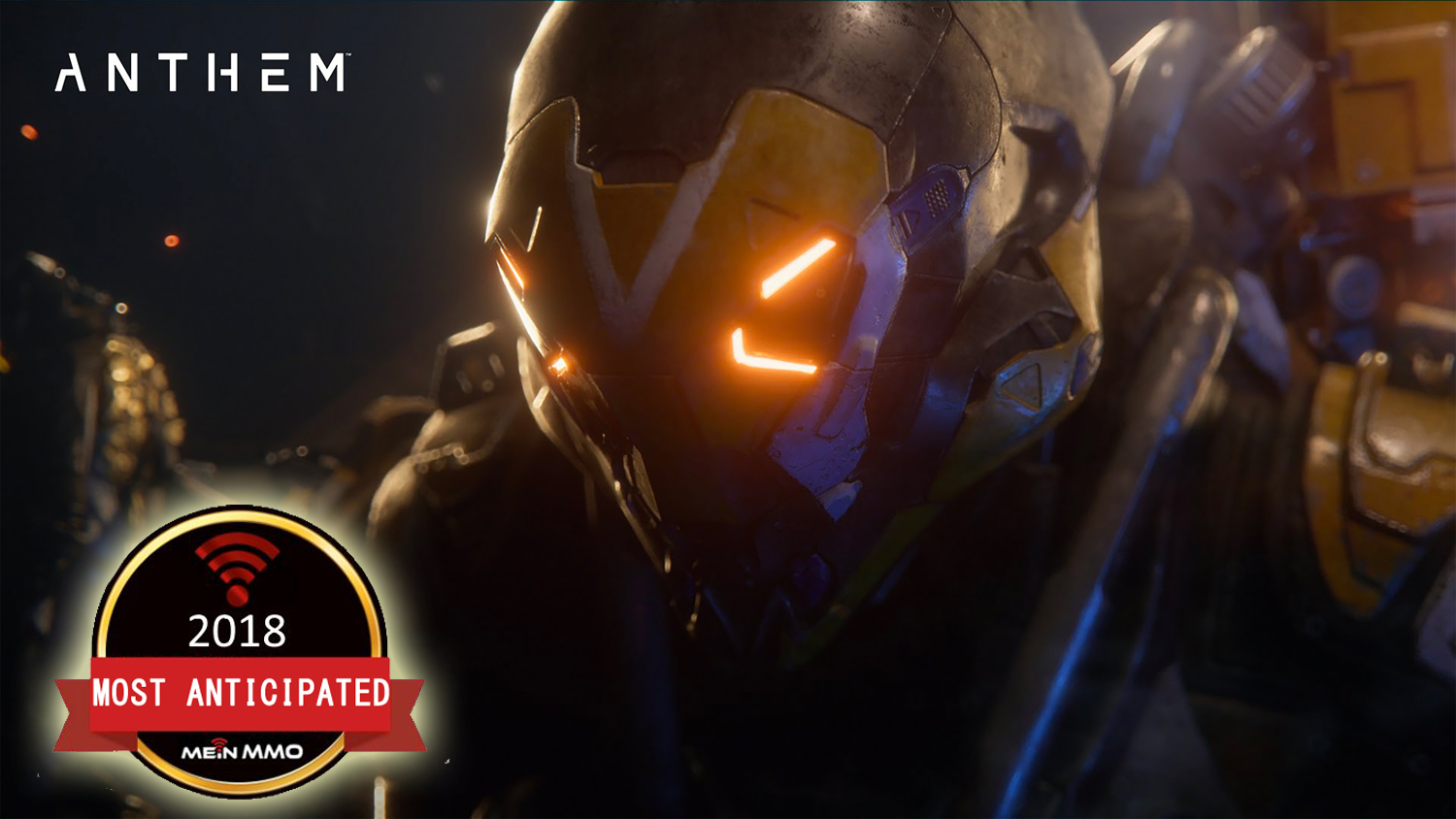
Anthem – Iron Man down
This was the expectation: Anthem was supposed to be a new service game from BioWare that would be played and developed for a long time:
- In January 2018, it was chosen by MeinMMO readers with 22% of the votes as the “Most Anticipated Online Game 2018” – at that time, it was thought to be released in 2018
- In January 2019, it received 29.67% in the same survey for 2019 and again landed in first place
The promise was to narrate the vibrant world, the great characters, and the story of the RPG classics for which BioWare is famous, in an ongoing story that is continuously developed: BioWare mentioned plans for Anthem content spanning 10 years.
Additionally, the popular “looting and leveling” gameplay in a stylish Iron Man aesthetic was enticing. Solo and team players were to be catered to. Fun for the whole family.
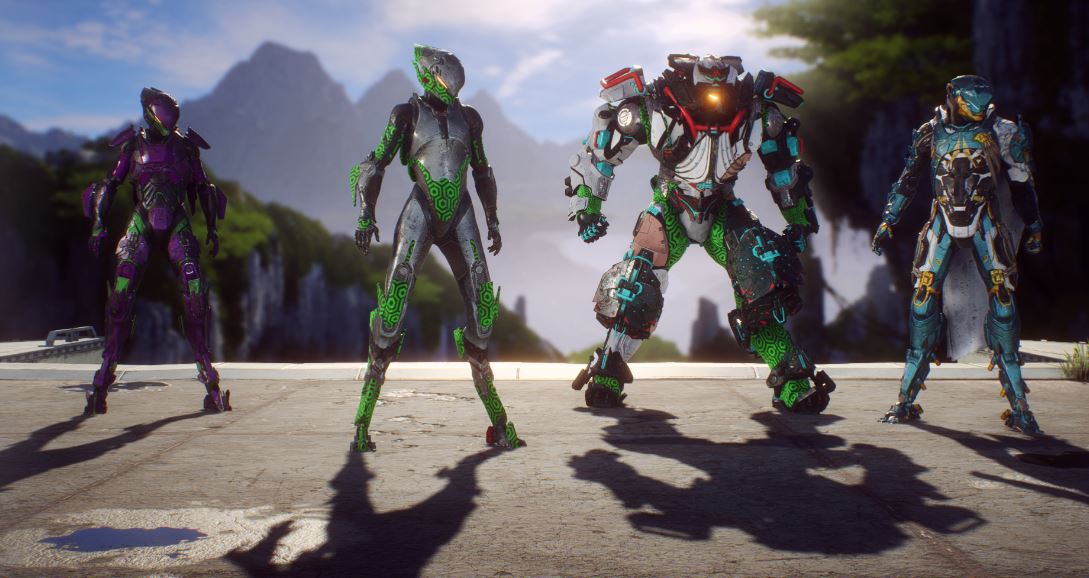
What went wrong: From the very beginning, Anthem faced an icy headwind because the studio’s fans preferred a single-player game over an “endless game” – as they are considered story-weak and stretched.
Massive seems to be aware of the fundamental problems with The Division 2: However, it is still unclear whether they have the resources to change the issues.
Google Stadia – Who is this meant for?
This was the expectation: Google wanted to make a big entry into gaming with Stadia: Their system was clearly designed as a competitor to the PS4 Pro and Xbox One.
Through streaming, players would no longer have to download games, but could seamlessly jump in and play from anywhere without having to buy expensive, high-performance hardware upfront.
Google’s announcement to enter the gaming market made such waves that Microsoft and Sony even formed a strategic partnership in May 2019 to support each other as “classic gaming companies” more strongly. Later, insiders mentioned that the established platform holders had “great respect” for the tech giant Google’s entry into the gaming market.
What went wrong: Actually, not much. The only issue remains unclear is who Google Stadia is actually aimed at: because the console primarily offers full-price titles that have long been available on other platforms. The typical “Free2Play” hits like Fortnite or Apex Legends are missing – there are currently no notable exclusives.
The system is especially attractive to people who have neither a PC nor a console or a game collection, but have decided to fully immerse themselves in gaming and purchase 60€ full-price titles.
Overall, the concept of Google Stadia, although technically impressive, does not seem coherent at the moment: You can play games without download, but you have to purchase them beforehand.
Players would likely prefer a subscription model, like what Microsoft offers with Gamepass: Play all the games in the offering for a flat rate, depending on what one feels like. Especially without bothersome downloads and patching, Stadia would be excellently positioned for such usage.
But Stadia doesn’t offer such a deal: Google offers a subscription, but it’s tied to only a few selected titles.
How can one see this positively? Stadia is still in its early stages and Google is working on the concept: Google has already proven that they can technically provide streaming – at least in many cases. Now they need games and titles that people will genuinely want to switch to or enter the gaming space for.
It will still take a while before the mechanisms kick in and exclusive studios develop top titles that only run on Stadia.
Ghost Recon Breakpoint – What repairs that wasn’t broken
This was the expectation: In 2017, Ghost Recon Wildlands was an unexpected success for Ubisoft. The tactical shooter managed to build a loyal community and was solidly developed over months.
Ghost Recon Breakpoint was supposed to build on this success.
What went wrong: Ghost Recon Breakpoint was such a flop for Ubisoft, that the head of the company, Yves Guillemot, questioned Ubisoft’s business model afterward and delayed the release of firmly announced games for early 2020.
Apparently, Ubisoft developed the shooter Breakpoint past its target audience, who did not understand why they should buy a new game when Wildlands was continuously being improved.
Breakpoint was said to lack new features, and the features that were genuinely new fell flat with players. The new ideas were aimed at “grinding” and “RPG” elements – while players preferred tactical elements that fit the “Ghost Recon” series over bullet sponge ideas like in The Division.
How can one see this positively? Ghost Recon Breakpoint was obviously a turning point for Ubisoft and a reason to re-evaluate the formula that had brought so much success in recent years: The idea to further develop and improve games like Rainbow Six Siege or For Honor has earned Ubisoft a lot of money and significantly enhanced the company’s reputation.
Halting the development of functioning games and then launching a new installment, as happened in 2019, seems to be a weak point in the formula that Ubisoft now needs to rethink. While it brings more launches, new attention, and money – players then want compelling reasons to see why a “restart” is necessary before engaging with the new game.
Ubisoft has clearly learned this lesson the hard way with Ghost Recon Breakpoint.
After so many disappointments, treat yourself to a list of online games that positively surprised us.
It can be assumed that Blizzard will recognize such a PR disaster in a similar situation next time and work on communication with their Chinese partners.
The evolution of The Division 2 – Hard up, harder down
This was the expectation: The shooter The Division 2 was released in March 2019 and received positive feedback. The shooter was considered the “most complete loot shooter to date” at launch. The Division 2 offered a well-rounded campaign, the systems felt solid, and the atmosphere was dense.
MeinMMO readers rated The Division 2 very highly after launch:
- 30% gave it a score of 9 out of 10
- 25% gave it a score of 8 out of 10
- 24% even gave it the top score of 10
The Division 2 was quite enjoyable for about 6 weeks. Players expected solid content to be added subsequently.
What went wrong: The Division 2 relied on free DLCs and was praised for it before release: Finally, the community would not be split between those who purchase DLCs and those who do not.
In practice, however, free updates proved too thin and too infrequent to maintain the initial hype of The Division 2.
Players also criticized that features and progress from The Division 1 were missing in the second part. It quickly became clear that The Division 2 could not sustain the initial momentum from the launch: the game rapidly lost steam.
While updates and DLCs were released, they did little to keep agents motivated to stay in The Division 2. As 2019 progressed, less and less new content arrived, and communication dwindled. As a game, The Division 2 convinced at launch, but as a “Games as a service” title meant to entertain players for over a year, the shooter fell short.
How can one see this positively? Division 1 improved after several months – the same can be hoped for The Division 2. Another DLC and a raid are planned for 2020. The game’s potential is also high, as evidenced by the reaction during the launch phase, which was later described by Massive as the “honeymoon” period.
The strange thing about The Division 2’s evolution is that Massive has already gone through all the difficult phases with The Division 1 between 2016 and 2018. The decision to focus on free DLCs and bring new missions instead of new modes seems to have significantly impacted long-term motivation.
Massive seems to be aware of the fundamental problems with The Division 2: However, it is still unclear whether they have the resources to change the issues.
Google Stadia – Who is this meant for?
This was the expectation: Google wanted to make a big entry into gaming with Stadia: Their system was clearly designed as a competitor to the PS4 Pro and Xbox One.
Through streaming, players would no longer have to download games, but could seamlessly jump in and play from anywhere without having to buy expensive, high-performance hardware upfront.
Google’s announcement to enter the gaming market made such waves that Microsoft and Sony even formed a strategic partnership in May 2019 to support each other as “classic gaming companies” more strongly. Later, insiders mentioned that the established platform holders had “great respect” for the tech giant Google’s entry into the gaming market.
What went wrong: Actually, not much. The only issue remains unclear is who Google Stadia is actually aimed at: because the console primarily offers full-price titles that have long been available on other platforms. The typical “Free2Play” hits like Fortnite or Apex Legends are missing – there are currently no notable exclusives.
The system is especially attractive to people who have neither a PC nor a console or a game collection, but have decided to fully immerse themselves in gaming and purchase 60€ full-price titles.
Overall, the concept of Google Stadia, although technically impressive, does not seem coherent at the moment: You can play games without download, but you have to purchase them beforehand.
Players would likely prefer a subscription model, like what Microsoft offers with Gamepass: Play all the games in the offering for a flat rate, depending on what one feels like. Especially without bothersome downloads and patching, Stadia would be excellently positioned for such usage.
But Stadia doesn’t offer such a deal: Google offers a subscription, but it’s tied to only a few selected titles.
How can one see this positively? Stadia is still in its early stages and Google is working on the concept: Google has already proven that they can technically provide streaming – at least in many cases. Now they need games and titles that people will genuinely want to switch to or enter the gaming space for.
It will still take a while before the mechanisms kick in and exclusive studios develop top titles that only run on Stadia.
Ghost Recon Breakpoint – What repairs that wasn’t broken
This was the expectation: In 2017, Ghost Recon Wildlands was an unexpected success for Ubisoft. The tactical shooter managed to build a loyal community and was solidly developed over months.
Ghost Recon Breakpoint was supposed to build on this success.
What went wrong: Ghost Recon Breakpoint was such a flop for Ubisoft, that the head of the company, Yves Guillemot, questioned Ubisoft’s business model afterward and delayed the release of firmly announced games for early 2020.
Apparently, Ubisoft developed the shooter Breakpoint past its target audience, who did not understand why they should buy a new game when Wildlands was continuously being improved.
Breakpoint was said to lack new features, and the features that were genuinely new fell flat with players. The new ideas were aimed at “grinding” and “RPG” elements – while players preferred tactical elements that fit the “Ghost Recon” series over bullet sponge ideas like in The Division.
How can one see this positively? Ghost Recon Breakpoint was obviously a turning point for Ubisoft and a reason to re-evaluate the formula that had brought so much success in recent years: The idea to further develop and improve games like Rainbow Six Siege or For Honor has earned Ubisoft a lot of money and significantly enhanced the company’s reputation.
Halting the development of functioning games and then launching a new installment, as happened in 2019, seems to be a weak point in the formula that Ubisoft now needs to rethink. While it brings more launches, new attention, and money – players then want compelling reasons to see why a “restart” is necessary before engaging with the new game.
Ubisoft has clearly learned this lesson the hard way with Ghost Recon Breakpoint.
After so many disappointments, treat yourself to a list of online games that positively surprised us.
Maybe Iron Man will rise again in 2020. By now, expectations are so low that anything looks like a silver lining.
Blizzard and Hong Kong – the most unnecessary shitstorm of 2019
This was the expectation: Blizzard has been propagating humanitarian values for decades:
- every voice counts
- think globally
- learn and grow
Essentially, Blizzard are the “good guys”, the ones who understand games and players, valuing quality and good communication.
Players expect a behavior that matches this image from “their” company.
What went wrong: During a Hearthstone stream, a professional player shouted: “Freedom for Hong Kong.”
Blizzard subsequently banned the player for life and ended the collaboration with both moderators, and it was said that the player would lose the prize money he had already won. Additionally, a statement from Blizzard appeared on an Asian social media platform saying that they protect “China’s pride”.
This led to a shitstorm, accusing Blizzard of “cowering” to the “Chinese government”. For fear of facing business disadvantages, Blizzard would now practice censorship and restrict freedom of speech, while betraying their own values and yielding to China’s national interests.
Blizzard employees covered some values like “Every voice counts” on an orc statue at the California headquarters. Protests were expected for BlizzCon 2019.
Blizzard responded to this shitstorm with a public apology: They acted too hastily. Blizzard reduced the penalties for the grandmaster and the hosts and distanced themselves from the statement regarding “China’s pride” – that was issued by Blizzard’s Chinese partner NetEase.
Nevertheless, it is crucial to adhere to the rules: Official streams should focus on the games, not on political messages. The now reduced penalties for those involved remained in place.
How can one see this positively? Blizzard showed remorse at BlizzCon 2019 and clarified that they do not want to be the Blizzard that they presented in the Hong Kong affair, but rather a more relaxed, tolerant version committed to their own values. In retrospect, it was said that they acted hastily and incorrectly when issuing the harsh penalties.
It can be assumed that Blizzard will recognize such a PR disaster in a similar situation next time and work on communication with their Chinese partners.
The evolution of The Division 2 – Hard up, harder down
This was the expectation: The shooter The Division 2 was released in March 2019 and received positive feedback. The shooter was considered the “most complete loot shooter to date” at launch. The Division 2 offered a well-rounded campaign, the systems felt solid, and the atmosphere was dense.
MeinMMO readers rated The Division 2 very highly after launch:
- 30% gave it a score of 9 out of 10
- 25% gave it a score of 8 out of 10
- 24% even gave it the top score of 10
The Division 2 was quite enjoyable for about 6 weeks. Players expected solid content to be added subsequently.
What went wrong: The Division 2 relied on free DLCs and was praised for it before release: Finally, the community would not be split between those who purchase DLCs and those who do not.
In practice, however, free updates proved too thin and too infrequent to maintain the initial hype of The Division 2.
Players also criticized that features and progress from The Division 1 were missing in the second part. It quickly became clear that The Division 2 could not sustain the initial momentum from the launch: the game rapidly lost steam.
While updates and DLCs were released, they did little to keep agents motivated to stay in The Division 2. As 2019 progressed, less and less new content arrived, and communication dwindled. As a game, The Division 2 convinced at launch, but as a “Games as a service” title meant to entertain players for over a year, the shooter fell short.
How can one see this positively? Division 1 improved after several months – the same can be hoped for The Division 2. Another DLC and a raid are planned for 2020. The game’s potential is also high, as evidenced by the reaction during the launch phase, which was later described by Massive as the “honeymoon” period.
The strange thing about The Division 2’s evolution is that Massive has already gone through all the difficult phases with The Division 1 between 2016 and 2018. The decision to focus on free DLCs and bring new missions instead of new modes seems to have significantly impacted long-term motivation.
Massive seems to be aware of the fundamental problems with The Division 2: However, it is still unclear whether they have the resources to change the issues.
Google Stadia – Who is this meant for?
This was the expectation: Google wanted to make a big entry into gaming with Stadia: Their system was clearly designed as a competitor to the PS4 Pro and Xbox One.
Through streaming, players would no longer have to download games, but could seamlessly jump in and play from anywhere without having to buy expensive, high-performance hardware upfront.
Google’s announcement to enter the gaming market made such waves that Microsoft and Sony even formed a strategic partnership in May 2019 to support each other as “classic gaming companies” more strongly. Later, insiders mentioned that the established platform holders had “great respect” for the tech giant Google’s entry into the gaming market.
What went wrong: Actually, not much. The only issue remains unclear is who Google Stadia is actually aimed at: because the console primarily offers full-price titles that have long been available on other platforms. The typical “Free2Play” hits like Fortnite or Apex Legends are missing – there are currently no notable exclusives.
The system is especially attractive to people who have neither a PC nor a console or a game collection, but have decided to fully immerse themselves in gaming and purchase 60€ full-price titles.
Overall, the concept of Google Stadia, although technically impressive, does not seem coherent at the moment: You can play games without download, but you have to purchase them beforehand.
Players would likely prefer a subscription model, like what Microsoft offers with Gamepass: Play all the games in the offering for a flat rate, depending on what one feels like. Especially without bothersome downloads and patching, Stadia would be excellently positioned for such usage.
But Stadia doesn’t offer such a deal: Google offers a subscription, but it’s tied to only a few selected titles.
How can one see this positively? Stadia is still in its early stages and Google is working on the concept: Google has already proven that they can technically provide streaming – at least in many cases. Now they need games and titles that people will genuinely want to switch to or enter the gaming space for.
It will still take a while before the mechanisms kick in and exclusive studios develop top titles that only run on Stadia.
Ghost Recon Breakpoint – What repairs that wasn’t broken
This was the expectation: In 2017, Ghost Recon Wildlands was an unexpected success for Ubisoft. The tactical shooter managed to build a loyal community and was solidly developed over months.
Ghost Recon Breakpoint was supposed to build on this success.
What went wrong: Ghost Recon Breakpoint was such a flop for Ubisoft, that the head of the company, Yves Guillemot, questioned Ubisoft’s business model afterward and delayed the release of firmly announced games for early 2020.
Apparently, Ubisoft developed the shooter Breakpoint past its target audience, who did not understand why they should buy a new game when Wildlands was continuously being improved.
Breakpoint was said to lack new features, and the features that were genuinely new fell flat with players. The new ideas were aimed at “grinding” and “RPG” elements – while players preferred tactical elements that fit the “Ghost Recon” series over bullet sponge ideas like in The Division.
How can one see this positively? Ghost Recon Breakpoint was obviously a turning point for Ubisoft and a reason to re-evaluate the formula that had brought so much success in recent years: The idea to further develop and improve games like Rainbow Six Siege or For Honor has earned Ubisoft a lot of money and significantly enhanced the company’s reputation.
Halting the development of functioning games and then launching a new installment, as happened in 2019, seems to be a weak point in the formula that Ubisoft now needs to rethink. While it brings more launches, new attention, and money – players then want compelling reasons to see why a “restart” is necessary before engaging with the new game.
Ubisoft has clearly learned this lesson the hard way with Ghost Recon Breakpoint.
After so many disappointments, treat yourself to a list of online games that positively surprised us.
The base game was criticized by some at launch for being too thin. Technical issues, especially on the critically important consoles, plagued Anthem.
The actual, deeper problems only became apparent after launch:
- Apparently, Anthem was just finished in time for launch and there were hardly any contents prepared for the time after release.
- Moreover, the game was heavily criticized for fundamental gameplay systems: the progress was off, and there was no enjoyment in upgrading the Javelin and searching for new items.
- Then practically half the team that developed Anthem left the game, either leaving the company or working on Dragon Age 4 – the SWTOR team in Austin was supposed to take over.
- The roadmap and the planned development of Anthem were put on hold. BioWare retreated for a fundamental overhaul.
How can one see this positively? BioWare and EA have assured that they will not give up on Anthem. Allegedly, a major overhaul or even a reboot is planned for 2020.
Maybe Iron Man will rise again in 2020. By now, expectations are so low that anything looks like a silver lining.
Blizzard and Hong Kong – the most unnecessary shitstorm of 2019
This was the expectation: Blizzard has been propagating humanitarian values for decades:
- every voice counts
- think globally
- learn and grow
Essentially, Blizzard are the “good guys”, the ones who understand games and players, valuing quality and good communication.
Players expect a behavior that matches this image from “their” company.
What went wrong: During a Hearthstone stream, a professional player shouted: “Freedom for Hong Kong.”
Blizzard subsequently banned the player for life and ended the collaboration with both moderators, and it was said that the player would lose the prize money he had already won. Additionally, a statement from Blizzard appeared on an Asian social media platform saying that they protect “China’s pride”.
This led to a shitstorm, accusing Blizzard of “cowering” to the “Chinese government”. For fear of facing business disadvantages, Blizzard would now practice censorship and restrict freedom of speech, while betraying their own values and yielding to China’s national interests.
Blizzard employees covered some values like “Every voice counts” on an orc statue at the California headquarters. Protests were expected for BlizzCon 2019.
Blizzard responded to this shitstorm with a public apology: They acted too hastily. Blizzard reduced the penalties for the grandmaster and the hosts and distanced themselves from the statement regarding “China’s pride” – that was issued by Blizzard’s Chinese partner NetEase.
Nevertheless, it is crucial to adhere to the rules: Official streams should focus on the games, not on political messages. The now reduced penalties for those involved remained in place.
How can one see this positively? Blizzard showed remorse at BlizzCon 2019 and clarified that they do not want to be the Blizzard that they presented in the Hong Kong affair, but rather a more relaxed, tolerant version committed to their own values. In retrospect, it was said that they acted hastily and incorrectly when issuing the harsh penalties.
It can be assumed that Blizzard will recognize such a PR disaster in a similar situation next time and work on communication with their Chinese partners.
The evolution of The Division 2 – Hard up, harder down
This was the expectation: The shooter The Division 2 was released in March 2019 and received positive feedback. The shooter was considered the “most complete loot shooter to date” at launch. The Division 2 offered a well-rounded campaign, the systems felt solid, and the atmosphere was dense.
MeinMMO readers rated The Division 2 very highly after launch:
- 30% gave it a score of 9 out of 10
- 25% gave it a score of 8 out of 10
- 24% even gave it the top score of 10
The Division 2 was quite enjoyable for about 6 weeks. Players expected solid content to be added subsequently.
What went wrong: The Division 2 relied on free DLCs and was praised for it before release: Finally, the community would not be split between those who purchase DLCs and those who do not.
In practice, however, free updates proved too thin and too infrequent to maintain the initial hype of The Division 2.
Players also criticized that features and progress from The Division 1 were missing in the second part. It quickly became clear that The Division 2 could not sustain the initial momentum from the launch: the game rapidly lost steam.
While updates and DLCs were released, they did little to keep agents motivated to stay in The Division 2. As 2019 progressed, less and less new content arrived, and communication dwindled. As a game, The Division 2 convinced at launch, but as a “Games as a service” title meant to entertain players for over a year, the shooter fell short.
How can one see this positively? Division 1 improved after several months – the same can be hoped for The Division 2. Another DLC and a raid are planned for 2020. The game’s potential is also high, as evidenced by the reaction during the launch phase, which was later described by Massive as the “honeymoon” period.
The strange thing about The Division 2’s evolution is that Massive has already gone through all the difficult phases with The Division 1 between 2016 and 2018. The decision to focus on free DLCs and bring new missions instead of new modes seems to have significantly impacted long-term motivation.
Massive seems to be aware of the fundamental problems with The Division 2: However, it is still unclear whether they have the resources to change the issues.
Google Stadia – Who is this meant for?
This was the expectation: Google wanted to make a big entry into gaming with Stadia: Their system was clearly designed as a competitor to the PS4 Pro and Xbox One.
Through streaming, players would no longer have to download games, but could seamlessly jump in and play from anywhere without having to buy expensive, high-performance hardware upfront.
Google’s announcement to enter the gaming market made such waves that Microsoft and Sony even formed a strategic partnership in May 2019 to support each other as “classic gaming companies” more strongly. Later, insiders mentioned that the established platform holders had “great respect” for the tech giant Google’s entry into the gaming market.
What went wrong: Actually, not much. The only issue remains unclear is who Google Stadia is actually aimed at: because the console primarily offers full-price titles that have long been available on other platforms. The typical “Free2Play” hits like Fortnite or Apex Legends are missing – there are currently no notable exclusives.
The system is especially attractive to people who have neither a PC nor a console or a game collection, but have decided to fully immerse themselves in gaming and purchase 60€ full-price titles.
Overall, the concept of Google Stadia, although technically impressive, does not seem coherent at the moment: You can play games without download, but you have to purchase them beforehand.
Players would likely prefer a subscription model, like what Microsoft offers with Gamepass: Play all the games in the offering for a flat rate, depending on what one feels like. Especially without bothersome downloads and patching, Stadia would be excellently positioned for such usage.
But Stadia doesn’t offer such a deal: Google offers a subscription, but it’s tied to only a few selected titles.
How can one see this positively? Stadia is still in its early stages and Google is working on the concept: Google has already proven that they can technically provide streaming – at least in many cases. Now they need games and titles that people will genuinely want to switch to or enter the gaming space for.
It will still take a while before the mechanisms kick in and exclusive studios develop top titles that only run on Stadia.
Ghost Recon Breakpoint – What repairs that wasn’t broken
This was the expectation: In 2017, Ghost Recon Wildlands was an unexpected success for Ubisoft. The tactical shooter managed to build a loyal community and was solidly developed over months.
Ghost Recon Breakpoint was supposed to build on this success.
What went wrong: Ghost Recon Breakpoint was such a flop for Ubisoft, that the head of the company, Yves Guillemot, questioned Ubisoft’s business model afterward and delayed the release of firmly announced games for early 2020.
Apparently, Ubisoft developed the shooter Breakpoint past its target audience, who did not understand why they should buy a new game when Wildlands was continuously being improved.
Breakpoint was said to lack new features, and the features that were genuinely new fell flat with players. The new ideas were aimed at “grinding” and “RPG” elements – while players preferred tactical elements that fit the “Ghost Recon” series over bullet sponge ideas like in The Division.
How can one see this positively? Ghost Recon Breakpoint was obviously a turning point for Ubisoft and a reason to re-evaluate the formula that had brought so much success in recent years: The idea to further develop and improve games like Rainbow Six Siege or For Honor has earned Ubisoft a lot of money and significantly enhanced the company’s reputation.
Halting the development of functioning games and then launching a new installment, as happened in 2019, seems to be a weak point in the formula that Ubisoft now needs to rethink. While it brings more launches, new attention, and money – players then want compelling reasons to see why a “restart” is necessary before engaging with the new game.
Ubisoft has clearly learned this lesson the hard way with Ghost Recon Breakpoint.
After so many disappointments, treat yourself to a list of online games that positively surprised us.
It can be assumed that Blizzard will recognize such a PR disaster in a similar situation next time and work on communication with their Chinese partners.
The evolution of The Division 2 – Hard up, harder down
This was the expectation: The shooter The Division 2 was released in March 2019 and received positive feedback. The shooter was considered the “most complete loot shooter to date” at launch. The Division 2 offered a well-rounded campaign, the systems felt solid, and the atmosphere was dense.
MeinMMO readers rated The Division 2 very highly after launch:
- 30% gave it a score of 9 out of 10
- 25% gave it a score of 8 out of 10
- 24% even gave it the top score of 10
The Division 2 was quite enjoyable for about 6 weeks. Players expected solid content to be added subsequently.
What went wrong: The Division 2 relied on free DLCs and was praised for it before release: Finally, the community would not be split between those who purchase DLCs and those who do not.
In practice, however, free updates proved too thin and too infrequent to maintain the initial hype of The Division 2.
Players also criticized that features and progress from The Division 1 were missing in the second part. It quickly became clear that The Division 2 could not sustain the initial momentum from the launch: the game rapidly lost steam.
While updates and DLCs were released, they did little to keep agents motivated to stay in The Division 2. As 2019 progressed, less and less new content arrived, and communication dwindled. As a game, The Division 2 convinced at launch, but as a “Games as a service” title meant to entertain players for over a year, the shooter fell short.
How can one see this positively? Division 1 improved after several months – the same can be hoped for The Division 2. Another DLC and a raid are planned for 2020. The game’s potential is also high, as evidenced by the reaction during the launch phase, which was later described by Massive as the “honeymoon” period.
The strange thing about The Division 2’s evolution is that Massive has already gone through all the difficult phases with The Division 1 between 2016 and 2018. The decision to focus on free DLCs and bring new missions instead of new modes seems to have significantly impacted long-term motivation.
Massive seems to be aware of the fundamental problems with The Division 2: However, it is still unclear whether they have the resources to change the issues.
Google Stadia – Who is this meant for?
This was the expectation: Google wanted to make a big entry into gaming with Stadia: Their system was clearly designed as a competitor to the PS4 Pro and Xbox One.
Through streaming, players would no longer have to download games, but could seamlessly jump in and play from anywhere without having to buy expensive, high-performance hardware upfront.
Google’s announcement to enter the gaming market made such waves that Microsoft and Sony even formed a strategic partnership in May 2019 to support each other as “classic gaming companies” more strongly. Later, insiders mentioned that the established platform holders had “great respect” for the tech giant Google’s entry into the gaming market.
What went wrong: Actually, not much. The only issue remains unclear is who Google Stadia is actually aimed at: because the console primarily offers full-price titles that have long been available on other platforms. The typical “Free2Play” hits like Fortnite or Apex Legends are missing – there are currently no notable exclusives.
The system is especially attractive to people who have neither a PC nor a console or a game collection, but have decided to fully immerse themselves in gaming and purchase 60€ full-price titles.
Overall, the concept of Google Stadia, although technically impressive, does not seem coherent at the moment: You can play games without download, but you have to purchase them beforehand.
Players would likely prefer a subscription model, like what Microsoft offers with Gamepass: Play all the games in the offering for a flat rate, depending on what one feels like. Especially without bothersome downloads and patching, Stadia would be excellently positioned for such usage.
But Stadia doesn’t offer such a deal: Google offers a subscription, but it’s tied to only a few selected titles.
How can one see this positively? Stadia is still in its early stages and Google is working on the concept: Google has already proven that they can technically provide streaming – at least in many cases. Now they need games and titles that people will genuinely want to switch to or enter the gaming space for.
It will still take a while before the mechanisms kick in and exclusive studios develop top titles that only run on Stadia.
Ghost Recon Breakpoint – What repairs that wasn’t broken
This was the expectation: In 2017, Ghost Recon Wildlands was an unexpected success for Ubisoft. The tactical shooter managed to build a loyal community and was solidly developed over months.
Ghost Recon Breakpoint was supposed to build on this success.
What went wrong: Ghost Recon Breakpoint was such a flop for Ubisoft, that the head of the company, Yves Guillemot, questioned Ubisoft’s business model afterward and delayed the release of firmly announced games for early 2020.
Apparently, Ubisoft developed the shooter Breakpoint past its target audience, who did not understand why they should buy a new game when Wildlands was continuously being improved.
Breakpoint was said to lack new features, and the features that were genuinely new fell flat with players. The new ideas were aimed at “grinding” and “RPG” elements – while players preferred tactical elements that fit the “Ghost Recon” series over bullet sponge ideas like in The Division.
How can one see this positively? Ghost Recon Breakpoint was obviously a turning point for Ubisoft and a reason to re-evaluate the formula that had brought so much success in recent years: The idea to further develop and improve games like Rainbow Six Siege or For Honor has earned Ubisoft a lot of money and significantly enhanced the company’s reputation.
Halting the development of functioning games and then launching a new installment, as happened in 2019, seems to be a weak point in the formula that Ubisoft now needs to rethink. While it brings more launches, new attention, and money – players then want compelling reasons to see why a “restart” is necessary before engaging with the new game.
Ubisoft has clearly learned this lesson the hard way with Ghost Recon Breakpoint.
After so many disappointments, treat yourself to a list of online games that positively surprised us.
The base game was criticized by some at launch for being too thin. Technical issues, especially on the critically important consoles, plagued Anthem.
The actual, deeper problems only became apparent after launch:
- Apparently, Anthem was just finished in time for launch and there were hardly any contents prepared for the time after release.
- Moreover, the game was heavily criticized for fundamental gameplay systems: the progress was off, and there was no enjoyment in upgrading the Javelin and searching for new items.
- Then practically half the team that developed Anthem left the game, either leaving the company or working on Dragon Age 4 – the SWTOR team in Austin was supposed to take over.
- The roadmap and the planned development of Anthem were put on hold. BioWare retreated for a fundamental overhaul.
How can one see this positively? BioWare and EA have assured that they will not give up on Anthem. Allegedly, a major overhaul or even a reboot is planned for 2020.
Maybe Iron Man will rise again in 2020. By now, expectations are so low that anything looks like a silver lining.
Blizzard and Hong Kong – the most unnecessary shitstorm of 2019
This was the expectation: Blizzard has been propagating humanitarian values for decades:
- every voice counts
- think globally
- learn and grow
Essentially, Blizzard are the “good guys”, the ones who understand games and players, valuing quality and good communication.
Players expect a behavior that matches this image from “their” company.
What went wrong: During a Hearthstone stream, a professional player shouted: “Freedom for Hong Kong.”
Blizzard subsequently banned the player for life and ended the collaboration with both moderators, and it was said that the player would lose the prize money he had already won. Additionally, a statement from Blizzard appeared on an Asian social media platform saying that they protect “China’s pride”.
This led to a shitstorm, accusing Blizzard of “cowering” to the “Chinese government”. For fear of facing business disadvantages, Blizzard would now practice censorship and restrict freedom of speech, while betraying their own values and yielding to China’s national interests.
Blizzard employees covered some values like “Every voice counts” on an orc statue at the California headquarters. Protests were expected for BlizzCon 2019.
Blizzard responded to this shitstorm with a public apology: They acted too hastily. Blizzard reduced the penalties for the grandmaster and the hosts and distanced themselves from the statement regarding “China’s pride” – that was issued by Blizzard’s Chinese partner NetEase.
Nevertheless, it is crucial to adhere to the rules: Official streams should focus on the games, not on political messages. The now reduced penalties for those involved remained in place.
How can one see this positively? Blizzard showed remorse at BlizzCon 2019 and clarified that they do not want to be the Blizzard that they presented in the Hong Kong affair, but rather a more relaxed, tolerant version committed to their own values. In retrospect, it was said that they acted hastily and incorrectly when issuing the harsh penalties.
It can be assumed that Blizzard will recognize such a PR disaster in a similar situation next time and work on communication with their Chinese partners.
The evolution of The Division 2 – Hard up, harder down
This was the expectation: The shooter The Division 2 was released in March 2019 and received positive feedback. The shooter was considered the “most complete loot shooter to date” at launch. The Division 2 offered a well-rounded campaign, the systems felt solid, and the atmosphere was dense.
MeinMMO readers rated The Division 2 very highly after launch:
- 30% gave it a score of 9 out of 10
- 25% gave it a score of 8 out of 10
- 24% even gave it the top score of 10
The Division 2 was quite enjoyable for about 6 weeks. Players expected solid content to be added subsequently.
What went wrong: The Division 2 relied on free DLCs and was praised for it before release: Finally, the community would not be split between those who purchase DLCs and those who do not.
In practice, however, free updates proved too thin and too infrequent to maintain the initial hype of The Division 2.
Players also criticized that features and progress from The Division 1 were missing in the second part. It quickly became clear that The Division 2 could not sustain the initial momentum from the launch: the game rapidly lost steam.
While updates and DLCs were released, they did little to keep agents motivated to stay in The Division 2. As 2019 progressed, less and less new content arrived, and communication dwindled. As a game, The Division 2 convinced at launch, but as a “Games as a service” title meant to entertain players for over a year, the shooter fell short.
How can one see this positively? Division 1 improved after several months – the same can be hoped for The Division 2. Another DLC and a raid are planned for 2020. The game’s potential is also high, as evidenced by the reaction during the launch phase, which was later described by Massive as the “honeymoon” period.
The strange thing about The Division 2’s evolution is that Massive has already gone through all the difficult phases with The Division 1 between 2016 and 2018. The decision to focus on free DLCs and bring new missions instead of new modes seems to have significantly impacted long-term motivation.
Massive seems to be aware of the fundamental problems with The Division 2: However, it is still unclear whether they have the resources to change the issues.
Google Stadia – Who is this meant for?
This was the expectation: Google wanted to make a big entry into gaming with Stadia: Their system was clearly designed as a competitor to the PS4 Pro and Xbox One.
Through streaming, players would no longer have to download games, but could seamlessly jump in and play from anywhere without having to buy expensive, high-performance hardware upfront.
Google’s announcement to enter the gaming market made such waves that Microsoft and Sony even formed a strategic partnership in May 2019 to support each other as “classic gaming companies” more strongly. Later, insiders mentioned that the established platform holders had “great respect” for the tech giant Google’s entry into the gaming market.
What went wrong: Actually, not much. The only issue remains unclear is who Google Stadia is actually aimed at: because the console primarily offers full-price titles that have long been available on other platforms. The typical “Free2Play” hits like Fortnite or Apex Legends are missing – there are currently no notable exclusives.
The system is especially attractive to people who have neither a PC nor a console or a game collection, but have decided to fully immerse themselves in gaming and purchase 60€ full-price titles.
Overall, the concept of Google Stadia, although technically impressive, does not seem coherent at the moment: You can play games without download, but you have to purchase them beforehand.
Players would likely prefer a subscription model, like what Microsoft offers with Gamepass: Play all the games in the offering for a flat rate, depending on what one feels like. Especially without bothersome downloads and patching, Stadia would be excellently positioned for such usage.
But Stadia doesn’t offer such a deal: Google offers a subscription, but it’s tied to only a few selected titles.
How can one see this positively? Stadia is still in its early stages and Google is working on the concept: Google has already proven that they can technically provide streaming – at least in many cases. Now they need games and titles that people will genuinely want to switch to or enter the gaming space for.
It will still take a while before the mechanisms kick in and exclusive studios develop top titles that only run on Stadia.
Ghost Recon Breakpoint – What repairs that wasn’t broken
This was the expectation: In 2017, Ghost Recon Wildlands was an unexpected success for Ubisoft. The tactical shooter managed to build a loyal community and was solidly developed over months.
Ghost Recon Breakpoint was supposed to build on this success.
What went wrong: Ghost Recon Breakpoint was such a flop for Ubisoft, that the head of the company, Yves Guillemot, questioned Ubisoft’s business model afterward and delayed the release of firmly announced games for early 2020.
Apparently, Ubisoft developed the shooter Breakpoint past its target audience, who did not understand why they should buy a new game when Wildlands was continuously being improved.
Breakpoint was said to lack new features, and the features that were genuinely new fell flat with players. The new ideas were aimed at “grinding” and “RPG” elements – while players preferred tactical elements that fit the “Ghost Recon” series over bullet sponge ideas like in The Division.
How can one see this positively? Ghost Recon Breakpoint was obviously a turning point for Ubisoft and a reason to re-evaluate the formula that had brought so much success in recent years: The idea to further develop and improve games like Rainbow Six Siege or For Honor has earned Ubisoft a lot of money and significantly enhanced the company’s reputation.
Halting the development of functioning games and then launching a new installment, as happened in 2019, seems to be a weak point in the formula that Ubisoft now needs to rethink. While it brings more launches, new attention, and money – players then want compelling reasons to see why a “restart” is necessary before engaging with the new game.
Ubisoft has clearly learned this lesson the hard way with Ghost Recon Breakpoint.
After so many disappointments, treat yourself to a list of online games that positively surprised us.
Maybe Iron Man will rise again in 2020. By now, expectations are so low that anything looks like a silver lining.
Blizzard and Hong Kong – the most unnecessary shitstorm of 2019
This was the expectation: Blizzard has been propagating humanitarian values for decades:
- every voice counts
- think globally
- learn and grow
Essentially, Blizzard are the “good guys”, the ones who understand games and players, valuing quality and good communication.
Players expect a behavior that matches this image from “their” company.
What went wrong: During a Hearthstone stream, a professional player shouted: “Freedom for Hong Kong.”
Blizzard subsequently banned the player for life and ended the collaboration with both moderators, and it was said that the player would lose the prize money he had already won. Additionally, a statement from Blizzard appeared on an Asian social media platform saying that they protect “China’s pride”.
This led to a shitstorm, accusing Blizzard of “cowering” to the “Chinese government”. For fear of facing business disadvantages, Blizzard would now practice censorship and restrict freedom of speech, while betraying their own values and yielding to China’s national interests.
Blizzard employees covered some values like “Every voice counts” on an orc statue at the California headquarters. Protests were expected for BlizzCon 2019.
Blizzard responded to this shitstorm with a public apology: They acted too hastily. Blizzard reduced the penalties for the grandmaster and the hosts and distanced themselves from the statement regarding “China’s pride” – that was issued by Blizzard’s Chinese partner NetEase.
Nevertheless, it is crucial to adhere to the rules: Official streams should focus on the games, not on political messages. The now reduced penalties for those involved remained in place.
How can one see this positively? Blizzard showed remorse at BlizzCon 2019 and clarified that they do not want to be the Blizzard that they presented in the Hong Kong affair, but rather a more relaxed, tolerant version committed to their own values. In retrospect, it was said that they acted hastily and incorrectly when issuing the harsh penalties.
It can be assumed that Blizzard will recognize such a PR disaster in a similar situation next time and work on communication with their Chinese partners.
The evolution of The Division 2 – Hard up, harder down
This was the expectation: The shooter The Division 2 was released in March 2019 and received positive feedback. The shooter was considered the “most complete loot shooter to date” at launch. The Division 2 offered a well-rounded campaign, the systems felt solid, and the atmosphere was dense.
MeinMMO readers rated The Division 2 very highly after launch:
- 30% gave it a score of 9 out of 10
- 25% gave it a score of 8 out of 10
- 24% even gave it the top score of 10
The Division 2 was quite enjoyable for about 6 weeks. Players expected solid content to be added subsequently.
What went wrong: The Division 2 relied on free DLCs and was praised for it before release: Finally, the community would not be split between those who purchase DLCs and those who do not.
In practice, however, free updates proved too thin and too infrequent to maintain the initial hype of The Division 2.
Players also criticized that features and progress from The Division 1 were missing in the second part. It quickly became clear that The Division 2 could not sustain the initial momentum from the launch: the game rapidly lost steam.
While updates and DLCs were released, they did little to keep agents motivated to stay in The Division 2. As 2019 progressed, less and less new content arrived, and communication dwindled. As a game, The Division 2 convinced at launch, but as a “Games as a service” title meant to entertain players for over a year, the shooter fell short.
How can one see this positively? Division 1 improved after several months – the same can be hoped for The Division 2. Another DLC and a raid are planned for 2020. The game’s potential is also high, as evidenced by the reaction during the launch phase, which was later described by Massive as the “honeymoon” period.
The strange thing about The Division 2’s evolution is that Massive has already gone through all the difficult phases with The Division 1 between 2016 and 2018. The decision to focus on free DLCs and bring new missions instead of new modes seems to have significantly impacted long-term motivation.
Massive seems to be aware of the fundamental problems with The Division 2: However, it is still unclear whether they have the resources to change the issues.
Google Stadia – Who is this meant for?
This was the expectation: Google wanted to make a big entry into gaming with Stadia: Their system was clearly designed as a competitor to the PS4 Pro and Xbox One.
Through streaming, players would no longer have to download games, but could seamlessly jump in and play from anywhere without having to buy expensive, high-performance hardware upfront.
Google’s announcement to enter the gaming market made such waves that Microsoft and Sony even formed a strategic partnership in May 2019 to support each other as “classic gaming companies” more strongly. Later, insiders mentioned that the established platform holders had “great respect” for the tech giant Google’s entry into the gaming market.
What went wrong: Actually, not much. The only issue remains unclear is who Google Stadia is actually aimed at: because the console primarily offers full-price titles that have long been available on other platforms. The typical “Free2Play” hits like Fortnite or Apex Legends are missing – there are currently no notable exclusives.
The system is especially attractive to people who have neither a PC nor a console or a game collection, but have decided to fully immerse themselves in gaming and purchase 60€ full-price titles.
Overall, the concept of Google Stadia, although technically impressive, does not seem coherent at the moment: You can play games without download, but you have to purchase them beforehand.
Players would likely prefer a subscription model, like what Microsoft offers with Gamepass: Play all the games in the offering for a flat rate, depending on what one feels like. Especially without bothersome downloads and patching, Stadia would be excellently positioned for such usage.
But Stadia doesn’t offer such a deal: Google offers a subscription, but it’s tied to only a few selected titles.
How can one see this positively? Stadia is still in its early stages and Google is working on the concept: Google has already proven that they can technically provide streaming – at least in many cases. Now they need games and titles that people will genuinely want to switch to or enter the gaming space for.
It will still take a while before the mechanisms kick in and exclusive studios develop top titles that only run on Stadia.
Ghost Recon Breakpoint – What repairs that wasn’t broken
This was the expectation: In 2017, Ghost Recon Wildlands was an unexpected success for Ubisoft. The tactical shooter managed to build a loyal community and was solidly developed over months.
Ghost Recon Breakpoint was supposed to build on this success.
What went wrong: Ghost Recon Breakpoint was such a flop for Ubisoft, that the head of the company, Yves Guillemot, questioned Ubisoft’s business model afterward and delayed the release of firmly announced games for early 2020.
Apparently, Ubisoft developed the shooter Breakpoint past its target audience, who did not understand why they should buy a new game when Wildlands was continuously being improved.
Breakpoint was said to lack new features, and the features that were genuinely new fell flat with players. The new ideas were aimed at “grinding” and “RPG” elements – while players preferred tactical elements that fit the “Ghost Recon” series over bullet sponge ideas like in The Division.
How can one see this positively? Ghost Recon Breakpoint was obviously a turning point for Ubisoft and a reason to re-evaluate the formula that had brought so much success in recent years: The idea to further develop and improve games like Rainbow Six Siege or For Honor has earned Ubisoft a lot of money and significantly enhanced the company’s reputation.
Halting the development of functioning games and then launching a new installment, as happened in 2019, seems to be a weak point in the formula that Ubisoft now needs to rethink. While it brings more launches, new attention, and money – players then want compelling reasons to see why a “restart” is necessary before engaging with the new game.
Ubisoft has clearly learned this lesson the hard way with Ghost Recon Breakpoint.
After so many disappointments, treat yourself to a list of online games that positively surprised us.
The base game was criticized by some at launch for being too thin. Technical issues, especially on the critically important consoles, plagued Anthem.
The actual, deeper problems only became apparent after launch:
- Apparently, Anthem was just finished in time for launch and there were hardly any contents prepared for the time after release.
- Moreover, the game was heavily criticized for fundamental gameplay systems: the progress was off, and there was no enjoyment in upgrading the Javelin and searching for new items.
- Then practically half the team that developed Anthem left the game, either leaving the company or working on Dragon Age 4 – the SWTOR team in Austin was supposed to take over.
- The roadmap and the planned development of Anthem were put on hold. BioWare retreated for a fundamental overhaul.
How can one see this positively? BioWare and EA have assured that they will not give up on Anthem. Allegedly, a major overhaul or even a reboot is planned for 2020.
Maybe Iron Man will rise again in 2020. By now, expectations are so low that anything looks like a silver lining.
Blizzard and Hong Kong – the most unnecessary shitstorm of 2019
This was the expectation: Blizzard has been propagating humanitarian values for decades:
- every voice counts
- think globally
- learn and grow
Essentially, Blizzard are the “good guys”, the ones who understand games and players, valuing quality and good communication.
Players expect a behavior that matches this image from “their” company.
What went wrong: During a Hearthstone stream, a professional player shouted: “Freedom for Hong Kong.”
Blizzard subsequently banned the player for life and ended the collaboration with both moderators, and it was said that the player would lose the prize money he had already won. Additionally, a statement from Blizzard appeared on an Asian social media platform saying that they protect “China’s pride”.
This led to a shitstorm, accusing Blizzard of “cowering” to the “Chinese government”. For fear of facing business disadvantages, Blizzard would now practice censorship and restrict freedom of speech, while betraying their own values and yielding to China’s national interests.
Blizzard employees covered some values like “Every voice counts” on an orc statue at the California headquarters. Protests were expected for BlizzCon 2019.
Blizzard responded to this shitstorm with a public apology: They acted too hastily. Blizzard reduced the penalties for the grandmaster and the hosts and distanced themselves from the statement regarding “China’s pride” – that was issued by Blizzard’s Chinese partner NetEase.
Nevertheless, it is crucial to adhere to the rules: Official streams should focus on the games, not on political messages. The now reduced penalties for those involved remained in place.
How can one see this positively? Blizzard showed remorse at BlizzCon 2019 and clarified that they do not want to be the Blizzard that they presented in the Hong Kong affair, but rather a more relaxed, tolerant version committed to their own values. In retrospect, it was said that they acted hastily and incorrectly when issuing the harsh penalties.
It can be assumed that Blizzard will recognize such a PR disaster in a similar situation next time and work on communication with their Chinese partners.
The evolution of The Division 2 – Hard up, harder down
This was the expectation: The shooter The Division 2 was released in March 2019 and received positive feedback. The shooter was considered the “most complete loot shooter to date” at launch. The Division 2 offered a well-rounded campaign, the systems felt solid, and the atmosphere was dense.
MeinMMO readers rated The Division 2 very highly after launch:
- 30% gave it a score of 9 out of 10
- 25% gave it a score of 8 out of 10
- 24% even gave it the top score of 10
The Division 2 was quite enjoyable for about 6 weeks. Players expected solid content to be added subsequently.
What went wrong: The Division 2 relied on free DLCs and was praised for it before release: Finally, the community would not be split between those who purchase DLCs and those who do not.
In practice, however, free updates proved too thin and too infrequent to maintain the initial hype of The Division 2.
Players also criticized that features and progress from The Division 1 were missing in the second part. It quickly became clear that The Division 2 could not sustain the initial momentum from the launch: the game rapidly lost steam.
While updates and DLCs were released, they did little to keep agents motivated to stay in The Division 2. As 2019 progressed, less and less new content arrived, and communication dwindled. As a game, The Division 2 convinced at launch, but as a “Games as a service” title meant to entertain players for over a year, the shooter fell short.
How can one see this positively? Division 1 improved after several months – the same can be hoped for The Division 2. Another DLC and a raid are planned for 2020. The game’s potential is also high, as evidenced by the reaction during the launch phase, which was later described by Massive as the “honeymoon” period.
The strange thing about The Division 2’s evolution is that Massive has already gone through all the difficult phases with The Division 1 between 2016 and 2018. The decision to focus on free DLCs and bring new missions instead of new modes seems to have significantly impacted long-term motivation.
Massive seems to be aware of the fundamental problems with The Division 2: However, it is still unclear whether they have the resources to change the issues.
Google Stadia – Who is this meant for?
This was the expectation: Google wanted to make a big entry into gaming with Stadia: Their system was clearly designed as a competitor to the PS4 Pro and Xbox One.
Through streaming, players would no longer have to download games, but could seamlessly jump in and play from anywhere without having to buy expensive, high-performance hardware upfront.
Google’s announcement to enter the gaming market made such waves that Microsoft and Sony even formed a strategic partnership in May 2019 to support each other as “classic gaming companies” more strongly. Later, insiders mentioned that the established platform holders had “great respect” for the tech giant Google’s entry into the gaming market.
What went wrong: Actually, not much. The only issue remains unclear is who Google Stadia is actually aimed at: because the console primarily offers full-price titles that have long been available on other platforms. The typical “Free2Play” hits like Fortnite or Apex Legends are missing – there are currently no notable exclusives.
The system is especially attractive to people who have neither a PC nor a console or a game collection, but have decided to fully immerse themselves in gaming and purchase 60€ full-price titles.
Overall, the concept of Google Stadia, although technically impressive, does not seem coherent at the moment: You can play games without download, but you have to purchase them beforehand.
Players would likely prefer a subscription model, like what Microsoft offers with Gamepass: Play all the games in the offering for a flat rate, depending on what one feels like. Especially without bothersome downloads and patching, Stadia would be excellently positioned for such usage.
But Stadia doesn’t offer such a deal: Google offers a subscription, but it’s tied to only a few selected titles.
How can one see this positively? Stadia is still in its early stages and Google is working on the concept: Google has already proven that they can technically provide streaming – at least in many cases. Now they need games and titles that people will genuinely want to switch to or enter the gaming space for.
It will still take a while before the mechanisms kick in and exclusive studios develop top titles that only run on Stadia.
Ghost Recon Breakpoint – What repairs that wasn’t broken
This was the expectation: In 2017, Ghost Recon Wildlands was an unexpected success for Ubisoft. The tactical shooter managed to build a loyal community and was solidly developed over months.
Ghost Recon Breakpoint was supposed to build on this success.
What went wrong: Ghost Recon Breakpoint was such a flop for Ubisoft, that the head of the company, Yves Guillemot, questioned Ubisoft’s business model afterward and delayed the release of firmly announced games for early 2020.
Apparently, Ubisoft developed the shooter Breakpoint past its target audience, who did not understand why they should buy a new game when Wildlands was continuously being improved.
Breakpoint was said to lack new features, and the features that were genuinely new fell flat with players. The new ideas were aimed at “grinding” and “RPG” elements – while players preferred tactical elements that fit the “Ghost Recon” series over bullet sponge ideas like in The Division.
How can one see this positively? Ghost Recon Breakpoint was obviously a turning point for Ubisoft and a reason to re-evaluate the formula that had brought so much success in recent years: The idea to further develop and improve games like Rainbow Six Siege or For Honor has earned Ubisoft a lot of money and significantly enhanced the company’s reputation.
Halting the development of functioning games and then launching a new installment, as happened in 2019, seems to be a weak point in the formula that Ubisoft now needs to rethink. While it brings more launches, new attention, and money – players then want compelling reasons to see why a “restart” is necessary before engaging with the new game.
Ubisoft has clearly learned this lesson the hard way with Ghost Recon Breakpoint.
After so many disappointments, treat yourself to a list of online games that positively surprised us.
It can be assumed that Blizzard will recognize such a PR disaster in a similar situation next time and work on communication with their Chinese partners.
The evolution of The Division 2 – Hard up, harder down
This was the expectation: The shooter The Division 2 was released in March 2019 and received positive feedback. The shooter was considered the “most complete loot shooter to date” at launch. The Division 2 offered a well-rounded campaign, the systems felt solid, and the atmosphere was dense.
MeinMMO readers rated The Division 2 very highly after launch:
- 30% gave it a score of 9 out of 10
- 25% gave it a score of 8 out of 10
- 24% even gave it the top score of 10
The Division 2 was quite enjoyable for about 6 weeks. Players expected solid content to be added subsequently.
What went wrong: The Division 2 relied on free DLCs and was praised for it before release: Finally, the community would not be split between those who purchase DLCs and those who do not.
In practice, however, free updates proved too thin and too infrequent to maintain the initial hype of The Division 2.
Players also criticized that features and progress from The Division 1 were missing in the second part. It quickly became clear that The Division 2 could not sustain the initial momentum from the launch: the game rapidly lost steam.
While updates and DLCs were released, they did little to keep agents motivated to stay in The Division 2. As 2019 progressed, less and less new content arrived, and communication dwindled. As a game, The Division 2 convinced at launch, but as a “Games as a service” title meant to entertain players for over a year, the shooter fell short.
How can one see this positively? Division 1 improved after several months – the same can be hoped for The Division 2. Another DLC and a raid are planned for 2020. The game’s potential is also high, as evidenced by the reaction during the launch phase, which was later described by Massive as the “honeymoon” period.
The strange thing about The Division 2’s evolution is that Massive has already gone through all the difficult phases with The Division 1 between 2016 and 2018. The decision to focus on free DLCs and bring new missions instead of new modes seems to have significantly impacted long-term motivation.
Massive seems to be aware of the fundamental problems with The Division 2: However, it is still unclear whether they have the resources to change the issues.
Google Stadia – Who is this meant for?
This was the expectation: Google wanted to make a big entry into gaming with Stadia: Their system was clearly designed as a competitor to the PS4 Pro and Xbox One.
Through streaming, players would no longer have to download games, but could seamlessly jump in and play from anywhere without having to buy expensive, high-performance hardware upfront.
Google’s announcement to enter the gaming market made such waves that Microsoft and Sony even formed a strategic partnership in May 2019 to support each other as “classic gaming companies” more strongly. Later, insiders mentioned that the established platform holders had “great respect” for the tech giant Google’s entry into the gaming market.
What went wrong: Actually, not much. The only issue remains unclear is who Google Stadia is actually aimed at: because the console primarily offers full-price titles that have long been available on other platforms. The typical “Free2Play” hits like Fortnite or Apex Legends are missing – there are currently no notable exclusives.
The system is especially attractive to people who have neither a PC nor a console or a game collection, but have decided to fully immerse themselves in gaming and purchase 60€ full-price titles.
Overall, the concept of Google Stadia, although technically impressive, does not seem coherent at the moment: You can play games without download, but you have to purchase them beforehand.
Players would likely prefer a subscription model, like what Microsoft offers with Gamepass: Play all the games in the offering for a flat rate, depending on what one feels like. Especially without bothersome downloads and patching, Stadia would be excellently positioned for such usage.
But Stadia doesn’t offer such a deal: Google offers a subscription, but it’s tied to only a few selected titles.
How can one see this positively? Stadia is still in its early stages and Google is working on the concept: Google has already proven that they can technically provide streaming – at least in many cases. Now they need games and titles that people will genuinely want to switch to or enter the gaming space for.
It will still take a while before the mechanisms kick in and exclusive studios develop top titles that only run on Stadia.
Ghost Recon Breakpoint – What repairs that wasn’t broken
This was the expectation: In 2017, Ghost Recon Wildlands was an unexpected success for Ubisoft. The tactical shooter managed to build a loyal community and was solidly developed over months.
Ghost Recon Breakpoint was supposed to build on this success.
What went wrong: Ghost Recon Breakpoint was such a flop for Ubisoft, that the head of the company, Yves Guillemot, questioned Ubisoft’s business model afterward and delayed the release of firmly announced games for early 2020.
Apparently, Ubisoft developed the shooter Breakpoint past its target audience, who did not understand why they should buy a new game when Wildlands was continuously being improved.
Breakpoint was said to lack new features, and the features that were genuinely new fell flat with players. The new ideas were aimed at “grinding” and “RPG” elements – while players preferred tactical elements that fit the “Ghost Recon” series over bullet sponge ideas like in The Division.
How can one see this positively? Ghost Recon Breakpoint was obviously a turning point for Ubisoft and a reason to re-evaluate the formula that had brought so much success in recent years: The idea to further develop and improve games like Rainbow Six Siege or For Honor has earned Ubisoft a lot of money and significantly enhanced the company’s reputation.
Halting the development of functioning games and then launching a new installment, as happened in 2019, seems to be a weak point in the formula that Ubisoft now needs to rethink. While it brings more launches, new attention, and money – players then want compelling reasons to see why a “restart” is necessary before engaging with the new game.
Ubisoft has clearly learned this lesson the hard way with Ghost Recon Breakpoint.
After so many disappointments, treat yourself to a list of online games that positively surprised us.
Maybe Iron Man will rise again in 2020. By now, expectations are so low that anything looks like a silver lining.
Blizzard and Hong Kong – the most unnecessary shitstorm of 2019
This was the expectation: Blizzard has been propagating humanitarian values for decades:
- every voice counts
- think globally
- learn and grow
Essentially, Blizzard are the “good guys”, the ones who understand games and players, valuing quality and good communication.
Players expect a behavior that matches this image from “their” company.
What went wrong: During a Hearthstone stream, a professional player shouted: “Freedom for Hong Kong.”
Blizzard subsequently banned the player for life and ended the collaboration with both moderators, and it was said that the player would lose the prize money he had already won. Additionally, a statement from Blizzard appeared on an Asian social media platform saying that they protect “China’s pride”.
This led to a shitstorm, accusing Blizzard of “cowering” to the “Chinese government”. For fear of facing business disadvantages, Blizzard would now practice censorship and restrict freedom of speech, while betraying their own values and yielding to China’s national interests.
Blizzard employees covered some values like “Every voice counts” on an orc statue at the California headquarters. Protests were expected for BlizzCon 2019.
Blizzard responded to this shitstorm with a public apology: They acted too hastily. Blizzard reduced the penalties for the grandmaster and the hosts and distanced themselves from the statement regarding “China’s pride” – that was issued by Blizzard’s Chinese partner NetEase.
Nevertheless, it is crucial to adhere to the rules: Official streams should focus on the games, not on political messages. The now reduced penalties for those involved remained in place.
How can one see this positively? Blizzard showed remorse at BlizzCon 2019 and clarified that they do not want to be the Blizzard that they presented in the Hong Kong affair, but rather a more relaxed, tolerant version committed to their own values. In retrospect, it was said that they acted hastily and incorrectly when issuing the harsh penalties.
It can be assumed that Blizzard will recognize such a PR disaster in a similar situation next time and work on communication with their Chinese partners.
The evolution of The Division 2 – Hard up, harder down
This was the expectation: The shooter The Division 2 was released in March 2019 and received positive feedback. The shooter was considered the “most complete loot shooter to date” at launch. The Division 2 offered a well-rounded campaign, the systems felt solid, and the atmosphere was dense.
MeinMMO readers rated The Division 2 very highly after launch:
- 30% gave it a score of 9 out of 10
- 25% gave it a score of 8 out of 10
- 24% even gave it the top score of 10
The Division 2 was quite enjoyable for about 6 weeks. Players expected solid content to be added subsequently.
What went wrong: The Division 2 relied on free DLCs and was praised for it before release: Finally, the community would not be split between those who purchase DLCs and those who do not.
In practice, however, free updates proved too thin and too infrequent to maintain the initial hype of The Division 2.
Players also criticized that features and progress from The Division 1 were missing in the second part. It quickly became clear that The Division 2 could not sustain the initial momentum from the launch: the game rapidly lost steam.
While updates and DLCs were released, they did little to keep agents motivated to stay in The Division 2. As 2019 progressed, less and less new content arrived, and communication dwindled. As a game, The Division 2 convinced at launch, but as a “Games as a service” title meant to entertain players for over a year, the shooter fell short.
How can one see this positively? Division 1 improved after several months – the same can be hoped for The Division 2. Another DLC and a raid are planned for 2020. The game’s potential is also high, as evidenced by the reaction during the launch phase, which was later described by Massive as the “honeymoon” period.
The strange thing about The Division 2’s evolution is that Massive has already gone through all the difficult phases with The Division 1 between 2016 and 2018. The decision to focus on free DLCs and bring new missions instead of new modes seems to have significantly impacted long-term motivation.
Massive seems to be aware of the fundamental problems with The Division 2: However, it is still unclear whether they have the resources to change the issues.
Google Stadia – Who is this meant for?
This was the expectation: Google wanted to make a big entry into gaming with Stadia: Their system was clearly designed as a competitor to the PS4 Pro and Xbox One.
Through streaming, players would no longer have to download games, but could seamlessly jump in and play from anywhere without having to buy expensive, high-performance hardware upfront.
Google’s announcement to enter the gaming market made such waves that Microsoft and Sony even formed a strategic partnership in May 2019 to support each other as “classic gaming companies” more strongly. Later, insiders mentioned that the established platform holders had “great respect” for the tech giant Google’s entry into the gaming market.
What went wrong: Actually, not much. The only issue remains unclear is who Google Stadia is actually aimed at: because the console primarily offers full-price titles that have long been available on other platforms. The typical “Free2Play” hits like Fortnite or Apex Legends are missing – there are currently no notable exclusives.
The system is especially attractive to people who have neither a PC nor a console or a game collection, but have decided to fully immerse themselves in gaming and purchase 60€ full-price titles.
Overall, the concept of Google Stadia, although technically impressive, does not seem coherent at the moment: You can play games without download, but you have to purchase them beforehand.
Players would likely prefer a subscription model, like what Microsoft offers with Gamepass: Play all the games in the offering for a flat rate, depending on what one feels like. Especially without bothersome downloads and patching, Stadia would be excellently positioned for such usage.
But Stadia doesn’t offer such a deal: Google offers a subscription, but it’s tied to only a few selected titles.
How can one see this positively? Stadia is still in its early stages and Google is working on the concept: Google has already proven that they can technically provide streaming – at least in many cases. Now they need games and titles that people will genuinely want to switch to or enter the gaming space for.
It will still take a while before the mechanisms kick in and exclusive studios develop top titles that only run on Stadia.
Ghost Recon Breakpoint – What repairs that wasn’t broken
This was the expectation: In 2017, Ghost Recon Wildlands was an unexpected success for Ubisoft. The tactical shooter managed to build a loyal community and was solidly developed over months.
Ghost Recon Breakpoint was supposed to build on this success.
What went wrong: Ghost Recon Breakpoint was such a flop for Ubisoft, that the head of the company, Yves Guillemot, questioned Ubisoft’s business model afterward and delayed the release of firmly announced games for early 2020.
Apparently, Ubisoft developed the shooter Breakpoint past its target audience, who did not understand why they should buy a new game when Wildlands was continuously being improved.
Breakpoint was said to lack new features, and the features that were genuinely new fell flat with players. The new ideas were aimed at “grinding” and “RPG” elements – while players preferred tactical elements that fit the “Ghost Recon” series over bullet sponge ideas like in The Division.
How can one see this positively? Ghost Recon Breakpoint was obviously a turning point for Ubisoft and a reason to re-evaluate the formula that had brought so much success in recent years: The idea to further develop and improve games like Rainbow Six Siege or For Honor has earned Ubisoft a lot of money and significantly enhanced the company’s reputation.
Halting the development of functioning games and then launching a new installment, as happened in 2019, seems to be a weak point in the formula that Ubisoft now needs to rethink. While it brings more launches, new attention, and money – players then want compelling reasons to see why a “restart” is necessary before engaging with the new game.
Ubisoft has clearly learned this lesson the hard way with Ghost Recon Breakpoint.
After so many disappointments, treat yourself to a list of online games that positively surprised us.
The base game was criticized by some at launch for being too thin. Technical issues, especially on the critically important consoles, plagued Anthem.
The actual, deeper problems only became apparent after launch:
- Apparently, Anthem was just finished in time for launch and there were hardly any contents prepared for the time after release.
- Moreover, the game was heavily criticized for fundamental gameplay systems: the progress was off, and there was no enjoyment in upgrading the Javelin and searching for new items.
- Then practically half the team that developed Anthem left the game, either leaving the company or working on Dragon Age 4 – the SWTOR team in Austin was supposed to take over.
- The roadmap and the planned development of Anthem were put on hold. BioWare retreated for a fundamental overhaul.
How can one see this positively? BioWare and EA have assured that they will not give up on Anthem. Allegedly, a major overhaul or even a reboot is planned for 2020.
Maybe Iron Man will rise again in 2020. By now, expectations are so low that anything looks like a silver lining.
Blizzard and Hong Kong – the most unnecessary shitstorm of 2019
This was the expectation: Blizzard has been propagating humanitarian values for decades:
- every voice counts
- think globally
- learn and grow
Essentially, Blizzard are the “good guys”, the ones who understand games and players, valuing quality and good communication.
Players expect a behavior that matches this image from “their” company.
What went wrong: During a Hearthstone stream, a professional player shouted: “Freedom for Hong Kong.”
Blizzard subsequently banned the player for life and ended the collaboration with both moderators, and it was said that the player would lose the prize money he had already won. Additionally, a statement from Blizzard appeared on an Asian social media platform saying that they protect “China’s pride”.
This led to a shitstorm, accusing Blizzard of “cowering” to the “Chinese government”. For fear of facing business disadvantages, Blizzard would now practice censorship and restrict freedom of speech, while betraying their own values and yielding to China’s national interests.
Blizzard employees covered some values like “Every voice counts” on an orc statue at the California headquarters. Protests were expected for BlizzCon 2019.
Blizzard responded to this shitstorm with a public apology: They acted too hastily. Blizzard reduced the penalties for the grandmaster and the hosts and distanced themselves from the statement regarding “China’s pride” – that was issued by Blizzard’s Chinese partner NetEase.
Nevertheless, it is crucial to adhere to the rules: Official streams should focus on the games, not on political messages. The now reduced penalties for those involved remained in place.
How can one see this positively? Blizzard showed remorse at BlizzCon 2019 and clarified that they do not want to be the Blizzard that they presented in the Hong Kong affair, but rather a more relaxed, tolerant version committed to their own values. In retrospect, it was said that they acted hastily and incorrectly when issuing the harsh penalties.
It can be assumed that Blizzard will recognize such a PR disaster in a similar situation next time and work on communication with their Chinese partners.
The evolution of The Division 2 – Hard up, harder down
This was the expectation: The shooter The Division 2 was released in March 2019 and received positive feedback. The shooter was considered the “most complete loot shooter to date” at launch. The Division 2 offered a well-rounded campaign, the systems felt solid, and the atmosphere was dense.
MeinMMO readers rated The Division 2 very highly after launch:
- 30% gave it a score of 9 out of 10
- 25% gave it a score of 8 out of 10
- 24% even gave it the top score of 10
The Division 2 was quite enjoyable for about 6 weeks. Players expected solid content to be added subsequently.
What went wrong: The Division 2 relied on free DLCs and was praised for it before release: Finally, the community would not be split between those who purchase DLCs and those who do not.
In practice, however, free updates proved too thin and too infrequent to maintain the initial hype of The Division 2.
Players also criticized that features and progress from The Division 1 were missing in the second part. It quickly became clear that The Division 2 could not sustain the initial momentum from the launch: the game rapidly lost steam.
While updates and DLCs were released, they did little to keep agents motivated to stay in The Division 2. As 2019 progressed, less and less new content arrived, and communication dwindled. As a game, The Division 2 convinced at launch, but as a “Games as a service” title meant to entertain players for over a year, the shooter fell short.
How can one see this positively? Division 1 improved after several months – the same can be hoped for The Division 2. Another DLC and a raid are planned for 2020. The game’s potential is also high, as evidenced by the reaction during the launch phase, which was later described by Massive as the “honeymoon” period.
The strange thing about The Division 2’s evolution is that Massive has already gone through all the difficult phases with The Division 1 between 2016 and 2018. The decision to focus on free DLCs and bring new missions instead of new modes seems to have significantly impacted long-term motivation.
Massive seems to be aware of the fundamental problems with The Division 2: However, it is still unclear whether they have the resources to change the issues.
Google Stadia – Who is this meant for?
This was the expectation: Google wanted to make a big entry into gaming with Stadia: Their system was clearly designed as a competitor to the PS4 Pro and Xbox One.
Through streaming, players would no longer have to download games, but could seamlessly jump in and play from anywhere without having to buy expensive, high-performance hardware upfront.
Google’s announcement to enter the gaming market made such waves that Microsoft and Sony even formed a strategic partnership in May 2019 to support each other as “classic gaming companies” more strongly. Later, insiders mentioned that the established platform holders had “great respect” for the tech giant Google’s entry into the gaming market.
What went wrong: Actually, not much. The only issue remains unclear is who Google Stadia is actually aimed at: because the console primarily offers full-price titles that have long been available on other platforms. The typical “Free2Play” hits like Fortnite or Apex Legends are missing – there are currently no notable exclusives.
The system is especially attractive to people who have neither a PC nor a console or a game collection, but have decided to fully immerse themselves in gaming and purchase 60€ full-price titles.
Overall, the concept of Google Stadia, although technically impressive, does not seem coherent at the moment: You can play games without download, but you have to purchase them beforehand.
Players would likely prefer a subscription model, like what Microsoft offers with Gamepass: Play all the games in the offering for a flat rate, depending on what one feels like. Especially without bothersome downloads and patching, Stadia would be excellently positioned for such usage.
But Stadia doesn’t offer such a deal: Google offers a subscription, but it’s tied to only a few selected titles.
How can one see this positively? Stadia is still in its early stages and Google is working on the concept: Google has already proven that they can technically provide streaming – at least in many cases. Now they need games and titles that people will genuinely want to switch to or enter the gaming space for.
It will still take a while before the mechanisms kick in and exclusive studios develop top titles that only run on Stadia.
Ghost Recon Breakpoint – What repairs that wasn’t broken
This was the expectation: In 2017, Ghost Recon Wildlands was an unexpected success for Ubisoft. The tactical shooter managed to build a loyal community and was solidly developed over months.
Ghost Recon Breakpoint was supposed to build on this success.
What went wrong: Ghost Recon Breakpoint was such a flop for Ubisoft, that the head of the company, Yves Guillemot, questioned Ubisoft’s business model afterward and delayed the release of firmly announced games for early 2020.
Apparently, Ubisoft developed the shooter Breakpoint past its target audience, who did not understand why they should buy a new game when Wildlands was continuously being improved.
Breakpoint was said to lack new features, and the features that were genuinely new fell flat with players. The new ideas were aimed at “grinding” and “RPG” elements – while players preferred tactical elements that fit the “Ghost Recon” series over bullet sponge ideas like in The Division.
How can one see this positively? Ghost Recon Breakpoint was obviously a turning point for Ubisoft and a reason to re-evaluate the formula that had brought so much success in recent years: The idea to further develop and improve games like Rainbow Six Siege or For Honor has earned Ubisoft a lot of money and significantly enhanced the company’s reputation.
Halting the development of functioning games and then launching a new installment, as happened in 2019, seems to be a weak point in the formula that Ubisoft now needs to rethink. While it brings more launches, new attention, and money – players then want compelling reasons to see why a “restart” is necessary before engaging with the new game.
Ubisoft has clearly learned this lesson the hard way with Ghost Recon Breakpoint.
After so many disappointments, treat yourself to a list of online games that positively surprised us.

Your opinion is important to us!
Do you like the article? Then let us know!