In the last 7 years, dozens of new MMORPGs have been released, but very few have been able to convince in the long term. MeinMMO editor Alexander Leitsch is still mourning three games that sounded really good on paper but unfortunately never appeared.
New MMORPGs are regularly hitting the market. Already this year, 5 new games have been released. However, most of them are only heard about for a short time. This is because they either lack innovation or contain the wrong innovations, or simply because they are technically weaker than what is already playable.
Good examples are Swords of Legends and Elyon, which were released in 2021. Both are not fundamentally bad games, but they simply do not do anything better that I cannot also experience in other MMORPGs.
The MMORPGs currently lack innovation and major features. And that’s exactly why I mourn three games that had a new vision but unfortunately never made it to release.
EverQuest Next
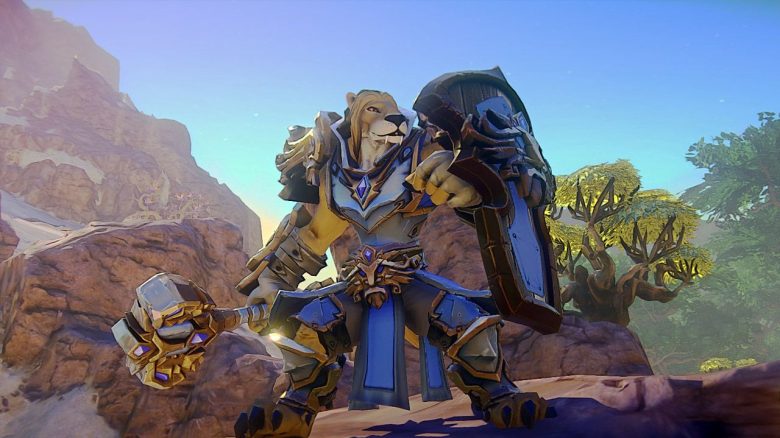
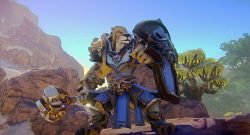
What kind of game was it? EverQuest Next was planned as the third part of the MMORPG series but was supposed to do many things differently than its two predecessors. The focus was on the idea of a gigantic sandbox that players could participate in.
Players were supposed to be able to change the world similar to Minecraft and build their own structures. At the same time, the NPCs were to respond to this customized world using a special technology and not just remain as dumb AI standing in place. This was intended to make the otherwise often rigid MMORPG world more dynamic.
Much emphasis was also placed on freedom and dynamism in the classes. You were supposed to choose only a rough framework at the beginning and then assemble your skills yourself. Each player could only put a certain number of skills in the action bar, similar to Guild Wars 1. The skills depended on the weapon but also on keywords such as damage, damage over time, or healing, which you could set yourself.
Graphically, EverQuest Next aimed for a colorful but stylistically beautiful world that made a good impression even before the alpha.
Here you see a trailer for EverQuest Next:
The big innovation was the addition of EverQuest Landmark, a separate game where players gained access to developer tools and could create content. This could then be quickly transferred into the main game EverQuest Next by Daybreak Games, effectively making the players developers themselves.
Games like Skyrim show that players enjoy creating their own mods and can create seemingly endless content. That would have been much faster possible with Landmark.
With dynamic NPCs, player-generated content, and a big brand like EverQuest in the background, much pointed to a small revolution in MMORPGs. Landmark was even released as a standalone game, but in 2016 the cancellation of EverQuest Next was announced.
Dave Georgeson, the former head of the project, was sure that EverQuest Next would have been possible under Sony, but they sold the studio during development to Daybreak Games.
This was ultimately said to be the death knell for the ambitious project. Development on EverQuest Next was officially halted on March 11, 2016.
However, a sequel is now supposed to be announced:
Ultima X Odyssey
Ultima X Odyssey was to become a new successor to Ultima Online, after the actual second part was canceled in 2001. The basic idea of Odyssey, announced in 2003, relies on a third-person perspective and a virtue system.
Instead of constantly defeating the next big evil, players were to complete actions and quests to demonstrate virtues such as compassion, honesty, humility, and self-sacrifice. Through these, new skills were to be unlocked and the character’s direction determined.
According to EA, you were supposed to constantly make decisions and thereby change the outcome of quests. Would you spare the thief caught in the act because he was starving and saw no other option, or would you administer his just punishment?
Here you see the official trailer for the game from 2003:
Ultima X Odyssey offered a choice of 12 different classes and was supposed to utilize a dynamic combat system involving blocking and dodging. The game also took some new approaches regarding equipment, as players were supposed to equip items that leveled with them and could be improved through crafting.
In the endgame, PvP was supposed to play a major role, with battles taking place only in special areas and being linked to a ladder.
It likely would have been difficult for the game to compete with WoW and EverQuest 2 if it had been released in 2004. However, much still sounds like a really good idea on paper that EA had in 2003, especially with all the choices in quests.
However, the game was canceled before it could even compete with the other two titles. Reasons given included that part of the team was pulled away for a new expansion of Ultima Online and another part did not want to move from EA’s Austin office in Texas to California.
Titan
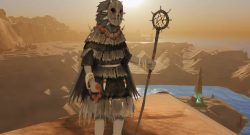
Project Titan is an MMORPG from Blizzard that never saw the light of day. In it, you were to take on the role of a super soldier who goes about a normal life during the day while carrying out important missions to protect humanity at night.
The MMORPG was supposed to take place in a near-future Earth and include many realistic elements. One goal of the game was presumably for players to build a kind of second life.
However, Blizzard was never much more specific. Development was already halted in 2014 and the remnants of the game were partially used to create Overwatch.
According to then-Blizzard chief Mike Morhaime, the game was a logical evolution from WoW but consisted only of ideas and never of true passion.


Honorable Mention: Sword Art Online
Sword Art Online is a story from Japan that is told in novellas, mangas, and animes. It is about an MMORPG in virtual reality, where players experience all sensory perceptions that occur in the game through special hardware.
In fact, there are already MMORPGs that bear the name Sword Art Online, but they only scratch the surface of what the actual idea of the game is. So far, there is no title that comes close to such an immersive world.
With Zenith – The Last City, a VR MMORPG was released on Steam in early 2022, which, however, has a lot of room for improvement both graphically and in terms of content. Nevertheless, the interest in it was already huge:

A new WoW needs big ideas – and a big name can help
A more dynamic world, player-generated content, building a second life, and virtual reality – these are the major innovations that the titles mentioned here have involved and to which the games of the future must aspire to bring fresh air to the genre.
The fascination of the upcoming MMORPG Ashes of Creation, for example, lies in the nodes. The areas in the game are supposed to develop further and depend on the players’ progress. Cities grow, new quests are unlocked, and world bosses, dungeons, or dynamic events occur.
It is one of the few upcoming MMORPGs that I also consider innovative, even though the PvP focus might be a hindrance for some and thus could diminish success. Here’s what the current situation of the game is:
All about the new MMORPG Ashes of Creation – Release, classes, gameplay, and nodes
It is also striking that a big name helps to generate attention and, of course, to have the necessary funds for implementation. MMORPGs are an expensive and risky genre, as all these canceled games prove.
Which MMORPG were you most looking forward to? And what do you think the MMORPG of the future needs?