

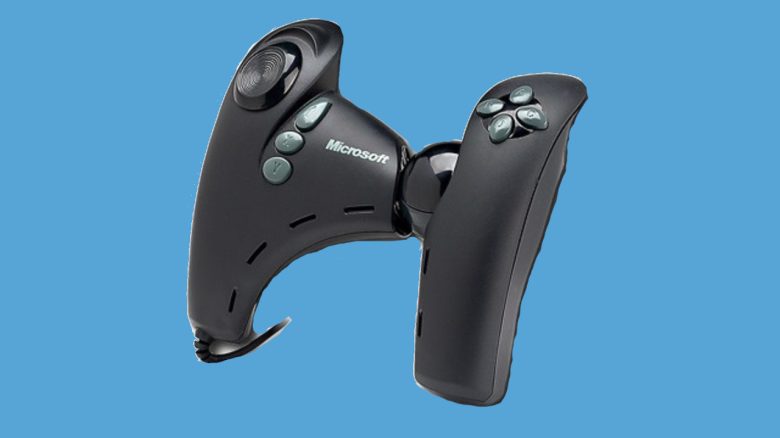
In 1999, Microsoft introduced a new controller for the computer, aimed at making shooters more enjoyable. However, this model has almost nothing in common with modern devices.
In 1999, the SideWinder Dual Strike was released, a gaming controller aimed at PC gamers. This was before Microsoft launched its first Xbox, which came out in November 2001 to compete with the PlayStation 2.
Today’s gamers may look at the design of the controller with skepticism. This controller is far removed from today’s ergonomic devices. The model was released at a price of 80 US dollars (around 100 euros today) and couldn’t convince everyone. Perhaps this is also a reason why you won’t find this model among the best controllers for PC and Xbox:

Controllers already offered modern features in 1999 that everyone uses today
What could the gamepad do? The SideWinder Dual Strike mainly offered a lot of buttons. On the left side were a D-Pad and three buttons. On the right side, four buttons on the front of a flight stick, connected to a large ball on the left part.
Behind the ball was the idea to aim precisely at opponents, which was meant to render the mouse unnecessary in shooters over time. All other keys from the keyboard were laid out on the remaining buttons of the controller.
In this regard, the device already offered some modern features back in 1999, which we also know from today’s hardware: you could program 8 buttons with 16 functions. Thanks to a switch feature, you could double-map all the buttons. This feature is now integrated into the hardware by all major manufacturers like Razer, Roccat, or Logitech.
You can watch a test video including unboxing on YouTube:
Testers criticized an excessively steep learning curve
The testers could only partly be convinced by the new controller at the time, mainly due to the strong competition from mouse and keyboard. The ideas were creative, but mouse and keyboard already worked excellently in PC games, and many found gaming with the SideWinder Dual Strike too cumbersome. The British magazine PCGamer describes gaming with the model as “trying to play System Shock 2 by solving a Rubik’s Cube.”
For many, it simply wasn’t worth the hassle of learning a control scheme that didn’t work as well as the mouse and keyboard. Moreover, showing up at any LAN party with such a controller made for a strange sight.
6 crazy controllers that you can really play with

Your opinion is important to us!
Do you like the article? Then let us know!