

The two Chinese megacities Beijing and Shanghai aim to become global gaming capitals by 2025. However, the tense situation in China against gaming is becoming a problem.
Is there already a gaming capital of the world? There is no single center for gaming worldwide, but rather regional hubs. Currently, three cities are viewed as the gaming capitals of the world:
- Los Angeles, where the large gaming fair E3 takes place every year, bringing together the Western world
- Seoul, as the capital of the e-sports nation of Korea, is the venue for many major tournaments in e-sports, in a city of 9 million inhabitants
- Tokyo, the center of Japan, hosts the “Tokyo Game Show” and is home to many arcades – Japan is generally considered a “gaming-crazy” nation

Beijing wants online gaming, Shanghai aims to dominate e-sports
These are the plans: But as abacusnews reports, two Chinese megacities have ambitions to become global gaming capitals:
- The local government plans to make Beijing the “international capital of online gaming” – aiming for a timeline of 2025. Beijing has about 21.5 million inhabitants (as of 2018)
- Shanghai wants to be the “International Capital of E-Sports” by 2025, according to the city’s government. Shanghai is even larger than Beijing with 24.2 million inhabitants (as of 2018)
These are the advantages of the cities: Generally, Chinese fans are considered gaming enthusiasts, and the economic boom has ensured that more and more money has been pumped into gaming in recent years. The gaming market in China is booming. In 2019, the market was 175 times larger than it was 16 years ago.
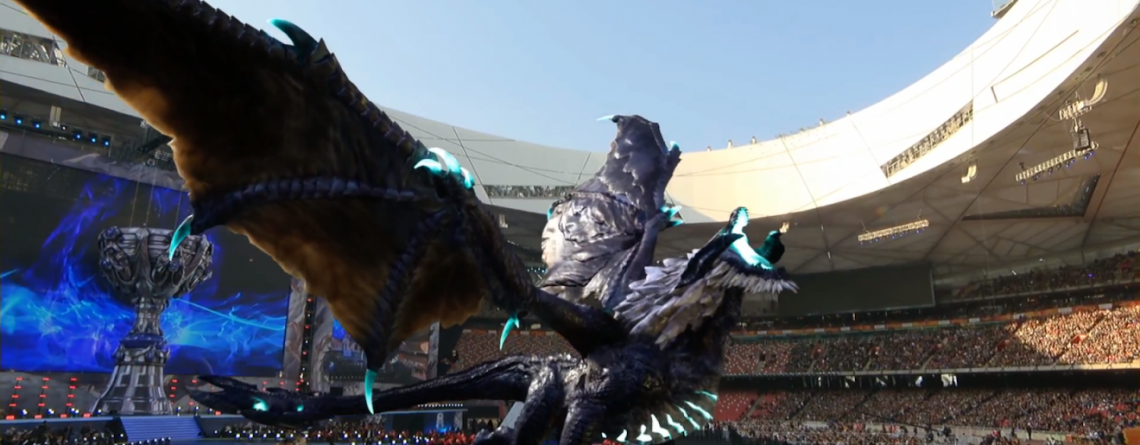
Beijing and Shanghai have already hosted major tournaments. For example, the finale of the LoL World Championship took place in Beijing in 2017 with 40,000 spectators – the DOTA-2 tournament “The International” attracted thousands to Shanghai in 2019.
For a long time, the Chinese government has been open towards gaming. In 2003, China was one of the first governments to recognize e-sports as an official sport, analyst Daniel Ahmad states.
Problem 1: Tencent and NetEase are elsewhere
What are the issues? One problem is that the center of the gaming industry in China is currently in Guangdong, a southern province with 106 million inhabitants. In the provincial capital Guangzhou is home to NetEase. The even larger company Tencent is also based in a special trade zone in the province.
The province of Guangdong is consequently responsible for three-quarters of the value of the gaming industry, as abacusnews reports.

Problem 2: The censorship causes issues
In China, everything is about state control. After gaming in the fields of “PC”, “Mobile”, and “E-Sports” flourished for years, there has been increased government intervention in recent months: The government was allegedly concerned about the eyesight of youth and the decline of morals:
- For months no new games were approved. There was talk of a “freeze.” In China, games need licenses to be published.
- International games were also censored. Games like PUBG did not conform to the “socialist values.”
All of this has given the Chinese gaming market a setback.
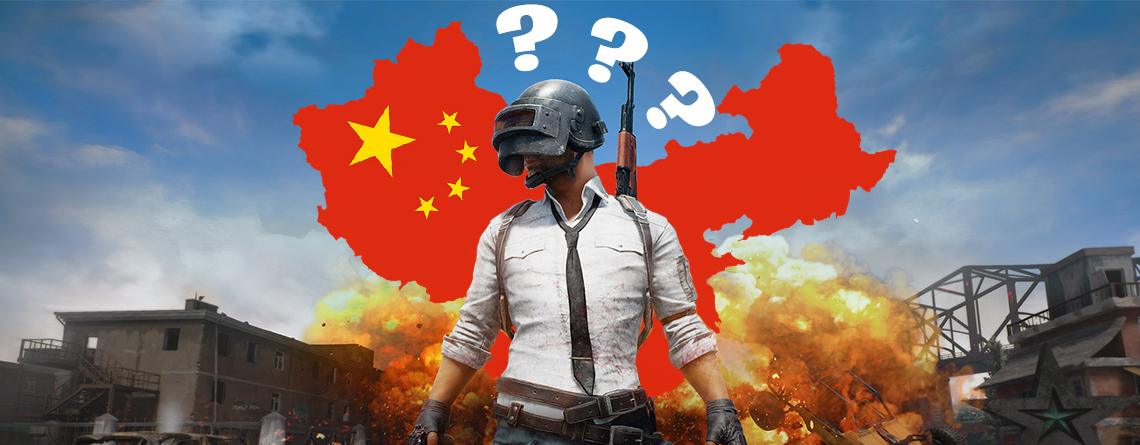
Many of the internationally largest gaming brands do not exist in China at all. Thus, the gaming sector in China is almost completely isolated from the rest of the world, with a few exceptions like LoL. Globally, only one version is played and the last 2 world championships were held in China.
We will see if the ambitious plans of Beijing and Shanghai come to fruition by 2025.


Your opinion is important to us!
Do you like the article? Then let us know!