

While many fans are waiting for new info on Divinity, thousands are currently just playing the direct predecessor on Steam. Divinity: Original Sin 2 has over 10,000 players on the platform. If you’re one of those who now feel like playing the series, here are some tips to help you get started.
Larian has announced their latest game with Divinity and continues a series that has been part of the studio’s portfolio for over 20 years – the actual “baby” of the developers.
However, after Baldur’s Gate 3 attracted so many new players and brought them into the genre, Divinity is considered by many of them to be “the game from the makers of Baldur’s Gate 3.” Although Divinity is older, it seems that some Larian fans want to catch up on the origins.
Divinity: Original Sin 2 is the latest (playable) entry in the series and was released in 2016. On Steam, the role-playing game recently had almost 11,000 players, an increase of nearly 5,000 players compared to November (according to steamcharts).
However, if you’re coming from Baldur’s Gate 3 or have never played a Divinity game before, you should keep a few things in mind, as the games differ significantly. Divinity: Original Sin 2 is a completely different game, even if it may look similar to Baldur’s Gate.
1. Forget the rules of D&D and Baldur’s Gate 3
Divinity is its own game series and is not based like Baldur’s Gate 3 on the ruleset of Dungeons & Dragons. This specifically means:
- There are no actions but action points for everything.
- Attributes and their bonuses are distributed completely differently.
- You don’t play classes, but characters.
- Different rules apply for armor, resistances, and status effects – both for you and for the opponents.
The game explains most of this through tutorials. Make sure to read them, as the differences from Baldur’s Gate 3 are enormous.
2. Your “class” doesn’t matter
Even if you choose a class during character creation, it has no impact in Divinity except for your initially learned abilities. The old Divinity games don’t have a class system, just skills.
When leveling up, you improve various skills and learn new spells through books when your relevant skill is high enough. Instead of having classes like in Baldur’s Gate 3, you put together builds.
A note on this: If you play on higher difficulties, it’s smarter to play purely physical or purely magical teams, as effects can stack and negate the same resistances. Physical groups are better suited for beginners.
3. Don’t overthink consequences
Like in many other RPGs, your actions in Divinity have consequences and can influence the course of the game. However, you often don’t feel the exact impact until much later.
Additionally, some situations can’t be avoided or can even be reversed and are not permanent, such as:
- Companions who may leave you. If you want to see everything, you’ll need to play multiple times.
- Skill choice: You can respec both your character and your companions. Don’t worry too much about leveling up.
If you’re not sure about the selection of companions, we have a brief characterization for all of them:
The character traits of the companions
- The Red Prince: Arrogant and conceited, but with great responsibility.
- Ifan ben-Mezd: Kind and just, but reserved about his own matters.
- Beast: Daring and sociable, but with powerful enemies.
- Loha: Playful and charismatic, but with a dark secret.
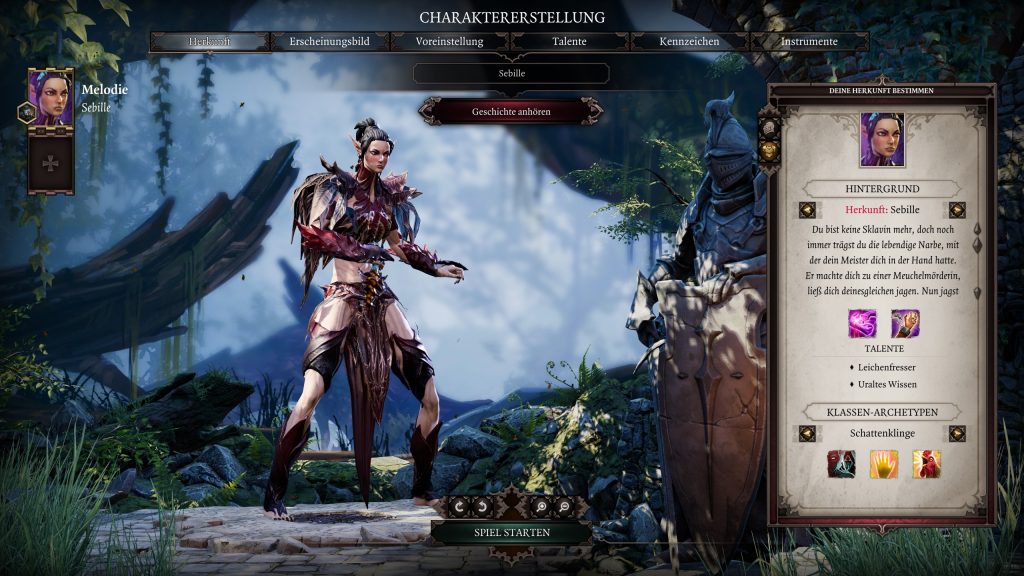
- Sebille: Cold-blooded and calculating, but with a sad past.
- Fane: Educated and cynical, but a bit eccentric and with an enormous legacy.
4. Take your time and explore what you want to explore
On Reddit, you often read about players who just run through the game from battle to battle. Fighting is indeed fun in Divinity, but you miss most of it if you don’t occasionally deviate from the path.
Don’t rush, there is no time pressure and – as mentioned earlier – you will have to play multiple times anyway. Baldur’s Gate 3 also offers content for hundreds of hours and still, people have not discovered everything.
As a tip: play your first run solo, or, if you really want to play co-op, best with another newcomer. A game with veterans quickly turns into “railroading.”
Sometimes such discoveries are even important to progress, as powerful items are hidden somewhere. And that’s exactly what you will urgently need later.
5. Maintain your equipment – It’s more important than you think
Unlike in D&D, you don’t just find random weapons occasionally that are hardly better than what you already carry. In Divinity, the values of the weapons matter and are sometimes even necessary to cast certain spells.
Think of the loot system more like Diablo, where you need certain attributes for your build to work. In particular, armor and magical armor are stats that are more important than raw health points.

6. Use elements and your environment: The strongest “spells” are mastered by everyone
You may have already heard of it, but in Divinity the “Barrelmancy” was first created. This is the strongest school of magic there is, as it can theoretically stack infinite damage.
In Divinity: Original Sin 2, use everything you find and experiment with it. The game is designed for you to know how to use your environment, such as through:
- Blessing of puddles or steam clouds for AoE healing
- Blood that you electrify to stun opponents
- Fire with which you can ignite poison clouds or summon elementals
Learn the elements. They can save your life. And if that’s too cumbersome, it will help you…
7. Save often – really!
The quick save function (default F5) is your best friend in the game. You have up to 25 quick save slots available, so you don’t overwrite the old save directly if you want to save quickly. You can set the number of slots in the settings.
The battles are significantly harder than in Baldur’s Gate 3 and require a lot of knowledge and combinations. If you just walk into too strong opponents and the last save is far behind, you will lose hours of progress.
Divinity: Original Sin 2 doesn’t directly tell you when you enter areas that are far above your level. So get used to pressing F5 every few minutes to save your game as early as possible.



8. It sounds strange, but: play a pre-made character!
As tempting as it may be to play a “Tav”: don’t do it. Don’t create your own character, but choose one from the six provided. Divinity: Original Sin 2 is not a role-playing game like Baldur’s Gate 3, where you are the hero; it is a story of six heroes.
If you don’t play with an “Origin,” you will miss out on at least one entire story arc because you can’t explore it. But if you really want to play a custom character, do that during your second playthrough – or play two times for all companion stories.
However, when creating, keep in mind that undead have a completely different standing than the living. NPCs will be afraid of you and will attack you directly if you don’t disguise yourself, and healing magic will harm you while you regenerate health points through poison. This is not a suitable option for beginners.
By the way, if you were tempted by the new trailer for Divinity, you should know that while Divinity: Original Sin 2 does have a distinctly dark tone, it is not as dark and macabre as the new game might suggest: “It’s so disgusting. I love it” – A trailer divides the Game Awards: some find it great, others too intense