
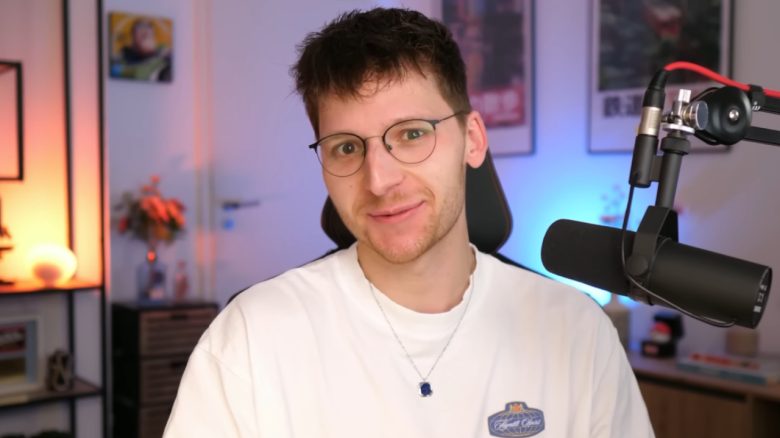
YouTuber Timon “Klengan” talks in his new video about the Twitch streamer Kevin “Papaplatte” Teller and his former editor. However, he sees the problem elsewhere, namely with the reactions themselves.
This is the background about Papaplatte: In August 2025, former editor Paul “Pamabu” spoke up on YouTube. He had built and managed Papaplatte’s reaction channel “Lattensepp” for 2 years, but found his payment and the treatment unfair.
When Papaplatte did not have a reaction channel yet, Pamabu took the stream recordings, edited out the reactions, and uploaded them on the newly created YouTube channel Lattensepp. Initially without Papaplatte’s consent.
Papaplatte stated in his comment on the situation that the reactions are his own content and that Pamabu had profited from them for a while. This is a topic that was overlooked in the broader discussion around the payment of editors.
In his new video on YouTube, Klengan talked about this very topic and noted what a significant problem this is in the Twitch and YouTube bubble.
Reactions bring imbalance to YouTube and Twitch
What is the problem? Watching YouTube videos in your Twitch stream, i.e. “reacting”, is widely spread in the Twitch bubble. Twitch streamers have their own reaction channels on YouTube that generate incredibly high sums of money.
Producing reactions is seen as a kind of “money cheat”. Twitch streamer MontanaBlack can record the highest monthly earnings from the two reaction YouTube channels. The problem: While the reacting content creators fill their pockets financially, there is not much left for the creators of the videos, both in terms of money and clicks.
Klengan illustrates this with his own videos that were reacted to by Twitch streamers. For example, his YouTube video gets about 160,000 clicks, while a reaction from MontanaBlack on it gets around 540,000 views.

Thus, reactions and original videos are in imbalance. Producing original videos is labor-intensive, not only in terms of effort – writing and shooting scripts – but also often in terms of payment. If a video is to be well-edited, an editor needs to be hired.
Reactions, on the other hand, have low effort: A video is watched, paused, commented on, snippets are edited and uploaded. Of course, there are also reactions that have a significantly higher effort, depending on further input provided. However, it often involves an opinion that is expressed by the Twitch streamers about the video and its topic.
What is the solution? As a proposed solution, Klengan shows a method that YouTuber RobBubble has already suggested: A system that splits the earnings of a reaction 50:50 between the creator and the reacting person.
Klengan emphasizes that YouTube’s current copyright system is indeed capable of recognizing when a video is played in a reaction and that the creator is notified as well. A change in this issue seems urgently necessary.

What exactly happened with Papaplatte? In his video, Pamabu accused the Twitch streamer mainly of changing payments. Initially, he was to be paid 25% of the channel’s income, which Papaplatte eventually found too much, so he started paying him a fixed salary in the future.
During their collaboration, Pamabu’s concerns were repeatedly ignored, and the collaboration eventually ended. Papaplatte spoke out in a reaction video on his YouTube channel, but the tone did not resonate with the community at all. The Twitch streamer reflected, acknowledged his misconduct, and then apologized.

Your opinion is important to us!
Do you like the article? Then let us know!