
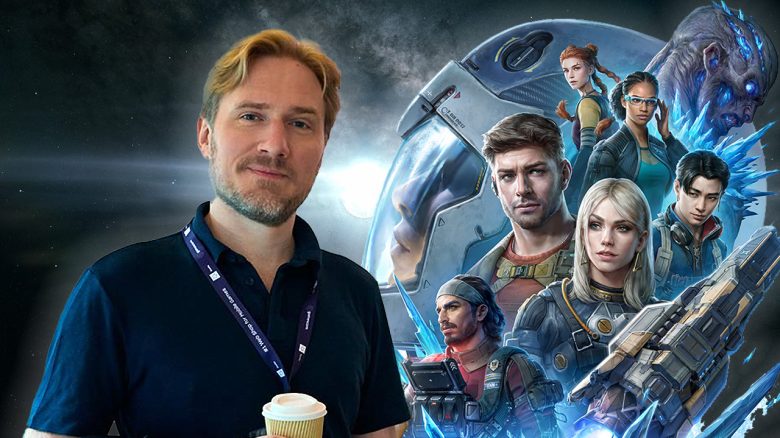
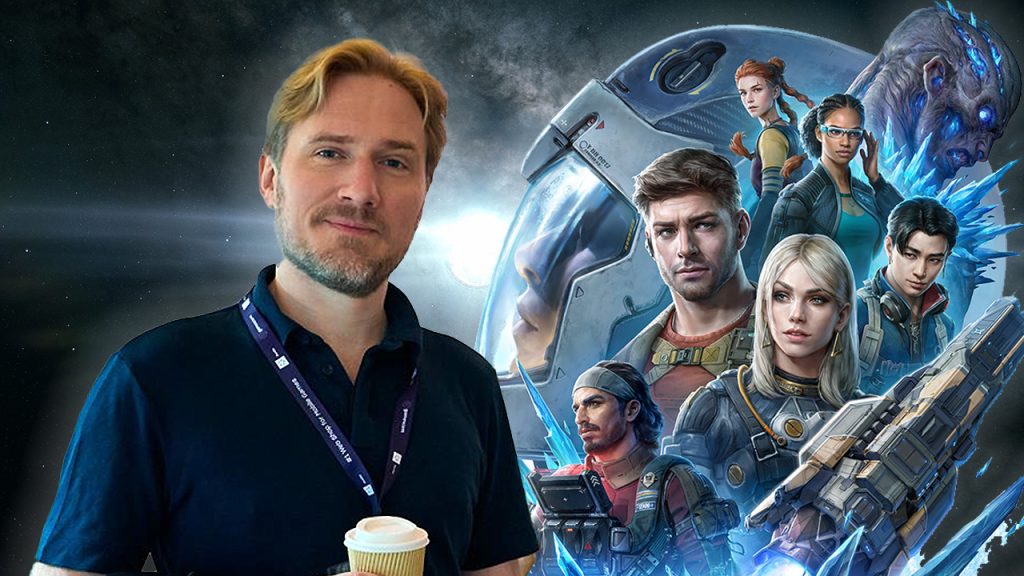
The MeinMMO editor-in-chief Leya Jankowski spoke in an interview with the Game Design Director of The Expanse: Osiris Reborn, Leonid Rastorguev, about what makes the story special.
The space in The Expanse is not a playground. It is a dangerous pressure cooker filled with political tensions. But how do you break down this relentless setting into an RPG?
To find out, I sat down with Game Design Director Leonid to discuss the lore of the new sci-fi RPG from Owlcat Games. In our conversation, we dove deep into the secrets of The Expanse’s solar system: from political conflicts to the psychological dilemmas of a crew in space, to the question of why you can be an asshole in the game, but never truly evil.
Here’s what to expect in the lore check for Osiris Reborn:
- The “Sailor Factor” for the crew: How Game Design Director Leonid uses his real-life experiences at sea to simulate the inevitable social conflicts on a spaceship.
- Physics vs. Fun: An honest insight into why 100% accurate gravity would ruin gameplay – and how the team instead uses the “physics of fear.”
- The “Origins” feature: How your origin (Earth, Mars, or Belt) influences political power dynamics and why there are no simple “heroes” in the game.
- Technology That Creates Problems: Why the team relies on plastic projectiles to avoid hull breaches, and how “high tech” from Mars contrasts with the “DIY” efforts of the Belt.
- Moral Gray Areas: Why the game allows you to be a “political weasel” or an “asshole,” but never forces you into a classic black-and-white framework.
- Sex in Space: Why intimacy is anything but comfortable in zero gravity.
- The Inhabited Solar System: A glimpse at places off the TV series – from hydroponic farms on Ganymede to hidden, illegal outposts in the asteroid belt.
“I love how structurally logical the world is“
MeinMMO: Leonid, let’s start with a general question. What is your personal connection to the world of The Expanse? When did you first encounter it and what were your thoughts?
Leonid: I started with the books and read the first few volumes. At that time, the focus seemed almost too much on the characters and not so much on the world itself. At least that’s what I can say after the first two books. A lot happens around Miller and Holden, the protomolecule zombies, Eros, and so on, but the worldbuilding felt too much in the background for my taste. I felt at that time that the world wasn’t deep enough.
But I must admit: That was a misjudgment based on just the first books. Later, I dove back into this setting through the series, and it really grabbed me. That’s when I truly learned to appreciate the worldbuilding: the depth of various layers, the structure, the political tensions, the factions, and the handling of scientific problems. I just love it when a world is logically structured – from the macro level of great powers to the micro level of personal stories.
MeinMMO: That’s interesting, for me it was almost the opposite! I was immediately fascinated by character development. But you say there was a later moment when it clicked for you. What was the moment when you realized: “This is how our game should feel”?
Leonid: That was when I grasped the bigger picture of the significant powers in the universe. When you meet characters like Chrisjen Avasarala or Anderson Dawes, the Martian government… you realize that there are multiple layers of narratives.
That’s a very solid foundation for the game because we can use some of these layers. We have the meta layer of political struggle, but we can alter other layers. We have our own characters and our own story.
We do not rely on James Holden’s journey – it does exist in our game as part of the overall picture, but we do not explore the development of his crew. We have our own crew. It’s like a puzzle where you can remove some pieces and replace them with your own pieces that you want to have in this world. It still works because the basic structure of this world is so stable.
“Eventually, everyone gets annoyed with everyone“
MeinMMO: Let’s talk about the “pressure cooker” of this world – psychological tension. In The Expanse, a spaceship is not just a means of transport, but an extremely confined space. You mentioned earlier that tensions in the crew are unavoidable. Can the atmosphere on board become so toxic that it affects efficiency during missions?
Leonid: Theoretically, it can of course. I have my own experiences from sailing. When you are at sea with a mixed crew, there comes a point during every trip – probably on the fourth day – when the mood turns and conflicts arise. It is inevitable; you just have to face it.
I think it’s the same when traveling in space. Eventually, everyone gets annoyed with everyone, and that’s okay. That’s part of how a social system functions in such tight quarters. There can be moments when it becomes toxic, and the crew just has to get through that. It is part of the teambuilding process so that in the end, you have a crew that works well together.
MeinMMO: And the background is crucial – whether one grew up on Earth, Mars, or in the Belt. How strongly do these roots flow into the conflicts?
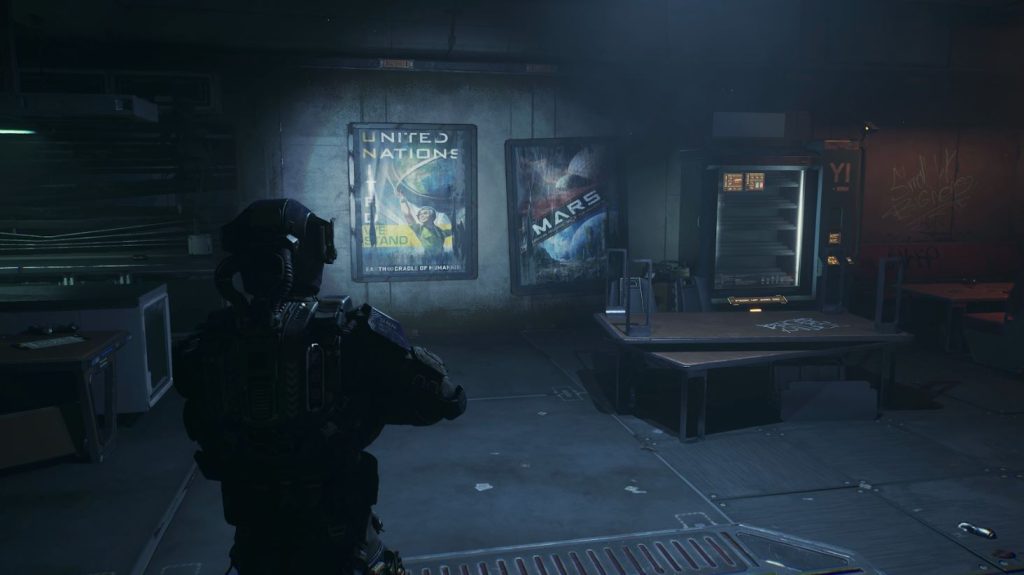
Leonid: They are a huge part of it. The big picture – the political struggle, the social and economic problems – affects every character. Some may come from Earth and lived on “Basic Assistance,” a very limited existence. The Belters are not doing any better; they have no government assistance and must constantly fight for survival.
The main plot often revolves around blaming other factions for one’s own predicament. The Earthers think the Belters should have their lives under better control, while the Belters see it exactly the other way around. This influences how the characters relate to each other. They have their own goals and may not be happy about what other factions have done. However, they share a common goal and must overcome these boundaries.
“The universe is a hostile environment”
MeinMMO: In The Expanse, there is this contrast between claustrophobia and infinity. How do you play with this contrast between the emptiness of space and the confines of the ship?
Leonid: The Expanse universe approaches space differently than other sci-fi settings. In Star Trek, space is a frontier to be explored, full of mysteries. In The Expanse, it is a hostile environment that puts you in danger at every moment. The vacuum, no sound, no oxygen, radiation – one cannot survive there for long. You must constantly manage resources like food, water, oxygen, and reaction mass. You have to calculate maneuvers, take planetary movements and gravity into account.
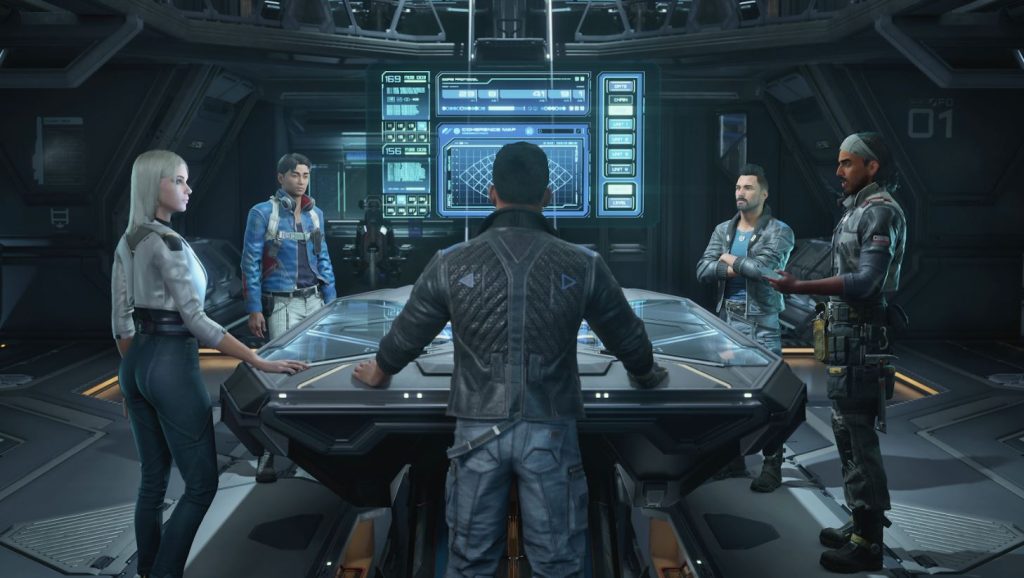
However, I wouldn’t necessarily call it claustrophobic because the ships are not that small. You have your corners where you can be alone. Especially in our game, we have a relatively modern ship; it’s not a patched-together Belter wreck. It is technologically advanced and comfortable by Expanse standards. The challenge is more about having to deal with few people in a confined space for prolonged periods.
“Strictly speaking, we should have done many things differently physics-wise”
MeinMMO: Technology is a good keyword. In many sci-fi settings, technology solves problems; in The Expanse, it often creates new ones. Which technological aspect of the lore do you find the most fascinating, perhaps precisely because it is prone to failure?
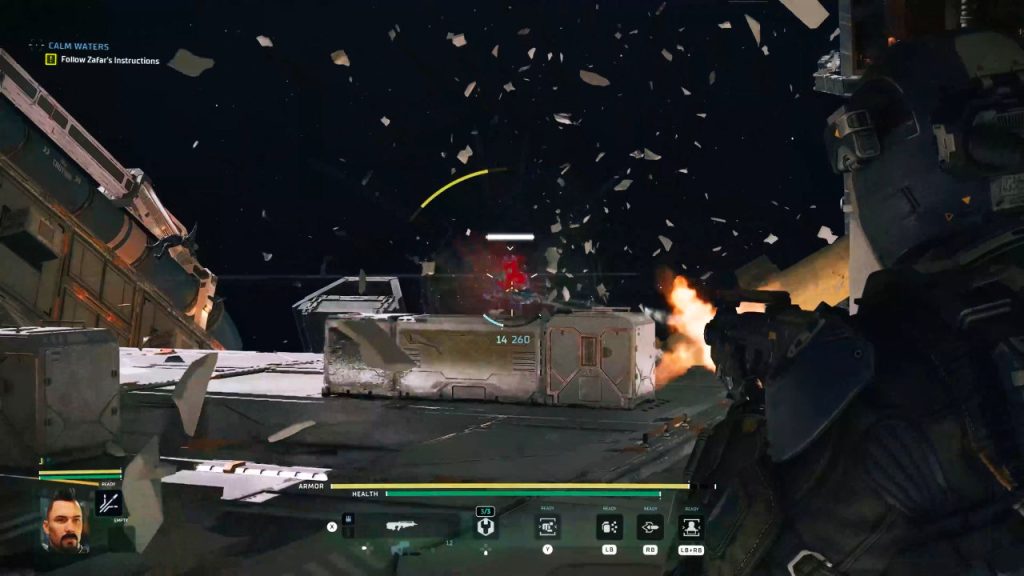
Leonid: I would say one of the defining aspects is the adaptation to gravity – or the lack thereof. Even when designing the environments, we faced scientific challenges. Most stations and moons like Ganymede or Titan have a microgravity between 0.1g and 0.3g. Strictly speaking, we should have done many things differently physics-wise – like how things float or how characters move. However, we couldn’t implement it 100% because it would feel very strange for the player – as if you were moving underwater all the time.
But we tried to show it wherever we could: in cutscenes, in narrative moments, or in rotating stations. It’s a wild experience when you see the inverted horizon just 10 meters in front of the character and the corridor rises as you move through it.
MeinMMO: Some might get dizzy from that…
Leonid: We actually had that problem! When we were working on the zero-G sections and the magnetic boots, part of the team got dizzy during those sequences. We had to revise the camera movement several times until we got the problem under control.
MeinMMO: Gravity is definitely one of the most fascinating points, especially regarding the physiology of the Belters. You wanted to stay true to the books and depict the Belters as over two meters tall. In the lore, these people often face issues with bone density and joints when exposed to high g-forces or Earth’s gravity. Is this physical frailty addressed in the gameplay mechanics, or is the size purely an aesthetic choice?
Leonid: We haven’t built in mechanical restrictions; they can perform the same actions as everyone else. But the setting offers solutions, like the “juice” you get during difficult ship maneuvers. Regarding visits to Earth – there’s not much of that in the game. But if we should visit Earth, we would definitely consider how to implement that narratively.
“There is no good and evil, only motivations”
MeinMMO: Earlier, you mentioned that one cannot be an “evil” character – you can be an asshole, but you can’t deliberately destroy the fate of humanity. Does that fit with this “gray” universe?
Leonid: I can’t reveal too much about the ending, but you can play through different options: altruistic or selfish. There is no good and evil, only motivations. If you are too selfish, you might not care what happens to the rest of the universe as long as you are doing well.
MeinMMO: Sometimes things happen unintentionally. I remember my first playthrough of Baldur’s Gate 3, where I accidentally committed genocide. That wasn’t my intention, but my choices led to that. Sometimes, in such games, it just escalates.
Leonid: Yes, that happens. It calls for a joke about modern politics, but I’ll spare you that. (laughs)
MeinMMO: Let’s dive into the planets. The TV series focused heavily on Ceres and Eros, but the books describe hundreds of small stations. How did you use these places to provide variety?
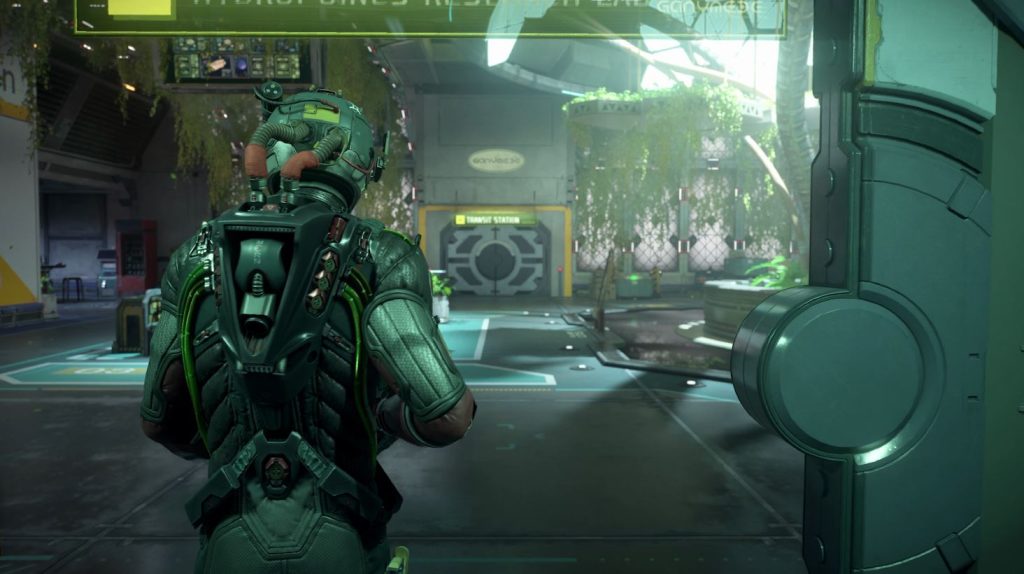
Leonid: We had two approaches. Of course, there are known locations like Ganymede or Io that appear in the books and the series. Having these in the game is a nice fan service. Ganymede is the “farm” for the solar system; those hydroponic farms under the domes look spectacular. On Io, there are mining facilities, and the view of the sulfur geysers is great.
On the other hand, we wanted to fill the world with more places to show that the solar system is inhabited. It’s no longer an undiscovered frontier, but settled space. So, there are a few smaller stations in the game that are not known from the books or the series. There, you meet people with their own plans to show that there is life everywhere in the solar system.
MeinMMO: Will we see something like a normal family life on one of these small stations, away from the larger politics?
Leonid: I can’t say much about that yet, as it’s more part of the side quests. But for the major centers like Mars or Ceres, we took the time to show life scenes. For example, there are concept drawings of a park on Mars.
You can see students learning about the Epstein Drive or people doing yoga on the lawn. We want to show that it’s not just a game environment, but that people are living their normal lives there. The same goes for Ceres, where people buy noodles at markets and so on. It should feel like a living world.
“Everyone has their own agenda”
MeinMMO: Let’s get to the big political questions. Earth, Mars, and the Belt are in a constant stalemate – labor against technology against resources. How did you incorporate this interdependence into the lore to show why a lasting peace is almost impossible?
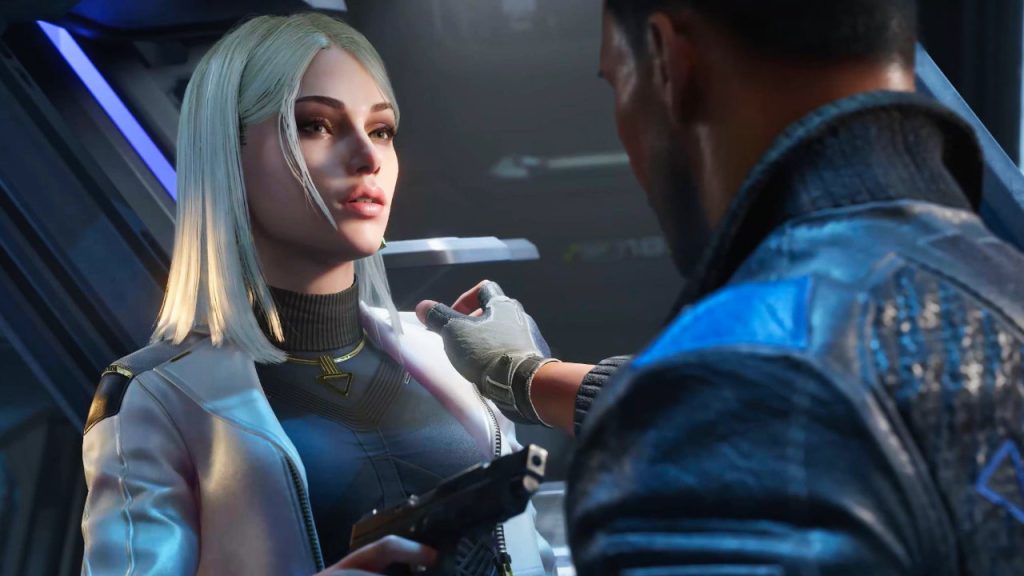
Leonid: We have a feature called Origins. Depending on which origin you choose during character creation, you will encounter different characters. Your first contact will be with your home. At some point, you have to negotiate with them and will realize that it’s not like: “Nice to have you back, make yourself at home.”
No, they have their own agenda. You might not even like the people from your own background that much. We wanted to show that with every decision that concerns the great powers, there are always more than one side involved. There are different people with different goals trying to win you over for their faction.
You can try to please everyone – like a political weasel – which is a very interesting player experience. But you can also support one side and make the rest unhappy. We are still shaping all of this, but this is our approach to the political system.
MeinMMO: For example, the Belters are often seen by others as cheap labor. Are there moments when the game forces us to shift our perspective – away from the label “OPA-terrorists” to an understanding of their fight for freedom?
Leonid: I think that’s one of the strengths of The Expanse: There are so many perspectives. We do not have to force the player into a specific viewpoint. We show the OPA radicals and their reasons. The player can join them or see them as mindless terrorists. Our job is to show why they do what they do. It always comes down to whether the end justifies the means.


“Humans are very fragile in this universe”
MeinMMO: A factor that influences the factions is resources. How do you depict the technological gap – between the high-end military tech of Mars and the patched-together systems of the Belt – without jeopardizing gameplay?
Leonid: There are a few points. First, the depiction of technology in the series did not always align with the books, often due to budget constraints. We wanted to showcase more of the technological advancement in the game because it takes place 300 years in the future. The Martian technology looks very advanced; we based it on modern scientific prototypes and expanded upon them.
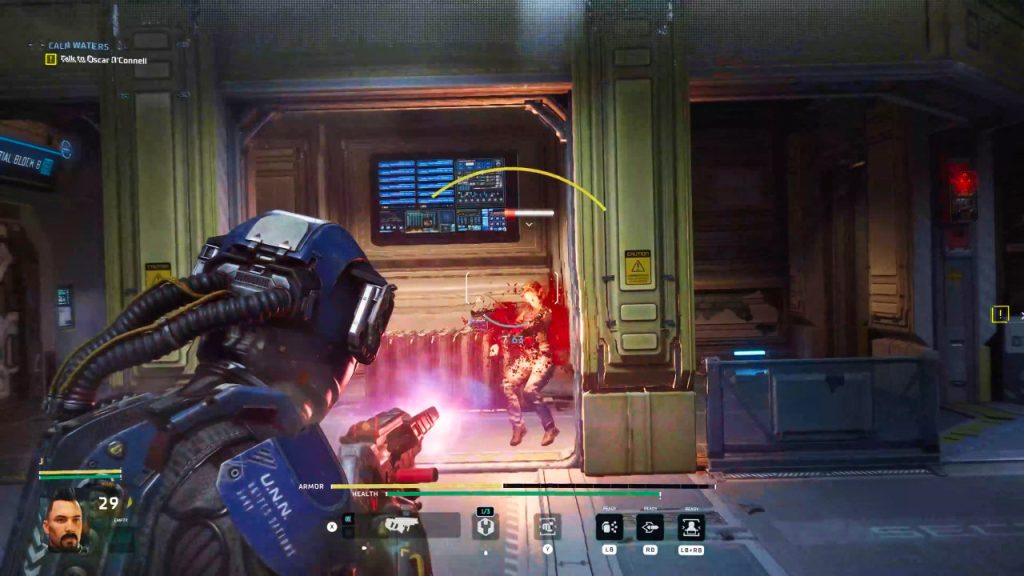
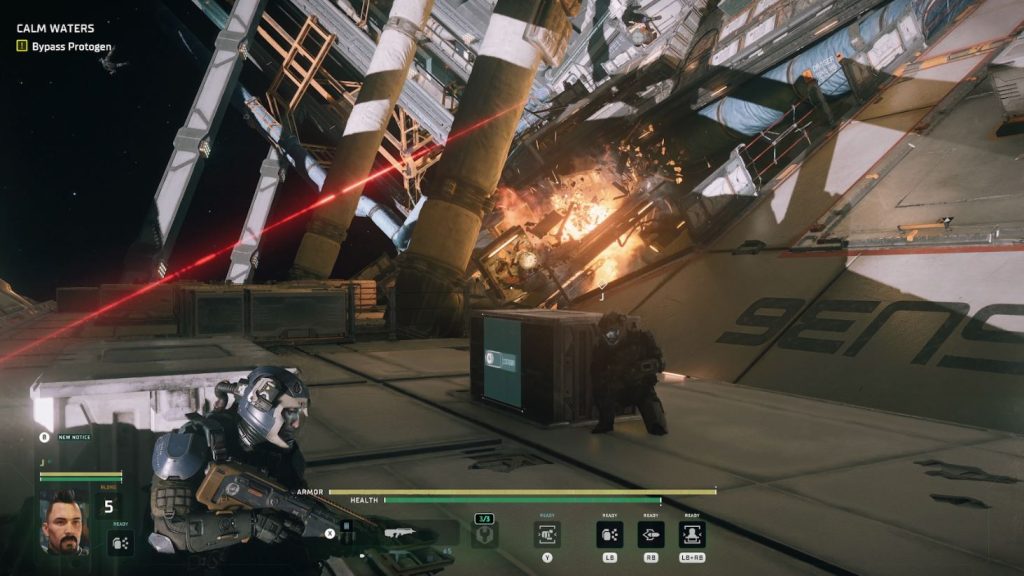
For the Belters, it is more “DIY” (do-it-yourself), patched together. This is reflected in the visual design and sound design. But mechanically we did not want to claim that a Belter weapon is useless. Humans are very fragile in this universe, no matter what you shoot them with. At the beginning, we do have simpler weapons that use plastic projectiles – which we incorporated out of respect for the setting, since you don’t want to blow everything up in confined spaces – but later, you switch to “real” weapons.
Destruction of the environment is more cosmetic; you can shoot at walls, but you won’t get sucked into space; that would disrupt gameplay too much.
MeinMMO: You mentioned the plastic projectiles. In The Expanse, it’s extremely dangerous if a ship has even a small hole. How did you approach this risk in game design?
Leonid: It’s true that you have to be extremely cautious in space. However, we couldn’t implement that fully mechanically, as it would be more of a simulation. But we designed the first stage of weapons to use plastic projectiles.
We also consulted scientific advisors: A decompression sequence, like one from movies where everything gets sucked out immediately, isn’t entirely accurate. While a strong wind does occur, it isn’t a hurricane. We demonstrated this, for example, in last year’s Gamescom presentation, where Zafari shoots through the windows. There are metal shutters that close over the windows, so you are only exposed to the vacuum for a short time.
“Sex in space is scientifically possible”
MeinMMO: So you worked with scientific advisors?
Leonid: Yes, we had very interesting discussions about life in space, procreation, sex, and births in space.
MeinMMO: There are romances in the game, so you had to address that! Do you want to share any insights with us?
Leonid: It is scientifically possible, but not very comfortable. You have to fix yourself somehow; otherwise, it gets tricky. Births are possible too, but there are problems with child development due to low gravity. This is also addressed in the books, and there are medications for it.
“The player should feel they made a difference in the end”
MeinMMO: In conclusion: What is the one thing about the Expanse universe that someone – whether a newcomer or a fan – should understand or feel when they finish your game?
Leonid: Aside from the lore, we primarily want to evoke emotions. We want the player to feel that their decisions were important and influenced many people.
They should question their motivations and moral principles they brought into the RPG. It’s always exciting to see how the agenda of different characters clashes against their own or that of the protagonist.
We want the player to have experienced a strong story in which they made a difference in the end.
MeinMMO: A story of immense scope. Leonid, thank you very much for the conversation.