

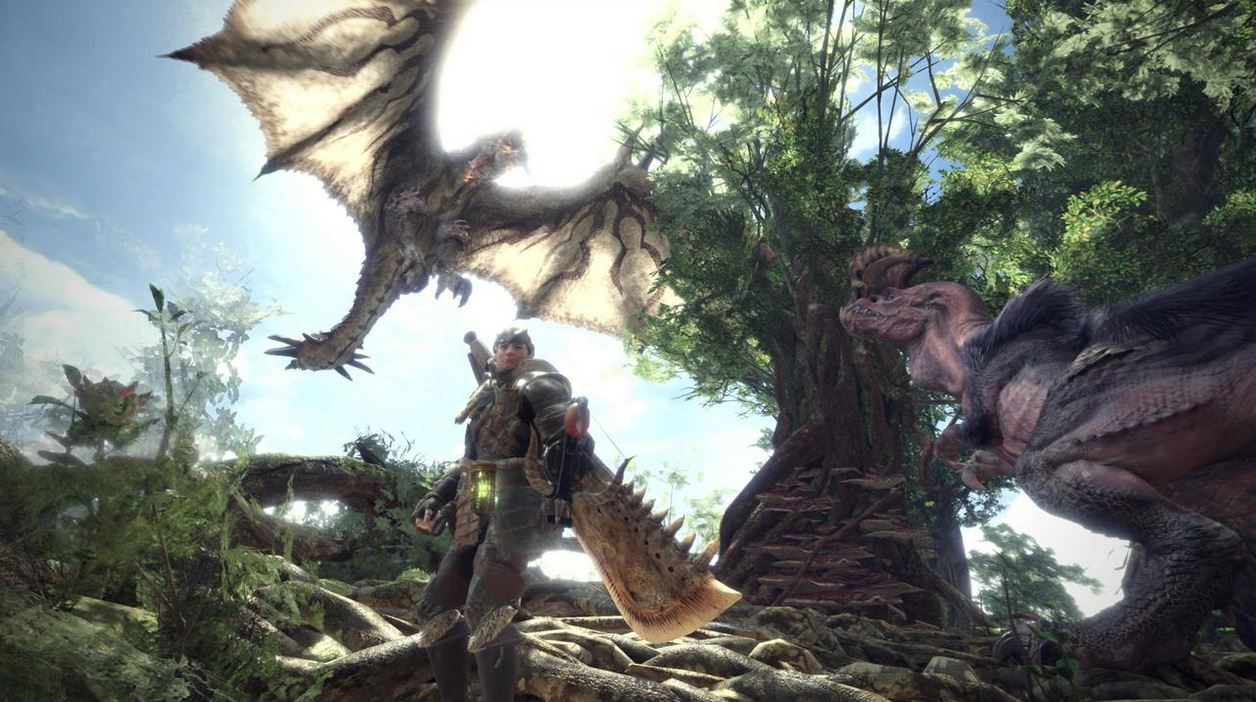
Monster Hunter World remains a game where hard work is required to reach your goal. This does not fit the modern Western gamer. Capcom promises that the new installment of the franchise will not be easier for the West.
“Monster Hunter” games are more complex than they might seem at first glance. Broken down, the gameplay consists of: “Beat the monster until it is dead. And don’t let the monsters beat on you.” But it goes a bit beyond that.
Players traditionally deal with different types of weapons. These have different move sets. The move sets determine how long an attack takes, where it hits, and how much damage is dealt. Additionally, the weapons have different damage types: Slash and Strike.
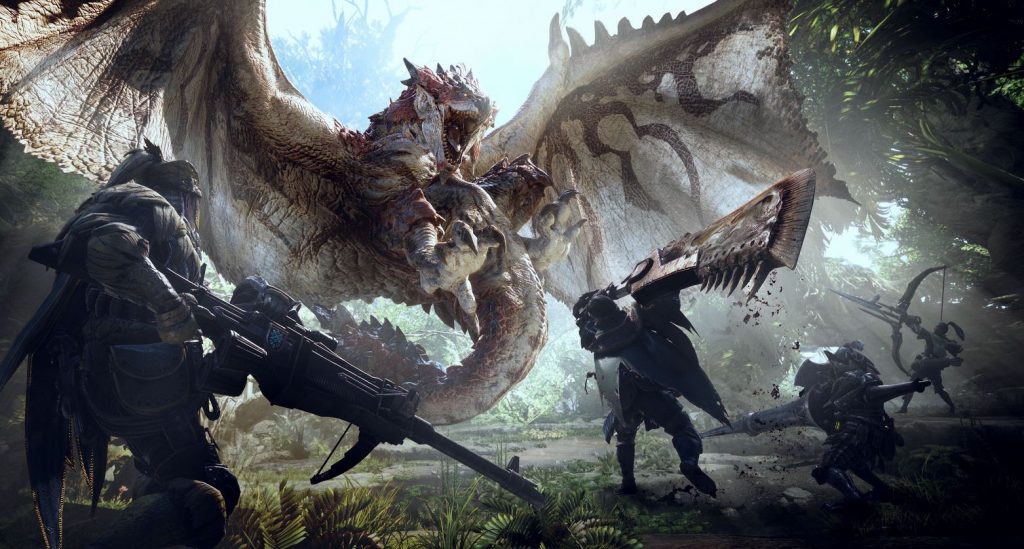
The learning curve in Monster Hunter is slow and tedious
The monsters that a hunter takes down all have different traits. They can be highly aggressive or tend to flee, for instance. Injured monsters may run away; there is no fixed opponent.
Each beast has different weak spots: For one beast, this might be the eye, while other monsters are sensitive around the chest or feet. For yet other creatures, elemental damage works particularly well, and they may not tolerate fire or ice.
Monsters have different body parts that the hunter can cut or break off. Among other things, wings, heads, tails, teeth, or bones are coveted in this game world. They are used to craft various items that make hunting easier. Crafting is important here. This also plays a significant role in Monster Hunter. Experimenting with different recipes and learning how to create potions or traps are essential for a successful hunt.
Yes, in the “Monster Hunter” universe, there is much to learn to become a successful hunter.
The learning curve progresses slowly, and players must earn their knowledge through trial and error. The necessary skills to use the weapon types correctly must be trained laboriously.
Fans fear: Monster Hunter World will be adapted for the West
Capcom aims to make Monster Hunter mainstream with the title “World” and establish it in the West. Fans were concerned that this decision would mean that Monster Hunter would be adapted for the West and “simplified”.
Monster Hunter is especially a big hit in Japan. Here, gameplay often functions differently than in the West. Progress is slower, often more complex, and less action-oriented. In the West, we like games that offer frequent checkpoints, fast action, double XP rewards, linear levels, and simple maps.
In the first released gameplay of Monster Hunter World, we see various elements that concerned fans.
- Scout Flies that guide the hunter.
- Action-based weapons, like guns and grappling hooks
- New features designed for a direct reward, like the camouflage cloak
- The environment can be destroyed
All of this seems somehow off in a “Monster Hunter” game at first glance. Because things like the scout flies are a significant relief in the hunt. In previous installments of the franchise, you had to mark monsters with paint and chase them across the entire map to catch them within a specific time limit. So now you need to put in a bit less work tracking down the monsters.
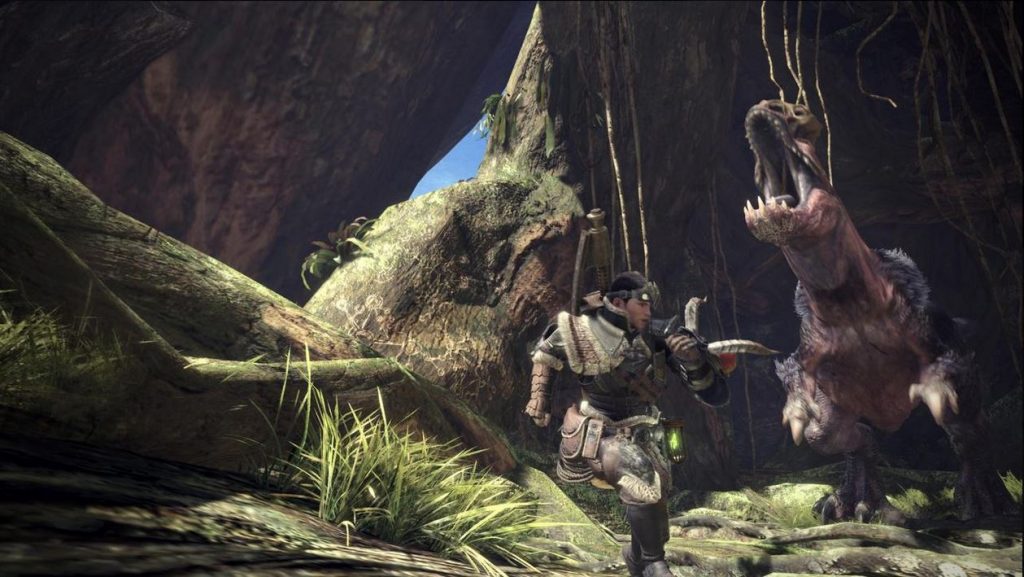
Monster Hunter World remains static as usual – even in the West
Fujioka Kaname is the lead director of Monster Hunter. He assured fans that Capcom would not “fix” the game for the West to sell it better there.
Monster Hunter World is merely an evolution of the franchise. So we can expect the following structure as usual:
- Hunters operate from a central hub
- The hub leads to the hunting areas to complete quests
- Monster Hunter World will retain the 14 known weapon types that we saw in the last installment “Generations”. The weapon system will only be expanded.
- Despite seamless maps, the areas will still be divided into different zones. These zones will be marked on the map and may feature climate changes. Only the loading screen between the zones will be removed.
- Players will still need to prepare for quests and devise a hunting strategy.
All this means that Monster Hunter World will retain a static core. Player progress remains slow and involves a lot of learning. Strategies and planning phases will still be required to successfully complete quests.
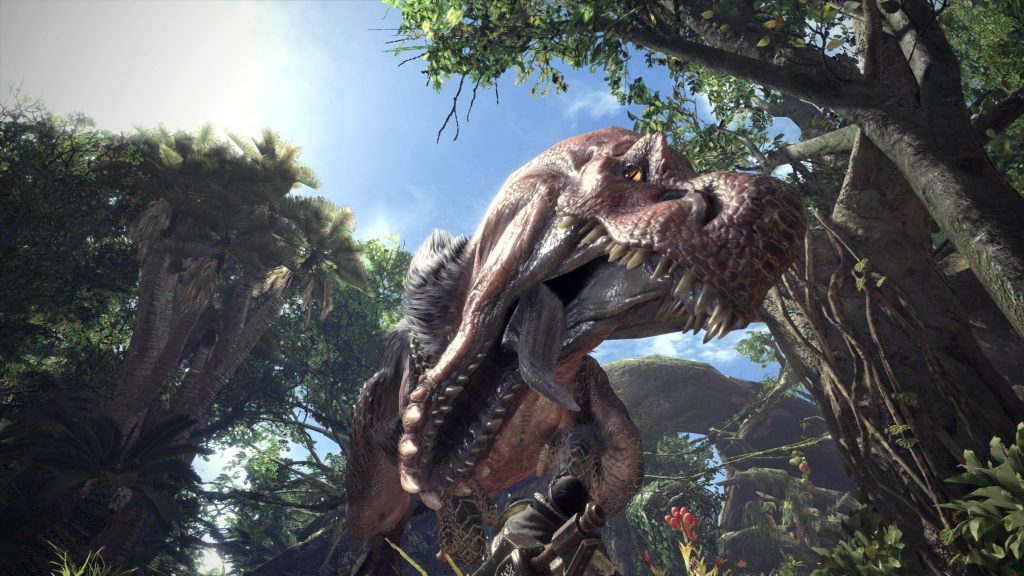
Seamless maps change the gameplay, not the core of the game
The biggest change for the developers was the seamless maps. The various zones of a map are no longer separated by a loading screen.
The developers have incorporated their gameplay decisions from this change. Whether a feature was removed, revised, or newly added was decided based on whether it fits the new, seamless environment.
Changes like those with the weapons or the introduction of scout flies had little to do with better marketing in the West, according to the developers.
In reverse, this means for those hoping for a West-typical title from Monster Hunter World that they are at the wrong address.
Monster Hunter stands out because it feels so “real”. The preparation for the hunt, learning about the monsters, the weapons, the environment – One can easily imagine that it would work just like that as a real monster hunter.
The changes are meant to support the feeling of authenticity and not to adapt the game for the West.
Monster Hunter World will launch in early 2018 on PS4, Xbox One, and PC.
In Monster Hunter World the dream comes true: a “breathing” world

Your opinion is important to us!
Do you like the article? Then let us know!