

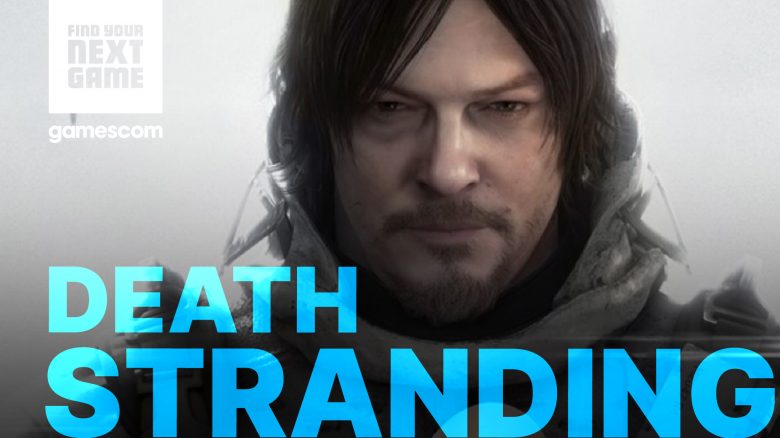
Death Stranding was released in 2019 under game designer Hideo Kojima and divided player opinions: some were thrilled, while others dismissed it as a walking simulator. I want to explain to you what Death Stranding is about, what the multiplayer looks like in the game, and why I still enjoy playing it so much three years after release.
After years of studying, I faced the final hurdle that stood between me and a master’s degree: the master’s thesis. I studied media and communication in Augsburg and was looking for a topic that I wanted to engage with intensively for half a year.
So I thought about what had particularly stuck in my mind recently and seemed interesting enough to invest that much time into: Why not simply write about one of my favorite games?
Death Stranding was immediately my favorite, as I was already fascinated by its unusual concept while playing. There were also so many unanswered questions that I couldn’t address during my first playthrough. In fact, I was really looking forward to spending half a year immersed in the game and earning my master’s title through my dedication to gaming.
Here you can see the launch trailer for Death Stranding:
There’s much more to Death Stranding than just a “walking simulator”
The game takes place in a post-apocalyptic world where a large part of the population has died due to the catastrophic event known as “Death Stranding.” The boundaries between life and death blur. So-called Beached Things, or BTs, ghostly and monster-like beings, make the world a dangerous place.
In this setting, players take on the role of the courier “Sam Porter Bridges.” He delivers goods to survivors and aims to connect America through a network. He also has to rescue the future president from a terrorist group. If that sounds strange to you, you clearly haven’t played enough games by Hideo Kojima.
As you travel through America as Sam, you find out: Not everything is as it seems at first glance, and Sam’s actions determine the survival of humanity.
What defines the gameplay? A large part of the gameplay actually consists of getting from point A to point B while damaging the cargo as little as possible.
The world seems desolate and abandoned after the apocalypse but also offers a beautiful landscape for the player to explore.
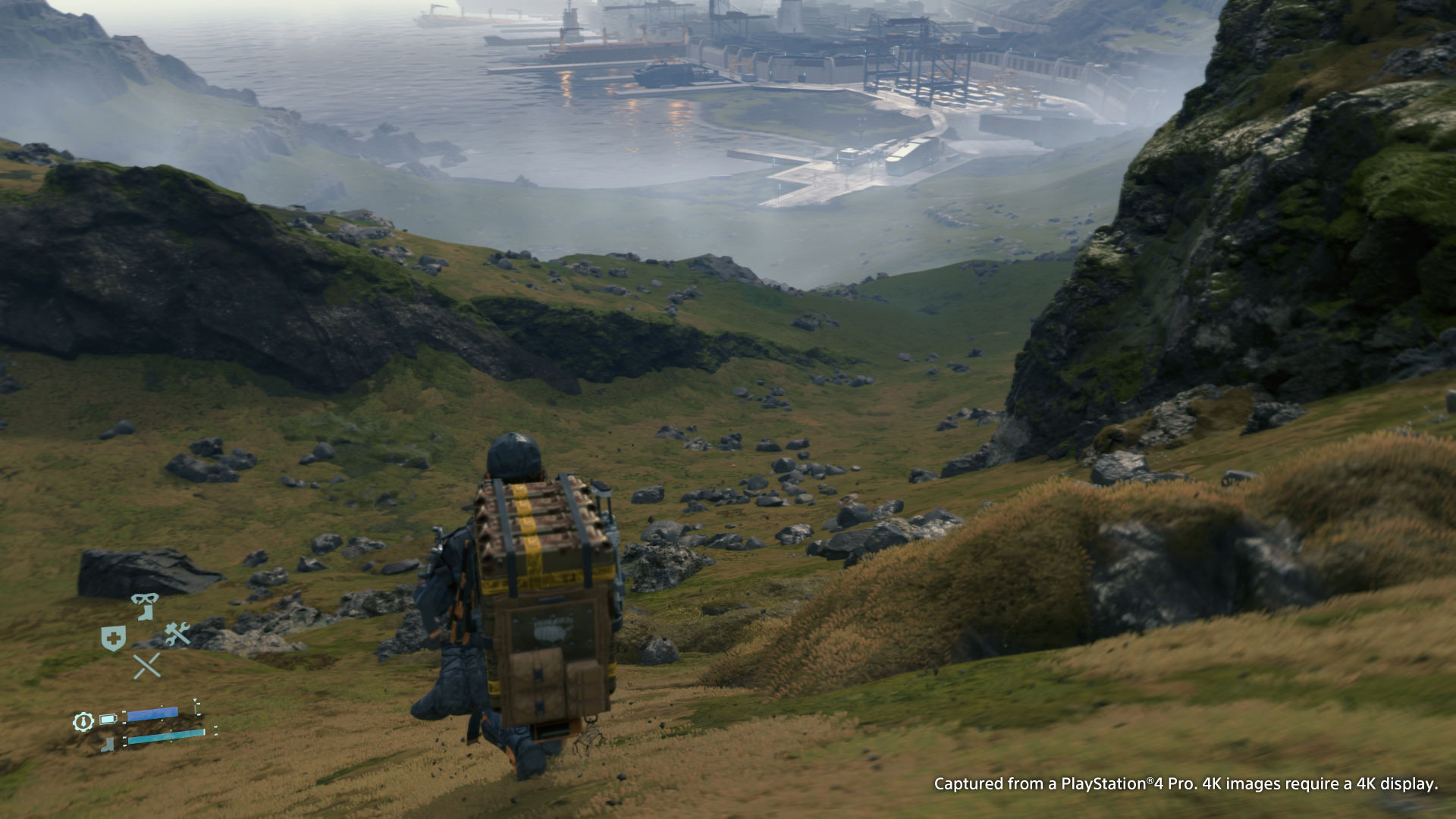
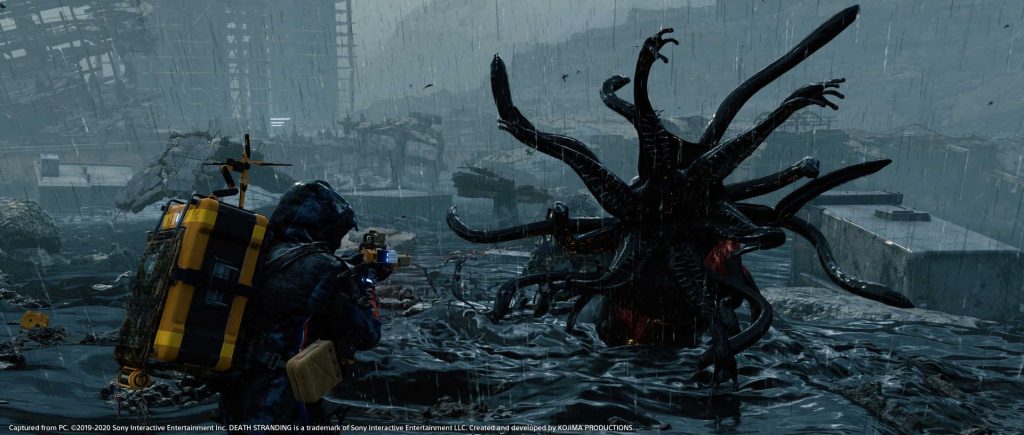
However, the player must be cautious of the BTs, terrorists, or MULES. The MULES are a group of NPCs trying to steal Sam’s packages.
In between, the gameplay varies through stealth sequences and combat situations. In those, I felt strongly reminded of Metal Gear Solid.
The true meaning of solitary multiplayer
Particularly interesting in Death Stranding is how the multiplayer is integrated into the game. Kojima calls it the “Social Strand System.”
Once a player connects an area to the chiral network, they can see the tracks of other gamers. The chiral network is comparable to the internet and allows for data exchange.
Structures like roads or ladders placed by other players in the world can now be used by oneself as soon as the area goes online.
If a player wants to show appreciation for the support from others, they can give likes, similar to social networks. This helps in increasing overall rankings in Death Stranding.
Resources and items can also be shared with other players. Additionally, the player can collect and return lost packages from others.
Similar to the coop in Elden Ring, the gameplay becomes noticeably easier with the assistance of other players. Especially when the player in Death Stranding doesn’t have to build the infrastructure alone but receives support in easing the delivery routes with helpful tools.
Kojima explained what lies behind the unique multiplayer in Death Stranding. On Twitter, he posted a picture with the explanation: “Through your gaming experience, I hope you will understand the true meaning of connecting with others.”
Death Stranding serves to connect players not only within the game world but also in real life. Through the indirect multiplayer, connections are made with other players worldwide, ensuring that the individual player does not feel alone.
In the spoiler box, you will find a meta-explanation behind the game.
Spoiler box
Before the actual game begins, the short story “Nawa” by Kobo Abe is displayed. It deals with stick and rope as the first tools of humanity. The rope is used to bring good to oneself. The stick is used to keep evil away. It is said that whenever you meet people, you also find these two objects.
They serve as a metaphor for what connects people and what separates them.
The game reiterates this metaphor. This can happen in the form of specific items, such as a revolver, or through the places that Sam integrates into the network on his journey. All cities have KNOT in their names (“Edge Knot City”).
Before a boss fight, it literally says: “Stick versus Rope. Gun versus Strand.” Because the characters in Death Stranding also embody the metaphor. Opponents of the main character, such as Higgs or Cliff, take on the role of the “sticks.” The main character Sam Porter Bridges turns out to be Sam Strand by the end of the game. Strand translates to strand. Hence, Sam has developed into a metaphorical rope over the course of the story.
Epic film scenes and hidden details
The more time I spent with Death Stranding, the more details I noticed in the game that referenced other games or films. This is hardly surprising, as Kojima is known to be a big fan of movies.
Even when casting the main characters, Kojima expresses his love for film. There are several obvious personalities from the film industry, such as the lead actor Norman Reedus. Most would know him as Daryl Dixon from the AMC series “The Walking Dead,” where he is the zombie killer with the crossbow and motorcycle.
Behind the models of the characters “Deadman” and “Heartman” are familiar faces from the film industry, directors Guillermo del Toro (“Shape of Water”) and Nicolas Winding Refn (“Drive”).
If players head to the cosplayer, they encounter American late-night host Conan O’Brien, who tries to make Sam laugh with otter jokes.
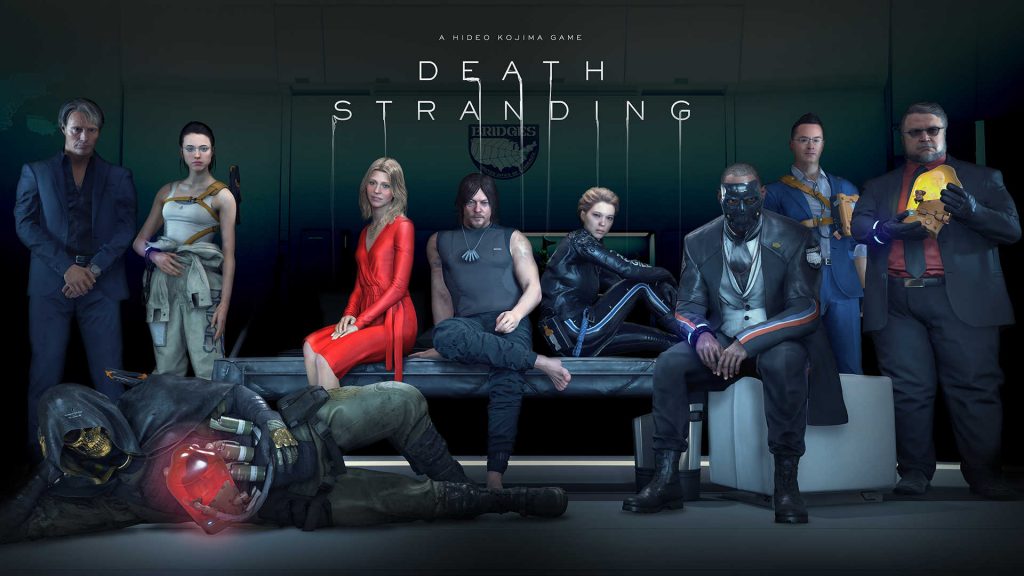
If you are a film fan, Death Stranding has a lot to offer: With a prominent cast and epic cinematic moments, the story surrounding life and death is told. Players with eagle eyes can discover some intriguing details that later become relevant and indicate that behind a character that appears friendly, there may be a sinister intention – or vice versa.
Especially the film scenes involving the Combat Veteran I find cinematographically impressive. They are full of symbolic elements and strike me as nightmarishly surreal. They create the perfect mood for what follows the cutscenes and present the portrayed character in an interesting way.
Here you can see the teaser trailer for Death Stranding featuring a cutscene with the Combat Veteran:
Who would I recommend Death Stranding to?
Death Stranding is not for everyone. If you’re looking for a game to play quickly in the evening to unwind after a long day, you probably won’t enjoy Kojima’s game.
Many criticize that the gameplay is too boring and monotonous, and some can hardly relate to the narrative of the game (metacritic).
Nevertheless, I can recommend Death Stranding. I believe especially gamers who are big film fans and value a good story can enjoy the game.
For me, the story was always a motivator to keep going, even during somewhat slow gameplay segments where I delivered packages.
On the other hand, the game is suitable for anyone who enjoys delving into profound topics and likes to explore the meaning behind things.
Even if you’re not interested in direct exchange with other players but still want to feel a sense of community in the game, Death Stranding offers an interesting alternative to typical multiplayer games.
Almost three years after release, the game hasn’t lost its relevance for me. Death Stranding advocates that society should grow together through a crisis and overcome it collectively instead of fighting each other – a message that might be more important now than ever.
Have you played Death Stranding? Feel free to share in the comments.
Conclusion: Death Stranding is exciting and full of meanings if you take the time to look closely
Kojima creates a wonderfully surreal and complex world in Death Stranding that holds many surprises both within the story and on a meta level: plot twists that turn the entire narrative upside down and profound themes and meanings hidden in details.
In reality, it’s a desolate, post-apocalyptic world full of death and loneliness. At the same time, Death Stranding tells a story about humanity and the importance of interpersonal relationships. And I find that incredibly beautiful.
Indeed, the multiplayer aspect achieved what Kojima intended for me. Despite the indirect exchange, I always felt a sense of community and was grateful for the help of other players in the game.
It may be that this was also due to the fact that I wrote my master’s thesis alone in home university during COVID times, and the topic resonated with me fully.
But the fact is, I can still say today: Death Stranding is one of my absolute favorite games, and I would choose it again as my master’s thesis topic.
Marie Friske
Junior Editor at MeinMMO

Your opinion is important to us!
Do you like the article? Then let us know!