

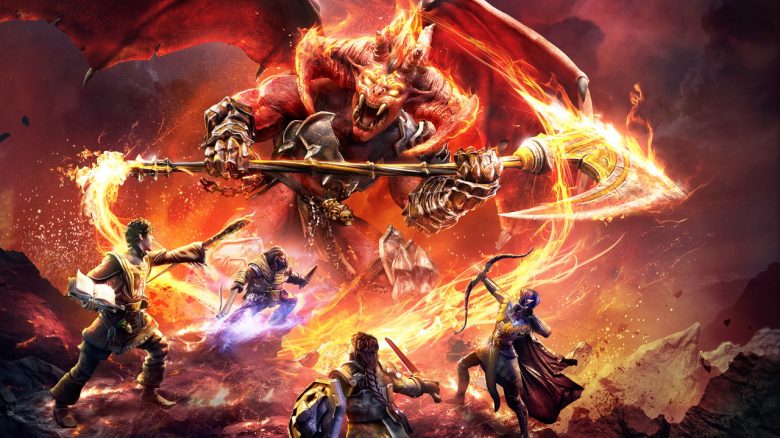
Have you ever noticed that many dungeons in MMORPGs require a group of 5? Why is that?
MMORPGs are group games. It’s about sharing a world with many others and then experiencing adventures together. If you want to explore dangerous dungeons, you are often limited to 5 players. But it wasn’t always like that. So why exactly 5?
It’s all about the group
Single-player role-playing games in the 80s and 90s adopted the group principle from pen & paper templates. Players should not roam the world as a lonely hero, but rather as a balanced party. At that time, classes such as warriors, thieves, clerics, and mages were available. However, they were also garnished with various subclasses like paladins, rangers, or druids.
For a balanced group, the four main classes were initially necessary. However, that was not enough. On the one hand, because the developers wanted to give players more variation, and on the other hand, it became evident that a damage dealer and a tank could make a significant difference in battles. Thus, the 6-member group established itself for single-player RPGs.
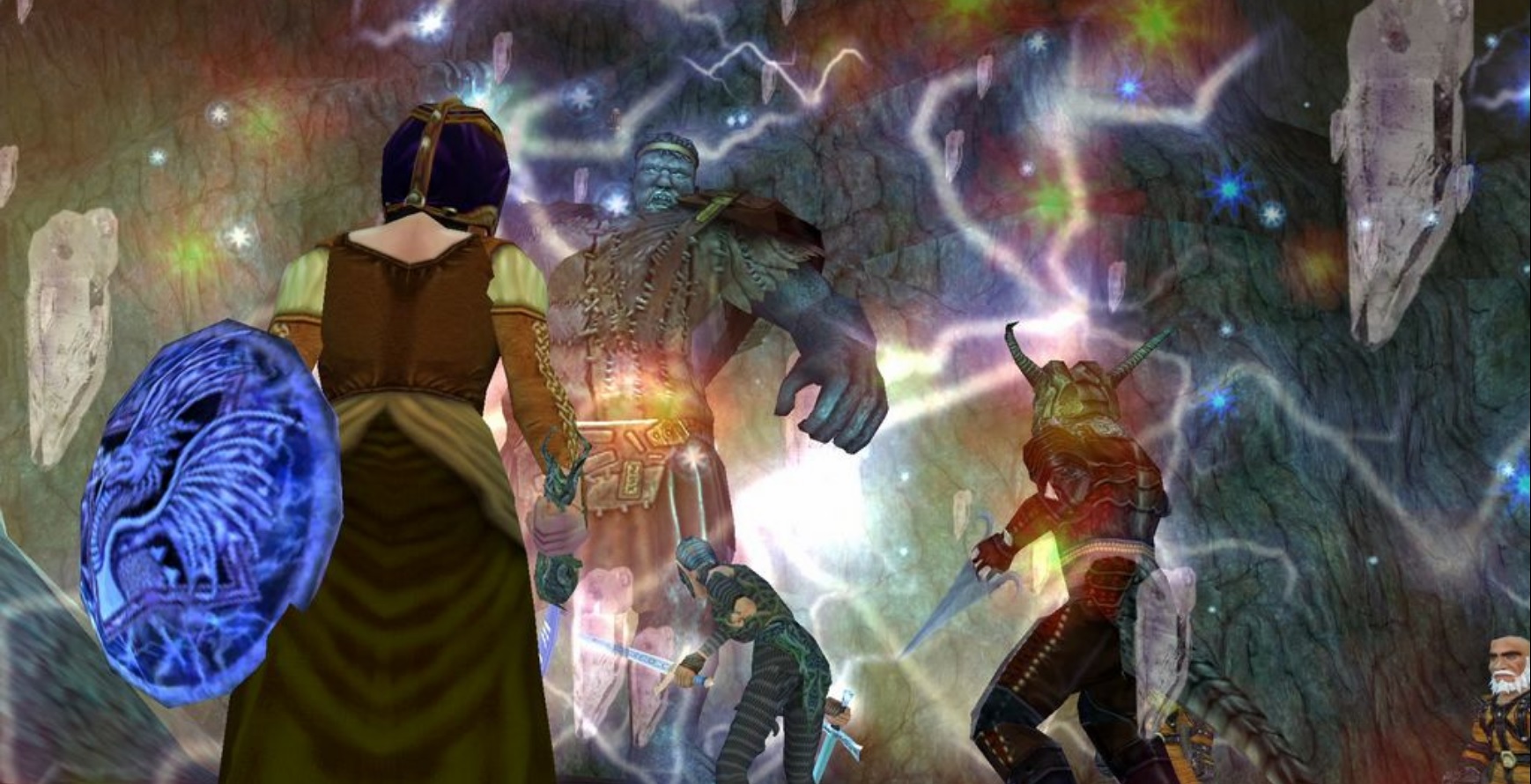
With MMORPGs, everything changed: When online role-playing games emerged in the 90s, there were initially no group limits for certain content like dungeons. The dungeons were public. Therefore, many players gathered in them. This often led to queues at boss enemies. Everyone wanted to defeat them, but the heroes had to wait until it was their turn and the boss respawned. This brought problems with it. Because no one wanted to wait long.
To eliminate waiting times and ensure better balancing, developers introduced instances. These are dungeons that only a pre-formed group of players could enter. A separate instance was then created for each group. This way, players didn’t interfere with each other and could explore the dungeon and defeat the boss in peace.
What is the right group size?
So how big should the groups be? Initially, there was experimentation. Groups of 6, groups of 16, and other configurations were not uncommon. Nowadays, 5-member groups are the most common.
A significant reason for this is the so-called Holy Trinity of classes. This consists of damage dealer, healer, and tank. These three must always be present since developers base the balancing of dungeons on this. Knowing that 5 players are entering the dungeon helps designers create and balance the dungeon well.
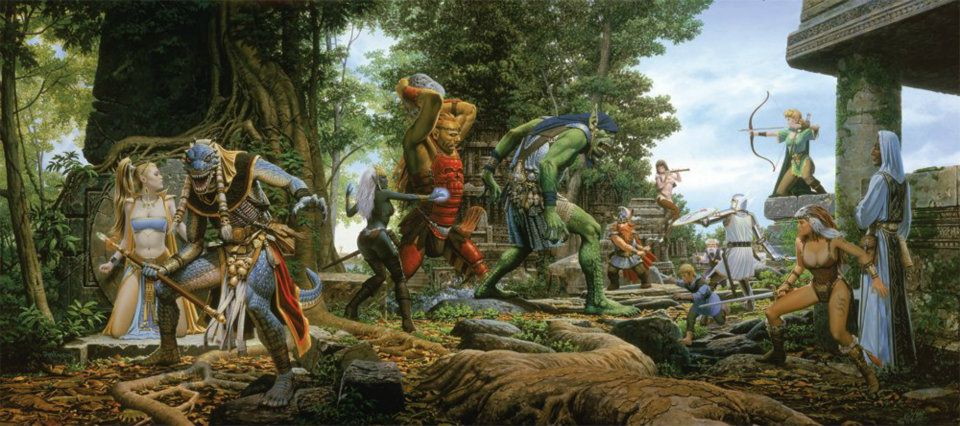
In a group, there should always be at least one damage dealer, such as a mage or assassin, one healer like a cleric, and one tank like the warrior.
However, there are also other classes like debuffers, who weaken enemies, buffers, who strengthen the party, and CCs, which are crowd controllers that can hold a whole group of enemies at bay.
5-member groups give players the opportunity to experiment without compromising the Holy Trinity. This means damage dealers, healers, and tanks are already included, and further classes can be tested to see how well they help to master the challenge as effectively as possible.
Reliability and flexibility desired
It’s all about randomness: The two free spots are often referred to as randoms. These are essentially places that can be assigned randomly. Additional healers or tanks, or damage dealers as well as CCs, buffers, or debuffers are welcome.
Groups naturally pay attention to ensuring that the composition fits the dungeon that is about to be entered as closely as possible. If the dungeon is designed by the developers in such a way that groups with more tanks have better chances, then one random spot will be filled with another tank. If damage dealers are advantageous, then one of those will be added.
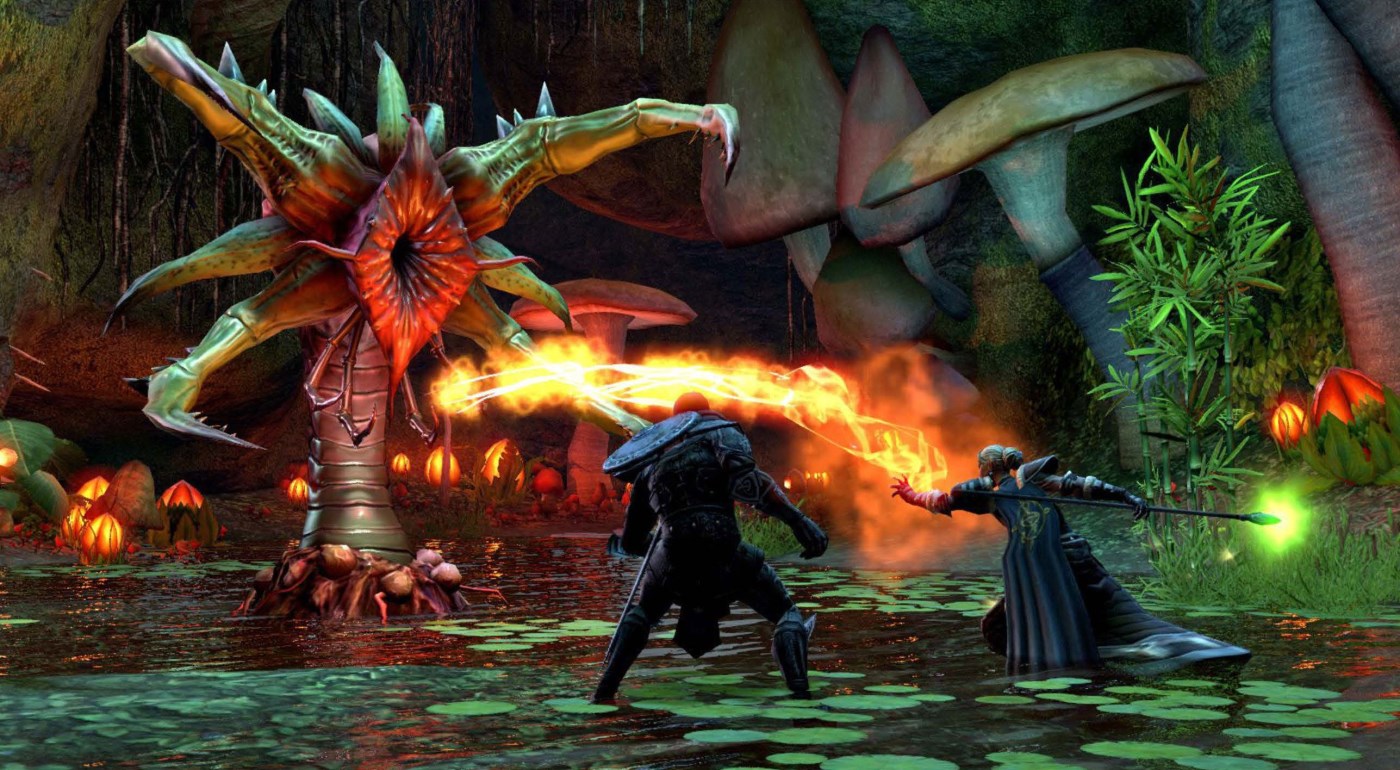
This makes the groups flexible. The Holy Trinity remains intact but can then be expanded by the classes that are needed for the specific content.
However, that doesn’t mean there aren’t other group compositions. MMORPGs still offer raids for significantly more players. Some dungeons in online role-playing games are also designed for small group sizes of 3 to 4, and even solo content is not uncommon. After all, there should be variety.
5-member groups simply provide security combined with a certain flexibility and also a tactical approach. Because there can’t be two of every class in the party, it has to be carefully considered how the group should ultimately be composed. And for developers, they offer a good way to balance the content correctly since 5 players are simply manageable. Therefore, 5-member groups just make sense for dungeons in MMORPGs.
Do you want to know what the first MMORPG ever was? We’ll tell you.

Your opinion is important to us!
Do you like the article? Then let us know!