

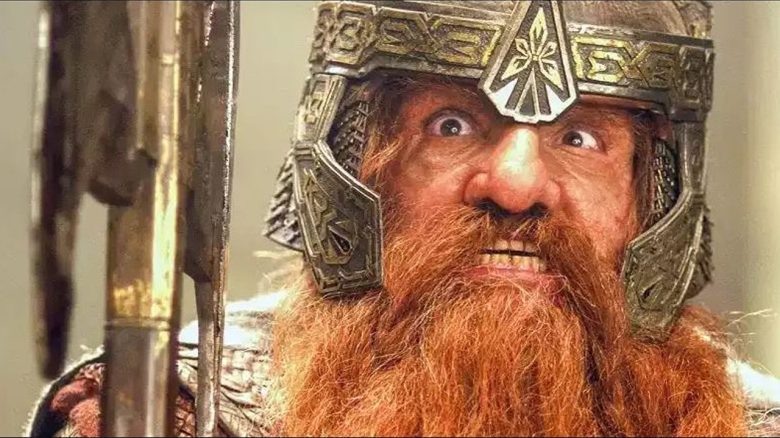
Whether Dragon Age, The Witcher, or World of Warcraft: Dwarves are a staple in most fantasy settings. And almost always, they are excellent blacksmiths, stonemasons, or otherwise masters of a craft. But why is that? There are ancient tales behind it.

Dwarves. The small, humanoid people from the mountains. Often depicted with full beards, stamina for drinking, and pride as great as their broad shoulders. And as stubborn as few other peoples. The obstinate tank in every MMORPG? Usually a dwarf.
These mostly small and stocky fellows are not only robust, grumpy, and bearded, but often above all: masterful blacksmiths, virtuoso stonemasons, and nimble with all kinds of tools.
Even Tolkien portrayed the craftsmanship of the dwarves in his Lord of the Rings as perhaps the best in the world. With that, the writer refers very precisely to the origin of the people, which traces back to Norse legends.
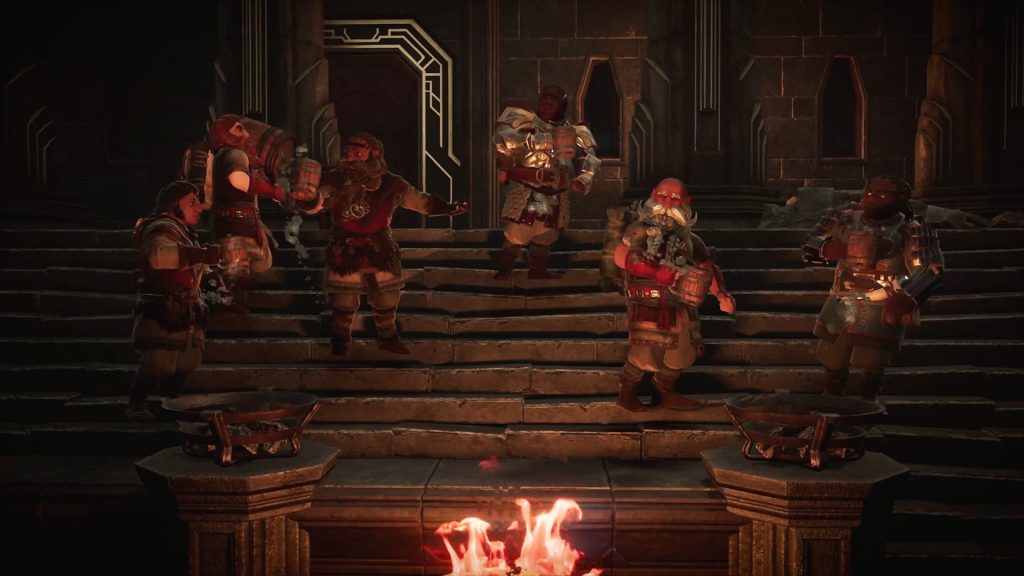
Tolkien’s dwarves are even the inspiration for an entire game, Return to Moria:
Dwarves are literally the flesh of the primordial giant
Like so many other things we encounter today in various forms, especially in the fantasy genre, dwarves also have a connection to or even their origin in Norse mythology. This was recorded and disseminated in the Edda – collections of ancient Norse tales, legends, and poems.
There are accounts of creatures living underground in Svartalfheim (i.e., the Home of the Dark Elves
) who were said to be completely black on the outside. Literally translated, dwarves are actually Dark Elves
– though the old word for elves can have multiple meanings and the kinship to the elves we know is disputed.
The dwarves, who were said to have sprung from the flesh of the giant Ymir, were close to the gods. Respect was not uncommon. However, there were also those who shamelessly exploited the craftsmanship of the dwarves to enrich themselves with the results or to possess better weapons than the other deities.
Every result a critical success
Dwarves possess great wisdom and besides their craftsmanship also have magical powers. They often made use of these when forging weapons and jewelry. Items that were not meant for just anyone, but for none other than the gods themselves.
And when the clientele consists (almost) entirely of deities, it becomes clear that only goods of the highest quality will suffice. Thus, the dwarves had no choice but to forge day in and day out.
It is no wonder that they further improved their already – in the truest sense – god-given abilities. And some of their works can still be found in many different entertainment media today.
Also very well-known is the spear of the Allfather Odin, Gungnir. The dwarves infused it with particularly powerful magic during forging. This made it a weapon that caused terrible storms not only when swung. Whenever Gungnir was thrown at a clear target, it hit it every time without exception.
Of course, there were not only weapons. Among the wonders of the dwarves were also Freyja’s necklace, the Brisingamen, and the ship of her half-brother Freyr, Skidbladnir.
The modern dwarf and their traces
Diverse weapons and other items made by dwarves have found their way into our favorite medium in various ways: Video games. But what about the dwarves themselves? Where and how do we encounter them in all the games that have been inspired by Norse mythology?
One of the oldest franchises that still receives new content today and where dwarves play a role is Warcraft. In the strategy game Warcraft 2 from 1995, dwarves are part of the playable humans. The old Warcraft titles have been re-released as remasters by Blizzard in 2024.
World of Warcraft (2004) was one of the first games where you could even play as a dwarf. Although you started back then in the city of Ironforge, Blizzard had already previously devised a lore with clans, conflicts, and stories.
J.R.R. Tolkien and his influence on gaming
Dwarves are such a popular motif in gaming, that there is now a dedicated Dwarf
-category on Steam, where only dwarf games may be categorized. Valve initially resisted, but dwarf fans are indeed stubborn.
The most shaping type is, however, none other than the dwarf created by Tolkien. In Return to Moria, you play as a dwarf who must dig himself out again after a disaster – preferably without waking up anything from the depths
.
Return to Moria lets you experience Tolkien’s version of dwarves in detail and shows you their blacksmithing and especially their stonemasonry. You discover submerged cities that are only briefly touched upon in the film.
Dwarves have been part of many games with (high) fantasy settings for over 40 years and have been interpreted in different ways for just as long. This back and forth is by no means limited to games. Dwarves have been in constant evolution regarding their nature depending on the era, religion, and culture.
From vile miscreant to friendly blacksmith next door
Over the countless centuries since their first mention, many different characteristics have been attributed to dwarves. After their glorious time as the blacksmiths of the gods, they often symbolized evil and treachery. They were once said to be deceitful creatures who spared no misdeed from mean tricks to child abductions.
For a long time, they were mistrustful and greedy beings, who spared no effort to enrich themselves. Sharing with others rarely crossed their minds. Especially not if those others were not dwarves. The dwarves placed a curse on their treasures so that they transformed into ordinary stones as soon as the thieves arrived home with them.
Then there were the times when they were the nice little helpers in fairy tales – and thus the complete opposite. The almost naively kind dwarves who, out of pure altruism, gave shelter to Snow White, without receiving anything of equal value from her first.


One way or another, they were often reduced to a minimum that was little more than a nearly interchangeable addition. They neither served the gods nor kings nor possessed any noteworthy powers of any kind. For simplicity’s sake, they were stripped of their character depth.
Only with Tolkien’s stories “The Hobbit” and “The Lord of the Rings” did dwarves become more dimensional characters who played a central role. This version of the small people would later serve as a blueprint for nearly every fantasy dwarf. Whether for novels, films, or video games, Tolkien’s version of the bearded dwarf, closely resembling the Nordic original, remains the prevailing archetype to this day.
What type of dwarf are you, and who is your favorite dwarf or favorite dwarf woman?
If you ever find yourself in the situation of having a grilled dwarf in front of you, it is questionable how you got there, but at least one gamer could not resist the temptation to try: A player accidentally eats a dwarf in Baldur’s Gate 3, is surprised by the result

Your opinion is important to us!
Do you like the article? Then let us know!