How much Multi Massive Online would you like, please?
MMO(G)s are designed for group players, that is no question at all!
– Right?!?
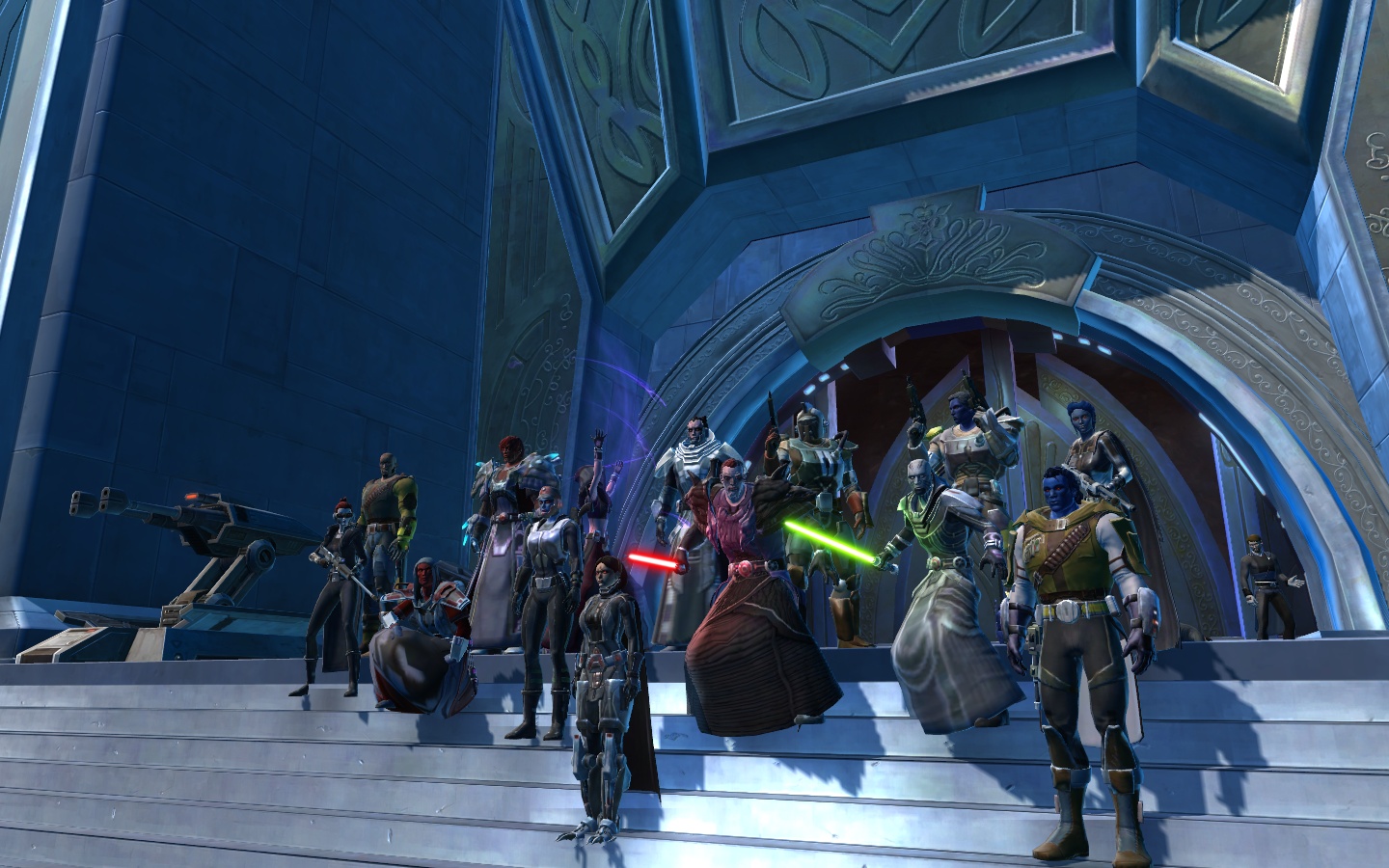
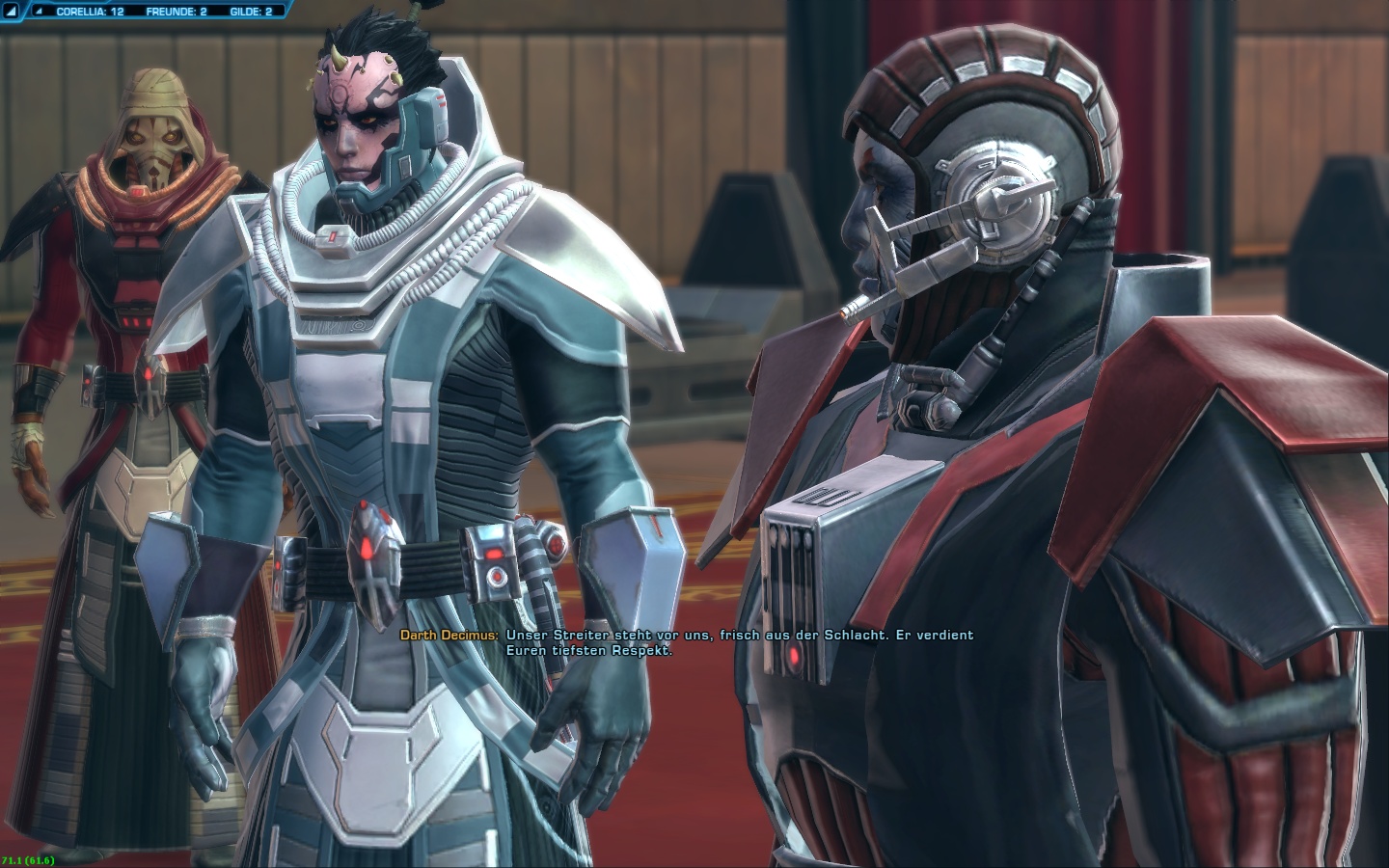
Yes, that is a valid question that can be asked, and it must be asked! For gamers who enjoy playing solo and want to experience a really good story like in Mass Effect or The Elder Scrolls, it is often recommended to stick with the single-player game. However, much to the delight of many gamers, online games are also becoming better at storytelling. For example, Star Wars: The Old Republic can be wonderfully experienced as a solo player as well. Great class stories are told here, and the player can participate interactively. The game offers countless hours of fun for solo players and the option to experience great group content. A must for Star Wars fans; for everyone else, give it a try! It’s already free-to-play! 😉
But what does the combination of solo and MMO gaming lead to? Of course, it creates added value for all players, but it also means that players who are fundamentally single players now stream into online worlds, and they often have nothing against experiencing some content together with others. Why not?
However, in numerous fixed groups (guilds, teams, clans, etc.) there is already a typical topic of contention – how much and what kind of MMO does each player want, and to what extent can their ideas be reconciled with those of the group?
YOU are the leader! Group harmony is your task!
Finding the right balance is your task! You are the leader or perhaps one of his deputies, a council member, maybe an officer. It could be that you don’t really care whether all your group members are satisfied, but then that wouldn’t really be the purpose of a group. Successful gaming requires a significant degree of group harmony, and let’s presume for now that you are interested and your group has this harmony for whatever reasons.

Back to the problem: Some in your group absolutely want to participate in end content, meaning they want to tackle and master the usually most difficult content (e.g., raids) in a reasonable time. A second subgroup of players only wants to engage in group content like instances, dungeons, or team PvP occasionally and “in a casual setting.” A third department, on the other hand, might occasionally like a group event but is not keen on engaging directly (Teamspeak or whatever) with you.
And you? Yes, you are the one who has to somehow bring all these different visions together without (and this is very important!) losing your own enjoyment of the game.
Do you HAVE to do that? No, you actually don’t have to at all. But what you should do is to set a direction together with your group for where the shared journey should go. Clear conditions keep all parties from disappointment. However, too many rules and regulations can scare off players – it’s about finding the balance here. Nevertheless, rule number 1 in this case is: clear announcements.
If the group is particularly interested in intense end content gameplay, then newbies and casual group players, as nice as one might want to be, are often not well-suited and should (in most cases) be categorically excluded (for your and their benefit). The disadvantages: Recruitment from your own ranks essentially doesn’t take place, and some nice and actually well-suited players may be sustainably scared off. Advantage: The skill level of the group remains relatively constant, and the group becomes a more cohesive team faster.
[pull_quote_left]We accept all players![/pull_quote_left]
Okay, “categorically excluding” sounds a bit harsh and doesn’t sound particularly harmonious. True, for groups that are about “hard at the limit”, gaming is much more than just amusing entertainment – it is competitive sports. Therefore, those who don’t like that should leave the supposed pro gamers among themselves. Play how you want! Intense group gaming, as long as the harmony is right, is really fun, but it’s just not everyone’s cup of tea.

Well, that’s nice and good, but you and your group don’t want to commit too much and provide a base for all player types – this has numerous advantages, as the pool of players you sympathize with is logically much larger than with more limiting requirements. It would be important to instill this maxim in every newcomer: “We accept all players!” Anyone who joins the group now knows that the community can accommodate any type of player. This neither excludes a successful PvE endgame or PvP group nor interesting role-playing events. However, it means that different types must get along, and the group leadership, which is striving for harmonious coexistence, should pursue a somewhat sensible strategy.
A sensible strategy for group harmony?
Yes. Let’s assume your group has exactly these three factions: players who are primarily interested in PvP, those only focused on PvE end content, and let’s say a handful of role players who enjoy meeting in the tavern and acting out their characters. Of course, there are numerous players who utilize all aspects of an online game, but in our example, the fronts are already a bit hardened. So, what to do?
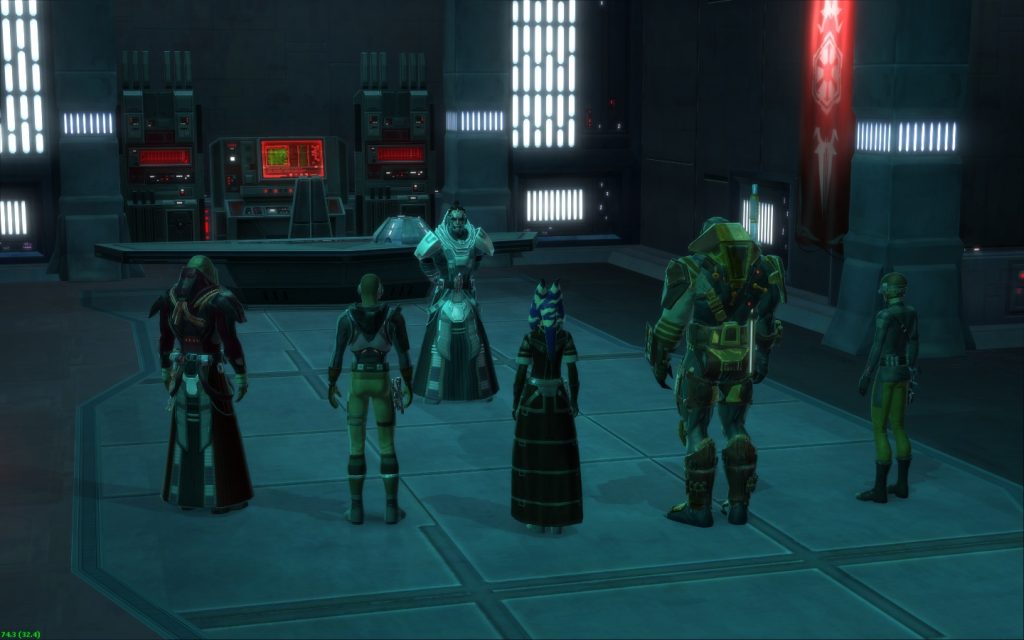
The answer to the question depends, how could it be otherwise, on factors such as group size, the respective faction size, and the engagement of your co-leaders (officers, etc.). The latter hints at the ideal solution. As a leader, you should engage with all three subgroups and ideally even be part of each faction. However, since you want to play too, it is simply sensible to share responsibilities.
In nearly every social group, an informal leader emerges sooner or later. This is not necessarily the actual leader of a group but the one whom most others listen to – this can have various reasons (e.g., social or professional competence). Following this principle, such a leader will also crystallize within your three factions. In many cases, it is simply one of the more experienced players. You grab that gamer and make him the faction leader of his interest group, for example, a PvP general in your guild. The advantage is that he has already informally led his faction, and since you have now entrusted him with this responsibility, he (if he wants to) will take on this task enthusiastically. Moreover, an alternative leader no longer has to assert himself against the informal leader, which can minimize tensions. You, on the other hand, demonstrate leadership competence to other members by making him the faction leader, as most would have elected him anyway. The solution doesn’t always work out, of course, but it is a sensible approach.
The actual division of responsibilities ensures that each interest group now has a direct contact person who belongs directly and can work on their concerns within the group. If the entire group or one of the subfactions is large enough, new subdivisions may be sensible. For example, one player could lead the PvP group, another train new recruits, and yet another organize the supply for the faction (potions, boosters, etc.).
Regular meetings of the individual factions help organize overarching themes and events and clarify tensions between individual interest groups.
First conclusion (as far as it goes):
In summary, the diverse types of players can be quite well brought together with a somewhat thoughtful strategy. However, it can also be part of the strategy to directly forgo certain types. Sounds a bit harsh, and nice is known to be the little sister of… uh, what I want to say is, clear announcements made collectively help all members and those who might want to join or those who no longer want to (and whom you don’t want anyway). *puhh*
More information and interesting facts about the MMO group will follow in any case soon. If you liked the article, feel free to share, love, and comment.
With that said, may you lead a harmonious group or simply help shape one!
Your MMO-Ultraübermegametagruppenchiefcommanderhäuptling (short and sweet MMO-UÜMMGCCH) Björn 😀