


Video games fascinate many people all over the world and are – in our case – even our work. We at MeinMMO asked ourselves: Why do we play at all? Two researchers from the University of Konstanz tried to answer this question for us.
Whom did we ask? The question “Why do we actually play games?” has been on our minds for quite some time. To answer it, we sought help from science: from Dr. Markus Spöhrer and MA Harald Waldrich, who work and research in the fields of media studies and games studies at the University of Konstanz.
Dr. Markus Spöhrer has been giving seminars on film and media theory since 2012 and has also been advocating for games studies in Konstanz for several years. One of his research focuses is theories and methods of digital gaming. He is a co-founder of the student group “Gaming Uni Konstanz” and a member of the research project “Media Participation.” He regularly offers seminars on gaming.
Harald Waldrich is a research associate at the University of Konstanz in the field of media studies with a focus on gaming. Since 2018, he has been pursuing a PhD in this area, giving lectures and seminars on gaming, and is also a co-founder of the gaming student group.
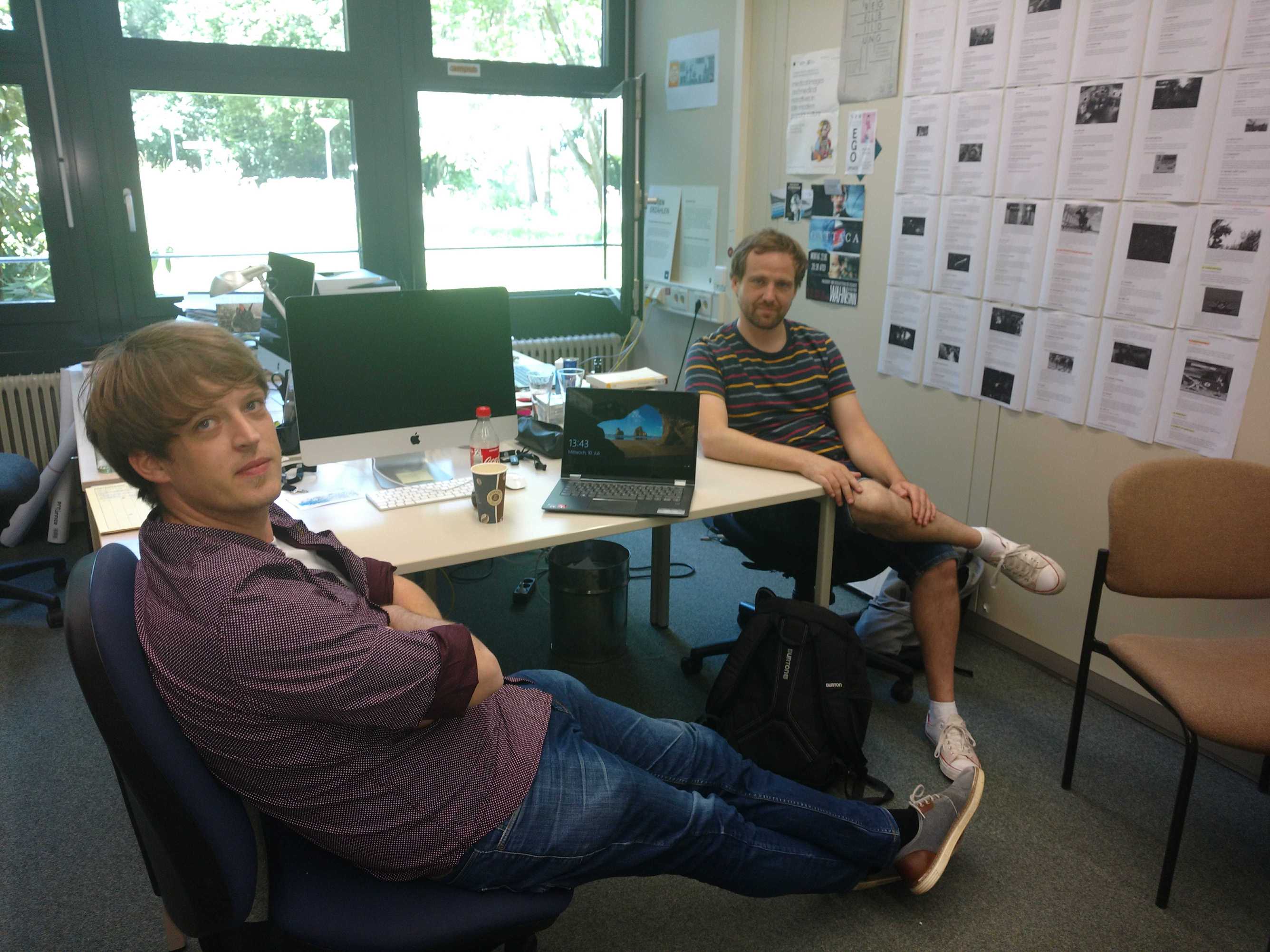
The following text is by MA Harald Waldrich with Dr. Spöhrer as co-author. Editorial editing was done by Benedict Grothaus. Contextual inserts for better clarity were added, formulations were changed for better understanding, and images were included. Content-wise, nothing was changed.
What playing is about
What do Battlefield, chess, and Lego have in common? They are all games! Even though there are many differences between these games, they are very similar in their core as a game.
They are games that are played and thus bring us to play and make us players. It is this playful moment that is common to all games, however different they may be, and to all players.
At first, it doesn’t matter what purpose playing serves and what value and reputation it experiences socially. It is solely about the fact that we all play. Playing connects us, it connects young and old, it connects strangers, it connects friend and foe.
Why is that so? What is it about playing together that captivates us for hours and makes us forget the time? Why do games have such an effect on us that they can frustrate or elate us? We want to get to the bottom of these questions.
What is playing at all?
A definition of “playing”: Playing is much more than mere entertainment for passing the time. Playing is a process and a dynamics inherent in us humans. Playing is part of us. A need like social contacts, affection, eating, and drinking.
Friedrich Schiller already reflected on playing and its functions for humans. He came to the conclusion: “Man plays only where he is fully human in the full meaning of the word, and he is only fully human where he plays.”
Schiller’s statement is mainly about freedom in playing, which we can all experience. Even if games are clearly defined and limited by rules and playing fields, our actions in the game are free from the consequences in everyday life.
This is how scientists define “playing”: This opinion was also held by the Dutch anthropologist Johann Huizinga, who made an important contribution to game theory with his book ‘Homo Ludens’ (“The Playing Man”).
He describes, among other things, the often-quoted magic circle (engl. magic circle), into which the players enter and in which the game takes place. In this magic circle, there are its own rules and goals. Our actions are determined by this playing field and serve no purpose outside the game; they gain their meaning within the game, allowing us as players to be freed from external constraints.
However, Huizinga goes a step further with his book. Already with the title, he presents a very specific concept of humanity. The playing man (Homo ludens) stands in direct contrast to the working (Homo oeconomicus) and the creating human (Homo faber).
For Huizinga, playing is a fundamental characteristic of humans and all culture. This means that according to Huizinga, wherever there is culture, there is play. Culture, in turn, is wherever humans are. At this point, the circle closes back to Schiller. Where playing occurs, man is human, and where man is human, playing occurs.
What does this mean? This might all seem a bit confusing and complicated at this point. We want to try to explain this point again in other words. Playing is a distinct way of human existence.
It is a unique dynamics and category that is inherent in us and which we can find in all areas of our lives. It primarily concerns the idea that the playful dynamics opens up the space for movement.
This movement is shaped by certain rules; however, the central moment of playing is the openness and the possibility that something unforeseen can happen.
Despite all the statistics and calculations, no one would have expected that Brazil would lose 7 to 1 against Germany in the semi-final of the World Cup in front of their home crowd.
Why do we play now?
This is what is interesting about the game: It is precisely this openness of playing that also carries a very productive potential from which new things can arise. Thus, new games can emerge in playing, just as the playing human continually develops and learns new things.
Perhaps it is also precisely this aspect that is why children are showered with toys at every opportunity and are observed playing under the proud eyes of their parents and grandparents. When children play, it is good, as it has a positive effect on their development.
For adults, this is usually overlooked and is broadly negatively connoted, because those who have time to play are not working. This raises only the question of the justification of this judgment.
The special thing about the game: Why should adults not develop and not play anymore? Playing is something unique. It is a phenomenon we can partake in, that lets us be human and gives us the opportunity to do unique things.
Playing is freedom and development. It encompasses all facets of our being. Playing surprises us, can move us to great deeds and motivates us to keep playing and to continue. Here, another important aspect of playing can be observed, which we want to explain briefly at the end.
Why do games motivate us to keep playing?
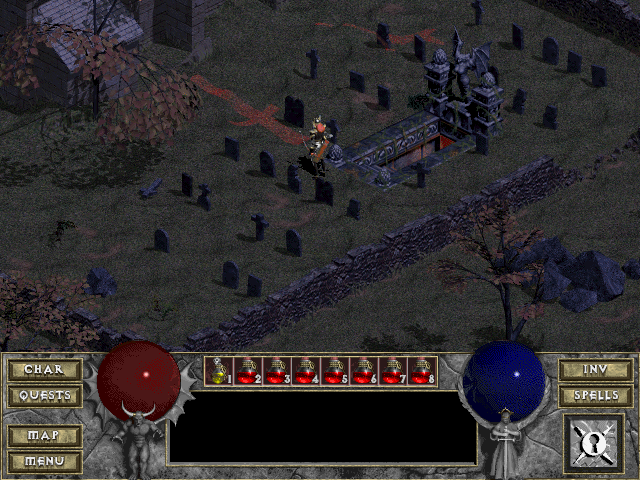
This is how games lure us: In games, one can ask the questions: Is a game that motivates us a good game? Why does the spiral of “looting and leveling” work so well and lead us to invest hundreds of hours in some games?
A possible answer to this is offered by the “flow theory” of retired psychology professor Mihaly Csikszentmihalyi. The flow theory describes “flow” as a state we enter when our challenges align with our abilities and can be accomplished.
If the tasks presented to us are too high for our abilities, frustration results. On the other hand, if the corresponding challenges are too easy, our abilities are not challenged, resulting in boredom, which ultimately also leads to frustration.

This is why we keep playing: Thus, it is about reaching that flow. A player in flow is inclined to keep playing, as they receive a reward that is exactly as large as is appropriate for their abilities. They feel affirmed.

At this point, it must be mentioned that Csikszentmihalyi did not develop the flow theory as a game theory, but applies it to the lives of individuals. However, over the years, the theory has also gained many advocates within game studies and the gaming industry and describes quite well what excites us about playing.
As a conclusion from the text by Dr. Spöhrer and Mr. Waldrich, we find that …
- we play because we are rewarded in a certain way.
- we play because humans can be free and creative while playing.
- we play because it has been encouraged and accepted since childhood.
- “good games” offer just as much challenge as we can handle, which motivates us.
- we play because we can satisfy our primal need to interact socially with others.
Did you enjoy the article?
Now the question to you: Did you find this scientific article interesting and would you like to read more of it? Or is this not at all your thing? Vote!
If you cannot see the survey, follow this link to the survey.
We would also love to hear in the comments what topics you would like to learn more about.
If you now feel even more like playing, we have a few recommendations:


Your opinion is important to us!
Do you like the article? Then let us know!