A tech expert examined how quality water coolers are constructed. His conclusion: half of the products fail. At least one product is highly recommended, while another contains a banned amount of lead.
Water coolers or AIOs are particularly popular among enthusiasts, as they generally provide better cooling than pure air coolers.
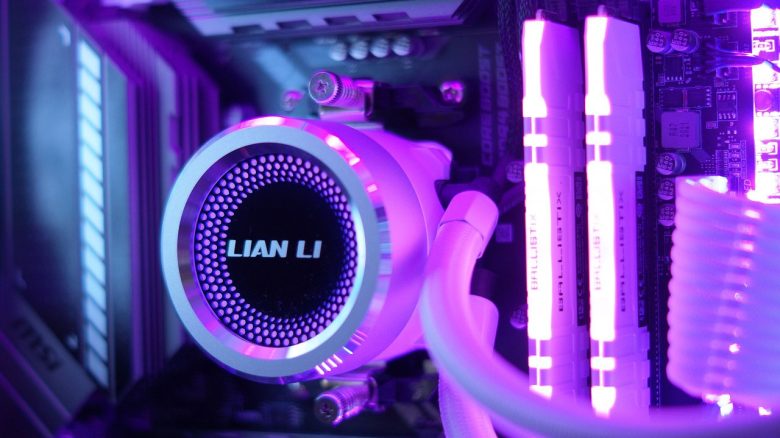
The AIO liquid cooling is a closed cooling system that consists of a pump, a radiator with fans, hoses, and a special coolant. The user only needs to install the system in their gaming PC with relatively little effort.
Igor Wallossek, a well-known hardware expert, has now examined half a dozen AIO coolers. Users complained about clogged pipes or strange corrosion. The expert notes that manufacturers are using significantly cheaper materials than officially stated.
Brass alloy instead of high-quality copper
What did the expert examine? With a grinding machine and a milling machine, he examined the materials that manufacturers use in their cooling elements. He paid particular attention to what the manufacturers specify as materials. He focused his investigations on pipes, screws, nuts, solder, operating fluids, and other things. You can read the entire test, spanning 8 pages with all details and measurements, directly at Igorslab.de.
It is also important to note that he did not test the cooling performance, but only the material composition. So what is promised to the customer, and what is actually included with advantages and disadvantages in their home gaming PC. He tested the following products:
- Alphacool NexXxoS ST30 Full Copper X-Flow 120mm
- Aqua Computer airplex radical 2/120, aluminum fins
- Bykski CR-RD120RC-TN-V2, D30 V2 Full Copper
- EKWB Quantum Surface P120M – Black
- Hardware Labs Black Ice Nemesis GTS – 120 Xflow
- Watercool HEATKILLER RAD 120-S Black
This is what he found: In his tests, he had to find out that half of the brands sold coolers made with cheaper materials than those specified, with the most common example being the alleged use of copper, while in reality it was a copper-zinc alloy similar to brass. Even a well-known premium manufacturer like EKWB performed poorly in the test.
The problem is mainly that manufacturers advertise significantly higher quality materials than what ultimately ends up in the sold product.
In one tested model, a high lead content is even present, which is banned in Germany at that level.
However, there is also a silver lining: the manufacturer Aqua Computer does everything right with its cooling product and accurately discloses the materials used.
Sloppiness and Negligence in Quality Management
What is his conclusion? In his conclusion, he addresses primarily the manufacturers of the products. He stated that many manufacturers need to invest more time in their quality management and cannot rely on their intermediaries during inspections and tests. He views the inaccurate material descriptions as negligence, not as intentional misrepresentation by the manufacturers:
I do not understand the whole lot of suppliers who lack minimal quality management and who rely solely on the OEM instead of conducting genuine spot checks and tests. I do not even assume intent, just nonchalant negligence or even laziness.



Those looking to upgrade their gaming system can either buy new or used hardware. In particular, used hardware can often save money and sometimes yield real bargains. Due to high prices, even old graphics cards are currently worth a lot of money.
But what about high-end hardware that is a few years old and is no longer receiving updates or drivers? An expert recently conducted a test and bought old high-end processors and compared prices: Expert explains why old high-end processors can become a real trap for you