

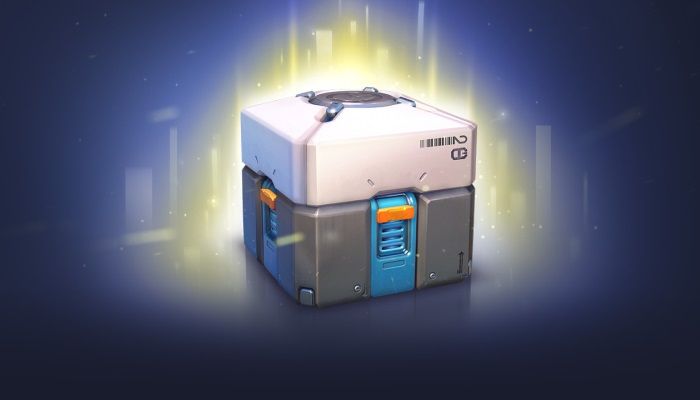
A law has been enacted in China making RNG Lockboxes more transparent.
“RNG Lockboxes” are a game mechanism found in online games. They appear in numerous variations and colors, carrying different names. In principle, they function like a gumball machine did in the past: You put in money and get something. But you don’t know what it is: Is it the grand prize you are hoping for, or do you get a consolation prize, a dud, a gumball?
Numerous online games use such “loot” boxes that players can purchase with real money. In some games, they can also be obtained through actual gameplay. In other games, the lockboxes are available for free, but keys must be purchased to open them.
Publishers make a fortune with such boxes
Especially in Asian free-to-play games, such “RNG Lockboxes” are popular. They come from the “Pachinko” tradition – these are machines that work mechanically based on such a “luck principle”.
But Western games also rely on such mechanics. The Elder Scrolls Online recently introduced it. Games like Overwatch or League of Legends make a fortune from this. More and more games, even successful ones, are implementing these mechanisms retroactively.
YouTubers reach a huge audience with videos in which they open countless such boxes.
One could argue that games like FIFA 17 or Hearthstone depend on this mechanic. After all, players buy a “card pack” not knowing whether the grand prize or a dud is waiting for them.
China now forces video game publishers to disclose probabilities
The Ministry of Culture in China has now issued a rule requiring publishers of online games to swiftly publish accurate information about their virtual items and services, including names, probabilities, quantity, and content.
Probabilities should be displayed on their website or in-game. It should be clear what chance players have of obtaining which items from these mechanisms.
It will be interesting to see whether a similar law will come to the West. EA would then have to disclose the probability of obtaining a Ronaldo in a card pack.
Hearthstone: Blizzard cheats with card packs – distribution is not as random as thought

Your opinion is important to us!
Do you like the article? Then let us know!