

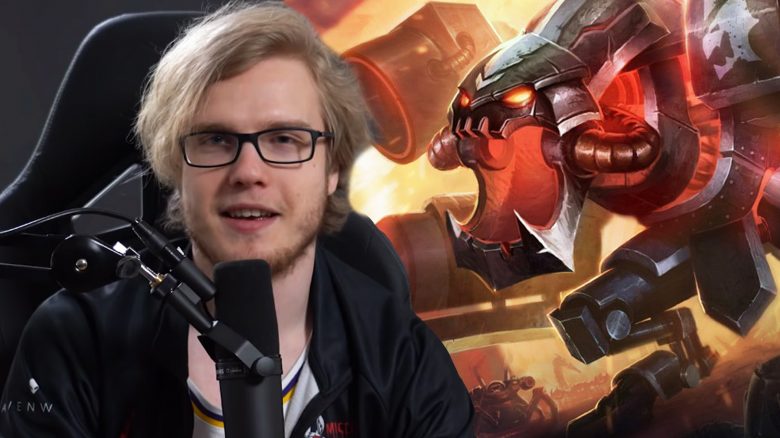
The German LoL pro Amazing talks about online hate on social media and how it changed him as a person in ways he didn’t want to be.

Who is it about? The 26-year-old Maurice “Amazing” Stückenschneider played as a pro in League of Legends (LoL) for years. He is currently a coach for Team Misfits. In an interview with Invenglobal, he discusses his experiences with online hate and the problems that a public pro career brings.
“That made me a vengeful, angry person […]”
This is why he speaks about it now: Recently, Amazing posted a tweet stating that many do not understand what e-sport players go through day in and day out. It’s often forgotten online that behind the usernames on the screens, there are real people.
The tweets came as part of an initiative by Schalke 04. The club put the topic “Mental Health” on the agenda and raised funds for the “Robert-Enke” foundation, which is dedicated to researching depression, among other things.
In the interview with Invenglobal, Amazing explains that generally, things that take place behind the scenes are often addressed. Now, having gained a different perspective on such events as a coach, he feels it is the right time to talk about them.
These people who are after me
This is how it changed him: In 2014, Amazing switched from the European team “Copenhagen Wolves” to the North American team “TSM”. The jungler TheOddOne had just parted ways – he was a founding member since 2011 – and Amazing took his spot. In League of Legends, TSM is a significant name with a huge fan base. All eyes were on the new German jungler and what he would deliver in this team.
As a new player in North America who did not perform strongly right away, he had a hard time. “I was an easy target at that time.” Online, he had to read a lot of criticism and comments. This was completely new for him when he built his social media presence.
“[…] it was somewhat overwhelming for me. Especially the criticism that came in such harshness.” He became somewhat cynical, maybe even angrier, Amazing explains. He had the thought: “I have all these people who are against me and completely negative, and I need to prove to them every day that they are wrong.”
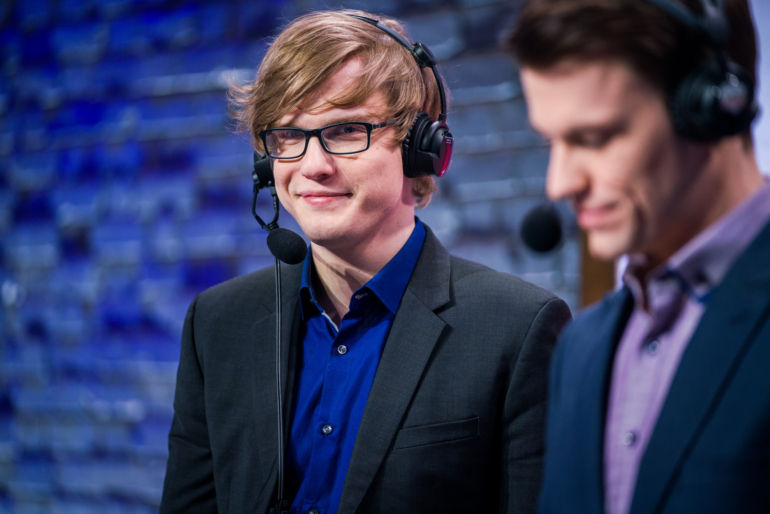
For years, this shaped his life. Only in 2016 did Amazing lose this thought when he finally felt he was the best jungler in the West. He thought he had finally proven it to everyone.
However, these thoughts returned later when he played in teams like Origen or Fnatic. “Then I suddenly had to prove to everyone again who I am and how good I am. The criticisms were loud and clear again.”
That made me a vengeful person, an angry person, honestly, to a certain degree, a despicable person. I don’t want to be that.
And I think with online criticism, you don’t deal with it as if they are strangers, but actually people who are talking to you.
If you see a Twitter profile of someone and they criticize you, you don’t think “Oh, that guy is just a Twitter profile”. Maybe you do that at first. Maybe once, twice, or three times. But when people send you direct messages saying “You are horrible, you are disgusting, kill yourself”, at that point you can’t deal with it as if it’s a stranger talking to you.
It gets really personal and that’s why it affects you.
Amazing in interview with Invenglobal.com
Why don’t pros just avoid Twitter? Now you might think as an outsider: Why do you create a public Twitter account when dealing with such silly criticism?
Amazing says he never really liked social media himself. Even when he started his career, he didn’t use it. Until 2014, when organizations like the Copenhagen Wolves or TSM forced him to. He had to use Twitter.
For many teams, it is part of the deal that players are encouraged to build an online presence. Players should be reachable and share something about themselves, as is the case on Twitter or other platforms.
A solution would be a social media manager to take care of these accounts. “We are not rich enough to hire someone to handle our social media. That’s not going to happen. Especially rookies won’t do it. They will interact with fans on a very personal level.” A LoL team once hired Satan as a pro-tweeter, who then got banned from Twitter.
While that wouldn’t always be negative, the negative comments are always louder than the positive ones. Especially when you’re not playing well yourself, that can be even harder.
You can watch the entire interview with Amazing here on YouTube.

The former pro player Wolf ended his career due to anxiety disorders. He regularly had to vomit before and after pro matches. At that time, he struggled with various issues such as depression or adjustment disorders.
He attributed some of the blame to the haters. While there were valid points of criticism, often it was just destructive.
LoL pro Wolf ended his career at 24 due to anxiety disorders.
While that wouldn’t always be negative, the negative comments are always louder than the positive ones. Especially when you’re not playing well yourself, that can be even harder.
You can watch the entire interview with Amazing here on YouTube.
The former pro player Wolf ended his career due to anxiety disorders. He regularly had to vomit before and after pro matches. At that time, he struggled with various issues such as depression or adjustment disorders.
He attributed some of the blame to the haters. While there were valid points of criticism, often it was just destructive.
LoL pro Wolf ended his career at 24 due to anxiety disorders.

Your opinion is important to us!
Do you like the article? Then let us know!