

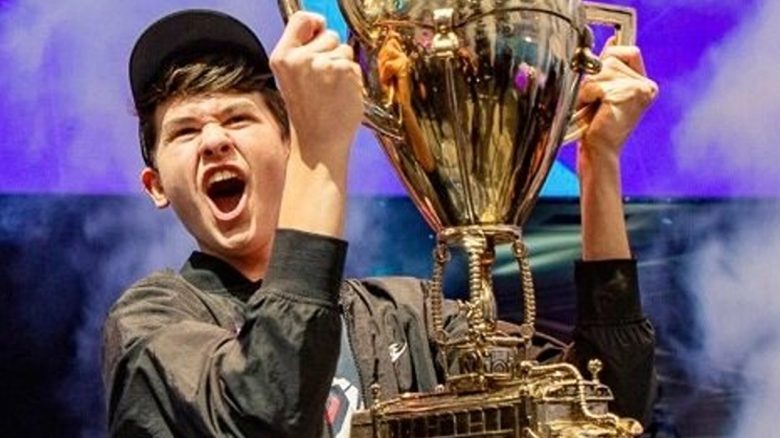
Five years ago, in July 2019, the World Championship in Fortnite took place: In retrospect, it was the peak of the Fortnite hype in e-sports, but the event left a bitter aftertaste and has not been repeated since. There are serious doubts about whether some people rightfully won their $17 million back then.
What an event it was back then!
- The Fortnite World Championship took place in New York from July 26 to 28, 2019.
- A total prize pool of $30 million was up for grabs.
- There were 4 categories: Solo, Duo, Creative Mode, and “Pro+Am,” a show match featuring streamers.
Why was it such an event back then? Those who qualified for the World Championship in Solo or Duo received $50,000 in prize money. The top 4 in Solo immediately became millionaires, with the later winner Bugha, who was 16 at the time, receiving $3 million in prize money.
But the qualification was tough, as millions were playing Fortnite at the time, yet only a handful of players were allowed from each region. Even big Twitch streamers like Ninja, who pulled all the strings, failed to qualify for the Fortnite World Championship.
Epic Games lowered the age limit for participation to 13 years before the World Championship, and veteran shooter pros like Ninja, who was in his late 20s at the time, had no chance against the underage competitors. The later second-place finisher Pslam was already a Methuselah at 24 among the participants.
He finished 14th in Duo and 25th in Solo: the Brit Benjyfishy
Everything revolved around the World Championship and qualification
How could one see the hype? Leading up to the World Championship, the qualification tournaments were always played on weekends. This affected the “rhythm” of Fortnite:
- In 2018, Fortnite’s viewership on Twitch fluctuated by weekdays: The key days were usually Fridays because the legendary community tournaments “Fortnite Friday” took place, but even a Monday was at times the strongest day of the week.
- Leading up to the Fortnite World Championship, everything was about qualification tournaments on Sundays.
The qualification worked in a way that players entered lobbies with “regular” players and had to accumulate as many points as possible by killing and surviving – a real rush, a hunt for the high score.
For months, people eagerly followed whether their favorite streamer could still qualify for the tournament. The matches were tough and competitive.

Players and viewers gorge themselves on Fortnite World Championship, are then satisfied
The effect of the event: The Fortnite World Championship itself went, at first glance, well. The viewer numbers were decent – e-sports seemed to be entering the mainstream.
But after the World Championship, the air was out of e-sports: Everything had boiled down to this central event for $30 million, players and viewers had almost played themselves into burnout with the months-long Fortnite qualification games, where everything was at stake, and after the Fortnite World Championship, the game lost its breath:
- In March 2019, Fortnite still had 101 million watched hours on Twitch.
- In July 2019, when the World Championship took place, Fortnite was still watched for 90.5 million hours.
- By September 2019, the number had dropped to 60.4 million hours – the hype was over.
Positively speaking, one could say: The hype around Fortnite was already waning in 2019, but the Fortnite World Championship kept it alive for a while longer. In any case, the end of the Fortnite World Championship also had a significant impact on Twitch.
This continued: Viewer numbers in e-sports declined, prize money shrank, and Fortnite only reached future highlights on Twitch with season highlights, i.e., the PvE events.
Great doubts about the integrity of the e-sports event in hindsight
This was the sporting problem of the event: What was never quite talked about: In retrospect, the format of the tournament proved to be a huge problem for the sporting integrity of Fortnite, as the winners were determined in matches where 100 players competed against each other – i.e., the best players in the world. All on one map. Everyone against everyone.
Fortnite was never designed as an e-sports title but was hastily brought up in a few months as a PUBG variant: Fortnite is a battle royale game that only offered e-sports because teams desperately wanted it in 2018.
The battle royale concept revolves around tension and show, where anything can happen at any moment. The goal is to entertain the viewers of a streamer, never was it meant to ensure fair competition.
Anyone who has played a battle royale knows how unfair it is when you land and find nothing, while the opponent comes rushing at you early with a shotgun.
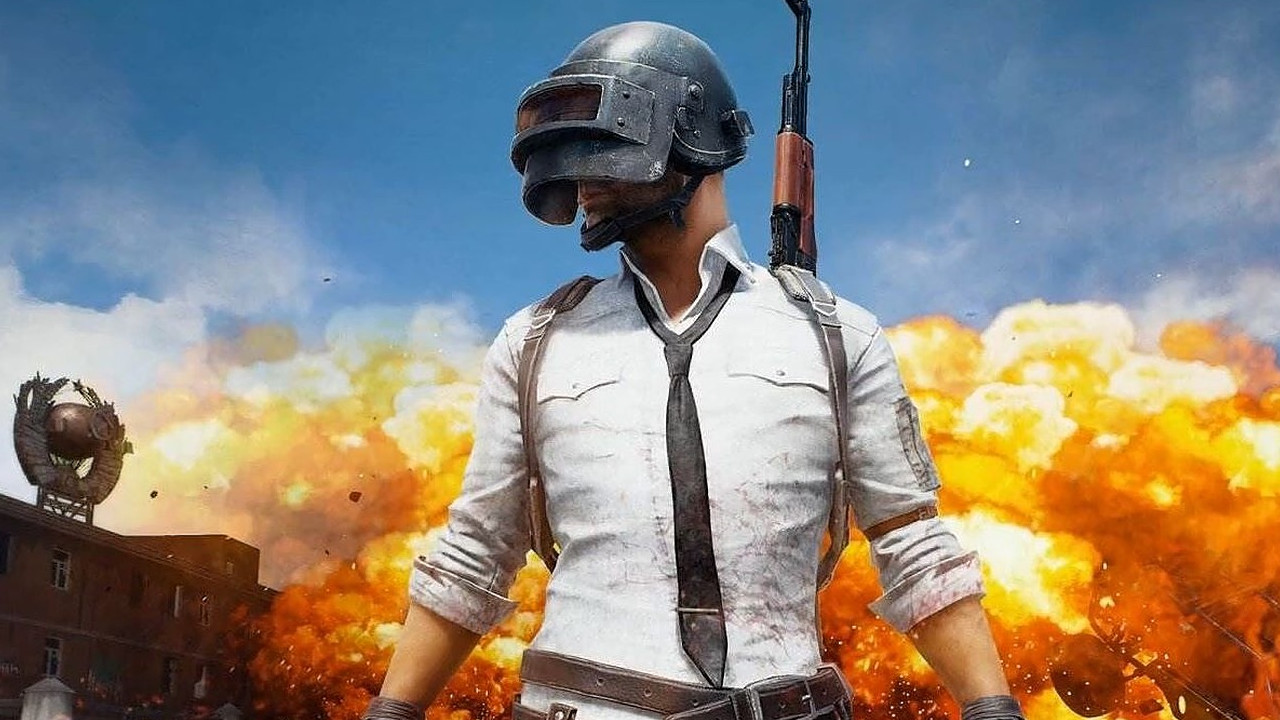
In e-sports, the problems become even more complex.
When 100 people play together on one map: How should one avoid manipulation? How could Epic Games prevent individual players from coordinating with the motto: “We’ll stay away from each other as long as possible so that we can survive long and collect many points.”
There are some indications that something like this happened before the Fortnite World Championship: A then 19-year-old coach Hugh Gilmour had trained a large part of the later winners:
According to his statements, people who went to him for “coaching” earned $17 million in prize money at the Fortnite World Championship: He trained the players who later placed 1st, 2nd, 3rd, and 5th in the solo tournament – and also teams 1, 2, 3, 4, and 6 in the duos.
These players knew beforehand that they would face each other in battle royale games at the World Championship – and all visited the same coach.
Why is that strange? If a coach trains a large portion of the later winners, one can speculate that something is not right and that there have been agreements over the paths to take.
It would be enough to recommend each player their own “landing points” so that they could stay out of each other’s way as long as possible in the match to gain a significant advantage. Maybe they would also be told where to go next after the landing point to avoid strong opponents for as long as possible: the loot routes.
This part of the Fortnite e-sport story has never really been clarified. No one has a real interest in looking into it closely, neither Epic Games nor the players involved.
Months later, in November 2019, the suspicion arose on Reddit that the coach had “not helped players through training” but by dictating the loot routes to avoid other players.
Even though this never really turned into a scandal, it stands to reason that Epic Games had its suspicions, as something like the Fortnite World Championship has never happened again.
Later, Fortnite implemented strangely appearing rules: In 2020, “jumping” was banned because jumping by professionals was seen as a signal: “Don’t harm me, and I won’t harm you either.”
Fortnite completely buried the World Championship, never revisiting the idea
These are the aftereffects of the Fortnite World Championship: To put it bluntly: maybe Epic Games found the 2020 pandemic quite convenient, as it provided a good excuse not to hold the Fortnite World Championship on-site in 2020.
Even when the issues with the COVID-19 pandemic eased, no event even remotely close to it ever returned.
The e-sports of Fortnite switched to online tournaments starting in 2020 and never returned to that level.
Many pros from the “golden age” switched to Valorant for a long time. Fortnite has drawn attention in recent years through PvE events; there is barely any talk of e-sports anymore.
Many of the then winners of Fortnite switched games conspicuously early or ended their careers outright:
Fortnite: Austrian became world champion and millionaire at 17 – Ends career at 21

Your opinion is important to us!
Do you like the article? Then let us know!