

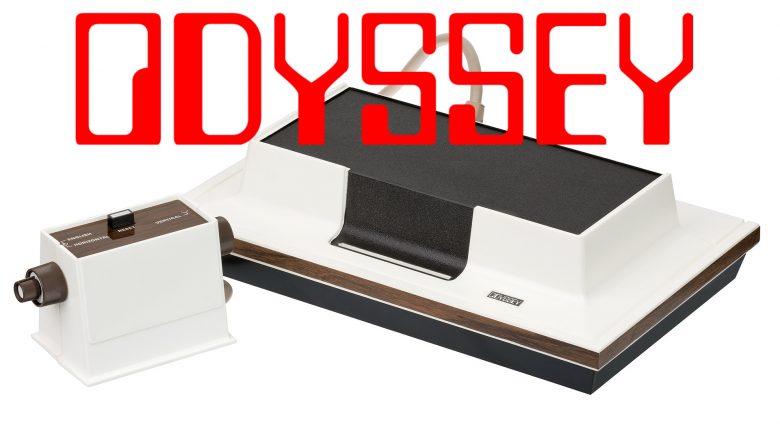
The Odyssey Magnavox is considered the world’s first commercial video game console and is certainly unknown to most people. MeinMMO introduces you to the world’s first console and explains what made it special.
In times of 4K-capable consoles such as the PlayStation 5 and the Xbox Series X, equipped with super-fast SSDs and enormously powerful processors, it is hard to imagine how unbelievably modest the beginnings of video game consoles really were.
For those who today see the Atari 2600 as a crude piece of hardware and a relic from a distant past, it will be shocking how unbelievably minimalistic the first home-use video game console in the world, the Odyssey, actually was.
This was developed under the leadership of Ralph Baer and subsequently produced in a slightly modified form by the electronics manufacturer Magnavox.
The first video game console ever: the Odyssey by Magnavox
How was the Magnavox Odyssey created? Perhaps some of you are familiar with the name Ralph Baer; after all, he is regarded as the “father of video games.” Already in 1966, the television technician who emigrated to the USA developed the prototype of the later first console, the so-called “Brown Box.” With this add-on for televisions, he aimed to make interactive TV games accessible for every household.
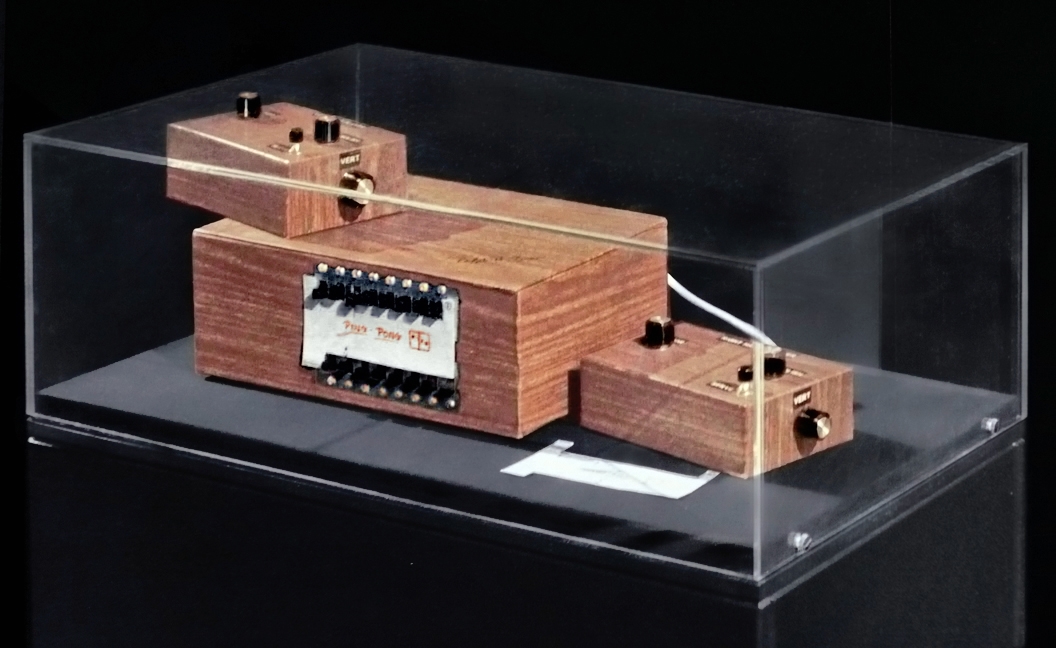
In January 1971, the Brown Box was licensed to Magnavox, one of the largest manufacturers of televisions at the time. The engineers there made some modifications to the prototype, mainly to reduce production costs, while the game ideas from Baer and his team were largely retained. These included, for example, a chase game and a ping-pong game.
In the spring of 1972, the modified Brown Box was introduced to the public in the USA under the name Odyssey as the first commercial video game console.
Among those present at this presentation was also Nolan Bushnell, the future founder of Atari, who was “inspired” by that very ping-pong game. Later, he released his own variant, known as “Pong,” which went down in history and led to a lengthy legal dispute with Magnavox.
From September of the same year, the console was initially available exclusively through Magnavox retailers for a then-price of $99.95 – which would be equivalent to just over €600 today. The launch of this innovative console was accompanied by a large-scale national advertising campaign. This campaign evidently had its effect, as the Odyssey quickly became a real bestseller and was also launched in Europe as of 1973. For example, the console, renamed “Odyssee,” could also be purchased from October of that year in the Federal Republic of Germany.
In May of that year, Magnavox ceased production after approximately 350,000 units sold, as manufacturing of the successor models had already begun shortly before.
What could the Odyssey do?
How was the Odyssey technically built? Compared to consoles that came out shortly after, there were no integrated circuits such as microprocessors or memory chips on the Odyssey’s circuit boards. Only standard electronic components were used, which did not make the Odyssey particularly powerful. For example, there was no sound, and the display on televisions was very coarse.
Furthermore, the Odyssey was solely powered by batteries, which, due to low power consumption, allowed for around 100 hours of operating time.
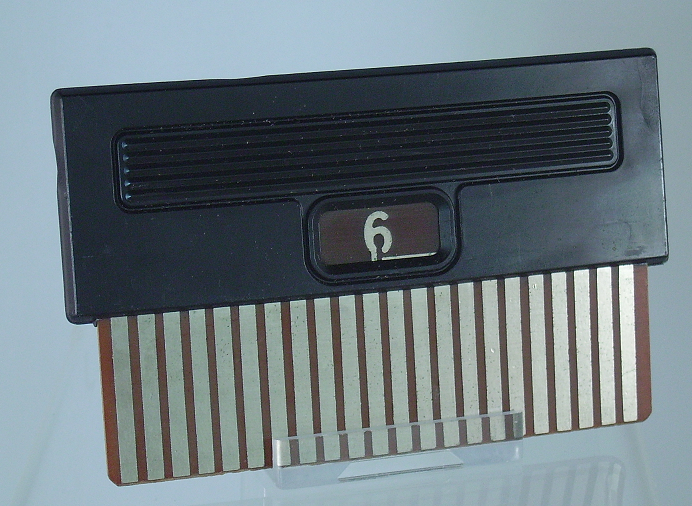
Anyone who takes a closer look at the console will also quickly notice that there is no power switch on the Odyssey. This is because the console automatically turns on and starts the desired game when one of the game cards (“plug plates”) is inserted into the designated slot (“game program slot”). Consequently, the console is also turned off by removing the card.

The connections for the two included controllers (“game consoles”) were also located on the back of the Odyssey, along with the sockets for the optional power supply, the connection unit for the television, and the connection for the “light gun.”
Instead of a title, the cartridges only had the number of the game marked. This meant that you had to memorize this number. With a total of 28 games released for the console, that was certainly not easy.
Particularly absurd from today’s perspective are the controllers of the Odyssey. As a big fan of innovative gamepads, just the sight of these blocks already makes my hair stand on end.
On the two so-called controllers were only two knobs (“adjusters”) for the horizontal and vertical movement of the “screen character,” as well as another knob to influence the ball trajectory in some games. Apart from a centrally placed “reset button” to restart a game, there was no trace of other buttons.
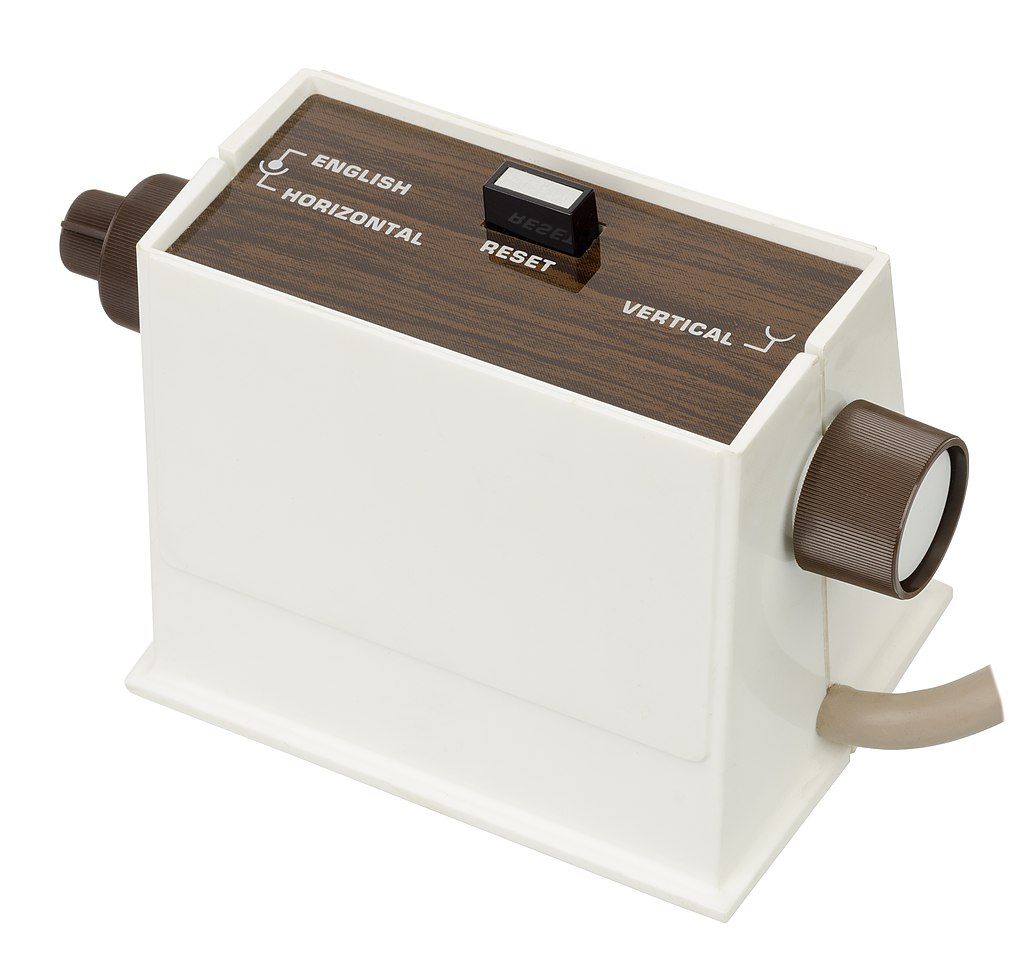
From today’s perspective, such a minimalist design for a controller is hardly imaginable. If we look, for example, at the soon-to-be-released new pro controller for the PS5, this is distinguished, among other things, by additional buttons that the standard controller lacks.
Here we embed the trailer of the new pro controller for the PS5 as a direct comparison:
The games of the world’s first console
What kinds of games were there on the modest hardware? Essentially, the 28 games developed for the Odyssey only differed marginally. In each game, the two players each controlled a light point, which was programmed a little differently depending on the game. Since there were only multiplayer games for the console, a second player was always needed.
Perhaps the most astonishing fact from today’s perspective is that the Odyssey – apart from the controllable light points – could not display any graphics.
For this reason, overlays for the individual games were included in the package, which had to be attached to the television screen before playing. It was essential that the correct combination of the right overlay and the right game card was always used.
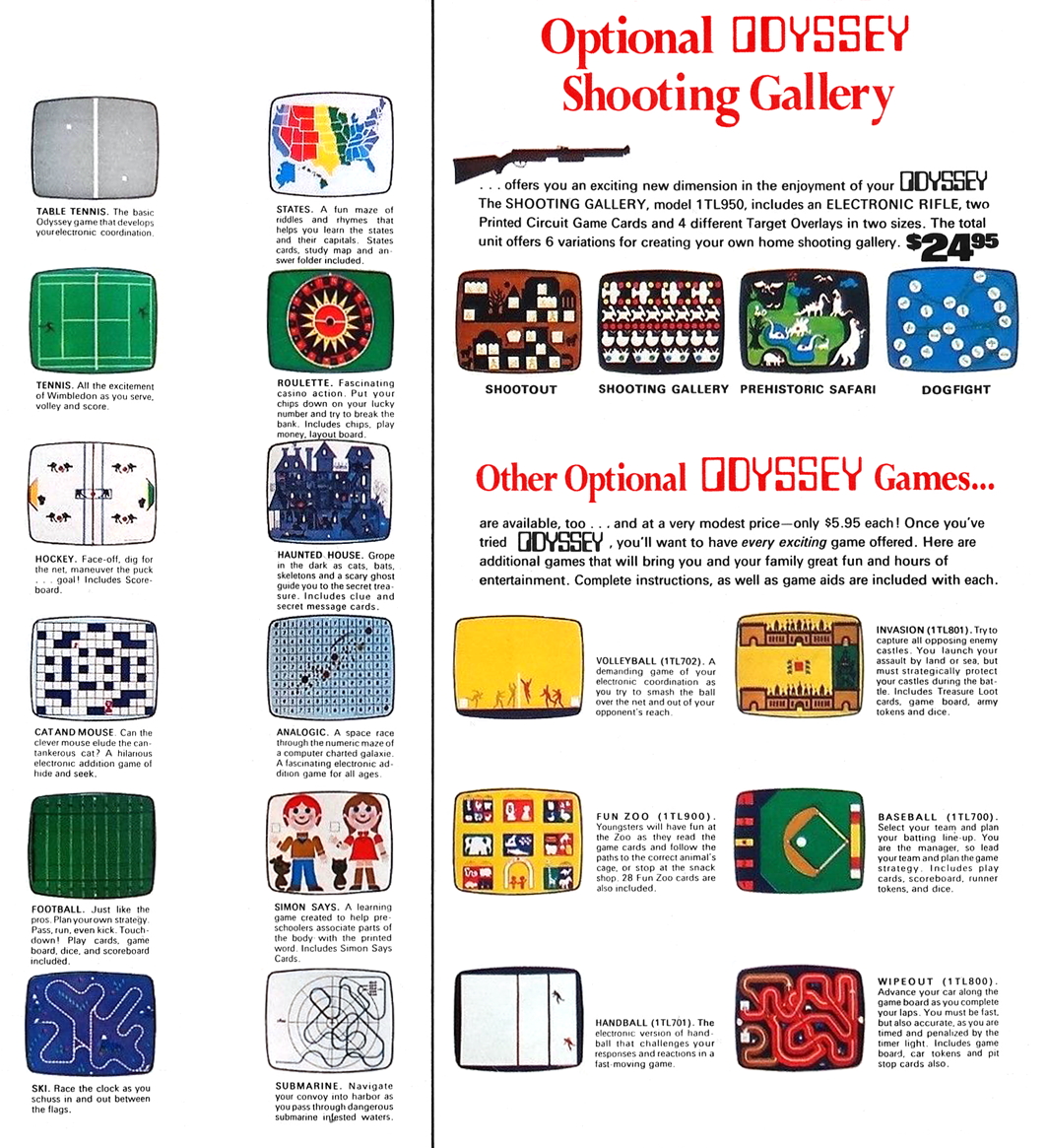
So, for example, if someone wanted to play the chase game “Cat and Mouse”, they first had to attach the overlay to the TV screen and insert the correct card. The point of this game was obviously that the light point of the cat had to catch that of the mouse without moving through the dark fields.
Another game was the probably first “horror game” in history – “Haunted House”. In this, one player had to collect evidence as a detective, which the second player read to him using provided cards. Furthermore, this player disguised as a “ghost” with his light point hide under the overlay in some object in the house while the other player had to avoid this hiding place.
From today’s perspective, one imagines immersive gaming fun quite differently.
In this video, you can experience the incredibly engaging gameplay yourself. But warning: not for the faint of heart!
In addition to a number of supposed sports games, there were also various educational games for younger gamers. Among them was a guessing game with the 50 U.S. states or the well-known “Simon Says,” in which one player told the other which body parts to illuminate on the game’s overlay.
For older players, there was also a gambling game called Roulette, where one player, with eyes closed, determined on which field the ball would land with his light point, which often failed or led to ambiguous results. Pure tension! Also for this game, additional materials such as the obligatory casino chips and game money were included, similar to “Haunted House.”

The optional controller: the light gun
What additional accessories were available for the Odyssey? In times when manufacturers are increasingly sensitive to the design of gun controllers, it may seem particularly bizarre how shockingly authentic the optionally available light gun appeared at first glance, aside from the cable. Today, such a controller would certainly be unimaginable.

Of course, there were also specially designed games for the light gun, such as “Shootout.” In this early spiritual predecessor to Red Dead Redemption, the player embodied a bandit. You had to move a light point under the Wild West overlay and only stop at one of several saloon windows. The other player – obviously the sheriff – was to shoot his opponent with the light gun. An exciting and of course entirely harmless fun for the whole family!
The legacy of the Odyssey
Was the Odyssey important for later consoles? As absurd and at times ridiculous as all this may initially seem from today’s perspective, it is still important to emphasize that the Odyssey paved the way for all later consoles. From an Atari 2600 to a Nintendo 64 and the PlayStation 5 – without the Magnavox Odyssey, none of these beloved consoles would have been possible.
And thus, in retrospect, the Odyssey did indeed live up to its name:
After all, an Odyssey represents a long journey full of obstacles, akin to an adventure. And for all those who are looking forward to God of War: Ragnarök or the new Pokémon games, this journey began in 1972.
If you are interested in more articles about the history of hardware, check out this article explaining why the mouse is actually called a mouse for PCs.

Your opinion is important to us!
Do you like the article? Then let us know!